
Our readers keep the lights on and the weekend projects moving. As an Amazon Associate, I earn from qualifying purchases.
Poured concrete starts with a proper foundation, and for many outdoor projects the first layer beneath that slab is a gravel or aggregate base. But over time, unprotected gravel spreads, sinks, and washes away, turning a solid pad into an uneven, cracked mess. That is where a ground grid steps in to lock each stone in place and maintain a level surface for years.
I’m Rikta — the founder and writer behind FitlyFast. I focus on market research and analyzing the structural specs and real-world performance data of base materials for outdoor construction projects.
Understanding the load ratings, cell depth, and material density is critical when choosing the right base for concrete pad to ensure your slab remains stable on any soil type.
How To Choose The Best Base For Concrete Pad
Selecting the right base material goes beyond grabbing the biggest roll. The subgrade conditions, expected load, and drainage requirements all dictate which grid system will keep your concrete pad flat and crack-free. Focus on these factors before you buy.
Cell Depth and Fill Material Compatibility
Deeper cells, typically 2 to 3 inches, lock in more aggregate and resist lateral shifting under the weight of wet concrete. Shallow grids around 1 inch work best for decorative gravel paths, but a pad supporting a shed or vehicle needs at least 2 inches of depth to prevent the fill from pushing out over time.
Load Rating and Tensile Strength
Manufacturers list load capacities ranging from 1,880 pounds per square foot to over 250,000 pounds per axle. For a standard residential concrete pad, a grid rated above 1,800 psf is sufficient. Commercial-grade options with reinforced locking tabs handle heavy equipment and frequent traffic without deformation.
Material Composition and UV Resistance
High-density polyethylene (HDPE) resists photooxidation, acid, and alkali exposure, making it the standard for outdoor geocells. Polypropylene (PP) grids are lighter but less durable under constant sun. Check for recycled content if sustainability is a priority, but always confirm the thickness — anything under 1.5 mm may tear during installation.
Quick Comparison
On smaller screens, swipe sideways to see the full table.
| Model | Category | Best For | Key Spec | Amazon |
|---|---|---|---|---|
| TRUEGRID PRO Plus | Premium Paver | Heavy vehicle roads | 1.8″ depth, 250k+ lb load | Amazon |
| Vodaland HexPave | Rigid Paver | Shed base, walkways | 1″ depth, 27,000 lb capacity | Amazon |
| VEVOR 3″ Ground Grid | Deep Geocell | Slopes, heavy fill pads | 3″ depth, 237.5 sq ft coverage | Amazon |
| VIVOSUN Ground Grid | Mid-Range Geocell | Driveways, pathways | 2″ depth, 1885 psf load | Amazon |
| LXVOOEE Gravel Grid | Value Geocell | Residential paths, pads | 2″ depth, includes 15 stakes | Amazon |
| Sunnyglade Ground Grid | Budget Geocell | Erosion control, light use | 2″ depth, 40 ft long roll | Amazon |
| MIWOOYY 2″ Grid | Entry Geocell | Small DIY projects | 2″ depth, 1885 psf rating | Amazon |
In‑Depth Reviews
1. TRUEGRID PRO Plus Permeable Pavers
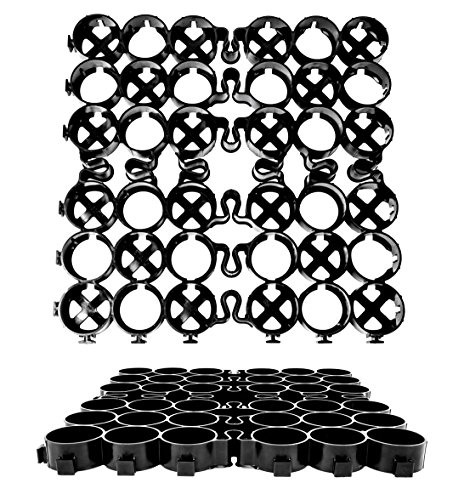
The TRUEGRID PRO Plus is a commercial-grade paver system built from 100% post-consumer recycled HDPE. Each panel measures 24 x 24 inches with a 1.8-inch depth, and the patented flex joints and locking tabs handle over 250,000 pounds per axle. That rating makes it suitable for fire lanes, truck yards, and drive lanes, far exceeding what a residential concrete pad demands.
Installation requires careful planning of interlocking edges, but the grid can be saw-cut for custom fits around trees or irregular corners. Snow plow-able and 100% permeable, it eliminates standing water and frost heave risks under the slab. The pack of 10 covers 40 square feet, so you will need multiple packs for larger pads.
Users report withstanding loaded garbage trucks and SUVs without any cell deformation. The over-engineered design adds cost, but for a permanent pad supporting heavy vehicles, the longevity justifies the investment. Budget-conscious buyers may find the upfront expense steep for light-duty shed bases.
Why it’s great
- Industry-highest load capacity eliminates rutting under heavy equipment
- Made in USA from recycled HDPE with snow plow durability
Good to know
- High cost per square foot for small projects
- Interlocking requires precise layout planning
2. Vodaland Permeable HexPave System

The HexPave system uses interlocking hexagonal panels made from 100% recycled polypropylene plastic. Each unit covers roughly 3 square feet, and 22 pieces together span 65 square feet. The 1-inch depth is shallower than most geocells, but the rigid honeycomb design supports up to 27,000 pounds — enough for a passenger vehicle or a shed base.
Installation is tool-free: the panels snap together on a level bed of sand or gravel. The permeable structure lets rainwater drain directly through, reducing runoff and preventing puddles under the pad. Users highlight how well it keeps pea gravel locked in place without migration, making it a tidy alternative to loose aggregate.
The trade-off is the surface texture. Raised traction barbs on top can feel uncomfortable under bare feet or dog paws. For a concrete pad base, you will cover the grid with slab anyway, but the barbs make it less ideal for exposed walkways. Price per square foot sits mid-range, offering good value for medium-duty residential use.
Why it’s great
- Snap-together assembly requires no tools or stakes
- 100% recycled material with excellent load distribution
Good to know
- Top surface has traction barbs uncomfortable for bare contact
- Shallow 1-inch depth limits fill volume for heavy loads
3. VEVOR Ground Grid 3″ Depth

The VEVOR geocell stands out with a 3-inch cell depth, the deepest among the geocell options here. Each unit measures 25 feet by 9.5 feet, covering 237.5 square feet in a single roll. The 0.06-inch HDPE walls use supersonic welding to handle 1,885 pounds per square foot when filled, making it suitable for slopes and uneven terrain.
The extra depth locks in more gravel or soil, which helps distribute the weight of a concrete slab evenly and prevents edge erosion. Users note that the included plastic clips are not strong enough for heavy loads and recommend replacing them with galvanized bolts at seams. A road cloth underneath improves stability on soft clay.
Some buyers reported misshapen cells after shipping, requiring extra staking to force the grid into the correct diamond pattern. The deeper cells also demand more fill material, raising the total project cost. For a large pad on a slope, the added depth provides structural benefits that shallower grids cannot match.
Why it’s great
- Deepest cell at 3 inches for superior aggregate retention
- Large coverage reduces seams and installation time
Good to know
- Included plastic clips are inadequate for seam reinforcement
- Cell shape can deform during shipping and requires extra staking
4. VIVOSUN 2″ Depth Ground Grid

The VIVOSUN 2-inch geocell hits the sweet spot between coverage, depth, and price. Measuring 9 by 17 feet, it provides a manageable surface for a single-car pad or a garden shed base. The HDPE material resists photooxidation and corrosion, and the honeycomb structure with ultrasonic welding distributes up to 1,885 pounds per square foot.
Installation follows the standard three-step process: spread, anchor, and fill. The grid cuts easily with scissors for custom shapes. Users report that the 2-inch depth holds 1A crushed gravel firmly, preventing ruts under motorcycle and trailer traffic. The grid is water permeable, so drainage beneath the concrete pad remains active.
Some cells arrive compressed from the packaging, making the initial accordion stretch difficult without a helper. The package does not include stakes, so you will need to purchase landscape staples or J-hooks separately. For a reliable mid-range option with real-world durability, this grid offers strong performance without the premium price tag.
Why it’s great
- Excellent balance of cell depth, coverage, and material strength
- Water-permeable design prevents pooling and frost heave
Good to know
- No stakes included in the package
- Folded cells may require two people to stretch into shape
5. LXVOOEE Gravel Grid 9×17.5 FT
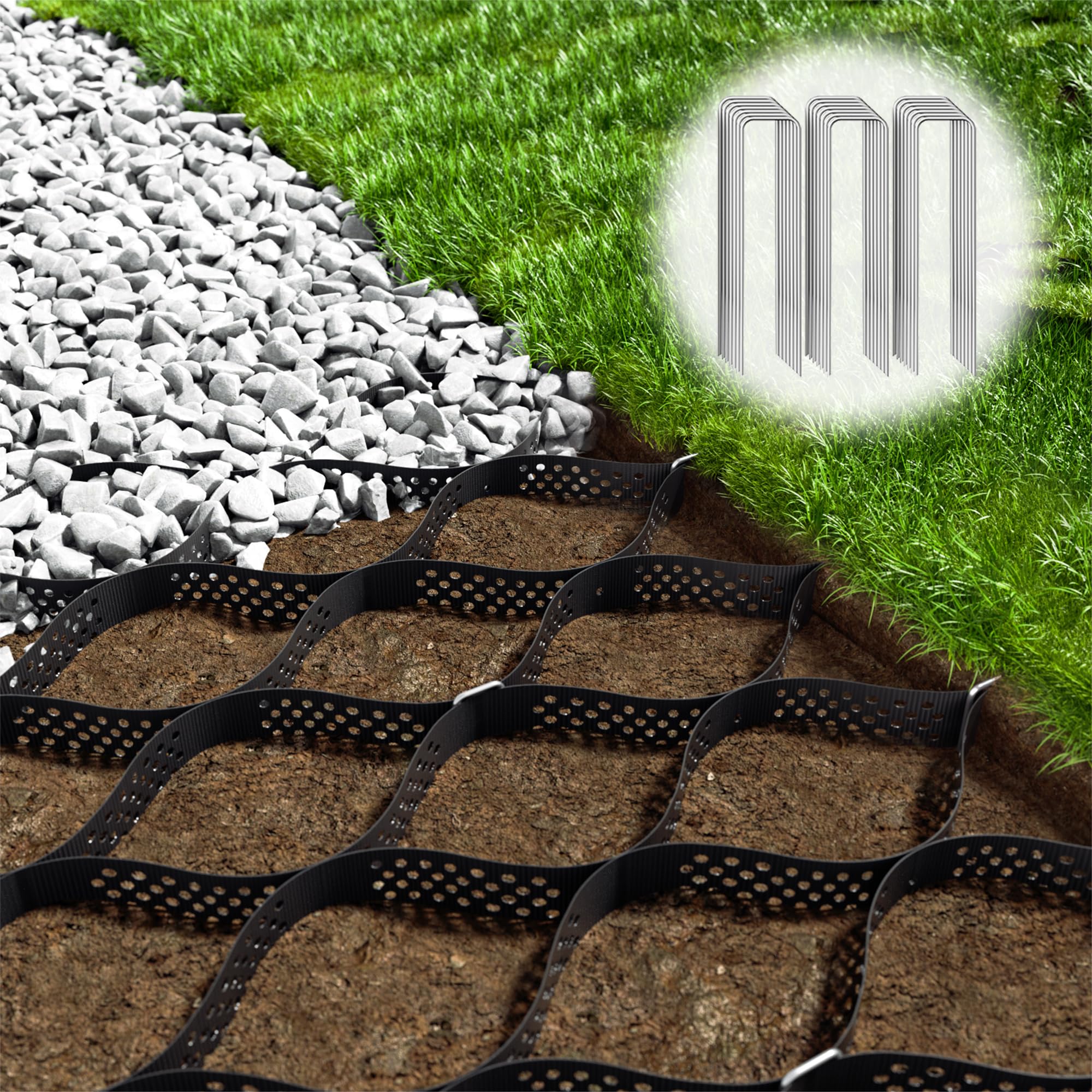
The LXVOOEE grid comes as a complete kit with 15 metal landscape staples and 20 connection clips, saving a trip to the hardware store. Each cell measures 8.9 by 8.9 inches with a 2-inch depth, and the double-row ultrasonic welding adds extra tensile strength compared to single-weld grids. The stated load capacity reaches 1,901 pounds per square foot when filled.
Users confirm it holds 3/4-inch crushed rock securely under constant vehicle use over six months. The 9 by 17.5-foot size covers roughly 157.5 square feet, fitting a compact parking pad or a wide walkway. The included clips help align seams, though the instructions lack detail on proper anchoring spacing.
Some buyers noted that the grid sticks out slightly after filling with pebbles, creating a noticeable texture underfoot. For a concrete pad, this is irrelevant since the slab covers the grid entirely. The included stake count is sufficient for basic anchoring, but heavy-traffic areas benefit from additional stakes at the perimeter.
Why it’s great
- Kit includes stakes and clips for immediate installation
- Double-weld construction improves cell joint strength
Good to know
- Instructions are vague on anchoring patterns
- Some cells remain visible above the fill surface
6. Sunnyglade 2″ Thick Ground Grid 40×4 FT

The Sunnyglade grid offers a long 40-foot roll at 4 feet wide, covering 160 square feet in a single piece. This format is ideal for narrow pathways or strip footings where a wide grid would create waste. The 2-inch HDPE cells hold 1,880 pounds per square foot when filled and resist oxidation and aging across all climates.
One buyer successfully used it to solve erosion on a 45-degree slope by filling cells with a 50/50 garden and native soil mix. The grid allowed water penetration while keeping soil in place, proving its versatility beyond gravel bases. Installation is straightforward, but the grid requires additional stakes — the package does not include any.
Some cells split under concentrated loads like a loaded wheelbarrow tire, so heavy equipment should be kept off until the fill is compacted. The material folds compactly for storage, but the creases from packing can make the grid reluctant to lie flat initially. As a value-oriented roll for linear projects, it performs adequately with proper anchoring.
Why it’s great
- Long 40-foot roll reduces seams for linear installations
- HDPE construction resists UV degradation and chemical exposure
Good to know
- No stakes or clips included
- Individual cells may split under concentrated point loads
7. MIWOOYY 2″ Thick Gravel Ground Grid
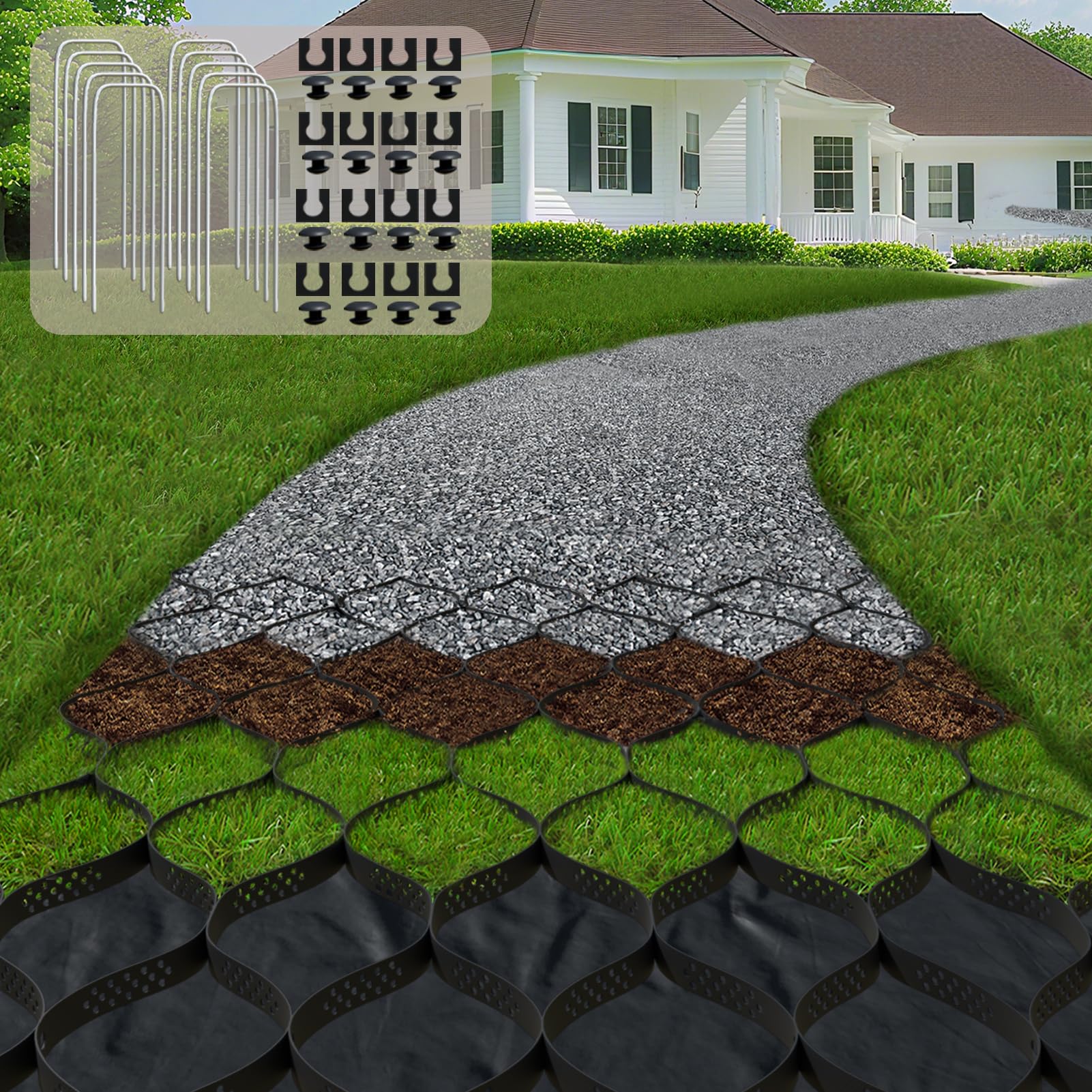
The MIWOOYY grid provides an entry point into geocell stabilization at a compact 6.5 by 16.5 feet. Each cell is 10 by 10 inches with a 2-inch depth, and the HDPE material carries the same 1,885 pounds per square foot rating as pricier competitors. The grid works well for light-load reinforcement on garden paths, patios, and small parking spots.
Users praise its effectiveness at cutting erosion on dirt roads and keeping mulch in place on hills. The foldable design packs small for transport, but the folding creates deep creases that resist opening into the diamond pattern. Several reviews note the grid is flimsy before filling and requires frequent staking — one buyer used 20+ staples to keep it flat.
Packaging is a common complaint: the grid arrives tightly folded, and warming it in the sun does not always relax the shape fully. The flimsiness before fill is typical of all geocells, but the MIWOOYY requires extra patience during layout. For a first DIY project on a small pad, it works effectively if you budget extra time and stakes.
Why it’s great
- Low entry cost for testing geocell stabilization on a small scale
- Holds gravel and mulch effectively on slight slopes
Good to know
- Requires many additional stakes to stay flat during fill
- Deep packing creases make the initial stretch difficult
FAQ
Can I pour concrete directly over a geocell grid?
How much gravel do I need to fill a 2-inch deep ground grid?
Will a ground grid prevent frost heave under a concrete pad?
Final Thoughts: The Verdict
For most users, the base for concrete pad winner is the VIVOSUN 2″ Depth Ground Grid because it delivers dependable load capacity and a practical 9×17 foot footprint at a reasonable cost. If you need a load rating that handles heavy vehicles and snow plows, grab the TRUEGRID PRO Plus. And for a deep-slope or high-fill pad requiring maximum aggregate retention, nothing beats the VEVOR 3-inch Ground Grid.