
Our readers keep the lights on and the weekend projects moving. As an Amazon Associate, I earn from qualifying purchases.
Swimming with music used to mean fumbling with bulky, water-resistant earbuds that never stayed put. Bone conduction headphones changed that by transmitting sound through your cheekbones, keeping your ear canals open and clear for water, safety, and comfort. The challenge is finding a pair that is truly waterproof at depth, has enough onboard storage for phone-free play, and doesn’t sacrifice fit under a swim cap.
I’m Rikta — the founder and writer behind FitlyFast. I’ve spent hours analyzing waterproof ratings, battery life claims, and real user feedback from triathletes and lap swimmers to separate what actually works from what falls apart.
This guide covers seven of the most capable models on the market, breaking down the specs that matter for swimmers. Whether you want maximum storage for offline play or the most secure fit for flip turns, this review of the bone conduction headphones for swimming market will help you pick the right one.
How To Choose The Best Bone Conduction Headphones For Swimming
Not every water-resistant headphone belongs in a lap pool. Swimmers face unique constraints: full submersion, no phone, and a cramped space under caps and goggles. The wrong choice means spotty audio, a dead battery mid-lap, or a headphone that slips off during a flip turn. Focus on these four criteria to find a pair that lasts through your training.
Waterproof Rating: The Difference Between Splash and Submersion
Look for a rating of IP68 or IPX8 — both indicate the unit can handle full submersion beyond one meter. An IP67 rating is usually splash-proof only and won’t survive repeated pool depths. Models that quote a specific depth (e.g., 2 meters for 2 hours) give you a real performance benchmark. Remember that Bluetooth itself cannot transmit through water, so higher waterproof ratings are only useful when you are using the onboard MP3 mode.
Onboard Storage Capacity: Your Phone-Free Lifeline
Bluetooth signals die within inches underwater. That makes built-in MP3 storage the single most important swim-specific feature. Entry-level units offer around 8GB (about 1,500 songs), while mid-range and premium options pack 32GB to 64GB. If you rotate playlists weekly, 8GB is sufficient. If you want to load your entire library and forget it, 32GB or 64GB saves you the hassle of frequent syncing.
Battery Life vs. Charging Speed
Swim headphones run on two different battery modes: MP3 mode (longer) and Bluetooth mode (shorter). Look for at least 8 hours of playback in MP3 mode to cover multiple pool sessions without recharging. Fast charging is a practical advantage — a quick 10-minute charge should give you 1–2 hours of playback for those mornings when you forgot to plug them in overnight.
Secure Fit Under Swim Gear
Bone conduction headphones wrap around the back of your head. The best designs use a flexible titanium alloy frame that holds its shape without pressing too hard. Skin-friendly silicone coatings prevent slipping when wet. The headphone should sit comfortably under a swim cap without creating pressure points, and the ear hooks must not interfere with goggles. Heavier or rigid frames tend to shift during sprints and flip turns.
Quick Comparison
On smaller screens, swipe sideways to see the full table.
| Model | Category | Best For | Key Spec | Amazon |
|---|---|---|---|---|
| ELYXFUL | Premium | Maximum offline storage | 64GB MP3 storage | Amazon |
| CXK | Premium | Long battery life | 12-hour playback | Amazon |
| PSIER | Mid-Range | Bass-heavy audio underwater | Dual driver (bone+air) | Amazon |
| NANK Runner4 | Mid-Range | Durable titanium frame | 16GB MP3 memory | Amazon |
| Rhyfell Fit 5 | Mid-Range | Ultra-lightweight wear | 28g weight, Bluetooth 6.0 | Amazon |
| DEMICEA | Budget | Large storage on a budget | 32GB storage, IP68 | Amazon |
| SANOTO | Budget | Affordable entry-level swim | IPX8, 8GB MP3 | Amazon |
In‑Depth Reviews
1. ELYXFUL Bone Conduction Swimming Headphones

The ELYXFUL stands out with a massive 64GB of onboard storage — double the capacity of most competitors in this guide. That means you can store your entire workout library in one go without rotating playlists. The IP68 rating confirms full submersion capability, and the included silicone earplugs noticeably enhance bass response underwater by blocking external water noise.
Switching between Bluetooth mode (for land-based use) and MP3 mode (for swimming) is straightforward, and the lightweight wraparound frame stays locked in place during flip turns and sprints. Battery life hits around 8 hours in MP3 mode, which covers multiple pool sessions before needing a recharge. The audio quality is surprisingly clear for bone conduction, and the drag-and-drop file transfer via the included USB-C cable makes loading music simple.
One minor trade-off is the charging cable — it uses a magnetic proprietary connector rather than standard USB-C, so you will need to keep the cable handy. The volume can feel slightly low for audiobooks when blowing bubbles during rhythmic breathing, though music cuts through fine. For swimmers who want the most storage and a secure, comfortable fit, this model is the top pick.
Why it’s great
- Industry-leading 64GB storage holds thousands of songs
- IP68 rated for full submersion in pools and open water
- Secure titanium frame stays put under cap and goggles
Good to know
- Uses proprietary magnetic charger, not USB-C
- Volume may be insufficient for audiobooks while actively swimming
2. CXK Bone Conduction Swimming Headphones
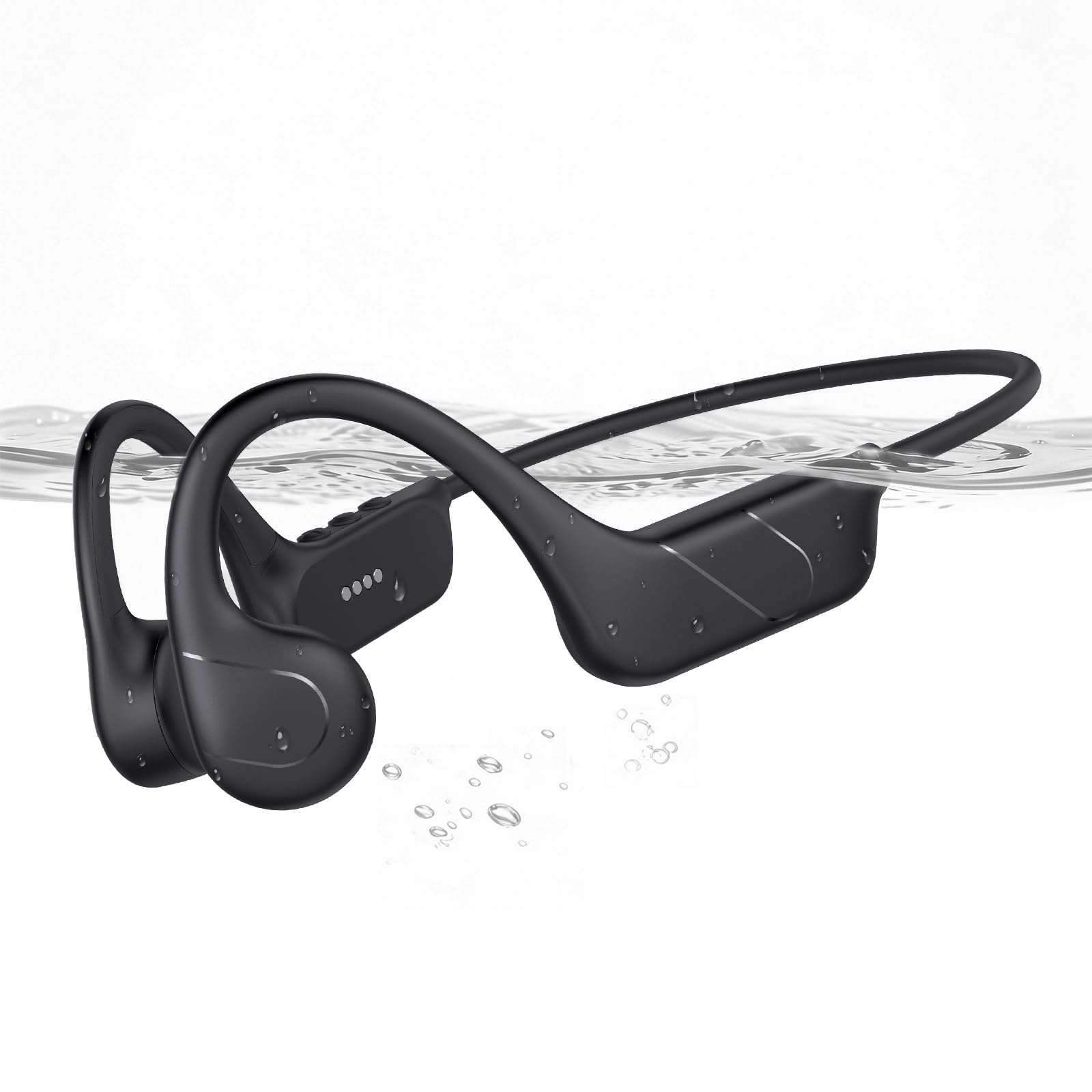
The CXK X17 delivers the longest battery life in this roundup — a full 12 hours of continuous playback on a single charge. That is enough for a week of daily swim sessions without ever reaching for the magnetic charger. The IPX8 rating permits submersion up to 2 meters for 2 hours, giving pool and open-water swimmers plenty of margin.
With 32GB of onboard storage, you can load up to 8,000 songs and switch to MP3 mode for phone-free underwater listening. The Bluetooth 6.0 chip provides a stable wireless connection on land with low latency, making these headphones equally capable for running and cycling. The adjustable headband and soft silicone pads create a secure fit that works under a swim cap without pressure points.
The main drawback is the lack of a hard carrying case — the package includes a soft pouch, which offers less protection during travel. A few users noted that the body could feel slightly bulky compared to ultra-lightweight competitors. Still, for triathletes and frequent swimmers who prioritize battery endurance above everything else, the CXK is the strongest option.
Why it’s great
- 12-hour battery life leads the category
- 32GB storage handles large music libraries
- IPX8 certified for submersion up to 2 meters
Good to know
- Bulkier frame may feel less minimal on smaller heads
- No hard carrying case included
3. PSIER Bone Conduction Swimming Headphones
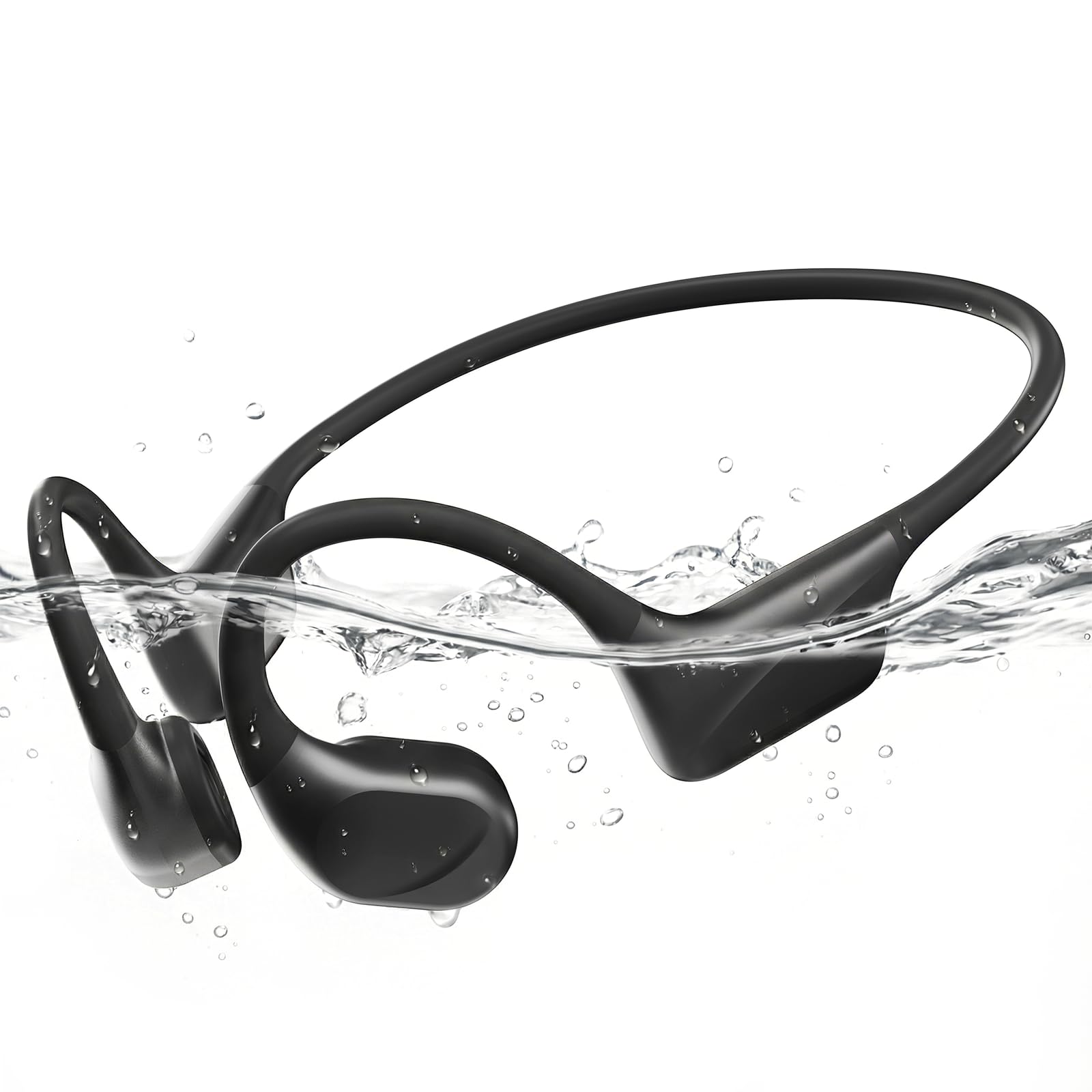
What sets the PSIER apart is its hybrid driver system — combining bone conduction with air conduction to deliver stronger bass than conventional bone conduction designs. Underwater, this translates to fuller, more immersive sound that does not sound thin or tinny. The IPX8 rating supports submersion up to 2 meters for one hour, making it suitable for both pool and shallow open-water swimming.
The built-in 32GB memory stores up to 8,000 songs, and switching to MP3 mode is a simple button press. Bluetooth 6.0 ensures quick pairing and low latency for use outside the pool. The seamless liquid silicone coating gives the frame a soft, comfortable feel that integrates well with goggles and swim caps, and the fast magnetic charging hits a full charge in 1.5 hours.
The one caveat is fit — the wraparound design is less adjustable than some competitors, and users with smaller head sizes may find the frame slightly too large. The touch controls can occasionally register unintended commands when adjusting your cap. For swimmers who prioritize sound quality and are willing to sacrifice some adjustability, the PSIER delivers the best audio experience underwater.
Why it’s great
- Hybrid bone+air conduction produces deeper bass underwater
- Fast charging reaches full in 1.5 hours
- IPX8 certified for pool use
Good to know
- Frame may be too large for smaller heads
- Touch controls can trigger accidentally under a swim cap
4. NANK Runner4 Bone Conduction Headphones
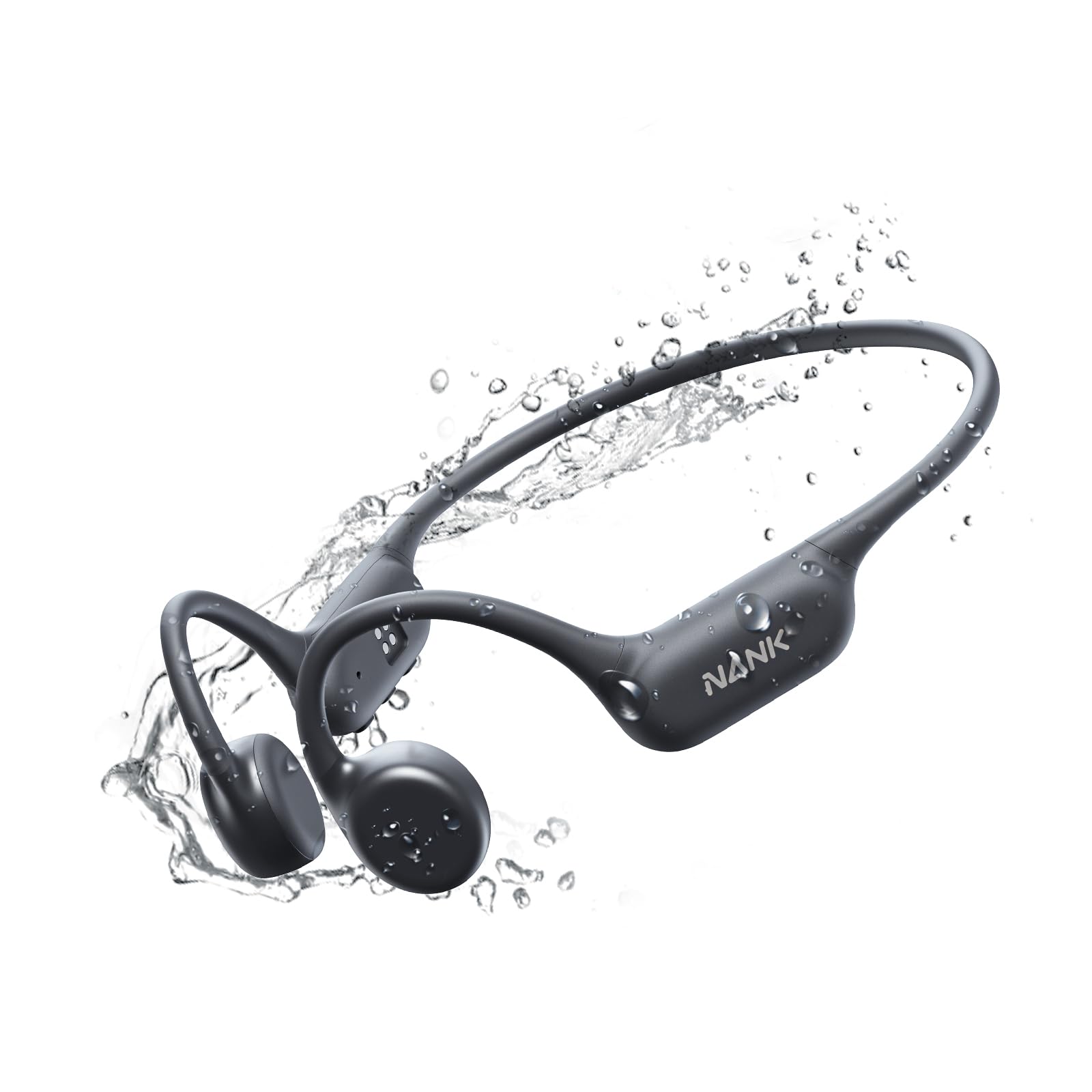
The NANK Runner4 uses a premium titanium alloy frame wrapped in skin-friendly silicone, creating a durable structure that springs back to shape after every wear. The IP68 waterproof rating and nano-coating technology protect against submersion, making it a reliable companion for lap swimming. The 16GB MP3 mode stores approximately 2,000 songs, which is enough for most active libraries.
NANK’s third-generation ResoVibe technology and OT leakage reduction system work together to minimize sound leakage, keeping your audio private during outdoor runs and gym sessions. The Bluetooth 5.4 chip provides a stable wireless connection on land, and the 8-hour battery life covers extended workouts. A quick 10-minute charge delivers 2 hours of playback — a practical feature when you forget to charge overnight.
The primary limitation is the 16GB storage — less than half of what the ELYXFUL and CXK offer, so you will need to rotate playlists if you have a massive music collection. Some users report the actual battery life in MP3 mode falls closer to 5–6 hours at moderate volume. It remains a solid choice for swimmers who prize build quality and fit over maximum storage.
Why it’s great
- Durable titanium frame with shape-memory flexibility
- Effective sound leakage reduction for privacy
- Fast charge provides 2 hours of playback in 10 minutes
Good to know
- 16GB storage requires more frequent playlist rotation
- Battery life in MP3 mode may be less than advertised
5. Rhyfell Fit 5 Swimming Headphones
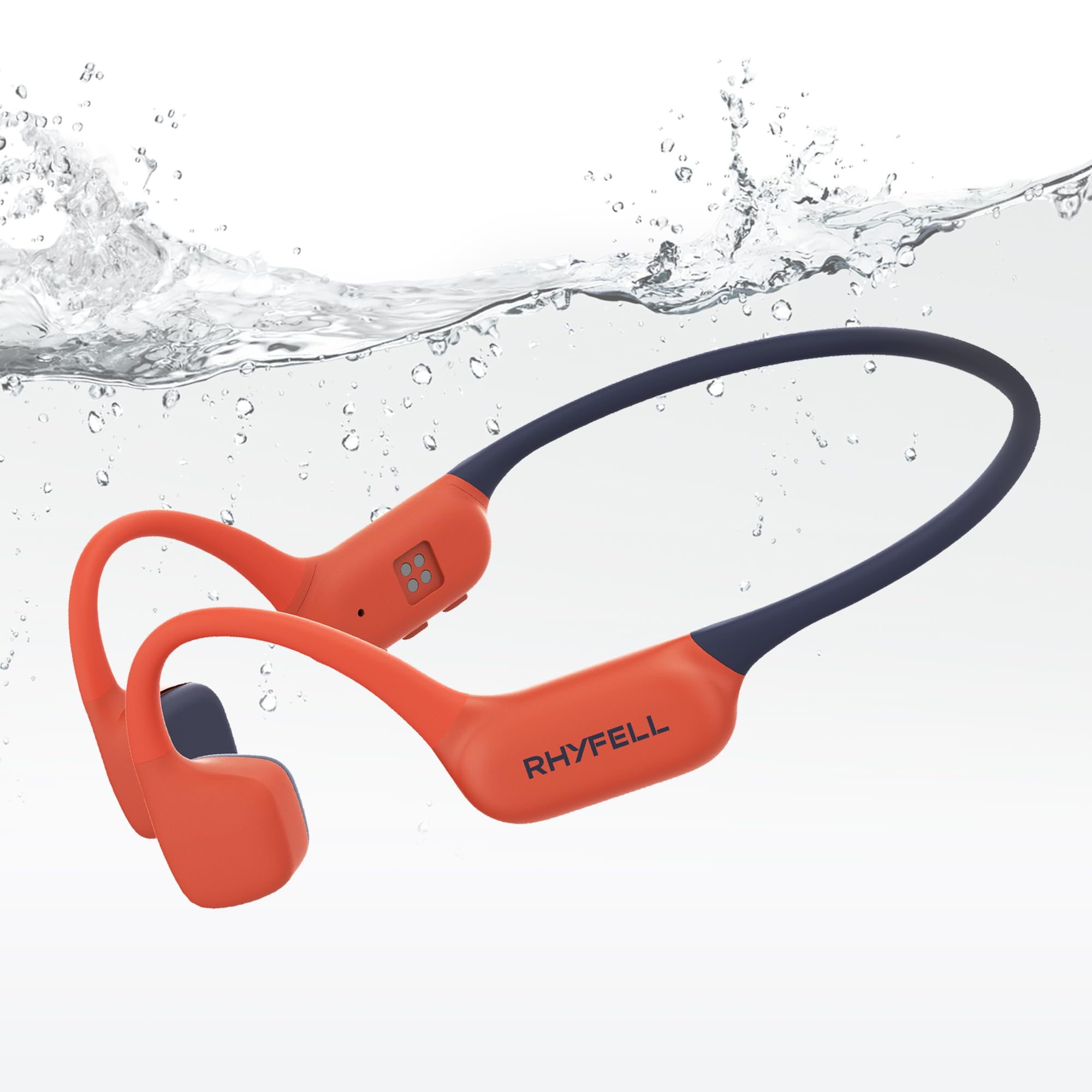
At just 28 grams, the Rhyfell Fit 5 is the lightest headphone in this lineup. The ultra-lightweight frame and liquid silicone material reduce fatigue during long swim sessions, and the ergonomic design stays secure under a cap. The IP68 rating supports submersion to 2–5 meters, giving it the deepest official depth rating in this group.
The 32GB onboard storage holds up to 8,000 songs, and the claimed transfer speed is 18 times faster than previous generations — meaning you can load a full library in minutes rather than hours. The 10-hour battery life in MP3 mode is competitive, and Bluetooth 6.0 provides low-latency pairing for use outside the water. The open-ear design keeps you aware of ambient sounds, which is useful for open-water swimming and cycling.
On the downside, some swimmers report that the actual battery life falls short of the 10-hour claim, landing closer to 6–7 hours in real-world MP3 use. The fit also depends heavily on ear shape — the arms may press uncomfortably on certain head contours. For swimmers who want the lightest possible headphone for distance training, the Rhyfell is a strong contender.
Why it’s great
- Ultra-lightweight 28g design reduces fatigue
- 32GB storage with fast file transfer
- IP68 rated for submersion up to 5 meters
Good to know
- Battery life may be less than the advertised 10 hours
- Fit varies with ear shape and head contour
6. DEMICEA Open Ear Sport Headphones
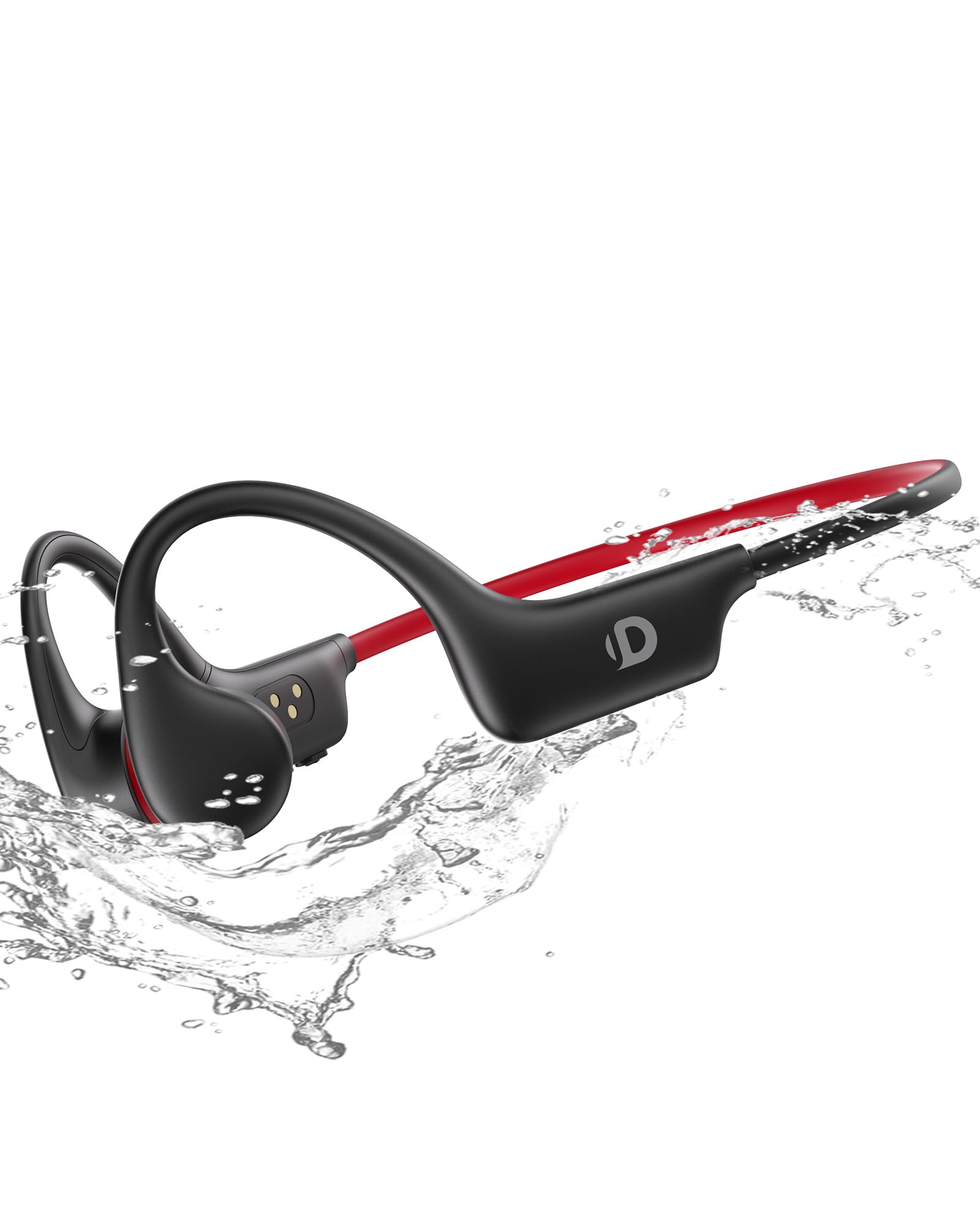
The DEMICEA offers an impressive 32GB of onboard storage at a budget-friendly price point, making it one of the best values in this guide for swimmers who need serious library capacity without spending at the premium tier. The 0.7mm flexible memory titanium alloy frame and skin-friendly silicone bridge create a comfortable, balanced fit that stays put during vigorous movement.
The 16mm bone conduction driver with SoundBeam directional technology minimizes sound leakage, and the IP68 rating handles submersion for swimming and wet-weather workouts. Bluetooth 5.3 provides solid connectivity for land-based use, and the 8-hour battery life covers standard training sessions. The integrated microphone allows for hands-free calls outside the pool.
Reliability is the main concern here — some users report button failures after a month of use, which renders the headphones unusable. Sound leakage is also more noticeable than on premium models, potentially disturbing others in quiet environments. For budget-conscious swimmers willing to accept some risk, the DEMICEA delivers strong storage and features.
Why it’s great
- 32GB storage at a budget-competitive price
- Flexible titanium alloy frame is comfortable and secure
- IP68 rated for swimming and heavy sweat
Good to know
- Reported button failures after extended use
- Sound leakage noticeable at higher volumes
7. SANOTO Swimming Headphones
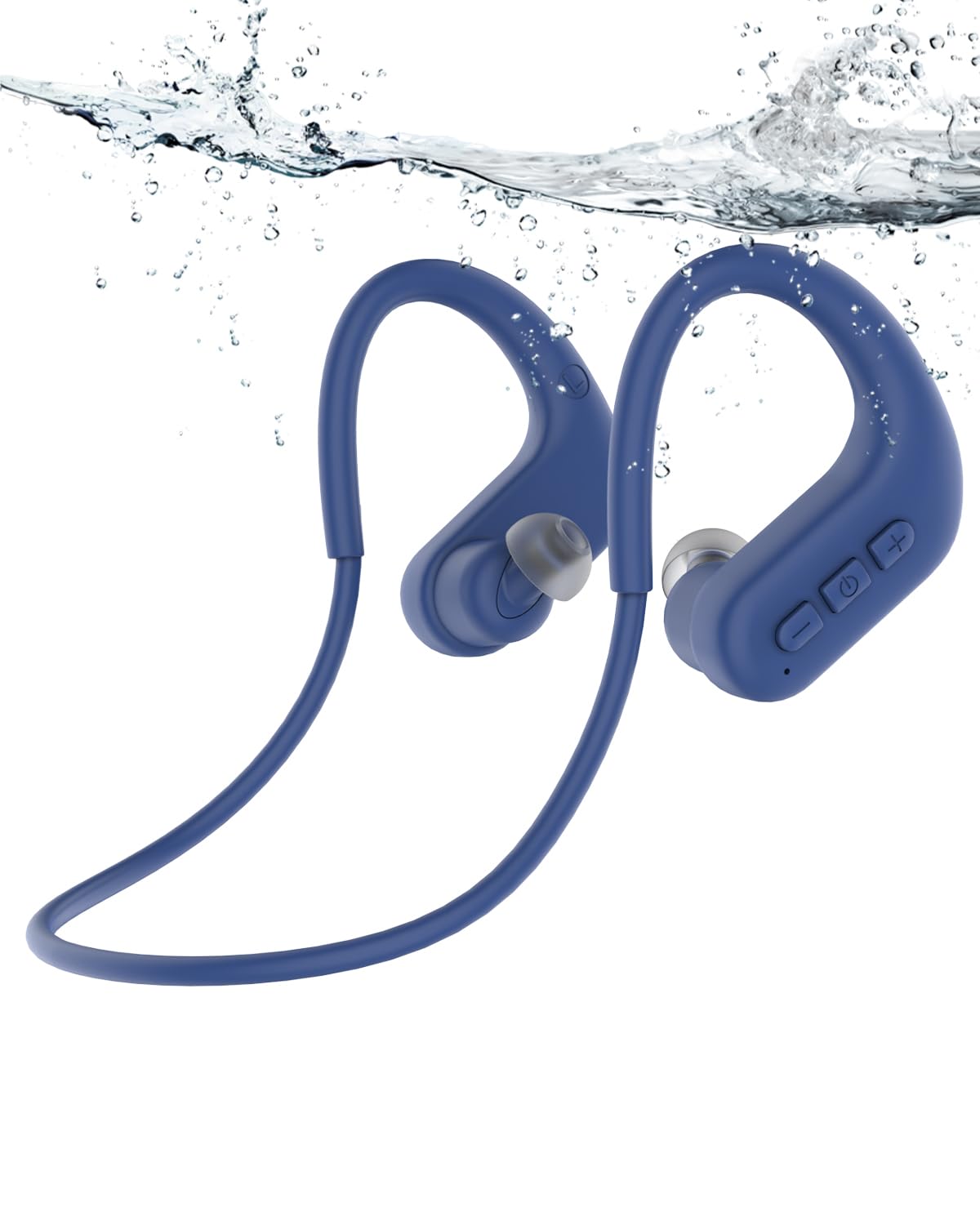
The SANOTO is the most affordable option here, yet it packs an IPX8 rating that permits submersion up to 10 meters for over 2 hours — the highest depth tolerance in its price class. The ear hooks are made from soft, skin-friendly silicone that adapts to different head shapes and fits comfortably under a swim cap and goggles. The in-ear design also acts as a water seal, preventing water from entering your ear canal while you swim.
With 8GB of built-in storage, you can load around 1,500 songs in MP3, FLAC, WMA, WAV, or APE formats. The 12-hour battery life in MP3 mode is the longest of any model in this guide. Bluetooth 5.4 handles wireless streaming on land, while the simple two-button interface makes mode switching quick. The package includes multiple ear tip sizes and two magnetic charging cables.
The sound quality is functional rather than impressive — reviews describe it as decent but not audiophile-grade. Bluetooth performance underwater is predictably poor (as with all models), but the MP3 mode works seamlessly. For swimmers on a tight budget who still want a certified waterproof headphone with solid battery life, the SANOTO is a practical entry point.
Why it’s great
- Highest depth rating at this price point (IPX8, 10 meters)
- 12-hour MP3 battery life is best in class
- In-ear design blocks water from ear canal
Good to know
- Sound quality is decent but not high-fidelity
- 8GB storage requires more frequent playlist updates
FAQ
Can bone conduction headphones work underwater with Bluetooth?
What is the difference between IP68 and IPX8 for swimming headphones?
How many songs can I store on 8GB versus 32GB?
Will bone conduction headphones fit under a swim cap and goggles?
How long does the battery last during a typical swim session?
Final Thoughts: The Verdict
For most users, the best bone conduction headphones for swimming winner is the ELYXFUL because it combines the largest 64GB storage with a proven IP68 rating and a comfortable, secure fit that works under swim caps and goggles. If you want the longest battery life for marathon training sessions, grab the CXK with its 12-hour playback. And for the best underwater audio quality with rich bass, nothing beats the PSIER and its hybrid bone-air conduction driver.