
Our readers keep the lights on and the weekend projects moving. As an Amazon Associate, I earn from qualifying purchases.
Finding alpine ski boots that let you carve all day without pressure points or cold toes is the single biggest challenge for any skier. A boot that fits poorly — too narrow in the forefoot or too loose around the heel — will ruin your technique and your time on the mountain faster than any other piece of gear.
I’m Rikta — the founder and writer behind FitlyFast. I spend my time studying ski boot shell geometry, last widths, flex indices, and heat-moldable liner tech so you don’t have to guess what works.
After comparing nine models across fit volume, stiffness, and entry systems, I’ve built this guide to help you find the alpine ski boots that match your foot shape and skiing ability without overpaying for features you won’t use.
How To Choose The Best Alpine Ski Boots
A boot that doesn’t fit right will make even the best skier miserable. Focus on three things: the last width, the flex index, and the volume — everything else is secondary. Let’s break down each one so you know exactly what to look for.
Last Width — The Room Your Foot Has
Measured in millimeters across the widest part of the forefoot, the last determines whether your foot feels squeezed or sloppy. Narrow lasts hover around 97–99 mm, mid-volume sits at 100–102 mm, and wide/comfort lasts run 103–106 mm. A boot that’s too narrow causes numbness; too wide lets your foot slide and reduces steering precision.
Flex Index — How Stiff The Boot Feels
Flex ratings typically range from 60 (soft) to 130 (very stiff). Beginners and lighter skiers should stick to flex 60–80 — softer boots are forgiving and easier to bend forward. Advanced and aggressive skiers need flex 100–120 for fast edge-to-edge response. Picking a flex that matches your strength and style prevents leg fatigue and keeps your shin in control of the ski.
Volume — High, Medium, Or Low
Volume refers to the overall interior shape — how tall the instep is and how much space the calf pocket offers. High-volume (HV) boots have a taller instep and a wider cuff for larger calves or higher arches. Low-volume boots fit skinnier legs and flatter feet. Many brands now offer a specific “HV” version, so you don’t have to settle for a generic medium fit that pinches your shin.
Quick Comparison
On smaller screens, swipe sideways to see the full table.
| Model | Category | Best For | Key Spec | Amazon |
|---|---|---|---|---|
| Fischer RC One 8.5 | Premium | Advanced skiers wanting precise edge control | Flex 85 · Medium volume | Amazon |
| Fischer RC One 11.0 | Premium | Expert skiers on piste and all-mountain | Flex 110 · Medium volume | Amazon |
| K2 BFC 80 | Mid-Range | Beginners wanting easy entry | Flex 80 · Hands-free entry | Amazon |
| Rossignol Evo 70 | Mid-Range | All-day comfort in a relaxed 104mm fit | Flex 70 · 104mm last | Amazon |
| Head Edge LYT RX HV | Mid-Range | Wide feet needing a high-volume shell | HV design · Beginner-friendly | Amazon |
| Nordica Cruise 80 | Mid-Range | Big calves and easy step-in | Flex 80 · 104mm last | Amazon |
| Atomic HAWX Magna 75 | Mid-Range | Women needing a warm, comfortable fit | Flex 75 · Memory Fit liner | Amazon |
| Nordica The Cruise | Budget | Entry-level skiers on a tight budget | Flex 60 · 104mm extra-wide | Amazon |
| Nidecker Altai | Premium | Snowboarders (included for completeness) | Dual BOA · Vibram sole | Amazon |
In‑Depth Reviews
1. Fischer RC One 8.5 Alpine Skis Boots
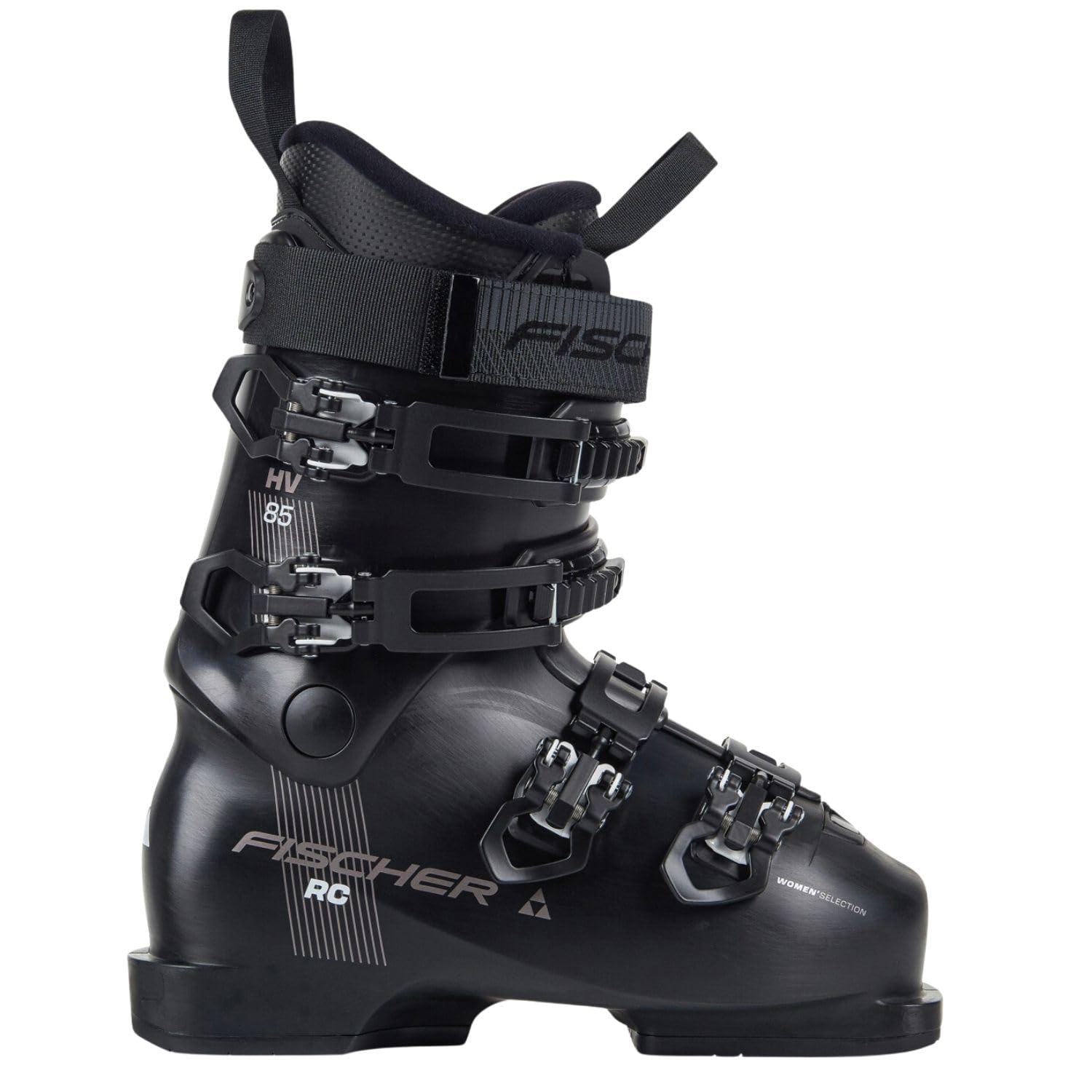
The Fischer RC One 8.5 hits the sweet spot for advanced skiers who want a responsive ride without jumping to an ultra-stiff 110 flex. With a flex index of 85, it offers enough backbone to carve hard on piste while still forgiving enough for all-day bump runs. The medium-volume shell fits standard-width feet well, and the polyurethane construction delivers consistent power transfer from shin to ski edge.
Testers with wide calves noted the boot accommodates them better than many competitors in this flex range. The internal liner features customizable zones that heat-mold to your foot, reducing the break-in period significantly. The four micro-adjustable aluminum buckles provide fine tension control across the instep and forefoot, so you can dial in pressure without pinching.
One user mentioned initial tightness that resolved after the liner molded to their calf shape. This boot is built to last through many resoles and buckle replacements.
Why it’s great
- Flex 85 offers an ideal balance of response and forgiveness for advanced skiers
- Heat-moldable liner reduces break-in discomfort significantly
- Four micro-adjustable aluminum buckles for precise fit
Good to know
- Medium volume may feel snug for very wide feet
- Premium price point — not ideal for casual rental-level skiers
2. Fischer Ski Boots Alpine Ski Boots RC One 11.0 Flex 110
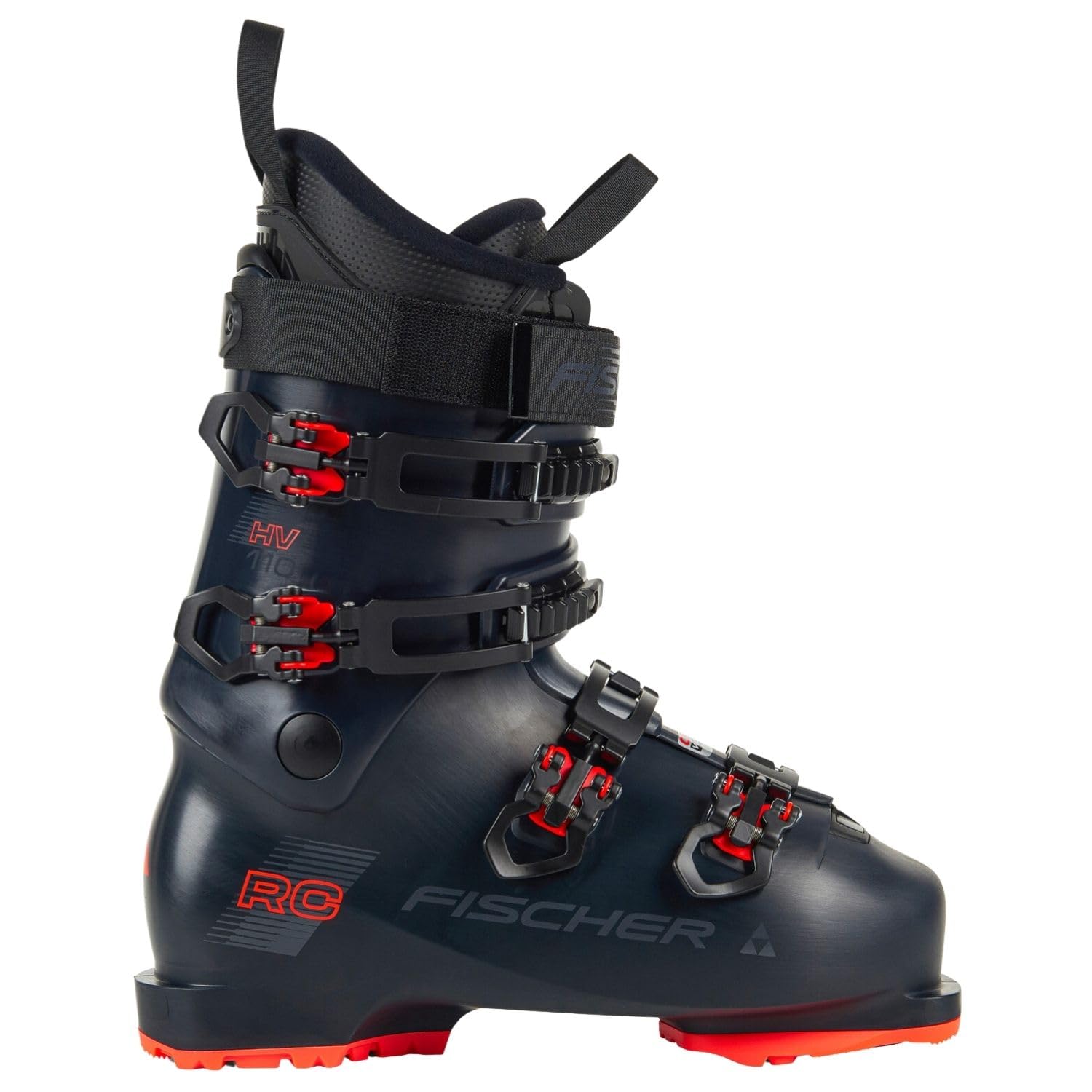
The RC One 11.0 is Fischer’s answer for the skier who attacks the mountain with aggression. Its 110 flex is noticeably stiffer than the 8.5, demanding a strong forward stance and leg strength to bend the boot properly. This translates into razor-sharp edge hold on hardpack and ice, making it a favorite for advanced and expert riders who prioritize precision over plushness.
The medium-volume shell fits true to size for average-width feet, and the PU shell maintains consistent flex even in cold temperatures. The liner is fully heat-moldable, and multiple reviewers praised the fit accuracy after a professional bake. The four micro-adjustable buckles include a power strap at the top that locks the shin in place for instant energy transmission.
A minority of buyers found the buckles stiff to operate initially, noting they required deliberate force to close. That is typical for high-flex boots designed to hold up under extreme loads — the hardware is burly by necessity. If you are an intermediate working toward advanced level, the 85 flex is a better stepping stone; the 11.0 is a serious tool for serious skiers.
Why it’s great
- 110 flex delivers exceptional edge-to-edge response for aggressive skiing
- Power strap and micro-adjustable buckles lock in precise heel hold
- Fischer liner molds accurately for a custom-like fit
Good to know
- Too stiff for beginner or intermediate skiers
- Buckles may feel stiff and require some force to close
3. K2 BFC 80 Men’s All-Mountain Ski Boots
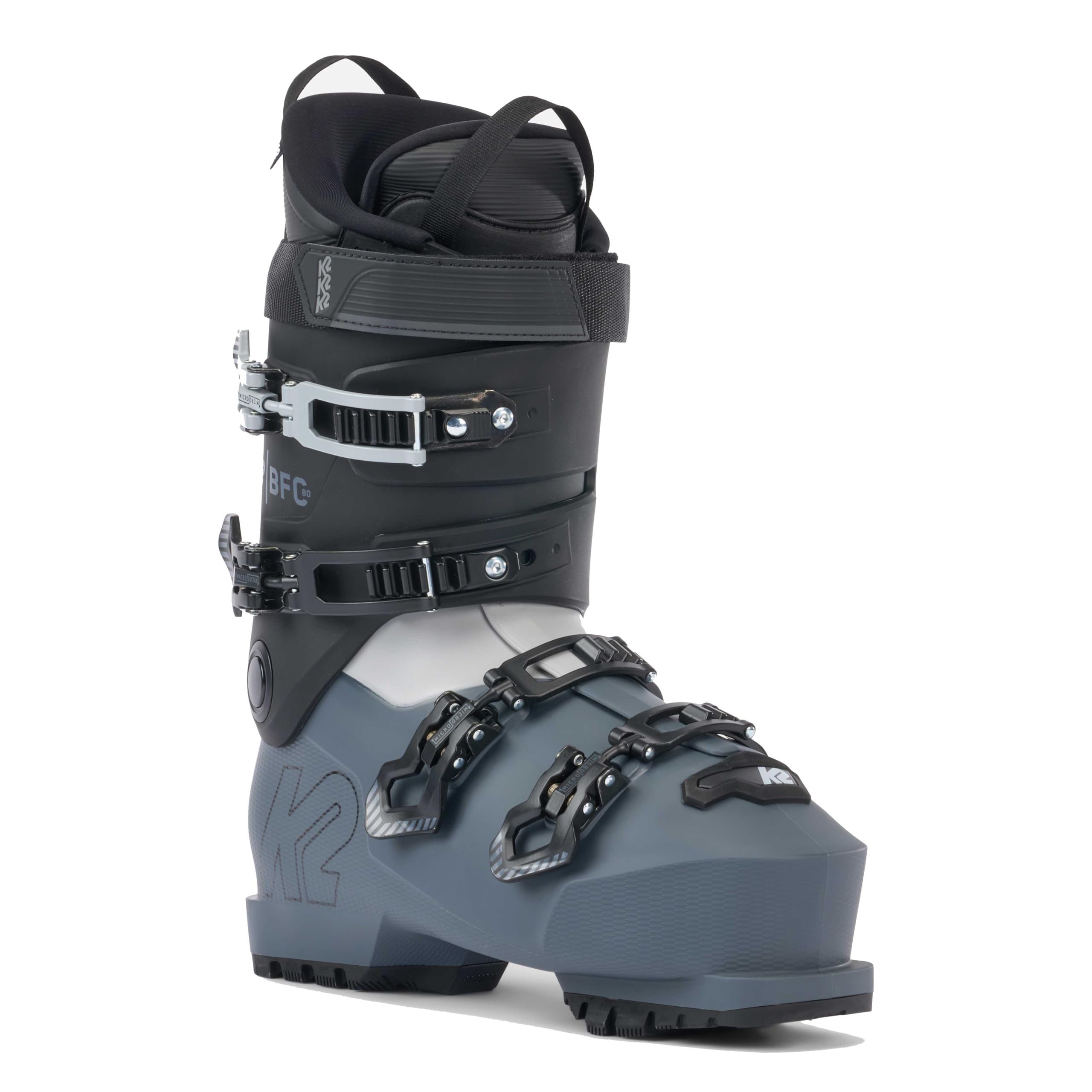
The K2 BFC 80 stands out for its hands-free entry system — you can step into the boot without wrestling the tongue or fighting overlapping shells. This is a huge quality-of-life upgrade for skiers who hate spending five minutes forcing their foot into a tight boot. The flex 80 is soft enough for beginners to initiate turns easily, while the cushioned liner provides a plush feel right out of the box.
The fully heat-moldable shell and liner allow a ski shop to expand problem areas around the sixth toe or ankle bone. The TPU shell and PP cuff offer good durability without adding excessive weight. The toe area is notably roomy, which helps skiers with wider forefeet avoid numbness on long days.
Some users reported receiving the wrong color, so double-check the listing before ordering. The closing mechanism relies on a unique cable system — it works well but feels different from traditional buckle boots. If you prioritize quick entry and exit, the BFC 80 is one of the most convenient alpine boots available at this performance level.
Why it’s great
- Hands-free entry system eliminates the struggle of putting boots on
- Heat-moldable shell and liner allow custom spot adjustments
- Roomy toe box keeps feet comfortable all day
Good to know
- Cable closure system may feel unfamiliar to traditional buckle users
- Color mismatch issues reported by some buyers
4. Rossignol Evo 70 Ski Boots for Men
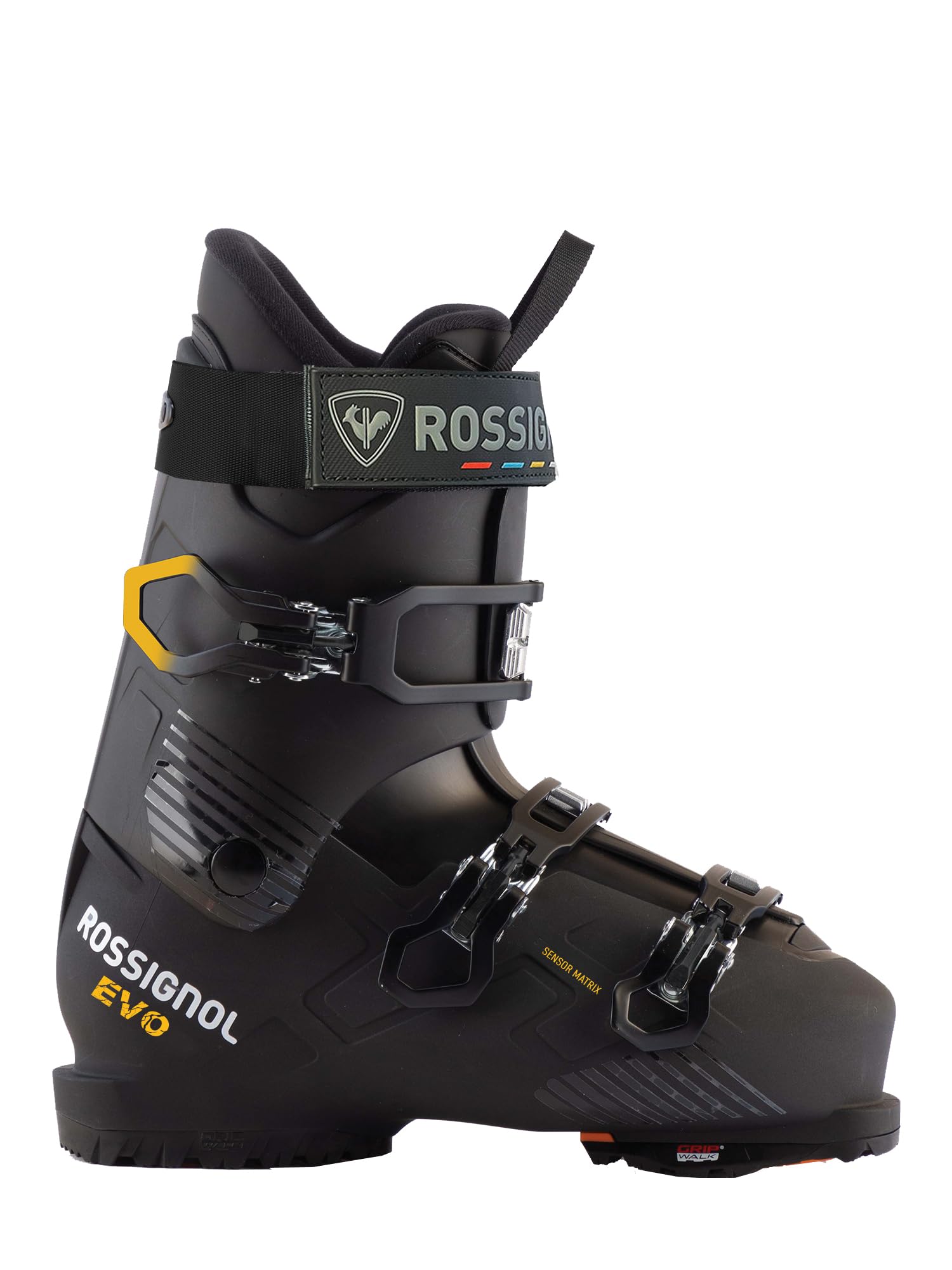
The Rossignol Evo 70 uses a 104mm last — that is a genuinely wide fit through the forefoot, toe box, and ankle. Skiers with square feet or bunions will find this boot much more forgiving than standard 100mm models. The flex 70 is soft and playful, making it a natural match for beginner to lower-intermediate skiers who want a relaxed carving experience without fighting the boot.
The Sensor Matrix shell design reduces overall weight without sacrificing structural integrity, so your legs feel less fatigued by the end of the day. The custom-fit liner has softer padding through the instep and ankle, which helps prevent shin bang — a common complaint with stiffer boots. The easy-opening overlap makes entry and exit smoother than many traditional four-buckle designs.
One user noted that the boot worked well with orthotic inserts, though those with very narrow feet may need to add heel pads to lock the foot in place. The EVO 70 is also GripWalk compatible, meaning you can install rubber sole inserts for better traction in the parking lot and lodge. For the price, this is one of the most comfortable wide-fit boots on the market.
Why it’s great
- 104mm last provides generous room for wide feet and bunions
- Lightweight Sensor Matrix shell reduces leg fatigue
- GripWalk compatible for safer walking on slippery surfaces
Good to know
- Soft flex is not suitable for aggressive or advanced skiers
- Narrow-footed skiers may need aftermarket heel pads
5. Head Edge LYT RX HV Alpine Ski Boots

Head’s Edge LYT RX HV is built specifically for the high-volume skier — extra room through the forefoot, instep, and calf area. The polyurethane shell is paired with a leather outer material in key zones, giving it a slightly more premium feel than entry-level all-plastic boots. It is rated for beginner to lower-intermediate ability, so the flex is soft and forgiving, encouraging easy turn initiation.
Buyers who only ski two or three times per year consistently praised the value proposition: the boot feels well-made and comfortable without demanding a top-tier investment. The wide fit (C width) accommodates bulky socks and orthotics without cramping the toes. The micro-adjustable buckles allow for incremental tightening, though the HV design means the shell may feel too loose for skiers with narrow heels or low insteps.
The softer flex means it won’t hold up well for skiers pushing aggressive speeds or carving hard on steep terrain. For the casual skier or the person stepping into alpine skiing for the first time, this boot delivers a forgiving, comfortable ride that reduces the learning curve. The price-to-performance ratio here is very strong.
Why it’s great
- HV design offers exceptional room for wide feet and large calves
- Leather accents add a touch of quality to the shell
- Soft flex is ideal for beginners and casual skiers
Good to know
- Not stiff enough for advanced or aggressive skiing
- Looser heel hold for skiers with narrow feet
6. Nordica Cruise 80 Men’s Comfort Fit All Mountain Alpine Ski Boots

The Nordica Cruise 80 shares the same 104mm high-volume last as the entry-level Cruise but adds the Instep Volume Control (I.V.C.) system, giving you the ability to lower or raise the boot board by 4mm. This is a huge advantage for skiers who need extra room over the top of the foot — you can fine-tune instep pressure without swapping shells. The flex 80 is moderate, suitable for intermediate skiers working on parallel turns and carving.
The dual soft-flap instep opens exceptionally wide, making this one of the easiest boots to get into and out of in this category. The infrared customization technology lets a boot fitter heat specific zones of the shell to relieve pressure points. Several reviewers emphasized that the boot accommodates large calves comfortably, solving a problem many high-volume skiers face.
A minority of users reported ankle discomfort and blistering despite the volume control, suggesting that the ankle pocket may not suit every foot shape. The boot is also only moderately supportive for advanced skiers — the 80 flex limits energy transfer at higher speeds. For intermediate skiers looking for adjustable volume and easy entry, however, the Cruise 80 is a compelling mid-range option.
Why it’s great
- Instep Volume Control allows 4mm of height adjustment for a customized fit
- Dual soft-flap instep makes entry and exit very smooth
- Accommodates large calves and high-volume feet comfortably
Good to know
- Ankle pocket may cause blisters for some foot shapes
- 80 flex limits performance for advanced skiers
7. Atomic HAWX Magna 75 Women’s Ski Boots

The Atomic HAWX Magna 75 is purpose-built for women with wider feet and higher-volume lower legs. The Memory Fit liner is a standout feature — it heat-molds to the contours of your foot and calf, delivering a personalized fit straight from the shop. The flex 75 is soft enough for beginner to intermediate skiers, providing a forgiving feel that builds confidence on groomers.
The removable spoiler on the cuff allows you to adjust the forward lean angle, which helps skiers with different calf shapes achieve a more natural stance. The Prolite design keeps the boot lightweight while reinforcing key power-transmission zones. Testers described the warmth and comfort as excellent, with several noting that the boot required essentially no break-in time after heat molding.
There have been isolated reports of used or damaged units arriving in poor packaging — check the seller feedback and consider purchasing directly from a reputable shop to avoid this risk. The boot is not designed for aggressive skiing; advanced women seeking a stiffer flex should look at Atomic’s Hawx Ultra line instead. For its intended audience, the Magna 75 delivers reliable, warm, and comfortable skiing.
Why it’s great
- Memory Fit liner heat-molds for a custom fit with minimal break-in
- Removable spoiler lets you adjust forward lean for calf comfort
- Lightweight Prolite design reduces fatigue on long days
Good to know
- Some inventory arrives used or with damaged packaging
- 75 flex is too soft for advanced or hard-charging skiers
8. Nordica Men’s The Cruise Boots for Beginner and Intermediate Skiers

The entry-level Nordica Cruise is the most budget-friendly boot in this comparison, but it does not cut corners on fit where it matters most. The 104mm extra-wide last makes this one of the most accommodating boots for skiers with wide feet or high-volume insteps. The flex is a soft 60, which is perfectly suited for first-timers and light intermediate skiers who are still learning to pressure the front of the boot.
The dual soft-flap instep design lets the boot open very wide, making it one of the easiest alpine boots to put on and take off — a real advantage for kids or adults who struggle with tight overlap boots. The micro-adjustable aluminum buckles provide better precision than you would expect at this entry-level price point. Buyers consistently call these “great boots for the price” and comment on the surprising level of comfort for the cost.
The soft polyurethane shell will not deliver the response needed for advanced skiing, and the 60 flex can feel too noodly for anyone over 160 pounds. It also lacks the heat-moldable liner and instep volume control found on the more expensive Cruise 80. For a beginner skier on a strict budget, however, the Cruise offers a solid foundation without overpaying for unused capability.
Why it’s great
- 104mm extra-wide last provides excellent room for wide feet
- Dual soft-flap instep makes entry and exit effortless
- Budget-friendly price with micro-adjustable aluminum buckles
Good to know
- Soft 60 flex is not suitable for heavier or more experienced skiers
- Lacks heat-moldable liner and instep volume control features
9. Nidecker Altai Men’s Snowboard Boots
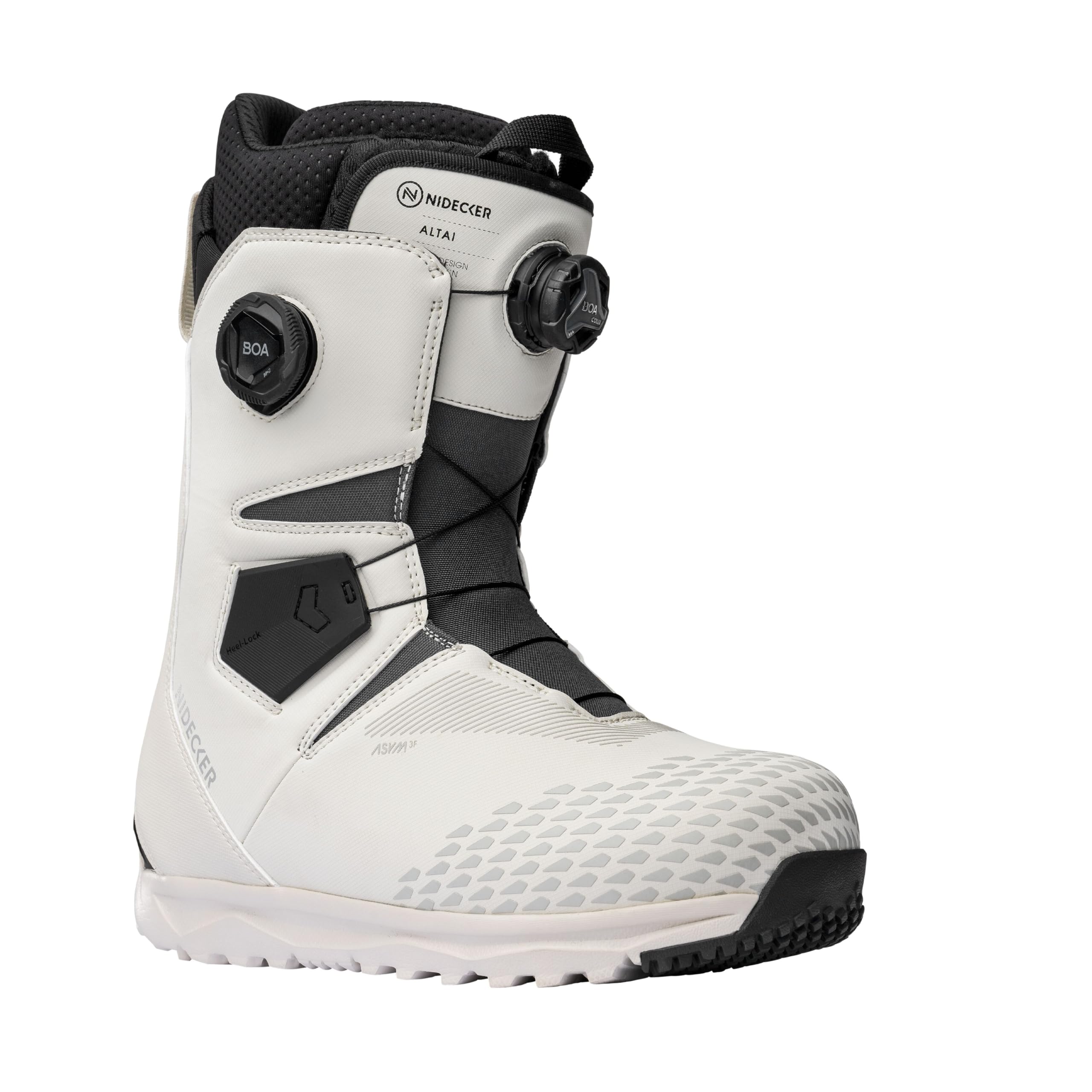
The Nidecker Altai is a snowboard boot, not an alpine ski boot, but it is included here because some mountain riders cross-train or share gear. Its dual BOA closure system allows independent tension control over the lower and upper zones, giving you precise heel hold without overtightening the forefoot. The Vibram outsole provides outstanding traction on icy parking lots and catwalks — a real safety plus.
The 3D molded lasted toe box and tongue create a snug anatomical fit that improves with heat molding. The silver liner includes antimicrobial properties to reduce odor, and the articulating flex zone makes the boot feel more natural when walking. Reviewers consistently praised the comfort straight out of the box and noted that after heat molding, the fit felt custom.
This boot is not compatible with alpine ski bindings — it is designed exclusively for snowboard bindings. If you are strictly an alpine skier, you should skip this product. For the snowboarder who wants a premium, supportive boot with a proven lacing system, the Altai is a strong choice, but it does not belong in an alpine ski boot discussion.
Why it’s great
- Dual BOA system delivers precise, independent fit control
- Vibram outsole offers excellent traction on slick surfaces
- Heat-moldable liner molds to the foot for a custom feel
Good to know
- Designed for snowboard bindings, not alpine ski bindings
- Not a relevant option for alpine skiers
FAQ
Should I buy ski boots that are one size larger for comfort?
What does the 104mm last number actually mean for my foot?
Can I walk normally in alpine ski boots with GripWalk soles?
How long should a set of quality alpine ski boots last?
Final Thoughts: The Verdict
For most users, the alpine ski boots winner is the Fischer RC One 8.5 because its flex 85 offers the best balance of precision and forgiveness for intermediate to advanced skiers, and the heat-moldable liner provides a custom fit without a premium price. If you want an easy entry system and plush comfort for all-day groomer laps, grab the K2 BFC 80. And for a wide-foot-friendly boot at an entry-level investment, nothing beats the Nordica The Cruise.