
Our readers keep the lights on and the weekend projects moving. As an Amazon Associate, I earn from qualifying purchases.
Basil seeds are not your average pantry spice—they are edible gelatinous super seeds used for centuries in Ayurveda and Southeast Asian cuisine. When soaked, they swell into a translucent gel prized for its cooling effect, high fiber content, and ability to stabilize blood sugar.
I’m Rikta — the founder and writer behind FitlyFast. I spend my time analyzing nutritional label claims, comparing lab-test fiber profiles, and sorting through dozens of basil seed sources to find the ones that actually deliver on their purity and swelling ratio.
Whether you are after a natural body coolant for summer or a high-fiber prebiotic for your smoothie bowl, this guide cuts through the noise to help you find the best basil seeds for your specific needs.
How To Choose The Best Basil Seeds
Basil seeds come in two completely different categories: edible “sabja” seeds for drinks and desserts, and garden seeds for growing basil plants or microgreens. Knowing which one you need is step one. Step two involves checking purity, origin, and fiber density.
Edible vs. Sprouting Seeds
Edible basil seeds (often labelled Sabja, Tukmaria, or Falooda seeds) are harvested specifically for human consumption. They swell into a gel within minutes and are neutral in flavor. Garden or microgreen basil seeds, by contrast, are treated to germinate in soil or a sprouting tray — they are not meant to be eaten dry or soaked for drinks.
Fiber Content and Swelling Ratio
The most reliable measure of quality in edible basil seeds is their soluble fiber content. Premium seeds deliver 10-15g of fiber per two-tablespoon serving and will expand to many times their dry volume within 5-20 minutes of soaking. A weak swelling ratio indicates old or adulterated seeds.
Certifications and Purity
For edible seeds, look for Non-GMO, Halal, Kosher, or GMP (Good Manufacturing Practice) certification. These third-party marks verify the seeds are free of additives, preservatives, and pesticide residues. For garden seeds, organic certification from USDA or Oregon Tilth ensures no synthetic chemicals were used during growth.
Quick Comparison
On smaller screens, swipe sideways to see the full table.
| Model | Category | Best For | Key Spec | Amazon |
|---|---|---|---|---|
| Zen Basil Seeds | Edible | High-fiber daily supplement | 15g fiber per serving | Amazon |
| Holy Natural’s Basil Seeds | Edible | Ayurvedic cooling drinks | 16 oz bulk value | Amazon |
| Dirt Goddess Genovese Basil | Garden | Growing full basil plants | Mycorrhizae-fortified | Amazon |
| Mountain Valley Genovese Basil | Microgreen | Indoor microgreen growing | 64,000 seeds (4 oz) | Amazon |
| Seedboy Organic Salad Blend | Sprouting Mix | Mixed sprout blends | Alfalfa, broccoli, radish, mung bean, lentil | Amazon |
| Nature Jims Radish Sprout | Sprouting | Spicy microgreen toppings | USDA Organic, 16 oz | Amazon |
| Sereniseed Organic Salad Mix | Sprouting Mix | Fast-sprouting salad blend | Alfalfa, radish, broccoli, clover | Amazon |
In‑Depth Reviews
1. Zen Basil Seeds
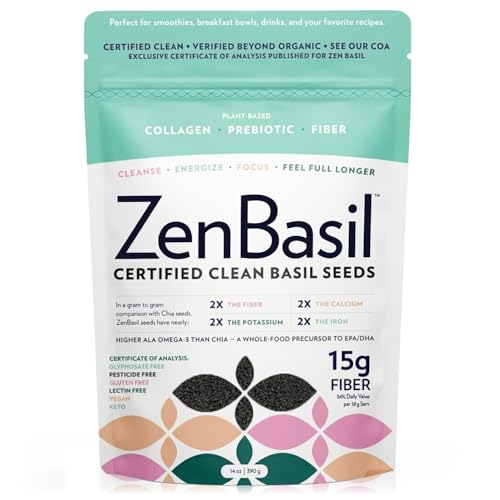
Zen Basil Seeds are the clear front-runner for anyone replacing chia with a higher-fiber alternative. Each two-tablespoon serving delivers 15g of fiber — nearly double what the same volume of chia provides — backed by confirmed lab results for potassium, calcium, and iron levels. The seeds swell quickly in water or any liquid, forming a clean gel with no bitter aftertaste.
Users consistently report that these seeds integrate seamlessly into oatmeal, yogurt, smoothies, and even baked goods without altering flavor. The 14-ounce bag is packed in California under kosher certification, making it a reliable choice for those following a keto, paleo, or vegan diet. The resealable bag helps maintain freshness between uses.
Reviewers specifically note the convenience of adding one tablespoon to a protein shake for a steady energy boost that lasts for hours. The neutral taste is a major advantage — no “basil” flavor intrudes into your morning coffee or post-workout drink.
Why it’s great
- Highest fiber content per gram in the lineup (15g per serving)
- Neutral flavor works in any drink or meal
- Kosher certified and packed domestically
Good to know
- 14 oz bag is smaller than some bulk edible options
- Gel can thicken a drink very quickly if left too long
2. Holy Natural’s Basil Seeds

Holy Natural’s Basil Seeds are the go-to for traditional falooda, rose milk, and nimbu pani drinks. These seeds are labeled as 100% pure with no additives or preservatives, and they are produced in a GMP-certified facility. The bag contains a full 16 ounces — equivalent to one pound — making it a strong value for heavy daily users.
Customers report that the seeds expand noticeably within 1-2 minutes of soaking, creating a satisfying pop when chewed. Many use this product as a body coolant during hot months, mixing two teaspoons into coconut water or lemonade. The seeds also pair well with yogurt for a high-fiber, hydration-focused meal during intermittent fasting.
Ayurvedic users will appreciate that the product is marketed specifically to reduce body heat and support blood sugar management. The bulk sizing is ideal for families or anyone who uses basil seeds in multiple recipes throughout the week.
Why it’s great
- Large 16 oz bulk bag for extended use
- Gel forms in 1-2 minutes for quick prep
- Non-GMO and Halal certified
Good to know
- Not kosher certified; labeled as Halal only
- Some users may find the pop texture unusual
3. Dirt Goddess Genovese Basil Seeds
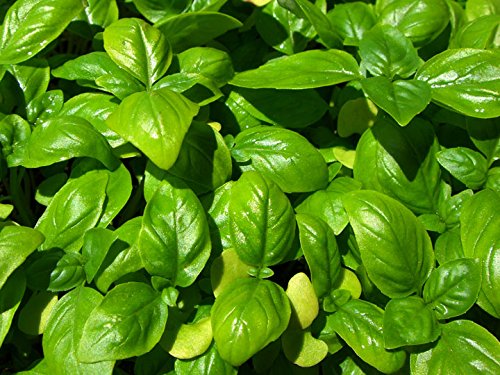
Dirt Goddess Super Seeds sets itself apart from other garden basil seeds by fortifying each pound with mycorrhizae — beneficial fungi that naturally increase nutrient uptake, drought tolerance, and overall plant vigor. This is a major advantage for outdoor growers who want stronger plants without synthetic fertilizers. The seeds are heirloom, open-pollinated, and non-GMO.
Customer reviews consistently praise the germination rate, with several noting that nearly every seed sprouted successfully. The 1-pound bulk bag is a solid option for anyone planning a large garden patch, school projects, or community planting events. The seed variety is Genovese basil, the classic Italian culinary basil known for large, aromatic leaves.
Some users reported that the leaves grew smaller than typical Genovese basil, but the overall germination and plant health were still excellent. The mycorrhizae additive makes this a unique choice for gardeners who want a biological head start.
Why it’s great
- Mycorrhizae fortification for superior root growth
- Massive 1 lb bulk bag at a reasonable per-ounce cost
- Heirloom, open-pollinated, and non-GMO
Good to know
- Not certified organic; mycorrhizae is natural but not a USDA label
- Leaves may be slightly smaller than other Genovese strains
4. Mountain Valley Genovese Basil Microgreen Seeds
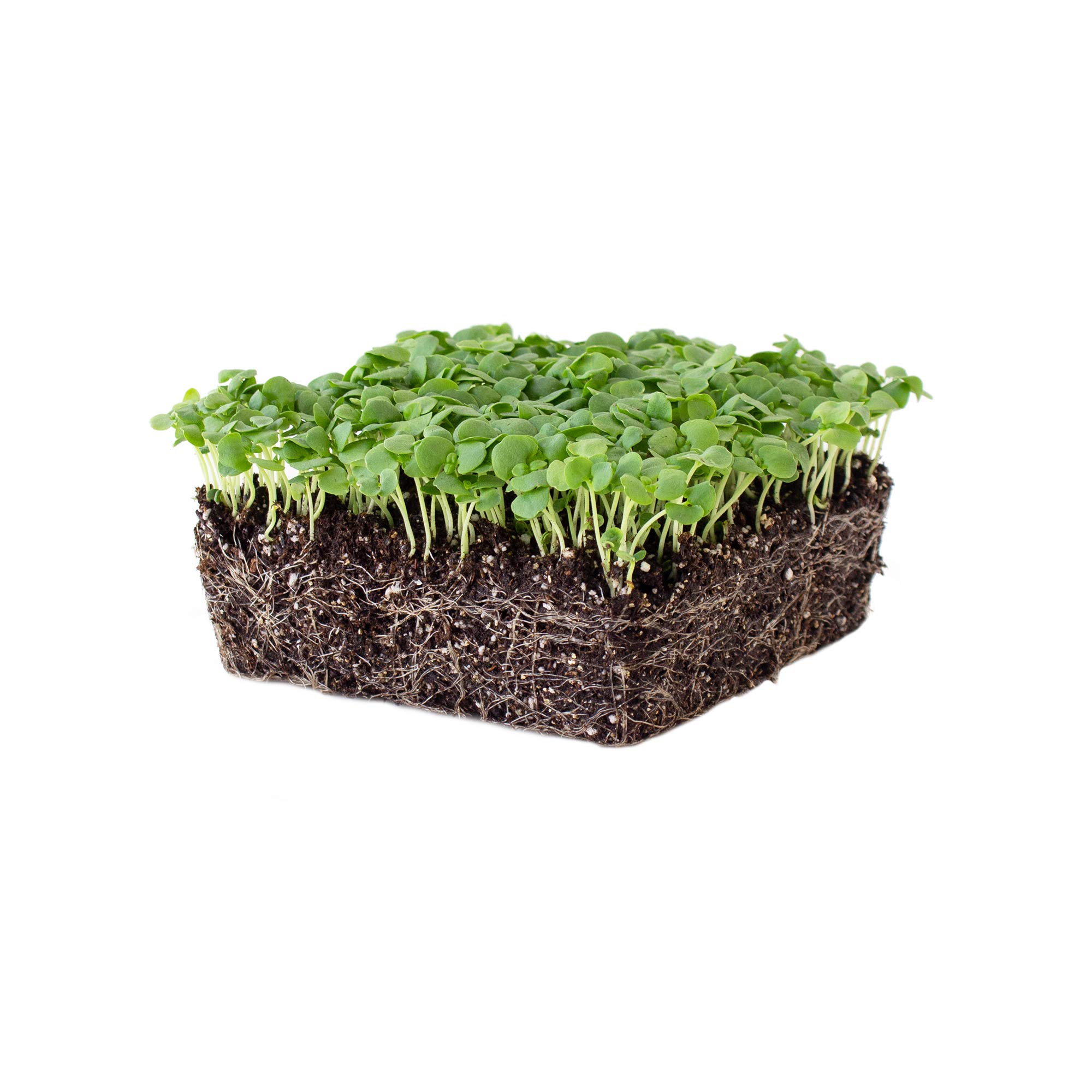
The Mountain Valley Seed Company offers a staggering 64,000 seeds in a single 4-ounce pouch. This is a microgreen-specific seed meant for indoor tray growing. The Genovese variety produces classic peppery basil flavor in sprout form, with reviews noting that the seeds sprout reliably within 2-3 days under proper damp conditions.
A clever trick shared by users is to line a sprouting jar with a coffee filter to prevent the tiny seeds from slipping through standard mesh lids. The high seed count makes this ideal for continuous microgreen production — you can stagger trays and harvest every week. The seeds are non-GMO and specifically tested for high germination rates.
Not all customers had a perfect experience — a small number reported poor germination across multiple trays. However, the majority of verified reviews confirm vigorous growth and intense basil flavor. This is the right choice if your goal is basil microgreens rather than edible seeds for drinks.
Why it’s great
- Enormous seed count (64,000) for the price
- Fast germination for microgreen production
- Non-GMO with clear indoor care instructions
Good to know
- Seeds are tiny and require a coffee filter in sprouters
- Occasional reports of inconsistent germination rates
5. Seedboy Organic Non-GMO Sprouting Seeds, Fresh Salad Blend
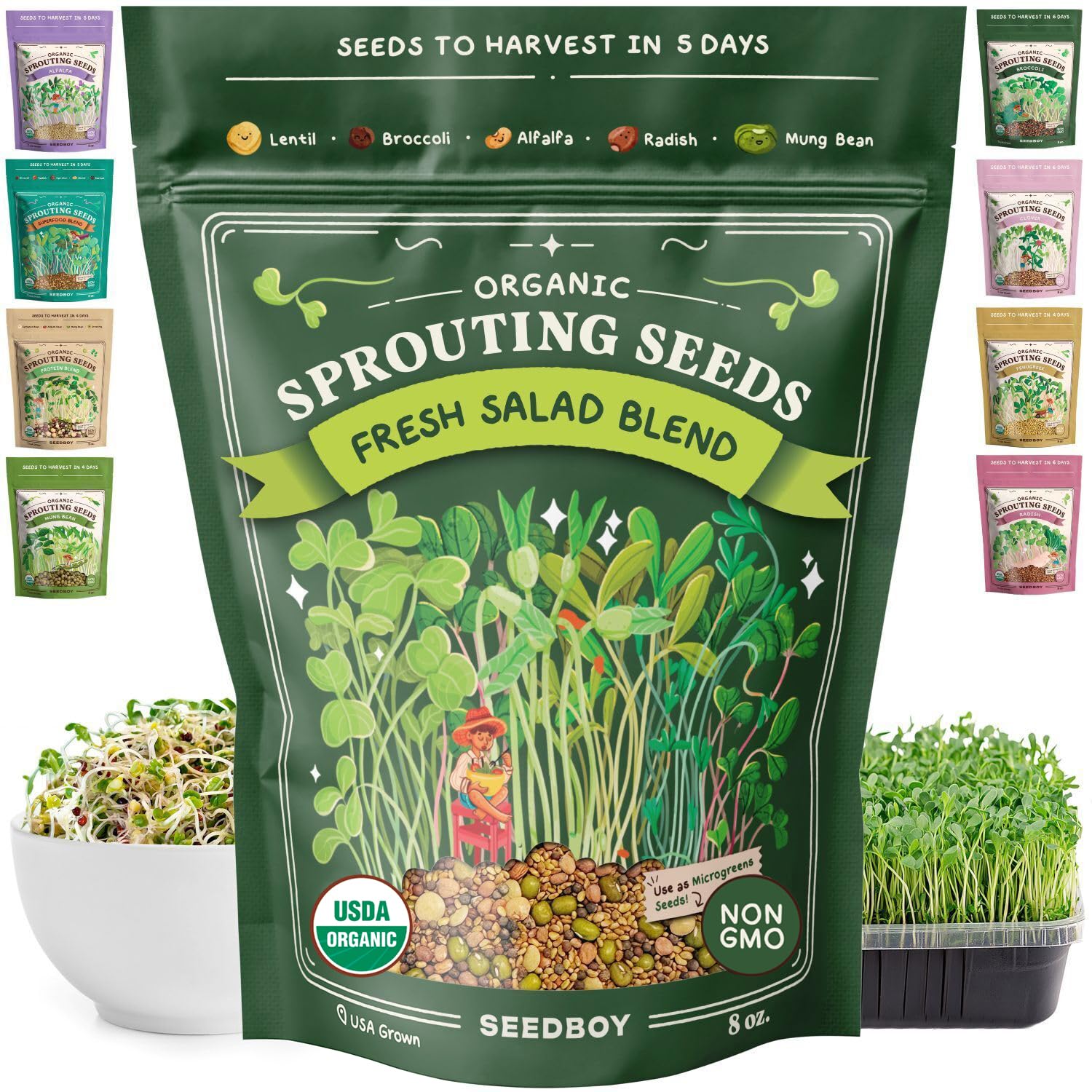
Seedboy’s Organic Salad Blend combines alfalfa, broccoli, radish, mung bean, and lentil seeds into a single 8-ounce bag that yields about 8 quarts of sprouts. It is USDA Certified Organic by OTCO and grown entirely in the USA. The blend is designed to produce a variety of textures and mild-to-spicy flavors that shift depending on when you harvest — 4-5 days for a milder crunch, 6-7 days for more spice.
Beginner-friendly instructions are included: soak for 6-8 hours, rinse twice daily, and harvest in under a week. Reviews from first-time growers confirm that the process is simple enough for a 10-year-old to manage alone. The germination rate consistently exceeds 90%, and the resulting mix is far more filling than store-bought alternatives.
The 8 oz bag provides enough seeds for 32 servings, making it an economical choice for households that want a steady rotation of fresh sprouts without spending on weekly produce. The eco-friendly bag is also resealable.
Why it’s great
- Five-seed blend for complex texture and flavor
- USDA Organic and USA grown
- Harvest window flexibility for mild or spicy taste
Good to know
- Does not include a sprouting jar — sold separately
- Some seeds (mung bean) require slightly longer soaking
6. Nature Jims Organic Radish Sprout Seeds
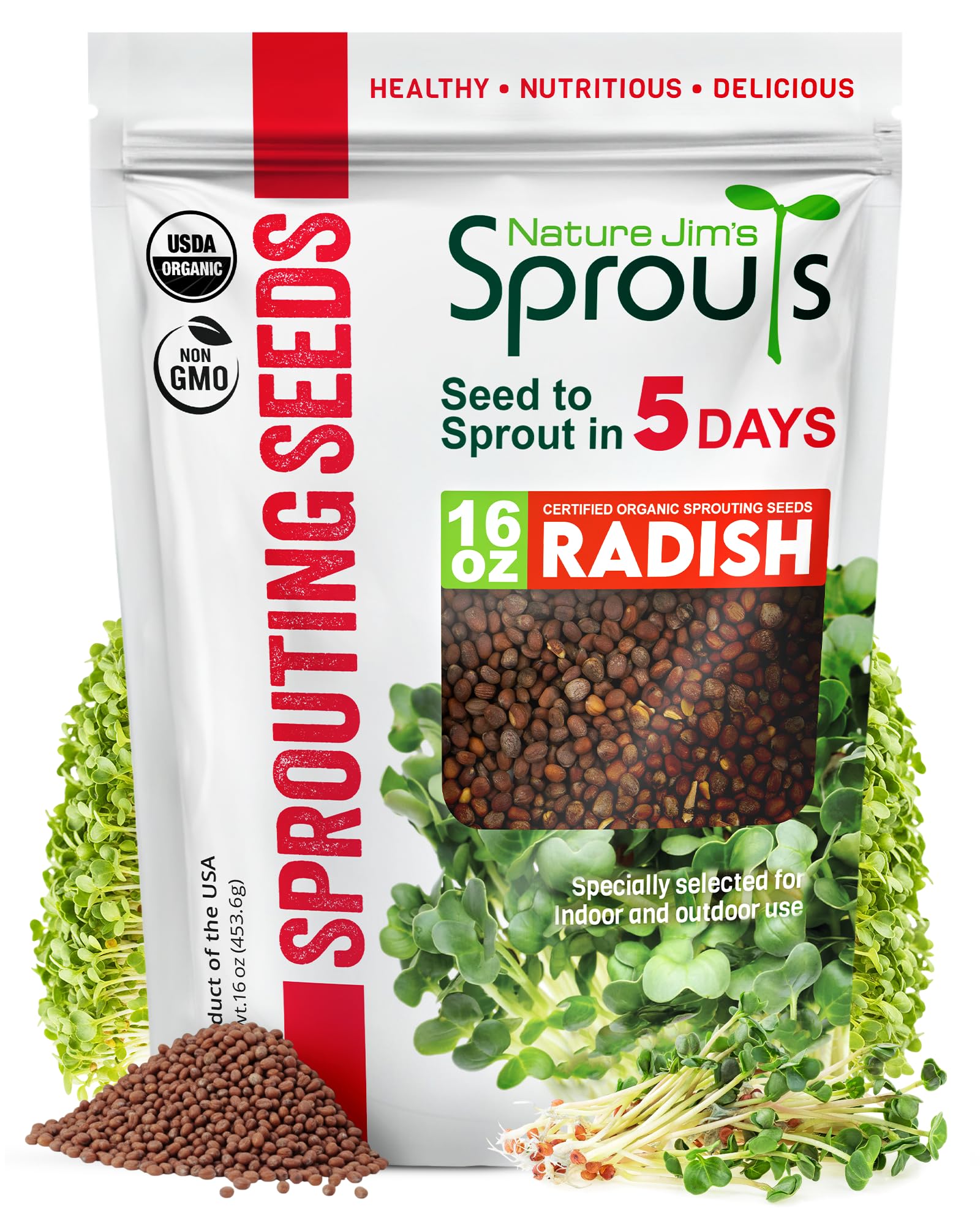
Nature Jims focuses on one thing and does it well: radish sprout seeds. This 16-ounce bag is USDA Organic, non-GMO, and free from preservatives. The seeds produce a daikon-type radish sprout that develops a characteristic spicy kick by day 5. The resealable bag uses secure-seal technology to keep seeds viable between uses.
Germination is fast and aggressive — users report seeing signs of life after just the first rinse. The sprouts are crunchy and flavorful, adding a peppery crunch to sandwiches, tacos, and salads. Many reviewers mention that the 16-ounce bag lasts for several months even with weekly sprouting cycles.
A notable detail is the strong, appealing aroma that fills the sprouting area — a sign of freshness. The daikon radish variety is also known for its enzyme content, which some users find aids digestion. This is not a mixed blend, so choose it only if you specifically want radish sprouts.
Why it’s great
- Exceptional germination speed (visible after first rinse)
- USDA Organic and non-GMO in a bulk 16 oz bag
- Spicy flavor that intensifies over several days
Good to know
- Single-variety — no blend for those who prefer mixed sprouts
- Spiciness may be too strong for some palates
7. Sereniseed Organic Salad Mix Sprout Seeds
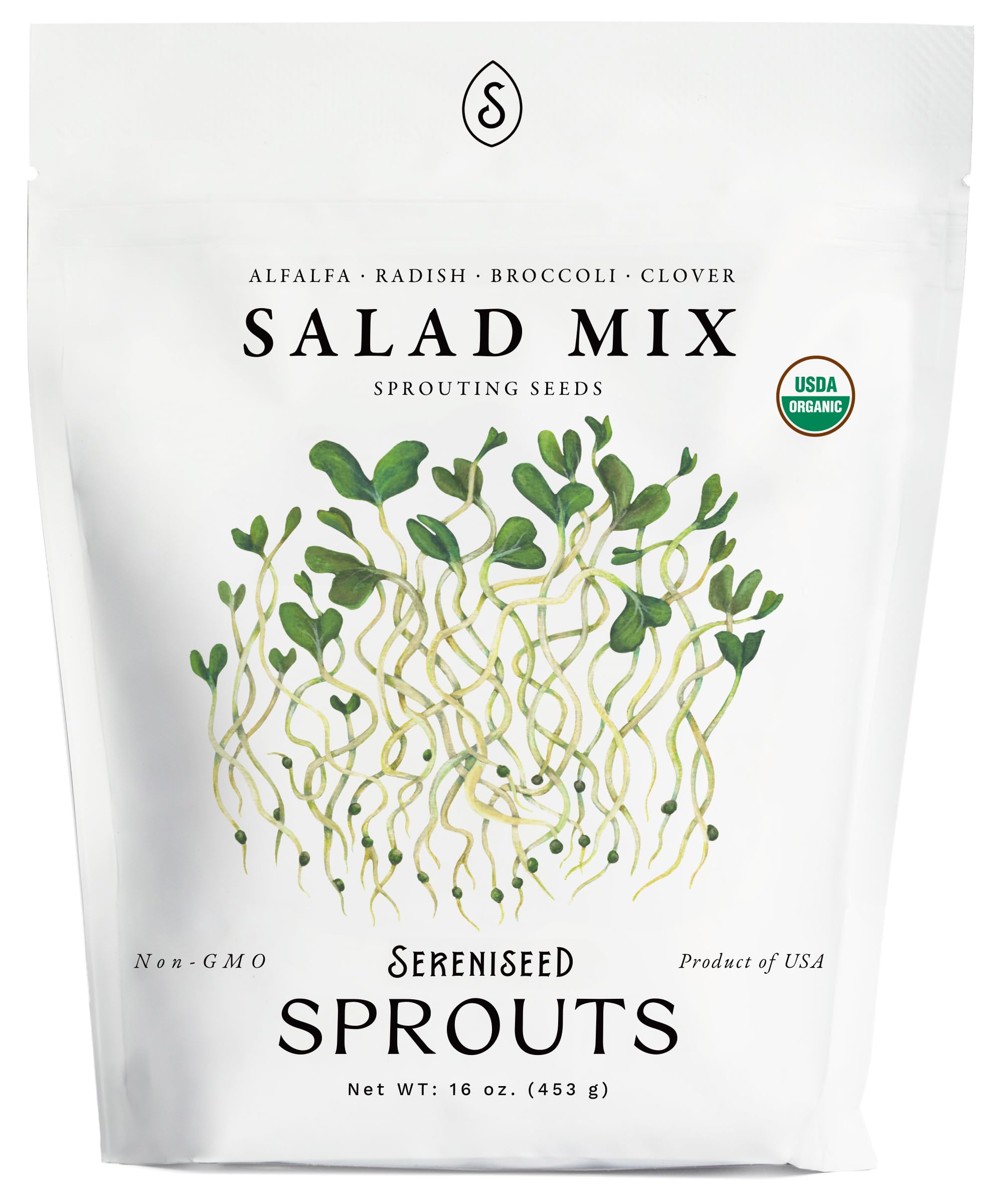
Sereniseed delivers a carefully balanced mix of alfalfa, radish, broccoli, and clover seeds in a 16-ounce bag. The seeds are certified organic by Oregon Tilth, non-GMO, open-pollinated, and tested for pathogens before packing. The company stores its bulk seeds in a climate-controlled walk-in cooler to maintain optimal germination rates year-round.
Customer feedback highlights the speed of sprouting — sprouts appear in as little as 2 days, faster than many competing blends. The flavor is vibrant and works well in sandwiches with homemade tzatziki. The broccoli component provides a source of sulforaphane, while alfalfa and clover contribute a milder base flavor.
One important note: the radish portion of the blend can cause heartburn if eaten in large quantities alone. Mixed into a meal, the spiciness adds depth without overwhelming. The germination guarantee adds peace of mind for first-time sprouters.
Why it’s great
- Fastest sprouting in the lineup (2 days)
- Oregon Tilth certified organic with pathogen testing
- Climate-controlled storage for high germination rates
Good to know
- Radish content can be spicy and cause heartburn if overeaten
- Blend contains clover — not for those avoiding legume sprouts
FAQ
Can I eat garden basil seeds the same way as edible sabja seeds?
How much fiber do basil seeds really contain compared to chia?
What is the best way to store opened basil seeds?
Do basil seeds need to be soaked before eating?
Final Thoughts: The Verdict
For most users, the best basil seeds winner is the Zen Basil Seeds because it delivers the highest fiber content per serving with a neutral flavor and kosher certification. If you want an Ayurvedic body coolant in bulk for traditional drinks, grab the Holy Natural’s Basil Seeds. And for growing your own Genovese basil plants with a biological boost, nothing beats the Dirt Goddess Super Seeds.