
Our readers keep the lights on and the weekend projects moving. As an Amazon Associate, I earn from qualifying purchases.
The first step to linking turns without pain is locking your heel into the pocket of a boot that flexes with your shins, not against them. A beginner snowboard boot needs a soft to medium flex rating so you can feel the board’s edge without fighting a stiff shell, plus a lacing system you can tweak on the chairlift without removing your gloves.
I’m Rikta — the founder and writer behind FitlyFast. I’ve spent years analyzing snowboard boot geometry, liner materials, and closure mechanisms to match new riders with gear that shortens the learning curve and prevents hot spots.
Whether you rent your first pair or buy your own, selecting the right beginner snowboard boots determines how quickly your feet adapt to toe-side turns and edge control without numbness or heel lift.
How To Choose The Best Beginner Snowboard Boots
Snowboard boots are the only direct connection between your body and the board. A poor fit leads to sloppy turns, foot pain, and a frustrating day on the mountain. Beginners benefit most from a soft-to-medium flex, simple closure systems, and a forgiving liner that packs out to match their foot shape over a few sessions.
Flex Rating — The Backbone of Control
Rated 1 (softest) to 10 (stiffest), a flex rating between 2 and 5 suits new riders perfectly. Soft flex allows you to bend your ankles naturally when shifting weight to the toe edge. Stiffer boots respond faster but punish small mistakes with oversteer. Look for a stated flex of 3 or 4 on the spec sheet — that sweet spot balances feedback and forgiveness.
Closure System — Ease of Use vs. Precision
Single-zone BOA dials let you tighten the entire boot with a single twist, ideal for quick adjustments. Dual-zone BOA separates upper and lower tension for a more precise fit. Traditional laces offer the cheapest entry point but require more effort to cinch evenly. Speed-lace systems with a single pull lock are a middle ground. Beginners who ride cold mornings benefit from BOA because frozen fingers struggle with laces.
Liner and Heel Hold
The liner determines how warmth and comfort scale over a full day. Foam liners pack out quickly but feel soft from day one. Heat-moldable liners, like the Imprint 1+ in the Burton Moto, adapt to your specific ankle bones and reduce pressure points. Internal J-bars (rubber wings behind the ankle) lock your heel in place during toe-side turns, preventing lift that kills edge control.
Quick Comparison
On smaller screens, swipe sideways to see the full table.
| Model | Category | Best For | Key Spec | Amazon |
|---|---|---|---|---|
| K2 Raider Men’s | Mid-Range | Everyday progression | Intuition Comfort Foam 3D Liner | Amazon |
| DC Control BOA | Premium | Customizable dual-zone fit | Dual BOA H4 Coiler Dials | Amazon |
| Burton Moto BOA | Premium | Instant out-of-box comfort | Imprint 1+ Heat-Moldable Liner | Amazon |
| ThirtyTwo Lashed Double BOA | Premium | Dual-zone adjustability | Dual BOA lacing system | Amazon |
| Nidecker Altai | Premium | All-mountain with heel lock | Vibram Traction Sole | Amazon |
| DC Phase BOA | Mid-Range | Wide-foot compatibility | Flex Rating 4/10 | Amazon |
| ThirtyTwo Shifty | Mid-Range | Lightweight all-day ride | Soft flex for park riding | Amazon |
| K2 Market | Budget | Budget-friendly quality | H4 BOA Focus Fit System | Amazon |
| 5th Element ST Lace & Dial | Budget | Hybrid lace/dial control | ATOP Dial Lacing System | Amazon |
In‑Depth Reviews
1. K2 Raider Men’s Snowboard Boots
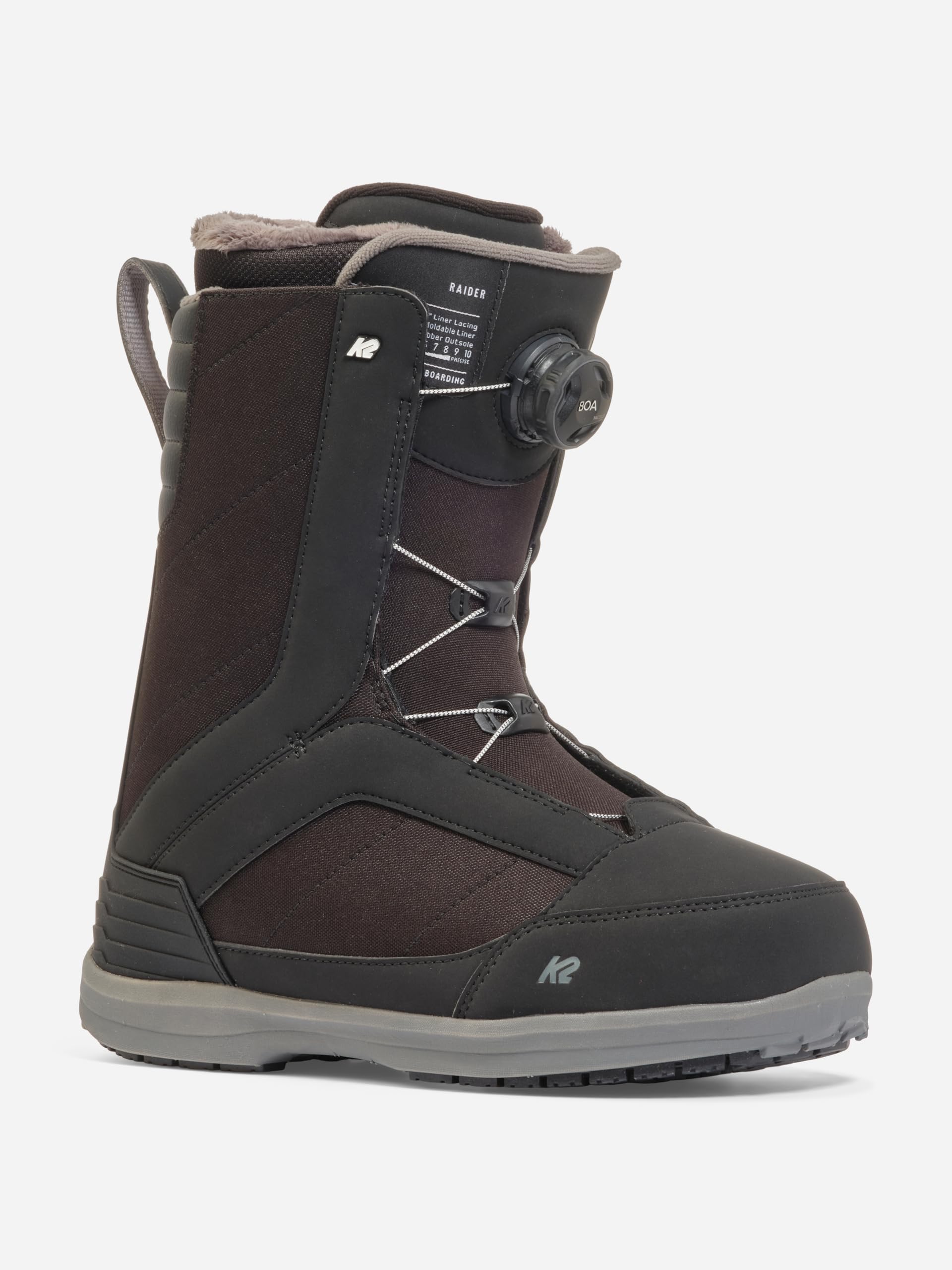
The K2 Raider sits squarely in the sweet spot for a new rider who wants to progress through an entire season without outgrowing the boot’s capabilities. It pairs a soft flex rating with the H4 Coiler BOA system, so you can tighten the shell with one gloved hand on the lift. The Intuition Comfort Foam 3D liner conforms to your foot shape over the first three to five sessions, reducing the need for a painful break-in period.
Internal J-bars behind the ankle are a standout feature at this tier — they grip the heel pocket and minimize lift during toe-side turns, which is the single most common frustration for beginners learning edge control. The Flex Zone upper cuff adds articulation, so you don’t feel locked into a rigid position while walking in the parking lot or traversing flats. Reviewers note the sizing runs true to street shoe size, a relief for first-time buyers who worry about the half-size gap.
The nylon outer shell keeps weight low at roughly one pound per boot, reducing leg fatigue during a full day lapping greens and blues. Some riders on the narrower side of average might find the toe box slightly roomy, but that extra volume leaves space for a thicker thermal sock without compressing circulation. The Raider justifies the mid-range investment by blending a proven BOA dial with a liner that actually packs out rather than collapsing.
Why it’s great
- Intuition foam liner molds quickly for a custom-like fit without heat molding
- BOA dial with Coiler spool provides smooth, even tension across the instep
- Internal J-bars lock the heel effectively for stable toe-side turns
Good to know
- Toe box may feel slightly wide for narrow-footed riders
- Flex is on the softer end; aggressive intermediates may want stiffer response later
2. DC Control BOA Snowboard Boots
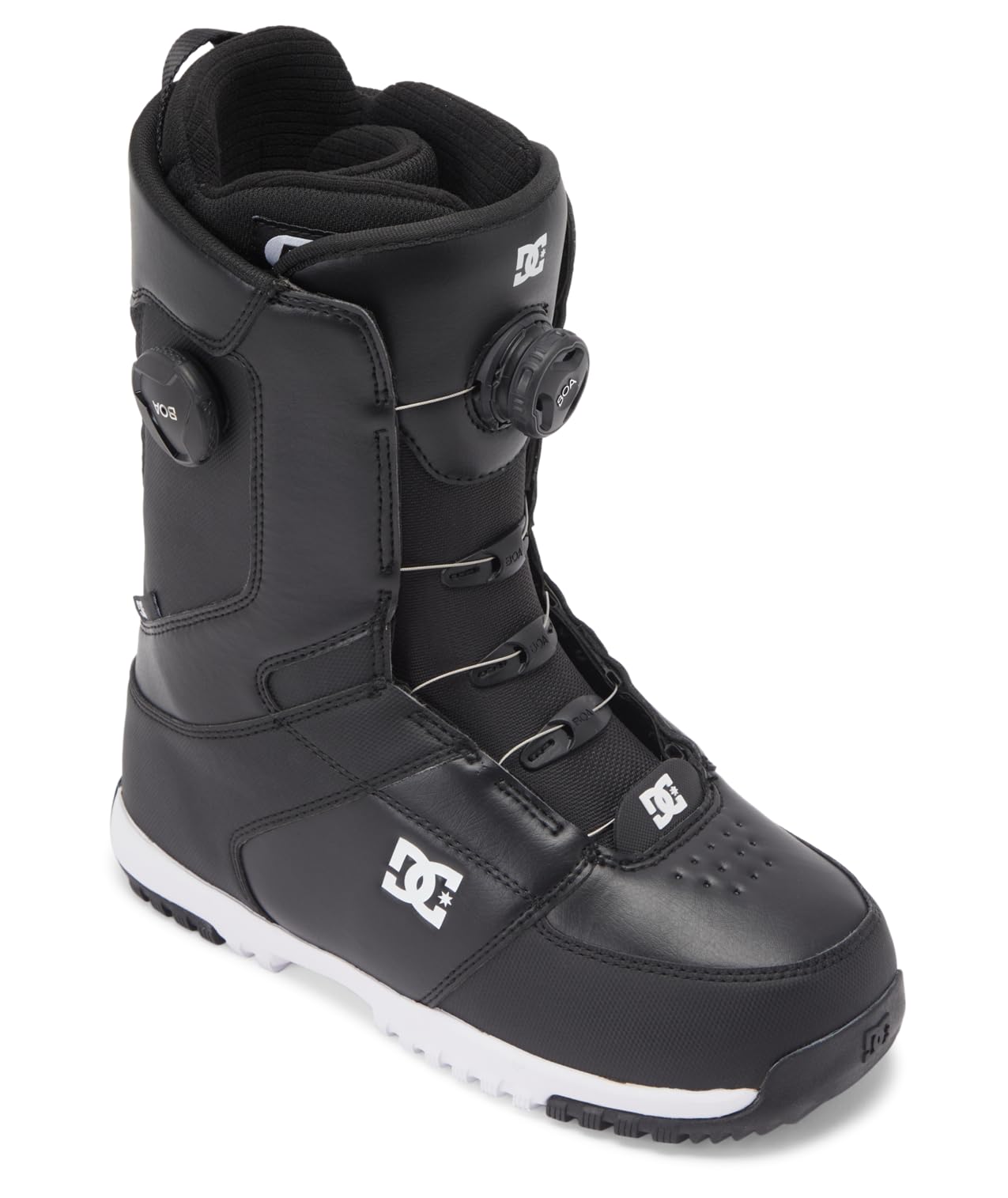
The DC Control BOA takes the guesswork out of tension distribution by splitting the BOA Fit System into two separate H4 Coiler dials — one for the lower foot and one for the upper cuff. This dual-zone architecture lets a beginner set the forefoot snug without crushing the instep, then independently lock the ankle for heel hold. The medium flex rating of 4 out of 10 offers enough stiffness to transition to carving while remaining forgiving during skidded turns.
Response Liner II wraps the foot with a multi-layer construction that includes latex J-bars and a 360-degree power strap inside the shell. That power strap wraps over the liner’s tongue before the outer shell closes, creating a unified flex that eliminates the sloppy micro-movements that cause shin bang. The molded IMPACT-ALG insole incorporates a structured arch support and heel cup, which helps riders who pronate maintain a neutral stance on the board.
The UniLite outsole keeps the boot light at 5.3 pounds per pair while providing enough rubber texture for icy parking lot walks. A few reviewers noted the sizing runs slightly smaller than marked — ordering a half size up from your street shoe is a safe strategy. The dual-dial system adds complexity over a single BOA, but the payoff in tailored fit makes this a logical step-up for someone who plans to ride more than ten days a season.
Why it’s great
- Dual-zone BOA lets you micro-tune lower and upper fit independently
- IMPACT-ALG insole provides proper arch support for flat feet
- Latex J-bars and power strap deliver excellent heel lock without pressure points
Good to know
- Sizing runs small; order a half size larger than your normal shoe
- Two dials take an extra chairlift ride to memorize compared to a single BOA
3. Burton Moto BOA Mens Snowboard Boots
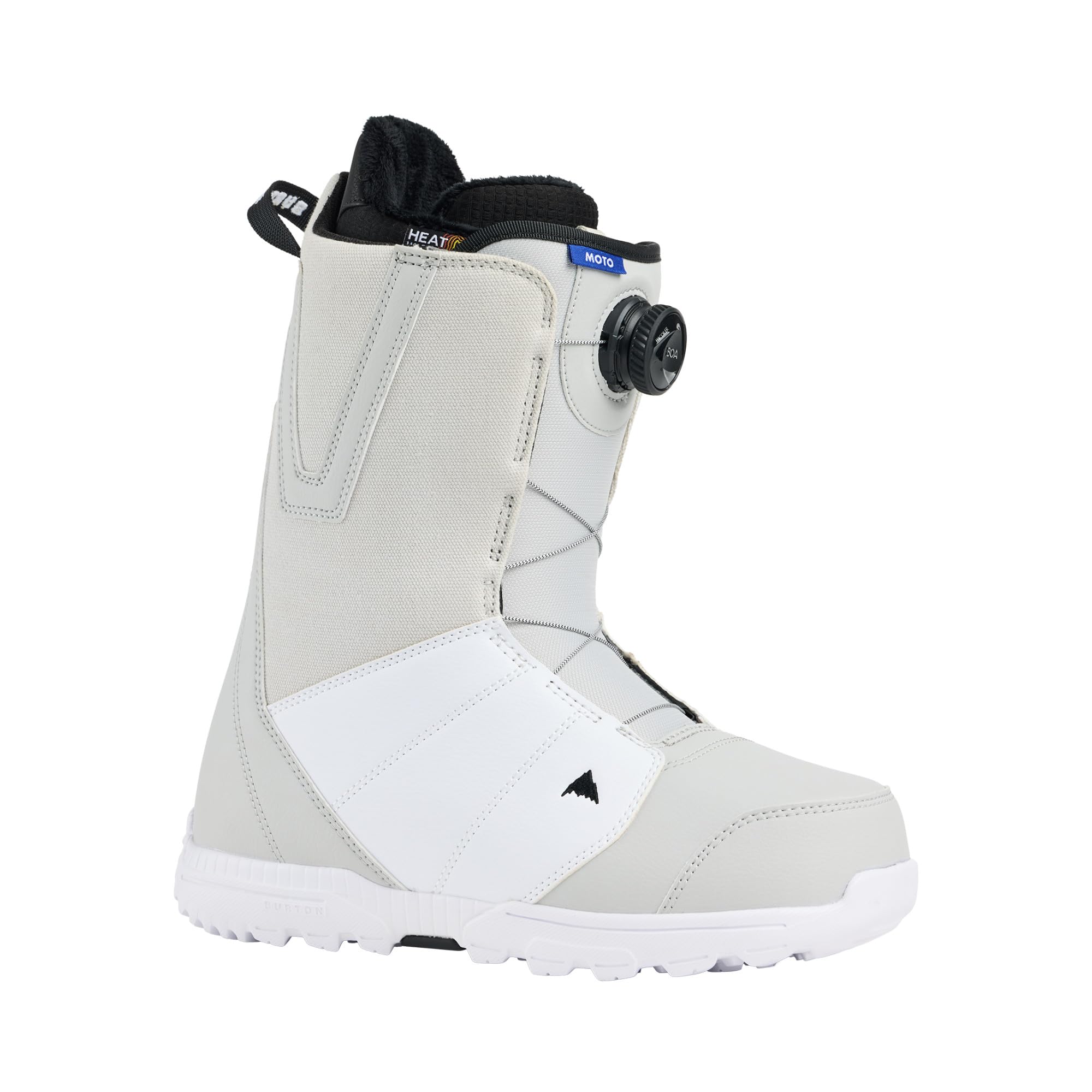
Burton’s Total Comfort Construction means the Moto BOA delivers a broken-in feel straight out of the box, a major advantage for beginners who cannot afford a painful multi-day break-in window. The single-zone BOA system routes laces through an inner spool that pulls evenly across the instep and ankle in one motion. Pair that with the Imprint 1+ heat-moldable liner, and you can customize the fit around your ankle bones after a short session with a boot dryer or a shop’s heat gun.
The DynoLITE outsole provides noticeable cushioning for heel-heavy landings on flat boxes or groomers, while the Shrinkage footbed reduces toe drag by shortening the boot’s effective length at the toe cap — a clever detail for riders between sizes. A snow-proof internal gusset seals the lower zone of the boot, keeping slush and moisture out during wet spring days. The flex rating lands on the softer side, which is ideal for learning but may feel loose for riders over 180 pounds charging harder terrain.
Reviewers with wide feet consistently praise the Moto’s accommodating forefoot volume. The sleeping bag reflective foil under the footbed adds noticeable warmth retention, extending your riding day past the point where cheaper boots chill through the sole. The one-year warranty covers manufacturing defects, though the Moto’s reputation for durability commonly extends across multiple seasons with normal use.
Why it’s great
- Total Comfort Construction eliminates the break-in period entirely
- Heat-moldable Imprint 1+ liner adapts to unique foot shapes
- DynoLITE outsole absorbs impact well for park and groomer riding
Good to know
- Soft flex may feel undersized for heavier riders pushing speeds
- Single-zone BOA cannot tension upper and lower independently
4. ThirtyTwo Lashed Double Boa Snowboard Boots
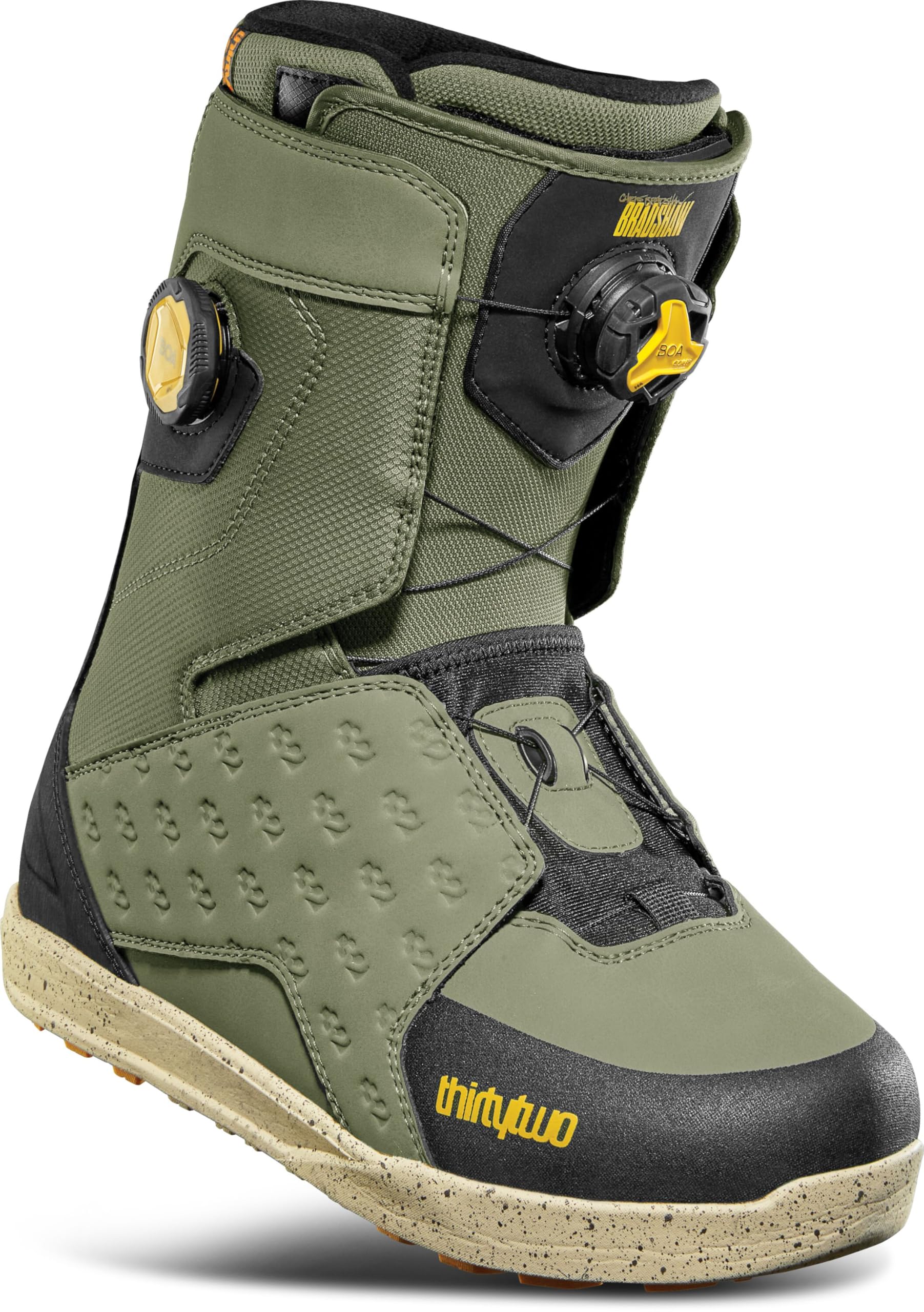
ThirtyTwo’s Lashed Double BOA brings a performance-grade dual-zone lacing system into the beginner conversation, offering a level of fit precision that single-dial boots cannot match. The standalone upper and lower dials let you set the forefoot snug without crushing the shin area, then independently adjust the upper cuff for calf pressure — a game-changer for riders with skinny calves who struggle with heel lift in standard boots. The flex rating is medium-soft, rated around 3.5 to 4, keeping it approachable for new riders while offering enough backbone for early carving attempts.
The double Velcro strap on the inner liner’s tongue locks everything in place before the outer shell even closes, reducing micro-shifts that cause blisters over a full day. Multiple reviews highlight that the boot runs a half to full size smaller than marked, so ordering up from your street shoe is strongly recommended. The thicker inner boot provides extra padding around the calf and shin, which adds warmth and dampens vibration from chatter on hardpack snow.
At roughly 4.8 pounds per boot, the Lashed strikes a balance between durability and mobility. The outsole rubber is grippy enough for icy stair climbs at the lodge, and the stitching across high-stress zones like the ankle flex area holds up well against repeated lace tension. Some riders note minor heel slip even after the liner packs out, which can be mitigated with adhesive heel pads or a thin insole upgrade.
Why it’s great
- Independent upper and lower BOA dials deliver precise zone-specific tension
- Thick inner boot adds warmth and shin protection for cold days
- Velcro tongue strap on liner stabilizes fit before shell closure
Good to know
- Sizing runs small; order a full size larger than your street shoe
- Some users report minor heel slip after the liner packs out
5. Nidecker Altai Men’s Snowboard Boots
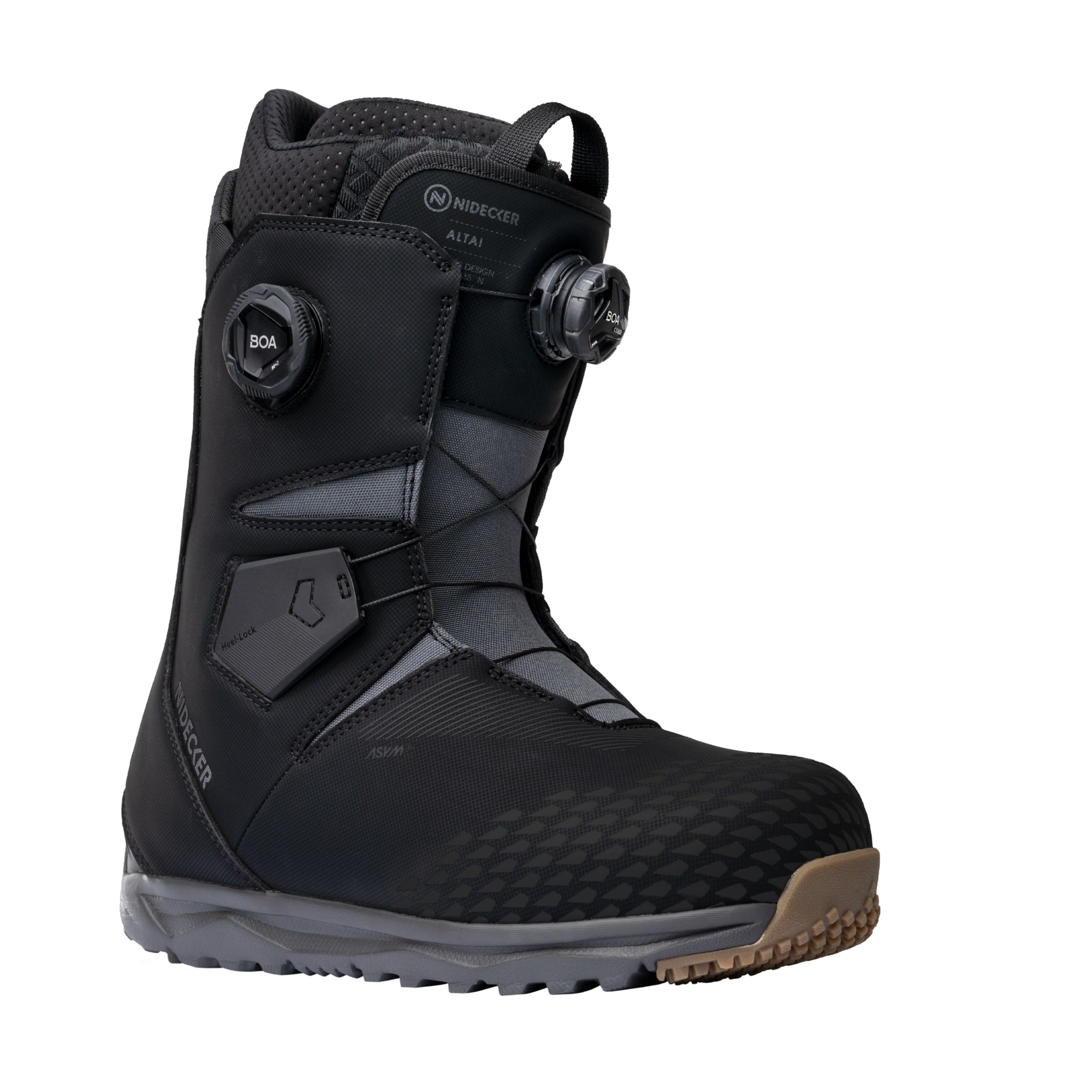
The Nidecker Altai stands apart from the typical beginner boot by pairing a dual BOA closure with a Vibram rubber outsole, a feature usually reserved for premium backcountry boots. The Vibram tread provides exceptional traction on icy walkways and sketchy boot packs, giving new riders confidence when they step out of bindings to hike a side hit. The 3D molded lasted toe box and tongue reduce internal seam pressure, so the boot feels nearly seamless against the foot from the first wear.
The medium-stiff flex rating — closer to a 5 out of 10 — offers more response than the softest options on this list, making the Altai a strong choice for a beginner who learns quickly and wants a boot that won’t feel too loose by mid-season. The Articulating Flex Zone allows the shell to move naturally with the ankle joint during lateral flex, which reduces calf fatigue during long groomer runs. Reviewers consistently note that the boot improves significantly after a heat-molding session at a local shop, transforming from a snug fit to a near-custom shell.
One trade-off is the weight: at 6.2 pounds per pair, the Altai is noticeably heavier than the K2 Raider or Burton Moto. That added mass comes from the denser Vibram sole and reinforced heel cup, which translates to a more planted feel on the board. Riders with narrow feet may find the forefoot too voluminous, but the asymmetrical lacing helps cinch down excess material. For a beginner who values traction and durability over absolute lightness, the Altai delivers a shelf life that extends well into intermediate riding.
Why it’s great
- Vibram outsole offers superior grip on ice and mixed terrain
- Medium-stiff flex supports progression into carving and all-mountain riding
- 3D molded internal construction reduces pressure points during long days
Good to know
- Heavier than comparable boots at roughly 6.2 pounds per pair
- Wide forefoot may not suit narrow-footed riders without extra socks
6. DC Phase BOA Snowboard Boots
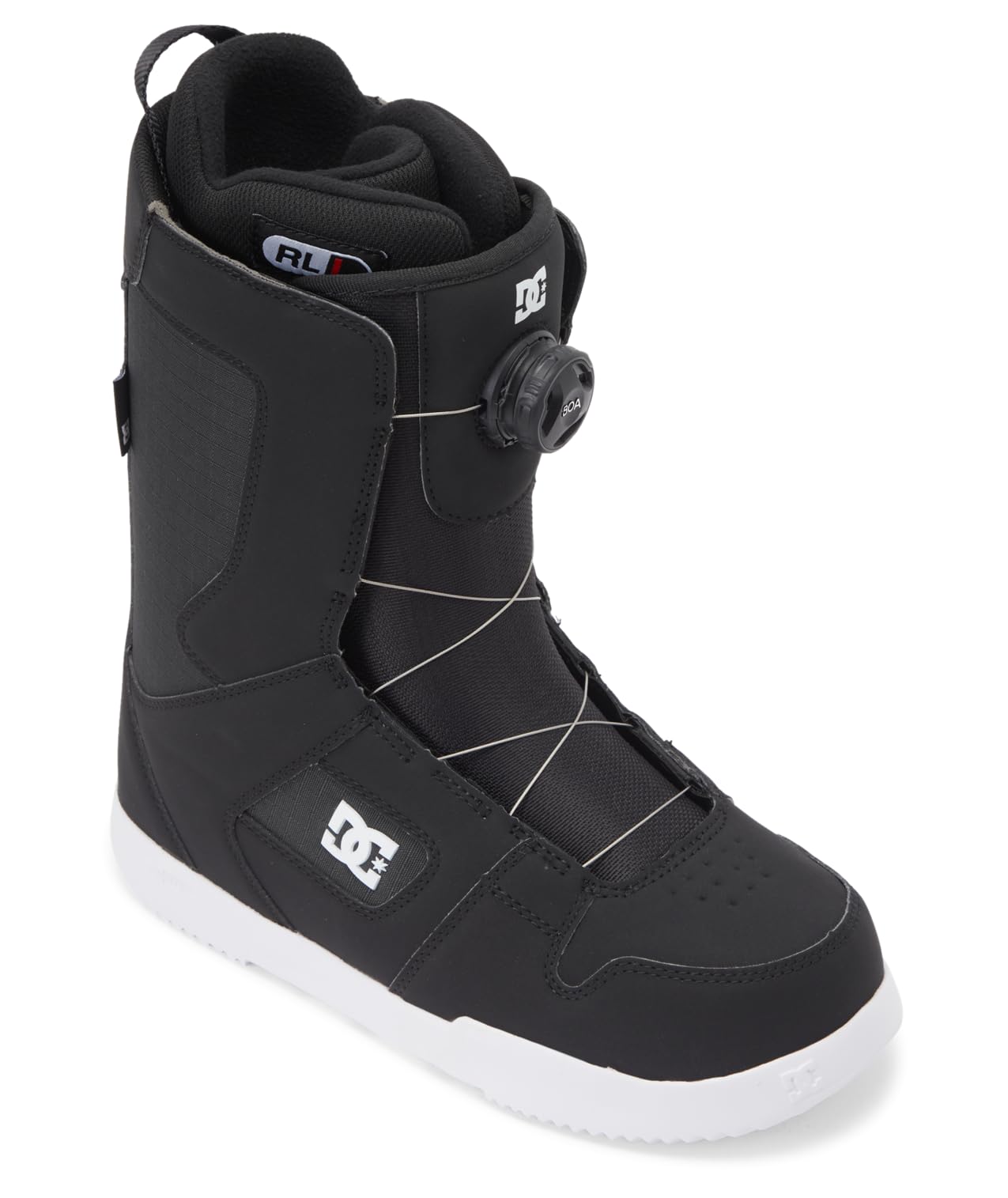
The DC Phase BOA targets the segment of beginners who need extra forefoot width without sacrificing heel hold. Multiple verified reviews from riders with wide feet confirm that the Phase accommodates a D-width foot comfortably, especially around the metatarsal area where cheaper boots often pinch. The flex rating of 4 out of 10 provides a middle ground — soft enough for learning but firm enough to keep the boot responsive when you start initiating edge pressure on steeper terrain.
The Foundation UniLite outsole keeps the boot light at roughly 5.3 pounds, and the Response Liner I includes a basic EVA foam that packs out gradually over twenty to thirty days. The BOA H4 Coiler dial is the same mechanism used in DC’s more expensive models, so you get reliable spool tension without the premium price jump. The IMPACT ALG insole adds a mild arch bump that helps align the foot over the binding’s footbed, reducing ankle fatigue during long chairlift rides.
A small but notable complaint in reviews concerns the BOA cable durability — some users report the lace snapping after a single season of heavy use. This is a known risk with the H4 Coiler system when the cable is overtightened or subjected to ice buildup. The Phase is best viewed as a reliable entry-level boot with an accommodating fit, but riders who plan to log thirty-plus days a season may want to upgrade to a dual-zone model for more longevity.
Why it’s great
- Wide forefoot design fits D-width feet comfortably without pinching
- BOA H4 Coiler provides smooth, reliable single-dial tightening
- Lightweight UniLite outsole reduces leg fatigue during all-day riding
Good to know
- BOA cable durability is a concern for high-frequency riders
- Basic EVA liner packs out faster than higher-end foam alternatives
7. ThirtyTwo Shifty Men’s Snowboard Boots
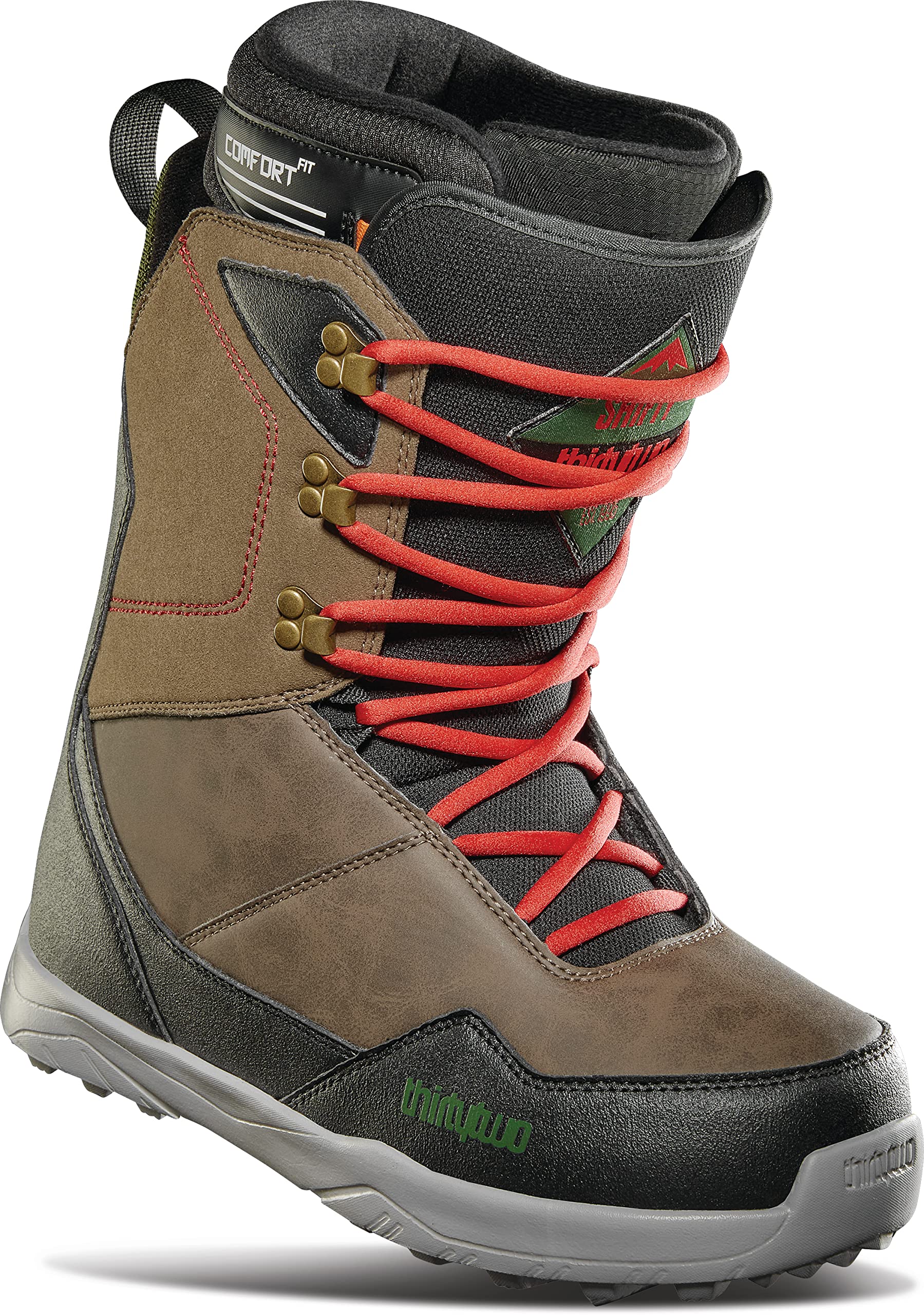
The ThirtyTwo Shifty strips away dials and cables in favor of a traditional lace-up configuration, trimming both cost and mechanical failure points. The soft flex rating makes this boot ideal for park laps, jibbing, and slow-speed progression where you want maximum ankle mobility. The light weight — one of the lightest in this lineup — reduces swing weight when you’re popping ollies off side hits or learning flat ground butters.
The thermal liner retains heat well, and riders in cold climates report comfortable toes even on single-digit mornings. The heel pocket is snug, though the lace system requires a proper knot to prevent gradual loosening through the day. A persistent theme across reviews is sizing inconsistency: multiple riders confirm that the Shifty runs 1.5 to 2 full sizes smaller than their street shoe. A size 10 street foot should target a size 11.5 or 12, depending on sock thickness.
Build quality has drawn mixed feedback. While the shell materials feel sturdy, a handful of users noted liner stitching or internal cord defects appearing within a single season. The Shifty is best suited for the budget-conscious beginner who expects one or two seasons of moderate use and prefers the simplicity of laces over a BOA dial. If you want a boot that grows with you into intermediate riding, the higher-tier options from K2 or Nidecker offer a longer usable lifespan.
Why it’s great
- Extremely lightweight for easy maneuverability on snow and off
- Traditional lace system has zero mechanical parts to fail or freeze
- Soft flex is forgiving for park riding and slow-speed learning
Good to know
- Sizing runs significantly small; order 1.5–2 sizes larger
- Build quality and stitching durability is inconsistent year-over-year
8. K2 Market Men’s Snowboard Boots
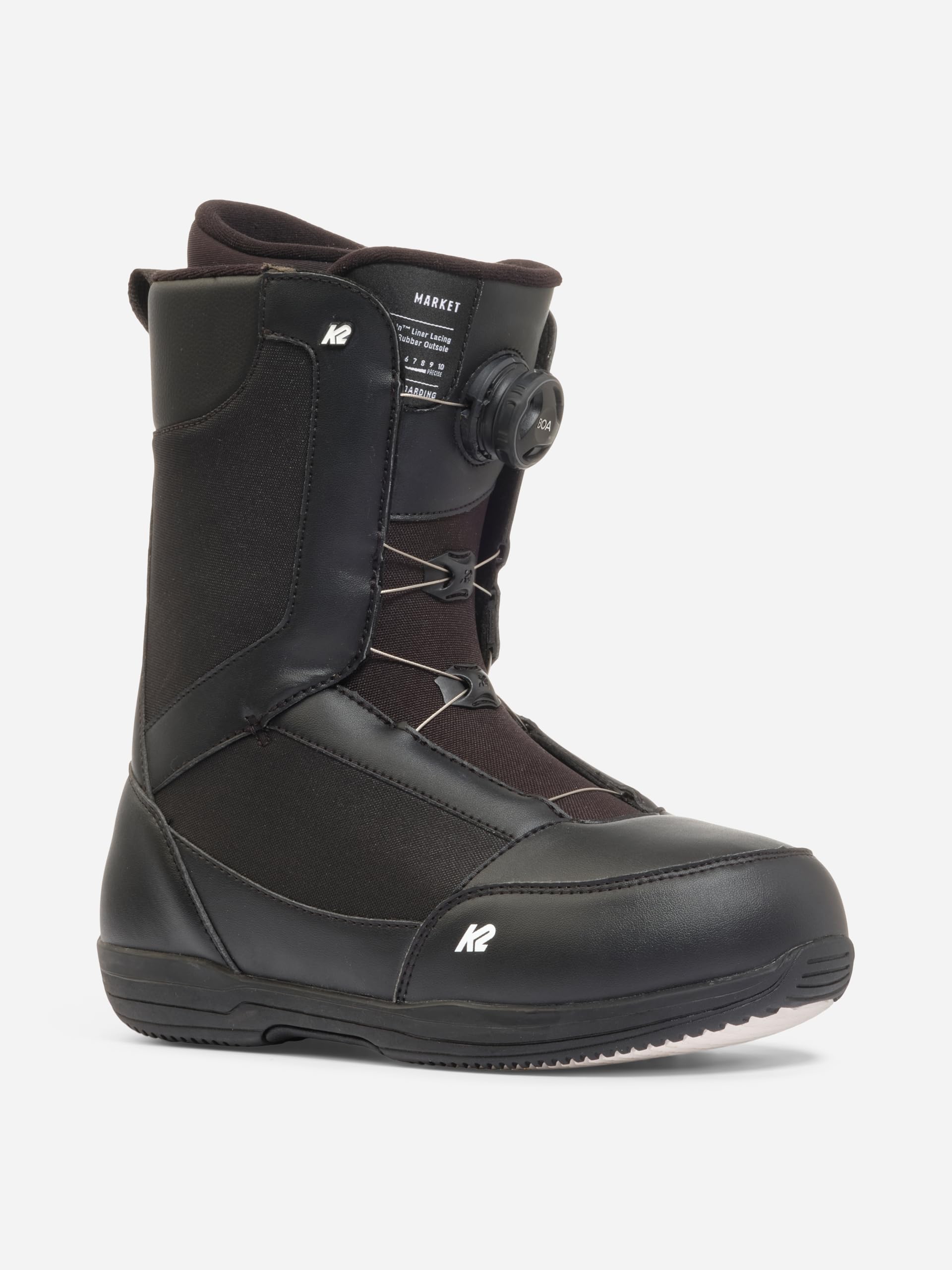
The K2 Market is a no-frills snowboard boot that focuses on fundamental comfort and reliability at a budget-friendly entry point. The BOA Focus Fit System uses a single dial to tighten a single spool, keeping the operation straightforward for a first-time buyer who has never used a dial closure. The Comfort Foam EVA liner is uncomplicated but effective — it packs out quickly but provides enough cushion for half-day sessions on groomed runs.
The Flex Zone upper cuff adds a hinge point that allows natural ankle movement when walking or strapping in, reducing the plastic-shell stiffness that can feel intimidating to a new rider. Internal J-bars are included, a surprising feature at this tier, and they do an adequate job of holding the heel in place during toe-side turns. The sole is made from a single-density EVA that offers decent shock absorption but minimal tread grip on icy surfaces.
Durability is the Market’s strongest suit: multiple reviews confirm the boot lasting three seasons without significant wear to the shell or BOA mechanism. The main trade-off is the liner’s tendency to pack out within a few weeks, leaving extra volume that can cause heel lift if the BOA is not cranked tight. This boot works best for a casual rider who gets out five to ten days a season and prioritizes a proven fit over premium liner technology.
Why it’s great
- BOA Focus Fit system is simple and intuitive for first-time dial users
- Internal J-bars provide surprising heel hold at this price tier
- Proven durability across multiple seasons with normal wear
Good to know
- EVA liner packs out relatively quickly, reducing snugness over time
- Sole tread is minimal, offering limited traction on icy walkways
9. 5th Element ST Lace and Dial Snowboard Boots

The 5th Element ST boots combine a traditional lace-up structure with an ATOP dial that cinches the upper cuff, giving you the reliability of laces with the convenience of a dial for fine-tuning shin tension. The dial mechanism uses a ratcheting system similar to BOA but with a distinct release method — turn left to unlock, pull the tongue, and slip your foot out. This hybrid approach appeals to beginners who want the adjustability of a dial without committing to a full BOA rebuild if a cable snaps.
The EVA foam liner keeps weight low and provides adequate warmth for resort riding in moderate climates. Several riders note that the sizing chart is misleading for half-sizes: a size 11.5 street foot should order a 12 rather than an 11. The boot runs true to length but the heel pocket is slightly shallow, so riders with narrow heels may experience lift that requires a padded sock or an aftermarket heel wedge. The synthetic PU/nylon outer shell resists scuffing from strap buckle contact.
At this entry-level price point, the ST holds up well over a season of weekly riding, but the lacing loops around the eyelets are a reported weak point — overtightening can cause the loops to fray. The ATOP dial itself feels solid, with no stripped gears reported in early reviews. The ST is a functional, low-cost entry for a beginner who wants to test the sport without a large upfront investment, but the heel hold and long-term durability trail the K2 Market and DC Phase by a small margin.
Why it’s great
- Hybrid lace-and-dial system offers both reliability and quick adjustability
- Lightweight EVA foam liner and shell reduce leg fatigue
- Low price of entry allows budget-conscious riders to start snowboarding
Good to know
- Sizing is inconsistent for half-sizes; order up from your street shoe
- Heel pocket is shallow, and lacing loops may fray under heavy tension
FAQ
Should a beginner buy snowboard boots a half size up for extra room?
Is a soft flex boot a waste of money if I only ride once a year?
How long should beginner snowboard boots last before replacement?
Can I wear snowboard boots with any binding brand?
What does heat molding a liner actually do for a beginner?
Final Thoughts: The Verdict
For most users, the beginner snowboard boots winner is the K2 Raider because it combines a forgiving flex, BOA convenience, and a liner that molds to your foot without heat tools — all at a mid-range investment that rewards progression. If you want the ability to micro-tune fit independently for your forefoot and shin, grab the DC Control BOA. And for instant out-of-box comfort with heat-moldable customization, nothing beats the Burton Moto BOA.