
Our readers keep the lights on and the weekend projects moving. As an Amazon Associate, I earn from qualifying purchases.
Landscaping rocks and stone accents can transform a yard, but they inevitably shift, scatter, and end up on the lawn after the first heavy rain. A targeted bonding agent locks gravel, pebbles, and bark in place, converting a high-maintenance landscape into a set-and-forget feature that withstands wind, runoff, and foot traffic.
I’m Rikta — the co-founder and writer behind FitlyFast. I’ve spent years analyzing adhesives for their tensile strength, weather resistance, and substrate compatibility, focusing specifically on how each formula performs when bonding irregular rock surfaces to one another and to the ground beneath.
Whether you are securing a garden path or anchoring large decorative stones, the right formulation determines whether the bond holds or fails after a season. This guide isolates the adhesive for rocks that actually earns a permanent place in your tool shed.
How To Choose The Best Adhesive For Rocks
Rock surfaces are porous, irregular, and often exposed to moisture and temperature swings. A general-purpose glue may work for a few weeks, but a dedicated rock adhesive must handle three distinct challenges: surface grip, weather endurance, and flexibility. Understanding these parameters keeps you from wasting time on a bond that fails mid-season.
Open Time vs. Set Time
Open time is the window you have to position rocks after applying adhesive. For landscaping stones spread over a wide bed, a longer open time of 20 minutes or more lets you adjust placement before the bond locks. Fast-setting formulas — those grabbing within five minutes — work better for single, heavy stones where slippage would ruin alignment.
UV and Freeze-Thaw Resistance
Outdoor rock adhesives must survive direct sunlight without yellowing or turning brittle. A resin-based or hybrid polymer formula with a listed temperature range of 0°F to 140°F will endure most climates. Clear-curing adhesives are ideal here because they maintain the natural color of the stone rather than creating a visible glue line.
Viscosity and Gap Fill
Rock surfaces rarely mate flush. A thick, paste-like adhesive fills the gaps between irregular pebbles, creating a mechanical lock that thin liquid glues cannot provide. For pea gravel or mulch lockdown, a low-viscosity liquid that seeps into the cracks works better than a heavy construction adhesive. Match the flow to the aggregate size.
Quick Comparison
On smaller screens, swipe sideways to see the full table.
| Model | Category | Best For | Key Spec | Amazon |
|---|---|---|---|---|
| Oycevila 34oz Rock Glue | Landscape | Large gravel beds & mulch | 34 fl oz per bottle | Amazon |
| Starbond 5 Minute Epoxy | Epoxy | Precision stone repairs | 2,600 lb shear strength | Amazon |
| 3M Hi-Strength 94 ET Spray | Spray | Large surface lamination | 60-minute open time | Amazon |
| Loctite Power Grab Crystal Clear | Construction | Vertical stone tile bonding | Crystal clear cure | Amazon |
| Gorilla Max Strength Clear | Construction | General stone-to-wood | 2x stronger than HD formula | Amazon |
| Titebond TiteGrab Plus | Construction | Tile and stone backsplash | Instant grab tack | Amazon |
| Brampton Extra Strength Epoxy | Epoxy | High-impact stone repairs | 20-min work life | Amazon |
In‑Depth Reviews
1. Oycevila 34oz Rock Glue
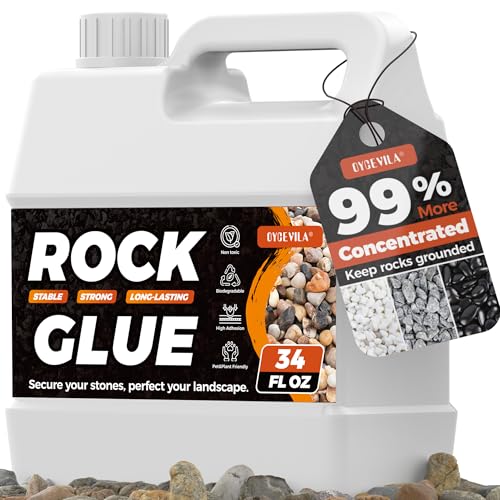
This dedicated rock and mulch glue comes in a generous 34-ounce bottle designed for broad coverage on pea gravel, bark, small pebbles, and decomposed granite. The liquid viscosity seeps between aggregate pieces rather than sitting on top, creating a subsurface bond that locks the entire bed together. It dries clear with a flexible finish that moves with ground expansion during freeze-thaw cycles, preventing the brittle cracking that ruins rigid adhesives outdoors.
The weather-resistant formula cures to a waterproof seal that holds up to direct rain and sprinkler runoff. Users reported that it saved them from re-spreading dozens of bags of mulch after a single application, with the bond lasting several months before any touch-up was needed. The clear, odorless formulation also means it is safe around pets and plants once fully cured, which is a critical advantage over solvent-based construction adhesives in a garden setting.
Application requires no special tools — just open the bottle and pour or drizzle along the surface. The fast-drying claim is valid in dry conditions; the glue surface-tacks within minutes, though full cure extends to 48 hours in humid weather. For homeowners managing large rock gardens or slope stabilization, this is the most efficient option in terms of coverage per dollar.
Why it’s great
- Covers large areas quickly with one bottle
- Flexible bond resists cracking in freeze-thaw
- Safe for pets and plants when cured
Good to know
- Full cure takes 48 hours in humid conditions
- Not suitable for vertical stone bonding
2. Starbond 5 Minute Epoxy Pro Kit

When you need to bond a broken stone, attach a decorative rock to a base, or repair a cracked landscape edging block, the Starbond Pro Kit delivers industrial-grade holding power in a fast-setting format. Its 1:1 mix ratio and screw-cap bottles eliminate the mess of syringe-based epoxies, and the included mixing trays and spatula make precise application straightforward. The formula cures clear and develops a shear strength of 2,600 lb once fully hardened after 24 hours.
The toughened epoxy remains slightly flexible after curing, absorbing vibration and minor impacts that would shatter a brittle repair. Users successfully glued knife scales, ceramic handles, and basement cracks, noting that the bond holds even on smooth surfaces like glass and glazed tile when the surfaces are properly cleaned beforehand. The 5-minute working time forces quick decision-making but rewards with a firm grip that allows handling within the same hour.
This kit is overkill for spreading across an entire gravel driveway but excellent for targeted stone-to-stone or stone-to-metal bonding. The gel consistency stays put on vertical surfaces without dripping, and the clear finish keeps repairs invisible on natural stone. For smaller, precision rock repairs, this is the strongest option in the list.
Why it’s great
- Massive shear strength for heavy stone repairs
- Flexible cured state resists impact cracking
- Complete kit with mixing tools included
Good to know
- 5-minute window is short for beginners
- Not economical for large landscape coverage
3. 3M Hi-Strength 94 ET Spray Adhesive
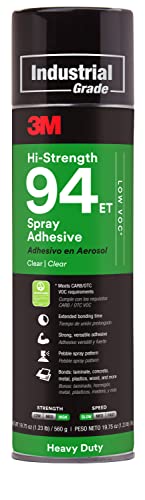
This spray adhesive from 3M is a contact cement designed for laminating large, flat surfaces, including stone veneer panels to walls. The aerosol format allows even coverage across broad areas in seconds, and the extended 60-minute open time gives you a full hour to reposition materials before the bond locks. It bonds to wood, metal, rubber, carpet, and fabric, making it a multi-purpose tool for mixed-material rock projects like attaching slate to a plywood base.
The formula is GREENGUARD certified and low-VOC, which matters if you are working indoors or in a closed garage. Users report strong adhesion for foam soundproofing to plastic in freezing temperatures, proving its cold-weather reliability. The spray requires a 30-minute drying time before mating surfaces, mimicking traditional contact cement behavior — rushing this step reduces bond strength.
For rock applications, this works best when you are adhering flat stone tiles or thin veneer to a substrate. It is not designed to fill gaps between irregular gravel pieces, nor will it seal loose pebbles in a bed. Ventilation is mandatory because the solvent smell is potent despite the low-VOC rating.
Why it’s great
- Spray application for fast, even coverage
- Long open time allows repositioning
- Low VOC and GREENGUARD certified
Good to know
- Not a gap-filler for loose gravel
- Requires ventilation during use
4. Loctite Power Grab Ultimate Crystal Clear
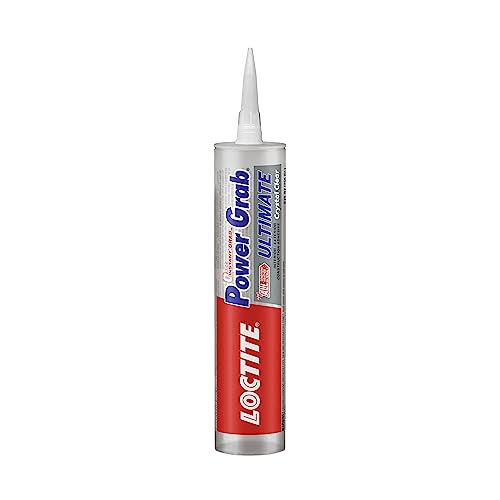
Loctite’s Power Grab formulation is a construction adhesive that cures to a completely transparent finish, making it ideal for bonding clear stone, glass mosaic tiles, or decorative rocks where the glue line must remain invisible. It bonds to plastic, concrete, wood, and metal, and the manufacturer states it works on wet surfaces and non-porous materials — a rare combination in the construction adhesive category.
The quick initial tack reduces the need for bracing, which is useful when mounting vertical stone features like wall cladding or ceiling tiles. Users report excellent results on metal, including hanging a stainless steel backsplash and passing a 5-pound weight test on a steel bracket. The dried adhesive has a slightly rubbery consistency that handles minor movement better than brittle construction glues.
Performance in freezing conditions is a weak point — multiple users noted that below 0°F, the adhesive remained tacky and failed to cure within 24 hours even with heaters running. It excels in moderate climates but should not be your first choice for outdoor rock projects in northern winters. The cartridge format requires a caulk gun, which is standard but adds friction if you only have a tube.
Why it’s great
- Dries completely transparent for invisible repairs
- Bonds non-porous and wet surfaces
- Quick tack reduces bracing needs
Good to know
- Fails to cure in sub-zero temperatures
- Requires caulk gun for application
5. Gorilla Max Strength Clear Construction Adhesive
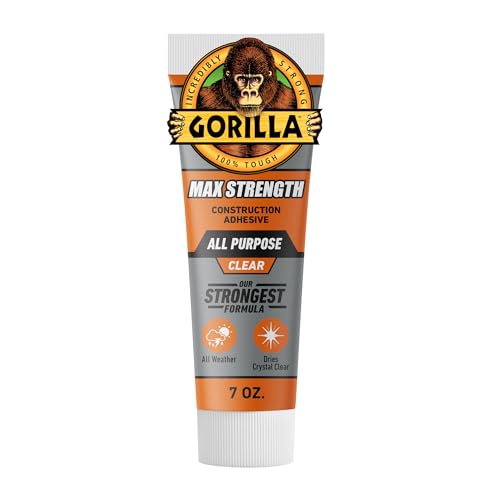
Gorilla upgraded its heavy-duty construction adhesive to a Max Strength formula that tests at double the bond strength of its previous HD variant. The clear paste dries to a hard rubber consistency that withstands car interior heat and direct water exposure, making it a strong candidate for outdoor stone projects that face heavy rain or pressure washing. The tube format is easy to handle without a caulk gun, using a standard squeeze tube tip.
The gap-filling capability is a standout for rockwork — the paste can fill voids up to several millimeters deep between irregular stone pieces, creating a mechanical interlock rather than a simple surface bond. Users report excellent adhesion on cement, wood, and metal, with a 30-second initial grab that allows repositioning within the first five minutes. Cleanup requires rubbing alcohol before the glue sets, and any drips should be wiped immediately to maintain a clean finish.
The main consideration is the bead size: the nozzle dispenses a relatively thick bead, which can create gobs of glue if you are not careful. For small rock repairs or thin stone veneer, the flow may be too heavy, making the Brampton or Starbond epoxy a better fit. For heavy-duty stone-to-concrete bonding outdoors, this formula holds up exceptionally.
Why it’s great
- Twice the strength of the standard formula
- Excellent gap-filling for irregular stones
- Waterproof after full cure
Good to know
- Nozzle produces a thick bead for small work
- Sticky residue is difficult to remove from skin
6. Titebond TiteGrab Plus Construction Adhesive
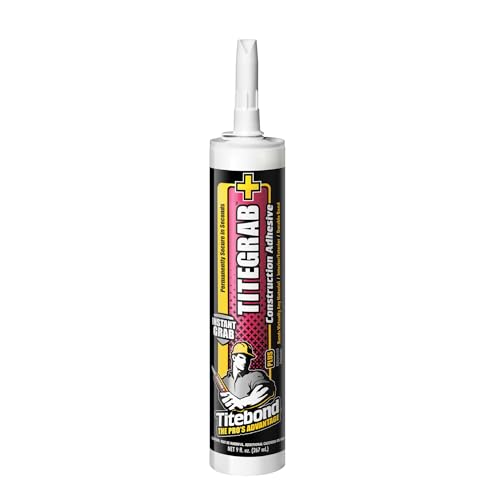
Titebond’s TiteGrab Plus uses an advanced polymer base that grabs instantly on contact, making it one of the fastest-tacking construction adhesives available. This is a clear advantage when bonding heavy stone tiles to vertical surfaces such as a kitchen backsplash or shower wall — the immediate hold eliminates the need for temporary bracing while the adhesive cures. The creamy formula extrudes smoothly from a standard caulk gun cartridge and holds a bead shape without slumping.
The water-resistant bond is rated for indoor and outdoor use, and the adhesive remains flexible without shrinking or turning brittle over time. Users repeatedly highlight its performance on tile backsplash installations, calling it the only product they trust for kitchen and bathroom renovations. The initial grab window is only 2 to 3 minutes, so you must commit to placement quickly. Once it sets, the bond is durable enough for long-term vertical stone applications.
Smooth, non-porous surfaces like polished marble or sealed granite are a challenge for this adhesive — it works best on porous stone, brick, and cement board where the polymer can penetrate the surface. For truly non-porous rock bonding, an epoxy-based solution performs better. It also requires a caulk gun, adding to the initial equipment cost if you do not already own one.
Why it’s great
- Instant grab eliminates bracing for vertical stone
- Flexible bond resists shrinking and brittleness
- Smooth extrusion for precise bead control
Good to know
- Not ideal for polished or non-porous stone
- Requires caulk gun for application
7. Brampton Extra Strength Epoxy 8 oz
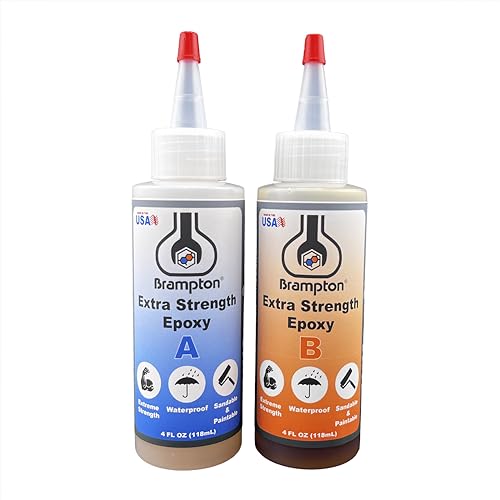
Brampton’s two-part epoxy offers a 20-minute working life, which is the longest open time among the epoxy entries in this roundup. This extended window is critical when bonding multiple stone fragments together in a single session — you can mix a larger batch, apply it across several repair spots, and still have time to adjust positioning before the resin kicks. The 1:1 mix ratio is straightforward, and the two bottles give you precise control over batch size, unlike single-use syringe formats.
The cured epoxy is infused with shock-resistant compounds that absorb physical impact without cracking, making it suitable for stone repairs in high-traffic areas like garden steps or patio stones. Users have successfully used it to attach knife scales, repair ceramic handles, and reassemble pool light assemblies, noting that the bond feels extremely hard and durable once fully cured at 24 hours. The amber-colored finish, however, is a notable distinction — despite marketing that suggests a clear cure, this epoxy dries to a warm amber hue that may be visible on light-colored stone.
For larger stone projects where appearance matters, the amber tint can be a dealbreaker. On dark stones or slate, the color is negligible, but on white or pale aggregate, the glue line will show. The 5-hour set time also means parts must remain undisturbed for an extended period compared to faster epoxies. For repairs where bond strength matters more than invisible finish, this is a reliable choice.
Why it’s great
- Long 20-minute work time for complex repairs
- Impact-resistant formula for high-traffic areas
- Two-bottle system allows batch control
Good to know
- Cures amber, not fully clear
- 5-hour set time requires patient clamping
FAQ
Will a construction adhesive hold rocks outdoors in freezing weather?
Can I use a spray adhesive to lock pea gravel in place?
How long does landscape rock glue last before needing reapplication?
Is there an adhesive that bonds stone to metal outdoors?
Final Thoughts: The Verdict
For most users, the adhesive for rocks winner is the Oycevila 34oz Rock Glue because it covers wide landscape areas efficiently, dries clear, and remains flexible through weather changes. If you need pinpoint strength for a broken stone repair, grab the Starbond 5 Minute Epoxy Pro Kit. And for bonding stone veneer to a vertical substrate, nothing beats the 3M Hi-Strength 94 ET Spray Adhesive.