
Our readers keep the lights on and the weekend projects moving. As an Amazon Associate, I earn from qualifying purchases.
If you’re looking for a 3D printer made in USA, you’re not just buying hardware — you’re investing in build quality, reliable support, and a machine designed to last. The American-made 3D printer market is lean but specialized, offering everything from desktop workhorses to industrial-grade systems that avoid the cost-cutting compromises found in many offshore alternatives. The real challenge is separating the few genuine domestic machines from the imported models with U.S. branding.
I’m Rikta — the co-founder and writer behind FitlyFast. I’ve spent years analyzing the 3D printer market, comparing supply chains, and identifying which brands actually manufacture their precision components and final assemblies within the United States versus those that simply stamp a logo on an overseas chassis.
For makers, engineers, and small businesses who demand accountability and domestic quality control, finding a genuine best 3d printer made in usa means understanding the difference between a branded label and a truly American-built frame.
How To Choose The Best 3D Printer Made In USA
The biggest mistake buyers make is assuming a U.S.-headquartered company means U.S. manufacturing. Know what to look for.
Verify the Assembly Origin
Check whether the frame, motion system, and electronics are assembled and tested in an American facility. Brands like Prusa Research and Raise3D are transparent about their Czech Republic and U.S. assembly lines. If a brand won’t disclose where final assembly happens, assume it’s an import with a local office.
Consider Your Material Needs
Domestic printers often emphasize industrial materials. If you need to print carbon-fiber nylon, PPA-CF, or polycarbonate, look for a heated chamber (60°C or higher) and a hardened steel nozzle. Entry-level USA-assembled printers may cap out at PLA and PETG, so match the machine to your filament requirements.
Prioritize Repairability and Support
A key advantage of buying from a company with domestic assembly is part availability and warranty service. Look for brands that stock replacement hotends, boards, and belts. Open-source designs allow you to print your own replacement parts — a major long-term cost saver.
Quick Comparison
On smaller screens, swipe sideways to see the full table.
| Model | Category | Best For | Key Spec | Amazon |
|---|---|---|---|---|
| Original Prusa MK4S | FDM Desktop | Professional reliability | Input Shaper / 250x210x220mm | Amazon |
| Original Prusa MK4 | FDM Kit/Assembled | DIY learning + quality | Nextruder / Loadcell leveling | Amazon |
| QIDI Q2 Combo | Enclosed FDM | Multi-color + engineering materials | 65°C heated chamber / 600mm/s | Amazon |
| QIDI Max4 Combo | Large-Format FDM | Industrial prototypes | 390x390x340mm / 800mm/s | Amazon |
| Creality K2 Pro Combo | Enclosed Multi-Color | High-speed multicolor | 60°C chamber / 600mm/s / CFS | Amazon |
| Creality Ender 5 Max | Large-Format FDM | Print farm / big models | 400mm³ / 64-point leveling | Amazon |
| Dremel 3D45-01 | Enclosed Desktop | Education / beginners | All-metal hotend / 280°C nozzle | Amazon |
| Raise3D E2 | IDEX Dual Extruder | Dual-material / two-color prints | IDEX / 330x240x240mm | Amazon |
| ELEGOO Saturn 4 Ultra | Resin MSLA | High-detail resin models | 16K LCD / 150mm/h / heated tank | Amazon |
| xTool F1 Ultra | Fiber/Diode Laser | Metal engraving / jewelry | 20W fiber+diode / 10000mm/s | Amazon |
| xTool P3 CO2 | Large-Format CO2 Laser | Industrial cutting / acrylic | 80W CO2 / 36×18″ / ACS auto-focus | Amazon |
In‑Depth Reviews
1. Original Prusa MK4S High-Speed 3D Printer

The Prusa MK4S is the benchmark for USA-made FDM printing. Assembled and tested at Prusa Research’s Prague facility (with strong U.S. distribution and support), this machine delivers immediate out-of-box results. The Nextruder with quick-swap nozzles and Loadcell sensor-based leveling means you never manually adjust the bed — the first layer is perfect every time. Input Shaper firmware support lets you print clean corners at high speed without ringing artifacts.
Users upgrading from entry-level printers report zero failed prints from day one, with the MK4S handling PLA, PETG, and TPU flawlessly using default PrusaSlicer profiles. The open-source design and huge community mean you can print your own upgrades or replacement parts, extending the machine’s life indefinitely. The included 1kg spool of Prusament PLA gets you started immediately.
The main trade-off is the build volume (250x210x220mm), which is smaller than many mid-range imports. But for reliability, part support, and genuine domestic engineering accountability, the MK4S is the gold standard. The fully assembled option saves time; the kit version teaches you the machine from the ground up.
Why it’s great
- True factory-assembled quality with Input Shaper
- Loadcell sensor eliminates manual bed leveling
- Open-source, upgradeable, huge community support
Good to know
- Build volume is smaller than competing imports
- Premium price reflects Czech assembly and support
2. Original Prusa MK4 3D Printer Kit

The MK4 kit offers the same Nextruder, Loadcell leveling, and PrusaSlicer integration as the MK4S, but at a lower price point and with the educational benefit of self-assembly. Buyers report that building the printer from scratch provides deep knowledge of the machine — making troubleshooting and future upgrades far easier. The 32-bit platform supports remote printing and customizable UI.
Print quality is indistinguishable from the assembled version. Users have printed complex items like a 2.3kg mask and cultural artifacts with zero failures using default settings. The removable PEI sheet bed delivers strong adhesion during printing and parts pop off easily once cooled — no glue or tape required. PrusaSlicer’s learning curve is real, but Expert mode unlocks professional-grade quality control.
Assembly takes most people 8-12 hours, with excellent printed instructions and online build guides. The kit includes a 2x25g Prusament PLA sample. This is the ideal entry point for someone who wants genuine US-accountable engineering without paying for full assembly, and who values repairability and long firmware support.
Why it’s great
- Same core hardware as MK4S at a lower price
- Kit assembly builds hands-on knowledge
- Excellent part adhesion without glue
Good to know
- Assembly takes several hours
- No Input Shaper included (upgradeable later)
3. QIDI Q2 Combo 3D Printer
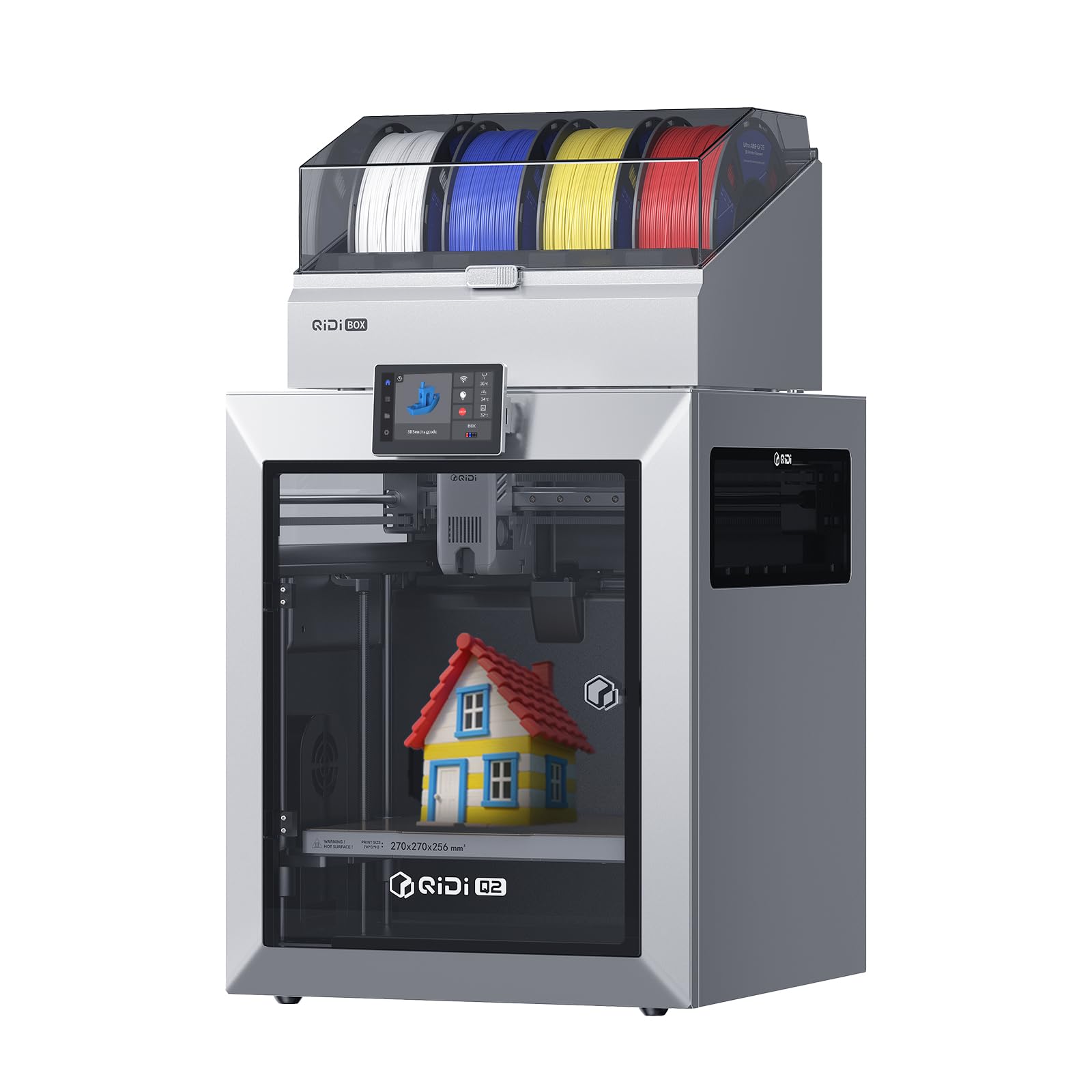
The QIDI Q2 Combo delivers multi-color, multi-material printing with a 65°C active heated chamber — a feature usually reserved for printers costing twice as much. The QIDI BOX integrates NFC filament recognition, 65°C drying, and automatic filament reloading, making it a true closed-loop system. The full-metal CoreXY structure and 1.5GT belt reduce vibration artifacts for smooth surfaces.
Users love the auto-leveling reliability: the nozzle itself acts as the leveling sensor, giving perfect first layers regardless of bed surface condition. The machine prints PLA, ABS, PETG, TPU, PA, PC, and carbon/glass-fiber composites with zero issues after proper filament drying. The triple filtration system (G3 pre-filter, H12 HEPA, activated carbon) makes enclosed operation safe for indoor use.
The main downsides are the box setup complexity — some users report WiFi pairing hassles that were resolved by firmware updates — and the fact that multi-material purge waste is inevitable. Klipper-based open firmware allows deep customization. This is a strong pick for users who want industrial material compatibility in a desktop footprint.
Why it’s great
- True 65°C heated chamber for engineering materials
- Integrated drying and NFC filament recognition
- Reliable auto-leveling with nozzle sensor
Good to know
- Filament box setup can be finicky
- Multi-color prints produce significant purge waste
4. QIDI Max4 Combo 3D Printer
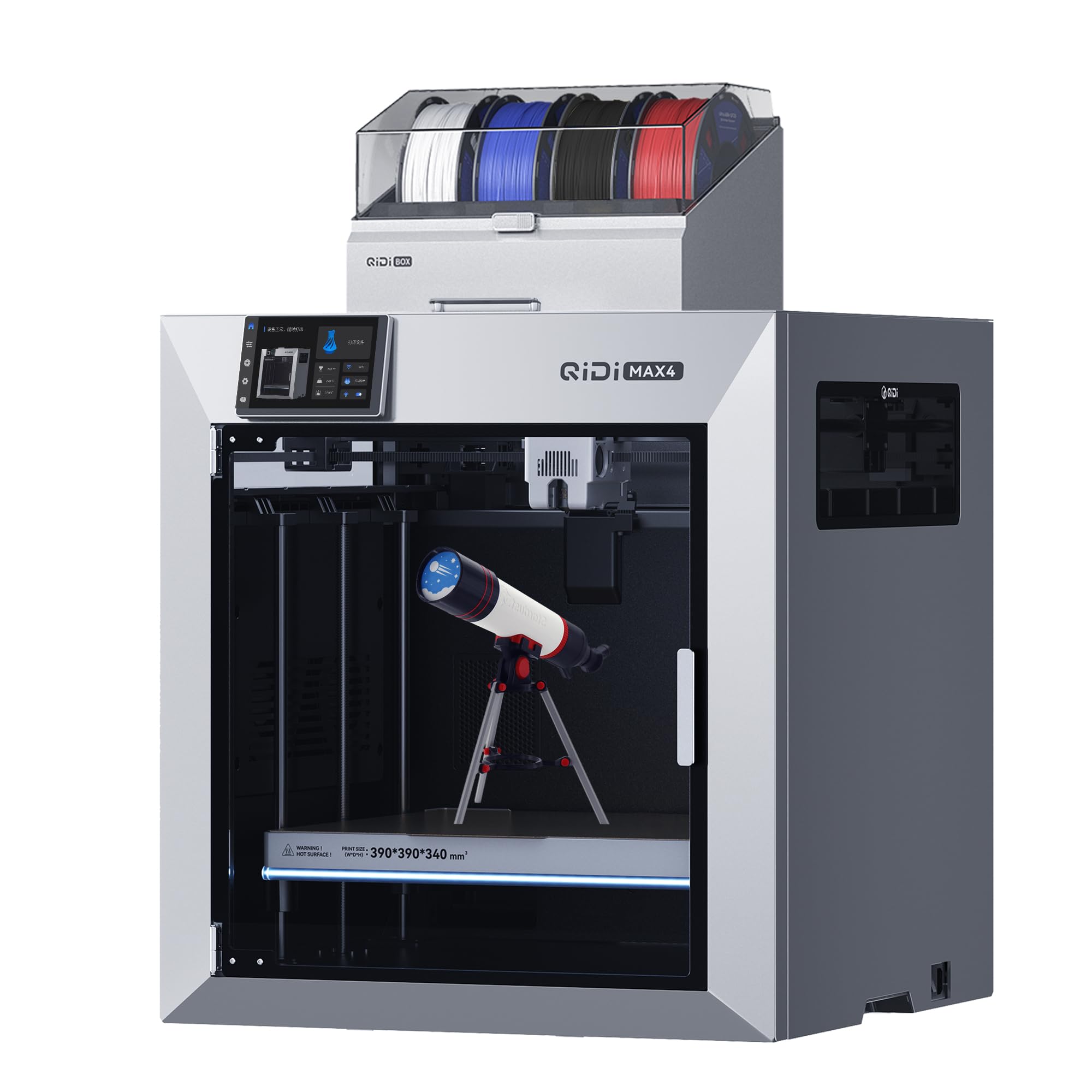
The QIDI Max4 Combo is built for large-format engineering prints. With a 390x390x340mm build volume, closed-loop motors on X/Y axes, and a 65°C active heated chamber, it handles industrial-grade materials like PPA-CF and ABS-CF with zero warping. The 40mm³/s high-flow hotend and hardened steel nozzle mean abrasive filaments won’t wear out the extruder prematurely.
Users transitioning from smaller QIDI machines report the same effortless setup but with dramatically larger capabilities. The 2mm lead screw and anti-backlash nut on the Z-axis produce smooth vertical surfaces even at 800mm/s. The AI camera detects spaghetti failures and pauses automatically, saving both material and time. The Polar Cooler system (sold separately) adds further cooling control for high-temp materials.
At 120 pounds, this is a permanent fixture, not a portable printer. The pre-print heating and calibration cycle takes longer than smaller machines. Some users have reported initial bed warping that QIDI support replaced quickly, reflecting the value of dealing with a responsive domestic-support brand. This machine is for serious production environments.
Why it’s great
- Massive build volume for industrial parts
- Closed-loop motors maintain precision at high speed
- 65°C chamber handles advanced composites
Good to know
- Heavy and non-portable
- Long warm-up and calibration sequence
5. Creality K2 Pro Combo 3D Printer
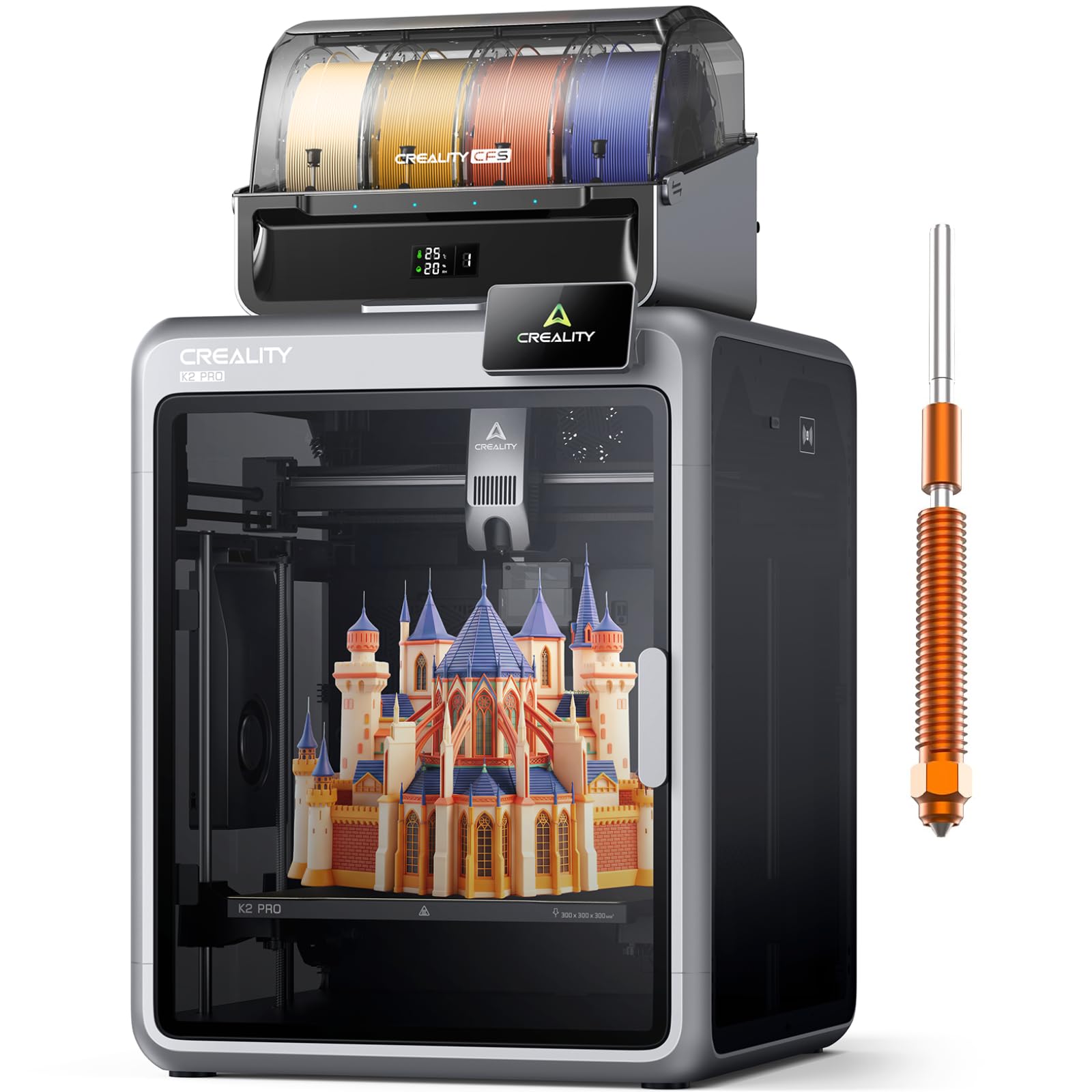
The Creality K2 Pro Combo combines a 60°C active chamber with the CFS multi-color system for up to 16-color prints at 600mm/s. The FOC step-servo motors and linear rails deliver smooth, quiet high-speed operation. What sets it apart is the dual AI camera system: a chamber camera for failure detection and time-lapse, plus a nozzle camera that auto-tunes flow rate and pressure advance in real time.
Users praise the out-of-box speed and print quality. The auto-leveling system probes only the areas where the model will be printed, dramatically reducing setup time. The hardened steel direct-drive extruder handles carbon-fiber composites without clogging, and the quick-swap hotend makes maintenance fast. The CFS provides dry storage and auto-filament switching.
The software experience has been a pain point for less technical users — CFS configuration and OrcaSlicer integration are not fully plug-and-play. Some users report cryptic error messages and unexplained print cancellations that require power cycling. For experienced users willing to dial in settings, the K2 Pro delivers exceptional speed and material versatility at a mid-range price.
Why it’s great
- Dual AI camera system for auto-tuning and monitoring
- 60°C chamber for demanding materials
- Very fast 600mm/s printing with linear rails
Good to know
- CFS multi-color software is not beginner-friendly
- Some users experience unexplained firmware glitches
6. Creality Ender 5 Max 3D Printer
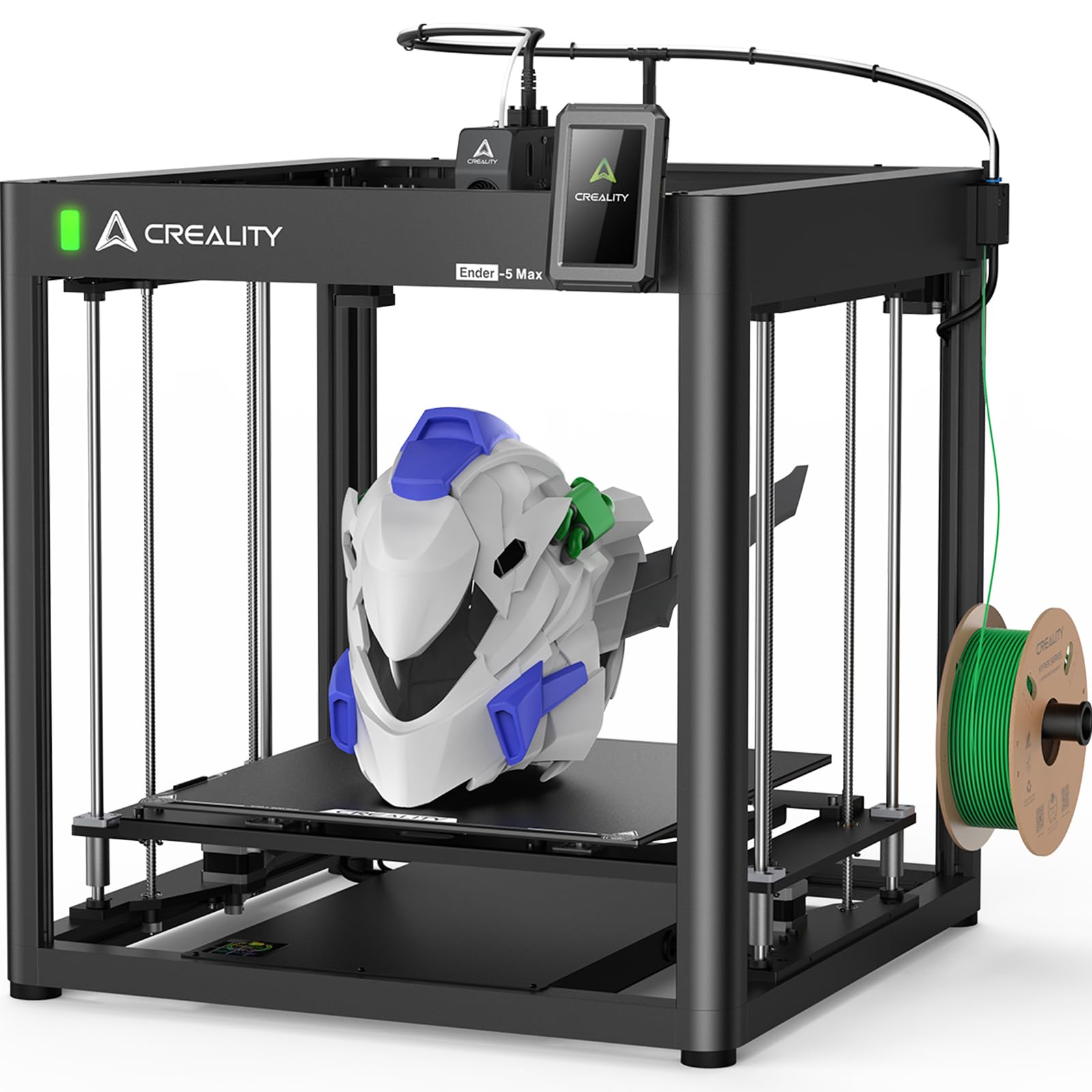
The Ender 5 Max is designed for print farms and oversized prototypes. Its 400x400x400mm build volume and 1000W rapid-heating bed let you print large parts or batch dozens of smaller objects in a single run. The CoreXY structure with high-torque motors achieves 700mm/s, and the reinforced die-cast aluminum frame minimizes vibration at scale.
The 64-point auto leveling system and automatic Z-offset ensure strong first-layer adhesion without manual tweaking. WLAN multi-printer control lets you manage a farm from a single interface. Users report that PLA and PETG print beautifully, and the enclosure (which requires a taller riser mod) maintains stable temperatures for ABS when sealed.
Quality control has been a topic of debate — some users receive units with perfect alignment and adhesion, while others report severe bed adhesion issues, loose parts, and extruder failures within hours. The support experience appears inconsistent. The Ender 5 Max is a high-value large-format option for users comfortable with assembly and potential troubleshooting, but not a guaranteed out-of-box experience.
Why it’s great
- Massive 400mm³ build volume for less
- 64-point auto leveling for reliable first layers
- WLAN multi-printer control for farms
Good to know
- Quality control is inconsistent between units
- Enclosure needs DIY riser mod for full effectiveness
7. Dremel 3D45-01 DigiLab 3D45

The Dremel 3D45 is a fully enclosed, beginner-friendly printer that prioritizes safety and ease of use. The all-metal hotend reaches 280°C, enabling Nylon, PETG, and ECO-ABS, while the glass build plate heats to 100°C for strong adhesion. The 5-inch color touchscreen with intuitive icons lets you go from unboxing to first print in under 15 minutes.
Dremel’s RFID system auto-detects Dremel-brand filament spools and sets the correct temperature profile, eliminating guesswork for beginners. The built-in carbon and particulate filter reduces odors, making it classroom-safe. Users report excellent PETG prints, quiet operation, and reliable automatic pause on filament runout.
The trade-offs are significant for anyone wanting material flexibility: Dremel pushes its own OEM filaments (ECO-ABS is modified PLA), and third-party spools may require workarounds. The build volume is small (6.7x10x6 inches), and the DigiLab slicer is based on an older Cura version. At this price point, experienced users get more capability from other options, but for schools and beginners, the Dremel 3D45 is unmatched in simplicity.
Why it’s great
- Fully enclosed with carbon filter for safe indoor use
- RFID auto-configures filament settings
- Quick 15-minute setup straight out of the box
Good to know
- Small build volume limits larger projects
- Heavily optimized for Dremel OEM filament
8. Raise3D E2 Desktop 3D Printer

The Raise3D E2 is a serious production tool built around Independent Dual Extruders. IDEX lets you print two identical copies simultaneously in Duplication Mode, produce a mirrored model in Mirror Mode, or use two different materials in the same print. The video-assisted offset calibration system guides you through geometric alignment with on-screen visual feedback.
The flexible build plate simplifies model removal, and the heated bed (up to 110°C) supports a wide range of materials. Power loss recovery and filament run-out sensors mean you don’t lose days of print time to a power flicker or an empty spool. The on-board 7-inch touchscreen and WiFi/Ethernet connectivity with a live camera enable remote monitoring and control.
Support experiences have been mixed — some users report responsive help and successful calibration, while others describe a months-long struggle with adhesion issues and extruder failures that went unresolved. The 30-day return window can be tight for identifying chronic defects. The E2 represents a powerful IDEX platform, but verifying warranty terms before purchase is critical for peace of mind.
Why it’s great
- IDEX allows dual-material or two-part simultaneous printing
- Video-assisted calibration simplifies alignment
- Professional 7-inch touchscreen interface
Good to know
- Support responsiveness has been inconsistent
- Return window is limited for identifying defects
9. ELEGOO Saturn 4 Ultra 16K Resin 3D Printer
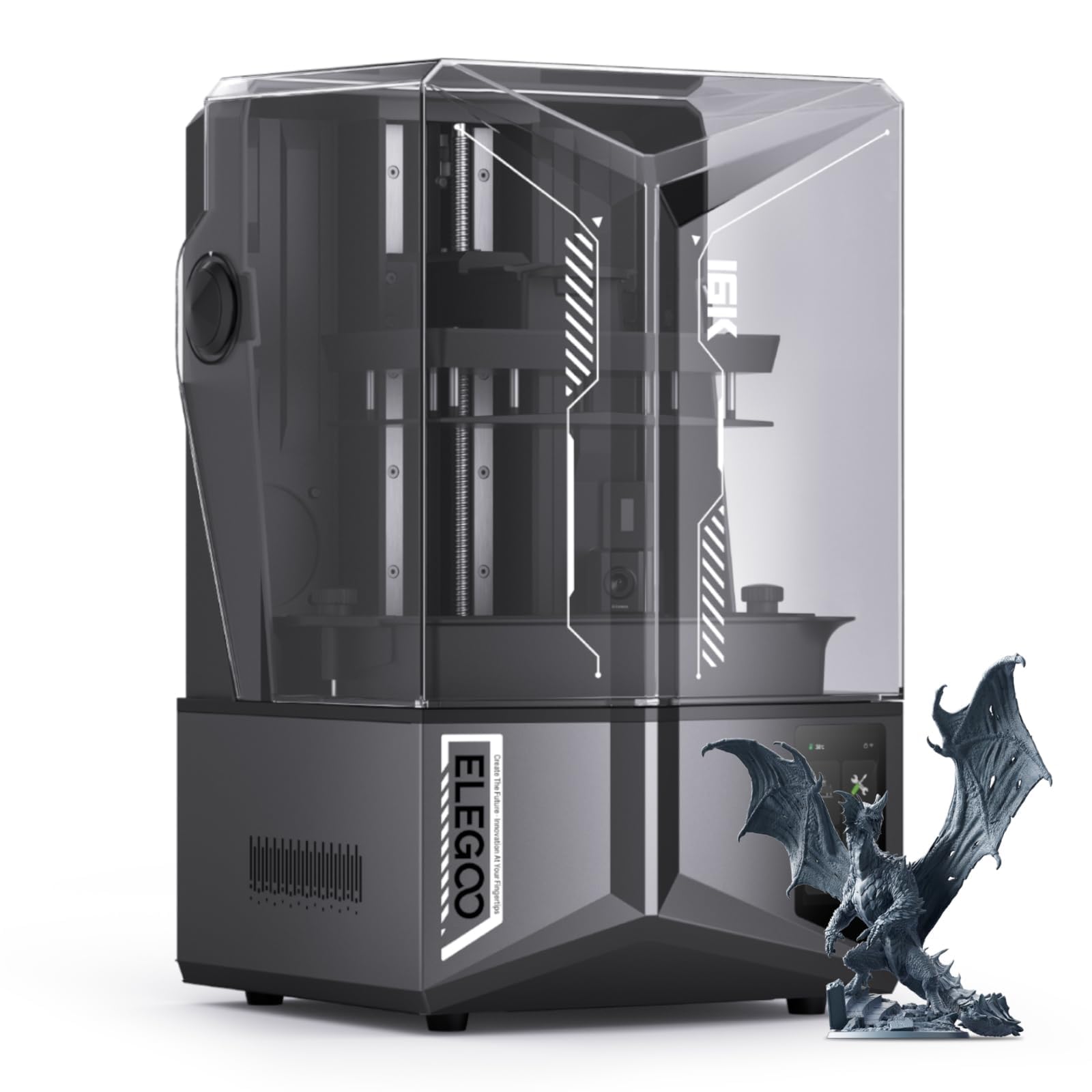
The ELEGOO Saturn 4 Ultra is a resin powerhouse with a 10-inch 16K mono LCD that delivers detail rivaling injection molding. The intelligent tank heating system maintains resin at 30°C, ensuring consistent fluidity and layer adhesion in colder environments — a feature typically found on higher-tier resin printers. The tilt release mechanism peels models from the FEP sheet without tearing delicate supports.
The built-in AI camera monitors prints and sends real-time alerts for empty build plates or warped models. Users report that assembly is minimal — auto-leveling is truly one-click, and the flip-up lid provides easy access. The 150mm/h print speed is competitive for a resin printer, and the large build volume (8.33×4.66×8.66 inches) accommodates busts and dioramas in a single print.
Some users note that the AI detection accuracy varies depending on resin type and lighting conditions. The build plate may require light sanding and increased base exposure (40-45 seconds) for reliable adhesion. This machine is best for model makers, jewelers, and hobbyists who want instant detail without manual leveling or workshop heater dependency.
Why it’s great
- 16K resolution captures microscopic detail
- Heated resin tank maintains performance in cold rooms
- True auto-leveling with no manual adjustment
Good to know
- AI detection may miss some failures
- Build plate may need sanding for first prints
10. xTool F1 Ultra 20W Fiber & Diode Dual Laser Engraver

The xTool F1 Ultra combines a 20W fiber laser and a 20W diode laser in a single desktop unit. The fiber laser engraves all metals (gold, silver, stainless steel, titanium) in seconds, while the diode laser handles wood, acrylic, leather, and fabric. The 16MP smart camera with distortion-free preview eliminates misalignment — you can place items anywhere on the 220x220mm bed and get precise positioning.
Three-dimensional embossing and deep engraving are genuine features, not marketing claims. Users have engraved metal business cards in under five minutes and produced detailed 3D coins. The Auto Streamline Production mode with the optional Conveyor Feeder allows batch processing for small businesses. The fully enclosed design and fire safety alarm make it safe for in-store customization.
Two units have been reported with fiber laser failure within 30 days, though customer service resolved the issue quickly. The main limitation is software: Creative Space is excellent but Lightburn compatibility on Mac is absent. Deep metal engraving is slow (3.5-7 hours per coin). The F1 Ultra is a business solution for metal engraving, not a hobbyist toy.
Why it’s great
- Dual laser system handles metal and organic materials
- 16MP camera with distortion-free preview
- Batch production capability with conveyor option
Good to know
- Occasional fiber laser failure reported in early units
- No Lightburn support on Mac
11. xTool P3 80W Flagship CO2 Laser Cutter
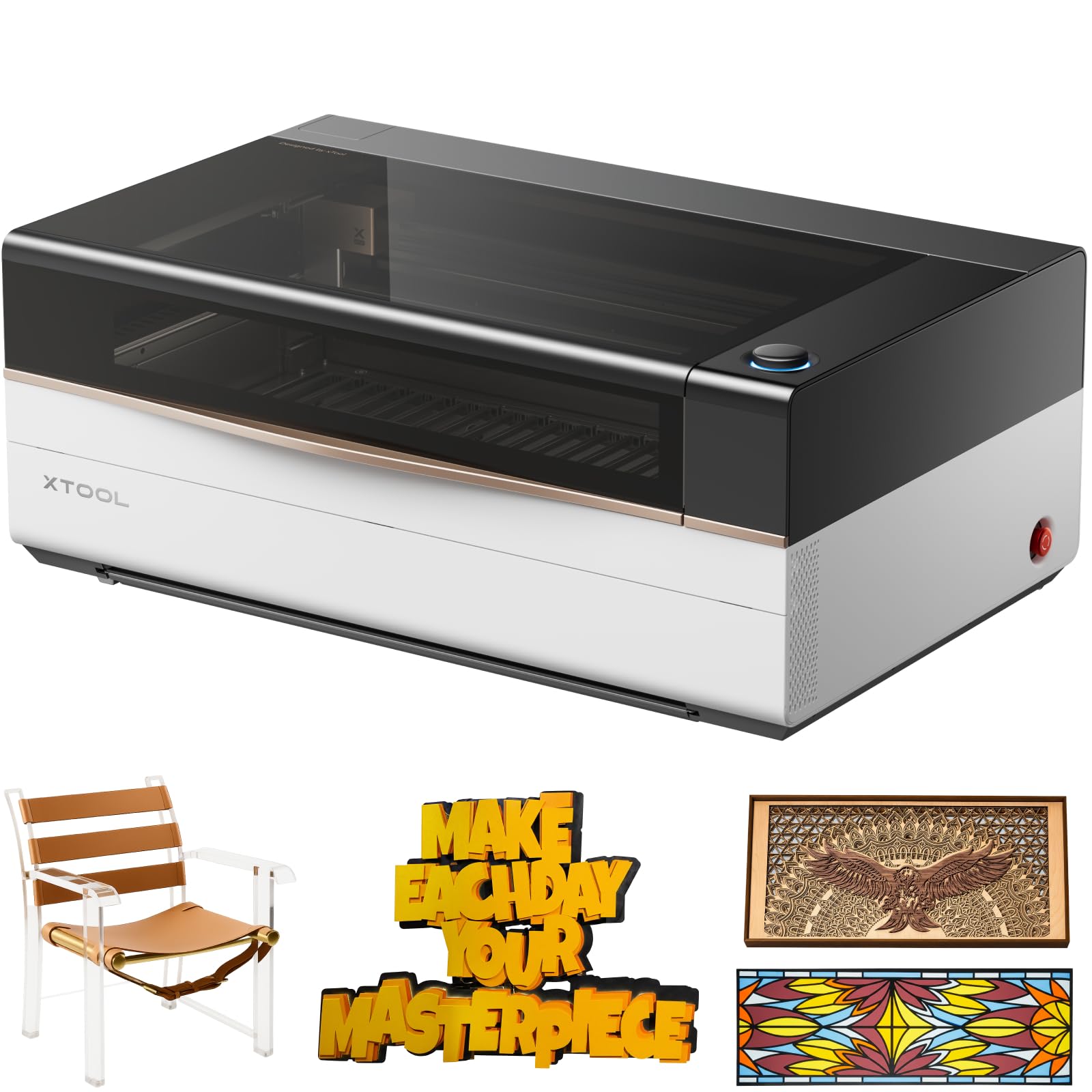
The xTool P3 is a true industrial-grade CO2 laser cutter designed for thick materials. It cuts 20mm wood and 25mm acrylic cleanly, and handles clear acrylic that diode lasers cannot process. The ACS auto-focus system uses LiDAR ranging for perfect focus on uneven surfaces, and the dual HD cameras provide microscopic 0.0079-inch alignment accuracy.
The 36×18-inch workspace is the largest in the desktop segment. AI-powered Smart Nesting achieves 98.7% material utilization, making it ideal for production environments that need to minimize waste. The Class 1 fully enclosed safety design with lid interlocks and an active fire suppression system means it can be used safely in workshops and schools.
Software criticism is the main pain point: xTool Studio’s preset cut settings default to 90-100% power, which can shorten CO2 tube life. The workspace is not a full 36×18 inches due to border requirements. At 327 pounds, this is a permanent fixture. The P3 is for businesses that need a reliable, automated CO2 cutter with a clear upgrade path via the Intelligent Conveyor Feeder and IR laser module.
Why it’s great
- Cuts 25mm acrylic and 20mm wood cleanly
- LiDAR auto-focus and dual HD camera system
- 98.7% material utilization with Smart Nesting
Good to know
- Default power settings may shorten tube life
- Usable bed is slightly smaller than advertised dimensions
FAQ
How can I verify a 3D printer is actually assembled in the USA?
Does an American brand guarantee better print quality than an import?
Can I print abrasive carbon-fiber filaments on a standard brass nozzle?
What is the difference between IDEX and CoreXY motion systems?
Final Thoughts: The Verdict
For most users, the best 3d printer made in usa winner is the Original Prusa MK4S because it combines genuine Czech-assembled quality with Input Shaper speed, a perfectly leveling Loadcell sensor, and a massive open-source ecosystem for upgrades and repairs. If you want industrial multi-color capability with a 65°C heated chamber for engineering materials, grab the QIDI Q2 Combo. And for large-format production that needs IDEX dual-extruder flexibility, nothing beats the Raise3D E2.