
Our readers keep the lights on and the weekend projects moving. As an Amazon Associate, I earn from qualifying purchases.
That first spoonful of rice cereal marks a huge milestone, but recent concerns over heavy metals in baby food have turned a simple purchase into a research project. You need a single-grain starter that’s gentle on tiny tummies, mixes to a silky-smooth consistency, and delivers the iron babies need for healthy brain development — without any hidden contaminants.
I’m Rikta — the co-founder and writer behind FitlyFast. I’ve spent years analyzing infant nutrition data, comparing third-party heavy metal test results, and cross-referencing organic certifications to separate genuinely clean baby cereals from marketing fluff.
After digging through lab reports and feeding trials, I narrowed the field to seven standout options that meet strict purity and nutritional standards, which I’ve organized into this guide to the best baby rice cereal for your little one’s first foods.
How To Choose The Best Baby Rice Cereal
Not all baby rice cereals are created equal. Some are fortified with essential nutrients but sourced from regions with higher soil arsenic levels. Others are organic but lack the iron content growing babies need. Here’s what to look for when narrowing down your options.
Heavy Metal Testing and Purity Certifications
The most important factor in modern baby rice cereal is third-party testing for contaminants like arsenic, lead, cadmium, and mercury. Rice naturally absorbs more arsenic from soil than other grains, so brands that voluntarily publish batch-level test results or carry certifications like the Clean Label Project’s Purity Award give you real peace of mind. Look for cereals that explicitly state they test for heavy metals — not just on the website, but on the packaging itself.
Iron Fortification Levels
Infants between 6 and 12 months need 11 mg of iron daily to support rapid brain development and red blood cell production. A quality baby rice cereal should provide at least 45-60% of the daily value per serving. Check the nutrition label: cereals with iron levels below 45% DV per serving may require additional iron-rich foods to meet your baby’s needs.
Ingredient Simplicity and Texture
For stage 1 feeding (4-6 months), a single-grain rice cereal with one or two ingredients is ideal. Avoid blends with added sugars, artificial flavors, or fruit concentrates until your baby has tried plain rice cereal first. The texture should dissolve easily in breast milk or formula to a smooth, runny consistency that won’t pose a choking hazard.
Quick Comparison
On smaller screens, swipe sideways to see the full table.
| Model | Category | Best For | Key Spec | Amazon |
|---|---|---|---|---|
| Else Nutrition Organic Baby Cereal | Premium | Purity-focused feeding | Clean Label Purity Award, 50% DV iron | Amazon |
| Earth’s Best Organic Multi-Grain | Premium | Whole grain variety | Organic oat, spelt, barley flour blend | Amazon |
| BARI Organic Baby Rice Porridge | Mid-Range | Heavy metal tested starter | USDA Organic, single-ingredient Korean rice | Amazon |
| Gerber 1st Foods Rice Cereal 5x8oz | Mid-Range | Bulk value rice cereal | Non-GMO, 40 oz total, iron-fortified | Amazon |
| Gerber Stage 2 Pears & Cinnamon Oatmeal | Mid-Range | On-the-go tubs for older babies | 16-pack, 60% DV iron, no artificial flavors | Amazon |
| Nestle Cerelac Mixed Fruits & Wheat | Budget | Flavor variety for stage 2 | Wheat & fruit blend, for 8+ months | Amazon |
| Nestle Nestum 5 Cereals 12-Pack | Budget | Long-term bulk stock | 12 canisters, 80% DV iron per 2 servings | Amazon |
In‑Depth Reviews
1. Else Nutrition Organic Baby Cereal 6+ Months (Vanilla, Pack of 6)

Else Nutrition’s baby cereal stands alone at the top of the purity pyramid. It’s the only product on this list that carries the Clean Label Project’s Purity Award, meaning every batch is independently tested for over 400 contaminants, including heavy metals, pesticides, and industrial toxins. The base is buckwheat — not rice — so arsenic concerns are effectively eliminated while still delivering a smooth, easy-to-digest porridge texture that babies accept readily.
Iron levels hit 50% of the daily value per serving, which is crucial for babies transitioning from breast milk or formula at the 6-month mark. The vanilla flavor is mild and natural, and the cereal mixes seamlessly with water, breast milk, or formula without clumping. Parents report that picky toddlers continue reaching for this brand well past infancy, which speaks to its palatability.
The one catch is availability — demand regularly outstrips supply, and the price reflects the premium testing and clean ingredients. For families prioritizing absolute purity and who can handle occasional stockouts, this is the gold standard for first foods.
Why it’s great
- Clean Label Purity Award — tested for 400+ contaminants
- 50% DV iron per serving supports brain development
- Gluten-free, dairy-free, no artificial dyes or preservatives
Good to know
- Frequently goes out of stock due to high demand
- Premium tier pricing compared to conventional rice cereals
2. Earth’s Best Organic Whole Grain Multi-Grain Cereal 8 Oz (Pack of 6)
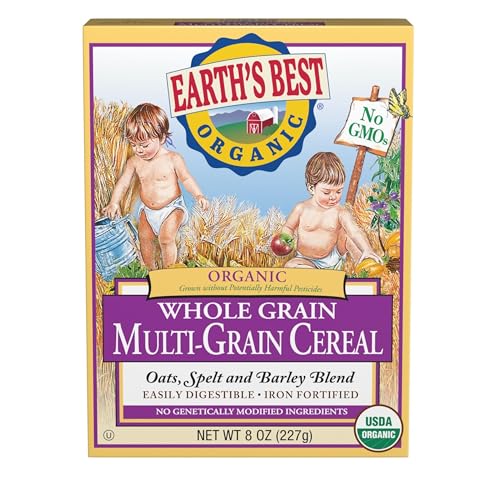
Earth’s Best has been a trusted name in organic infant nutrition for decades, and this multi-grain cereal is a fantastic option for babies ready to move beyond plain rice. The blend of organic whole grain oat, spelt, and barley flour provides a broader spectrum of fiber and nutrients than single-grain rice cereal alone. It’s iron-fortified to support healthy growth and mixes easily to a spoonable consistency that babies 4-6 months can handle.
Parents consistently report that their babies digest this cereal well, with fewer instances of constipation or gassiness compared to pure rice-based options. The six-pack format at this price tier makes it a smart mid-range buy for families committed to organic feeding. The texture is slightly heartier than ultra-fine rice flour, but not so coarse that it’s difficult for beginners.
One consideration: because it contains spelt and barley, this is not suitable for gluten-sensitive babies. If your family has a history of celiac disease or gluten intolerance, stick with single-grain rice or buckwheat-based cereals for stage 1 introduction.
Why it’s great
- Organic whole grain blend (oat, spelt, barley) offers more fiber
- Iron-fortified for nutritional completeness
- Six-box pack provides excellent value for committed organic buyers
Good to know
- Contains gluten from spelt and barley — not for gluten-free diets
- Not a single-grain cereal; best used after plain rice is accepted
3. BARI Organic Baby Rice Porridge – Stage 1 – 4.2 oz (10 Packets)
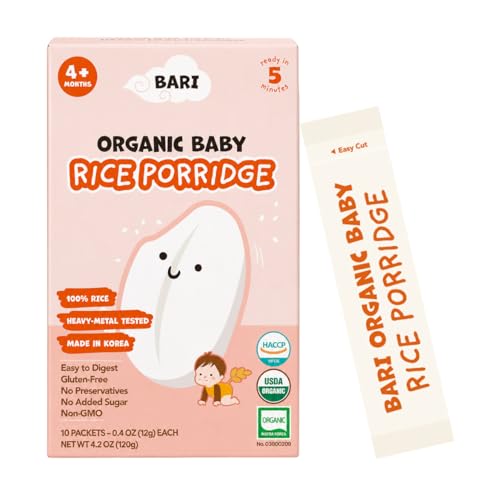
BARI’s baby rice porridge is the cleanest single-grain rice cereal I’ve found that doesn’t break the bank. Every batch undergoes independent third-party testing for arsenic, lead, cadmium, and mercury — a critical safeguard given rice’s tendency to absorb soil arsenic. The ingredient list reads exactly as it should: 100% USDA Organic Korean white rice, nothing else. No added sugar, salt, flavors, or fortified additives that can complicate a baby’s first exposure to solids.
The texture is ultra-fine and silky smooth, dissolving almost instantly when mixed with breast milk or formula. It cooks in two minutes on the stovetop or in the microwave, and the individual single-serve packets are ideal for travel or portion control. Parents of babies with sensitive stomachs report that this rice cereal causes less constipation than standard grocery store rice cereals, likely because there are no thickeners or maltodextrin fillers.
The one drawback: because it’s not fortified with iron, you’ll need to ensure your baby gets adequate iron from other sources — either iron-fortified formula or iron-rich purees like spinach, lentils, or meat. That makes this a better choice for parents who prefer to manage nutrient intake separately rather than relying on a single fortified food.
Why it’s great
- Third-party heavy metal tested for arsenic, lead, cadmium, mercury
- Single ingredient: USDA Organic Korean white rice
- Ultra-fine, silky texture mixes smoothly without clumps
Good to know
- Not iron-fortified — must supplement with other iron sources
- Premium per-ounce cost compared to bulk rice cereals
4. GERBER CEREAL FOR BABY Infant Dry Cereal Rice 1ST FOODS Non GMO Rice 5x8oz
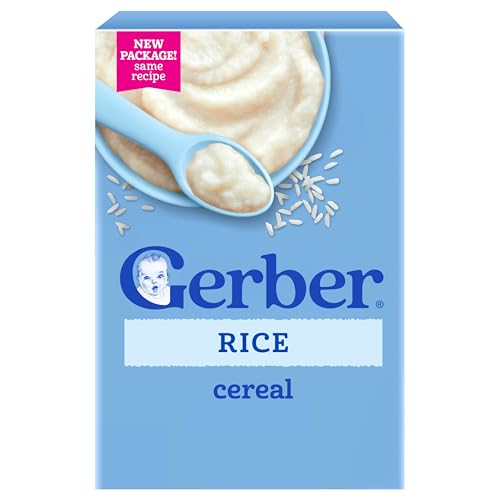
Gerber’s classic 1st Foods rice cereal remains a go-to for a reason: it’s reliable, affordable in bulk, and fortified with the iron that BARI’s organic option lacks. This five-box pack delivers 40 total ounces of cereal, making it the highest-volume rice cereal option at a very accessible cost per ounce. It’s Non-GMO, mixes smoothly into bottles or bowls, and is specifically designed for babies starting solids around 4 months.
Parents of preemies and babies with reflux particularly value this cereal — pediatricians often recommend adding a small amount to bottles to thicken formula or breast milk, and Gerber’s fine powder dissolves without clogging nipples. The five-box format means you won’t run out mid-week, and it’s easy to stash boxes in the diaper bag, the nursery, and grandma’s house.
The trade-off is that Gerber does not publicly share heavy metal test results for this particular cereal line the way some smaller organic brands do. If you’re concerned about rice arsenic levels and want independent verification on every batch, you may prefer BARI or Else. But if your priority is an iron-fortified, pediatrician-recommended rice cereal at a practical bulk price, this is the most sensible choice.
Why it’s great
- Five-box pack (40 oz total) offers excellent value for bulk buyers
- Iron-fortified — supports brain development and red blood cells
- Fine texture mixes well in bottles for reflux management
Good to know
- No publicly available heavy metal test results per batch
- Contains more than just rice — check label for added nutrients
5. Gerber Stage 2 Baby Food, Pear Cinnamon Oatmeal Cereal Tubs, 16-Pack
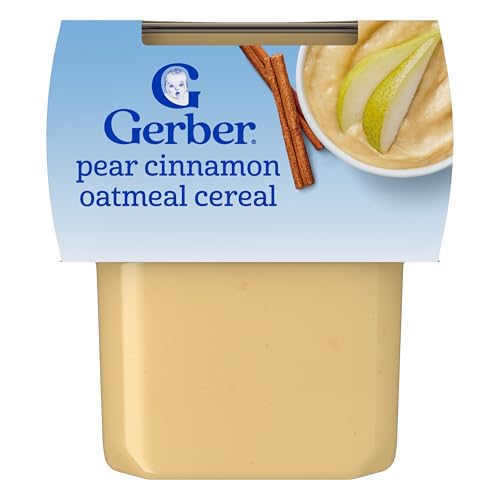
This isn’t a dry rice cereal — it’s a ready-to-eat oatmeal blend designed for stage 2 babies (6+ months) who are ready for more texture and flavor. Each tub provides 60% of the daily value of iron for brain development, plus 45% DV vitamin C and 30% DV zinc. The pear and cinnamon flavor is a gentle introduction to fruit-spice combinations without added sugars or artificial flavors.
The 16-pack format is incredibly convenient for busy parents. No mixing, no measuring, no cleanup — just twist off the lid and serve. Parents report that even picky toddlers who refuse homemade purees will eat these tubs, making them a reliable backup for days when baby-led weaning efforts fall flat. The texture is smooth but thicker than stage 1 purees, appropriate for babies who are developing chewing skills.
This is not a single-grain cereal, and the ingredient list includes pear puree and cinnamon along with the oatmeal base. If you’re still in the stage of introducing plain, single-ingredient foods, save this for later. It’s also less economical per serving than buying dry cereal and mixing yourself.
Why it’s great
- 60% DV iron per serving to support brain development
- Ready-to-eat convenience — no prep or cleanup needed
- 16 tubs provide plenty of backup meals for busy days
Good to know
- Not a single-grain cereal; contains pear, cinnamon, and oatmeal
- Higher per-serving cost than dry cereal options
6. Nestle Cerelac, Mixed Fruits and Wheat with Milk, 14.1 Ounce Can

Cerelac is a well-known infant cereal brand internationally, and this mixed fruits and wheat variant is a decent option for babies 8 months and older who have already accepted plain cereals. The can contains a pre-mixed powder with milk solids, fruit bits, and wheat flour — just add water and stir. It’s fortified with essential vitamins and minerals, making it a complete meal replacement for a single serving.
The flavor is noticeably sweeter than plain rice cereal, which can help transition babies who are reluctant eaters. Parents who grew up on Cerelac themselves often reach for it out of familiarity, and many report their babies enjoy the taste. The 14.1-ounce can is compact and easy to store.
The downsides are significant: the can size is smaller than it appears in product photos, and multiple reviews note that the price at Amazon is considerably higher than local grocery stores. Additionally, the wheat and milk content means it’s unsuitable for gluten-sensitive or dairy-allergic babies. For a simple stage 1 starter, you’re better off with Gerber’s plain rice or BARI’s organic option.
Why it’s great
- Pre-mixed with milk and fruit for complete nutrition
- Familiar brand with broad international availability
- Babies tend to enjoy the sweeter fruit flavor
Good to know
- Contains wheat (gluten) and milk — not for allergies or sensitivities
- Can size is smaller than product photos suggest
7. Nestle Nestum Infant Cereal, 5 Cereals, 10.6 oz (Pack of 12)
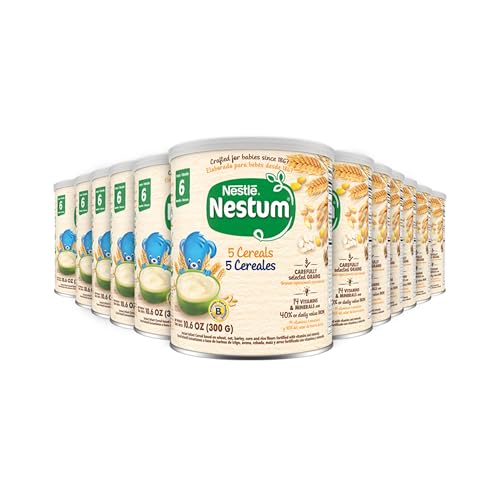
Nestum’s 5-cereal blend is a bulk-buy powerhouse for parents who want to stock the pantry for months. Each of the 12 canisters contains a mix of grains — not just rice — with added vitamins and minerals. Two servings per day provide 80% of the daily value of iron, which is among the highest iron fortification levels of any product on this list.
Parents who have difficulty finding Nestum in local stores appreciate the convenience of the 12-pack delivery, especially when the cost per canister is lower than retail. The cereal mixes with water, milk, soy milk, or juice, and it’s fine enough for babies who have already started solids. Several reviews mention that the low sugar content and high protein profile make it suitable even for older children and adults with chewing difficulties.
Two major issues: the first is that some buyers report receiving fewer than 12 canisters despite the listing claiming a 12-pack. The second is that expiration dates can be very tight — one review noted all 12 canisters expired within two months, which is impossible for a single baby to consume. If you do buy this, check the expiration date immediately upon arrival and consider sharing with a friend if the timeline is too short.
Why it’s great
- 12 canisters provide months of supply at lower per-canister cost
- 80% DV iron per 2 servings — among the highest fortification levels
- Low sugar, high protein, versatile mixing options
Good to know
- Some buyers report receiving fewer than 12 canisters
- Expiration dates can be very short — check immediately upon arrival
FAQ
At what age should I start feeding my baby rice cereal?
Is organic baby rice cereal safer from heavy metals?
Can I mix baby rice cereal with formula or breast milk?
How do I know if my baby has a reaction to rice cereal?
Final Thoughts: The Verdict
For most parents starting solids, the best baby rice cereal winner is the BARI Organic Baby Rice Porridge because it combines independent heavy metal testing, a single USDA Organic ingredient, and an ultra-smooth texture that babies love — without relying on iron fortification that can mask other concerns. If you want maximum convenience and iron fortification for reflux management, grab the Gerber 1st Foods Rice Cereal 5x8oz. And for the absolute cleanest option with a purity certification and plant-powered ingredients, nothing beats the Else Nutrition Organic Baby Cereal.