
Our readers keep the lights on and the weekend projects moving. As an Amazon Associate, I earn from qualifying purchases.
Waking up to uprooted flower beds, scattered trash, or the telltale signs of a scuffle with a raccoon is a frustrating ritual for anyone trying to maintain an outdoor space. The challenge isn’t just identifying the culprit—it’s finding a humane, effective, and low-maintenance strategy to keep them from returning night after night. Whether it’s a persistent deer browsing on your hedges, feral cats using your lawn as a litter box, or a determined groundhog undermining your shed, the right defense can restore peace without turning your yard into a fortress.
I’m Rikta — the co-founder and writer behind FitlyFast. I’ve spent years researching behavioral deterrent technologies, analyzing user-reported outcomes across ultrasonic, sprinkler, physical barrier, and sound-based systems to separate genuine solutions from gimmicks.
This guide breaks down each method by real-world effectiveness, installation complexity, and humane operation so you can decide which approach fits your specific nuisance. By the end, you’ll confidently select a best animal deterrent tailored to the exact wildlife pressure on your property.
How To Choose The Best Animal Deterrent
Selecting the right device starts with identifying the target animal’s size, its primary activity times (nocturnal versus diurnal), and the physical layout of your protection zone. A solution perfect for a small raised bed might fail entirely against a mature deer clearing a 6-foot fence in one bound.
Sensor Range and Detection Angle
The PIR (passive infrared) sensor is the brain of most electronic deterrents. A 120° detection angle with a 30-foot range covers an average backyard perimeter with fewer blind spots than a narrow 90° sensor. Wider angles reduce the number of units you need, but also increase the chance of false alarms from wind-blown branches or passing cars. Models with adjustable sensitivity let you tune out nuisance triggers while maintaining reliable animal detection.
Deterrent Method: Sonic vs. Spray vs. Barrier
Ultrasonic devices emitting frequencies between 13.5kHz and 65.5kHz are completely silent to humans but can be heard by dogs, cats, and many rodents. Water sprinkler deterrents use a sudden burst to startle and condition animals to avoid the area—effective against most mammals but dependent on hose pressure and ambient temperature. Physical barriers like buried metal fencing stop diggers (groundhogs, rabbits, determined dogs) at the source but require installation effort and won’t deter climbers or jumpers. Choose the method that matches the primary offender’s behavior pattern.
Power Source and Weather Durability
Solar-powered units eliminate wiring but need direct sunlight for several hours daily to maintain a full charge through overcast weeks. The IP rating (Ingress Protection) tells you how well the electronics resist rain and dust—IP44 handles splashing water, while IP65 or IP66 survives direct hose spray and driving rain. In northern climates with limited winter sun, a unit with USB backup charging ensures the deterrent doesn’t go silent during the coldest, darkest months when animals are most desperate for food and shelter.
Quick Comparison
On smaller screens, swipe sideways to see the full table.
| Model | Category | Best For | Key Spec | Amazon |
|---|---|---|---|---|
| Peepst Sprinkler 2-Pack | Sprinkler | Large properties with multiple entry points | 110° PIR, 26 ft range | Amazon |
| TFKK 2-Pack Ultrasonic | Ultrasonic | Versatile, multi-animal garden protection | 5 frequency modes, 120° sensor | Amazon |
| TONGMO No-Dig Fence | Barrier | Stopping diggers under existing fences | 15″ depth, 1.5″ spike spacing | Amazon |
| Peepst Motion Sprinkler | Sprinkler | Targeted bed & border protection | 360° spray, 4 sensitivity levels | Amazon |
| RQQN 2-Pack Ultrasonic | Ultrasonic | Night-active predators (coyotes, raccoons) | 13.5–65.5 kHz, IP66 | Amazon |
| COTINSE Sound Alarm | Sound/Light | Remote areas & chicken coops | 130 dB, 13 sounds + recording | Amazon |
| Peepst Green Ultrasonic | Ultrasonic | Entry-level & budget-conscious buyers | 10–14 kHz, 39 ft range | Amazon |
In‑Depth Reviews
1. Peepst Solar Motion Activated Sprinkler 2-Pack
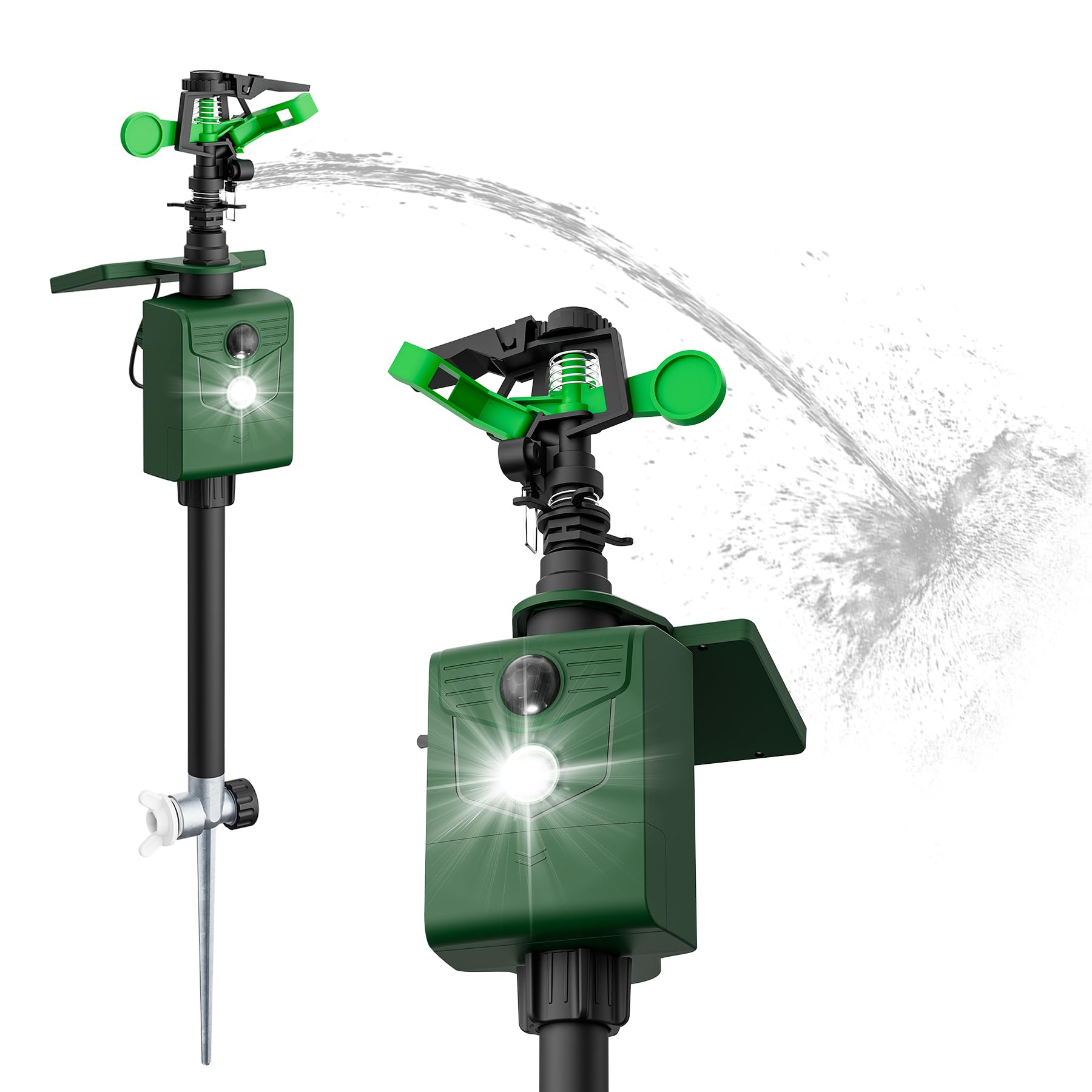
The two-pack configuration of these solar sprinklers addresses the primary weakness of single-unit deterrents: coverage gaps. Each unit packs a high-precision PIR sensor with a 110° detection angle and a 26-foot maximum range, which together create overlapping protection zones ideal for irregularly shaped yards or any property with multiple access points. The 360° rotatable nozzle lets you dial in a focused jet for a specific flower bed or a wide arc for a lawn border, and the spray range adjusts based on your existing hose water pressure. Dual power (solar panel plus DC charging) and an automatic 24-hour anti-clog spray cycle mean the units rarely require hands-on maintenance after the initial setup.
Real-world user reports consistently describe a dramatic reduction in deer tracks, rabbit damage, and stray cat activity within the first week of deployment. The motion-activated water burst is startling enough to condition animals to avoid the zone permanently, yet completely harmless. Multiple users noted that the visible spray arc provides satisfying confirmation that the system is working—a tactile reassurance that ultrasonic devices cannot offer. The included metal ground stakes hold the units steady even in loose soil, and the ABS construction shrugs off rain and UV exposure season after season.
The primary trade-off is the need for a standard 3/4-inch garden hose connection per unit, which means you’ll need a splitter and sufficient water pressure to run both sprinklers simultaneously. In very cold climates, the units must be drained and stored before the first hard freeze to prevent internal frost damage. For anyone managing a medium to large property with consistent hose access, this two-pack delivers the most reliable, low-hassle daily defense available in this category.
Why it’s great
- Two-unit coverage eliminates blind spots common with single-device setups
- Adjustable 360° nozzle and four sensitivity levels for precise targeting
- Solar and DC dual-power with 24-hour self-cleaning cycle prevents clogs
Good to know
- Requires a hose connection and adequate water pressure per unit
- Must be drained and stored in freezing winter temperatures
2. TFKK 2-Pack Solar Ultrasonic Animal Repeller
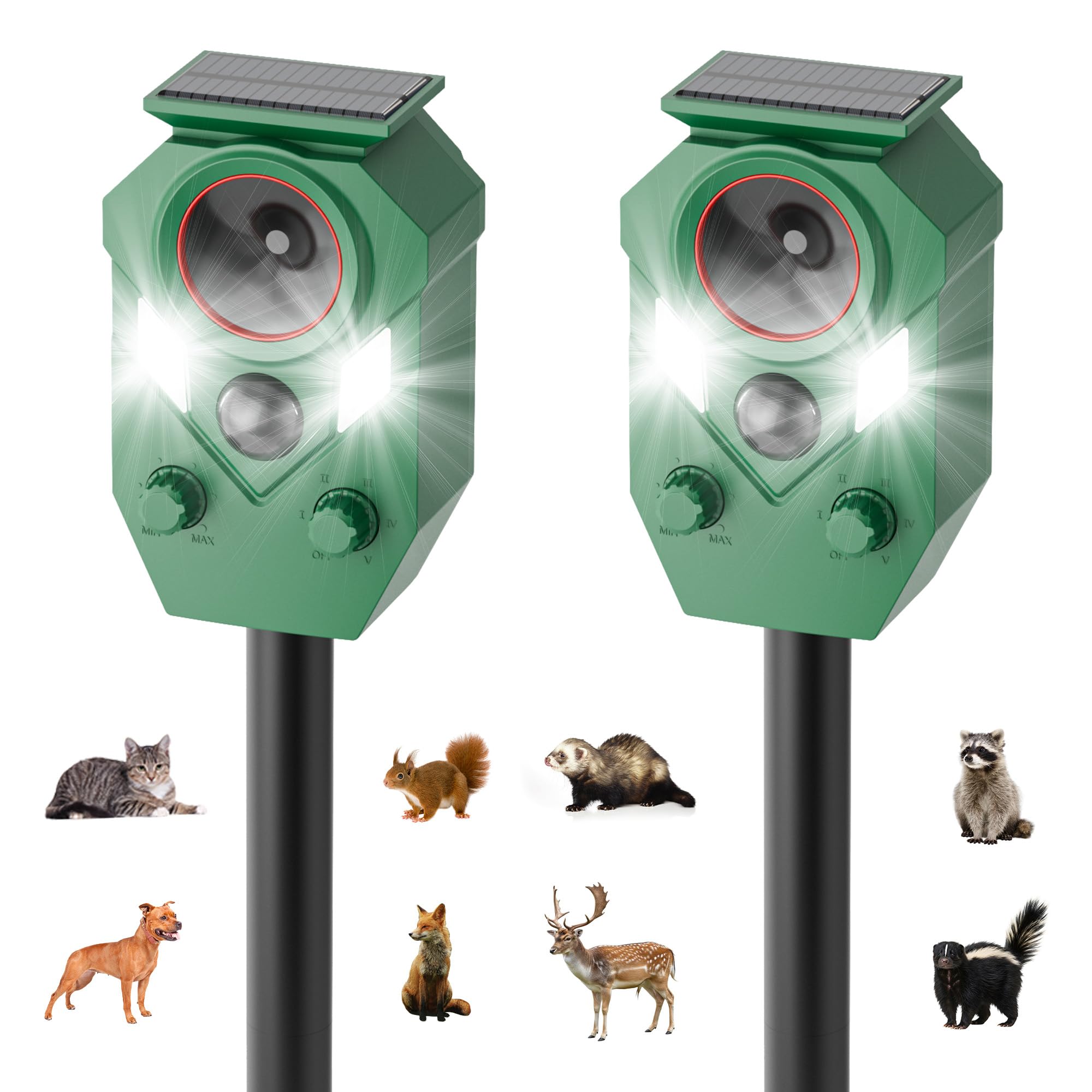
The standout feature here is the five adjustable frequency modes, a capability that directly addresses the biggest weakness of fixed-frequency ultrasonic repellers: habituation. Animals can become desensitized to a single unchanging tone over time, but having the ability to cycle between different frequencies keeps the deterrent effect fresh. The PIR sensor covers a generous 120° angle with a 30-foot range, and when triggered it pairs the ultrasonic burst with bright LED strobe lights for a dual-sensory punch. The solar panel charges efficiently in direct sun, and the IP65 waterproof ABS housing ensures the electronics stay dry through rainstorms and sprinkler overspray.
User feedback highlights the unit’s effectiveness against a broad spectrum of animals—deer, raccoons, stray cats, and even rodents like mice. Several reviews from orchard and vegetable garden owners noted a near-immediate reduction in soil disturbances and browsing damage within days of installation. The automatic return to standby mode when no motion is detected conserves battery life, which is critical during the shorter days of autumn. The stake mounting system is straightforward, and the compact green design blends into garden borders without drawing visual attention.
One consistent caveat is that the device is less effective against squirrels, which seem to tolerate ultrasonic frequencies better than larger mammals. Additionally, the IP65 rating, while excellent for rain, does not guarantee protection against full submersion or high-pressure hose spray at close range. For homeowners who want a set-and-forget ultrasonic solution with the flexibility to adapt to changing pest pressures, the TFKK two-pack provides outstanding coverage at a mid-range investment.
Why it’s great
- Five frequency modes prevent animals from becoming accustomed to a single tone
- Wide 120° detection and LED strobe lights for night-time effectiveness
- Solar powered with IP65 weatherproofing for year-round outdoor use
Good to know
- Reports limited effectiveness against squirrels specifically
- Not fully submersible; avoid placing in low-lying flood zones
3. TONGMO No-Dig Animal Barrier Fence 10-Pack

This is the only non-electronic solution in the lineup, and it fills a critical gap that no sensor-based device can address: physical prevention of digging. Each panel measures 24 inches wide by 15 inches deep, with 5mm galvanized steel rods spaced 1.5 inches apart—tight enough to stop medium-sized dogs, groundhogs, and rabbits from tunneling under an existing fence, yet wide enough to allow grass roots to grow through. The triple-welded crossbars add structural rigidity, and the rust-proof finish has held up through multiple New England winters according to long-term user reports. Installation requires only a hammer and a block of wood to drive the panels into the ground along the base of your current fence line.
User feedback consistently praises the product for stopping determined diggers cold. Owners of huskies, terriers, and other escape-artist breeds report that the barrier ended months of frustration after a single weekend of installation. The 10-pack covers roughly 20 linear feet, and the panels can be clipped together using the included wire clamps for a continuous underground wall. Because there are no batteries, sensors, or moving parts, the maintenance burden is zero once installed.
The main limitation is that these panels only solve digging problems—they do nothing to deter climbers, jumpers, or animals that access the yard from above. The horizontal rods can separate from the vertical spines if hammered into particularly rocky or hard-packed soil, so pre-soaking the ground or using a drill to create pilot holes is recommended. For anyone whose primary nuisance is a dog digging under a chain-link fence or a groundhog excavating under a shed, this barrier offers a permanent, low-tech solution that no electronic device can replicate.
Why it’s great
- Galvanized steel construction resists rust for years of outdoor exposure
- 1.5-inch spike spacing stops medium-sized diggers without blocking root growth
- No power source, no maintenance—install once and forget
Good to know
- Only effective against digging; does not deter climbers or jumpers
- Hard soil may require pilot holes or pre-soaking to prevent weld separation
4. Peepst Motion-Activated Sprinkler (Single)
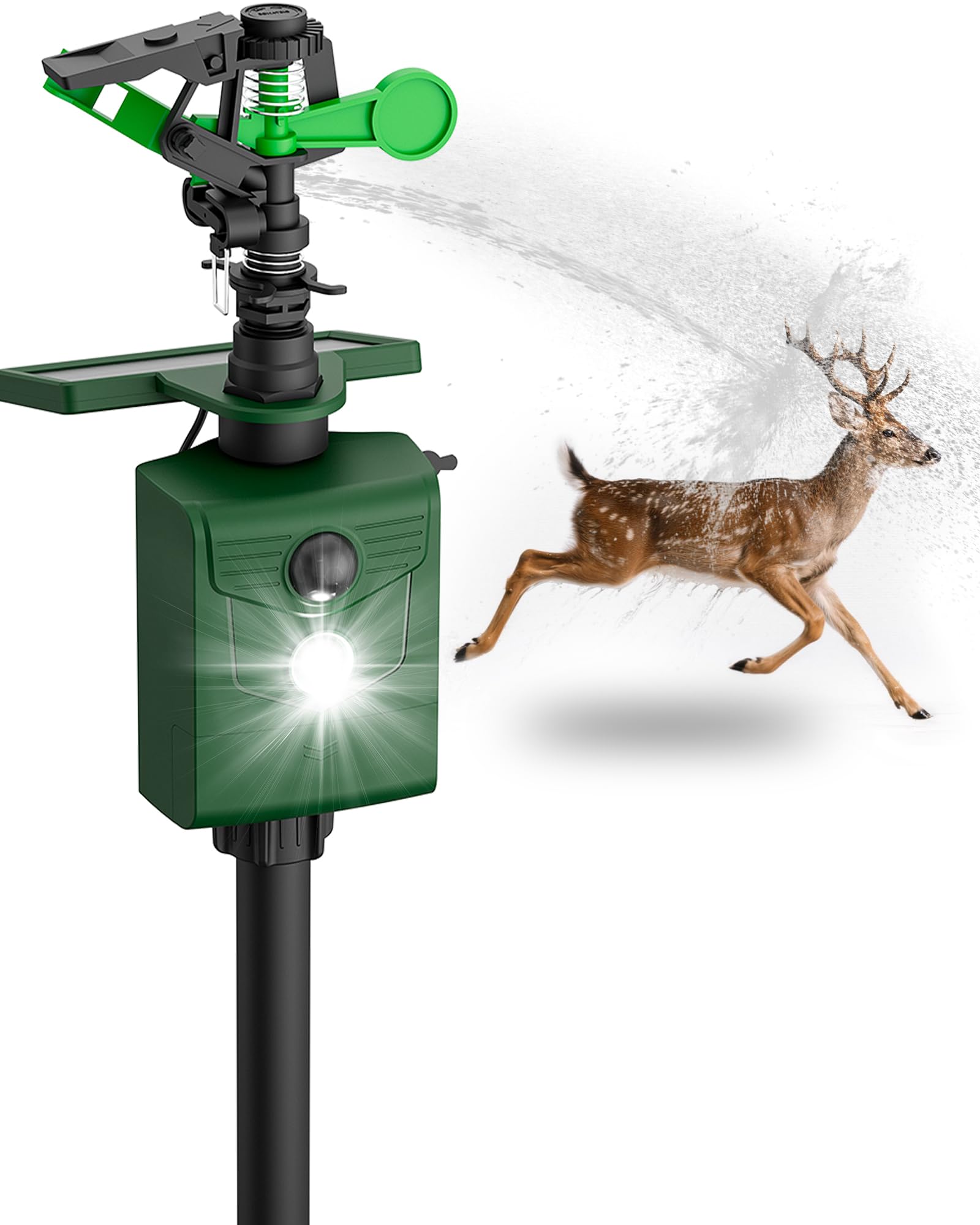
This single-unit sprinkler strip the multi-pack concept back to a focused, high-value tool for homeowners defending a specific zone—such as a vegetable patch, a single flower bed, or a trash can enclosure. The PIR sensor’s 26-foot range and 110° detection angle are identical to the two-pack version, but the real differentiation lies in the 4-level sensitivity knob. Level 1 only triggers on large, slow-moving animals (like deer), while level 4 reacts to virtually any motion, including small birds and rabbits. This granularity is invaluable for avoiding the frustration of constant false alarms from swaying plants or passing cars. The quick-connect hose fitting and robust metal stake make setup a five-minute job, and the IP65 waterproof casing handles hose splash and rain without issue.
User reviews highlight the device’s effectiveness against rabbits, deer, and neighborhood cats, with several owners reporting that their garden damage dropped to near zero within the first week. The automatic 24-hour self-cleaning spray is a thoughtful touch that prevents the nozzle from clogging with dirt or insect nests during idle periods. Solar charging keeps the battery topped off, and the unit also offers USB backup for cloudy stretches. The spray pattern can be switched between a 360° rotation, a wide-angle fan, or a focused jet, giving you precise control over which areas get soaked.
The single-unit format obviously covers less ground than a two-pack, so you’ll need to prioritize the most vulnerable area of your yard. Water pressure remains a dependency—low-pressure hose setups may produce a weak spray that fails to startle larger animals. For the homeowner who wants a single, powerful, and fully customizable water deterrent for a specific high-value area, this sprinkler delivers reliability and precision at a mid-range price point.
Why it’s great
- Four sensitivity settings let you dial in the exact animal size threshold
- Three spray modes (360°, wide fan, focused jet) for targeted coverage
- Solar and USB backup with anti-clog self-cleaning cycle
Good to know
- Single unit covers limited area; best suited for a specific zone
- Performance depends on adequate garden hose water pressure
5. RQQN 2-Pack Ultrasonic Animal Repellent
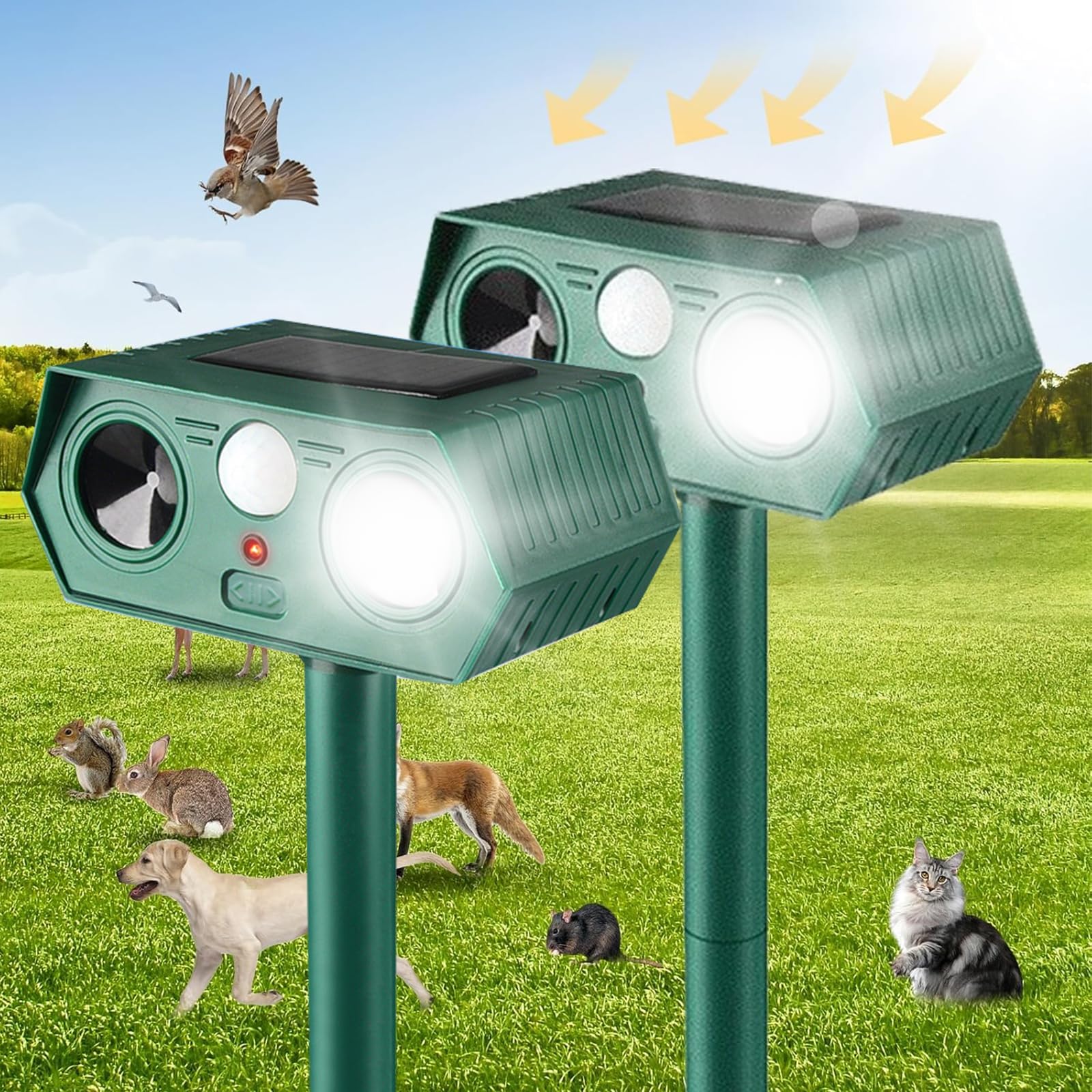
This two-pack distinguishes itself with an exceptionally wide ultrasonic frequency sweep—from 13.5kHz up to 65.5kHz—which covers both the lower range that larger mammals like deer and coyotes can hear and the upper range that targets smaller rodents like squirrels and rats. The device also employs a smart dual-mode strategy: during daylight hours it relies solely on ultrasonic waves, but after sunset it adds bright LED flash lights to visually deter nocturnal visitors such as raccoons, foxes, and coyotes. The 110° PIR sensor detects movement between 20 and 33 feet depending on animal size, and the IP66 weatherproof rating means it withstands not just rain but also direct hose-down cleaning without damage.
Users living in wooded or rural areas report particularly strong results against coyotes and stray dogs. One reviewer noted that a single unit placed near a carport effectively eliminated rats seeking shelter in the engine compartment during winter—a testament to the deterrent’s reach. The solar panel paired with high-grade ABS construction ensures the unit survives harsh ranch conditions, including heavy rain and temperature swings. Installation is genuinely tool-free: simply stake the unit into the ground or use the built-in hanging holes to attach it to a fence post or tree trunk.
Some users mention that the units are less effective against animals that have already established a habit or food source in the area—a determined raccoon with a known garbage supply may require additional reinforcement. The lack of adjustable frequency cycling (output is fixed per mode) means habituation is a long-term risk if the same animal visits repeatedly. For rural property owners facing nightly pressure from coyotes, foxes, and stray dogs, the IP66 durability and wide frequency range make this a strong, weather-resistant choice.
Why it’s great
- Frequency range from 13.5kHz to 65.5kHz covers both large predators and small rodents
- Night mode adds LED flash lights for enhanced deterrence after dark
- IP66 waterproof rating handles rain, hose spray, and harsh ranch conditions
Good to know
- Fixed frequency output per mode may allow habituation over time
- Less effective against animals with established food sources in the area
6. COTINSE Solar Outdoor Motion Sensor Alarm
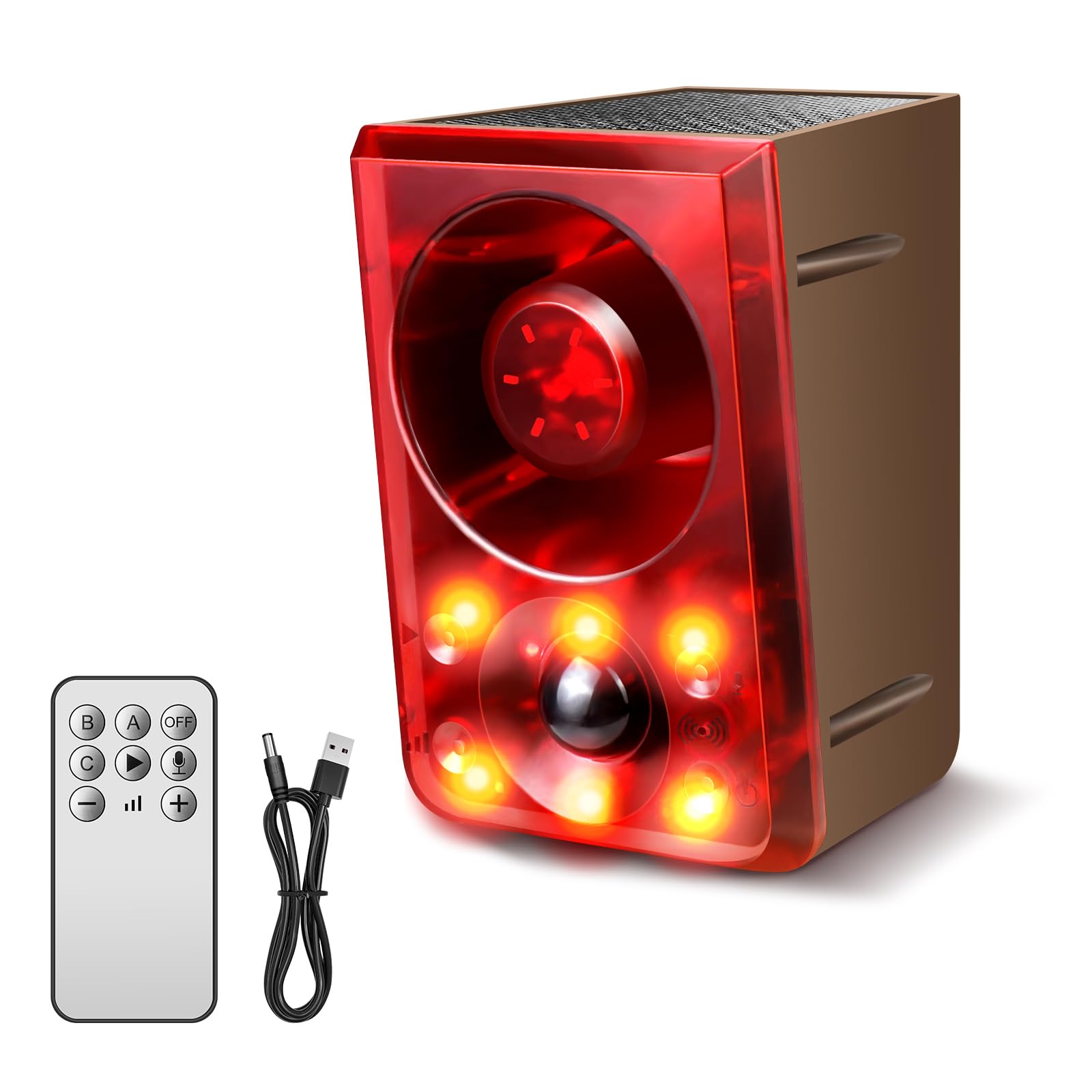
This device takes a fundamentally different approach from ultrasonic or sprinkler systems: it uses audible sound blasts up to 130 decibels combined with a strobe light to scare animals away. The 13 preloaded sounds include a wolf howl, dog barking, and gunshot effects, plus the ability to record your own voice. This makes it uniquely effective for remote properties where the noise won’t disturb neighbors and where animals have become desensitized to ultrasonic frequencies. The solar panel with USB backup keeps the alarm operational, and the PIR sensor claims a 500-foot maximum range in open line-of-sight conditions—significantly longer than any other device in this guide.
User reports from chicken farmers and rural landowners are emphatic: the unit successfully scared off foxes, coyotes, and even bears from vulnerable livestock areas. The custom recording feature allows you to personalize the alert—one user recorded themselves yelling at feral cats, though with mixed results in a dense urban environment. The three operational modes (24-hour, night-only, and timer) give flexibility based on the target animal’s activity window. The device is also notably affordable compared to equivalent sprinkler setups, making it an accessible entry point for those with a single problem zone.
The primary drawbacks are the noise—130 dB is genuinely painful at close range and will disturb neighbors in suburban or urban settings. The remote control requires a direct line of sight and must be kept within 3 feet of the unit, which limits convenient adjustments. Several users reported that one or two units out of multi-packs stopped functioning after a few months, suggesting some quality variability. For rural dwellers with space buffers and a need to deter large predators like coyotes or bears, the sheer volume and customizable sounds make this a powerful last-resort option.
Why it’s great
- 130 dB sound and strobe light create a powerful startle response for large predators
- 13 preloaded sounds plus custom recording for personalized deterrence
- Long 500-foot detection range suits large, open rural properties
Good to know
- Very loud—unsuitable for suburban or dense urban neighborhoods
- Remote requires direct line of sight and 3-foot proximity
7. Peepst Solar Animal Repeller (Green)
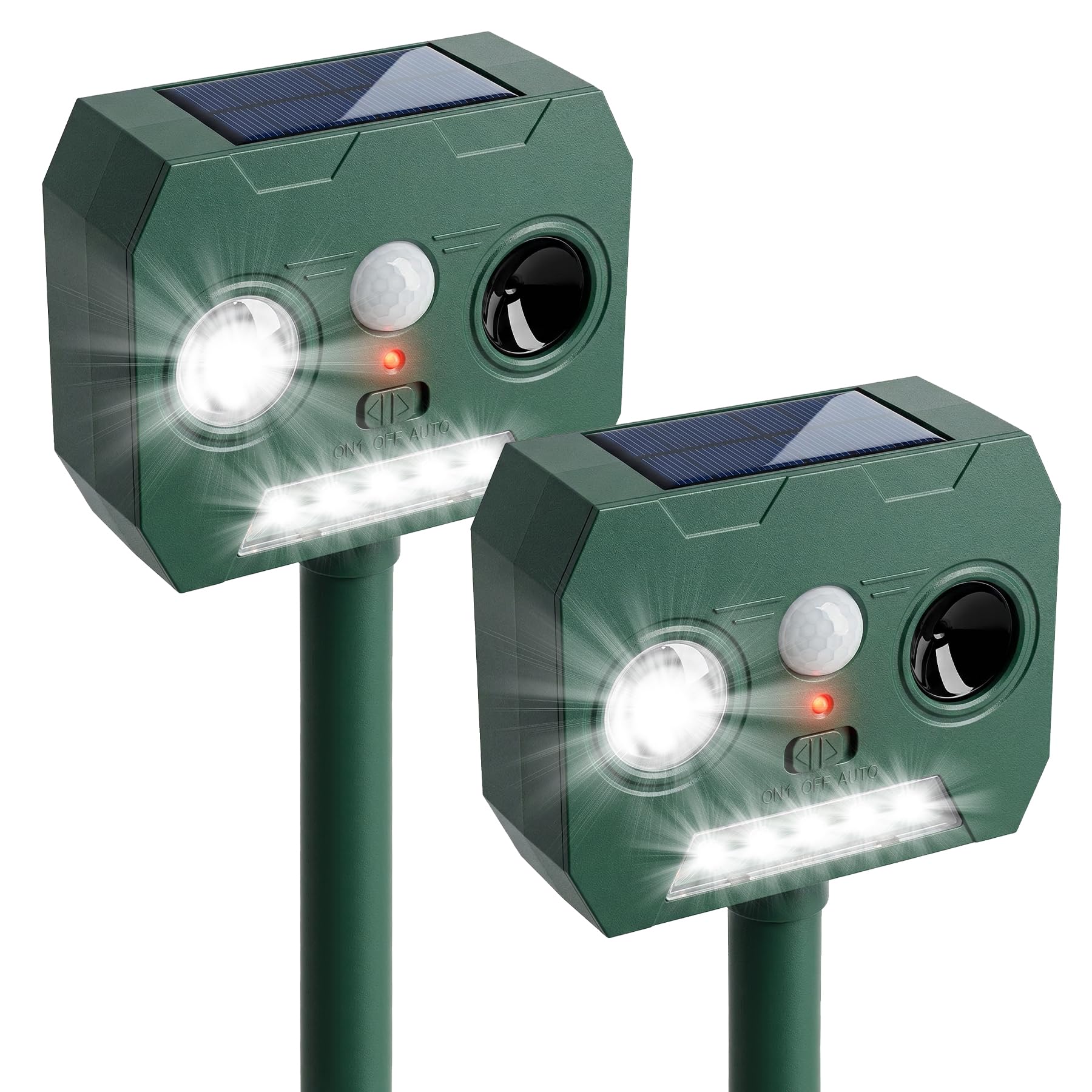
This budget-friendly entry-level unit keeps the fundamentals simple: a 120° PIR sensor with a 39-foot detection range, ultrasonic frequencies in the 10–14kHz band, and bright LED flashes triggered by motion. The poly-silicon solar panel charges the internal battery throughout the day, and the IP44 waterproof rating handles splashing rain and sprinkler mist. The dual mounting system—ground stake or wall mount—gives you installation flexibility, and the compact green housing is visually unobtrusive in a garden setting. Two operational modes (continuous deterrence and motion-triggered) let you balance battery conservation with protection intensity.
User reports are mixed but informative. Several gardeners with established flower beds found the unit effectively deterred rabbits and deer, noting a visible reduction in browsing damage within days. The humane, chemical-free operation was a consistent point of praise, and the solar-powered autonomy eliminated the need for battery swaps or wiring. However, a significant minority of users reported that the device had zero effect on persistent stray cats or raccoons, especially in urban environments where animals are already desensitized to lights and sounds. The 10–14kHz frequency band is narrower than premium competitors, which may limit effectiveness against animals that are less sensitive to that specific range.
The IP44 rating, while adequate for light rain, is the lowest weather protection in this guide and means the unit should be positioned where it won’t face direct, prolonged hose spray or standing water. For a first-time buyer wanting to test whether ultrasonic deterrents work on their specific nuisance animal without a large financial commitment, this unit represents the lowest-risk entry point. Just temper expectations—it may require multiple units or a supplementary method for stubborn or large animals.
Why it’s great
- Low entry cost makes it an affordable trial for first-time users
- Solar-powered with 39-foot detection range for decent coverage
- Dual ground stake and wall mount installation options
Good to know
- Narrow 10–14kHz frequency range may not deter all animal types
- IP44 rating limits placement; avoid prolonged direct hose spray
FAQ
Will ultrasonic animal repellents bother my own pets?
How many deterrent units do I need for an average backyard?
Do solar-powered deterrents work in winter or cloudy regions?
Final Thoughts: The Verdict
For most users, the best animal deterrent winner is the Peepst Solar Motion Activated Sprinkler 2-Pack because its dual-unit coverage, humane water spray, and solar autonomy solve the widest range of nuisance animal problems with minimal maintenance. If you want the flexibility of adjustable ultrasonic frequencies and LED flash deterrence, grab the TFKK 2-Pack Ultrasonic Repeller. And for a permanent, zero-power solution against persistent diggers like groundhogs and escape-artist dogs, nothing beats the TONGMO No-Dig Barrier Fence.