
Our readers keep the lights on and the weekend projects moving. As an Amazon Associate, I earn from qualifying purchases.
Choosing a boot for extreme cold is a decision where the stakes are measured in frostbite risk and hours of outdoor productivity. A few degrees of warmth, a millimeter of extra room for thick socks, or a rubber compound that stays flexible at -30°F can separate a successful day from a dangerous retreat. The market offers everything from lightweight pac boots to overbuilt hunting tanks, but only a handful genuinely deliver on sub-zero performance.
I’m Rikta — the co-founder and writer behind FitlyFast. I have spent years analyzing thermal insulation ratings, outsole rubber durometers, and waterproof membrane construction across hundreds of cold-weather products to identify the models that match their bold temperature claims.
This guide cuts through the marketing hype to deliver a direct, spec-focused evaluation of the boots for extreme cold that have proven their reliability in real-world conditions from ice fishing holes to alpine summits.
How To Choose The Best Boots For Extreme Cold
Extreme cold boots are a unique category where conventional sizing rules and material expectations shift. The primary engineering goal is to trap still air for insulation while maintaining a waterproof barrier, all without creating a clumsy, circulation-cutting enclosure. Here are the three factors that separate a great cold-weather boot from a mediocre one.
Insulation Type and Weight
Most boots list insulation in grams (200g, 400g, 1000g, 1200g). This number refers to the weight of the insulation fill used in the boot’s lining. For stationary use like ice fishing or hunting from a blind, you want 1000g to 2000g. For active use like hiking or snowshoeing, 400g to 800g is usually enough to prevent sweaty feet. Some premium boots, like those from Baffin, use multi-layer proprietary systems (rated to -94°F) that don’t rely on a single gram-weight number, instead testing the entire boot system in a cold chamber.
Boot Height and Snow Collar
Extreme cold often involves deep snow. A boot that is only 6 inches tall will allow snow to pour over the top during a post-hole. Look for 8-inch to 12-inch shaft heights. A built-in gaiter or a snug-fitting snow collar at the top of the boot is a massive advantage — it prevents snow from packing down into the boot and also blocks wind from entering and stripping your body heat away from your feet.
Sizing for Socks and Circulation
This is the most common mistake. Your foot size changes when wearing 2 pairs of socks (a thin liner and a thick wool cushion). You need a half to a full size larger boot to allow for that volume without compressing the insulation. If your foot crushes the insulation against the boot wall, it loses its dead-air space and will feel cold. A properly fitted cold-weather boot should feel slightly roomy with thin socks, because you will size up for thick socks.
Quick Comparison
On smaller screens, swipe sideways to see the full table.
| Model | Category | Best For | Key Spec | Amazon |
|---|---|---|---|---|
| Baffin Selkirk | Pac Boot | Sub-zero snowmobiling & extreme statis | Rated to -94°F, 13 inch height | Amazon |
| Baffin Eiger | Pac Boot | Static cold use (photography, ice fishing) | Multi-layer insulation, 8 inch height | Amazon |
| Baffin Control Max | Pac Boot | Arctic-grade comfort & ice fishing | Dual-layer inner boot, 9 inch height | Amazon |
| Irish Setter Elk Tracker | Hunting Boot | Sub-zero camping & heavy hunting | 1000g insulation, 12 inch height | Amazon |
| UGG Adirondack Tall III | Winter Fashion Boot | Warmth & style for everyday winter wear | Sheepskin fleece lining, 8 inch height | Amazon |
| KEEN Revel IV High Polar | Insulated Hiker | Active winter hiking & snowshoeing | 400g insulation, waterproof leather | Amazon |
| ROCKY Blizzard Stalker | Work Boot | Ice fishing & daily sub-zero chores | 1200g insulation, 8 inch height | Amazon |
| Carhartt Rugflx 8″ | Work Boot | Extreme duty work & construction | 0°F rating with wool socks, 8 inch height | Amazon |
| KEEN Revel 4 Mid | Mid Hiker | All-around winter hiking & casual snow | Mid-height, waterproof, wide toe box | Amazon |
In‑Depth Reviews
1. Baffin Selkirk Snow Boot

This is the heavyweight champion of arctic-grade boots. The multi-layer removable liner system combines interlocking insulation layers with a reflective foil barrier that does an exceptional job of keeping deep cold from migrating through the boot. The special rubber compound, called the IcePaw outsole, stays flexible well below zero, providing a level of surface contact and grip that standard winter boots lose once the mercury drops below 10°F. The 13-inch shaft with a snow gaiter built into the upper means you can wade through deep powder without worrying about snow entry.
User reports confirm its performance in extreme wind chill events down to -50°F during snowmobiling, with testers noting that the insulation compresses slightly after a minute or two for a more natural, form-fitting feel. The boot runs large, which is intentional to accommodate heavy socks and allow the insulation to loft properly — a point many buyers miss. The removable liner is a practical advantage for drying overnight after multi-day use, preventing the damp cold that can set in with non-removable liners.
Where this boot excels is stationary exposure. Sitting on an ice fishing hole at -18°F requires a boot that delivers passive warmth without generating heat through activity, and the Selkirk delivers. It is less suitable for fast-paced hiking due to its higher weight and bulk, but for arctic-grade protection when standing still, it sets the standard.
Why it’s great
- Industry-leading -94°F cold rating verifiable through cold chamber standards
- Removable multi-layer liner allows overnight drying and long-term hygiene
- Icepaw outsole maintains flexibility and grip in extreme sub-zero conditions
Good to know
- Bulky profile makes it difficult to fit under snow pants cuffs
- Sizing requires careful attention to sock volume; order up a full size
2. Baffin Eiger Snow Boot
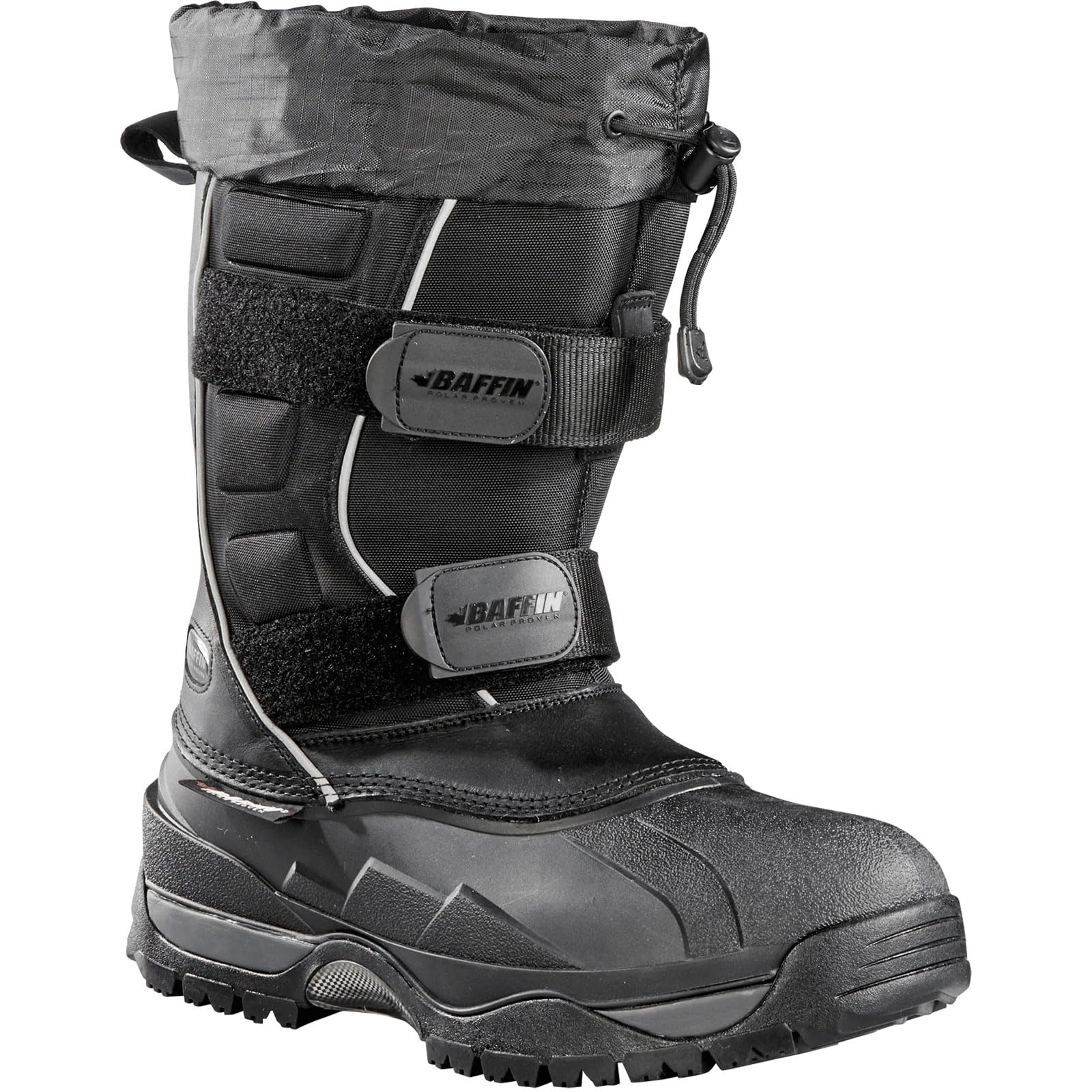
Baffin positions the Eiger as even warmer than the Selkirk, and the cold-box testing confirms it. This is a boot designed exclusively for static or low-activity exposure — think photography sessions in sub-zero landscapes, ice fishing, or watching outdoor events in brutal cold. The shorter 8-inch profile makes it easier to stand and walk in compared to the taller Selkirk, though it sacrifices some deep-snow protection that a taller gaiter would provide.
The boot is well-constructed with a similar multi-layer inner boot system, but the footbed is narrower than the Selkirk or the Control Max models. Users with wide feet or very muscular calves report that the fit is too restrictive, especially along the Achilles and upper cuff. Sizing is a critical issue here — many reviews note that you must size up significantly, with one user reporting an 11.5 foot needing a size 14. This is not a minor variance; it’s a fundamental design characteristic that rewards careful measurement.
For static warmth, the Eiger is a legitimate tool. The front seam is unsealed at the ankle, which a few users sealed themselves with a dab of seam sealer. It runs big, so the sizing headache is real, but if the fit works for your foot shape, this boot produces unmatched warmth for low-exertion sub-zero days.
Why it’s great
- Extremely high static warmth rating, exceeding the Selkirk in cold-chamber data
- Shorter height improves mobility and flexibility compared to taller pac boots
- Durable construction with rubber outsole that resists cracking in extreme cold
Good to know
- Narrow last and cuff not suitable for wide feet or thick calves
- Aggressive size-up required; expect to order two to three sizes above normal
3. Baffin Control Max Snow Boot
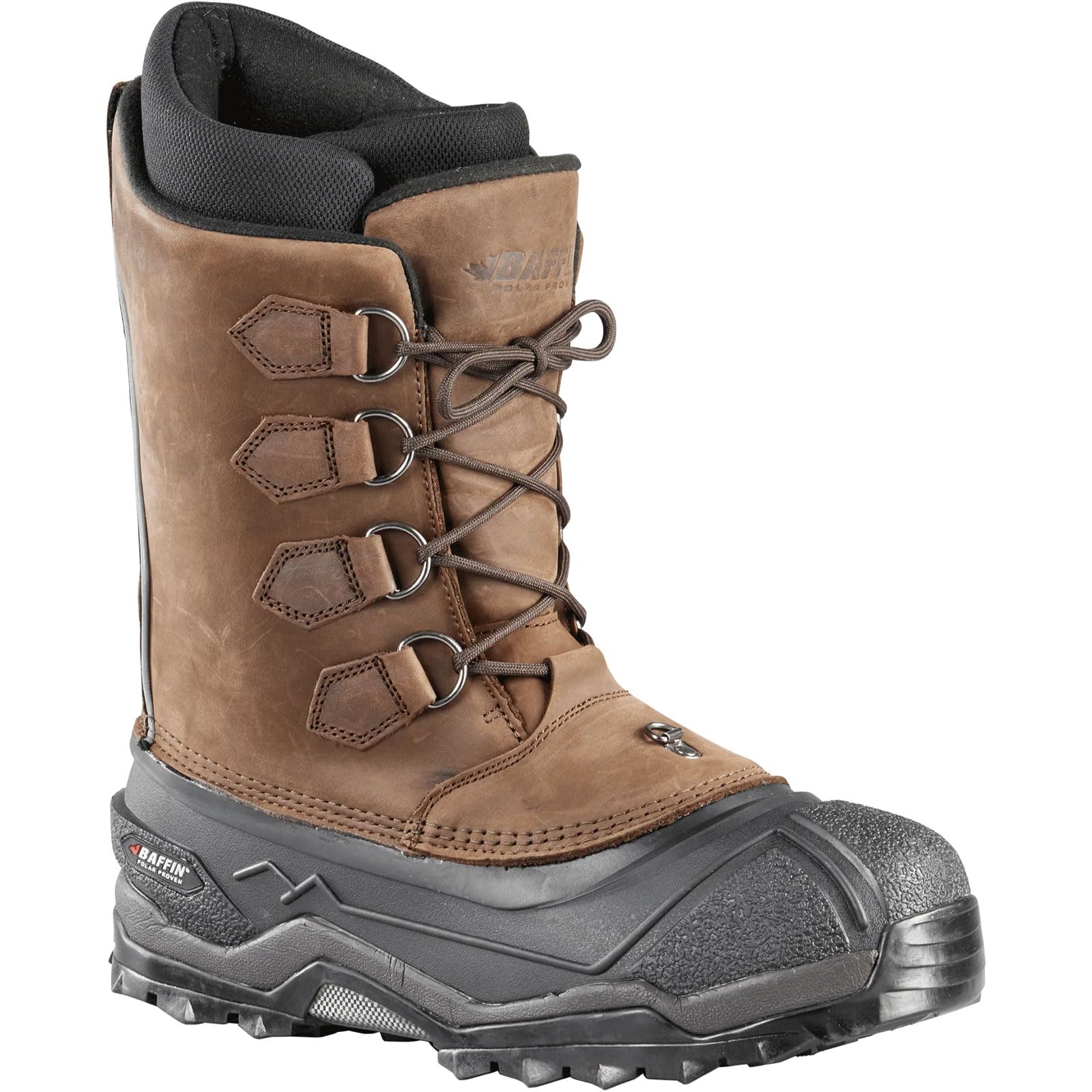
The Control Max is a serious pac boot that sits between the Selkirk and Eiger in height and warmth, but it distinguishes itself with a more accommodating fit for a wider range of foot shapes. The dual-layer inner boot features a removable liner that provides excellent insulation while still allowing the boot to feel cushioned — several users describe the sensation as “walking on pillows.” This is a direct result of the thick, multi-density foam and felt layers in the liner, which absorb shock and reduce fatigue over long stationary periods.
It runs a half-size smaller than standard shoes, not a full size, which makes it easier to guess correctly. The boot is bulky, and that is its main trade-off. Wearing it around town or on a casual walk looks and feels like space boots; the thick cuff and wide profile make fitting pants over the top difficult. This is not a boot for aesthetic subzero style — it is a tool for staying warm while working outside.
Users who bought it for snow blowing, ice fishing, and hunting have praised its warmth and build quality, noting that after a short break-in period where the insulation compresses, the fit becomes near-perfect. The traction on packed snow and ice is good but not as specialized as the Baffin IcePaw compound. For the warmth-to-bulk ratio, this is the most accessible high-performance option in the Baffin lineup.
Why it’s great
- Plush, cushioned liner provides all-day comfort for standing on ice or frozen ground
- Insulation compresses for a custom fit after brief wear without losing warmth
- More accessible sizing than other Baffin models; half-size up works for most
Good to know
- Very bulky profile looks overbuilt for casual use and doesn’t fit under pants
- Not designed for hiking or high-movement activities; best for static outdoor work
4. Irish Setter Elk Tracker 1000g

The Elk Tracker is an overbuilt hunting boot that feels more like a piece of heavy equipment than footwear. The 12-inch shaft provides exceptional ankle support and deep-snow protection, and the 1000-gram insulation rating is ideal for the transition from hiking to sitting still in a deer stand. It is not a lightweight boot, but the mass translates directly into durability — these are built to survive multiple seasons of rough use in the backcountry.
Fit is accommodating for wide feet, especially in the EE width options, but users with narrow feet may find the boot excessively roomy. The boot requires a period of break-in, and many owners recommend applying multiple coats of Sno-Seal to maximize the waterproofing of the leather. Without this treatment, the leather can wet out during prolonged exposure to slush or rain. The sole unit is stiff, which is excellent for scrambling on uneven terrain and sidehilling but less forgiving for casual walking on pavement.
One user reported sole cracking after two months of heavy use, which was immediately replaced under premium customer service. However, another user reported that after 11 years of use, the boots remained warm, dry, and intact — a testament to the variance in individual usage. For the hunter or winter camper who needs a bombproof boot that can handle the worst of backcountry cold and abuse, the Elk Tracker is a proven platform.
Why it’s great
- Extremely rugged construction with full-grain leather and reinforced stitching
- 12-inch height provides deep snow protection and outstanding ankle support
- Excellent fit for wide feet (EE) with a stable platform for hunting terrain
Good to know
- Heavy and stiff; requires a break-in period and may feel clunky on pavement
- Leather needs regular waterproofing treatment to maintain performance in wet snow
5. UGG Adirondack Boot Tall III
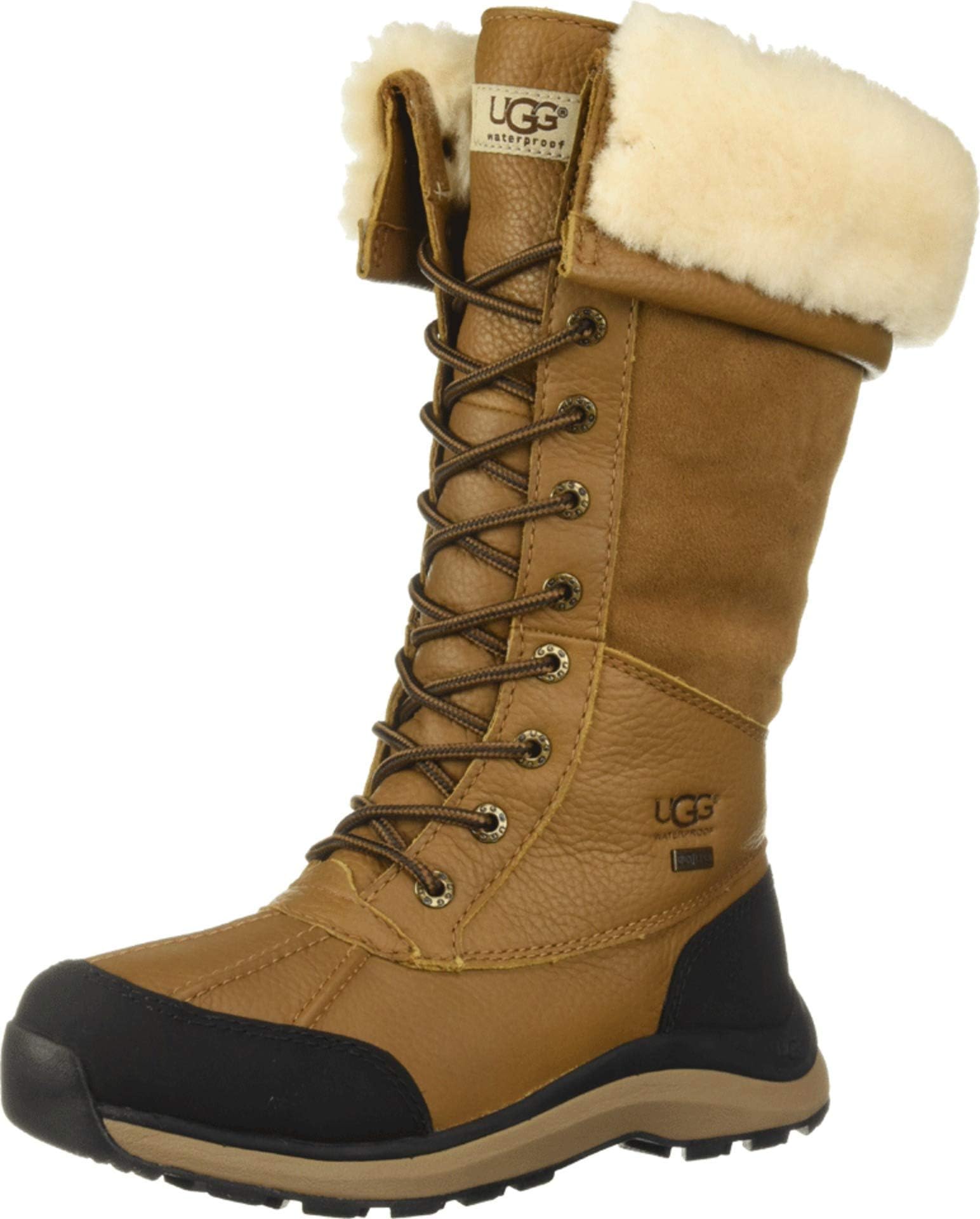
The UGG Adirondack III proves that a lifestyle brand can produce a genuinely effective cold-weather boot. It uses a sheepskin fleece lining that runs the full interior length, extending up the shaft, which provides a plush warmth that is immediately noticeable. The fleece wicks moisture away from the skin better than synthetic insulation when you start to sweat, and the leather upper is treated with a waterproof coating that holds up well in slushy conditions. The outsole features a lug pattern similar to hiking boots, giving it capable traction on snow and ice for urban use.
Sizing is true to standard shoe size, which is refreshing in this category. The boot accommodates a wide calf with its lacing system, though the shaft is not adjustable for leg circumference beyond the laces. The fleece lining does compress over time, which can make a snug fit feel slightly looser after a few months. This is not a boot for backcountry trekking or long-distance winter hiking; the tread is not aggressive enough for deep mud or steep ice.
For the woman who needs a boot that can handle a daily commute through snowy sidewalks, a trip to the sledding hill, or standing at a winter market, the Adirondack III delivers warmth without the bulk of a pac boot. It is a category-specific choice — a fantastic cold-weather boot, but not an extreme-weather boot.
Why it’s great
- Real sheepskin fleece lining provides natural, breathable warmth that regulates temperature
- True-to-size fit eliminates the guessing game common in extreme cold boots
- Attractive design that transitions from snow to social settings without looking tactical
Good to know
- Fleece compresses over time, slightly loosening the fit and reducing loft over long ownership
- Not suitable for deep backcountry hiking or technical winter terrain due to limited tread
6. KEEN Revel IV High Polar
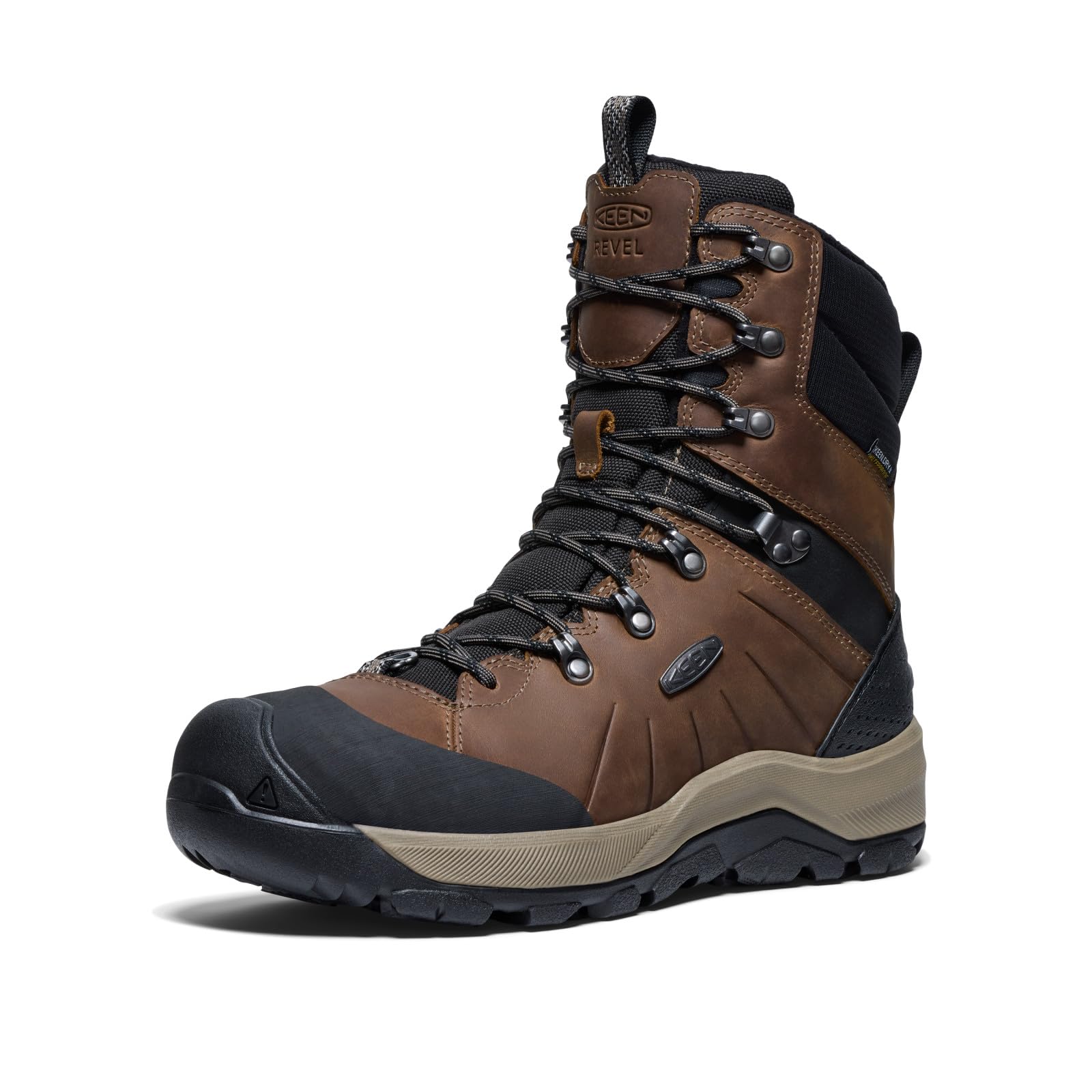
This boot fills a specific niche in the extreme cold category: active winter hiking. The 400-gram insulation is enough to keep feet warm while generating body heat through movement, but not so much that you overheat and sweat. The waterproof leather and KEEN’s proprietary membrane do a reliable job of keeping moisture out, and the outsole uses multi-directional lugs that grip well on packed snow and wet rocks. The high-top design keeps snow from spilling in during normal walking, though it will succumb to very deep powder.
The fit is where KEEN shines for many users: the toe box is wide and anatomical, allowing toes to splay naturally, which improves circulation and warmth. This is a critical feature for cold-weather footwear that many brands ignore. The platform is stiff enough to sidehill and handle sharp rocks without rolling an ankle, yet it has enough flex for a natural walking stride. One reviewer reported staying warm at -2°F while walking all day, but noted a chill when sitting still — this is the natural trade-off of a lighter insulation weight.
It is not a boot for ice fishing or stationary winter camping. For anyone who plans to hike, snowshoe, or do outdoor chores that involve consistent movement in sub-20°F conditions, the Revel IV High Polar is arguably the best-balanced option in the mid-range.
Why it’s great
- Wide toe box promotes blood flow and toe warmth during active movement
- Light enough for day-long hiking without the fatigue of heavy pac boots
- Excellent balance of insulation (400g) for active cold-weather use
Good to know
- Not warm enough for extended stationary sitting in sub-zero temperatures
- Mid-height shaft is not adequate for deep powder snow conditions
7. ROCKY Blizzard Stalker 1200G

This boot leans heavily into the “lots of insulation for a fair price” strategy. The 1200-gram Thinsulate insulation provides a high warmth-to-weight ratio, and the waterproof construction has held up for users in ice fishing and outdoor work settings down to 6°F. The boot runs large — about half to a full size bigger — which many owners use to their advantage for adding thick merino wool socks without compressing the insulation layer.
The outsole offers good traction on light snow and packed paths, but reviewers consistently mention that it is not a strong performer on glare ice; you will likely need strap-on crampons or Yak Traks for icy driveways or frozen lakes. The bootlace hooks are a known weak point — multiple reports of hooks breaking after several wears. This is a hardware issue that ROCKY has not addressed in a design revision, which is disappointing for a boot that otherwise delivers on warmth.
For the price, this is a role-specific tool: it will keep feet warm during stationary tasks like ice fishing or standing on frozen ground for hours. It is not a hiking boot, not a fashion boot, and not a do-everything boot. It is an affordable, high-insulation workhorse for the coldest conditions, but the lace hook durability and mediocre ice traction keep it from being a top-tier recommendation.
Why it’s great
- High 1200g insulation rating provides warmth for stationary activity in deep cold
- Generous sizing accommodates heavy sock layering without pressure points
- Proven waterproofing for wet snow and slush conditions
Good to know
- Lace hooks prone to breaking after limited use; a design flaw
- Grip on smooth ice is poor without supplemental traction devices
8. Carhartt Rugflx 8″ Soft Work Boot

The Carhartt Rugflx is not a dedicated extreme cold boot in the same way the Baffins are, but it earns a place on this list for a specific reason: it is an incredibly comfortable, durable work boot that can handle 0°F conditions when paired with appropriate wool socks. The secret is the RugFlx technology, which uses a flexible, lightweight sole and a cushioned midsole that requires zero break-in time. Users consistently report that these are the most comfortable boots they own for long days on their feet.
It is built for the trades. Worn daily on construction sites and roofing jobs, the boot holds up to abrasion, puncture risks, and repeated bending. The 8-inch height provides decent ankle protection and moderate snow resistance, but the insulation is not rated by grams — Carhartt relies on the boot’s overall construction and the user’s sock choice to hit the warmth target. This means it is less warm per ounce than dedicated 1000g boots, but the comfort trade-off is significant for anyone who needs to move quickly and climb ladders.
For extreme cold, it is the best option only if your primary activity is physically demanding work in temperatures that occasionally dip to zero. For standing still in deeper cold, it will not keep up. It is also notably wide-fitting, which accommodates thick socks but may feel loose for narrow feet. A solid work boot for cold climates, not an extreme-cold specialist.
Why it’s great
- Zero break-in period with flexible sole that feels like athletic shoes from day one
- Extremely durable for daily construction and heavy labor use
- Wide fit allows layering thick socks for improved cold performance
Good to know
- Not a true extreme-cold boot; warmth relies heavily on sock choice and activity level
- Wide fit may feel too loose for narrow feet, causing heel slip
9. KEEN Revel 4 Mid Height Polar
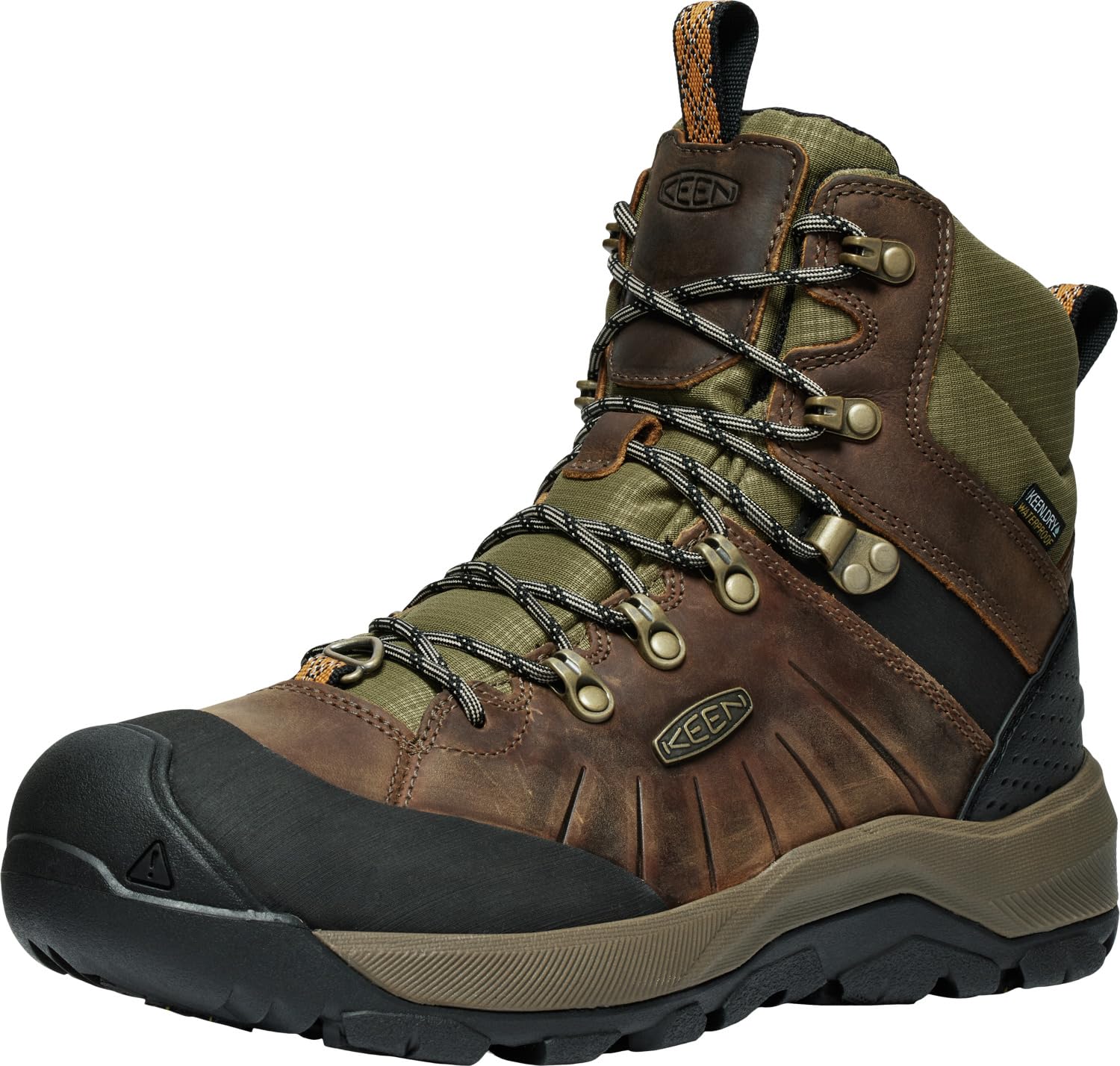
The KEEN Revel 4 Mid is the most versatile and affordable entry on this list. It is a mid-height boot, so deep-snow protection is limited, but for three-season winter hiking in temperatures down to around 5°F, it is hard to beat in terms of value. The same KEEN wide toe box is present, giving toes room to move and stay warm, and the waterproof membrane has been proven against snow and ice during climbs of Colorado fourteeners in March conditions.
Reviewers consistently highlight the traction as a standout feature. The multi-directional lugs provide a confident grip on packed snow and even moderate ice, often eliminating the need for separate traction devices during day hikes. The boot feels lightweight and supportive, with a stable platform that works well with snowshoes. Sizing is true to standard shoe size, which simplifies ordering.
At this price point, it delivers the best overall warmth-to-comfort ratio for the active winter user. It will not work for stationary exposure below zero, nor for deep powder. But for someone who wants a single boot for commuting, hiking, and general winter use in moderate cold, the Revel 4 Mid is the smartest budget-friendly play on this list.
Why it’s great
- Excellent traction on snow and ice often eliminates need for separate crampons
- Lightweight and supportive for all-day winter hikes and snowshoeing
- True to size with a roomy toe box that prevents cold-induced circulation issues
Good to know
- Mid-height shaft is not suitable for deep snow or extended stationary cold exposure
- Not insulated enough for sub-zero temperatures when standing still
FAQ
Should I size up for extreme cold boots?
Are removable liners better than fixed insulation?
Final Thoughts: The Verdict
For most users, the boots for extreme cold winner is the Baffin Selkirk because it combines a verified -94°F rating, a removable liner system, and an ice-ready outsole into a package that has proven itself in the most demanding sub-zero conditions. If you want the best balance of warmth and mobility for active winter hiking, grab the KEEN Revel IV High Polar. And for a budget-friendly workhorse that delivers surprising warmth for the cost, nothing beats the ROCKY Blizzard Stalker when paired with proper wool socks.