
Our readers keep the lights on and the weekend projects moving. As an Amazon Associate, I earn from qualifying purchases.
For anyone who cringes at the compressed, lifeless sound of a smartphone and craves the depth and texture their favorite tracks deserve, the search for a dedicated audio device is a return to what music should feel like. The gap between a standard phone output and a properly engineered portable player isn’t subtle — it’s the difference between a shadow and the full image.
I’m Rikta — the co-founder and writer behind FitlyFast. I’ve spent years analyzing hardware specifications, DAC chip implementations, and amplifier topologies to separate genuine high-fidelity gear from products that just market the label.
This guide cuts through the noise to help you find the best audio quality mp3 player for your ears, built around real specs every audiophile should know.
How To Choose The Best Audio Quality MP3 Player
Selecting a player focused on sound reproduction requires you to look past storage capacity, screen size, or streaming features. The core question is: how accurately and powerfully can this device convert digital files into the analog signal your headphones receive? Start with the DAC, then examine the amplification stage, and finally match the output power to your headphone impedance.
DAC Architecture and Chip Selection
The digital-to-analog converter is the brain of the operation. Look for dedicated chips from Cirrus Logic, ESS Sabre, or AKM rather than integrated SoC codecs. A dual-DAC or quad-DAC configuration in a balanced layout reduces crosstalk and improves dynamic range. Specification targets: a signal-to-noise ratio above 115 dB and total harmonic distortion below 0.005% are hallmarks of serious audio hardware.
Amplifier Power and Output Stage
Your player’s amplifier must supply enough current to drive your headphones without distortion. A 3.5mm single-ended output at 32mW-70mW is fine for sensitive IEMs, but over-ear headphones benefit from a 4.4mm balanced output delivering 200mW or more per channel. A Class A amplifier topology — often found in higher-tier devices — provides the cleanest signal at the cost of battery life.
File Format Support and Source Purity
Native DSD256 or DSD128 decoding, PCM sampling rates up to 384kHz/32-bit, and MQA unfolding are markers of a player that won’t downsample or alter your original files. Confirm the device supports gapless playback — many budget players skip this feature, causing an audible gap between tracks on live albums or classical recordings.
Quick Comparison
On smaller screens, swipe sideways to see the full table.
| Model | Category | Best For | Key Spec | Amazon |
|---|---|---|---|---|
| FiiO M21 | Premium DAP | Desktop-grade balanced power | 950mW balanced output per channel | Amazon |
| HiBy R4 | Premium DAP | Class A amp with Android streaming | Quad ESS DAC Class A output | Amazon |
| Hidizs AP80 Pro-X | Mid-Range DAP | Ultracompact with dual balanced jacks | Dual ESS9219C DACs + DSD256 | Amazon |
| JadeAudio/FiiO JM21 | Mid-Range DAP | Android 13 streaming with Snapdragon 680 | 700mW balanced output 2x CS43198 | Amazon |
| Sony NW-WM1AM2 | Flagship DAP | S-Master HX amplifier warmth | S-Master HX digital amplifier | Amazon |
| HIFI WALKER H2 | Value DAP | Entry-level lossless with Bluetooth aptX | ESS ES9018K2M DAC + 32bit/384kHz | Amazon |
| MECHEN M30 | Budget DAP | Budget-friendly lossless playback | WM8965 + TPA6530 dual decoding | Amazon |
In‑Depth Reviews
1. FiiO M21
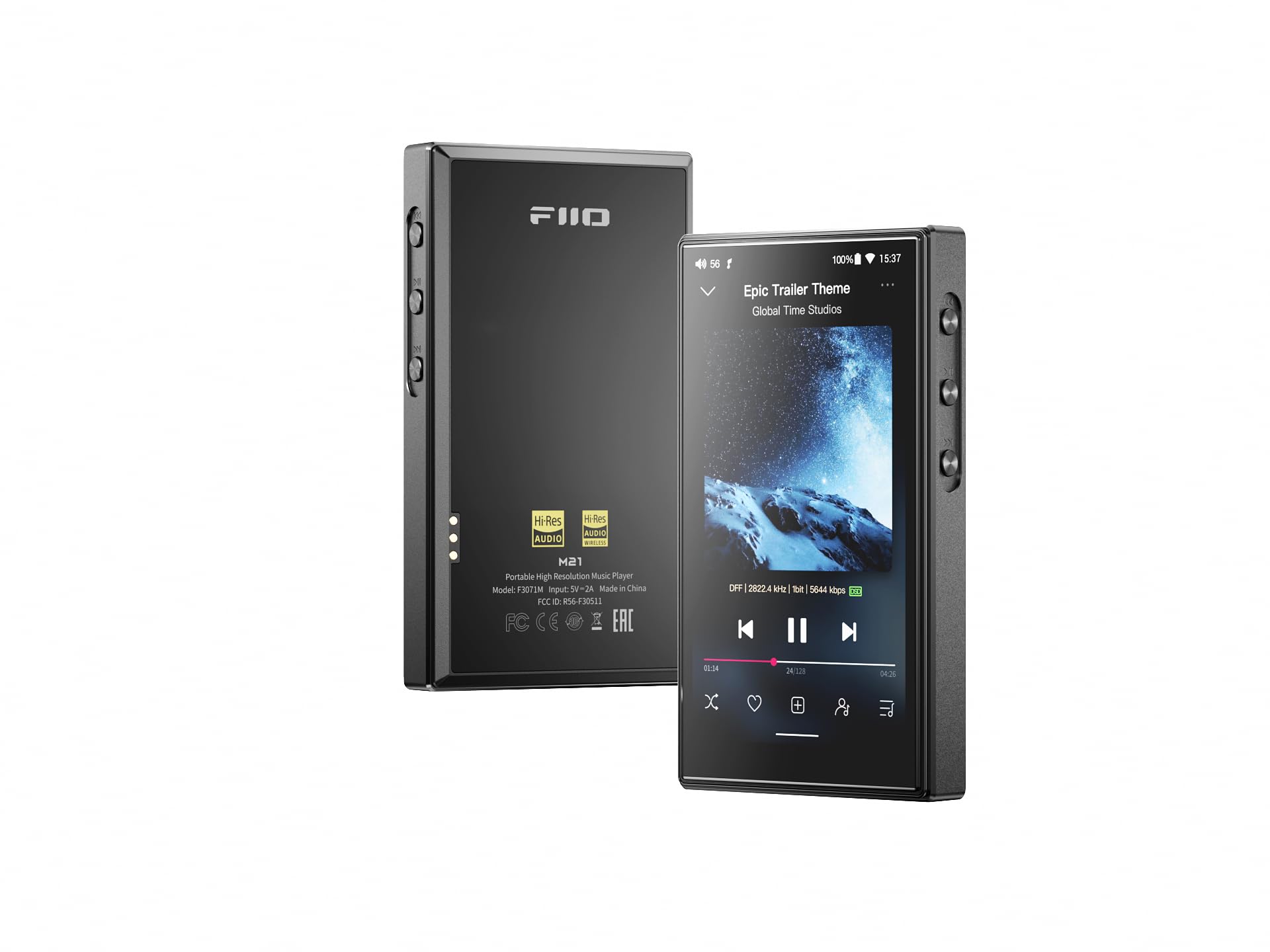
The FiiO M21 sets a new benchmark for portable audio with its quad CS43198 Matrix DACs arranged in a fully balanced 4-channel, 8-path differential design. Its patented Desktop Mode bypasses the battery entirely when connected to external power, delivering up to 950mW per channel on the 4.4mm balanced output — enough to drive even demanding over-ear headphones with authority. The Snapdragon 680 processor and Android 13 interface keep streaming apps like Apple Music and Qobuz running smoothly.
Out of the box, the M21 offers a neutral reference sound with exceptional dynamic range and noise immunity. The two-stage amplification circuit separates voltage gain from current drive, preserving microdetails across the frequency spectrum. FiiO’s parametric EQ app allows precise tuning, and a recent firmware update added audiophile headphone profiles that improve open-back staging. The 4.7-inch LCD, physical buttons, and included TPU case make daily use practical.
Battery life is a solid 10-12 hours with balanced output, and Quick Charge replenishes the device from 8% to 80% in under an hour. The only notable caveat is that the stock FiiO Music app has occasional shuffle and library update quirks — most users prefer UAPP (USB Audio Player Pro) for local file playback. For the price, the M21 delivers desktop-class amplification in a truly portable format.
Why it’s great
- 950mW balanced output powers high-impedance headphones effortlessly
- Desktop Mode preserves battery health during extended listening
- Quad DAC architecture with separate voltage/current amplification stages
Good to know
- Stock Music app has shuffle and metadata quirks
- WiFi antenna failure reported in rare cases after several months
2. HiBy R4

The HiBy R4 distinguishes itself with an integrated Class A headphone amplifier paired with four ESS DAC chips and 28 high-precision tantalum capacitors. This combination delivers a warm, detailed sound signature with exceptional transient response — the Class A topology maintains low distortion across all gain levels. Native DSD256, PCM768kHz/32-bit, and MQA 16X unfolding ensure format flexibility, while the dedicated PCM/DSD dual circuitry automatically optimizes the signal path for each file type.
On the connectivity side, the R4 offers both 3.5mm single-ended and 4.4mm balanced outputs, plus Bluetooth 5.0 with LDAC, aptX HD, and AAC codecs. The Snapdragon 665 processor and Android 12 OS allow installation of any streaming app, and the included TPU case and screen protectors are a welcome bonus. The 4500mAh battery delivers about 11 hours of playback, though enabling the Class A amp reduces that to around 8 hours — still acceptable for a device of this power class.
Build quality is robust with a continuous metal frame, though the device runs warm during extended use. The HiBy Music app offers deep sound customization via MSEB (MageSound Eight Ball), but its interface can lag slightly during EQ adjustments. File organization is straightforward via drag-and-drop over USB, and expandable storage up to 2TB via microSD means your entire collection fits on one card. For listeners who prioritize amplifier purity over absolute battery life, the R4 is compelling.
Why it’s great
- True Class A amplifier circuit with three gain levels for low THD
- Quad DAC architecture with PCM/DSD dual signal paths
- Supports LDAC, aptX HD, and UAT Bluetooth codecs
Good to know
- Runs warm during Class A operation; reduces battery life
- Some units have reported bricking issues after overnight idle
3. Sony NW-WM1AM2 Walkman

Sony’s NW-WM1AM2 represents the company’s flagship portable audio vision, built around the proprietary S-Master HX digital amplifier. Unlike traditional Class D or Class A/B designs, S-Master HX processes the audio signal entirely in the digital domain until the final output stage, eliminating the conversion errors typically introduced by analog amplification. The result is a smooth, slightly warm house sound with realistic timbres, rolled-off treble, and a lush midrange that pairs beautifully with IEMs.
The aluminum frame houses 128GB of internal storage, expandable via microSD, and supports native DSD playback and DSEE Ultimate upscaling for compressed files. Wi-Fi compatibility enables streaming and downloading, though the player runs Android 11 with no upgrade path — the interface is noticeably slower than modern competitors, especially when browsing a large library. The 3.5mm single-ended output is adequate for sensitive headphones, but the 4.4mm balanced output is where the Walkman truly shines, offering better channel separation and a quieter noise floor.
Build quality is outstanding, with precise machining and a premium feel. However, the 490g weight is substantial, and battery life falls short of Sony’s claims — real-world balanced use yields about 6-8 hours. The Music Center for PC software required for library management is clunky and prone to errors, and the microSD slot design is finicky. For listeners who value a forgiving, musical presentation over clinical accuracy, the Sony Walkman remains a unique option.
Why it’s great
- S-Master HX digital amplifier delivers a warm, natural house sound
- Premium aluminum chassis with 128GB internal storage
- DSEE Ultimate for upscaling compressed audio files
Good to know
- Android 11 is outdated and sluggish with large libraries
- Music Center for PC software is frustrating and unreliable
4. Hidizs AP80 Pro-X
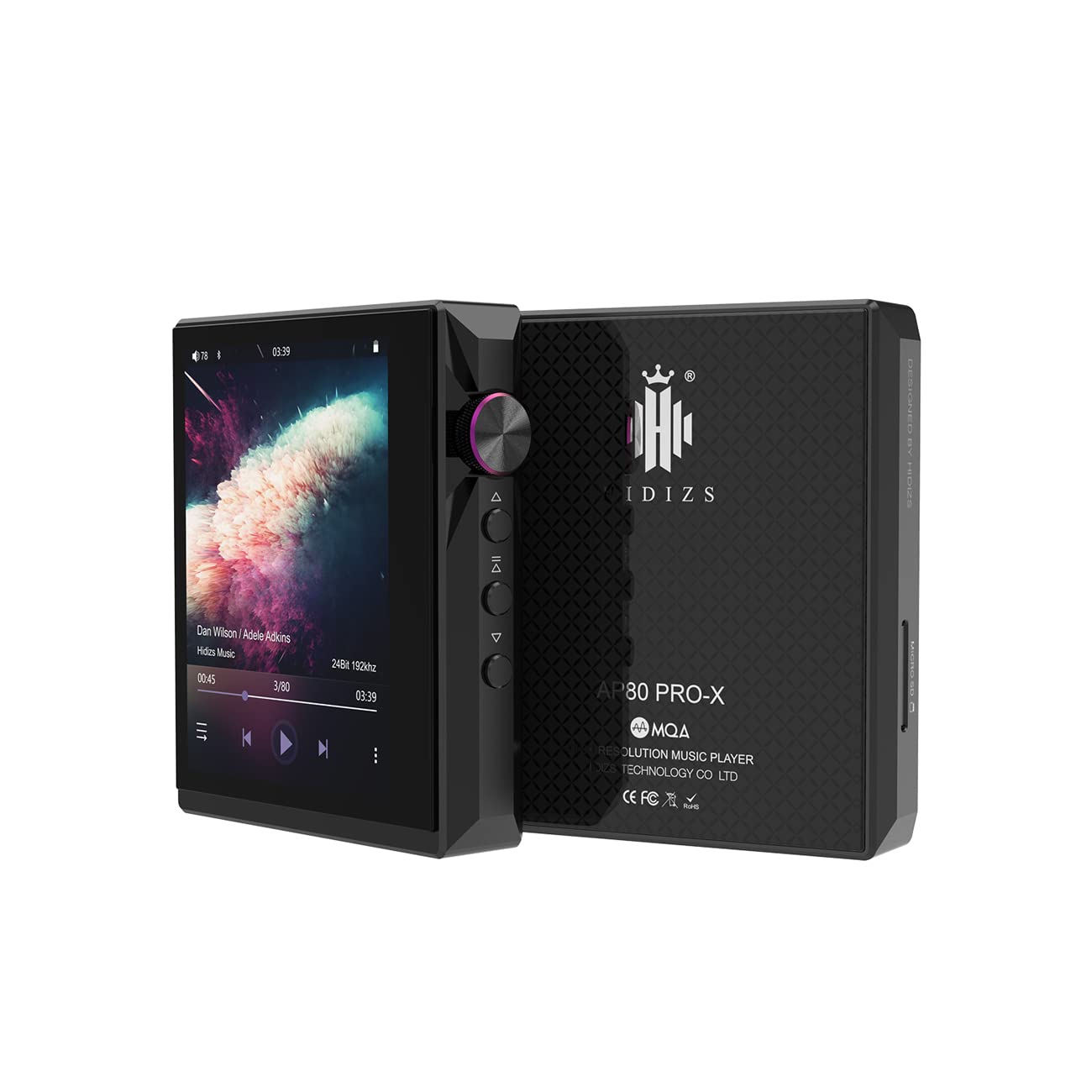
The Hidizs AP80 Pro-X proves that high-fidelity audio doesn’t require a large chassis. Weighing just 72 grams with a CNC-milled aluminum unibody, this player packs dual ESS9219C DAC chips with FPGA-driven native DSD256 decoding — an unusual level of precision for such a compact device. The MSEB (MageSound Eight Ball) tuning system gives listeners granular control over bass, sibilance, and vocal presence without introducing audible distortion.
Connectivity is a standout feature: both 3.5mm single-ended and 2.5mm balanced jacks are present, along with bidirectional Bluetooth 4.2 and USB DAC functionality. The 2.5mm balanced output offers a noticeable improvement in soundstage width and instrument separation, especially with higher-impedance IEMs. The 2.0-inch IPS touchscreen is responsive indoors, though it becomes difficult to read in direct sunlight. The device has no internal storage, so a microSD card — supporting up to 512GB — is mandatory.
Battery life is the trade-off for this compact form factor: 8-11 hours of real-world playback, dropping further when using the balanced output or Bluetooth. The ALPS volume wheel provides tactile precision, and the step counter and e-book functions are useful extras. Some users have reported random Bluetooth disconnections and occasional reboot loops when connecting to car audio systems. For those who need pocketable size without sacrificing DAC quality, the AP80 Pro-X is a strong choice.
Why it’s great
- Dual ESS9219C DACs with native DSD256 in a 72g package
- 2.5mm balanced output for improved soundstage and separation
- MSEB tuning offers detailed frequency-specific adjustments
Good to know
- No internal storage; microSD card required
- Battery life drops significantly with balanced output or Bluetooth active
5. JadeAudio/FiiO JM21

The JadeAudio/FiiO JM21 combines a fully balanced audio architecture with the convenience of Android 13, powered by the Snapdragon 680 processor. Its dual Cirrus Logic CS43198 DACs and high-performance SGM8262 operational amplifiers deliver a balanced output of up to 700mW per channel — enough to drive most over-ear headphones with confidence. The DAPS digital audio purification system, coupled with a fifth-generation FPGA and custom femtosecond crystal oscillators, ensures bit-perfect playback across streaming apps like Spotify and Apple Music.
The 3.5mm single-ended and 4.4mm balanced outputs offer flexibility for different headphone types. Bluetooth 5.0 with LDAC support provides high-quality wireless streaming when needed. The device is remarkably thin at 13mm and weighs just 156g, making it one of the most portable Android-based DAPs available. Battery life reaches 12.5 hours in balanced mode, and Quick Charge support brings the battery from 8% to 80% in under an hour.
Build quality is solid but not premium — the plastic chassis with matte finish can show wear over time, and some users have reported the 4.4mm balanced port failing after several months of use. The included manual is nearly useless for file organization, and creating playlists is unnecessarily complicated. Despite these quirks, the JM21 offers excellent value for anyone who wants to stream lossless audio from Tidal or Qobuz without sacrificing sound quality during local playback.
Why it’s great
- Dual CS43198 DACs with 700mW balanced output per channel
- Android 13 with full Play Store access for streaming apps
- Thin, lightweight design at 13mm and 156g
Good to know
- Manual is poor; file organization and playlist creation is unintuitive
- 4.4mm balanced port durability is a concern based on user reports
6. HIFI WALKER H2
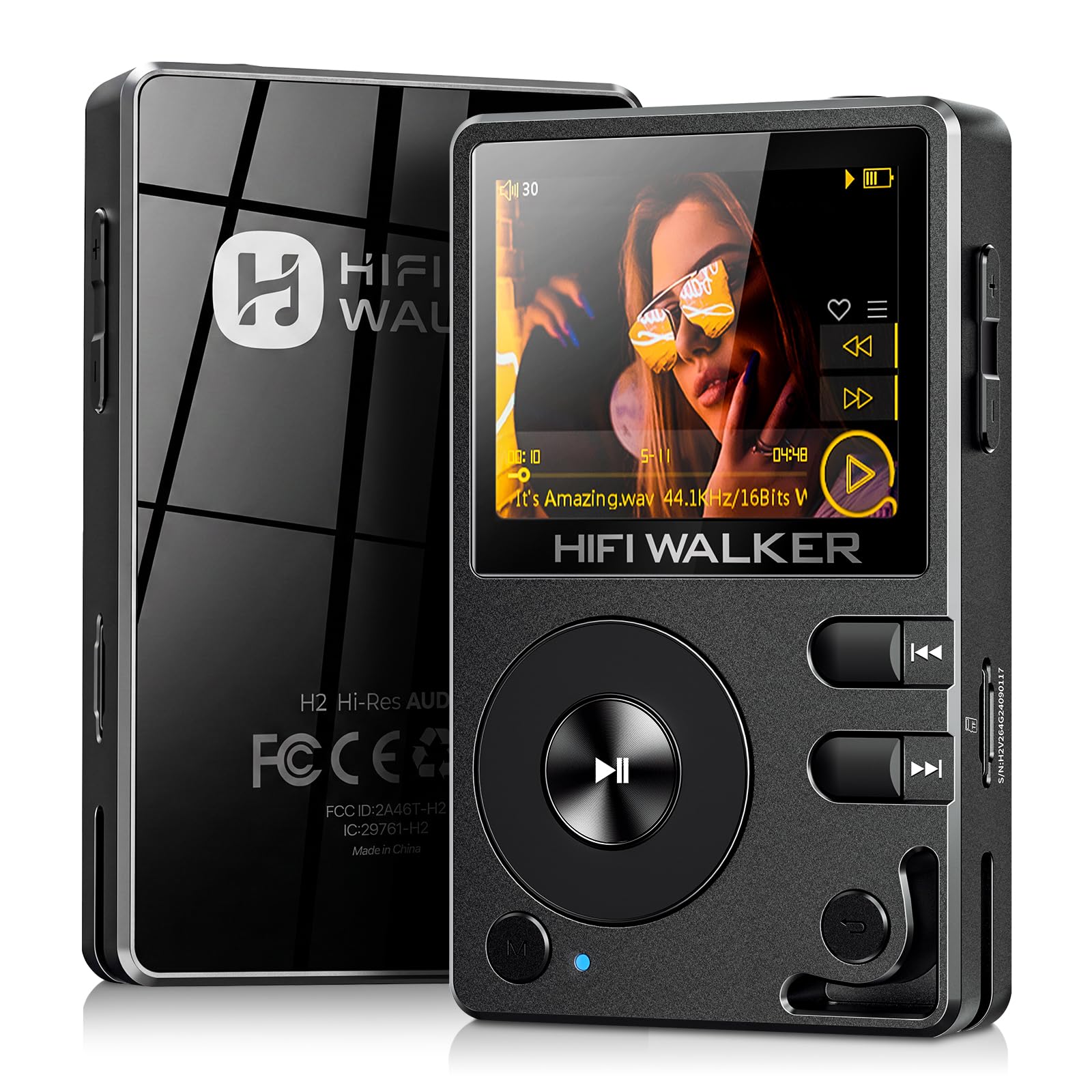
The HIFI WALKER H2 is a bridge between casual listening and serious audio. Its ESS ES9018K2M DAC supports 32-bit/384kHz decoding and native DSD128 playback, delivering a 107dB SNR and low 0.008% THD — numbers that would have been reserved for premium desktop gear a few years ago. The 70mW output at 32Ω is sufficient for most IEMs and efficient on-ear headphones, and the ALPS scroll wheel provides smooth track navigation.
Bluetooth 5.2 with Qualcomm aptX allows two-way connectivity — the H2 can serve as a Bluetooth receiver for your phone or transmit audio to wireless headphones. The CNC-machined zinc alloy shell feels dense and durable, and the pre-installed 128GB microSD card means you can start loading music immediately. Drag-and-drop file transfer via USB-C is straightforward, and the 2.0-inch screen displays basic playback info clearly.
The H2 has limitations that separate it from higher-tier options: the user interface is basic and clunky, and the battery life of 8-10 hours with Bluetooth on is merely adequate. Some users have reported random track skipping and Bluetooth disconnections at moderate range. Wired playback, however, is where this player shines — the sound quality genuinely competes with devices costing twice as much. For budget-conscious listeners who prioritize wired fidelity, the H2 is a smart starting point.
Why it’s great
- ESS ES9018K2M DAC with 32-bit/384kHz and DSD128 support
- Two-way Bluetooth 5.2 with aptX for flexible wireless use
- Solid zinc alloy build with pre-installed 128GB storage
Good to know
- UI is basic and navigation can be clunky
- Bluetooth range and stability are not on par with premium options
7. MECHEN M30

The MECHEN M30 proves that entry-level pricing doesn’t have to mean entry-level sound quality. Its dual-decoding architecture — WM8965 DAC paired with TI’s TPA6530 high-power amplifier — supports lossless formats including FLAC (up to 192kHz), APE, WAV, and DSD128. The sound signature is slightly warm and forgiving, making it ideal for long listening sessions with compressed or older recordings that might sound harsh on more analytical gear.
The 1500mAh battery is a highlight: 25 hours of continuous playback means charging is almost an afterthought. The CNC aluminum alloy shell is fingerprint-resistant and lightweight at 176g. A 64GB microSD card is included, and the unique scroll wheel control allows rapid track navigation. The 2.0-inch LCD screen displays lyrics and track info clearly, and the interface is simple enough to use without consulting a manual.
The compromises are clear: no Bluetooth, no WiFi, no touchscreen, and a microUSB charging port instead of USB-C. Gapless playback is absent, which is a problem for classical and live albums. File sorting can be inconsistent without a firmware update. Despite these omissions, the M30 focuses its budget entirely on the analog audio path and battery endurance. For listeners who want a dedicated offline player for the gym, commute, or travel without worrying about daily charging, the M30 delivers.
Why it’s great
- Excellent 25-hour battery life for extended listening sessions
- Dual DAC/amp setup for warm, forgiving sound reproduction
- Sturdy aluminum body with tactile scroll wheel navigation
Good to know
- No Bluetooth, WiFi, or touchscreen connectivity
- No gapless playback; file sorting may require firmware update
FAQ
What is a DAC chip and why does it matter for sound quality?
Do I need a balanced output or is 3.5mm good enough?
How important is the amplifier section in an MP3 player?
What is the difference between native DSD and PCM decoding?
Final Thoughts: The Verdict
For most users, the best audio quality mp3 player winner is the FiiO M21 because it balances desktop-grade balanced amplification with a modern Android interface and a price that doesn’t require a second mortgage. If you want Class A amplifier purity and quad DAC architecture in a more affordable package, grab the HiBy R4. And for the smallest footprint that still delivers dual DACs and a balanced jack, nothing beats the Hidizs AP80 Pro-X.