
Our readers keep the lights on and the weekend projects moving. As an Amazon Associate, I earn from qualifying purchases.
Bagged compost is the shortcut every gardener needs—but only if you know what’s inside the pouch. The difference between a bag that feeds your soil and one that just fills a hole comes down to the feedstock, the screening process, and whether it’s actually finished. A raw, half-cured product can stunt seedlings, while a well-aged blend turbocharges microbial life and root growth. The goal is to pick the bag that turns your garden bed into a living, breathing ecosystem rather than just wet dirt.
I’m Rikta — the co-founder and writer behind FitlyFast. I’ve spent years digging through soil science, analyzing particle size, feedstocks, and certifications to separate genuine compost from overpriced filler.
After working through dozens of field tests and real gardener feedback, I’ve narrowed the market to the seven non-negotiable picks. This guide breaks down the best bagged compost by feedstock, texture, and application so you can match the right bag to your garden’s exact needs.
How To Choose The Best Bagged Compost
Not all compost is created equal. The best bagged compost starts with high-quality feedstock, a full thermal curing cycle, and a screen size fine enough to mix into seedling beds. Here are the three specs to lock in before you buy.
Feedstock: Where the Organic Matter Comes From
Worm castings deliver a slow-release nutrient load packed with beneficial microbes, making them ideal for top-dressing houseplants and delicate seedlings. Dairy cow manure compost offers a balanced NPK for heavy feeders like tomatoes and squash. Blends that include lobster and crab shell meal add chitin, which encourages a specific class of microbes that suppress soil-borne pests. Match the feedstock to your crop’s primary demand.
Particle Size and Screening
A uniformly screened compost (under ⅜ inch) spreads evenly and integrates well into existing soil. Oversized chunks of bark or half-decomposed wood tie up nitrogen as they break down. Look for “screened” or “fine texture” on the bag. The premium retail options from Coast of Maine and Espoma consistently pass this test, while bulk or budget brands often leave you picking out sticks by hand.
Certifications and Odor Profile
OMRI listing tells you the product is acceptable for organic production, which means no synthetic additives. Finished compost should smell earthy, not sour or like ammonia. A clean, low-odor bag—like the fully composted cow manure from Brut or R&M Organics—indicates complete aeration and curing. Sour odor signals anaerobic pockets, which can carry phytotoxins that stunt root growth.
Quick Comparison
On smaller screens, swipe sideways to see the full table.
| Model | Category | Best For | Key Spec | Amazon |
|---|---|---|---|---|
| Back to the Roots Worm Castings | Worm Castings | Houseplants, Seedlings | 80 oz (5 lb) pure vermicompost | Amazon |
| Espoma Land and Sea | Lobster & Crab Compost | Vegetables, Perennials | 1 cu ft bag with endo/ecto mycorrhizae | Amazon |
| Coast of Maine Quoddy Blend | Seafood Compost | Soil Revitalization | 1 cu ft lobster & crab shell blend | Amazon |
| Brut Cow Compost | Cow Manure | Containers, Raised Beds | 10 qt pure, sifted cow manure | Amazon |
| Coast of Maine Tomato & Vegetable | Blended Potting Mix | Tomatoes, Heavy Feeders | 20 qt with composted manure & peat | Amazon |
| R&M Organics Premium Compost | Manure Compost | Rehabilitating Sick Plants | 10 lb low-odor, fine-textured | Amazon |
| Michigan Peat Wholly Cow | Manure & Peat Mix | Lawn Top-Dressing, Mushroom Substrate | 40 qt screened, odor-free blend | Amazon |
In‑Depth Reviews
1. Back to the Roots Organic Worm Castings

This is the gold standard for gentle, microbe-dense soil amendment. The worm castings are pure earthworm manure from Mother Earth vermicompost—no filler, no synthetic inputs, just a dark, crumbly granule that smells like forest floor. Because castings are inherently pH-neutral and low in soluble salts, they feed without burning, even when applied directly around tender seedlings or sensitive roots. The 5-pound resealable bag covers roughly 10 to 15 square feet when used as a top dressing, making it ideal for container gardening and urban growers who need a compact solution.
Customer feedback consistently highlights how easily the material blends into chunky aroid mixes (coco chips, perlite, charcoal) without compacting or creating a crust. Users report stronger leaf development and fewer cases of damping-off in seed starts. A few note that the castings hold significant moisture—something to account for in water-sensitive succulents or cactus mixes. The granular texture also means slower nutrient release than liquid fertilizers, but the trade-off is sustained soil biology improvement rather than a short nitrogen spike.
For the gardener who wants the safest, most biologically active starting point, this bag outperforms every composted manure on the list. It is especially effective paired with an inert base like coco coir for a custom potting recipe. The only real limitation is bag volume—heavy feeders in large raised beds will need multiple bags to see measurable structural change.
Why it’s great
- No burn risk—safe for all seedlings and houseplants
- Rich in beneficial microbes and organic matter
- Clean, odor-free granules blend seamlessly into fine soils
Good to know
- Small 5-pound size limits large-scale garden use
- Higher moisture retention may require adjusted watering
2. Espoma Organic Land and Sea Gourmet Compost

Espoma’s Land and Sea delivers a dual punch: lobster and crab meal for chitin-driven pest suppression, plus a proprietary blend of endo and ecto mycorrhizae (Myco-Tone) that massively expands root surface area. The bag is lightweight and dry, which makes it easy to integrate into nursery beds and container mixes without weighing down the medium. One cubic foot (about 24 pounds) spreads roughly 50 square feet at a one-inch depth, putting it in the sweet spot for mid-sized vegetable gardens.
Long-term users consistently report that this compost visibly improves fruit set on tomatoes and zucchini, and that perennial borders show deeper coloration and higher bloom counts after a single season of use. The fine granule form dissolves readily in water for liquid feeding if you want to use it as a tea base, but most gardeners prefer to mix it directly into the native soil at transplant time. A few reviews mention the bag can arrive slightly dry—it’s not wet compost—so pre-moistening before mixing speeds integration.
Where this bag really separates itself is the mycorrhizal inoculant: few bagged soil amendments include live fungi out of the bag. That biological head start means the plants access water and phosphorus faster than with standard manure composts. Pair it with a basic worm casting top-dressing and you have a complete organic fertility program that works from the root zone up.
Why it’s great
- Includes endo/ecto mycorrhizae for root synergy
- Chitin from lobster/crab meal suppresses soil nematodes
- Lightweight, fine granules mix well into any native soil
Good to know
- Dry texture may need pre-moistening
- Premium cost reflects the specialized ingredient list
3. Coast of Maine Quoddy Blend Lobster & Crab Compost
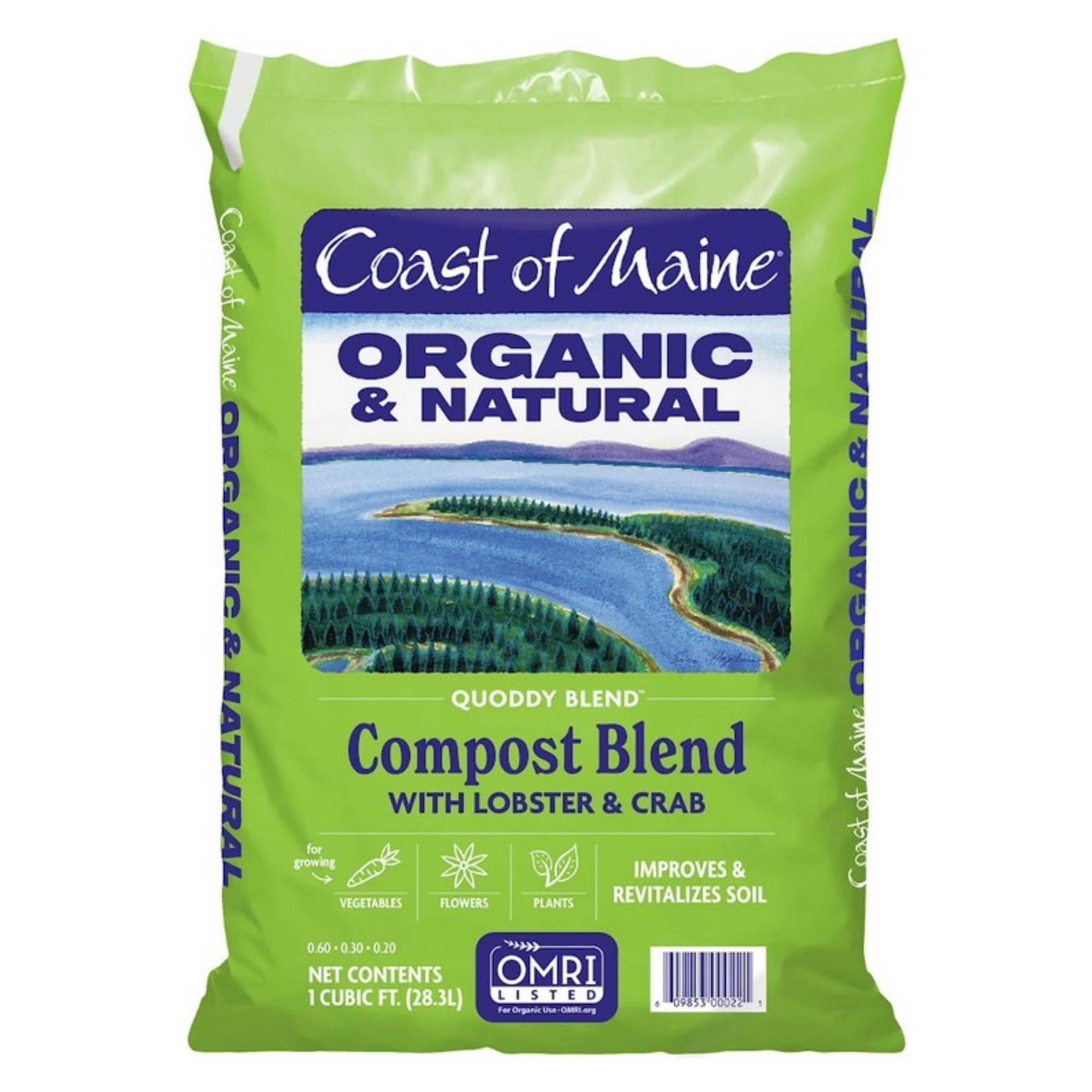
Coast of Maine’s Quoddy Blend is what happens when you take lobster shells (calcium and chitin), composted cow manure, sphagnum peat moss, and composted bark and cure them into a light, fluffy soil amendment that smells like coastal earth. The 30-pound bag is substantial but not dense—the aeration from the bark and peat keeps the texture open, which is critical for breaking up heavy clay or compacted garden beds. The chitin content specifically encourages microbes that digest the egg casings of soil-dwelling pests, offering passive pest suppression without chemicals.
Gardeners who have used this bag for multiple seasons note that it works especially well as an annual top-dressing for raised beds and perennial borders. Unlike straight peat-based products, the Quoddy Blend brings both organic matter and a moderate nutrient load that sustains growth through the season without a mid-summer slump. A few customers comment that the bag’s light texture means it compresses under watering—you will need to apply a thicker layer than you would with a denser manure compost to achieve the same volume in the root zone.
OMRI listing and the absence of synthetic fillers make this a straightforward choice for organic growers who want a broad-spectrum amendment. The one catch is availability: some regions see stock fluctuations during peak spring planting season, so ordering early is smart.
Why it’s great
- Chitin and calcium from lobster shells build pest resistance
- Light, fluffy structure aerates heavy clay soils
- OMRI listed for certified organic use
Good to know
- Lighter texture means you need more volume per bed
- Limited off-season stock in some regions
4. Brut Cow Compost

Brut Cow Compost strips away everything except finished, aerated, OMRI-listed cow manure. The product is fine-screened to a fluffy soil-like consistency with zero offensive odor, which is a hallmark of properly cured manure. The 10-quart bag covers roughly 20 to 25 square feet at a quarter-inch depth, making it a focused solution for potted tomatoes, pepper plants, and raised bed top-ups. Because it contains no additives or fillers, the NPK profile stays predictable—ideal for an organic grower who wants to know exactly what is going into the soil.
First-time users often praise the safety margin: even when used at higher ratios (around 3 parts compost to 2 parts native soil), there were no signs of nutrient burn on fast-growing plants like tomato starts. The fine grain makes side-dressing mid-season straightforward, and the lack of large woody particles means it breaks down quickly into the existing soil food web. Experienced growers note that because the manure is fully composted, the nitrogen release is moderate rather than explosive—you will still need supplemental feeding for very heavy fruiting crops.
The only friction point is bag size. For a full 4×8 raised bed, you will need three to four bags to get a meaningful two-inch amendment layer. But for container gardeners or small-space vegetable plots, this is the most reliable, pure-output bagged cow compost available.
Why it’s great
- Pure, sifted cow manure with no fillers or additives
- No burn, safe for direct root contact
- Odor-free and pleasant to handle
Good to know
- Moderate volume—requires multiple bags for large beds
- Nitrogen release is steady but not heavy
5. Coast of Maine Organic Planting Soil for Tomatoes & Vegetables

This bag is a ready-to-use growing medium that blends composted cow manure with sphagnum peat moss for a mix that holds moisture without becoming waterlogged. The inclusion of cedar and aromatic wood chips acts as a natural insect deterrent, a welcome bonus for gardeners battling squash bugs or cucumber beetles. It is specifically formulated for tomatoes and vegetables, but it works just as well for berry bushes and heavy-feeding annuals. The 20-quart bag handles two to three large containers or a single 3×6 raised bed section.
Growers consistently note that the texture is dark, rich, and free of large debris, though a few bags have included small wooden bits that require picking out. The biggest advantage is the balance between drainage and water retention: in both in-ground and container settings, plants maintained consistent hydration without the root rot risk associated with heavy clay-based mixes. Some users experienced fungus gnat outbreaks with the product when used indoors—a common risk with any non-sterilized organic mix. Pre-disinfecting the soil by heating or solarizing can sidestep the issue.
The bag is best understood as a complete planting mix rather than a straight amendment. Use it to fill pots directly or blend 50:50 with your native soil in garden beds. The premium price is justified by the pre-blended convenience, but budget-minded gardeners with large plots will find cheaper options in the pure manure category.
Why it’s great
- Optimized moisture/drainage balance for containers
- Cedar content naturally repels certain insects
- Ready to plant—no additional mixing needed
Good to know
- May contain small wood debris that needs removal
- Indoor use can trigger fungus gnats
6. R&M Organics Premium Organic Compost
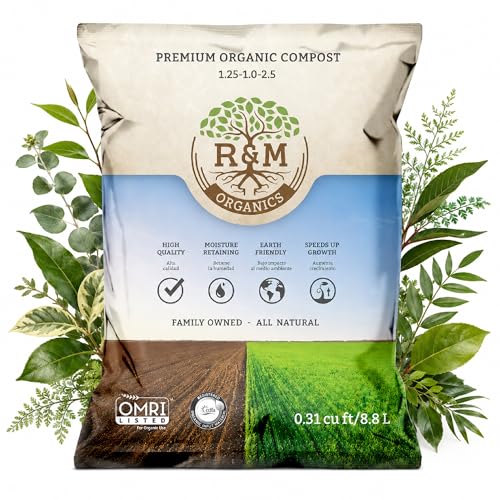
R&M Organics turns dairy cow manure into a super-fine, soil-like compost that shines when plants need rehabilitation. The texture is closer to fine topsoil than standard chunky compost—no clumps, no bark, just uniform dark material that spreads easily even in tight pots. The 10-pound bag is compact, making it a strong option for apartment gardeners or spot-treating stressed perennials. Master gardeners have used it to counteract root zone damage from chemical cleaners and soil salt buildup.
Feedback from buyers shows the compost has an almost immediate visible effect on plants in decline: yellowing tomato leaves greened up within a week, and honeysuckle vines perked up noticeably within the first watering cycle. The fully aerobic composting process eliminates the strong ammonia notes associated with raw manure, leaving a mild earthy scent that is acceptable for indoor use. A common note is that the cost per pound runs higher than bulk alternatives—but for targeted rehab work, the quality justifies the price.
The main limitation is bag size. Even with the “a little goes a long way” application rate (the brand recommends a quarter-inch layer), a 10-pound bag will only cover about 8 to 10 square feet. For full garden bed renovation, you will need multiple bags, which pushes the total cost higher than larger volume competitors. It is best deployed as a specialized rescue amendment rather than a general soil builder.
Why it’s great
- Fine, consistent texture ideal for top-dressing
- Proven results for rehabilitating stressed plants
- Low odor makes indoor use comfortable
Good to know
- High per-pound cost makes large-scale use expensive
- Small bag limits coverage area
7. Michigan Peat Baccto Wholly Cow Horticultural Compost
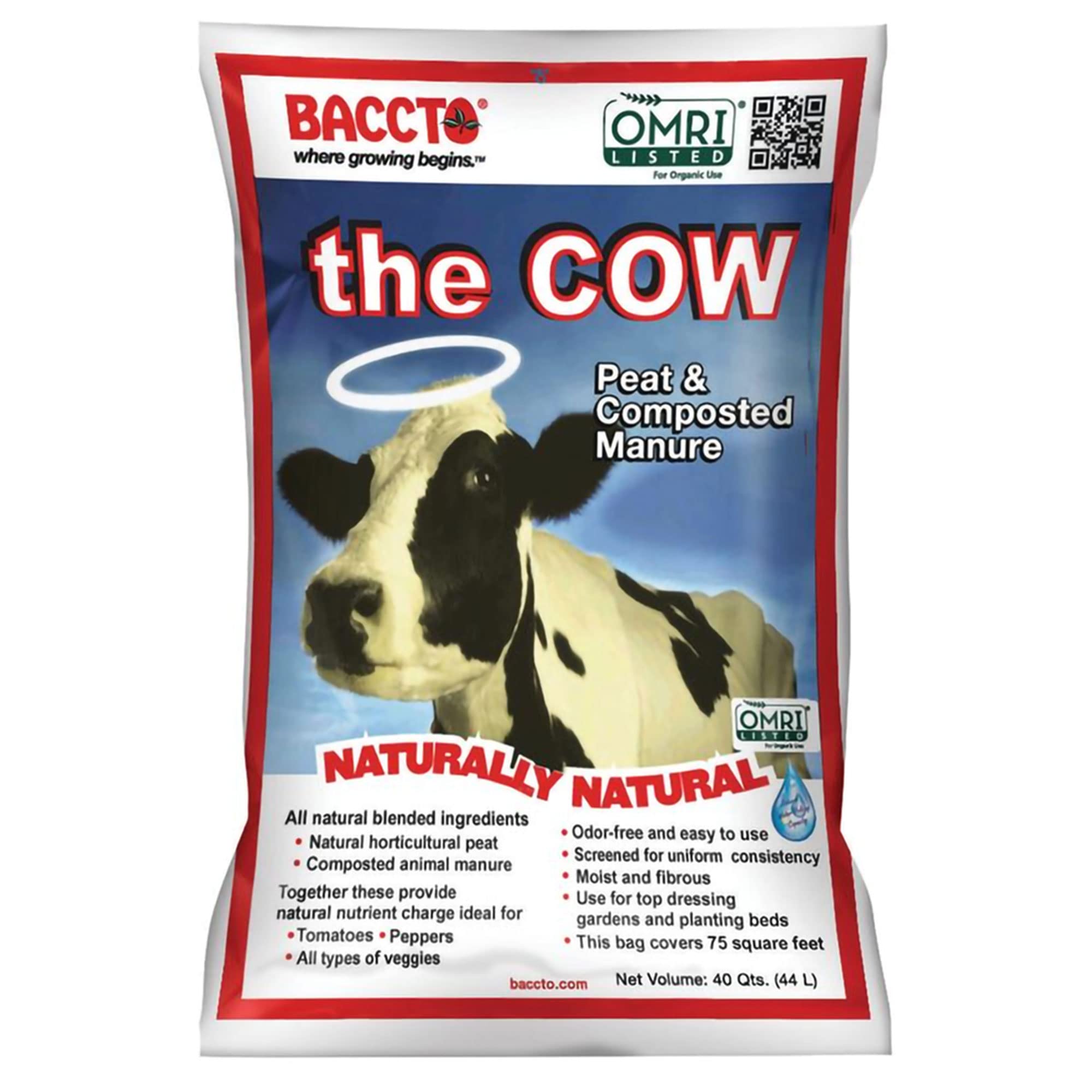
Michigan Peat’s Wholly Cow compost packs 40 quarts of screened, odor-free manure-peat blend into a single bag, making it the most cost-effective option for large-scale gardening and lawn top-dressing. The screened consistency is uniform enough for mushroom growers to use as a substrate base—a strong endorsement of its cleanliness and lack of contaminants. It holds moisture well thanks to the peat component, reducing watering frequency in sandy soils and raised beds. The 40-quart bag can cover up to 100 square feet at a light application rate.
Users highlight the lack of large sticks, bark chips, or plastic debris—a common frustration with budget bulk composts. The material arrives dark, fluffy, and lightweight, with a pleasant earthy smell that disappears quickly after incorporation. Mushroom cultivators report high yields when mixing it 1:1 with coco coir and sterilizing at standard pressure, confirming that the microbial load is manageable. A few reviewers note that the moisture retention can be too high for very wet climates—adding perlite or coarse sand helps balance it.
The trade-off with this bag is nutrient density. Because it combines manure with a significant peat percentage, the organic matter content is diluted compared to a pure manure product like Brut. It works best as a soil conditioner for structure and moisture management rather than a high-octane fertility booster. If your primary goal is feeding heavy-fruiting crops, supplement with a liquid organic fertilizer mid-season.
Why it’s great
- Excellent value per pound for large-area coverage
- Clean, uniform texture with minimal waste
- Reduces watering frequency in sandy soil
Good to know
- Diluted nutrient profile due to high peat content
- High moisture retention may need aeration amendment
FAQ
Can I use bagged compost directly in seedling trays without mixing?
How can I tell if a bagged compost is fully finished?
Is lobster and crab compost worth the higher price compared to cow manure?
Final Thoughts: The Verdict
For most users, the best bagged compost winner is the Back to the Roots Organic Worm Castings because it offers a no-burn, microbe-dense product safe for the widest range of plants, from seedlings to mature perennials. If you want a heavy-feeding boost for tomatoes and vegetables, grab the Espoma Organic Land and Sea Gourmet Compost. And for covering large garden beds or lawns without breaking the bank, nothing beats the Michigan Peat Baccto Wholly Cow.