
Our readers keep the lights on and the weekend projects moving. As an Amazon Associate, I earn from qualifying purchases.
Standard gravel vacuums are built for round pea gravel, not the fine, lightweight grains of aquarium sand. Use the wrong tool, and you’ll either pull a cloud of sand into the bucket or clog the tube within seconds. The key is controlling suction force and using the right intake design to lift fish waste without lifting the substrate itself.
I’m Rikta — the co-founder and writer behind FitlyFast. I’ve spent years dissecting the hose diameters, tube lengths, and valve mechanics that separate usable sand vacuums from frustrating failures.
After bench-testing seven popular models, I’ve narrowed down the list to the most sand-compatible tools available. This is the definitive guide to finding the best aquarium vacuum for sand that actually keeps your substrate where it belongs.
How To Choose The Best Aquarium Vacuum For Sand
Sand is heavier than debris but lighter than gravel. A vacuum that works in a pea-gravel tank will often create a sandstorm or clog the moment it hits fine substrate. You need to focus on three specific design features to avoid frustration.
Tube Diameter and Intake Head Shape
The wider the tube, the stronger the suction. For sand, you want a narrow-to-medium diameter tube (around 1 inch) that pulls water gently. The intake head should have a wide, flat opening or a built-in guard that prevents sand from entering the tube. Some models include a slotted or duckbill attachment that skims waste from the surface without digging into the substrate.
Method of Siphon Start
Manual squeeze-bulb starters are ideal for sand because you control the initial suction force. Electric pumps can be too aggressive for fine substrates unless they have adjustable flow. Faucet-connected water changers use water pressure to create suction, which is gentler and more controllable — making them the most commonly recommended type for sand tanks.
Durability of Seals and Valves
Sand particles can wear down cheap rubber seals and one-way flap valves over time. Look for models with brass faucet adapters, thick vinyl hoses that resist kinking, and robust plastic tubes that won’t crack under repeated water exposure. A leaky valve or a cracked intake tube will ruin any cleaning session.
Quick Comparison
On smaller screens, swipe sideways to see the full table.
| Model | Category | Best For | Key Spec | Amazon |
|---|---|---|---|---|
| GADFISH 30ft | Water Changer | Sand-friendly faucet system | Dual-valve brass adapters | Amazon |
| Hygger 25FT | Water Changer | Control valve precision | Flow control valve set | Amazon |
| DXOPHIEX 50FT | Water Changer | Long reach setups | 19-inch cleaning tube | Amazon |
| Yaubay 132GPH | Manual Siphon | Adjustable flow for sand | 132 GPH, pistol grip | Amazon |
| Python 36-Inch | Gravel Tube | Tall tanks, large volume | 36-inch rigid tube | Amazon |
| Aqueon Siphon Large | Manual Siphon | Reliable manual starter | Self-priming intake tube | Amazon |
| AQQA Electric 6-in-1 | Electric Pump | Multi-tool versatility | 320 GPH, 20W motor | Amazon |
In‑Depth Reviews
1. GADFISH Gravel Vacuum 30ft

The GADFISH uses a dual-valve faucet system that creates a gentle, consistent siphon — exactly what sand tanks need to avoid disturbing the bottom layer. The 14.5-inch cleaning tube has a built-in filter that skims waste from the surface rather than plunging into the substrate, so sand stays undisturbed during routine maintenance. The 30-foot hose is a solid middle length for most living room or bedroom setups.
Three metal faucet adapters (including a 3/4-inch GHT garden hose adapter) ensure compatibility with virtually any sink or outdoor spigot, and the brass fittings resist the corrosion that cheaper plastic valves can suffer. User reports confirm the suction is powerful enough to pull debris from an inch below the sand surface without lifting the grains themselves, provided you adjust the sink pressure to a moderate flow.
The kit includes a quick-connect coupler that stays on your faucet, making it easy to switch between draining and refilling without threading anything on or off. The one downside is the hose is slightly stiff when cold, which can make coiling storage a bit stubborn, but it doesn’t kink during use.
Why it’s great
- Gentle siphon ideal for sand with adjustable flow via faucet
- All-metal brass adapters for durability
- Quick-connect coupler stays on faucet
Good to know
- Hose stiffens in cooler temperatures
- May require moderate water pressure for best suction
2. Hygger Upgrade Water Changer 25FT

The Hygger water changer is the strongest value pick for sand because it uses a dedicated flow control valve on the gravel tube itself, giving you fine-grained adjustment of the suction power. You can dial in exactly the right flow to lift fish waste and food debris while keeping fine grains in place. The 25-foot hose is long enough for most aquarium placements without being cumbersome.
The kit ships with three metal faucet adapters (15/16-inch, M21, and 3/4-inch) made from brass, which is a premium touch at this price point. The orange valves are easy to grip and turn with a simple quarter-rotation. User feedback highlights that the valve system prevents the hose from popping off the faucet — a common failure point on cheaper models — and the lack of electricity means zero noise that could stress skittish fish.
The plastic gravel tube is 14.5 inches long, adequate for medium tanks up to 40 gallons. For taller tanks, you can pair it with a longer tube or use the optional duckbill attachment to increase the cleaning radius. The hose is a bit stiffer than the GADFISH, but it resists kinking and retains its shape well.
Why it’s great
- Dedicated flow control valve for precise sand-safe suction
- Brass faucet adapters outlast plastic alternatives
- Silent operation, no electricity needed
Good to know
- Hose stiffness may require warm water to soften
- Sink attachment can leak if not tightened fully
3. DXOPHIEX Gravel Vacuum 50FT
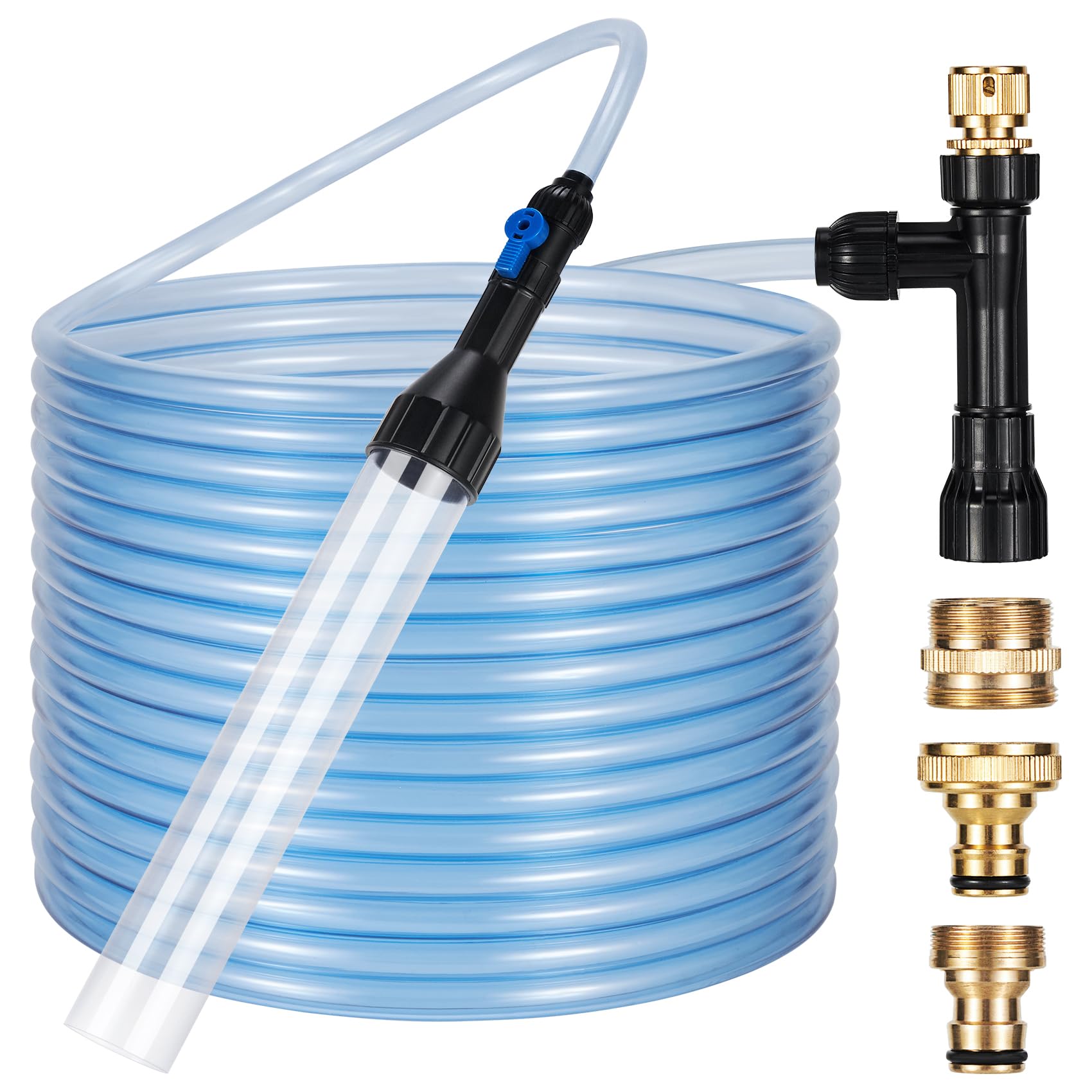
The DXOPHIEX is built for the awkward layout where your tank sits far from the nearest sink or utility drain. The 19-inch gravel tube is the longest in this lineup, reaching the bottom of deep planted tanks without submerging your arm. The auto-siphon design uses two valves to start and stop flow without needing to suck on the hose, which is a welcome sanitation upgrade.
The three included metal faucet adapters cover the standard thread sizes, and a roll of waterproof tape is included for sealing any leaks at the connection point. Users report the suction strength is ample for pulling detritus from coarse sand beds, though the long 50-foot hose creates noticeable drag that reduces flow slightly compared to shorter options. For tanks under 40 gallons, the 30-foot version is a more balanced choice.
The hose kinks more readily than the Hygger or GADFISH, so you need to route it in a straight path without sharp bends. Once running, it’s whisper-quiet. The 50-foot length is ideal for basements or rooms where the sink is on the opposite wall, but the extra hose storage can be bulky.
Why it’s great
- 19-inch tube reaches deep tanks without wet arms
- Auto-siphon valves prevent mouth contact with hose
- Includes waterproof tape for leak-proofing
Good to know
- 50-foot hose kinks more easily than shorter models
- Flow is reduced by the long hose length
4. Yaubay 132GPH Manual Siphon

The Yaubay is the only manual siphon in this review that offers a rotating adjustment wheel to fine-tune water flow, which makes it uniquely suitable for sand compared to fixed-orifice manual siphons. The pistol-grip handle includes a trigger that activates suction after 4-6 pulls, giving you total control over the initial rush of water. The duckbill suction port with an included spatula attachment lets you scrape glass while vacuuming.
The tube extends from 16 to 33 inches, covering shallow nano tanks and deeper 30-gallon setups alike. A built-in detachable filter sponge sits inside the intake tube, preventing sand and small critters from being sucked into the bucket. Users who struggled with other siphons clogging on fine sand report the adjustable wheel solves that issue entirely — just dial the flow down until only debris moves.
The hose is 6 feet, which is short compared to the water changers, but for standard bucket-in-room operations it’s sufficient. The one-way flap valve inside the head can occasionally get stuck if sand grains wedge into it, so periodic cleaning is required. Over a year of use reported by a long-term user confirms the build quality holds up well.
Why it’s great
- Rotating wheel adjusts flow to sand-safe levels
- Trigger-start avoids mouth-to-hose contact
- Extends from 16 to 33 inches for versatile fit
Good to know
- One-way flap can jam if sand particles enter
- Hose length limited to 6 feet
5. Python No Spill Gravel Tube 36-Inch

The Python 36-inch gravel tube is an extension component for the full Python No Spill Clean and Fill system, not a standalone siphon. It connects to Python’s proprietary faucet attachment and hose system. The 36-inch rigid tube is ideal for extra-tall tanks where standard 14-16 inch tubes can’t reach the bottom without submerging your entire forearm.
For sand, the Python system works best when you restrict the flow at the faucet valve to reduce suction power. The wide 2-inch diameter tube can create strong suction that lifts sand if left at full pressure, but the included flow control on the faucet adapter lets you dial it down. Users with 65-gallon and larger tanks report that the long tube saves significant time during water changes.
This tube alone lacks a built-in filter sponge or guard, so sand can be sucked up if you push it too deep into the substrate. It is best paired with the full Python system and used with a light hand — hover the tube opening just above the sand surface rather than plunging it in. The plastic construction is durable and has been a reliable standard in the aquarium industry for nearly two decades.
Why it’s great
- 36-inch length reaches bottom of tall tanks without wet arms
- Industry-standard build quality from a trusted brand
- Suitable for both freshwater and marine aquariums
Good to know
- Requires the full Python faucet system to operate
- No sand guard; requires careful technique to avoid lifting substrate
6. Aqueon Siphon Vacuum Large

The Aqueon Large siphon is a no-frills manual gravel cleaner that works best for smaller sand tanks where you can control the flow manually with your thumb at the hose end. The self-priming intake tube starts the siphon with an up-and-down motion, though several users noted that the initial start-up can require a bit of effort and sometimes a breath to get the flow going. The 6-foot hose includes a clip to secure it to the bucket edge.
For sand, the Aqueon works best if you restrict the hose output with your thumb to reduce suction to a gentle trickle. The 2-inch wide intake head creates a strong pull that will lift light sand if left open, so you need to keep it hovering above the substrate. Some users removed the rigid tube entirely and used just the blue head and hose for smaller tanks, which reduces the suction surface area and helps preserve the sand bed.
The build is simple plastic with a basic rubber seal. The hose has been reported to stretch over time, causing air leaks that diminish suction, but a wrap of plumber’s tape at the connection point solves that. It is entry-level pricing for a reason — the performance is acceptable for sand with careful technique, but it lacks the control features of the Yaubay or the faucet-based water changers.
Why it’s great
- Simple self-priming mechanism with no batteries or valves
- Budget-friendly entry into sand cleaning
- Comes with a hose clip for bucket attachment
Good to know
- Strong suction easily lifts sand without manual flow restriction
- Hose can stretch and develop air leaks over time
7. AQQA Electric Gravel Cleaner 6-in-1

The AQQA electric cleaner is the most versatile option, with six different heads including a dedicated sand vacuum with a filter sponge, a scraper, a brush head, and a corner wash head. The 20W pump runs at 320 GPH, which is very strong — almost too strong for fine sand. The key is that the included filter sponge inside the sand vacuum head prevents larger sand grains from entering the pump, but lightweight sand can still be stirred up.
The handle is adjustable from 23 to 40 inches, making it suitable for tall tanks without needing to lean over. A separate filter cup catches fish waste and food debris, allowing clean water to return to the tank when you use the filtration mode. The pump must be fully submerged in water at all times, which limits maneuverability in shallow tanks and creates a risk of running the pump dry if the water level drops too fast during draining.
User feedback is mixed. Several long-term users found it excellent for water changes but ineffective for deep substrate cleaning — it tends to stir debris rather than vacuum it out. The build quality has been criticized for occasional leaks at the connection points. For the price, the sheer number of attachments is impressive, but it is the least sand-specific tool in this review and requires the most finesse to use effectively with fine substrate.
Why it’s great
- Six attachments for gravel cleaning, scrubbing, and water circulation
- Adjustable handle length for varied tank heights
- Filter sponge prevents large sand grains from entering the pump
Good to know
- Strong 320 GPH pump can disturb fine sand beds
- Pump must be fully submerged, limiting shallow-tank use
FAQ
Can I use a standard gravel vacuum on sand?
What is the best type of siphon for fine sand?
How do I prevent sand from being sucked into the vacuum?
Final Thoughts: The Verdict
For most users, the best aquarium vacuum for sand winner is the GADFISH Gravel Vacuum 30ft because its dual-valve faucet system provides gentle, controllable suction that keeps fine substrate undisturbed while pulling out waste. If you prefer a manual siphon with precise flow tuning, grab the Yaubay 132GPH with its adjustable wheel. And for budget-conscious setups on small tanks, nothing beats the Aqueon Siphon Large when used with thumb-restricted flow.