
Our readers keep the lights on and the weekend projects moving. As an Amazon Associate, I earn from qualifying purchases.
A massive screen this size isn’t just a TV; it’s a commitment to a cinematic experience in your own living room. The challenge isn’t finding a big screen, but finding one that delivers the contrast, color accuracy, and brightness necessary to make that image truly immersive without turning your room into a theater vestibule or turning off the lights entirely. The wrong choice can leave you with a giant, washed-out window, while the right one transforms your home into a personal cinema.
I’m Rikta — the co-founder and writer behind FitlyFast. I’ve spent years analyzing display hardware, from backlight configurations and processor capabilities to real-world HDR performance, to help you cut through the marketing noise and find the panel that actually delivers on its promises.
Whether you’re chasing the perfect black of an OLED or the blazing brightness of a Mini-LED, finding the right 83 inch tv for your home requires a clear understanding of how these flagship technologies actually perform in a typical living space, not just in a showroom.
How To Choose The Best 83 Inch TV
At this screen size, the choice isn’t about which TV is the biggest; it’s about which technology best handles the demands of a large canvas. You are investing in a centerpiece that will be judged by every movie, sports game, and streaming show you watch. Understanding the core trade-offs is the only way to avoid a costly mistake.
OLED vs. Mini-LED: The Great Divide
This is the single most important decision. OLED panels produce perfect blacks because each pixel is its own light source, creating infinite contrast and zero blooming. This makes them spectacular for dark room movie watching. Mini-LEDs, conversely, use thousands of tiny LEDs to backlight an LCD panel. They can achieve much higher peak brightness, which is critical for combating glare in bright rooms and making HDR highlights truly pop. The trade-off is a potential for blooming around bright objects on dark backgrounds. Your room’s ambient light is the deciding factor here.
The Brain of the Beast: Processor & Upscaling
An 83-inch screen mercilessly reveals the flaws in your source material. A poor processor will take your 1080p cable broadcast or older streaming content and make it look soft, blocky, and noisy on the big screen. The best processors, like Sony’s XR or LG’s α9 (Alpha 9), use AI to intelligently upscale, adding detail and clarity that makes old content look surprisingly new. A high native refresh rate (120Hz or 144Hz) is non-negotiable for smooth motion in sports and fluid gameplay, but the upscaling engine is what you’ll benefit from daily.
HDR Format Support & Peak Brightness
A massive 4K screen is nothing without a great HDR (High Dynamic Range) image. You need a TV that can get bright enough to make sunlight, explosions, and reflections look realistic. Look for peak brightness figures over 1,000 nits for a real HDR impact. Furthermore, universal support for Dolby Vision is a key advantage, as it is the most widely used dynamic HDR format across streaming services. While HDR10+ is also powerful, Dolby Vision’s presence in more content makes it a safer bet for a premium viewing experience.
Quick Comparison
On smaller screens, swipe sideways to see the full table.
| Model | Category | Best For | Key Spec | Amazon |
|---|---|---|---|---|
| LG C3 Series (83″) | OLED evo | Dark Room Theater | a9 AI Processor Gen6 | Amazon |
| Samsung S85D (83″) | OLED | Vibrant Pantone Color | 20 Neural Networks | Amazon |
| LG G5 Series (83″) | OLED evo | Galley-Style Installation | Brightness Booster Max | Amazon |
| LG G3 Series (83″) | OLED evo | Bright Room + Flush Mount | a9 AI Processor Gen6 | Amazon |
| Samsung S90H (83″) | OLED HDR+ | Glare-Free Performance | NQ4 AI Gen3 Processor | Amazon |
| Sony BRAVIA 9 (85″) | Mini-LED QLED | Bright Room Ultimate | XR Backlight Master Drive | Amazon |
| Sony BRAVIA 7 (85″) | Mini-LED QLED | PS5 Gaming & Movies | XR Processor (real-time) | Amazon |
| TCL QM7K Series (85″) | Mini-LED QLED | Bright Room Value | 5000 nits Peak Brightness | Amazon |
| Hisense U6 Pro (100″) | Mini-LED ULED | Massive Screen Value | Native 144Hz Refresh | Amazon |
| Samsung QN80H (85″) | Neo QLED | Near-OLED Blacks | NQ4 AI Gen2 Processor | Amazon |
| LG C4 Series (83″) | OLED evo | 144Hz PC Gaming | a9 AI Processor Gen7 | Amazon |
| TCL QM8L Series (98″) | SQD-Mini LED | Flagship HDR Brightness | 6000 nits Peak Brightness | Amazon |
| Samsung S90H (77″) | OLED HDR+ | Compact Premium Viewing | NQ4 AI Gen3 Processor | Amazon |
In‑Depth Reviews
1. LG G5 Series (OLED83G5WUA)

The LG G5 represents the absolute peak of OLED technology for this class. The Brightness Booster Max technology pushes the panel to over 2000 nits, a figure that was once the exclusive domain of high-end Mini-LEDs, utterly destroying any notion that OLEDs are only for dark rooms. This makes it spectacularly capable in brightly lit living spaces, delivering perfect blacks right alongside searing HDR highlights.
Powering this visual feast is the Alpha 11 AI Processor Gen2, which is arguably the most capable upscaling engine available. It makes even standard 720p content look remarkably clean and detailed on its massive 83-inch canvas. The “One Wall Design” with included flush wall bracket is a premium touch, designed for a gallery-like installation that makes the TV look like a painting when not in use.
While the internal speakers are competent, the real magic is unlocked with a dedicated sound system. The remote, unfortunately, lacks backlit buttons, a surprising omission at this level. For the buyer who wants the absolute best picture quality available—combining the perfect black of OLED with near-flagship brightness and top-tier processing—the G5 is the undisputed king.
Why it’s great
- Incredible brightness (2000+ nits) for an OLED, perfect for bright rooms
- Superior AI upscaling from the new processor
- Beautiful, flush-to-wall design for a premium finish
Good to know
- Remote control does not have backlit buttons
- Premium price point reflects its flagship status
2. Sony BRAVIA 9 (K-85XR90)

For those who prioritize raw luminous power and do not want to worry about glare, Sony’s BRAVIA 9 is the ultimate anti-OLED statement. It uses thousands of precisely controlled Mini-LEDs to achieve the highest peak brightness of any TV on this list, making it the absolute best choice for a sun-drenched living room where an OLED would wash out.
The XR Backlight Master Drive is the key technology here, exercising microscopic control over the LEDs to minimize blooming and deliver contrast that rivals premium OLEDs. Sony’s XR Processor is legendary for its upscaling and motion handling, making it the best television for sports and live broadcasts thanks to its ability to smooth out camera pans and add detail to lower-resolution feeds.
Like other Sony Bravias, it offers exclusive PlayStation 5 features like Auto HDR Tone Mapping and is calibrated with Netflix and Prime Video modes for accurate out-of-the-box color. Is it as perfect as an OLED in a dark room? No, but it doesn’t need to be. It’s built for a different, brighter environment and it excels there.
Why it’s great
- Industry-leading peak brightness for stunning HDR in bright rooms
- Excellent blooming control for a Mini-LED TV
- Superior upscaling and motion handling for sports/broadcasts
Good to know
- Black levels cannot match perfect black of OLED in a dark room
- Premium price places it firmly in high-end territory
3. LG C3 Series (OLED83C3PUA)
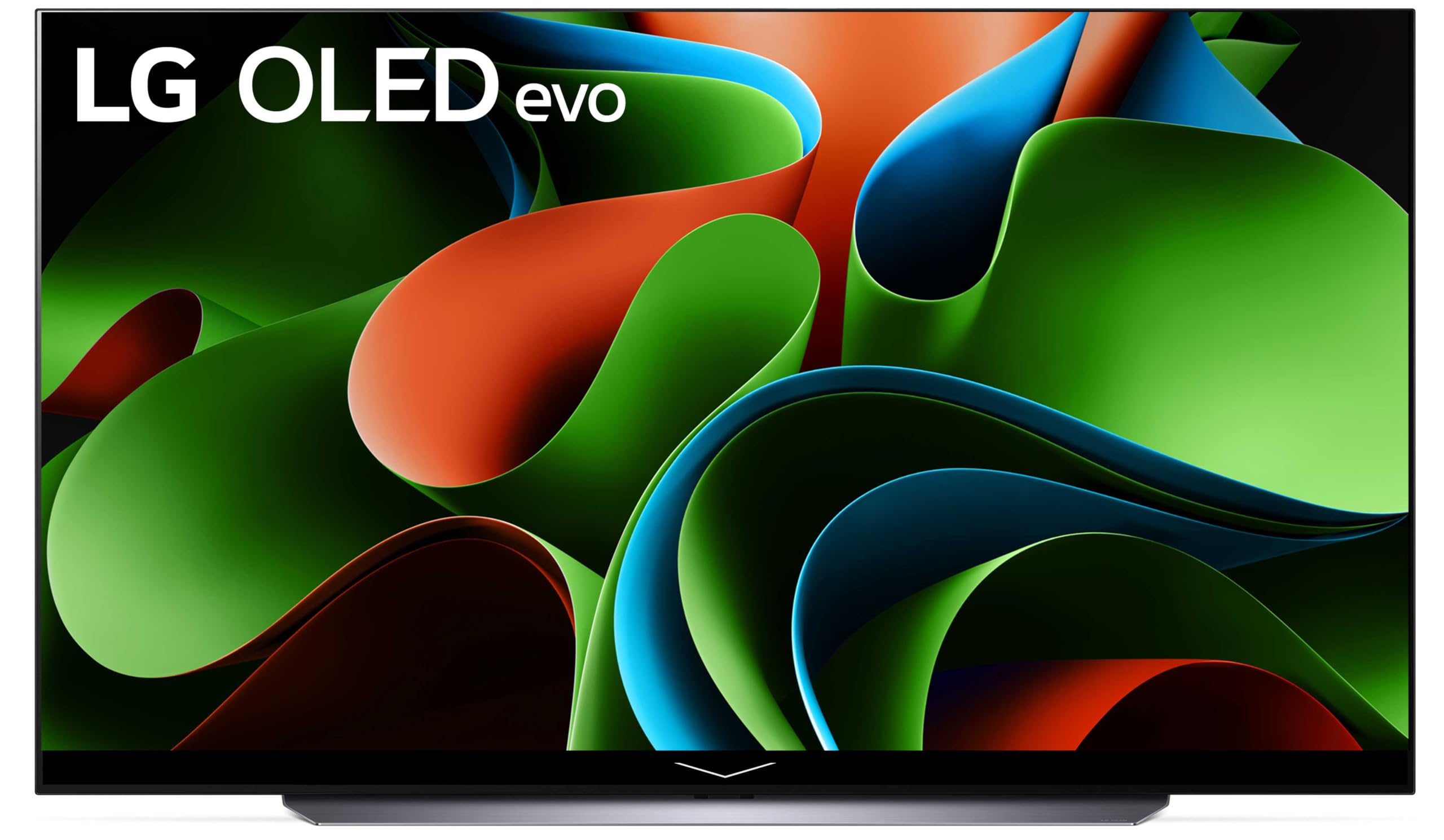
The LG C3 is the benchmark that all other OLEDs are measured against for pure, unadulterated picture quality. It delivers the perfect blacks, infinite contrast, and vibrant colors that are the hallmark of LG’s OLED evo technology. The a9 AI Processor Gen6 does a fantastic job of upscaling content, making everything from 4K Blu-rays to standard streaming look exceptional.
With four HDMI 2.1 inputs, NVIDIA G-Sync, and AMD FreeSync Premium, it is a gamer’s dream. The 0.1ms response time at 120Hz makes competitive gaming feel incredibly responsive and fluid. The “Filmmaker Mode” ensures you see movies exactly as the director intended, without motion smoothing or other unwanted processing.
The main drawback for an 83-inch panel is brightness. While perfectly adequate for a dim to moderately-lit room, it can struggle against direct sunlight or bright ambient light. The webOS interface is snappy, though some may find it a bit cluttered. For the dedicated cinephile with a controlled-light environment, this remains a top-tier choice and a fantastic value for a last-generation flagship.
Why it’s great
- Class-leading OLED picture quality with perfect blacks
- Full suite of HDMI 2.1 gaming features
- Excellent value for a last-gen flagship TV
Good to know
- Peak brightness is lower than current OLEDs like the G5
- Better suited for controlled-light rooms
4. LG G3 Series (OLED83G3PUA)

The LG G3 was a groundbreaking TV because it was the first to make an OLED truly viable for brighter rooms. The “Brightness Booster Max” technology, achieved through a Micro Lens Array (MLA), allowed it to get significantly brighter than the C3 while maintaining the perfect black level that defines OLED’s superiority. This makes it a much more versatile offering for a wider range of living spaces.
The “One Wall Design” is a standout feature, including a flush wall mount that makes the TV sit almost flush against the wall like a piece of art. The built-in gallery mode is purpose-built for this, displaying art or photos when you are not watching. It is powered by the same excellent a9 AI Processor Gen6 found in the C3, ensuring top-tier processing and upscaling.
Gaming performance is identical to the C3 with full HDMI 2.1 support. While the newer G5 has superseded it, the G3 remains a phenomenal option if you can find it at a discount. It is the perfect choice for a home theater build where aesthetics and design are just as important as the fantastically bright and contrasty picture.
Why it’s great
- Significantly brighter than standard OLEDs, good for bright rooms
- Beautiful flush-mount design with included bracket
- Perfect for an art-gallery aesthetic when not watching TV
Good to know
- No stand included, designed specifically for wall mounting
- Being a previous generation, it is now harder to find new stock
5. Samsung S90H Series (83S90H)
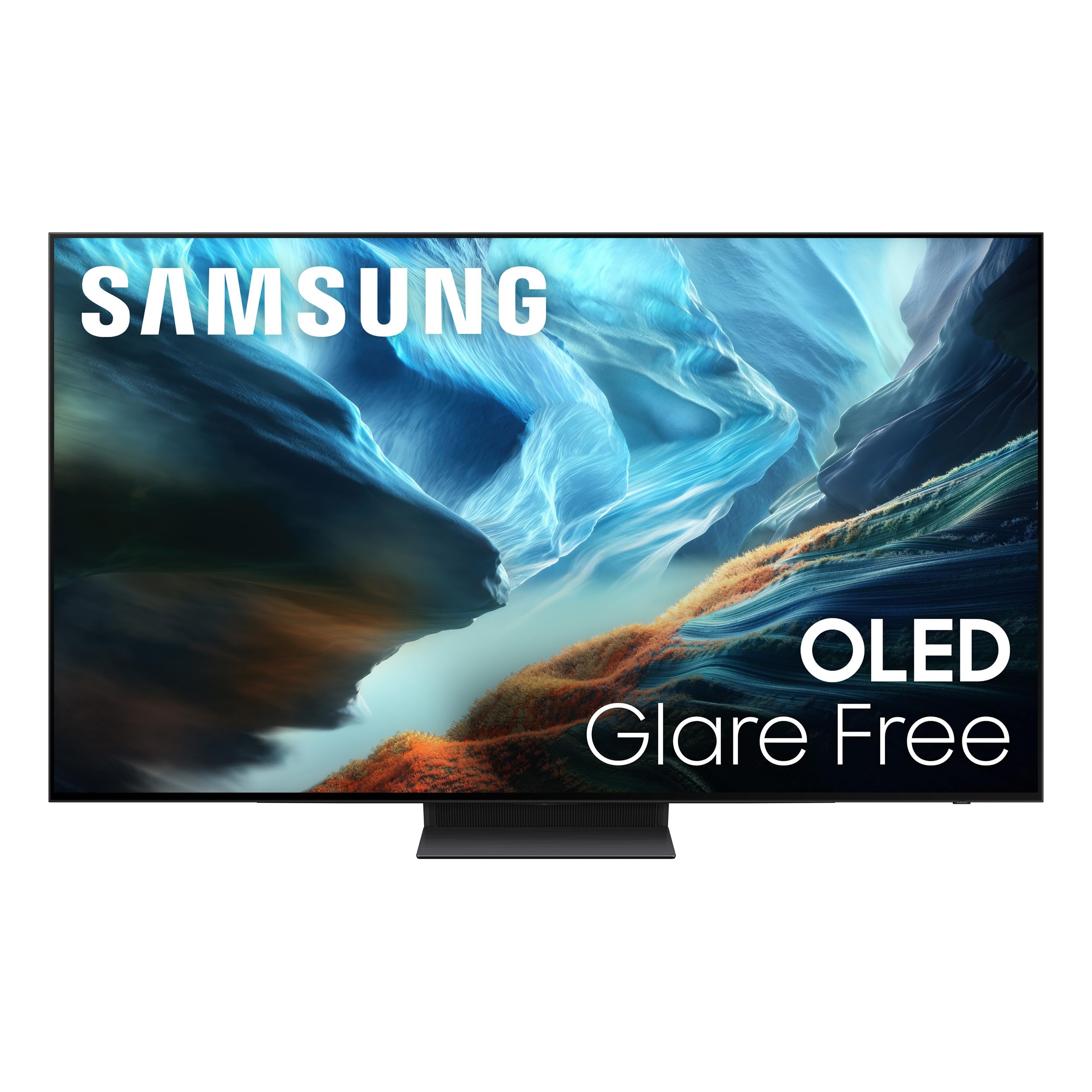
Samsung’s S90H 83-inch model is a masterclass in solving the OLED’s biggest practical weakness: reflections. The “Glare Free” technology is genuinely impressive, diffusing light from windows and lamps so effectively that it drastically reduces distracting reflections without washing out the image. This makes it a far more practical OLED for a typical living room with windows.
Powered by the new NQ4 AI Gen3 Processor with 128 neural networks, the upscaling is superb, breathing new life into older content. The “AI Motion Enhancer Pro” is a boon for sports fans, smoothing fast-moving balls and reducing blur significantly. For gamers, it supports a blistering 165Hz refresh rate with both NVIDIA G-Sync and AMD FreeSync Premium Pro, making it one of the most responsive TVs available.
One omission is the lack of Dolby Vision support, relying instead on HDR10+. While HDR10+ has improved, Dolby Vision remains the more prevalent HDR format across streaming services, which could be a deal-breaker for some. If you can live with that, its combination of anti-reflective screen and OLED blacks is a compelling, unique package.
Why it’s great
- Excellent Glare Free technology for bright rooms
- Top-tier AI upscaling with the new NQ4 Gen3 processor
- Class-leading 165Hz refresh rate for competitive gaming
Good to know
- Does not support Dolby Vision, relies on HDR10+
- Premium pricing for a 2026 model
6. Samsung S85D Series (QN83S85D)

The Samsung S85D is a stellar entry point into the world of Samsung OLED. It delivers the classic OLED advantages of deep, inky blacks and vibrant, Pantone-validated colors that make content pop. The ultra-slim “Laser Slim Design” makes it look incredibly elegant and premium, even on a stand.
The “Object Tracking Sound Lite” in combination with Dolby Atmos creates a surprisingly immersive audio bubble that follows the on-screen action, reducing the immediate need for a soundbar. The 4K AI Upscaling is more than capable of handling standard content, ensuring a sharp and clear picture across the board. The Tizen operating system is smooth and fast, providing access to all major streaming apps.
Its biggest asset is also its biggest trade-off: the sleek design limits the size and power of the internal speakers. While the technology is impressive, the overall sound signature won’t compete with a dedicated audio system. For the stylish home where a minimal aesthetic is key, this Samsung OLED is a fantastic choice.
Why it’s great
- Beautiful, ultra-slim design that looks great in any room
- Excellent color accuracy with Pantone validation
- Immersive Object Tracking Sound Lite
Good to know
- Sound quality, while good, is not a substitute for a soundbar
- No Dolby Vision support
7. Sony BRAVIA 7 (K-85XR70)

The Sony BRAVIA 7 is the sweet spot in Sony’s premium lineup, combining exceptional Mini-LED backlight control with Sony’s legendary video processing. It provides a big, bright, and incredibly detailed picture that looks fantastic across all content types, from streaming to cable broadcasts. The XR Processor is the star, intelligently enhancing color, contrast, and clarity in real-time.
As an extension of the PlayStation 5 ecosystem, it is hard to beat. It features Auto HDR Tone Mapping and Auto Genre Picture Mode that seamlessly optimizes the picture when you switch from a game to a streaming movie on your console. The “Game Menu” puts all essential gaming settings in one place, which is very convenient.
The biggest knock against it is that it doesn’t reach the same scorching brightness levels as the more expensive BRAVIA 9. It is also a significant upgrade over entry-level models but commands a premium price for its Sony processor. For a PS5 owner looking for a gigantic, all-around excellent performer with near-flagship gaming features, this is the perfect choice.
Why it’s great
- Excellent picture quality with superior Sony processing
- Flawless integration and exclusive features for PlayStation 5
- Studio-calibrated modes for accurate out-of-box color
Good to know
- Not as bright as the flagship BRAVIA 9
- Premium pricing for the Sony processor and ecosystem
8. TCL QM8K Series (85QM8K)
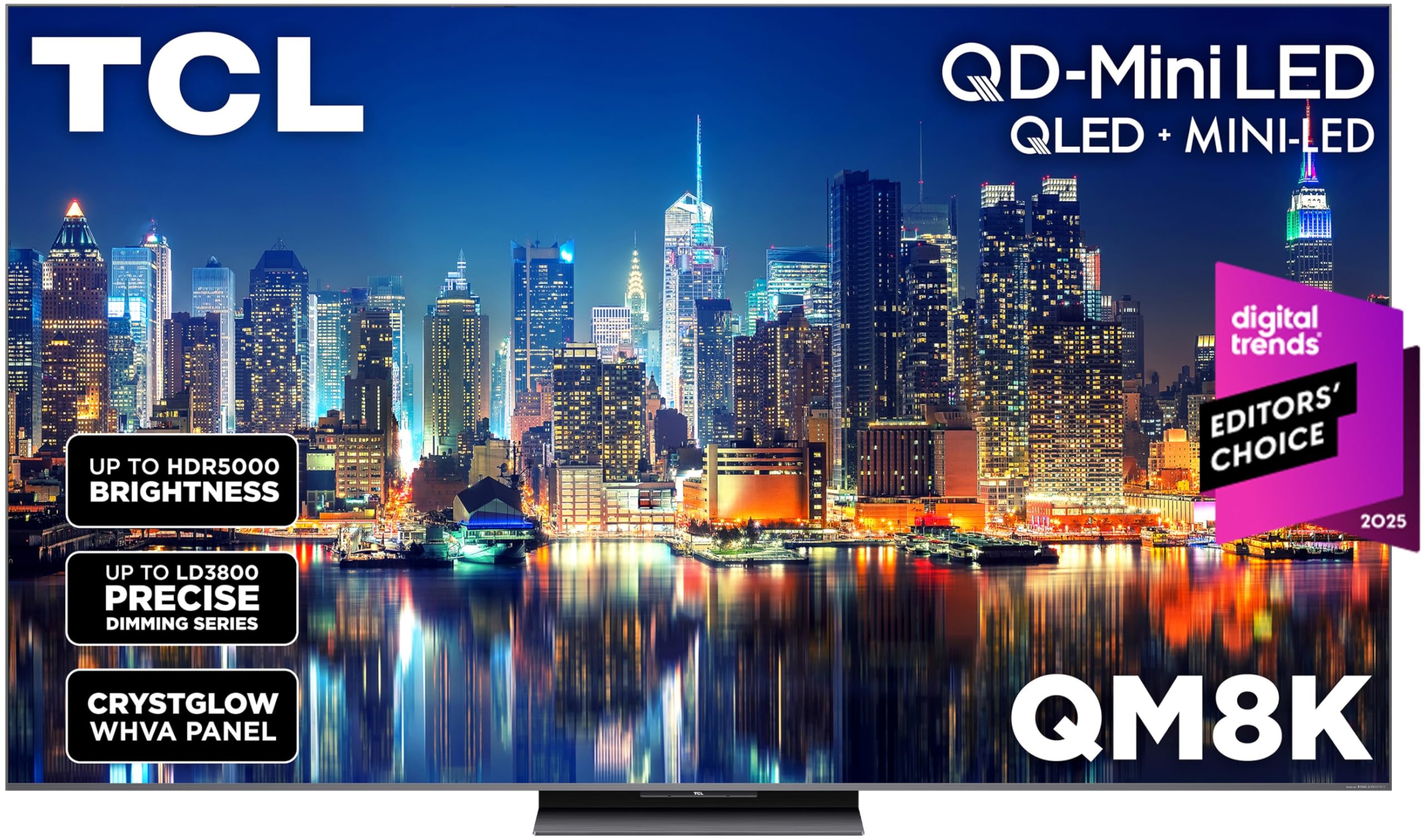
The TCL QM8K is a disruptive force in the big-screen market, offering a premium Mini-LED experience with a peak brightness of 5,000 nits at a price that many would consider mid-range. For anyone in a bright room, this kind of raw luminous output is transformative, making HDR content look explosive and vibrant.
The “CrystGlow WHVA Panel” has excellent anti-reflective properties, reducing glare effectively, and the color volume from the QD-Mini LED is fantastic. While it may not achieve the perfect blacks of an OLED, the blooming control is impressive for its class. The built-in audio, tuned by Bang & Olufsen, is a step above most competitors, providing clear dialogue and decent bass.
The Google TV interface is responsive and intuitive. It might not have the ultimate processing power of a Sony, but for sheer brightness and size per dollar, the QM8K is an absolute steal. It is the go-to recommendation for the buyer who wants a jaw-droppingly bright picture without spending a fortune.
Why it’s great
- Exceptional peak brightness for a mid-range price
- Great anti-reflective screen for a bright room
- Surprisingly good built-in audio with Bang & Olufsen tuning
Good to know
- Black levels can’t match an OLED in a dark room
- Processing and upscaling is good, but not class-leading
9. Samsung QN80H Series (85QN80H)
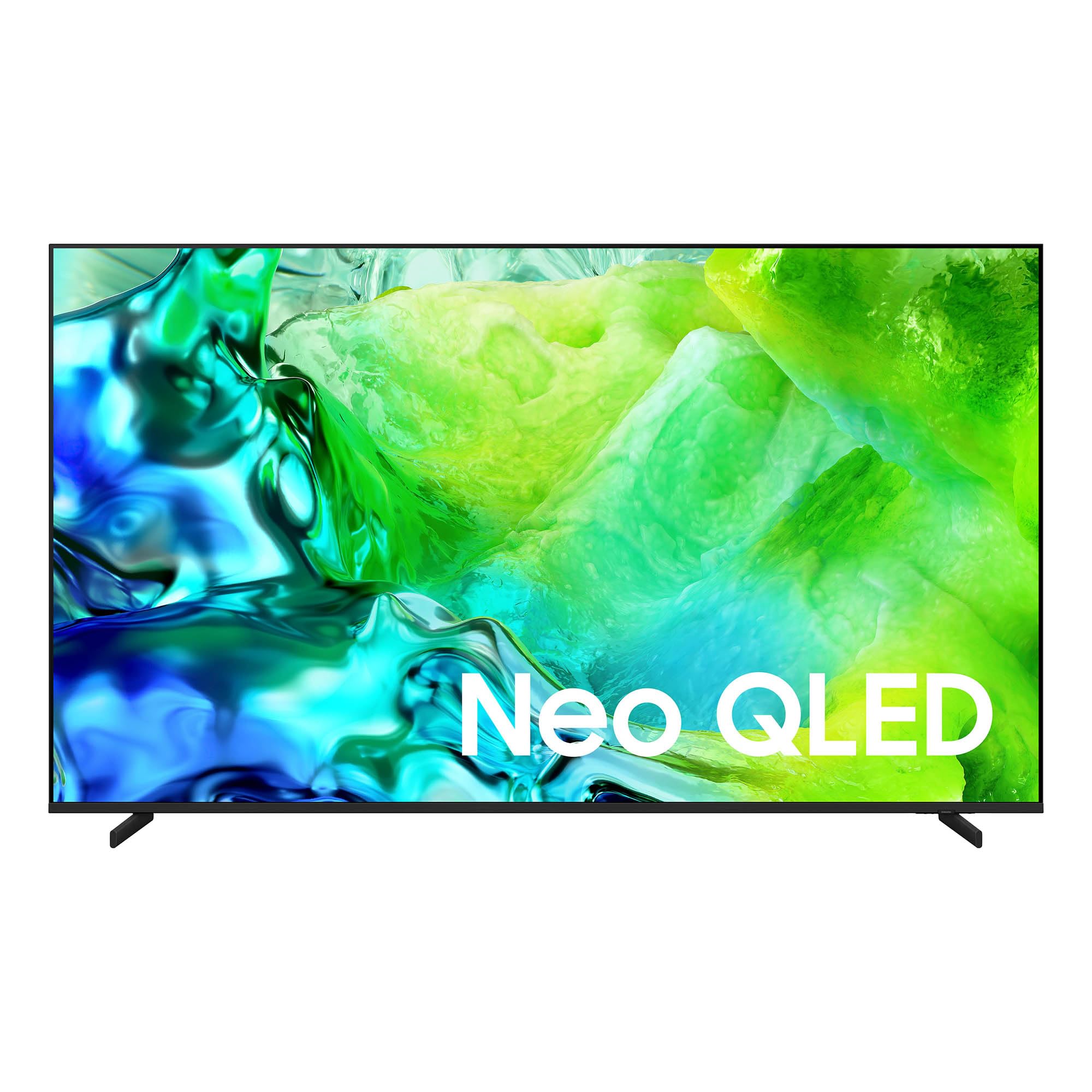
Samsung’s QN80H sits in a unique sweet spot: it provides a large 85-inch screen with excellent Mini-LED performance that rivals some OLEDs in black level performance, thanks to its powerful full-array local dimming. The “Quantum Mini LED Full Array” ensures minimal blooming around bright objects, giving a near-OLED contrast experience without the burn-in anxiety some buyers have.
The NQ4 AI Gen2 Processor is very capable, providing sharp 4K upscaling and smooth motion handling. The “Supersize Picture Enhancer” is a clever bit of software that specifically optimizes the picture for these large screens, reducing noise and improving clarity on a per-pixel level. It supports the 144Hz Motion Xcelerator, making it a smooth and responsive gaming partner.
Being a mid-to-premium Neo QLED, it doesn’t match the absolute brightness of the very top-tier or the perfect blacks of an OLED, but it comes remarkably close. It is an ideal choice for someone who wants the brightness of an LCD without the blooming of cheaper models, and the peace of mind that comes with a non-OLED panel, all at a competitive price point.
Why it’s great
- Excellent black levels and blooming control for Mini-LED
- 144Hz refresh rate for smooth gaming
- Includes custom tuning for supersized screens
Good to know
- Not as bright as the flagship Samsung QN90 series
- Lacks Dolby Vision support
10. TCL QM8L Series (98QM8L)
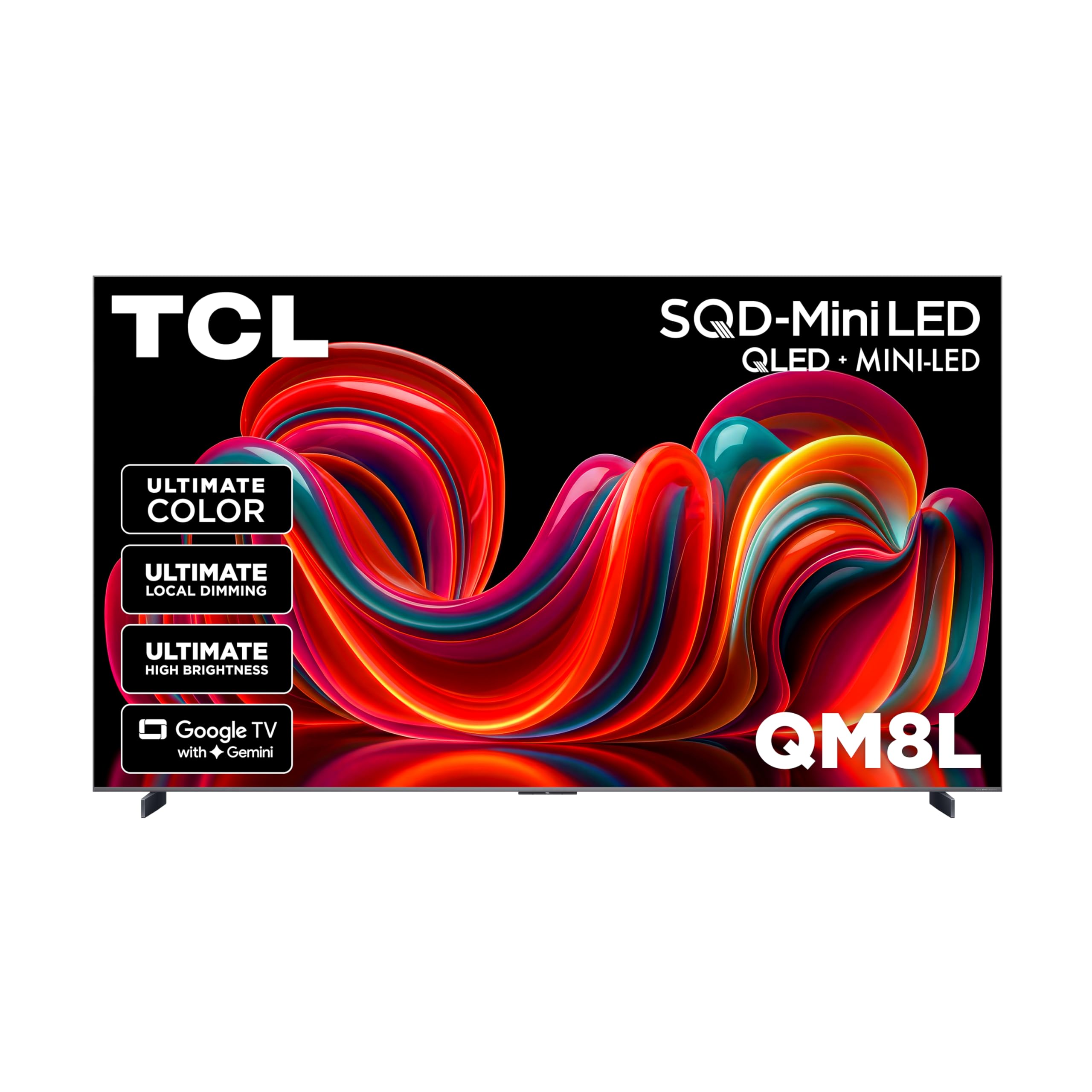
The TCL QM8L is an absolute behemoth, offering a 98-inch canvas with a staggering 6,000 nits of peak brightness. This is a television for those who want to recreate the most intense cinema experience at home, where a solar flare on-screen literally feels like it’s in the room with you. The 7000:1 static contrast ratio from the SQD-Mini LED panel is exceptional for a non-OLED, producing deep blacks and a sense of depth that is usually the domain of self-emissive tech.
The TCL “Halo Control System” with its 26-bit dynamic dimming is incredibly refined, managing the 4000+ local dimming zones with precision to keep blooming to a minimum. Audio by Bang & Olufsen rounds out the premium package, providing a genuinely cinematic soundstage that complements the mammoth visuals. Google Gemini interactive AI is also on board for a smarter, voice-controlled experience.
The sheer size and weight of the 98-inch model require careful logistical planning for delivery and installation, and it will absolutely dominate a room. For the buyer with the space, the budget, and the desire for a truly larger-than-life viewing experience, the QM8L is a formidable and surprisingly refined contender.
Why it’s great
- Massive 98-inch screen with incredible HDR brightness
- Excellent black levels for a Mini-LED with 7000:1 contrast ratio
- Premium built-in audio and advanced AI features
Good to know
- Requires careful planning for delivery and installation due to size
- Commanding price means it is a serious investment
11. LG C4 Series (OLED83C4PUA)

Building on the legacy of the C3, the LG C4 brings a crucial upgrade for gamers: a native 144Hz refresh rate. This makes it an even more compelling choice for PC gamers with high-end rigs who want to take full advantage of higher frame rates on a massive screen. The core picture quality remains top-tier with the signature perfect blacks and vibrant colors of an OLED.
The new a9 AI Processor Gen7 improves brightness slightly over the C3 and offers even better AI Super Upscaling4, ensuring a clearer picture from lower-resolution content. The “Brightness Booster” also helps combat the typical OLED weakness against ambient light, making it more versatile than previous generations. It includes four HDMI 2.1 ports, G-Sync, and FreeSync Premium, so all your devices are ready for the highest performance.
The webOS Re:New program promises five years of software updates, which is a nice touch for longevity. It’s still an OLED, so it’s best for a controlled-light environment. But for the gamer who prioritizes perfect image quality and fluid motion, the C4 is the new standard for an ultimate gaming OLED.
Why it’s great
- 144Hz native refresh rate for superior PC gaming
- Excellent OLED picture quality with perfect blacks
- Full HDMI 2.1 support for all modern consoles and GPUs
Good to know
- Still not as bright as high-end Mini-LEDs in bright rooms
- Premium price for the latest mid-range OLED model
12. Samsung S90H Series (77S90H)
For those with a slightly smaller space or budget, the Samsung S90H in 77-inch offers nearly all the brilliance of its 83-inch sibling. You still get the glorious OLED HDR+ with the exceptional Glare Free technology that makes it one of the best OLEDs for a room with ambient light, and the same powerful NQ4 AI Gen3 Processor that delivers stunning upscaling.
The 4K AI Upscaling Pro and AI Motion Enhancer Pro provide a fantastic viewing experience for sports, movies, and TV shows. It maintains the same 165Hz gaming capabilities, making it an excellent high-performance display for gaming consoles and PCs alike. The design is similarly sleek and premium.
The 77-inch size is excellent, but for those dead-set on an 83-inch panel, this will be a size compromise. It also lacks Dolby Vision support, consistent with all Samsung TVs. It is a top-tier choice for anyone who wants the premium OLED experience and best-in-class reflection handling, but in a slightly more manageable and affordable size.
Why it’s great
- Premium OLED picture with best-in-class Glare Free technology
- Powerful processing and AI upscaling
- Excellent gaming performance with 165Hz support
Good to know
- Smaller 77-inch size than the focus of this guide
- No Dolby Vision support
13. Hisense U6 Pro (100U6SF Pro)
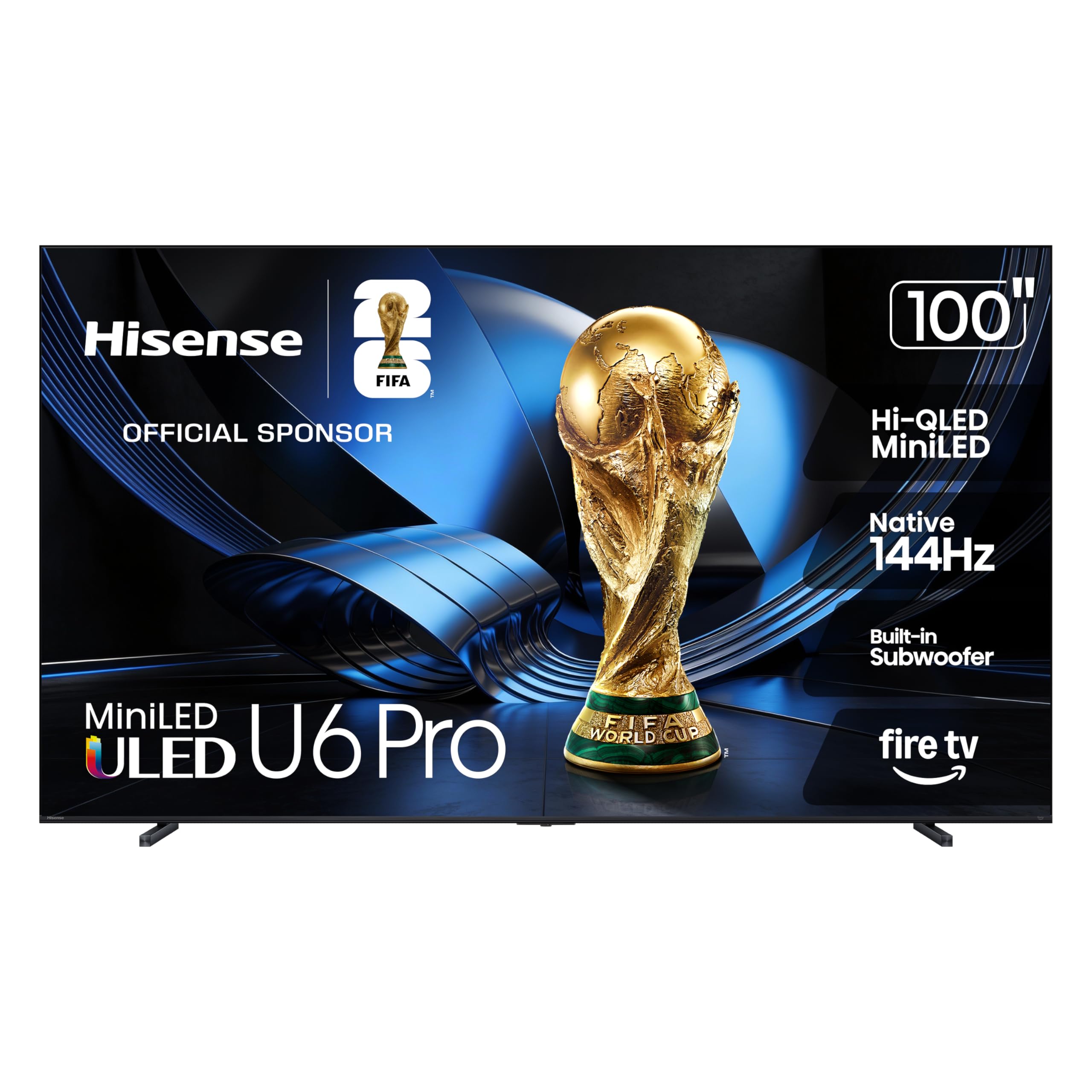
The Hisense U6 Pro is the champion of providing the largest possible screen for the most reasonable price. While not an 83-inch TV, its 100-inch panel represents the same segment of buying a massive screen on a budget. The “Hi-QLED MiniLED” technology delivers a solid picture with good contrast and brightness, making it a huge step up from basic LCDs.
The native 144Hz refresh rate and “Motion Rate 480” ensure smooth motion for sports and gaming, a fantastic feature at this price point. The built-in subwoofer provides a decent amount of bass without an external speaker, and the Fire TV interface is fast and user-friendly, especially for those in the Alexa ecosystem. The Hi-View AI Engine also works to automatically adjust picture settings for different types of content, which is a great convenience.
It’s important to understand the trade-offs: the peak brightness is nowhere near the premium Mini-LEDs, and the upscaling for low-quality content is passable rather than class-leading. For someone who wants a massive, immersive screen and is willing to make some compromises on ultimate picture quality to do so, the Hisense U6 Pro is an exceptional budget-friendly choice.
Why it’s great
- Excellent value for an incredibly large 100-inch screen
- Solid picture quality with Mini-LED for the price
- Smooth 144Hz gaming performance and built-in subwoofer
Good to know
- Peak brightness and upscaling are not premium-level
- Picture quality can’t match high-end OLED or Mini-LED options
FAQ
How far away should I sit from an 83-inch TV?
Is an 83-inch TV too big for a standard living room?
Will my 1080p content look bad on an 83-inch 4K TV?
Final Thoughts: The Verdict
For most users, the 83 inch tv winner is the LG G5 Series (OLED83G5WUA) because it combines the perfect black of OLED with unprecedented brightness, making it the most versatile and future-proof premium television available. If you want a TV that excels in a very bright room and provides the most explosive HDR impact, grab the Sony BRAVIA 9 (K-85XR90). And for the absolute best value, balancing incredible Mini-LED brightness with a surprisingly affordable price, nothing beats the TCL QM8K Series (85QM8K).