
Our readers keep the lights on and the weekend projects moving. As an Amazon Associate, I earn from qualifying purchases.
Unfinished concrete basement slabs are cold, unforgiving, and slick with dust. A proper gym floor turns that space into a dry, stable platform where heavy deadlifts and high-intensity metcons feel safe on your joints and equipment.
I’m Rikta — the co-founder and writer behind FitlyFast. My research on basement gym flooring focuses on material density, thickness tolerances, and moisture resistance because a dehumidifier can’t fix a foam tile that wicks dampness up from the slab.
This guide compares rubber rolls, interlocking tiles, and large-format mats to help you find the right basement gym flooring for your space and training style without overpaying for features you don’t need.
How To Choose The Best Basement Gym Flooring
Basements add a moisture variable that upstairs rooms don’t. A good floor must breathe, resist mildew, deaden impact sound, and handle the weight of a squat rack without delaminating. Start with the slab condition and work up.
Material – Foam vs. Rubber vs. PVC
High-density EVA foam is the most forgiving on joints and easiest to cut, but it can hold moisture against concrete if the slab isn’t sealed. Recycled rubber rolls offer the best equipment stability and sound dampening but are heavy and hard to cut precisely. Large PVC mats give you a portable, shoe-friendly surface that rolls up for cleaning — ideal if your basement doubles as storage or a workshop.
Thickness and Density
A 1-inch interlocking tile masks small floor imperfections and provides excellent cushion for bodyweight work, but it compresses noticeably under a 300-pound barbell. A quarter-inch rubber roll preserves a stable platform for heavy lifts while still protecting the concrete from scratches. For mixed-use gyms with both cardio and strength stations, a 7-to-8mm mat offers a good compromise between joint comfort and firmness.
Coverage and Seam Logic
Interlocking tile sets let you reconfigure layouts if you rearrange equipment later, but the seams can collect dust and may separate under lateral movement. Rubber rolls create a continuous, low-maintenance surface but require exact measurements and sharp blades for doorways and corners. Large-format single-piece mats eliminate seams entirely for small zones like a deadlift platform or yoga strip.
Quick Comparison
On smaller screens, swipe sideways to see the full table.
| Model | Category | Best For | Key Spec | Amazon |
|---|---|---|---|---|
| BalanceFrom 18-Piece | Interlocking Foam Tile | Multi-surface cushioning | 1-inch thick, 72 sq. ft. | Amazon |
| Flooring Inc Rubber Roll | Rubber Roll | Heavy equipment stability | 1/4-inch thick, 40 sq. ft. | Amazon |
| GXMMAT 6×5-Foot | Oversized PVC Mat | Portable cardio floor zone | 7mm thick, 30 sq. ft. | Amazon |
| GymCope 10×6-Foot (8mm) | Oversized PVC Mat | Large single-piece coverage | 8mm thick, 60 sq. ft. | Amazon |
| GymCope 12×6-Foot (7mm) | Oversized PVC Mat | Long jump rope zone | 7mm thick, 72 sq. ft. | Amazon |
| Our Modern Space 24-Pack | EVA Foam Tile | Budget-friendly area coverage | 0.4-inch thick, 96 sq. ft. | Amazon |
| AIRHOP 6-Piece Set | Rubber-Top Tile | Scratch protection under machines | 0.79-inch thick, 24 sq. ft. | Amazon |
In‑Depth Reviews
1. BalanceFrom 1-Inch Interlocking Foam Tiles (18-Piece)
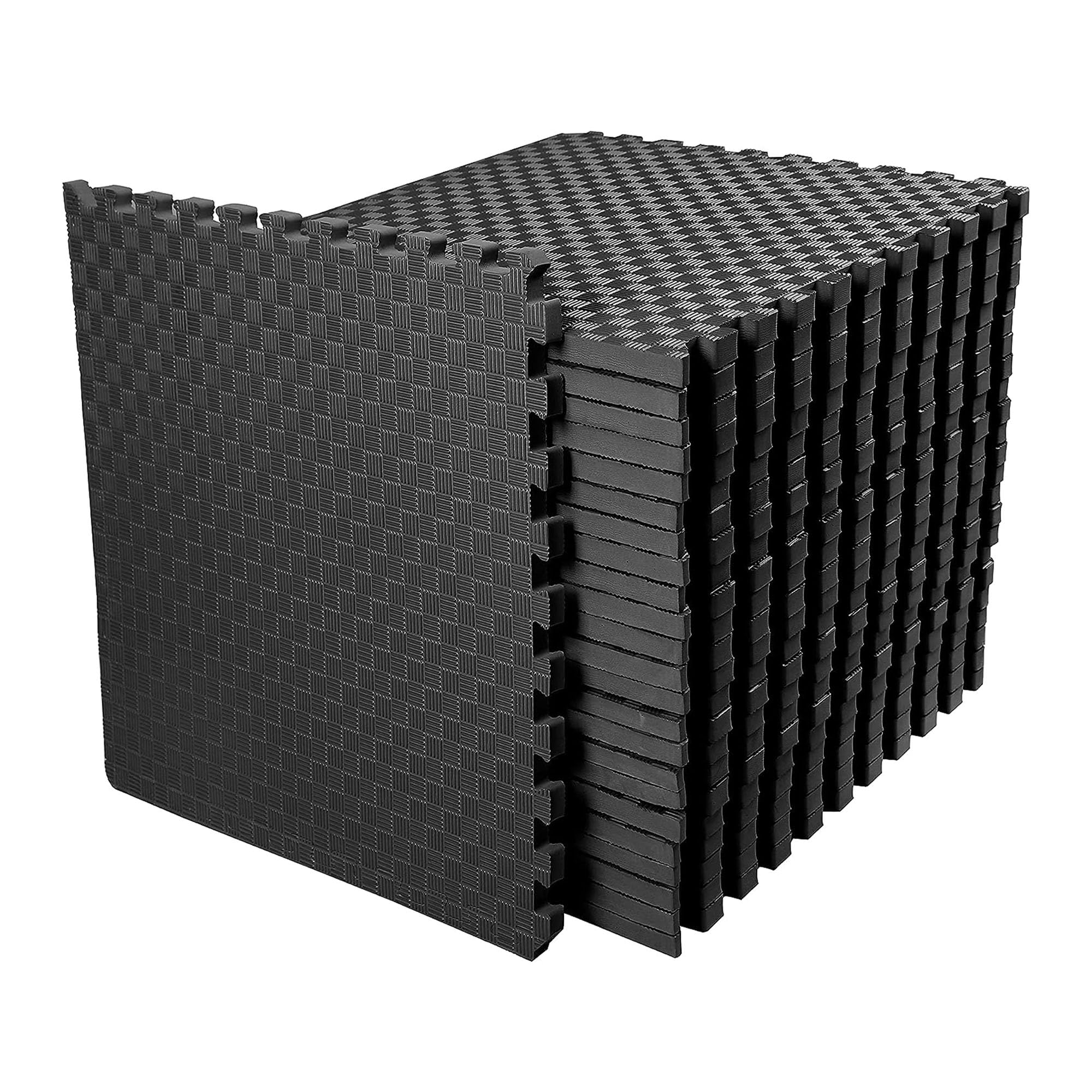
The BalanceFrom set delivers the thickest standalone foam platform in this lineup. Each tile measures a full 1 inch of high-density EVA foam, which masks concrete slab imperfections and deadens the hollow sound of dropped kettlebells better than any 7mm mat on this list.
The double-sided non-slip surface keeps the assembly locked together during burpees and sprawls, though the textured top collects dust and pet hair noticeably faster than smooth PVC mats. The included border strips create a clean finished edge along walls — a detail most tile sets skip.
A few early buyers report a strong initial off-gassing that fades after 48 hours in a ventilated basement. The tiles compress slightly under heavy racks, making this a better fit for bodyweight, yoga, and light strength work than for an Olympic lifting platform.
Why it’s great
- Full 1-inch thickness provides excellent joint protection on concrete.
- Border strips give a finished look along baseboards.
- Easy to remove and reconfigure if you rearrange equipment.
Good to know
- Strong initial odor requires airing out.
- Compresses under heavy stationary loads like squat racks.
2. Flooring Inc’s 1/4-Inch Tough Rubber Flooring Roll

This recycled rubber roll is the only true commercial-grade option in the selection. At a quarter-inch thick, it provides a rock-solid base for power racks, plate-loaded leg presses, and stationary bikes without the spongy feel of foam. The dense rubber also dampens vibration transfer to the room below — useful if your basement is directly under a living area.
Cutting the roll to fit around support columns and door frames requires a sharp utility knife and a metal straightedge; the material is tough enough that a dull blade will tear rather than slice cleanly. Once laid, the weight of the rubber keeps it flat without adhesive on most sealed concrete floors.
The initial rubber smell is present but fades within a week in a space with moderate airflow. A few customers noted slight width inconsistencies between rolls, so ordering enough material for the whole floor from the same batch is advisable if you need a seamless look.
Why it’s great
- Maximum stability for heavy strength equipment.
- Excellent sound and vibration dampening.
- Made in the USA from recycled rubber.
Good to know
- Difficult to cut accurately without sharp blades.
- Thin profile offers minimal cushion for floor exercises.
3. GXMMAT Large Exercise Mat 6×5-Foot (7mm)

The GXMMAT hits a sweet spot for basements used primarily for aerobic training. At 7mm thick, it provides enough padding for jump rope and plyometric landings without creating the unstable surface that overly thick mats produce under running shoes. The double-sided non-slip texture grips sealed concrete, and the subtle top texture prevents shoe traction from grabbing.
The 6×5-foot footprint fits two people doing partner drills, and the included carrying bag and Velcro straps make it easy to stow when the basement needs to function as a workshop or laundry zone. The bonus pair of workout gloves is a genuine extra, not a useless trinket.
The mat arrives rolled tightly and may need a day under light weights to lie completely flat around the edges. Users with bare feet reported some surface moisture during intense sessions, though a quick towel dry resolves the issue without affecting the mat’s integrity.
Why it’s great
- Portable enough to roll up and store between sessions.
- Stable for high-impact cardio without excessive bounce.
- Included accessories add genuine value for the price.
Good to know
- Requires weight to flatten out after unrolling.
- Surface can feel slick with bare feet during sweaty workouts.
4. GymCope Extra Large Exercise Mat 10×6-Foot (8mm)
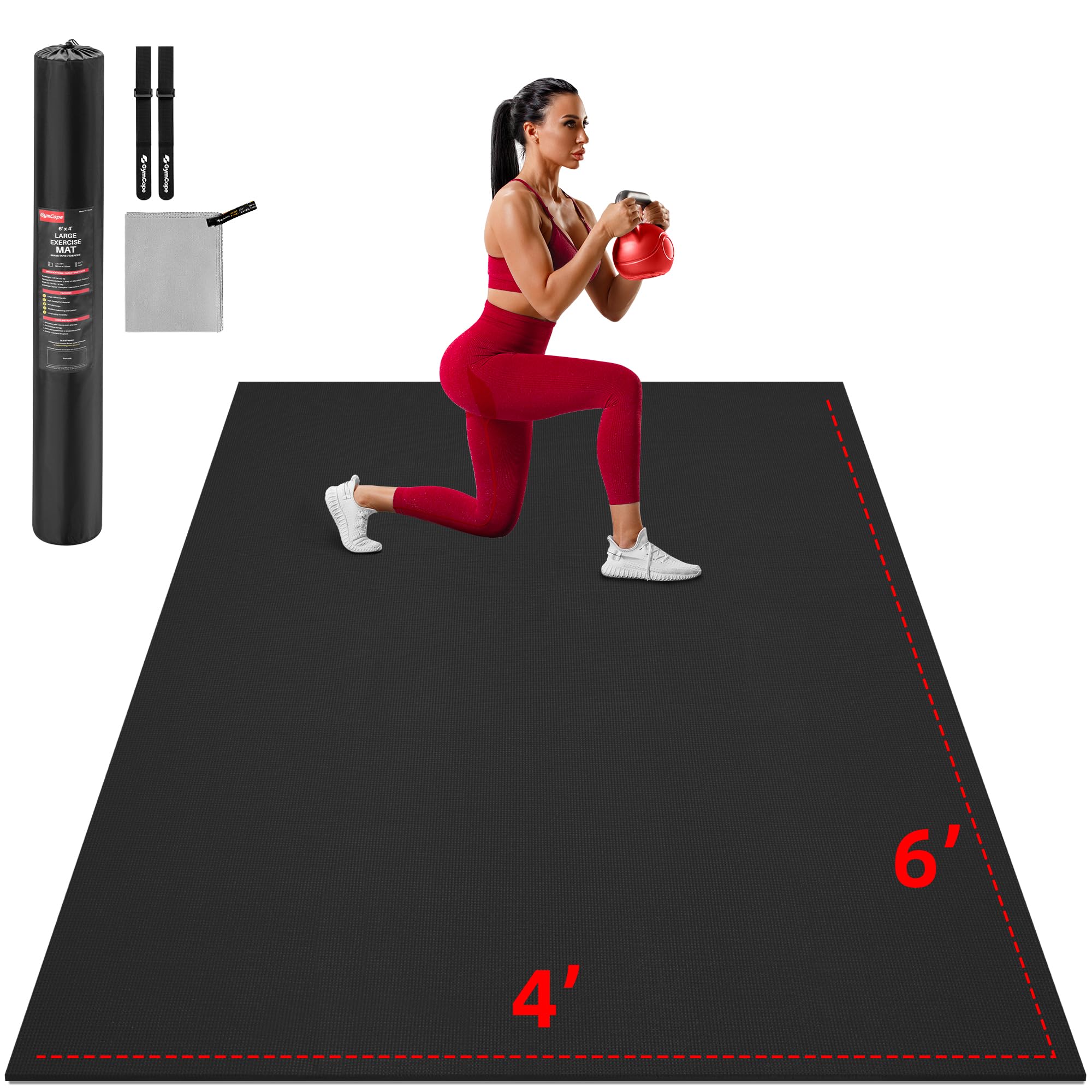
For a single-piece floor that covers a large area without seams, the GymCope 10×6 is a strong contender. The 8mm thickness places it between the thin rubber rolls and the thick foam tiles, offering a balanced platform for everything from heavy deadlifts to dynamic stretching. The triple-layer construction — a wear-resistant top, shock-absorbing core, and anti-slip bottom — works as advertised on sealed concrete.
The surface is compatible with training shoes and shows minimal scuffing after weeks of use. The mat comes with two carrying straps and a storage bag, though at this size it is heavy enough that you will not want to move it frequently. It is best laid down and left in place.
The dimensions have a minor manufacturing tolerance of 1–2 inches, which can leave an uneven gap if you are trying to butt the mat flush against a wall. The included microfiber towel is useful for wiping down after sweaty sessions.
Why it’s great
- Seamless large coverage up to 60 square feet.
- Triple-layer design improves durability over standard single-layer mats.
- Stays flat and does not curl at the edges.
Good to know
- Size variance of up to 2 inches can affect tight wall-to-wall fits.
- Heavy and awkward to reposition once laid.
5. GymCope Large Exercise Mat 12×6-Foot (7mm)

The 12×6 variant from GymCope extends your floor zone to 72 square feet in a single piece — enough for a full deadlift platform plus a rower footprint. The 7mm thickness is slightly thinner than the 8mm version, which makes it a bit easier to roll out flat, but it still provides adequate joint cushion for bodyweight circuits and moderate impact work.
The PVC material resists tearing from dumbbell drops and does not absorb sweat, so cleanup is a quick wipe-down. The double-sided anti-slip grip holds well on concrete, carpet, and tile alike, making this a versatile option if you ever relocate the mat to an upstairs room.
At this length, the mat can be cumbersome to unroll alone in a tight basement. The included hook-and-loop storage straps and carry bag help with organization, but the weight means you will likely designate a permanent zone for it. Some users noted that the 7mm feels less forgiving than the 8mm for prolonged floor work like planks.
Why it’s great
- Massive single-piece coverage eliminates seam issues.
- Tear-resistant surface handles shoe wear well.
- Cleans easily and resists moisture absorption.
Good to know
- Thinner than the 8mm version, less comfortable for long floor holds.
- Heavy and requires significant space to unroll.
6. Our Modern Space 24-Pack EVA Foam Tiles (0.4 Inch)

This 24-pack provides more than 96 square feet of coverage at the lowest per-square-foot cost in the group, making it the obvious entry-level choice for covering a full basement floor on a tight budget. At 0.4 inches thick, the tiles provide modest insulation from cold concrete and mild cushion for stretching and light yoga, but they will bottom out under a loaded barbell or heavy dumbbells.
The interlocking edges are easy to snap together — the full set can be laid in under an hour — and the tiles cut cleanly with a box cutter for odd-shaped rooms. The surface is non-toxic and safe for kids, and several buyers have repurposed leftover tiles for children’s play areas.
The foam does slide on smooth hardwood or laminate if laid directly, but on concrete the grip is sufficient for casual use. The material lacks the density for serious impact absorption, so it is best reserved for low-intensity circuits, stretching zones, or as a protective layer under a larger mat.
Why it’s great
- Largest coverage area for the lowest price.
- Easy to cut and install without tools.
- Non-toxic material suitable for family spaces.
Good to know
- Thin foam provides minimal shock absorption for high-impact moves.
- Slides on smooth surfaces without an anti-slip underlay.
7. AIRHOP 0.79-Inch Rubber-Top Interlocking Tiles (6-Piece)
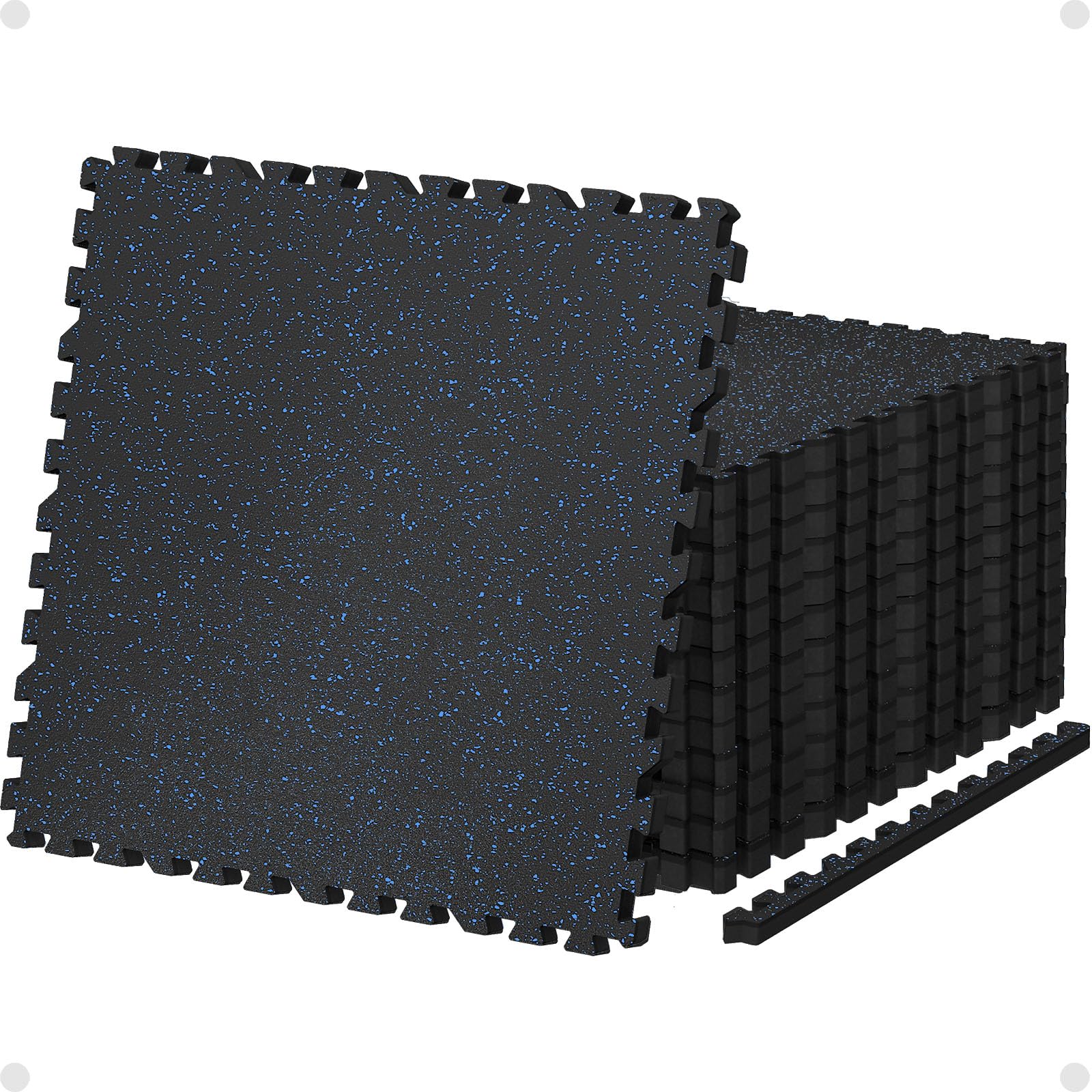
The AIRHOP tiles combine a textured recycled rubber top layer with a high-density EVA foam base, creating a dual-density surface that resists scratching from equipment while still providing some joint-friendly give. At 0.79 inches thick, they sit between the ultra-thin rubber rolls and the thick foam tiles, making them a versatile middle-ground option.
The upgraded interlocking locks are noticeably tighter than standard puzzle mats — the assembly stays together during dynamic movement and does not separate under a 200-pound treadmill. The rubber top stays cool to the touch, which is pleasant for barefoot work in a warm basement during summer months.
The 6-piece set only covers 24 square feet, so it works best as a dedicated platform under a squat rack, bench, or heavy bag rather than a full room floor. Ordering multiple sets to create a larger zone gets expensive quickly compared to single-piece mats or rolls. The edge pieces are narrower than the center tiles, which can be a minor weakness if the floor has high foot traffic.
Why it’s great
- Rubber top resists scratches from equipment feet.
- Tighter interlocking system prevents seam separation.
- Cool surface temperature is comfortable for barefoot training.
Good to know
- Small set size limits use to equipment pads or small zones.
- Narrow edge pieces could be a durability weak point under heavy traffic.
FAQ
Can I lay gym flooring directly on a damp basement concrete slab?
How thick should basement gym flooring be for dropping weights?
Will interlocking tiles separate during intense cardio workouts?
Final Thoughts: The Verdict
For most users, the basement gym flooring winner is the BalanceFrom 18-Piece Tile Set because its 1-inch thickness offers the best balance of joint protection and equipment support for mixed-bodyweight and light-strength training in a basement. If you need a stable base for heavy power racks and don’t care about floor comfort for yoga, grab the Flooring Inc Rubber Roll. And for a portable cardio zone that packs away when not in use, nothing beats the GXMMAT 6×5-Foot Mat.