
Our readers keep the lights on and the weekend projects moving. As an Amazon Associate, I earn from qualifying purchases.
For competitive and immersive gaming, the display is your most critical peripheral—lag, motion blur, and washed-out HDR can sabotage reaction times and ruin atmospheric depth. A proper big-screen gaming TV delivers a high native refresh rate, low input lag, variable refresh rate (VRR) support, and high peak brightness to pull detail from dark scenes. Finding the right balance of panel technology, gaming-specific features, and screen size for your space and console is the difference between victory and frustration.
I’m Rikta — the co-founder and writer behind FitlyFast. I’ve spent years analyzing display hardware, gaming benchmarks, and panel specifications to separate marketing claims from real gaming performance, particularly regarding HDMI 2.1 bandwidth, VRR ranges, and HDR tone mapping.
This guide breaks down the most capable models available today so you can confidently choose the best big screen tv for gaming that matches your console, PC, and room conditions.
How To Choose The Best Big Screen TV For Gaming
Gaming TVs differ from standard TVs in four key areas: refresh rate, input lag, VRR support, and HDR implementation. A TV that excels at movies may still introduce unacceptable latency for fast-paced shooters or fail to display HDR highlights correctly in game mode.
Native Refresh Rate & VRR
A native 120Hz or 144Hz panel ensures fluid motion without interpolation artifacts. Variable Refresh Rate (VRR) synchronizes the display’s refresh rate to the console or GPU’s frame output, eliminating screen tearing during frame rate fluctuations. Look for HDMI Forum VRR or AMD FreeSync Premium Pro certification for the widest compatibility with Xbox Series X and PS5.
HDMI 2.1 Bandwidth
Full 48Gbps HDMI 2.1 ports are required for 4K at 120Hz with 10-bit HDR and VRR active simultaneously. Some TVs limit bandwidth on certain ports or cap at 40Gbps, which still supports 4K 120Hz but reduces chroma subsampling flexibility. Ensure at least two HDMI 2.1 ports if connecting multiple consoles or a gaming PC.
Panel Technology: Mini-LED or OLED
Mini-LED TVs use thousands of dimming zones for high brightness and excellent contrast without burn-in risk—ideal for bright rooms and long gaming sessions with static HUDs. OLED panels offer perfect black levels and instant pixel response but have lower peak brightness and potential for permanent image retention with static elements. Your room lighting and gaming habits should guide this choice.
Quick Comparison
On smaller screens, swipe sideways to see the full table.
| Model | Category | Best For | Key Spec | Amazon |
|---|---|---|---|---|
| Amazon Ember 75″ Mini-LED | Mini-LED QLED | Integrated Alexa gaming | 144Hz FreeSync Premium Pro | Amazon |
| Hisense 75″ U7 | Mini-LED ULED | High brightness & anti-glare | Native 165Hz, VRR 330Hz | Amazon |
| Roku Pro Series 75″ | Mini-LED QLED | Simple OS & great value | 120Hz FreeSync Premium Pro | Amazon |
| TCL QM8K 75″ | QD-Mini LED | Blazing 288Hz VRR gaming | 144Hz with Game Accelerator 288 | Amazon |
| Sony BRAVIA 5 65″ | Mini-LED | PS5 exclusive features | 120Hz XR Motion Clarity | Amazon |
| Samsung S90F 77″ | QD-OLED | Vibrant colors & deep blacks | 144Hz Motion Xcelerator | Amazon |
| Sony BRAVIA XR8B 77″ | OLED | Cinematic PS5 gaming | 120Hz XR OLED Motion | Amazon |
| Samsung M70H 75″ | Mini-LED | Budget-friendly entry | 60Hz panel, Motion Xcelerator | Amazon |
| iFFALCON 75″ U85 | Mini-LED | 144Hz value with 4X HDMI 2.1 | 144Hz, VRR up to 288Hz | Amazon |
| Hisense CanvasTV 75″ | QLED Art TV | Style & casual gaming | 144Hz with AI Smooth Motion | Amazon |
| Toshiba Z670 75″ | Mini-LED QLED | All-around premium gaming | Native 144Hz Game Mode Pro | Amazon |
In‑Depth Reviews
1. Amazon Ember 75″ Mini-LED Series with Fire TV
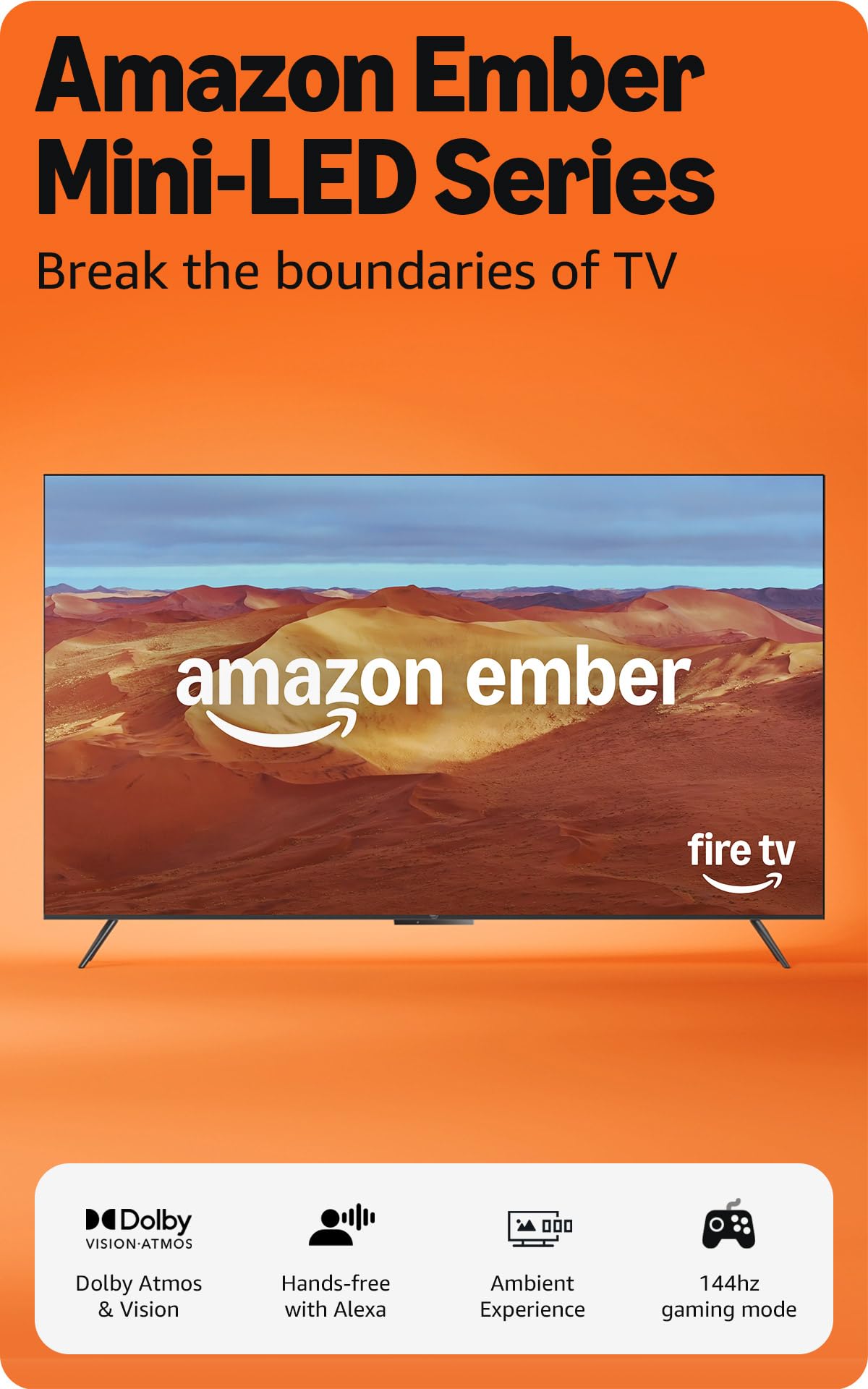
The Amazon Ember 75″ combines a QLED Mini-LED panel with a 144Hz native refresh rate and AMD FreeSync Premium Pro certification, making it one of the most feature-complete gaming TVs in the mid-range bracket. With up to 1,400 nits peak brightness and 512 dimming zones, it delivers high contrast and punchy HDR highlights that benefit both fast-paced shooters and open-world titles. The Fire TV interface is heavily integrated with Alexa, allowing hands-free control of game launch, volume, and smart home devices without leaving the couch.
Gaming performance is strong—low input lag in Game Mode and tear-free VRR across the full 48-144Hz range keep gameplay smooth. The built-in 2.1 Dolby Atmos audio adds punch for those without a dedicated sound system, though purists will still want a soundbar for critical directional audio. The anti-glare layer helps reduce reflections in bright living rooms, a common pain point for gamers with daytime setups.
Some users have reported occasional software sluggishness on the Fire TV OS after major updates, and the optical audio output lacks flexibility for older sound systems. Overall, this TV delivers near-Premium gaming features at a mid-range price point, making it the clear choice for gamers who want high-refresh performance without stepping into OLED territory.
Why it’s great
- 144Hz native refresh with FreeSync Premium Pro
- Bright Mini-LED panel with deep black levels
- Strong built-in Dolby Atmos audio
Good to know
- Fire TV OS can lag after updates
- No full-bandwidth HDMI 2.1 on all ports
2. Hisense 75″ U7 Mini-LED ULED
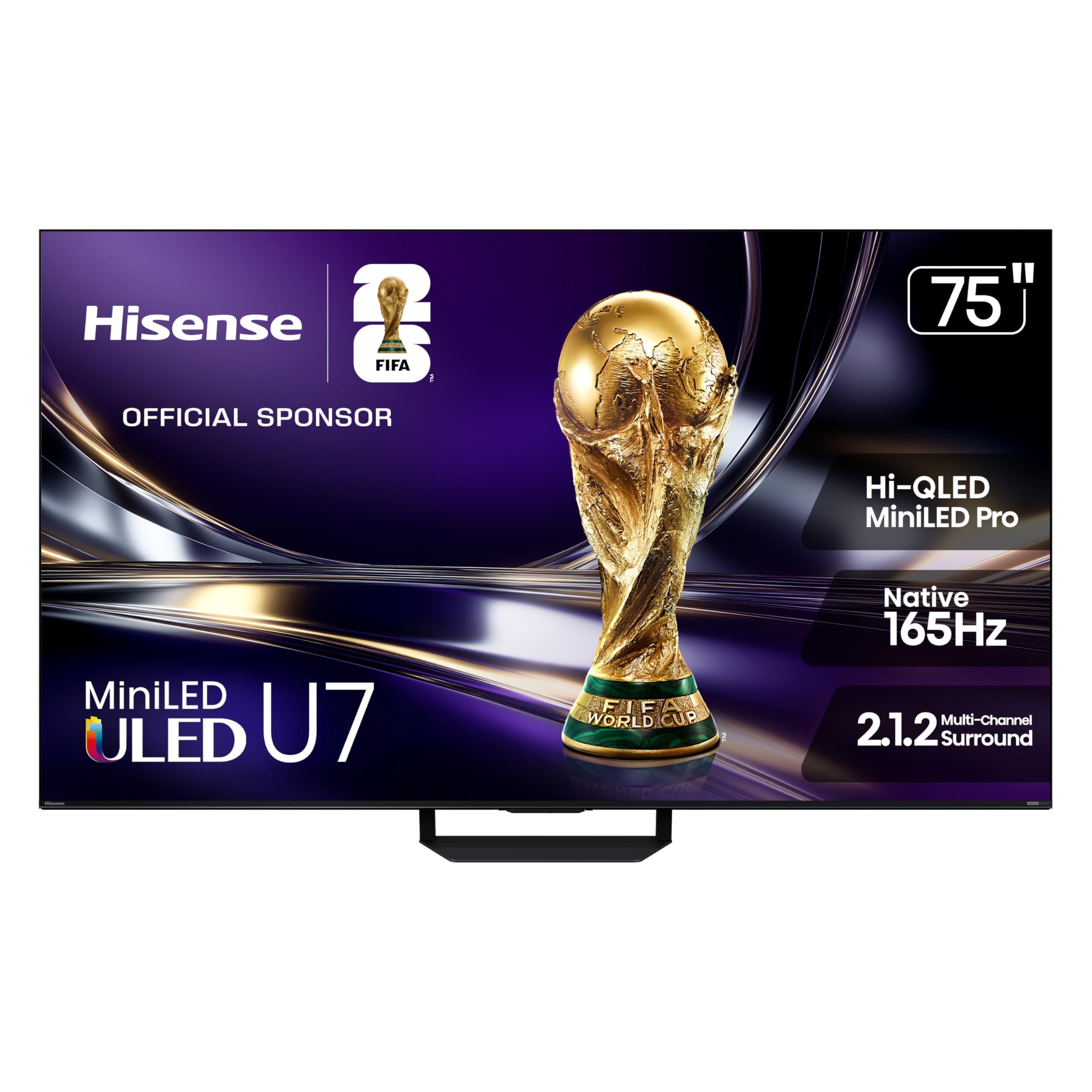
The Hisense U7 pushes beyond the standard 120Hz barrier with a native 165Hz panel and VRR support up to 330Hz, making it one of the fastest big-screen gaming TVs available. This headroom is especially useful for PC gamers who can push frame rates above 144fps, but even console players benefit from the rock-solid VRR stability across the entire 48-165Hz range. The Hi-QLED Mini-LED Pro panel with up to 3,000 dimming zones delivers exceptional contrast and peak brightness that rivals much more expensive models.
Hisense’s Hi-View AI Engine Pro optimizes HDR tone mapping scene by scene, preserving highlight detail in bright games like Forza Horizon while maintaining deep blacks in horror titles. The anti-reflection and glare-free coating is a standout feature for living rooms with windows or overhead lighting—colors remain vivid and contrast stays intact. With Google TV built-in, you get a clean interface with personalized recommendations across all streaming services.
The 2.1.2 channel audio system with Dolby Atmos provides decent immersion, but the real strength here is visual performance. The U7 is a serious contender for gamers who prioritize raw refresh rate and brightness over the perfect blacks of OLED.
Why it’s great
- Industry-leading 165Hz native refresh
- Excellent anti-glare screen for bright rooms
- High peak brightness with thousands of dimming zones
Good to know
- Sound quality benefits from an external soundbar
- Google TV may require account sign-in for full features
3. Roku Smart TV – 75-Inch Pro Series
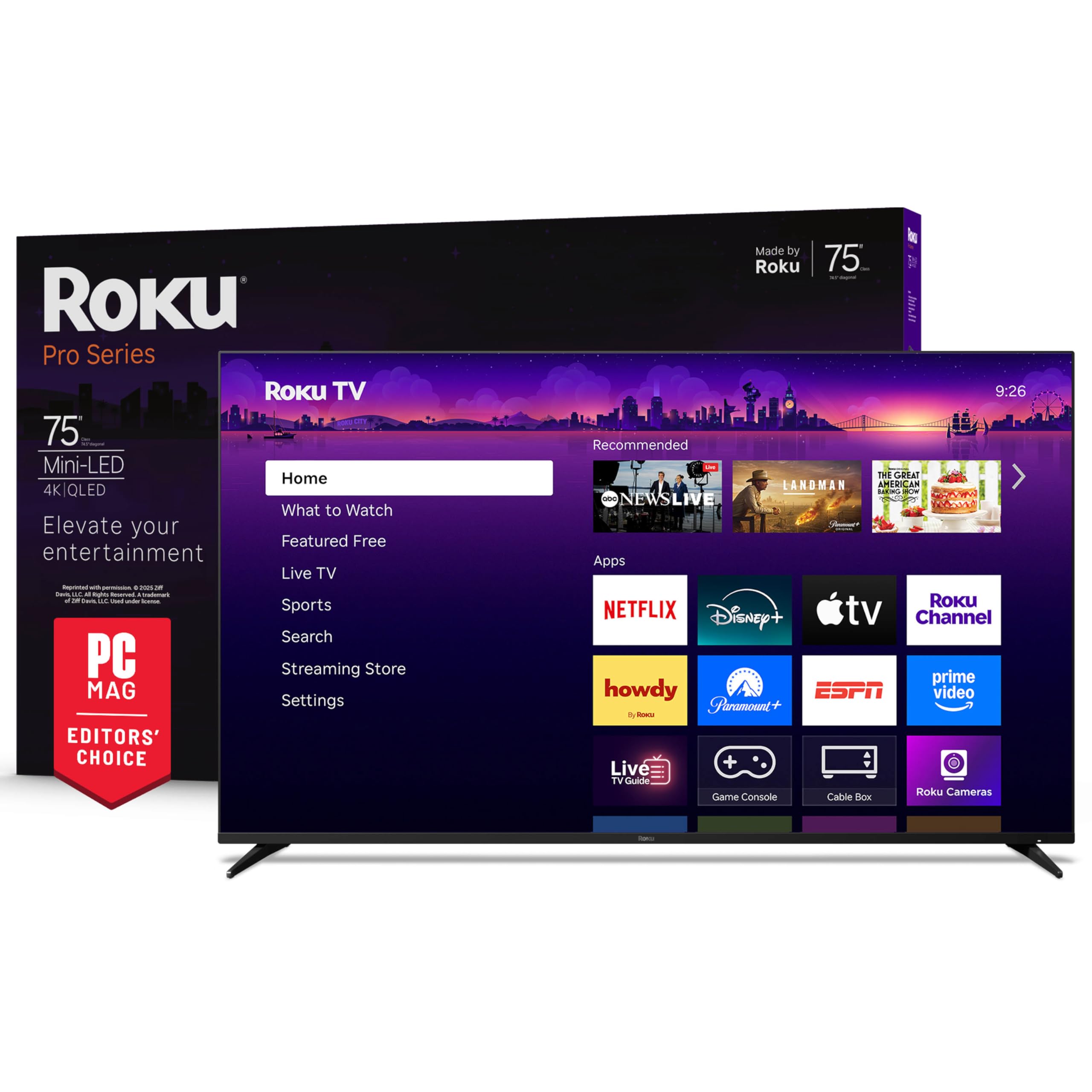
Roku’s Pro Series brings a 120Hz Mini-LED QLED panel with FreeSync Premium Pro, ALLM, and VRR to the table at a price point that challenges the value proposition of many competitors. The Roku OS is famously simple, ad-free, and regularly updated—a major advantage if you dislike navigating complex smart TV menus. The backlit Voice Remote Pro with remote finder is a practical touch that gamers will appreciate when the controller gets buried in couch cushions.
Picture quality is excellent for the price: Dolby Vision IQ adapts HDR to room lighting, and the side-firing speakers with Dolby Atmos create a wide soundstage without requiring an immediate soundbar upgrade. The custom wall mount included with some configurations sits the TV nearly flush against the wall, giving it a clean, gallery-like appearance when not in use. For gamers who want a streamlined experience without sacrificing performance, the Roku Pro Series delivers.
The 120Hz refresh cap means it won’t match the 144Hz or 165Hz panels for ultra-high-framerate PC gaming, but for PS5 and Xbox Series X, 120Hz is the current ceiling. Input lag in game mode is negligible, and the automatic game mode switching via ALLM ensures you never miss a drop-in match.
Why it’s great
- Best-in-class Roku OS simplicity
- Solid 120Hz gaming with FreeSync
- Great built-in sound with Dolby Atmos
Good to know
- Limited to 120Hz for PC gaming
- No full HDMI 2.1 on all ports
4. TCL 75 Inch QM8K Series
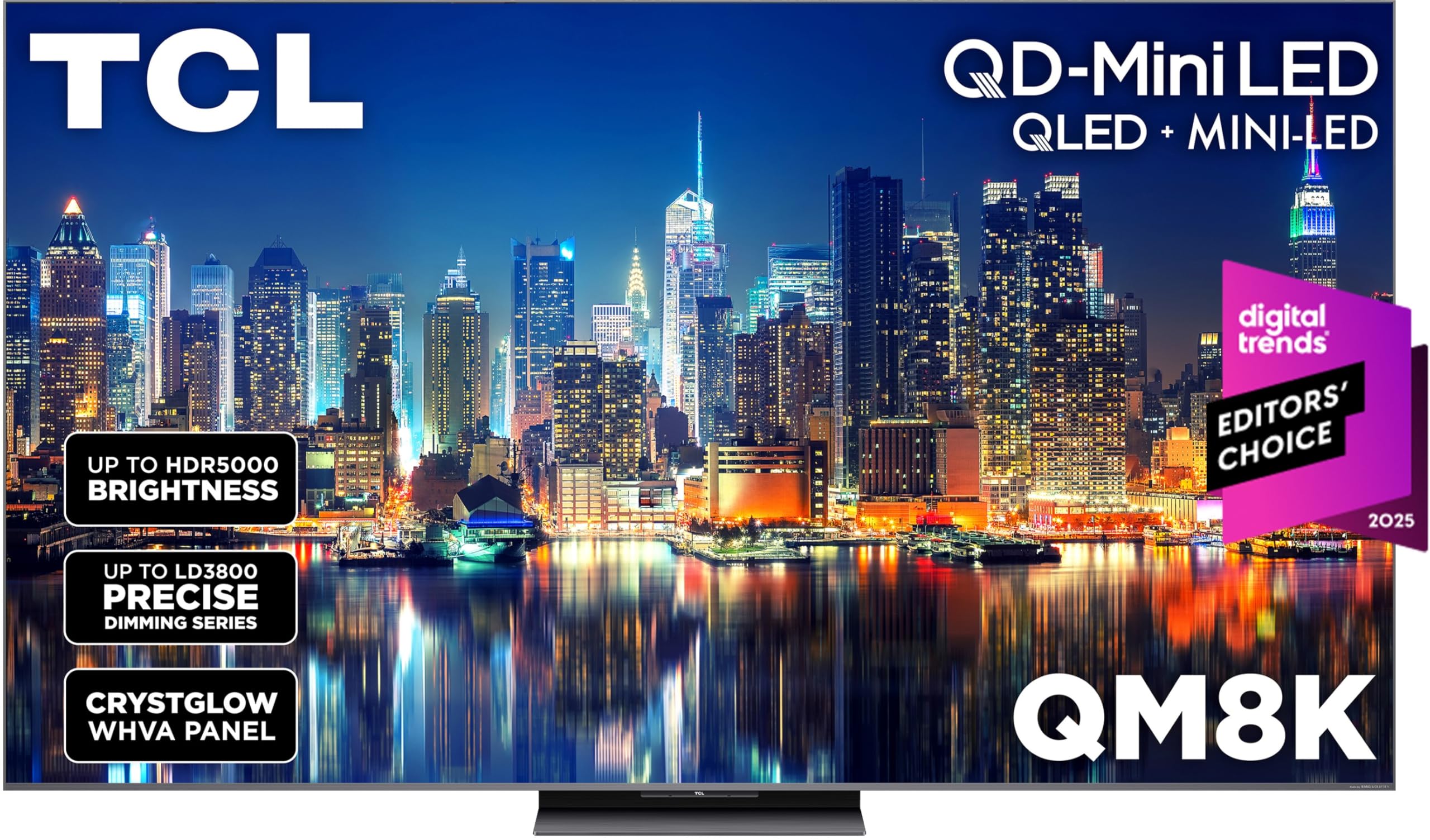
TCL’s QM8K is a premium QD-Mini LED TV that pushes gaming performance into elite territory with the Game Accelerator 288, enabling up to 288Hz VRR for compatible PC titles. The Halo Control System manages thousands of dimming zones with zero-delay transient response, virtually eliminating blooming around bright objects on dark backgrounds. The CrystGlow WHVA panel with anti-reflective coating maintains color accuracy and contrast from wide viewing angles, making it ideal for multiplayer sessions.
With up to 5,000 nits peak brightness, HDR content in game mode is breathtaking—specular highlights on weapons, neon signs, and explosions look incredibly realistic without washing out shadow detail. The built-in Bang & Olufsen audio system (on select models) provides room-filling sound that reduces the immediate need for a soundbar. Google TV with hands-free voice control and a backlit remote rounds out a premium package.
The QM8K sits at a higher price point, but it justifies the investment with near-OLED black levels, no burn-in risk, and headroom for future PC frame rates. It’s the definitive choice for the serious PC gamer or console enthusiast who wants the best Mini-LED has to offer in 2025.
Why it’s great
- Up to 288Hz VRR for PC gaming
- Very high brightness with minimal blooming
- Strong built-in audio with premium sound
Good to know
- Premium pricing places it near OLED territory
- Hulu app has reported audio sync issues
5. Sony BRAVIA 5 65 Inch TV

The Sony BRAVIA 5 is engineered specifically with PlayStation 5 integration as a core feature, offering Auto HDR Tone Mapping and Auto Genre Picture Mode that communicate directly with the console. The XR Processor with AI analyzes every scene in real-time, upscaling lower-resolution content and enhancing color, contrast, and clarity without adding latency. The Mini-LED panel, controlled by XR Backlight Master Drive, delivers deep blacks and bright highlights that make HDR games look stunning.
Sony’s XR Motion Clarity technology ensures blur-free motion during fast-paced gameplay without the flickering or strobing that can cause eye strain. The Game Menu puts all gaming picture settings—including VRR status, motion blur reduction, and black equalizer—in one accessible overlay. For PS5 owners, this TV offers the deepest integration available, including automatic switching to game mode when the console is turned on.
It’s worth noting that only 2 of the 4 HDMI ports support the full 48Gbps bandwidth, so careful port allocation is needed if connecting both a PS5 and a high-end PC. The built-in acoustic audio is decent, but Sony’s Acoustic Surface Audio+ (available on higher-end models) is not included here, so a soundbar is recommended for critical gaming audio.
Why it’s great
- Native PS5 features for optimized HDR and game mode
- Excellent motion handling with XR Motion Clarity
- AI-powered upscaling enhances all content
Good to know
- Only two HDMI ports are full bandwidth 2.1
- Built-in audio is adequate but not immersive
6. Samsung 77-Inch S90F

The Samsung S90F uses a QD-OLED panel that combines OLED’s perfect black levels and instant response time with quantum dot color volume, resulting in the most vibrant and contrast-rich gaming image available. The NQ4 AI Gen3 processor with 128 neural networks handles upscaling and HDR tone mapping intelligently, ensuring that SDR games look punchy and HDR titles deliver stunning specular highlights. The 144Hz Motion Xcelerator supports 4K 144Hz VRR for PC gaming, making this one of the fastest OLED options for competitive play.
For console gamers, the S90F supports ALLM and VRR, and the low input lag is among the best in the OLED category. Samsung’s Tizen OS provides access to all major streaming apps, and the anti-glare coating on the OLED panel helps manage reflections better than previous generations. The Q-Symphony feature syncs TV speakers with a compatible Samsung soundbar for a more immersive audio stage without additional wiring.
The QD-OLED panel is best suited for controlled lighting environments, as direct sunlight can impact black levels. Also, like all OLEDs, there is a risk of burn-in with static HUD elements over years of use. For gamers who prioritize image quality above all else and game in a dim room, the S90F is a revelation.
Why it’s great
- Superb QD-OLED color volume and perfect blacks
- Very low input lag for competitive gaming
- AI upscaling enhances lower-resolution content
Good to know
- OLED burn-in risk with static HUDs over long sessions
- Not ideal for very bright rooms
7. Sony 77 Inch OLED BRAVIA XR8B

Sony’s BRAVIA XR8B combines a self-lit OLED panel with the XR Processor to deliver pure blacks, infinite contrast, and studio-calibrated picture modes for Netflix and Prime Video. For PS5 owners, the exclusive Auto HDR Tone Mapping and Auto Genre Picture Mode ensure that games look exactly as the developers intended, with accurate brightness and color that doesn’t clip highlights. The OLED panel’s instant pixel response eliminates motion blur completely, giving competitive shooters a noticeable edge in clarity during fast camera movements.
The XR OLED Motion technology maintains smoothness without causing the soap-opera effect, and the Game Menu consolidates all gaming settings—including VRR status, motion blur reduction, and black equalizer—into an easy-to-access overlay. The built-in Acoustic Surface Audio+ uses actuators behind the screen to produce sound that appears to come directly from the on-screen action, which adds a layer of immersion for single-player titles.
As with all OLEDs, the XR8B is best in a dimly lit room, and there is a burn-in risk with prolonged exposure to static elements. The 120Hz refresh cap matches current console limits, but PC gamers seeking 144Hz will prefer the Samsung S90F. Sony’s processing and PS5 integration make this the definitive console gaming OLED.
Why it’s great
- Perfect OLED blacks and infinite contrast
- Native PS5 integration with Auto HDR mapping
- Acoustic Surface Audio+ for immersive directional sound
Good to know
- Requires controlled lighting for best blacks
- Burn-in risk with static HUDs
8. Samsung 75-Inch M70H
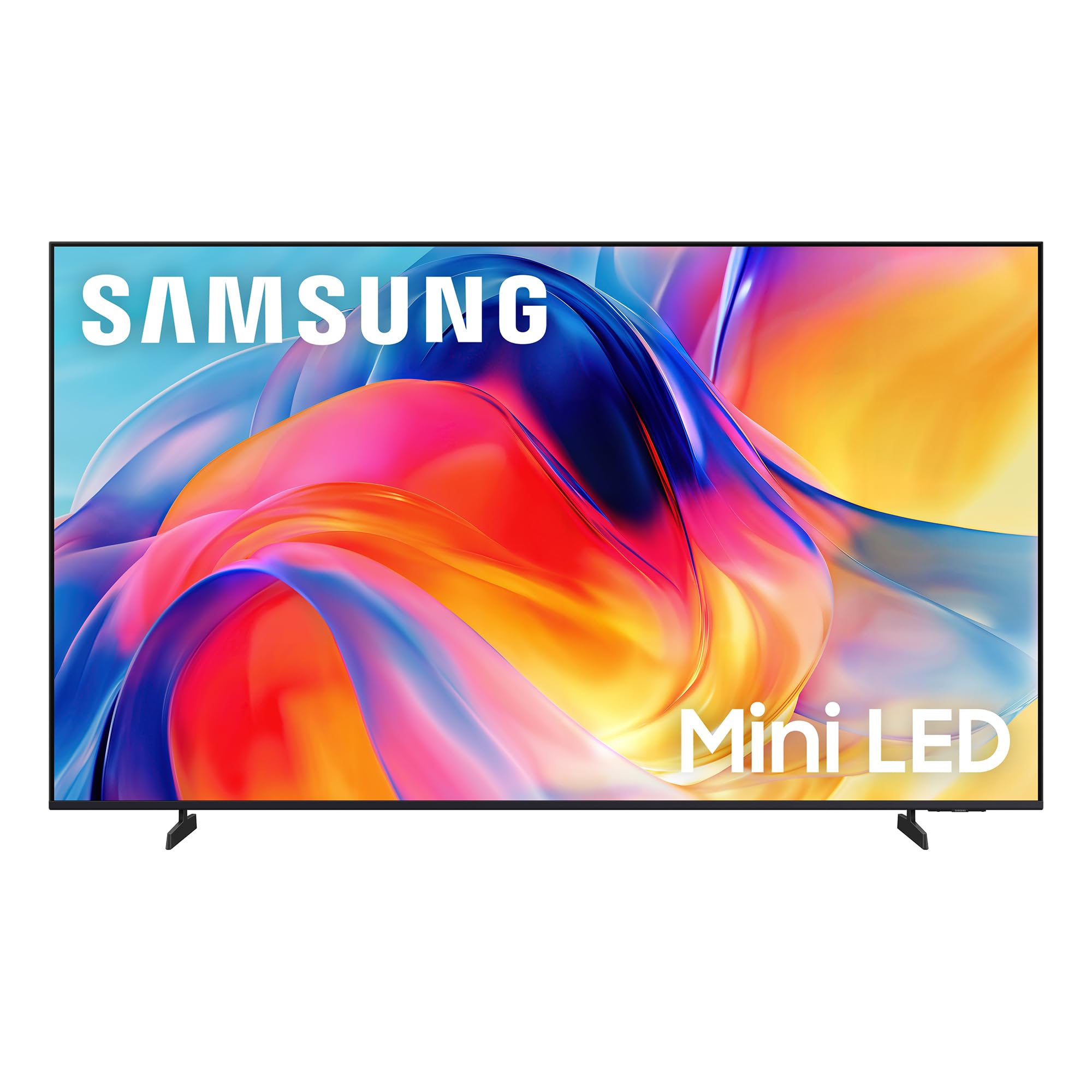
The Samsung M70H is an entry-level Mini-LED TV that brings Samsung’s color science and Pure Spectrum Color to the gaming space without the high price tag of premium models. The 60Hz panel with Motion Xcelerator + DLG 120Hz uses display technology to simulate a higher refresh rate, which can reduce motion blur in supported game modes. For casual gaming on PS5 or Xbox Series X where 60fps is the standard, this TV delivers solid performance without breaking the bank.
The Gaming Hub centralizes access to cloud gaming services, consoles, and apps in one interface, making it easy to switch between Xbox Game Pass streaming and a connected PS5. The Mini-LED backlight system provides decent contrast for the price, and Samsung’s color booster makes games like Hogwarts Legacy and Gran Turismo 7 visually pop. The remote system can feel sluggish at times, and the 60Hz native panel lacks the fluidity that competitive gamers require.
This TV is a practical choice for budget-conscious gamers who want a big screen with solid color performance and smart features but don’t need the high refresh rates of dedicated gaming TVs. Stick with single-player adventures and strategy games to get the best experience.
Why it’s great
- Affordable entry into Mini-LED technology
- Excellent color accuracy for the price
- Gaming Hub for cloud and console gaming
Good to know
- Native 60Hz panel limits competitive gaming
- Remote has narrow reception angle
9. iFFALCON 75″ 4K MiniLED U85
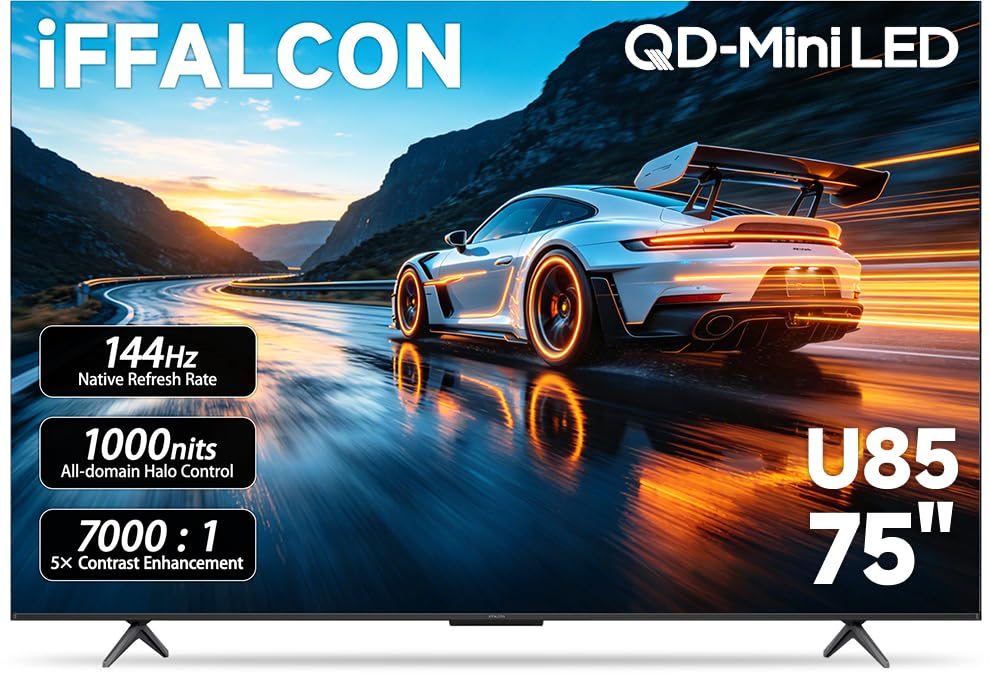
The iFFALCON U85 is a dark horse in the gaming TV space, offering a native 144Hz panel with VRR up to 288Hz and crucially, four HDMI 2.1 ports—two running 4K 144Hz and two at 4K 60Hz. This port configuration is rare even on premium models and allows simultaneous connection of a PS5, Xbox Series X, gaming PC, and soundbar without any switching. The Mini-LED panel with up to 1,000 nits brightness delivers vibrant HDR visuals with deep blacks and minimal blooming.
Dolby Vision IQ, Dolby Vision Gaming, and IMAX Enhanced support ensure that HDR content is automatically optimized for room lighting and content type. The Google TV interface is clean and intuitive, and the far-field voice control works well for hands-free searches. For the price, the feature set is remarkable—144Hz gaming, four HDMI 2.1 ports, and strong HDR performance make it a serious contender.
The build quality is slightly thicker than premium brands, and the built-in 50W audio system, while adequate, benefits from an external soundbar for immersive Dolby Atmos gaming. If you value multi-device connectivity above brand prestige, the iFFALCON U85 delivers exceptional value.
Why it’s great
- Four HDMI 2.1 ports for multi-console setups
- 144Hz native with high VRR ceiling
- Excellent HDR format support
Good to know
- Build quality feels less premium than Sony/Samsung
- Soundbar recommended for best audio
10. Hisense 75″ Hi-QLED S7 CanvasTV
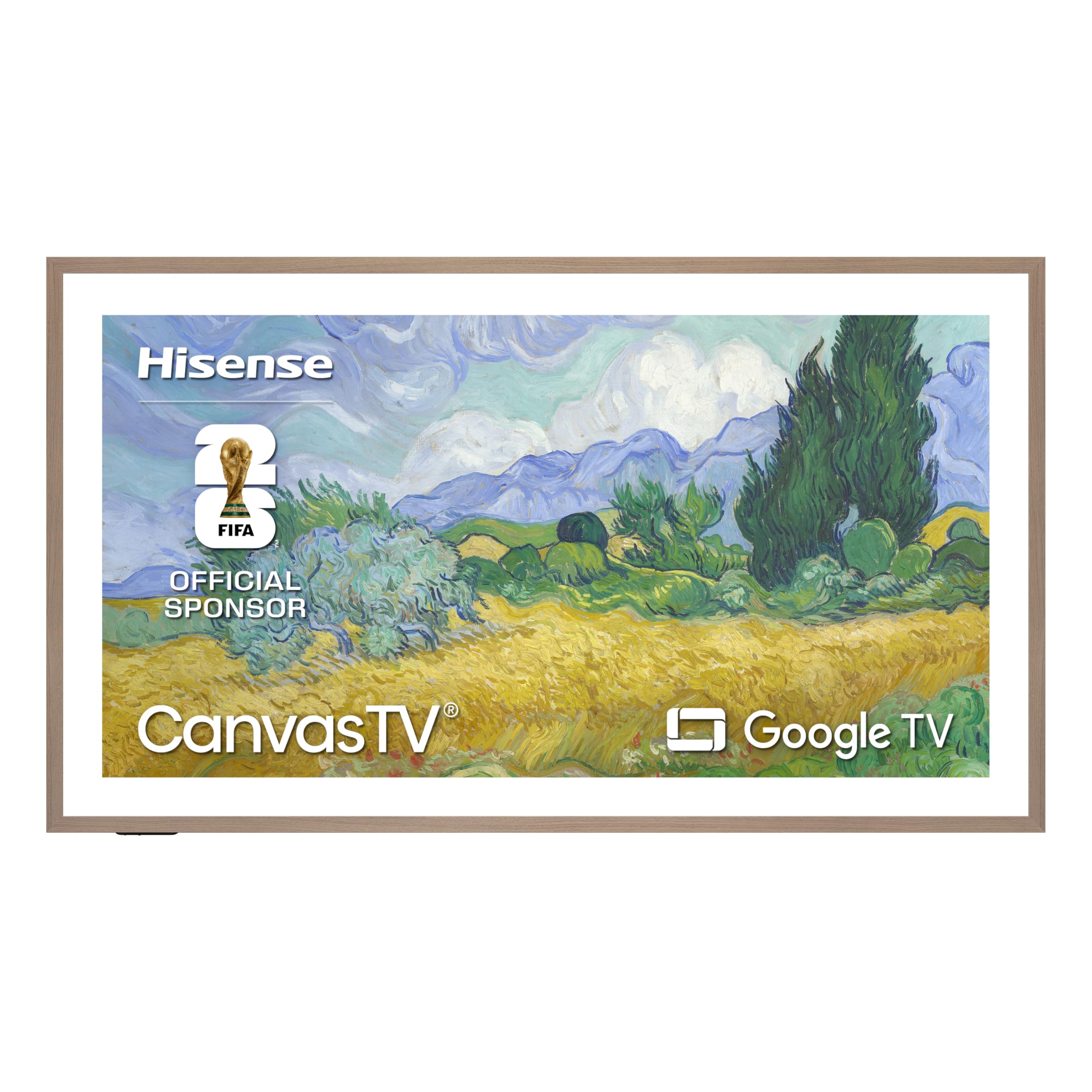
The Hisense CanvasTV is designed primarily as an art TV, but it packs a solid gaming punch with a native 144Hz panel and AI Smooth Motion technology that reduces blur during fast gameplay. The Hi-Matte anti-glare display eliminates reflections, making it ideal for living rooms where the TV doubles as a gallery piece. When not gaming, the Art Mode cycles through over 1,000 curated artworks, and the included teak frame gives it the appearance of a framed canvas.
Gaming performance is respectable: the 144Hz refresh rate handles console and PC gaming smoothly, and the 2.0.2 multi-dimensional sound with DTS Virtual:X provides immersive audio without a soundbar. The AI Ambient Light Sensor adjusts brightness and color temperature to match room lighting, which helps with eye strain during long gaming sessions. The ultra-slim wall mount sits flush against the wall, making the entire setup look clean and intentional.
This TV is best suited for the gamer who values aesthetics and wants a display that blends into the room when not in use. The panel won’t match the peak brightness or contrast of dedicated gaming TVs like the Hisense U7, but for casual to mid-level gaming in a stylish living space, it strikes an excellent balance.
Why it’s great
- Flush wall mount with included teak frame for art mode
- Anti-glare Hi-Matte display
- 144Hz refresh for smooth gaming
Good to know
- Peak brightness lower than dedicated gaming models
- Art mode unconvincing to some viewers
11. Toshiba 75″ Z670 Series
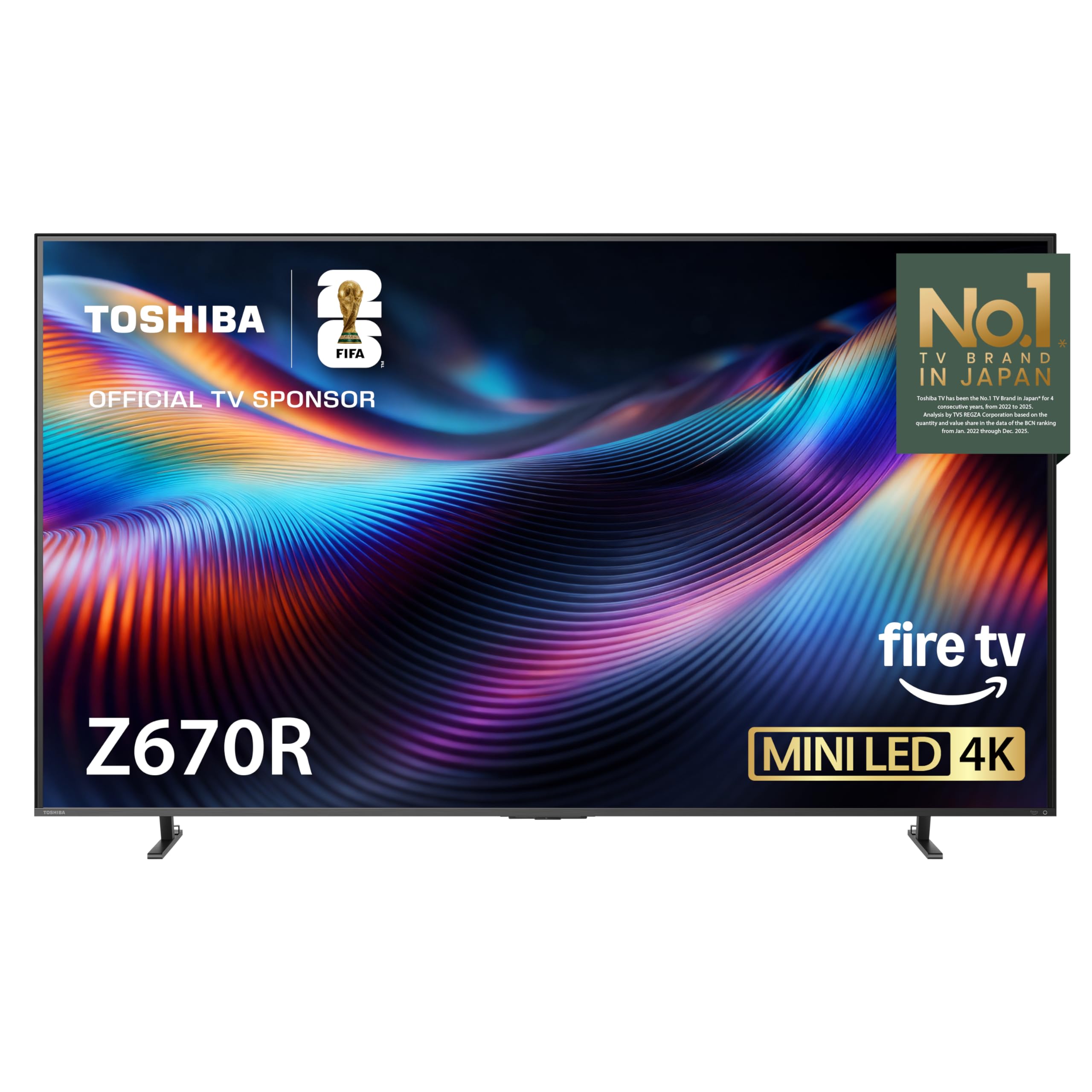
Toshiba’s return to premium displays is embodied in the Z670, which combines a Mini-LED QLED panel with the REGZA Engine ZRi Gen3—an AI picture and sound processor tuned by Toshiba’s Japanese engineering team. The native 144Hz refresh rate with AMD FreeSync Premium, VRR 144Hz, and ALLM delivers responsive, tear-free gaming that competes with top-tier brands. The Total HDR Solution Pro supports Dolby Vision IQ, HDR10+, and HDR10+ Adaptive, ensuring consistent HDR performance across all content sources.
The REGZA Power Audio Pro system with a bass woofer provides surprisingly deep and clear audio for a flat-screen TV, reducing the immediate need for a sound system. The AI Light Sensor Pro automatically adjusts brightness and color balance to room lighting, reducing eye strain during extended gaming sessions. The design language is minimalist and refined, with clean lines that match modern living spaces.
For gamers who want premium Mini-LED performance with thoughtful audio and picture tuning, the Toshiba Z670 is a compelling package. The Fire TV interface with Alexa built-in complements the gaming experience, allowing voice control of game launch and system settings.
Why it’s great
- Excellent picture tuning from Japanese engineering
- Strong built-in audio with bass woofer
- Comprehensive HDR format support
Good to know
- Bluetooth version 5.0 may limit some wireless audio
- Fire TV OS may present ads on home screen
FAQ
Does VRR work on both PS5 and Xbox Series X?
Is 144Hz noticeable over 120Hz for gaming?
Final Thoughts: The Verdict
For most users, the best big screen tv for gaming winner is the Amazon Ember 75″ Mini-LED because it combines a bright Mini-LED panel, 144Hz gaming with FreeSync Premium Pro, and a deeply integrated Alexa experience at a compelling price point. If you want the fastest possible refresh rate and exceptional anti-glare performance, grab the Hisense 75″ U7. And for those seeking the absolute best image quality with deep blacks and vibrant colors, nothing beats the Samsung 77″ S90F.