
Our readers keep the lights on and the weekend projects moving. As an Amazon Associate, I earn from qualifying purchases.
Camping backpacks either make miles feel effortless or turn a short trail into a long lesson in regret. The difference comes down to internal frame stiffness, torso adjustability, and how a bag transfers weight from your shoulders to your hips.
I’m Rikta — the co-founder and writer behind FitlyFast. I’ve spent years analyzing suspension designs, fabric deniers, and load-bearing geometries to help outdoor enthusiasts find gear that actually performs for multi-day expeditions.
Throughout this guide, I break down the specific suspension technologies, capacity tiers, and real-world feedback that define the absolute Best Backpack For Camping, so you can confidently choose a pack that matches your build, your load, and your terrain for years to come.
How To Choose The Best Backpack For Camping
Selecting a camping backpack is less about brand loyalty and more about matching a suspension system to your torso length, typical load weight, and trip duration. Here are the factors that separate a pack that disappears on your back from one that fights you every step.
Capacity and Trip Length
A 50-liter pack works for weekend trips with careful packing. A 60- to 70-liter bag handles three to five days of food, shelter, and clothing. Anything larger than 75 liters suits extended expeditions or winter gear. Going too big encourages overpacking, which strains the frame and your body.
Suspension and Torso Fit
The internal frame transfers the load from your shoulders to your hips. Adjustable torso lengths between 16 and 22 inches cover most adults. Hip belt padding must be dense enough to avoid digging in, yet flexible to conform to your iliac crest. Load lifter straps at the top of the shoulder harness fine-tune weight distribution for steep terrain.
Weight and Durability Balance
Sub-4-pound packs are light but often use lower-denier fabrics that abrade against rock. Packs between 4 and 5.5 pounds typically use 210D to 420D nylon with reinforced stitching, balancing longevity with carry weight. For loads under 40 pounds, a lighter pack keeps miles enjoyable; for loads exceeding 50 pounds, frame stiffness and fabric tear strength take priority.
Quick Comparison
On smaller screens, swipe sideways to see the full table.
| Model | Category | Best For | Key Spec | Amazon |
|---|---|---|---|---|
| Osprey Rook 50L | Premium | Multi-day backpacking | 3.6 lb, AirSpeed suspension | Amazon |
| Osprey Stratos 34L | Premium | Day hikes and travel | 3.15 lb, 3D-tensioned mesh | Amazon |
| Teton 55L Scout | Mid-Range | Entry-level overnight trips | Open-cell foam lumbar pad | Amazon |
| Mardingtop 70L (B09) | Mid-Range | Heavy load carrying | 2.45 kg, 600D polyester | Amazon |
| MOUNTAINTOP 70L | Mid-Range | Overnight to multi-day camping | Aluminum alloy frame plate | Amazon |
| Mardingtop 60L | Budget | Moderate loads and customization | Expandable to 75L w/ MOLLE | Amazon |
| besrey Baby Carrier | Specialty | Hiking with toddlers | 5.5 lb, 3-position seat | Amazon |
In‑Depth Reviews
1. Osprey Rook 50L Men’s Backpacking Backpack

The Osprey Rook 50L brings Osprey’s proven LightWire frame and AirSpeed ventilated backpanel to a 3.6-pound package, making it one of the lightest fully featured 50-liter packs in its class. The tensioned mesh backpanel keeps your spine dry on warm climbs, while the load-lifter straps and padded hip belt distribute weight evenly. It handles loads up to 35 pounds with noticeable balance — the frame keeps the pack from sagging away from your back even on uneven terrain.
The zippered sleeping bag compartment with a floating divider gives flexible storage for a 3-season quilt or bag. Angled water bottle pockets let you grab a drink without removing the pack. The integrated rain cover stows in its own pocket and deploys quickly when clouds roll in. The fabric uses a tough nylon that has held up for hundreds of trail miles without fraying at the seams.
The trade-off is a missing large front mesh pocket for stuffing wet layers mid-day. There is no back-panel access to the main compartment — you load from the top and sleeping bag zipper only. For dedicated multi-day backpackers who want a light, ventilated pack with a bombproof rain cover, this Rook is the benchmark in its category.
Why it’s great
- Excellent weight-to-comfort ratio at 3.6 pounds with full suspension
- Integrated rain cover is built-in and removable, not an aftermarket add-on
Good to know
- No large external mesh pocket for quick-access wet gear
- Removable sleeping bag divider exists but no back-panel zipper for main compartment
2. Osprey Stratos 34L Men’s Hiking Backpack

The Stratos 34L is Osprey’s dedicated day-hiking and lightweight overnight pack, using the same AirSpeed technology in a smaller form. The 3D-tensioned mesh suspension keeps the pack off your back, channeling airflow through a gap that active hikers swear by on hot summer treks. At 3.15 pounds, it is light enough for peak bagging yet sturdy enough for a weekend’s worth of shelter, food, and extra layers.
The panel-loading design uses a #10 YKK zipper that opens the entire back, making packing and unpacking far easier than a traditional top-loader. Internal hydration sleeve with a center hose port keeps water accessible without unbalancing the load. The included rain cover lives in a dedicated stash pocket, so you never leave it behind. The adjustable torso range fits most adult frames from 16 to 22 inches.
The main downside is capacity — at 34 liters you cannot carry a full mountaineering tent and three-season sleeping bag together. The hip pockets are snug, and the lack of a true sleeping bag compartment means you pack vertically. For hikers who prioritize ventilation and quick access over massive storage, the Stratos is the premier choice.
Why it’s great
- Panel-loading back zipper gives full compartment access without digging to the bottom
- Outstanding back ventilation keeps you dry on long climbs
Good to know
- 34 liters is too small for multi-day winter gear or bulky group shelters
- Hip belt pockets are relatively small and work best for slim items
3. Mardingtop 70L Internal Frame Backpack
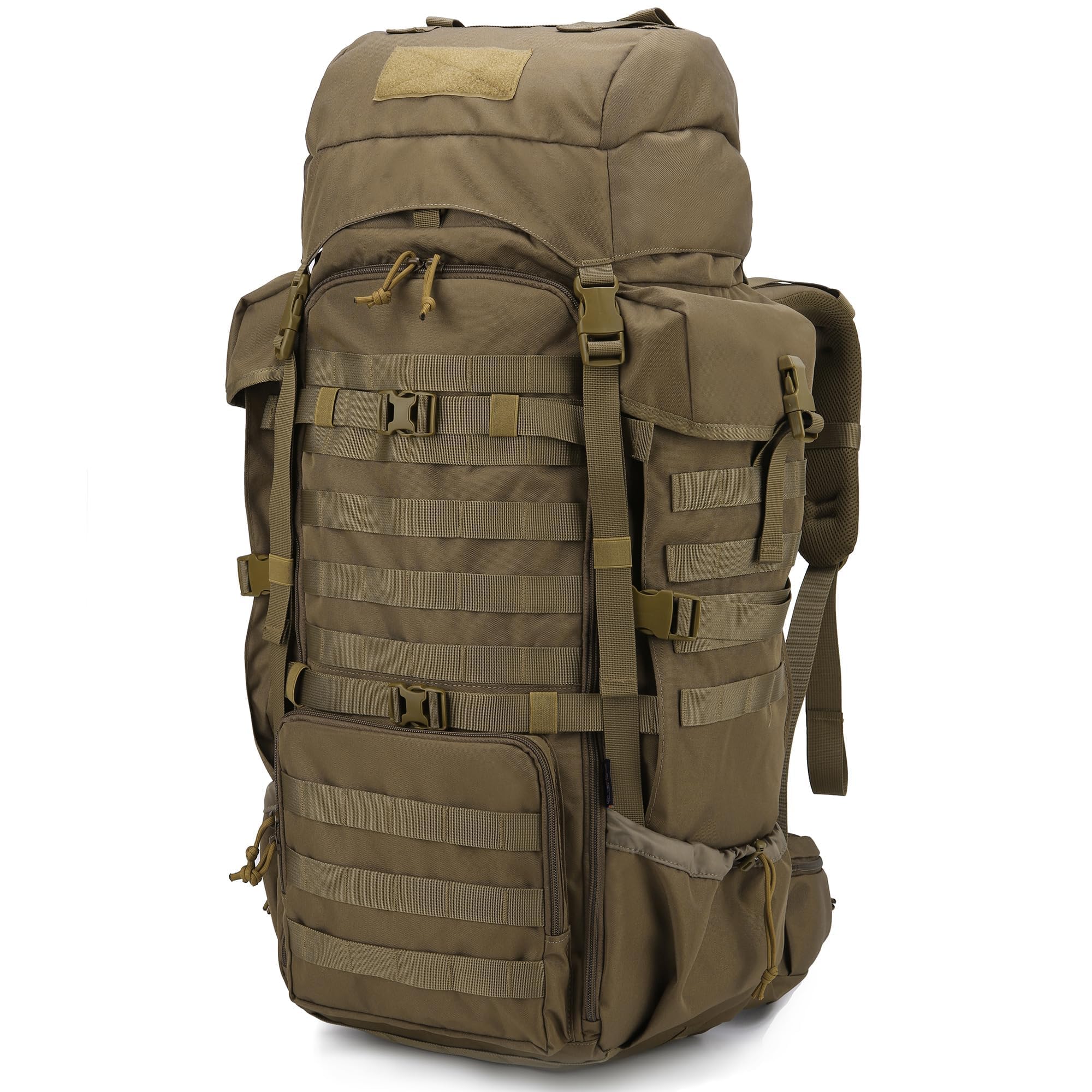
This 70-liter Mardingtop uses 600D polyester and YKK zippers to handle loads exceeding 60 pounds without structural failure. The internal frame and load-lifter straps keep the weight on the hip belt, and the hip belt itself is padded enough for sustained carries. The MOLLE webbing on the front and sides lets you attach pouches, carabiners, or a bedroll externally — a feature that appeals to bushcrafters and hunters who need modular gear carrying.
The main compartment opens via a large front zipper so you can pack like a suitcase rather than stuffing through a narrow top opening. Two large internal mesh pockets hold a stove, pot set, or water filter. The side pockets swallow 36-ounce bottles, and the hydration sleeve fits a 3-liter bladder with a center hose port. The adjustable torso covers a wide height range, and the sternum strap slides vertically to find your ideal anchor point.
User reports note the fabric can be noisy — the polyester crinkles and squeaks when packed tight. Some buckles feel cheaper than the rest of the build, particularly the hip belt buckle. For anyone carrying heavy hunting or camping loads who needs a rugged, expandable platform, this pack delivers serious value.
Why it’s great
- 600D fabric and YKK zippers survive heavy loads and abrasive conditions
- Full-front zipper opening gives suitcase-style access to the main compartment
Good to know
- Polyester material is noticeably noisy when packed tightly
- Hip belt buckle and some plastic hardware could be more robust
4. Teton 55L Scout Internal Frame Backpack
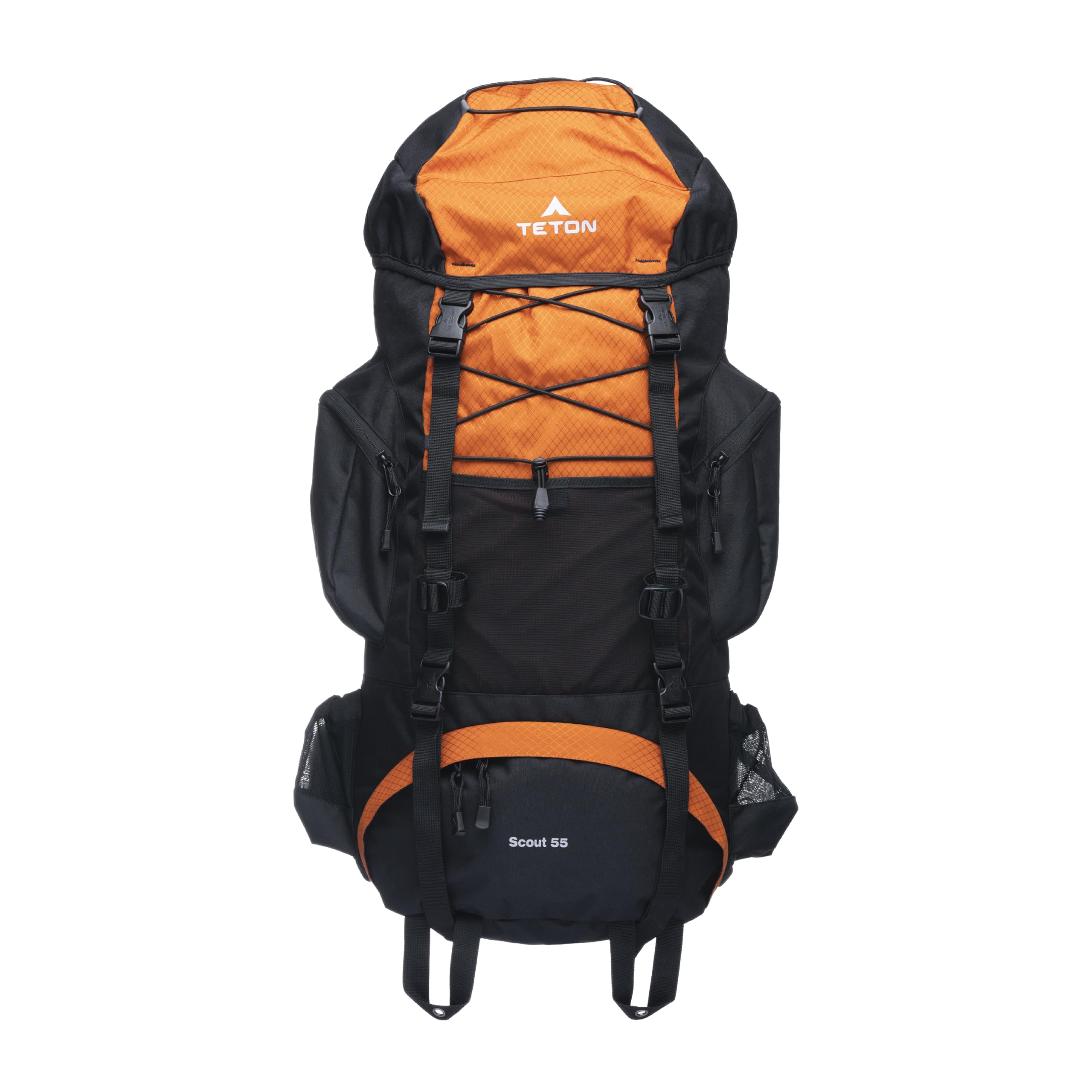
The Teton Scout 55L is built with a multi-position torso adjustment that fits shorter and slimmer body types particularly well. The open-cell foam lumbar pad provides decent back support, and the molded channels allow some airflow. The internal frame uses adjustable aluminum slats, so you can fine-tune the stiffness. For beginners or lighter-weight hikers carrying up to 40 pounds, this pack offers a balanced ride at a moderate price.
The sleeping bag compartment is separated by a zippered divider and has its own external access zipper — convenient for grabbing your bag without unpacking everything. Compression straps on the sides and top stabilize the load, and the included rain cover fits snugly. The side pockets hold 1-liter bottles, and the hydration sleeve takes up to a 3-liter bladder. The bottom lacks dedicated lashing points for a tent or pad, so you use the compression straps instead.
The hip belt runs small — it fits waist sizes from 23 to 26.5 inches, which is great for narrow frames but limits use for broader builds. The shoulder straps lack the dense padding of premium packs and can feel thin with loads over 35 pounds. For weekend trips and slimmer hikers, the Scout is a reliable entry point.
Why it’s great
- Torso adjustment system works well for shorter and smaller-framed hikers
- Separate sleeping bag compartment with external zipper for quick access
Good to know
- Hip belt is sized for narrow waists and may not accommodate larger body types
- No dedicated bottom lashing points for attaching a tent or closed-cell pad
5. MOUNTAINTOP 70L Internal Frame Backpack

The MOUNTAINTOP 70L uses a lightweight aluminum alloy frame plate to create a rigid internal suspension that transfers heavy loads efficiently. The frame keeps the pack from sagging, and the multi-position torso adjustment accommodates a range of heights. The breathable mesh back padding and shoulder straps provide reasonable comfort for loads under 50 pounds. At 4.4 pounds, it is slightly heavier than the Osprey Rook but offers a full 20 extra liters of capacity for extended trips.
Side zipper access lets you reach the main compartment without opening the top lid — useful for grabbing a rain jacket mid-hike. The hydration sleeve sits in the back panel and includes a hose port, though the port opening is small and may not fit all bite valves. Two large side pockets hold 1-liter bottles, and the bottom compartment stores a sleeping bag or shoes. The included rain cover fits the pack fully loaded.
A few users report the hip belt padding could be thicker for heavy loads, and the top seam stitching showed fraying after intensive use. The shoulder straps are comfortable for moderate distances but less forgiving beyond 15 miles. For budget-conscious campers who need 70 liters of capacity with a real internal frame, this pack is a strong contender.
Why it’s great
- Aluminum frame plate keeps the pack rigid and prevents load sag
- Side zipper allows mid-hike access without unloading the main compartment
Good to know
- Hydration hose port is small and may not fit larger bite-valve designs
- Some seam fraying reported at the top stitching after repeated trips
6. Mardingtop 60L Military Internal Frame Backpack
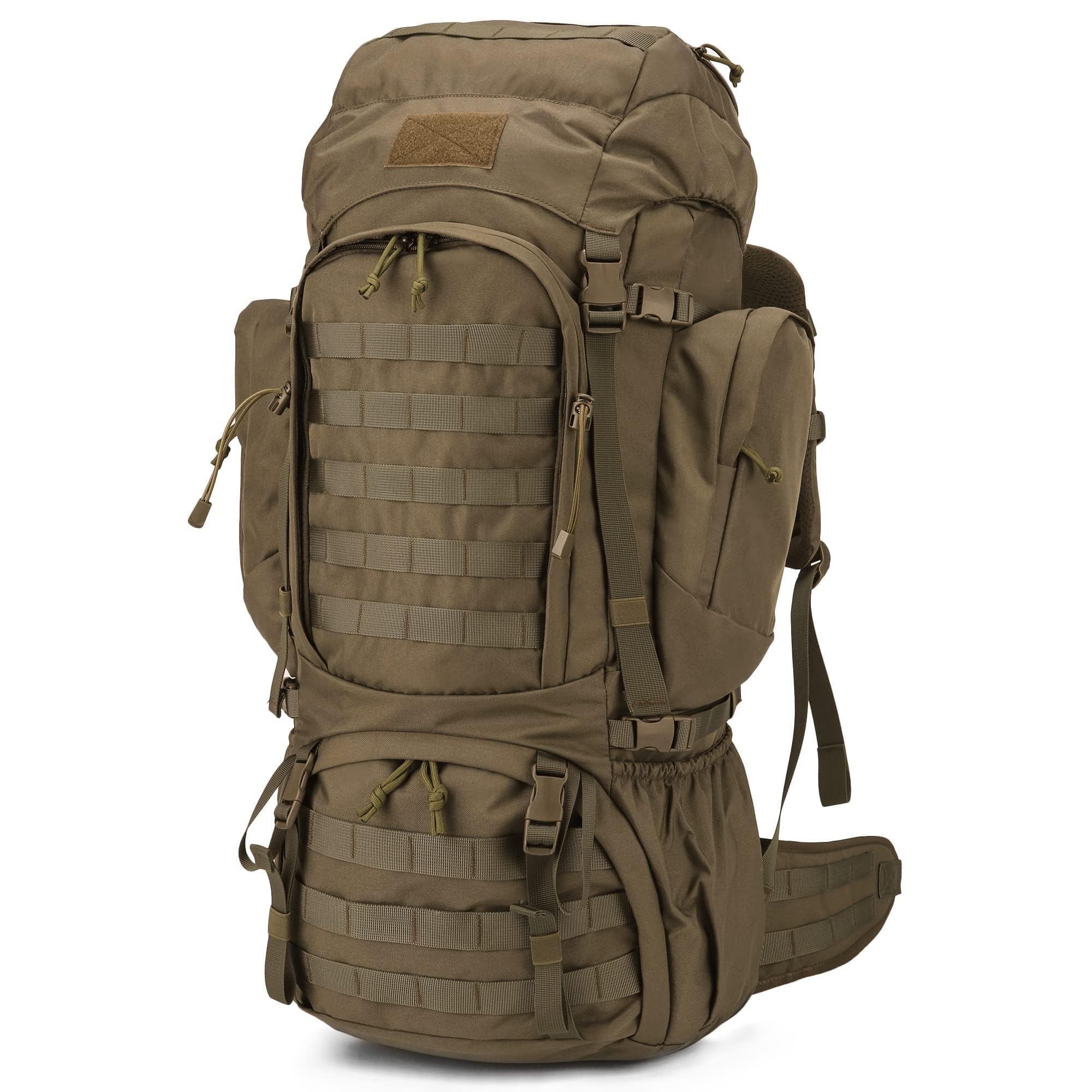
The 60L Mardingtop military-style backpack offers a YKK-zippered main body with MOLLE webbing that can expand capacity to roughly 75 liters when you attach external pouches. The internal frame provides structure, and the chest and hip straps stabilize the load. At just 4.49 pounds, it is one of the lighter 60-liter packs, and the multiple compression straps let you cinch down a partial load for a tighter carry.
Customer reports highlight that this pack handled loads up to 90 pounds for short ruck runs without structural damage. The material is lightweight yet durable, and the stitching holds up under tension. The included rain cover has tie-down loops that keep it secure in wind. The MOLLE panel on the front allows attaching pouches, a hatchet, or a bedroll — a major plus for campers who need modular carry for non-standard gear.
The hip belt lacks the dense padding of premium packs, which leads to chafing on longer carries over 10 miles. The shoulder straps are narrow relative to the pack’s volume, so heavier loads can dig in. For moderate loads under 50 pounds and campers who appreciate modular customization, this pack earns its place as a smart budget-friendly choice.
Why it’s great
- MOLLE webbing allows external attachment of pouches and gear for expanded versatility
- Very sturdy construction for short hauls under heavy load — tested at 90 pounds
Good to know
- Hip belt padding is minimal, causing chafing on extended carries
- Shoulder straps are narrow for the pack volume, limiting comfort under heavy loads
7. besrey Baby Backpack Carrier

The besrey Baby Backpack Carrier is a specialized frame pack designed to carry toddlers from 16 to 40 pounds during hikes. The lightweight frame weighs only 5.5 pounds and features a three-height adjustable seat so your child’s center of gravity stays aligned with yours. The 5-point safety harness and adjustable foot stirrups keep the child secure and comfortable while offering them a full view of the trail. The padded shoulder straps and hip belt distribute the weight across your body to reduce back fatigue.
Storage is integrated throughout — there are zippered pockets on the hip belt, mesh side pockets for bottles, and a large compartment under the seat for diapers, snacks, and light gear. The detachable sunshade protects from UV and light rain, and a washable drool pad is included for the headrest. The foldable frame makes storage easier when not in use, though it remains bulky compared to a standard pack.
On flat to moderate terrain, the carrier performs well with good stability. On steep, technical trails, the child sits noticeably far from your back, which shifts the center of gravity rearward and can feel less stable than premium carriers. The waist strap can rub on longer hikes for lighter parents. For families who hike on maintained trails and want a safe, affordable carrier with ample storage, the besrey is a solid pick.
Why it’s great
- Three-height adjustable seat keeps the child’s weight positioned for different parent heights
- Integrated sunshade and drool pad add protective value for child comfort
Good to know
- Child sits farther from your back than premium carriers, reducing stability on technical terrain
- Waist strap can rub on longer hikes for parents with narrower frames
FAQ
What liter capacity do I need for a three-day camping trip?
How do I know if a hip belt fits me properly?
Is a pack with MOLLE webbing good for camping?
How important is an integrated rain cover?
Final Thoughts: The Verdict
For most users, the best backpack for camping winner is the Osprey Rook 50L because it combines premium ventilation, an integrated rain cover, and proven Osprey suspension at a weight that does not punish your shoulders. If you need a ventilated pack for shorter day hikes and travel, grab the Osprey Stratos 34L. And for slim-framed overnighters on a budget, nothing beats the Teton Scout 55L.