
Our readers keep the lights on and the weekend projects moving. As an Amazon Associate, I earn from qualifying purchases.
A rotten egg stench from every hot faucet signals one thing: your water heater’s sacrificial rod is battling hydrogen sulfide gas in your well water and losing. That sulfur odor — and the corrosion that follows — is the single most annoying well water complaint, and the fix is a targeted rod swap, not a whole tank replacement.
I’m Rikta — the co-founder and writer behind FitlyFast. I’ve crawled through dozens of spec sheets, corrosion reports, and real well-owner reviews to sort out exactly which material and rod style handles the unique mineral load of private well water.
After months of cross-referencing alloy compositions, thread standards, and sulfur reduction claims, I built this guide to the best anode rod for well water, covering magnesium, aluminum-zinc, and powered titanium options for every tank type and water chemistry.
How To Choose The Best Anode Rod For Well Water
Well water introduces unique chemistry — high mineral content, dissolved hydrogen sulfide gas, and often iron-reducing bacteria — that attacks standard magnesium anodes differently than city water. Choosing the wrong rod material can turn a minor sulfur smell into a full-on odor crisis inside your home.
Material Chemistry: Magnesium vs. Aluminum-Zinc vs. Powered Titanium
Magnesium produces the strongest protective current but actively feeds the bacteria that create hydrogen sulfide, often worsening the rotten egg smell. Aluminum-zinc alloys (especially the A420 military-grade blend) suppress those bacteria while still providing excellent corrosion protection. Powered titanium rods don’t get consumed at all — they use a tiny electrical current to protect the tank without introducing any reactive metal into the water, which permanently eliminates sulfur odor.
Flexible vs. Solid Construction and Overhead Clearance
Most water heaters sit in basements or utility closets with less than four feet of overhead clearance. A solid rod requires cutting the hot water line and tilting the tank. A flexible rod, hinged into 12-inch segments, snakes into the tank without any plumbing disassembly. If you have a designated anode port on top and plenty of room, a solid rod offers slightly more surface area. For everyone else, flexible is the practical choice.
Thread Type, Diameter, and Compatibility with Well Water Tanks
Nearly all residential tanks use a standard 3/4-inch NPT thread on the anode port, but some Bradford White models route the anode through the hot water outlet — requiring a specialty Y-fitting kit. The rod diameter matters too: a thicker 0.8-inch or 3/4-inch solid rod provides more sacrificial material than a 5/8-inch rod, extending the replacement interval in hard well water conditions.
Quick Comparison
On smaller screens, swipe sideways to see the full table.
| Model | Category | Best For | Key Spec | Amazon |
|---|---|---|---|---|
| Corro-Protec Powered Anode Rod | Powered Titanium | Bradford White tank owners who want zero odor forever | Hot water outlet install with Y-fitting, 120-gallon max | Amazon |
| HertzEagle Powered Anode Rod | Powered Titanium | Well owners wanting maintenance-free 20-year protection | Titanium tip, dedicated anode port, 40-89 gallon tanks | Amazon |
| Water Connection AR136 Aluminum Zinc Anode Rod | Solid Aluminum-Zinc | Buyers who want maximum sacrificial mass and a solid rod | 0.75-inch diameter, Mil-A-18001K aluminum, 44 inches | Amazon |
| About Fluid Michigan Magnesium Anode Rod | Flexible Magnesium | City water customers who want premium kit and plumber support | 304 stainless cable hinges, lifetime socket included | Amazon |
| Eau Aluminum Zinc Anode Rod | Flexible Aluminum-Zinc | Budget-minded well owners eliminating sulfur smell | 44-inch flexible, four segments, 3/4-inch NPT | Amazon |
| Podoy Flexible Magnesium Anode Rod | Flexible Magnesium | Budget DIY replacement for non-sulfur well water | 44-inch flexible, 0.8-inch diameter, includes socket | Amazon |
| Kelaro Flexible Magnesium Anode Rod | Flexible Magnesium | Simple replacement in tight spaces | 44-inch hinged magnesium, 3/4-inch NPT thread | Amazon |
In‑Depth Reviews
7. Corro-Protec Powered Anode Rod
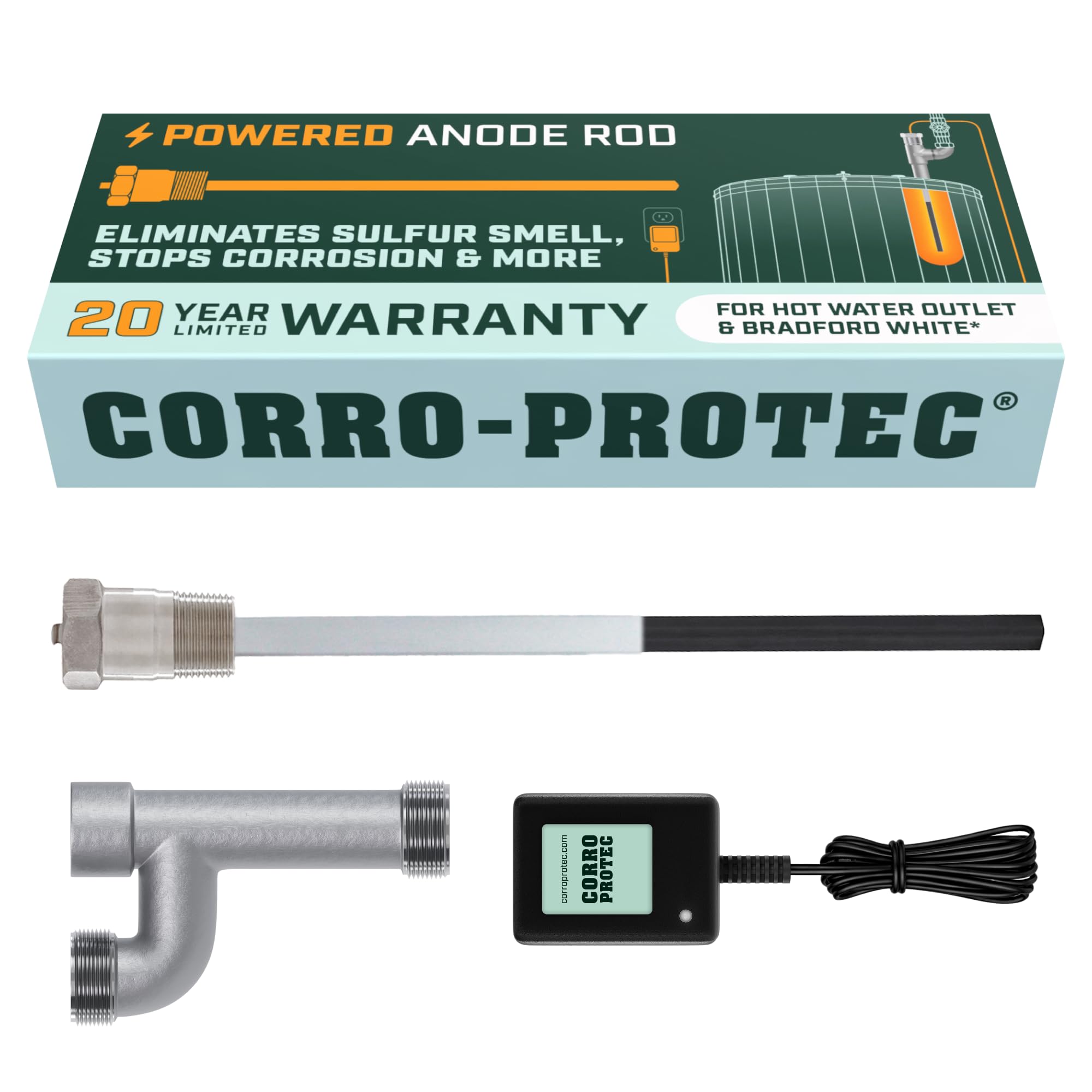
The Corro-Protec is the only rod designed specifically for Bradford White tanks, which lack a dedicated anode port and require installation in the hot water outlet using the included Y-shaped Wye fitting. Its impressed-current titanium tip sends a steady electrical charge into the tank, completely eliminating the sulfur reaction without dissolving any metal into the water supply. Owners report the rotten egg smell vanishes within 72 hours and never returns, even on well water with heavy hydrogen sulfide loads.
The kit includes a 12-foot power cord, step-by-step instructions written in plumber language, and grey Teflon tape rated for stainless threads. The Y-fitting redirects hot water back into the tank while the titanium rod protrudes into the chamber. This setup requires cutting and re-soldering copper piping, so basic plumbing skills or a pro install are recommended. The 20-year warranty backs the unit, and the manufacturer’s CEO has been known to personally follow up with customers.
For well owners with a Bradford White tank who are exhausted by yearly rod replacements and persistent sulfur odor, this is the permanent solution. The upfront investment is significant, but the titanium core never gets consumed, making the cost-per-year effectively zero over two decades of service.
Why it’s great
- Permanently eliminates sulfur/rotten egg smell from well water
- No sacrificial material consumed — lasts 20+ years
- Specifically designed for Bradford White tanks that lack a dedicated port
- Backed by a responsive 20-year manufacturer warranty
Good to know
- Requires cutting and re-soldering hot water outlet plumbing
- Premium price point far above standard sacrificial rods
- Basic electrical outlet needed near the water heater
6. HertzEagle Powered Anode Rod

The HertzEagle is a mid-priced powered rod that works with most standard tanks — electric, gas, solar, and geothermal — through the dedicated 3/4-inch NPT anode port, making installation far simpler than the hot-water-outlet route. Its titanium and stainless steel construction doesn’t corrode or dissolve into the water, eliminating the byproducts that feed sulfur-producing bacteria. Customers on well water with severe hydrogen sulfide levels report the rotten egg smell disappearing completely within 24 hours of installation.
The unit draws only 10 kWh per year to maintain its impressed current, translating to a nominal annual energy cost. The 20-year extended warranty provides long-term peace of mind. Installation is straightforward for a DIY homeowner — remove the old sacrificial rod, thread in the HertzEagle, plug it into a nearby outlet, and watch the green indicator light confirm operation. The rod head uses a 1-3/16-inch hex, so a larger socket than standard may be needed.
This is the ideal entry into powered anode technology for well owners who don’t own a Bradford White tank. It solves the sulfur smell problem at its root — the electrical reaction inside the tank — rather than trying to mask or manage it with a different sacrificial alloy.
Why it’s great
- Eliminates sulfur smell within 24 hours on most well water systems
- Minimal energy draw — under yearly operating cost
- Simple DIY install through the standard dedicated anode port
- 20-year extended warranty on the titanium tip
Good to know
- Not compatible with Bradford White tanks (no dedicated port)
- Requires a standard electrical outlet near the water heater
- Bolt head requires a non-standard 1-3/16-inch socket
4. Water Connection AR136 Aluminum Zinc Anode Rod

The Water Connection AR136 stands apart as the only solid rod in this lineup, built from U.S. Military-spec A420 aluminum-zinc alloy that suppresses sulfur-producing bacteria while providing a thicker 0.75-inch diameter rod than the typical 0.625-inch competitors. More mass means more sacrificial material to sacrifice before replacement, and the solid forging offers greater surface area for corrosion protection compared to a segmented flexible rod. Owners of tanks with adequate overhead clearance report getting 10-plus years between changes.
This rod does not include a socket or Teflon tape — you’ll need a standard 1-1/16-inch socket and your preferred thread sealant. The solid design requires at least four feet of clearance above the water heater to extract the old rod and insert this one as a single piece. For well water with strong sulfur odors, the aluminum-zinc construction typically eliminates the smell within two days, though a small number of users report a partial return of the odor after extended use.
The lifetime warranty from The Water Connection, a US-based company operating since 1996, adds confidence for well owners who prefer buying from an established domestic brand. If your water heater location gives you the necessary headroom, this solid rod delivers more enduring corrosion protection than any flexible alternative at a competitive price point.
Why it’s great
- Thicker 0.75-inch diameter offers more sacrificial material than typical rods
- Mil-spec aluminum-zinc alloy actively suppresses sulfur bacteria
- Lifetime warranty from a long-standing US manufacturer
- Solid construction provides maximum surface area for tank protection
Good to know
- Requires at least 4 feet of overhead clearance for installation
- Does not include any tools or thread tape in the package
- Some users report partial sulfur smell return after extended use
5. About Fluid Michigan Magnesium Anode Rod

The About Fluid Michigan kit is the most well-conceived magnesium rod package for city water users who still need well water compatibility. It uses 304 stainless steel cable for the hinge connectors — a detail that prevents the rust-prone hardware found on many generic flexible rods. The magnesium core provides the strongest electrochemical protection of any sacrificial material, ideal for aggressive well water chemistry that would rapidly consume an aluminum rod.
The kit includes a genuine lifetime-use socket made from chrome-vanadium steel, a full roll of Teflon tape (enough for multiple future replacements), a brass spigot cap, and step-by-step instructions written by a licensed Michigan plumber named David. The instructions are clear enough for a confident DIYer to finish the job in under an hour. The flexible four-segment design fits into any tank with just 12 inches of clearance.
It’s important to note that magnesium rods often worsen the rotten egg smell in well water with hydrogen sulfide. This rod is best suited for well water without sulfur odor, or for city water customers who want premium customer support. The personal backup from the plumber who designed the kit is a unique value-add that you won’t get from any generic import.
Why it’s great
- Rust-proof 304 stainless steel hinge cables outperform standard connectors
- Includes a genuine lifetime-rated chrome-vanadium socket
- Printed instructions written by a practicing plumber with decades of experience
- Generous Teflon tape roll for multiple installations
Good to know
- Magnesium material can increase sulfur smell in well water with hydrogen sulfide
- Premium price for a magnesium rod compared to standard options
- Not the best choice for wells with existing rotten egg odor problems
3. Eau Aluminum Zinc Anode Rod

The Eau aluminum-zinc rod is the most targeted choice for well owners whose primary complaint is the rotten egg smell. Its specially formulated aluminum-zinc alloy is engineered specifically to neutralize the bacteria responsible for hydrogen sulfide production, and the product name itself (“Eau” — French for water — hinting at odor removal) signals its core mission. Customer reviews consistently report the sulfur smell disappearing within days after installation, often after Cloroxing the well and other methods failed.
This flexible 44-inch rod splits into four 12-inch segments for easy ceiling-scraping installations. The kit includes a 27mm (1-1/16-inch) chrome-finished socket and a roll of Teflon tape, so you likely won’t need a trip to the hardware store. The rod can be cut shorter with a hacksaw if your tank is shallow. It fits standard 3/4-inch NPT ports on Rheem, Reliance, Richmond, Kenmore, GE, and many other brands.
For well owners on a moderate budget who are hesitant about the cost of a powered rod, the Eau aluminum-zinc offers the best smell-fixing performance per dollar. It’s a sacrificial rod that will eventually need replacement — typically every two to three years depending on your water’s aggressiveness — but the included tools and easy installation make that a straightforward recurring task rather than a hassle.
Why it’s great
- Specifically formulated aluminum-zinc alloy neutralizes sulfur bacteria
- Comes with both a socket and Teflon tape — complete DIY kit
- Flexible four-segment design for tight installation spaces
- Reliable solution for rotten egg smell after other methods fail
Good to know
- Sacrificial design requires replacement every 2-3 years in active well water
- Aluminum provides slightly less tank protection than magnesium
- Package instructions can be vague according to some buyer feedback
1. Podoy Flexible Magnesium Anode Rod
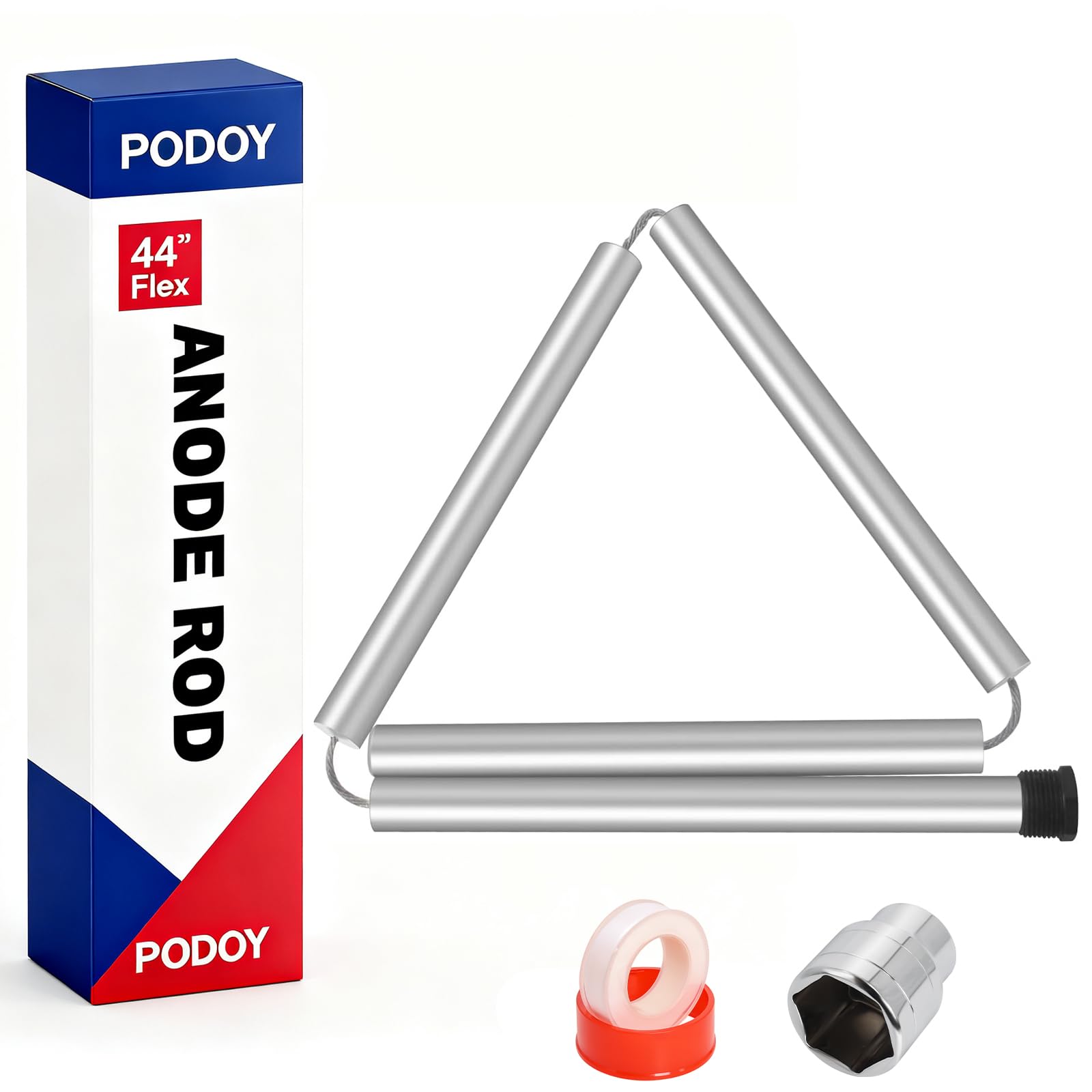
The Podoy flexible magnesium rod earns the top position in this guide because it delivers the strongest electrochemical protection for well water that does not produce sulfur smell, while including everything needed for a successful installation. The 0.8-inch diameter is thicker than the standard 0.625-inch rods, providing more magnesium to sacrifice over a longer period. Customers report that the rod eliminated the “well water smell” (a musty, mineral odor distinct from sulfur’s rotten egg scent) and reduced scaling in the tank.
The four-segment flexible design installs easily with just over a foot of clearance. The package includes a 1-1/16-inch hex socket tool machined to grip the rod head without rounding, and a roll of Teflon sealing tape — though some users recommend buying a separate higher-quality tape for an absolutely leak-proof seal. The rod is compatible with Rheem, Reliance, Richmond, Kenmore, GE, A.O. Smith, and other major brands using the standard 3/4-inch NPT connection.
The half-year manufacturer’s defect warranty is shorter than some competitors, but the modest price makes it a low-risk investment for well owners who want a quick, reliable replacement for a worn-out rod. If your well water doesn’t have a hydrogen sulfide problem — meaning you experience no rotten egg odor — the Podoy magnesium rod provides superior tank protection compared to any aluminum alternative at this price level.
Why it’s great
- Thick 0.8-inch diameter provides more sacrificial material for longer life
- Complete kit with socket tool and thread tape for one-box solution
- Strongest corrosion protection of any sacrificial rod material
- Eliminates musty well water smell and reduces tank scaling
Good to know
- Magnesium can worsen sulfur/rotten egg smell in active hydrogen sulfide wells
- Only a half-year manufacturer warranty on the rod
- Included Teflon tape is thin — consider upgrading to a premium tape
2. Kelaro Flexible Magnesium Anode Rod

The Kelaro magnesium rod is the no-frills workhorse of this category — a straightforward 44-inch flexible rod built for owners who just need a dependable replacement without any extra tools or accessories. It is lighter than most competitors at 1.32 pounds, which makes handling and maneuvering in tight spaces easier. The flexible design folds into segments shorter than 12 inches each, enabling installation under low ceilings without dismantling the water heater plumbing.
Customers regularly report replacing their old rod, which was completely dissolved after two to three years in challenging water conditions. The magnesium material provides robust corrosion protection throughout its lifespan, and the universal 3/4-inch NPT thread fits A.O. Smith, Rheem, Kenmore, GE, Reliance, Richmond, State, and other common brands. No socket or tape is included, so you’ll need a 1-1/16-inch socket and a breaker bar — an important detail for buyers expecting an all-in-one kit.
For well owners who already own the required tools and simply want a solid magnesium rod at a budget-friendly price, the Kelaro delivers exactly that. It’s not the flashiest option on the shelf, but the consistent five-star feedback regarding ease of installation and reliable performance makes it a safe bet for anyone looking to extend their water heater’s life.
Why it’s great
- Lightweight and easy to handle in tight ceiling spaces
- Reliable universal fit with standard 3/4-inch NPT thread
- Flexible hinge design enables installation without moving the tank
- Proven performance — customers report 2+ years of protection
Good to know
- No socket or Teflon tape included in the package
- Magnesium may worsen sulfur smell in well water with hydrogen sulfide
- Lighter construction may feel less durable than thicker rods
FAQ
Why does my well water smell like rotten eggs after installing a magnesium anode rod?
Can I use a standard flexible rod in any water heater tank?
How often should I inspect and replace a sacrificial anode rod in a well water system?
Does a powered titanium rod really last 20 years without replacement?
Will a powered anode rod work if my water heater is in a basement without a nearby outlet?
Final Thoughts: The Verdict
For most users, the anode rod for well water winner is the HertzEagle Powered Anode Rod because it permanently eliminates the sulfur smell while providing maintenance-free tank protection for decades. If you want a budget-friendly sacrificial rod that stops the rotten egg smell without the electrical requirement, grab the Eau Aluminum Zinc Anode Rod. And for Bradford White tank owners who need a specialized hot-water-outlet solution, nothing beats the Corro-Protec Powered Anode Rod with its dedicated Y-fitting kit.