
Our readers keep the lights on and the weekend projects moving. As an Amazon Associate, I earn from qualifying purchases.
That dull, flaky coat and relentless scratching isn’t just a grooming nuisance — it’s a sign that fungus, yeast, or bacteria have taken hold on your horse’s skin. Without targeted medicated ingredients like ketoconazole or chlorhexidine, standard shampoos simply wash the dirt off while leaving the microbial cause untouched, letting rain rot, ringworm, and itch cycles return within days.
I’m Rikta — the co-founder and writer behind FitlyFast. I’ve spent years analyzing veterinary dermatology data, comparing antifungal and antibacterial active ingredients, and evaluating how equine shampoos perform across different skin conditions so you can skip the trial-and-error.
This guide cuts through the marketing to deliver a tightly curated field of proven options so you can find the best antifungal shampoo for horses and restore your horse’s comfort without wasting time on ineffective washes.
How To Choose The Best Antifungal Shampoo For Horses
Fungal infections on horses require more than a simple wash — they need a shampoo with proven active ingredients that cling to the skin long enough to kill the pathogen. Without the right combination of antifungals, antibacterials, and skin-supporting ingredients, the infection will return as soon as the coat dries.
Active Ingredients: What Actually Kills Fungus
Look for ketoconazole (typically 1-2%), miconazole (1%), or chloroxylenol as the primary antifungal agents. Chlorhexidine at 1-2% adds broad antibacterial and some antifungal coverage, making it ideal for mixed infections. Avoid shampoos that rely solely on natural oils or oatmeal — these soothe symptoms without eliminating the root cause.
Convenience and Application
Foam-based sprays like the Vetericyn offer quick, full-coverage application and easier rinsing, which is perfect for the hard-to-reach spots like the lower legs where scratches and fungus thrive. Traditional liquid shampoos require more lathering but often provide deeper penetration into thick winter coats. Consider your horse’s coat density and your own bathing routine when choosing between foam and liquid formats.
Safety for Sensitive Skin
Equine skin is sensitive, and harsh sulfates, parabens, or artificial fragrances can worsen irritation. Choose pH-balanced, hypoallergenic formulas that are soap-free and gentle enough for twice-weekly use. Ingredients like aloe vera, ceramides, and nano vitamins help restore the skin barrier while the active ingredients do the antifungal work.
Quick Comparison
On smaller screens, swipe sideways to see the full table.
| Model | Category | Best For | Key Spec | Amazon |
|---|---|---|---|---|
| CeraSoothe CHX+KET | Premium | Chronic itching & coat shine | Chlorhexidine 2% & Ketoconazole 1% | Amazon |
| Vetoquinol Sebozole | Premium | Deep cleansing & routine use | Medicated anti-itch formula | Amazon |
| Saratoga Veterinary | Premium | Large volume & show sheen | Chloroxylenol antifungal, 1 gallon | Amazon |
| BioHex MicroSilver | Mid-Range | Hot spots & skin barrier repair | Chlorhexidine + MicroSilver BG | Amazon |
| Vetericyn FoamCare | Mid-Range | Easy spray-on application | Miconazole 1% sprayable foam | Amazon |
| Truseb Keto+Chlor | Mid-Range | Multi-pet household value | Ketoconazole 2% & Chlorhexidine 1% | Amazon |
| E3 Nano Vitamin | Budget | Gentle daily coat maintenance | Nano vitamins A, C, E & F | Amazon |
In‑Depth Reviews
1. CeraSoothe CHX+KET Antiseptic Shampoo
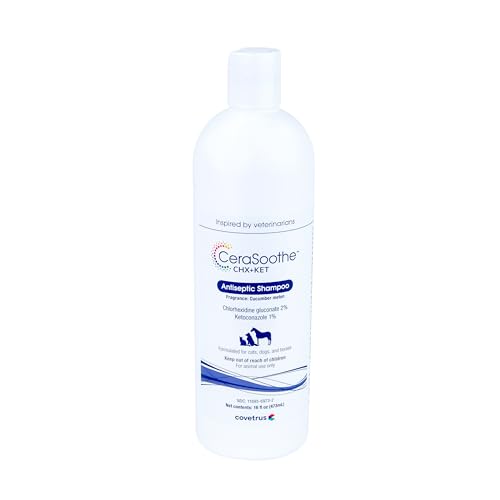
CeraSoothe delivers a potent dual-action punch with chlorhexidine at 2% and ketoconazole at 1%, making it one of the most biologically active formulas in this category. The chlorhexidine targets bacteria while the ketoconazole handles fungi and yeast, creating broad-spectrum coverage for mixed infections that often appear as stubborn dandruff or recurring hot spots.
What sets CeraSoothe apart is its inclusion of ceramides and avenanthramides — compounds that actively restore the skin’s moisture barrier after the medicated wash. Many antifungal shampoos strip the coat of natural oils; CeraSoothe balances deep cleaning with skin barrier support so your horse doesn’t enter a dry-itch cycle after treatment.
The light cucumber melon scent effectively neutralizes the musty odor associated with yeast and fungal infections, and the 16-ounce bottle provides enough volume for several full-body washes on an average-sized horse. Customer feedback consistently notes visible coat shine and reduced scratching after the second or third application.
Why it’s great
- High-concentration dual actives (2% CHX + 1% KET) for broad coverage
- Ceramides and avenanthramides restore skin barrier post-wash
- Pleasant cucumber melon scent neutralizes fungal odors
Good to know
- 16 oz bottle goes quickly for multiple horses or frequent full-body baths
- Requires 10-minute contact time for full efficacy
2. Vetoquinol Sebozole Shampoo
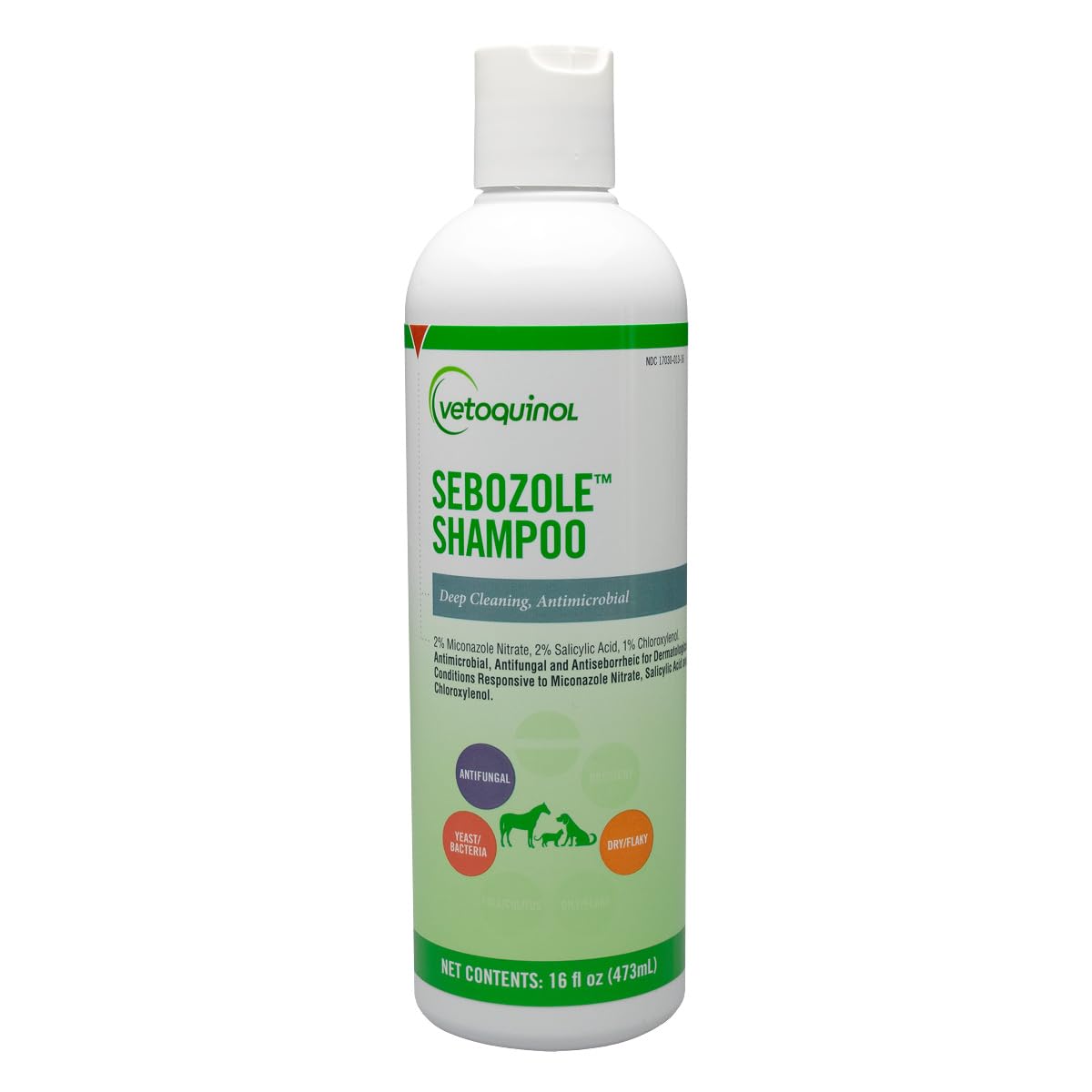
Vetoquinol Sebozole occupies a unique position in the antifungal horse shampoo market because it’s designed for maintenance — not just crisis management. Its medicated yet gentle formula is explicitly safe for twice-weekly use until symptoms subside, then weekly for long-term prevention, which is critical for horses prone to seasonal fungal flare-ups.
The sulfate-free composition means it won’t strip the natural protective oils from the coat, a common complaint with harsher medicated shampoos. After the required 10-minute contact time, it rinses cleanly without leaving a residue that could attract dirt or irritate sensitive skin during the healing phase.
Vetoquinol is a well-established veterinary pharmaceutical brand, so you’re getting a product that has undergone rigorous formulation testing rather than a boutique equine cosmetic. Owners of multi-pet households also appreciate that it’s safe for dogs and cats, making it a versatile stock item for any stable with multiple animal species.
Why it’s great
- Approved for twice-weekly or weekly maintenance schedules
- Sulfate-free formulation preserves coat’s natural moisture
- Trusted veterinary brand with proven mildness
Good to know
- Less potent for severe, deep-rooted fungal infections compared to high-concentration dual actives
- Requires full 10-minute dwell time for best results
3. Saratoga Veterinary Antifungal Shampoo
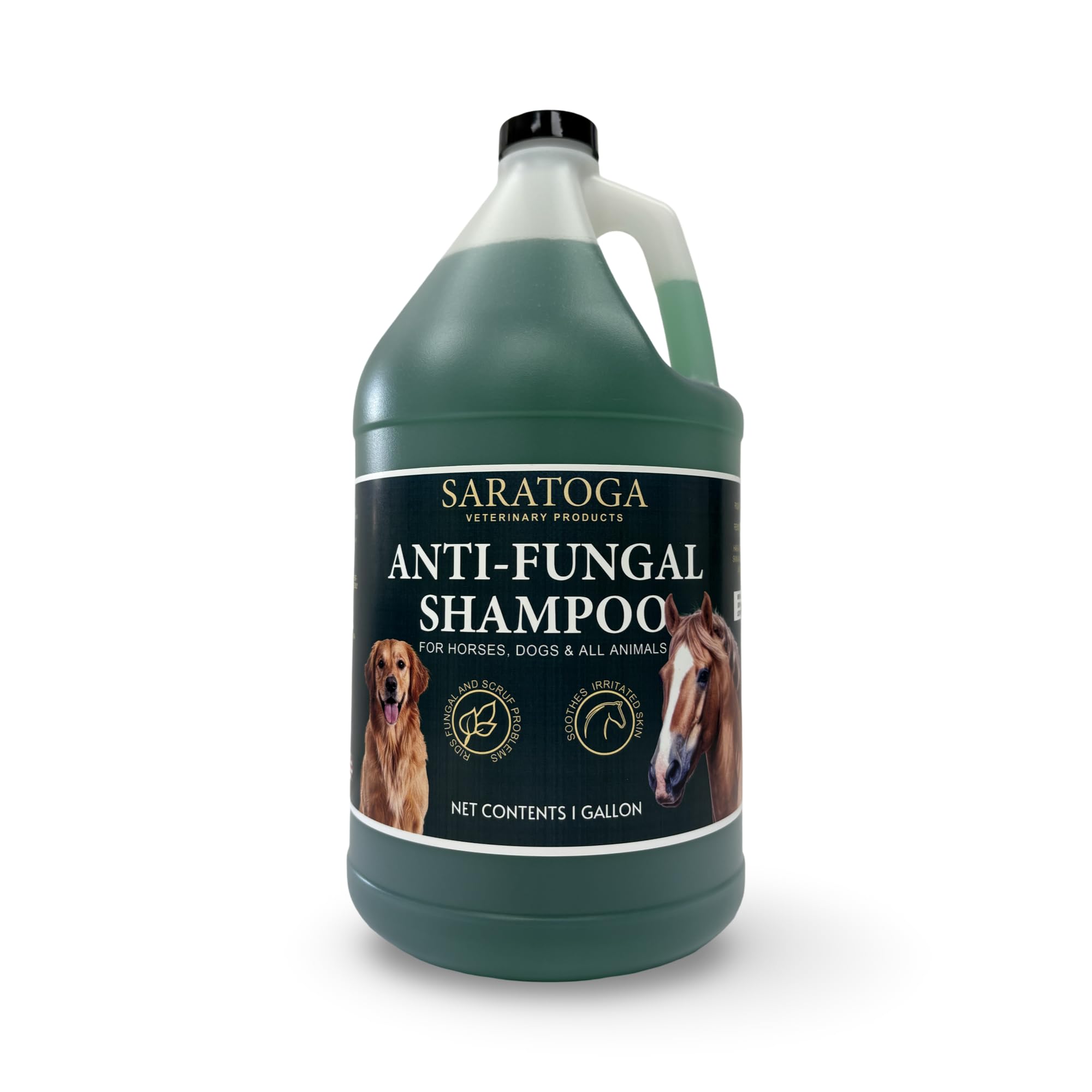
Saratoga’s offering is built around chloroxylenol — a potent antifungal agent commonly used in professional veterinary settings for combating deeply embedded fungal particles and scurf. This is the shampoo to reach for when you’re dealing with persistent rain rot that hasn’t responded to ketoconazole or chlorhexidine alone.
The one-gallon jug is the clear standout feature here. If you’re managing multiple horses or treating a large draft breed with a heavy coat, smaller bottles disappear in two or three washes. The chloroxylenol formula also doubles as a conditioner, delivering a noticeable show sheen that competitive owners appreciate for maintaining coat presentation during treatment.
It’s worth noting that Saratoga is paraben-free and sulfate-free, but some users find the lotion-thin consistency less satisfying compared to thicker gel-based shampoos. Diluting it with water as recommended by the manufacturer extends the gallon even further without compromising antifungal efficacy.
Why it’s great
- Chloroxylenol effective against stubborn fungal infections like rain rot
- One-gallon volume ideal for multiple horses or frequent bathing
- Conditions coat to produce a competitive show sheen
Good to know
- Thin lotion consistency requires dilution for optimal coverage
- Less effective for purely bacterial skin issues without mixed fungal component
4. BioHex Chlorhexidine and MicroSilver Shampoo

BioHex from VetBiotek leverages a unique dual-mechanism approach: chlorhexidine with miconazole for immediate antimicrobial action, plus MicroSilver BG — a proprietary silver compound engineered to “stick” to the skin and continue providing antiseptic benefits between baths. This residual activity is a genuine advantage for horses that can’t be bathed daily.
The inclusion of Ceramide III is a smart formulation choice because fungal infections often co-occur with a compromised skin barrier. Ceramide III helps patch that barrier, reducing the likelihood of reinfection and allowing the antifungal agents to work in a healthier microenvironment. This makes BioHex particularly well-suited for horses with chronic, recurring skin problems.
Veterinary dermatologists recommend VetBiotek’s MicroSilver line more often than competitive products, and the 16-ounce bottle contains a concentrated formula that requires less product per wash than many alternatives. The Kiwi scent is pleasant but subtle enough that it won’t cloy during hot summer stable sessions.
Why it’s great
- MicroSilver BG provides residual antimicrobial protection between baths
- Ceramide III actively repairs the skin’s protective barrier
- Recommended by veterinary dermatologists for chronic cases
Good to know
- Premium positioning reflected in price per ounce
- May require weekly maintenance even after visible improvement
5. Vetericyn FoamCare Medicated Horse Shampoo

Vetericyn FoamCare breaks the mold by delivering its antifungal active (miconazole 1%) in a sprayable foam format rather than a traditional liquid. This is a game-changer for treating hard-to-reach areas like the lower legs where scratches and fungus commonly take hold, because the foam clings to vertical surfaces instead of dripping off immediately.
The pH-balanced, hypoallergenic formula is sulfate-free, paraben-free, and free of artificial fragrances, making it one of the gentlest options for horses with extremely sensitive skin. It removes dirt, sweat, and stains without stripping natural oils, which is essential for horses that need frequent bathing during show season or in humid climates.
FoamCare’s ease of rinsing is a practical benefit that saves time and water, especially with horses that fidget during baths. The 32-ounce bottle provides generous coverage, and the spray nozzle allows for targeted application to affected spots without having to wet the entire horse unnecessarily.
Why it’s great
- Sprayable foam format clings to vertical surfaces for precise application
- Sulfate-free and paraben-free for sensitive equine skin
- Quick rinsing reduces bath time and water usage
Good to know
- Miconazole 1% is less potent than higher-concentration ketoconazole for deep infections
- Some users prefer a concentrate to reduce per-wash cost
6. Truseb Ketoconazole and Chlorhexidine Shampoo
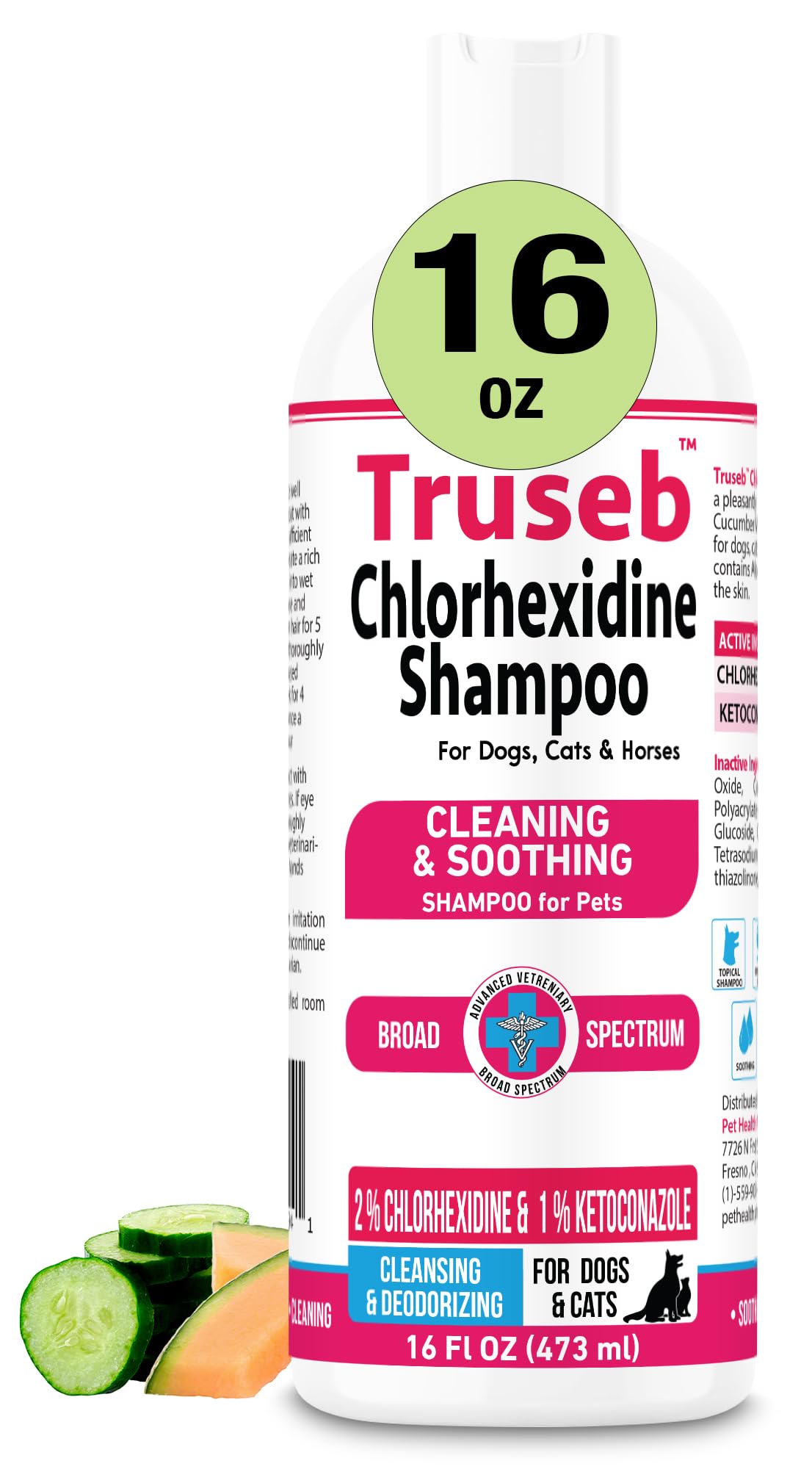
Truseb delivers veterinary-strength active ingredients (ketoconazole 2% and chlorhexidine 1%) at a price point that makes it an exceptional value for multi-pet households. The dual-antifungal-and-antibacterial approach covers the same microbial spectrum as premium competitors, but the 16-ounce bottle costs significantly less per wash than the premium-tier options above.
The cucumber melon scent is a welcome departure from the medicinal odor that characterizes many antifungal shampoos. It deodorizes effectively, particularly useful for horses that develop musty-smelling fungus in sweaty tack-contact areas like the girth line. The soap-free, paraben-free formula is gentle enough for regular grooming maintenance without causing cumulative irritation.
GMP certification adds a layer of quality assurance that matters when you’re applying medicated products to animals with compromised skin barriers. The formula is also safe for dogs and cats, so one bottle can address fungal issues across your entire stable of animals without needing separate specialty shampoos.
Why it’s great
- Vet-strength 2% ketoconazole + 1% chlorhexidine at a value price
- Pleasant cucumber melon scent neutralizes fungal odors
- GMP-certified manufacturing ensures consistent quality
Good to know
- 16 oz bottle may require frequent repurchase for multiple horses
- Liquid formula can drip off vertical legs faster than foam alternatives
7. E3 Antifungal Ketoconazole and Thymol Skincare Shampoo

E3 takes a slightly different approach by combining ketoconazole with thymol — a plant-derived antiseptic — and fortifying the formula with nano-sized vitamins A, C, E, and F. The nano-vitamin delivery is designed to penetrate deeper into the skin layers to support healing from within, rather than just addressing surface-level fungal growth.
This shampoo is unscented, which is a deliberate choice for horses that have reacted poorly to artificial fragrances or for owners who prefer to control their own fly spray and coat shine program without chemical interference. The gel formula lathers well even in hard water conditions common in rural stable areas.
At the budget-friendly tier, E3 is an accessible entry point for owners trying antifungal treatment for the first time, but the 8-ounce bottle size is the smallest in this review and will require more frequent repurchasing for full-body baths on larger horses. It works best as a spot-treatment shampoo for localized fungal patches rather than a whole-body maintenance wash.
Why it’s great
- Nano vitamin fortification aids deeper skin healing
- Unscented formula avoids fragrance-related skin reactions
- Budget-friendly option for first-time antifungal users
Good to know
- 8 oz bottle is small for full-body bathing on large horses
- Less potent dual-action than chlorhexidine combination shampoos
FAQ
How often should I bathe my horse with antifungal shampoo for active infections?
Can I use a dog antifungal shampoo on my horse?
Does antifungal horse shampoo expire or lose potency over time?
Final Thoughts: The Verdict
For most horses battling chronic fungal infections, the best antifungal shampoo for horses winner is the CeraSoothe CHX+KET because its dual 2% chlorhexidine-and-1% ketoconazole formulation provides the broadest coverage while ceramides repair the skin barrier during treatment. If you want quick, mess-free application to troublesome lower-leg fungus, grab the Vetericyn FoamCare. And for managing several horses on a budget without sacrificing active ingredient potency, nothing beats the value of Truseb’s ketoconazole-and-chlorhexidine shampoo.