
A cockatiel’s tail feathers should never touch the cage bars when it turns around, yet most pet-store cages force them to live in a cramped, stressful box. The right home gives your bird real wing-stretching room, safe bar spacing, and materials that survive a sharp beak without rusting or chipping.
I’m Rikta — the co-founder and writer behind FitlyFast. I have spent years analyzing hardware specifications for pet habitats, comparing wrought iron gauge, powder-coat adhesion, and bar-spacing tolerances to separate genuinely safe shelters from dangerously flimsy enclosures.
This guide focuses on what actually matters when choosing a bird cage for cockatiel: bar spacing that prevents escape or injury, a footprint that allows real flight, and a build that withstands daily cleaning without rusting or wobbling.
How To Choose The Best Bird Cage For Cockatiel
Choosing a cage for a cockatiel is not the same as choosing one for a budgie or a conure. Cockatiels have long tail feathers, a strong beak, and a natural need to flap their wings horizontally. A cage that is tall but narrow will frustrate a cockatiel. A cage with bar spacing wider than 15 mm risks a stuck head. A cage made of thin painted wire will chip and rust within months. Focus on the three specs below to avoid wasting money on a cage your bird will hate or escape from.
Bar Spacing Is the Safety Line
For a cockatiel, bar spacing must be between 10 mm (roughly 0.4 inches) and 15 mm (roughly 0.6 inches). Wider than 0.6 inches and your bird can push its head through — getting stuck and panicking or injuring itself. Narrower than 0.4 inches is overkill for a cockatiel and may limit visibility. Always measure the gap your bird can access, not the center-to-center distance. Avoid cages that list spacing in vague fractions without millimeter clarity.
Interior Dimensions Dictate Real Comfort
A cockatiel’s wingspan is roughly 12 inches, so the cage width should be at least 18 inches to allow flapping without hitting bars. The interior height matters less for horizontal flight but must accommodate a long tail (up to 7 inches) without dragging on the grate. A flight cage (long horizontally, not just tall) is ideal. Look for a minimum footprint of 24 x 18 inches. The cage should feel like a room, not a vertical tube.
Material and Finish Determine Longevity
Powder-coated wrought iron or alloy steel is the standard for durable cockatiel cages. The powder coat resists chipping when your bird chews the bars, and wrought iron holds its shape even when moved frequently. Avoid cages made of thin painted wire — the paint flakes off, creating a rust hazard and exposing toxic metal. Also check the grate gauge: a wire floor that is too thin will bow under the weight of a cockatiel and let droppings fall through inconsistently.
Quick Comparison
On smaller screens, swipe sideways to see the full table.
| Model | Category | Best For | Key Spec | Amazon |
|---|---|---|---|---|
| Yaheetech 63-Inch Wrought Iron | Large Flight Cage | Multiple Cockatiels or Larger Parrots | Bar spacing 10 mm, 32 x 18.5 x 63 in | Amazon |
| VEVOR 82.7-Inch Open Top | Extra-Tall Flight Cage | Maximum Vertical Play Space | Bar spacing 0.6 in, 32.7 x 31.1 x 82.7 in | Amazon |
| VIVOHOME 54-Inch Wrought Iron | Mid-Size Flight Cage | Single Bird with Room to Fly | Bar spacing 10 mm, 24.2 x 16.9 x 54 in | Amazon |
| Topeakmart Wrought Iron Large Flight | Large Flight Cage | Multiple Small to Medium Birds | Bar spacing 15 mm, 31.1 x 20.4 x 52 in | Amazon |
| Yaheetech 57-Inch Open Top | Open-Top Play Cage | Interactive Birds that Love Top Perches | Bar spacing 0.6 in, 23.5 x 23.5 x 57 in | Amazon |
| YITAHOME 62-Inch Metal Cage | Tall Narrow Cage | Budget-Friendly Tall Cage for Two Birds | Bar spacing 0.4 in, 17 x 14 x 62 in | Amazon |
| Prevue Pet Products Scrollwork | Vintage Tabletop Cage | Decorative Cage for Display Spaces | Bar spacing 0.6 in, 18 x 18 x 25 in | Amazon |
In‑Depth Reviews
1. Yaheetech 63-Inch Wrought Iron Rolling Large Bird Cage
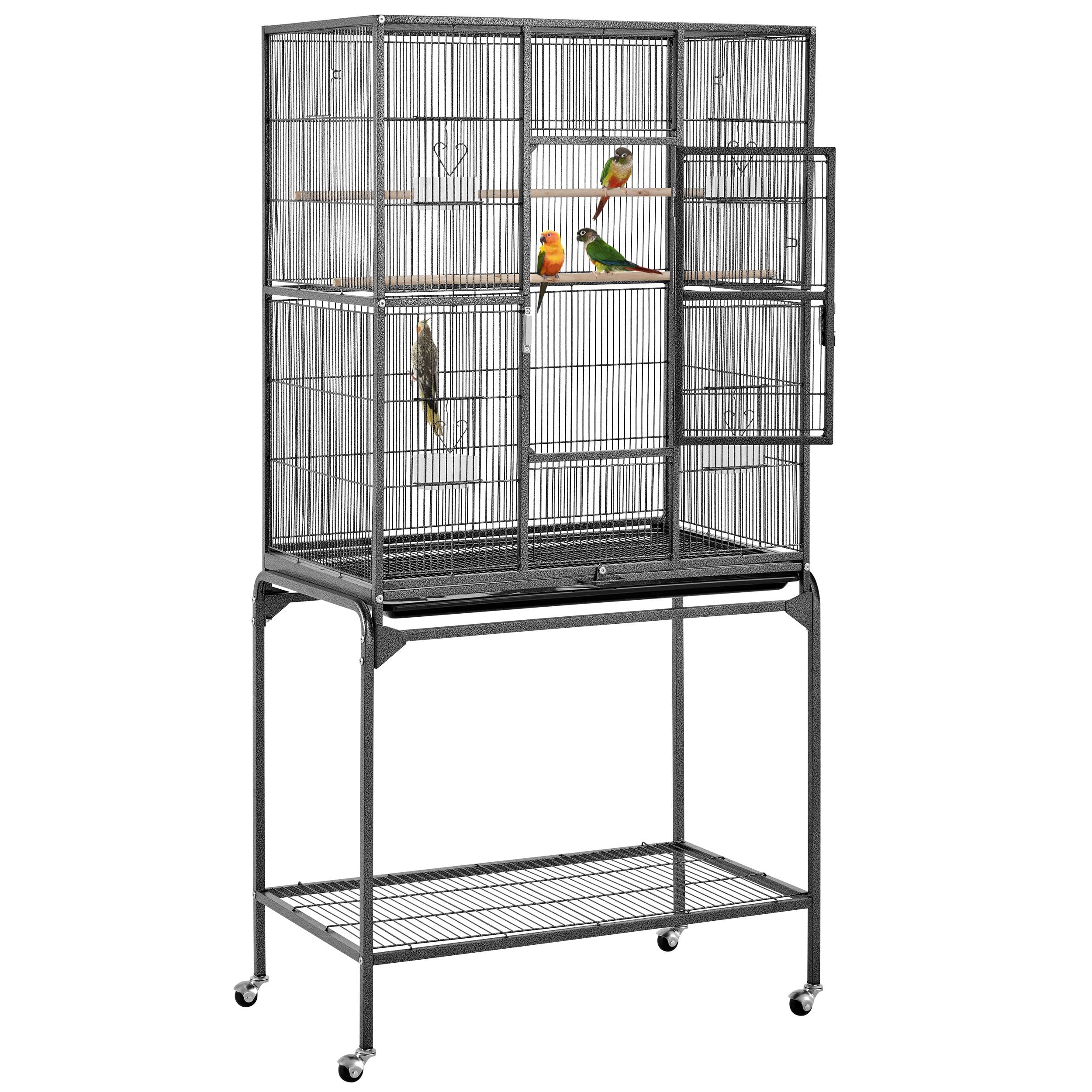
This Yaheetech model is the class leader for a reason: 10 mm bar spacing is the sweet spot for a cockatiel — tight enough to prevent head entrapment but wide enough for the bird to see out clearly. The footprint measures 32 by 18.5 inches, giving a cockatiel enough width to flap its wings without touching the walls. The overall height of 63 inches provides vertical climbing space and a perch setup that keeps the tail clear of the grate.
The hammered black powder-coat finish on wrought iron resists chipping when your bird chews the bars, and the slide-out tray makes daily cleaning manageable. The four 360-degree swivel casters let you roll the cage from room to room for sunlight or temperature changes. Owners of African Greys and Amazon parrots have also used this cage successfully, which speaks to its build quality and generous interior volume.
Some users report the main door lock is stiff at first, and the included plastic dishes and dowel perches are basic — you will likely replace them with stainless steel bowls and natural wood branches. Assembly takes about 40 minutes with two people. The base is detachable, so you can remove the stand entirely if you prefer a tabletop setup.
Why it’s great
- 10 mm bar spacing is ideal for cockatiel safety
- Wide footprint allows horizontal wing flapping
- Powder-coated wrought iron resists rust and chewing damage
Good to know
- Included plastic dishes and dowel perches are low quality
- Main door lock may need adjustment for smooth operation
- Assembly requires two people for easier build
2. VEVOR 82.7-Inch Open Top Wrought Iron Flight Cage
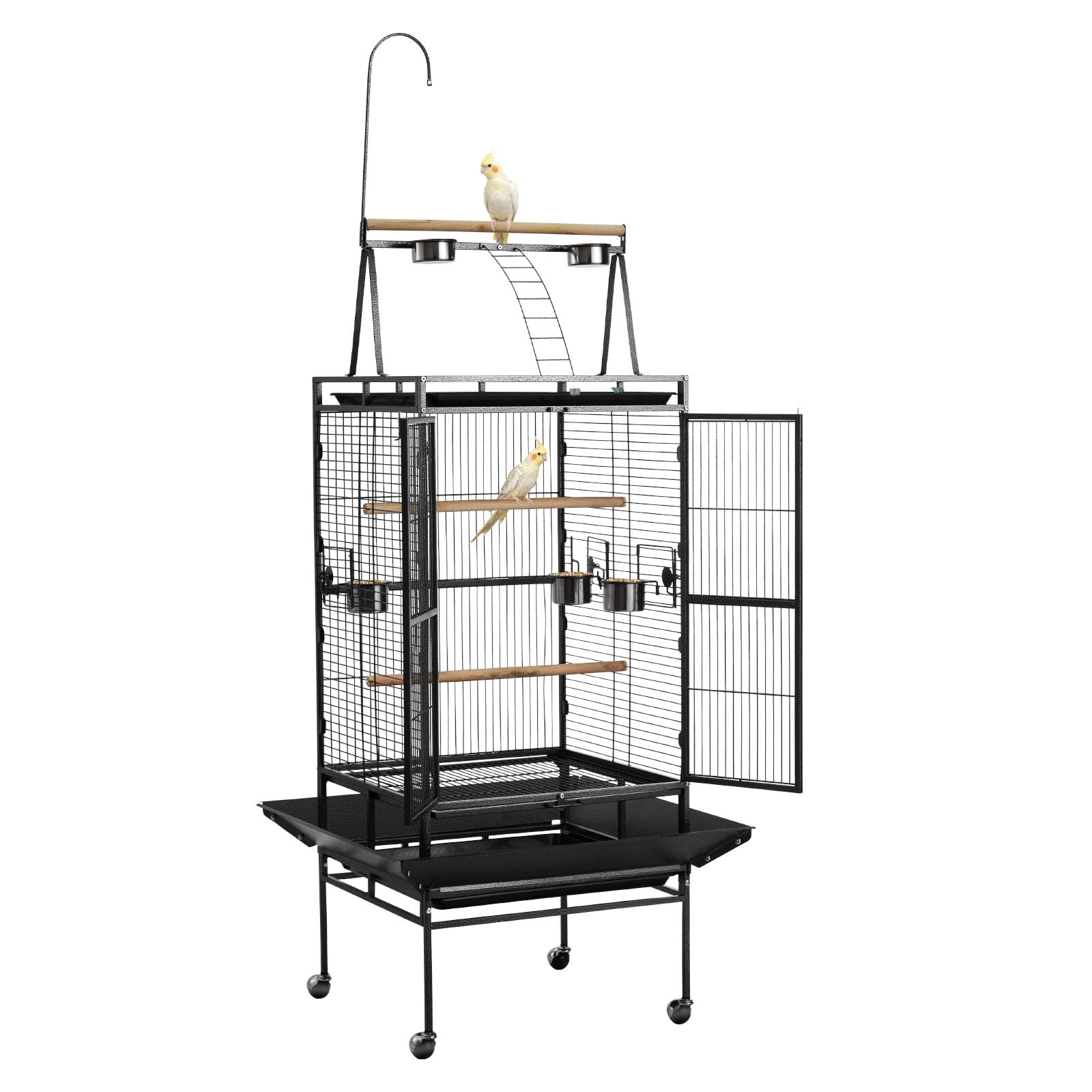
If vertical real estate is your priority, this VEVOR cage towers at 82.7 inches — the tallest unit in the roundup. The flat open top creates a platform where you can set up a play gym or hang extra toys, turning the cage roof into an enrichment zone. The bar spacing of 0.6 inches is at the upper limit for cockatiels; measure your bird’s head size carefully before committing.
The wrought iron frame with powder-coated finish holds up well, and the thickened tubes prevent deformation even in a busy multi-bird household. The slide-out tray and metal grate separate droppings from your bird, and a seed guard around the base helps contain the mess that cockatiels famously make. The cage includes three wooden perches and five plastic feeders — a generous accessory pack compared to competitors.
The biggest catch is the door latch: it uses a simple metal stick rather than a proper lock, so an agile cockatiel may learn to pop it open. You will also need to budget for replacement stainless steel bowls, as the plastic feeders are hard to clean and may harbor bacteria. Assembly is straightforward with clear instructions, and the four swivel casters make repositioning manageable even at this height.
Why it’s great
- Massive height for vertical climbing and play space
- Flat open top serves as an integrated play gym
- Sturdy wrought iron frame resists deformation
Good to know
- Door latch is not escape-proof against clever birds
- 0.6-inch bar spacing may be too wide for smaller cockatiels
- Plastic feeders are difficult to clean thoroughly
3. VIVOHOME 54-Inch Wrought Iron Large Bird Flight Cage
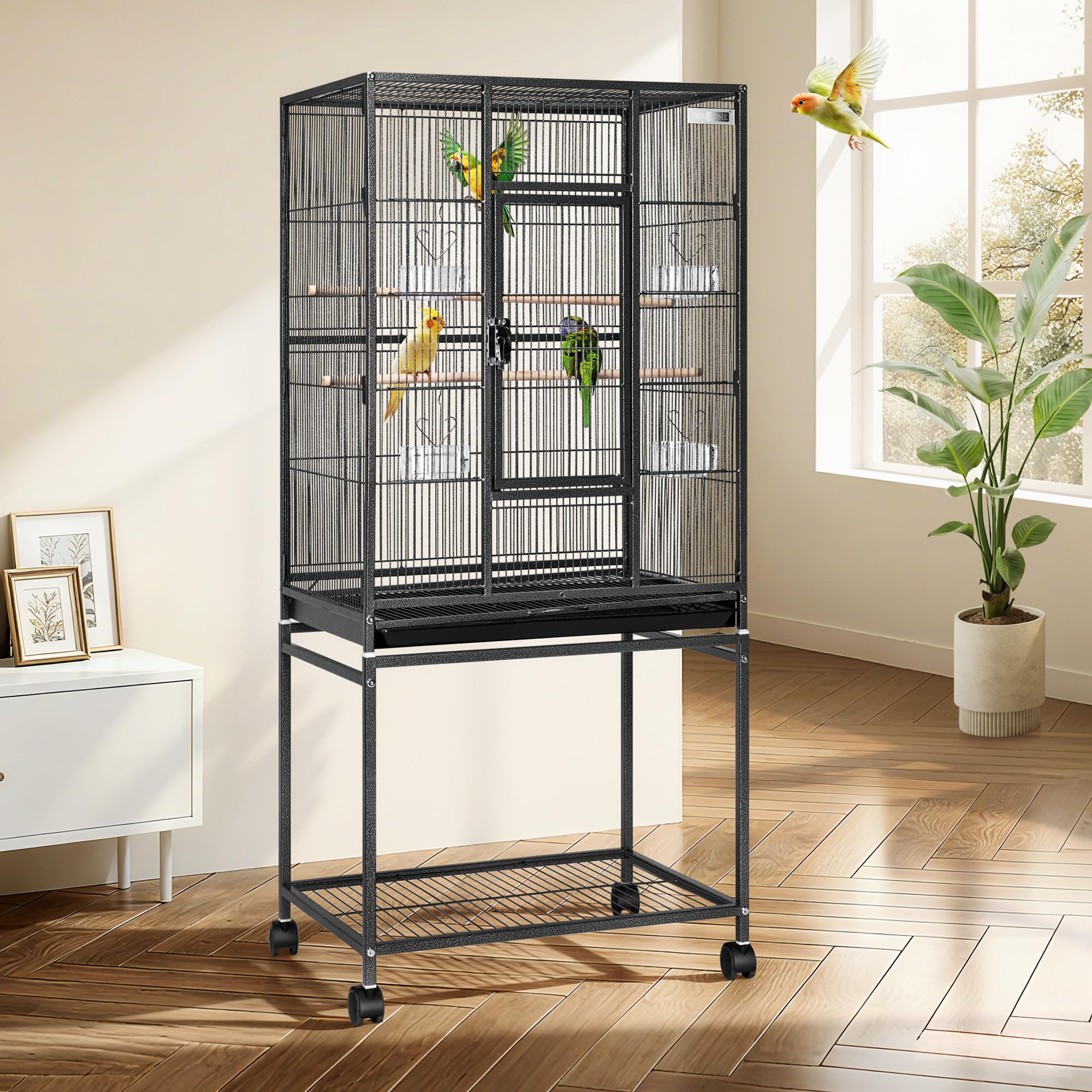
The VIVOHOME 54-inch cage hits the sweet spot for a single cockatiel that needs room to fly without taking over the room. With 10 mm bar spacing, it is perfectly safe for a cockatiel’s head, while the 24.2 by 16.9-inch footprint provides enough width for short flights. The hammer-pattern powder coat is one of the most durable finishes in this class — it resists scratches from beak grinding and cleans up easily with a damp cloth.
The flat top design gives you extra space for hanging toys or potted plants, and the unique latch mechanism is genuinely secure: your bird will not learn to slide it open. The slide-out tray is deep and removes smoothly, making it easy to scoop out droppings without dismantling the cage. Four plastic transparent food boxes let you separate seeds, pellets, and fresh food without crowding the same bowl.
A small number of units have arrived with a broken latch handle, and the plastic catch pan underneath is not the most durable — some owners replace it with a metal baking tray for a more permanent solution. The included perches are basic wooden dowels; consider swapping them for natural branch perches to promote foot health. Overall, this is a reliable, well-built cage that prioritizes safety and ease of cleaning.
Why it’s great
- Perfect 10 mm bar spacing for cockatiel safety
- Hammer-pattern powder coat is exceptionally scratch-resistant
- Secure latch prevents escape attempts
Good to know
- Plastic catch pan may need reinforcement over time
- Included dowel perches should be swapped for natural wood
- Occasional latch handle defects reported
4. Topeakmart Wrought Iron Large Flight Parrot Bird Cage

The Topeakmart flight cage is the largest in this mix by footprint at 31.1 by 20.4 inches, making it an excellent choice if you want multiple cockatiels or a single bird with maximum horizontal flying room. The 15 mm bar spacing is right at the limit for a cockatiel — if your bird has a particularly small head, you may want to measure first, but for most adult cockatiels this spacing is safe and provides better visibility.
The powder-coated steel construction is robust at 37.5 pounds, and the hammered paint finish is water- and scratch-resistant. The cage comes with seven doors total, including two large front doors that swing open for easy access when you need to change toys or clean perches. The pull-out tray and metal grate separate birds from droppings, and the additional open shelf underneath provides storage for food, toys, and cleaning supplies.
Assembly instructions are picture-only and are difficult to follow — many owners rely on video guides found online. Some units arrive with slightly bowed panels that can be straightened with pliers. The locking mechanism on the doors uses pins that are not as secure as a proper latch, so watch for birds learning to work them open. Despite these quirks, owners of lovebirds, conures, and parakeets consistently report very happy birds that use every inch of the space.
Why it’s great
- Largest horizontal footprint for real flight exercise
- Seven doors provide excellent access for cleaning and interaction
- Hammered paint finish is highly water-resistant
Good to know
- Picture-only instructions are difficult to follow
- 15 mm spacing may be too wide for small cockatiels
- Door lock pins are not fully escape-proof
5. Yaheetech 57-Inch Open Top Bird Cage

The open-top design is the standout feature of this Yaheetech cage: the roof locks closed for daily living but opens wide with a wood dowel, creating a secure perching spot outside the cage. Cockatiels that enjoy climbing onto their roof for a different vantage point will love this setup. The 23.5 by 23.5-inch footprint is near-square, offering decent width but not the long horizontal flight path of the Topeakmart or VEVOR cages.
The bar spacing of 0.6 inches (15 mm) is at the upper safety limit — it works for most adult cockatiels but may be risky for smaller individuals or juveniles. The powder-coated metal construction is durable, and the detachable stand with four casters (two with brakes) makes the cage easy to reposition. The storage shelf underneath is wide enough for seed bags, cleaning brushes, and spare bowls.
Some owners note that the bottom wire spacing is too wide for small birds’ feet — a cockatiel will not have this problem, but if you ever house smaller finches, you will need to add paper over the grate. The included bowls are large stainless steel units that work well for cockatiels, though buyers of smaller birds have had to swap them for smaller dishes. Assembly is reasonably easy, but the cage panels arrive flat and require firm pressure to shape correctly.
Why it’s great
- Open-top design gives birds an elevated outside perch
- Stainless steel bowls are larger than average
- Detachable stand with locking casters for flexible placement
Good to know
- 0.6-inch bar spacing may not suit smaller cockatiels
- Wide bottom grate spacing allows droppings to fall through unevenly
- Cage panels arrive flat and need effort to shape
6. YITAHOME 62-Inch Metal Bird Cage
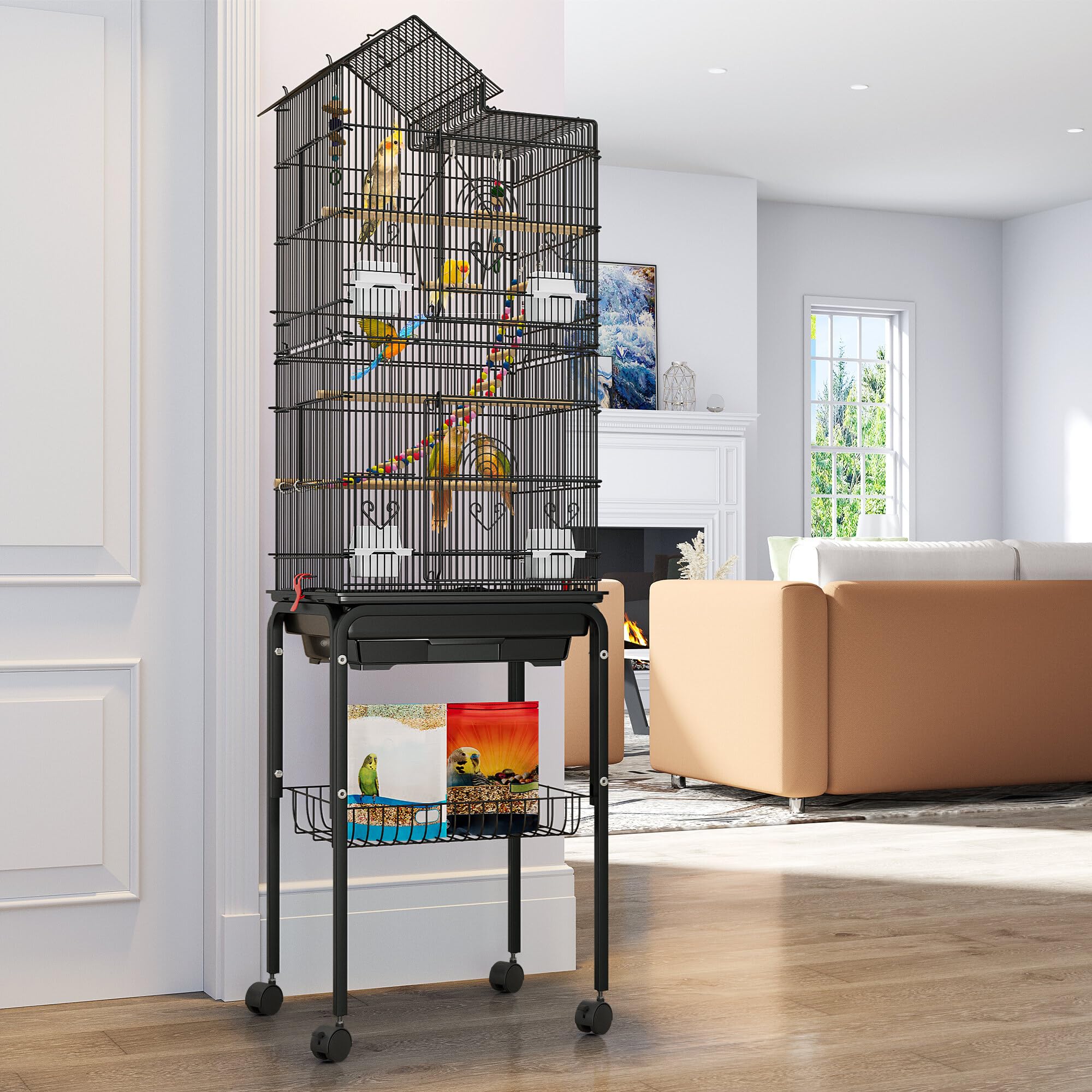
The YITAHOME cage is the most budget-friendly option in the roundup, but it comes with a trade-off in footprint: at 17 by 14 inches, the base is the narrowest of the group. A single cockatiel will fit comfortably, but the bird cannot truly fly horizontally. The cage compensates with a tower-like height of 62 inches, which provides vertical climbing space and room for multiple perches at different levels.
The 0.4-inch bar spacing is actually tighter than necessary for a cockatiel, but it is perfectly safe and prevents any risk of head entrapment. The four-door design includes two side doors for close interaction and feeding, plus a large front door. The lightweight 17-pound construction makes it easy to move room to room, though the lower weight also means it feels less sturdy than the wrought iron cages in this list.
Several owners report the roof fits slightly off and needs to be bent into alignment with pliers during assembly. The slide-out tray and detachable mesh grate clean easily, and the cage comes with a long bridge, pendants, and perches as decorative extras. For the price, this is a solid entry-level cage, but if your cockatiel is active and needs to fly, you will want to upgrade to a wider cage over time.
Why it’s great
- Very affordable entry point to a tall cage
- 0.4-inch bar spacing is completely safe for any cockatiel
- Lightweight frame is easy to move and reposition
Good to know
- Narrow footprint prevents true horizontal flight
- Feels less sturdy than heavier wrought iron cages
- Roof panel may require bending during assembly
7. Prevue Pet Products Scrollwork Bird Cage

The Prevue Scrollwork cage is the smallest option here at 18 by 18 by 25 inches, and it is designed as a tabletop display cage rather than a full-flight enclosure. For a cockatiel, this should be considered an out-of-cage play space or a temporary travel cage, not a primary home. The 0.6-inch bar spacing is safe for most adult cockatiels, and the vintage white scrollwork design looks genuinely attractive in a living room or home office.
The cage comes with two plastic perches and two hooded feeding cups that help reduce seed scatter. The slide-out tray makes cleaning straightforward, and the cage can be placed on a table or hung on a stand (sold separately). The lightweight plastic and wire construction means it is easy to move, but it is also the least durable option in this list — the bottom tray is thin plastic that can crack within the first year of use.
Owners with canaries and parakeets report that the cage works well for those smaller species, but a cockatiel will be cramped if this is the only cage. The tension-based assembly (no screws) makes it quick to set up but also means the structure is less rigid than bolted cages. If your cockatiel already has a large flight cage, this makes a nice secondary space for supervised time in a different room.
Why it’s great
- Beautiful vintage scrollwork design fits home decor
- Easy tension-based assembly with no tools required
- Hooded feeding cups reduce seed mess
Good to know
- Too small for a cockatiel’s primary cage
- Bottom tray is thin plastic prone to cracking
- Less sturdy than bolted wrought iron cages
FAQ
Is 0.6 inch bar spacing safe for a cockatiel?
Can a cockatiel live in a round cage?
How often should I replace a cockatiel cage?
Final Thoughts: The Verdict
For most users, the bird cage for cockatiel winner is the Yaheetech 63-Inch Wrought Iron because it combines the perfect 10 mm bar spacing, a wide 32-inch footprint that allows real flight, and durable powder-coated wrought iron that resists rust and chewing. If you want the tallest possible vertical space for climbing and an open play top, grab the VEVOR 82.7-Inch Open Top. And for a single bird on a budget where value matters most, nothing beats the VIVOHOME 54-Inch Wrought Iron for its safety-first bar spacing and proven durability.