
Choosing the wrong adhesive for ceramic tile is a common source of DIY regret. Whether you are fixing a hairline crack in a shower floor, rebonding a hollow-sounding kitchen tile, or setting a new mosaic backsplash, the adhesive formula you select must match both the tile type and the environmental stress it will face. A mismatch leads to cracked grout, popped tiles, or a repair that yellows within months.
I’m Rikta — the co-founder and writer behind FitlyFast. I have spent countless hours analyzing chemical formulations, cure times, and bonding mechanisms across the flooring and tile repair industry to match real-world application to the right product.
When the surface demands a permanent bond that resists moisture and daily traffic, understanding the differences between epoxy fillers, thinset mortars, and pressure-sensitive adhesives is critical to finding the adhesive for ceramic tile that will not let you down.
How To Choose The Best Adhesive For Ceramic Tile
Ceramic tile adhesive is not a one-category-fits-all product. The right choice depends entirely on whether you are installing new tile over a subfloor or patching an existing damaged piece. Understanding the chemical class, the application scenario, and the cure time will determine whether your project lasts a decade or fails in a week.
Epoxy Resin Repair Kits vs. Pre-Mixed Grout Fillers
Epoxy resin kits, like the cocomfix and Ankita color-match options, are designed specifically for surface repairs—chips, cracks, and scratches on the tile face. They cure into a hard, waterproof finish that can be polished to a high gloss. Pre-mixed sanded grout fillers, such as the PentaUSA option, are designed to fill missing grout lines or joints between tiles. Using a grout filler to fix a chip on the tile surface will result in a poor bond and an ugly patch. Match the product to the repair location.
Mortar Thin-Set for New Installation
If you are setting new ceramic tiles on a floor, wall, or countertop, a polymer-modified thinset mortar like the Mapei Adesilex-P10 or Custom Building Products AP Thin Set is the correct choice. These dry powders are mixed with water to form a creamy paste that provides structural support and bonds the tile to the substrate. They are not meant for patching a single chip—they are the foundation of a whole new tile layout.
Loose Tile Injection Adhesive
For hollow-sounding or loose tiles that are still intact, a liquid injection adhesive like the Fix-A-Floor PRO Pack is the targeted solution. This product is injected through small drill holes directly under the tile to rebond it to the subfloor. It avoids the mess and expense of removing and replacing a perfectly good tile. This is a specialized category that works well on concrete subfloors but requires the recommended caulk gun for proper flow control.
Surface Recommendation and Water Resistance
Always verify that the adhesive is compatible with your specific tile material (ceramic, porcelain, stone) and the substrate beneath it (concrete, plywood, existing tile). For wet areas like showers and tub surrounds, look for explicit water resistance ratings. Epoxy-based repairs generally offer superior waterproofing, while some acrylic-based grout fillers are only splash-resistant and may fail under constant submersion.
Quick Comparison
On smaller screens, swipe sideways to see the full table.
| Model | Category | Best For | Key Spec | Amazon |
|---|---|---|---|---|
| cocomfix Tile Repair Kit | Epoxy Color Match | Chip & crack surface repair | 7 pigment mixing kit | Amazon |
| Ankita Tile Repair Kit | Epoxy Color Match | DIY chip repair on walls & floors | 7 pigment mixing kit | Amazon |
| PentaUSA Premixed Grout | Sanded Grout Filler | Cracked or missing grout lines | Covers 58 sq ft (2-pack) | Amazon |
| Mapei Adesilex-P10 | Thinset Mortar | Mosaic & glass tile installation | Nonsag white formula | Amazon |
| Custom Building AP Thin Set | Thinset Mortar | High-strength tile installation | Exceeds ANSI A118.4/11 | Amazon |
| Fix-A-Floor PRO Pack | Injection Adhesive | Rebonding loose tiles | Micro syringe injector kit | Amazon |
| ROBERTS Universal Adhesive | Pressure-Sensitive | Vinyl & carpet tile bonding | Microban protection | Amazon |
In‑Depth Reviews
1. Fix-A-Floor PRO Pack
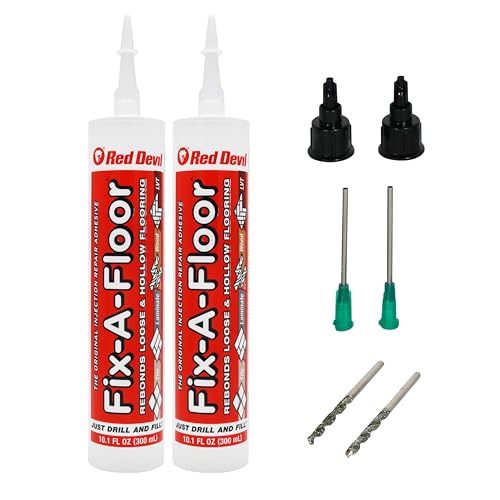
This PRO Pack is a specialized rescue kit for loose or hollow-sounding tiles that are otherwise intact. The extra-strength copolymer formula is injected through a micro syringe directly beneath the tile, rebonding it to the subfloor without any removal or replacement. The kit includes two 10.1 oz tubes, two syringe adaptors with resealable caps, 14-gauge steel injection needles, and two 2.5mm diamond drill bits.
Real-world feedback confirms its effectiveness on concrete subfloors after hurricanes and general wear, with the adhesive curing hard within 24 hours. However, the included drill bits are noted to be fragile — a carbide masonry bit is a better choice for drilling through ceramic. The adhesive is watery during injection to flow into gaps, but it can be messy; cleanup with a damp sponge is essential before the bond sets.
This is a premium purchase for anyone dealing with a hollow tile floor. It is cost-effective compared to a professional re-tiling job, but it requires a specific caulk gun (Red Devil 3935 or similar) and a careful, patient hand. Not for floating floors or thin grout lines where the adhesive cannot penetrate.
Why it’s great
- Rebonds tiles without removal
- Cures hard and durable in 24 hours
- Includes precision injection kit
Good to know
- Requires recommended caulk gun (not included)
- Included drill bits are weak
- Messy application; must clean immediately
2. Custom Building Products AP Thin Set Mortar

This all-purpose thinset mortar is a staple for serious tile installations. It is polymer-modified, meaning you only need to add water—no liquid latex additive required. The formula exceeds ANSI A118.4 and A118.11 standards, which qualifies it for interior and exterior floors, walls, countertops, and even fast-cure applications in cold weather. The 25-pound bag provides excellent coverage for medium-to-large projects.
Users consistently praise its extended open time and easy adjustment, which gives a DIY installer room to position tiles precisely before the mortar sets. The high-strength bond is the primary reason it is trusted by professionals. One user noted that a single bag can run short on a bigger job, so measure your square footage carefully before starting.
This is the right choice if you are setting new ceramic or porcelain tiles. It is not a repair filler—it is a structural foundation. The fine plastic composition means no aggregate to interfere with thin-set applications, but it is dusty during mixing, so a respirator and good ventilation are advised.
Why it’s great
- Exceeds ANSI standards without additives
- Great for cold-weather installations
- Long working and adjustment time
Good to know
- Only 25 lbs—may need two bags
- Dusty during mixing
- Not a surface repair filler
3. Mapei Adesilex-P10 Premium Mosaic & Glass Tile Mortar

The Mapei Adesilex-P10 is a premium white, nonsag thinset mortar specifically formulated for sheet-mounted mosaics and glass tiles. Its bright white color helps avoid dark shadows showing through translucent glass or light-colored mosaics. The nonsag performance means it stays put on vertical surfaces without slumping, which is critical for shower walls and backsplashes.
Users describe it as easy to work with and highly effective. For submerged installations like a swimming pool or fountain, Mapei recommends mixing it with Keraply additive to enhance waterproofing. The coverage range of 11 to 24 square feet per bag reflects the small-format tile nature of mosaic work—expect less coverage per pound compared to standard thinset.
This is a targeted premium product. If your project involves standard 12×12 inch ceramic tiles, a general-purpose thinset may be more economical. But for glass mosaics or white marble where shadowing is a concern, the pure white color and nonsag properties make it the clear choice.
Why it’s great
- Bright white color prevents shadows
- Nonsag formula for vertical walls
- Excellent for glass and mosaic tiles
Good to know
- Lower coverage per bag than standard thinset
- Needs Keraply for submerged use
- Premium pricing for specialized use
4. cocomfix Tile Repair Kit
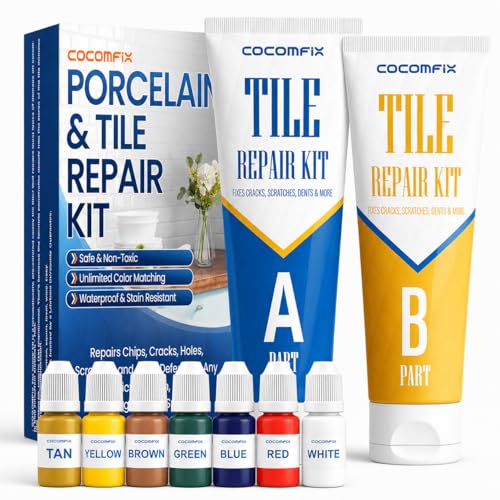
The cocomfix kit is an epoxy-based color-match repair system designed for surface imperfections on ceramic, porcelain, acrylic, and fiberglass tiles. It includes seven primary pigments (Red, Yellow, Blue, White, Green, Tan, Brown) plus a pro-guide to help you blend the exact shade of your tile. The advanced epoxy formula cures to a high-gloss, waterproof, heat-resistant finish that stands up to daily foot traffic.
Positive reviews highlight its strong adhesion and ease of use—mix parts A and B, add color, and apply. However, many users note that color matching takes experimentation. The color guide provides basic direction, but achieving an invisible blend, especially on vintage or unique tiles, requires patience and small test batches. The finish is glossy, which on matte tiles may stand out.
For a DIY homeowner dealing with a single chip or crack, this kit offers excellent value. The non-toxic, low-odor formula makes it safe for indoor use. The main limitations are the color-matching difficulty and the fact that the sheen cannot be adjusted, which can make the repair visible on matte or textured surfaces.
Why it’s great
- Infinite color mixing with 7 pigments
- Waterproof and heat-resistant final bond
- Non-toxic and beginner friendly
Good to know
- Color matching requires trial and error
- Gloss finish may not match matte tiles
- Small kit for single-repair use
5. Ankita Tile Repair Kit
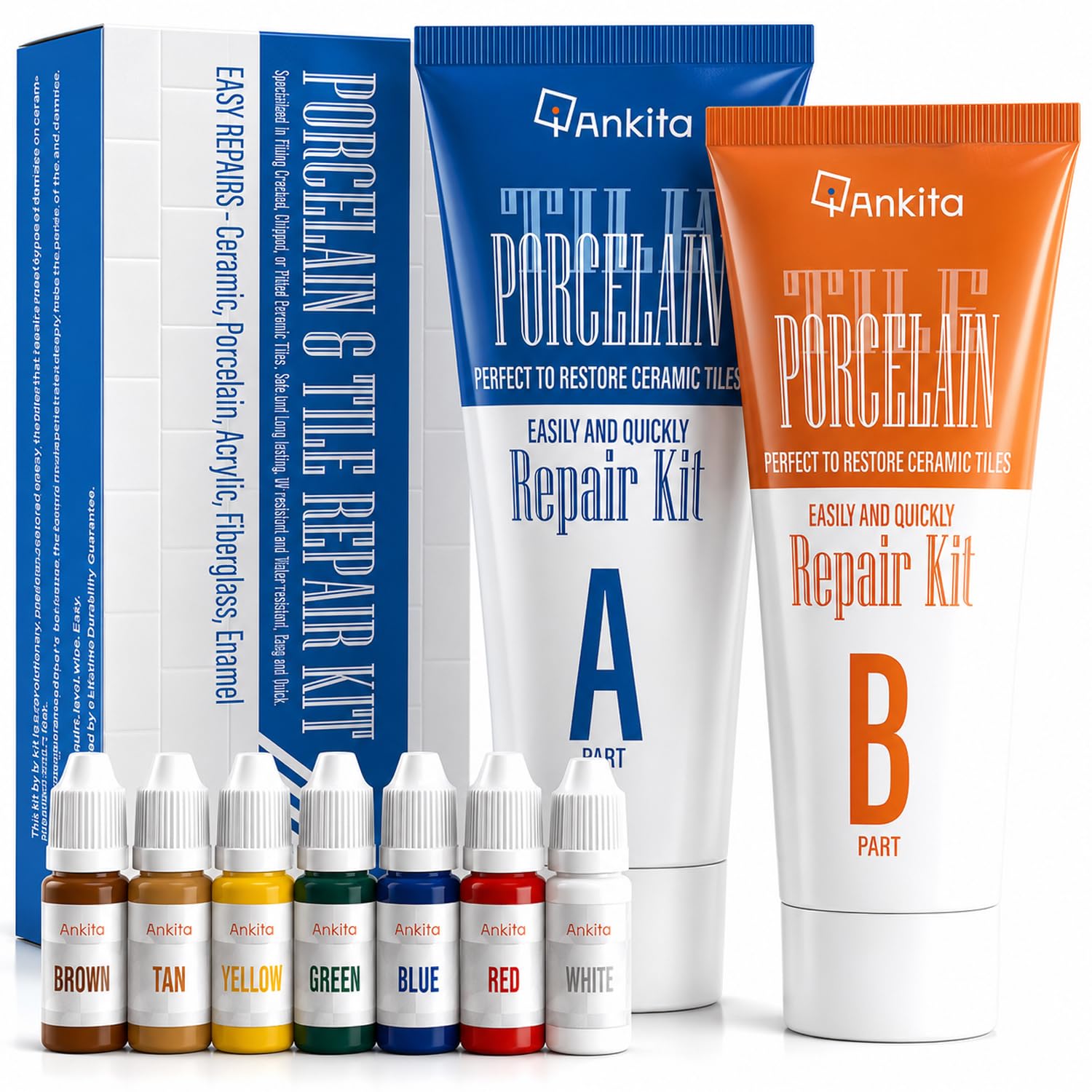
The Ankita repair kit shares a similar structure to the cocomfix—7 pigments, epoxy-based, and designed for chips, cracks, scratches, and holes on ceramic and porcelain surfaces. It is marketed as a fast color-match solution for bathroom and kitchen tiles. Application is straightforward: clean the area, mix the epoxy, tint with pigments, and apply.
User reports are mixed in a useful way. Several reviewers praise the strong adhesion and ease of use for small repairs, noting it works well on countertops and bathroom tiles. However, there are complaints about the color shifting over time—one user reported the repair turned cream after curing. Another warned that the texture looks like white putty on cracks and does not blend seamlessly.
This kit is best suited for small, low-visibility repairs where a perfect color match is not critical. It is a budget-friendly entry into epoxy tile repair, but if aesthetics are paramount, be prepared to test the color mix thoroughly on a hidden area first, and accept that the final hue may not be an exact match for your specific tile.
Why it’s great
- Strong adhesion on multiple surfaces
- Step-by-step guide for beginners
- Water resistant after full cure
Good to know
- Color may shift or yellow over time
- Texture often looks like putty, not tile
- Difficult to sand smooth after curing
6. PentaUSA Premixed Tile Grout Repair Kit
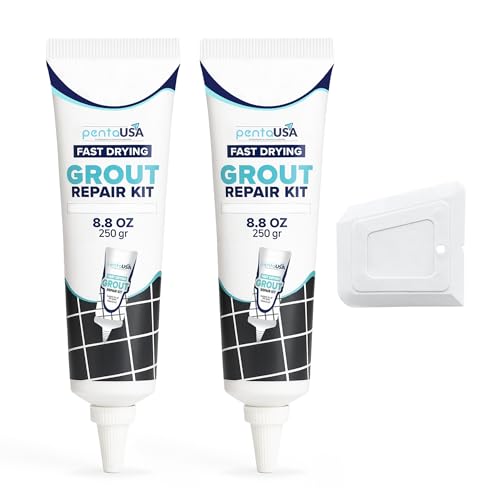
This kit is not for repairing the tile face itself, but for restoring the grout lines between tiles. It is a pre-mixed, sanded acrylic grout filler that comes in a caulk-style tube. It cures into a solid grout-like material that bonds to both the existing grout and the tile edges. The 2-pack provides enough material to cover roughly 58 square feet of standard 12×12 inch tile with thin grout lines.
Feedback is largely positive for ease of use—squeeze, apply, and smooth with the included scraper. It is water-resistant and suitable for showers and bathrooms after a 24-hour cure. However, the color match can be challenging. One user specifically noted that the “Beige” shade has a strong yellow undertone that did not match their “Biscuit” grout. Another reported that some spots flaked after months, suggesting the bond depends heavily on surface preparation.
For anyone dealing with cracked or missing grout, this is a convenient no-mix solution. It works on ceramic, porcelain, stone, and glass tile. Just be sure to order a color sample or test a small hidden spot before committing to the entire job, as the dried color can differ from the wet tube appearance.
Why it’s great
- No mixing required; applies like caulk
- Water and stain resistant after cure
- Generous 2-pack for large jobs
Good to know
- Dried color may not match in-person grout
- Some spots may flake if prep is poor
- Not for outdoor or submerged use
7. ROBERTS Universal Resilient Flooring Adhesive

This is a pressure-sensitive, solvent-free acrylic latex adhesive designed for luxury vinyl tile, vinyl plank, VCT, and vinyl-backed carpet tile. It is not a traditional ceramic tile mortar or an epoxy repair filler. Its use case is bonding resilient flooring to properly prepared subfloors including concrete, plywood, and existing well-bonded vinyl tile.
The inclusion of Microban protection helps fight stain-causing bacteria within the adhesive itself, which is a unique advantage for flooring in kitchens or commercial spaces. Users report that it is strong, easy to spread, and offers a long working time—globs can be cleaned up with water if done promptly. One reviewer with an RV successfully used it to patch a vinyl floor tear, and it held for six months of travel.
If your project involves laying down LVT or LVP over an existing tile floor or concrete slab, this adhesive is a solid choice. However, it is not appropriate for setting new ceramic tiles or filling chips in a tile surface. It is a specialized glue for the resilient flooring category, and it performs that role admirably.
Why it’s great
- Excellent working time for large rooms
- Microban resists bacterial growth
- Solvent-free with low odor
Good to know
- Not for ceramic or porcelain tile setting
- Must clean spills immediately
- Requires taped lid to prevent leakage
FAQ
Can I use grout filler to repair a chip directly on the tile surface?
How do I get an invisible color match with an epoxy repair kit?
Why does my loose tile injection adhesive not flow under the tile?
Final Thoughts: The Verdict
For most users, the adhesive for ceramic tile winner is the cocomfix Tile Repair Kit because it offers the best balance of a strong epoxy bond with a versatile 7-pigment color matching system for surface chip and crack repairs. If you are setting new tile and need a structural foundation, grab the Custom Building Products AP Thin Set Mortar for its ANSI-rated performance. And for rebonding a loose tile without tearing out the floor, nothing beats the Fix-A-Floor PRO Pack.