
Our readers keep the lights on and the weekend projects moving. As an Amazon Associate, I earn from qualifying purchases.
An axe on your back is dead weight unless it earns its keep at the campsite. Whether you are breaking down tinder-dry branches for a fire or clearing a fallen limb from the trail, a compact yet capable hiking axe must balance a narrow profile with enough head mass to deliver a clean bite into seasoned wood. The difference between a frustrating trip and a successful outing often comes down to the handle length, steel grade, and grind geometry packed into that small tool.
I’m Rikta — the co-founder and writer behind FitlyFast. This guide cuts through the marketing noise by comparing actual blade steel compositions, handle ergonomics, and weight distribution data from seven models that serious hikers and bushcrafters actually carry into the backcountry.
After analyzing hours of spec sheets and user reports, I built this review of the best axe for hiking around the real-world metrics that determine whether an axe is a precision tool or an unwieldy club.
How To Choose The Best Axe For Hiking
The ideal hiking axe lives in a narrow performance sweet spot: short enough to lash to a pack without snagging brush, heavy enough to split a 3-inch log with two swings, and sharp enough to shave curls for a feather stick. Ignore any of those three demands and the tool becomes either too heavy to carry or too light to work. Here is how to dial in the right trade-offs for your trail style.
Handle Length and Swing Arc
A 12- to 14-inch handle suits one-handed limbing and carving work where control matters more than raw power. A 19- to 20-inch handle allows a two-handed grip and a full swing arc, generating enough momentum to bite deep into hardwoods. For general hiking where you carry the axe in a pack or on a molle panel, a 14- to 16-inch handle is the goldilocks zone — long enough for solid chopping, short enough to pack flat.
Steel Type and Field Maintenance
High-carbon steel like 1055 or 1095 holds a fine edge and sharpens easily with a portable stone, but it rusts fast if not oiled. Boron steel (used by Morakniv) offers a marginal hardness boost with similar corrosion-care requirements. Stainless steel (440C is common in tactical designs) resists rust entirely but is harder to sharpen without a diamond plate. For multi-day wet-trail hikes, stainless wins; for dry-canyon trips where you can baby the edge, carbon steel performs better.
Head Weight and Grind Geometry
Heads weighing 1 to 1.5 pounds provide enough mass to split campfire wood without exhausting your arm by midday. Grind shape matters more than many beginners realize: a Scandi grind (flat bevel from edge to steel body) excels at carving and feather-stick work but lacks the wedge action for splitting rounds. A convex or bearded profile creates a wider splitting wedge that pushes fibers apart aggressively. Tactical three-in-one designs add a hammer poll and pry bar but add ounces that you feel after mile ten.
Quick Comparison
On smaller screens, swipe sideways to see the full table.
| Model | Category | Best For | Key Spec | Amazon |
|---|---|---|---|---|
| Cold Steel War Hawk | Tactical Tomahawk | Camp building and breaching | 19 in handle, 1055 carbon steel | Amazon |
| Fiskars X7 Hatchet | Lightweight Hatchet | All-day carry and splitting | 14 in handle, 1.5 lb total weight | Amazon |
| Morakniv Boron Steel Camp Axe | Compact Camp Axe | Light bushcraft and carving | 12.7 in handle, 0.5 kg weight | Amazon |
| HX OUTDOORS Mercenary | Tactical Multi-Tool | Survival and rescue tasks | Full-tang 440C stainless steel | Amazon |
| BeaverCraft AX1 Hatchet | Carving Hatchet | Wood carving and bushcraft | 12 in handle, Scandi convex grind | Amazon |
| Helko Werk Journeyman | Premium Pack Axe | Serious two-handed chopping | 20 in handle, C50 high-carbon steel | Amazon |
| Gränsfors Bruks Wildlife | Heirloom Hatchet | Precision limbing and scouting | 13.5 in handle, forged Swedish steel | Amazon |
In‑Depth Reviews
1. Fiskars X7 Hatchet

The Fiskars X7 is the benchmark ultralight hatchet that hiking guides point to first. Weighing only 1.5 pounds with a 14-inch handle, the DuraFrame construction bonds the blade to molded polymer so there is no traditional wooden handle to crack or loosen after repeated wet-dry cycles. The proprietary blade grinding creates a thin, sharp geometry that bites through small logs with surprising authority for its low mass.
Testers consistently report that the low-friction coating prevents the head from sticking in green wood — a common frustration with heavier axes that require a second wedge. The molded head also eliminates the overstrike risk that damages wooden handles; the polymer absorbs shock where a wood handle would splinter. Users with 20-year-old X7 hatchets confirm the durability holds across decades of camp use.
Where the X7 compromises is the handle texture — some users find the smooth polymer grip slippery in the rain, especially with bare hands. The included sheath is a thin plastic guard that protects the edge but offers no belt attachment, so you will need to rig your own carry solution for lashing to a pack. Despite those minor gripes, this is the lightest full-function hiking axe at its price point.
Why it’s great
- Extremely lightweight for long trail carries
- Indestructible polymer handle resists weathering
- Low-friction coating prevents stuck heads
Good to know
- Handle feels slippery when wet
- Blade guard lacks a belt loop
- Not designed for heavy splitting of large rounds
2. Morakniv Boron Steel Camp Axe

Morakniv brings the same Scandi-grind precision from their bushcraft knives to this compact hatchet, making it a specialist tool for carving and camp craft rather than brute-force splitting. The 6-millimeter-thick boron steel blade delivers a hardness edge that holds its shaving-sharp geometry through several day hikes before requiring touch-ups. The black ED-coating protects the head from scratches and light rust, but it is not rust-proof — expect to oil after wet trips.
The lightweight polypropylene handle is ergonomically shaped with a flared pommel that locks into the palm during choked carving grips. At only 17.6 ounces, the Morakniv disappears in a pack. The back of the blade is nearly flat, which some users successfully use as a light hammer for tent stakes, though the manufacturer does not recommend heavy striking. The vegetable-tanned leather sheath has a secure snap and a lanyard hole for wrist straps.
The trade-off for the low weight and Scandi grind is limited splitting power — the flat bevel wedges poorly through knotty wood compared to a convex profile. The head also lacks a hammer poll, so any tasks requiring a striking face are compromised. Hikers who primarily need feather sticks, notch carving, and small limbing will love this tool; those needing to split standing deadfall should look elsewhere.
Why it’s great
- Extremely light at 17.6 oz for pack carry
- Scandi grind maintains easy field sharpening
- Secure leather sheath with snap closure
Good to know
- Poor splitting performance on knotty wood
- No hammer poll for striking tasks
- Steel requires regular oiling to prevent rust
3. Cold Steel War Hawk Axe
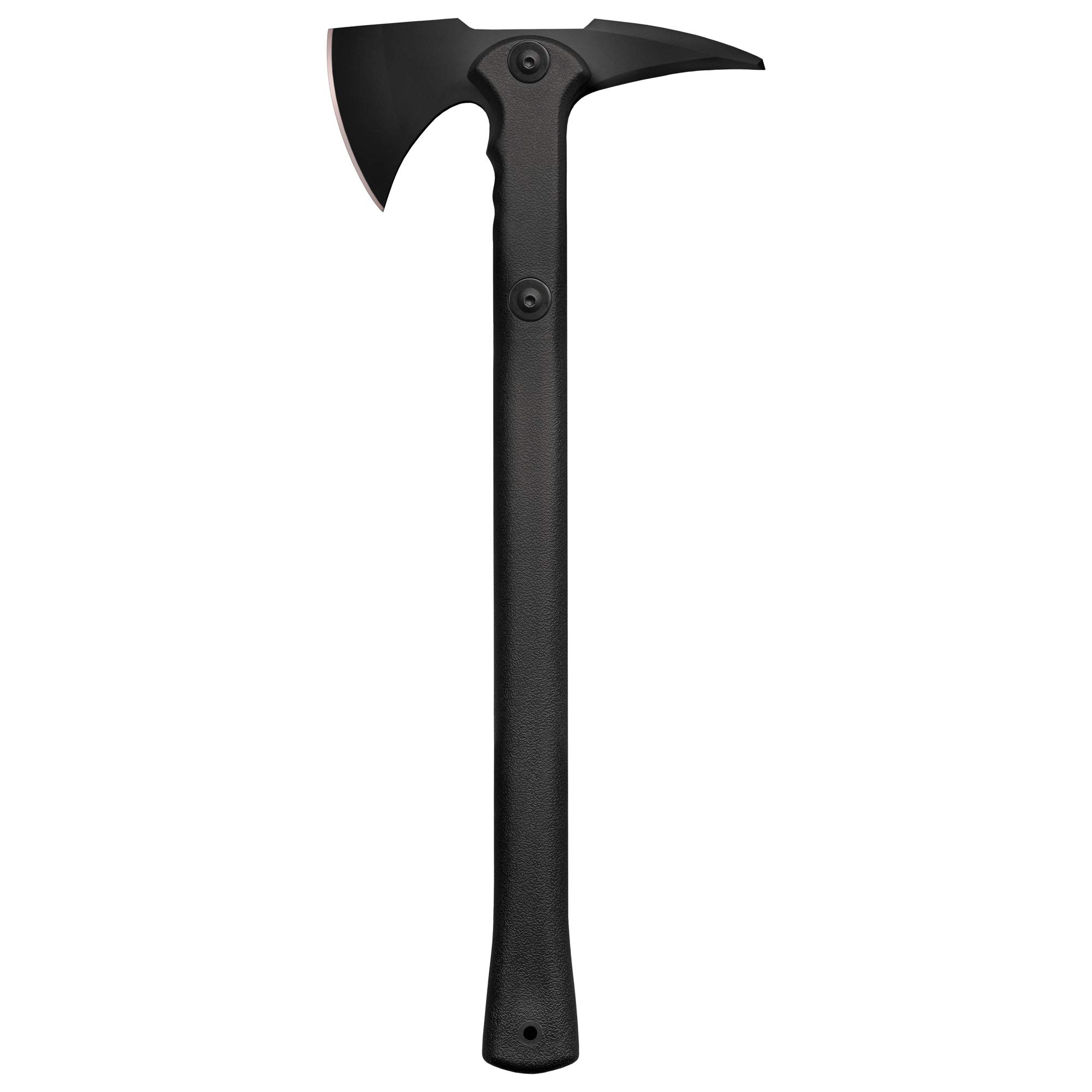
The Cold Steel War Hawk wears its tactical heritage openly: a bearded 1055 carbon steel head with a reverse Tanto-style spike makes this a breaching tool that also splits campfire logs. The 19-inch polypropylene handle provides a long swing arc for two-handed chopping that few compact axes match, generating enough kinetic energy to bite deep into seasoned oak. The Secure-Ex sheath is a genius design that locks the head in place without stitching or rivets.
Field reviews consistently note the War Hawk arrives shaving sharp out of the box — unusual for a production tomahawk at this price tier. The blade geometry combines a wide bearded profile that excels at slicing branches with a pick-like spike that hooks and pulls deadfall. Tang extension is 5 inches with two cross bolts; many users recommend applying thread-locker to prevent loosening during heavy use. The handle is slick polymer, so wrapping with coban or paracord improves grip in wet conditions.
The main drawback for hiking is weight: 2.05 pounds pushes the upper limit for ultralight pack carries, and the 19-inch overall length does not pack as flat as a 12-inch hatchet. The secure-ex sheath also lacks a belt loop or molle attachment, requiring creative lashing to secure it to a pack. This is a premium camp base-camp tool rather than a daily trail companion.
Why it’s great
- Very sharp out of box with no secondary sharpening needed
- Long 19-inch handle provides powerful two-handed swings
- Multi-purpose spike for prying and hooking branches
Good to know
- Over 2 lbs is heavy for extended hiking carries
- Slick polymer handle requires added grip wrap
- No belt or MOLLE attachment on sheath
4. HX OUTDOORS Mercenary Tactical Axe
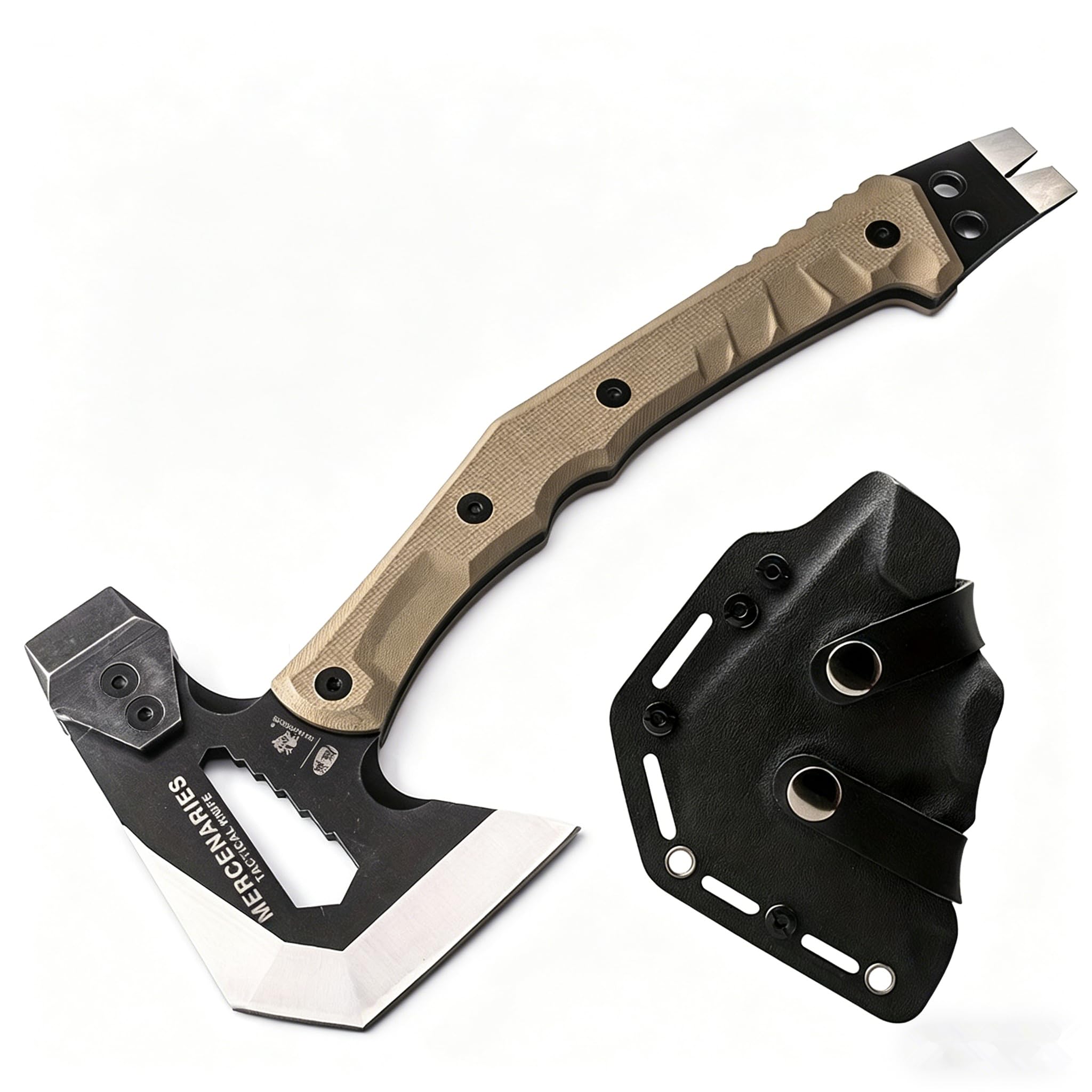
The HX OUTDOORS Mercenary is a one-piece full-tang stainless steel 440C tool that bundles an axe, hammer poll, and integrated pry bar into a single compact unit. The stainless construction eliminates the rust anxiety that plagues carbon steel axes when crossing streams or camping in humid environments. The included Kydex sheath features a removable MOLLE clip that secures directly to pack webbing, solving the carry dilemma that other designs leave to the user.
The blade arrives razor sharp from the factory with a straight grind that slices through small-diameter wood cleanly. The hammer poll with a removable polymer cap enables tent stake driving and light striking without damaging the tool. The pry-bar notch at the base adds surprising utility for opening crates or prying roots. Users with large hands note the G10 handle scales are slightly slim — use gloves to avoid blisters during extended chopping sessions.
Where the Mercenary stumbles is the handle ergonomics: the composite scales are smooth and lack contouring, so the axe can rotate in the hand during angled strikes. The painted screws on some units showed heat damage from the manufacturing glue. Still, for hikers who carry one tool to cover camp chores, rescue tasks, and light splitting, the stainless build and included carry system make this a versatile option.
Why it’s great
- Stainless steel blade resists corrosion in wet trail conditions
- MOLLE-compatible Kydex sheath for reliable pack carry
- Hammer poll and pry bar add multi-function utility
Good to know
- Smooth handle scales can cause blisters without gloves
- Heavier than dedicated hatchets of similar size
- Straight grind less effective on knotty splits
5. BeaverCraft Wood Carving Axe AX1

The BeaverCraft AX1 is a purpose-built carving hatchet that prioritizes control and edge geometry over splitting power. Hand-forged from hardened high-carbon steel with a convex Scandi grind, the blade excels at making clean, chip-free cuts for bushcraft projects like trap triggers, notched joints, and feather sticks. The 12-inch Ashwood handle is ergonomically shaped with a slender profile that fits small to medium hands comfortably for prolonged carving sessions.
Users report the blade arrives sharp and holds its edge well across several outings, only needing a light stropping for maintenance. The cowhide leather sheath includes a belt loop, making it easy to attach to a pack or belt loop. At 600 grams (1.32 pounds), the AX1 splits the difference between ultralight and heirloom weight, giving enough mass for small to medium rounds without tiring the arm.
The downsides center on the sheath durability — several users report the leather breaking at the stitching after a few uses, requiring aftermarket replacement. The Ashwood handle also requires periodic oiling to prevent drying and cracking in arid conditions, adding maintenance overhead that polymer handles avoid. This is the right tool for the hiking woodcarver; it is a specialist, not a general-purpose splitter.
Why it’s great
- Convex Scandi grind produces carving-grade precision cuts
- Comfortable Ashwood handle for extended hand-use
- Belt-loop sheath included for easy carry
Good to know
- Sheath stitching reported fragile by multiple buyers
- Wood handle needs periodic conditioning oil
- Not designed for heavy splitting or two-handed swings
6. Helko Werk Classic Journeyman Pack Axe

The Helko Werk Journeyman is a handmade German pack axe that bridges the gap between a hatchet and a full-sized forest axe. The 20-inch Grade-A American hickory handle, sanded to 150-grit and finished with boiled linseed oil, provides a comfortable grip for both choked and full-swing techniques. The C50 high-carbon steel head (53-56 HRC) is individually open-face drop forged, resulting in a polished, rust-resistant finish that reduces cutting friction.
With a 1.5-pound head and 2.25-pound total weight, the Journeyman generates substantial chopping force for its compact profile, able to limb, split kindling, and even fell small trees with proper technique. The vegetable-tanned leather sheath is premium quality with sturdy stitching and a belt loop. An included 1-ounce Axe Guard oil helps maintain the steel during storage. Users consistently praise the symmetrical grind and precise symmetry of the head as marks of true craftsmanship.
The Journeyman is not beginner-friendly — the edge typically requires profiling to match an individual user’s preferred cutting angle, and the hard anti-rust coating is difficult to remove without sandpaper and WD-40. The wide handle is designed for large hands, potentially overwhelming smaller grips. At this price point, this is an heirloom purchase for dedicated backpackers who demand German precision.
Why it’s great
- Hand-forged German steel with precise symmetrical grind
- 20-inch hickory handle provides full-swing chopping power
- Premium leather sheath and protective oil included
Good to know
- Edge profiling required out of box for optimal performance
- Wide handle may feel oversized for small hands
- Anti-rust coating is difficult to remove
7. Gränsfors Bruks Wildlife Hatchet

The 13.5-inch handle is straight-grained hickory selected for density and grain orientation, resulting in a tool that absorbs shock and feels balanced in the hand. At 1.3 pounds, this hatchet manages to combine low pack weight with a forged head design that handles felling, limbing, and carving with equal competence.
The blade arrives shaving sharp with no secondary mill scale, ready for immediate use. The unique worn-steel appearance comes from the traditional forging process, not a coating, so the patina develops naturally over time. Users of all hand sizes (tested from 130-pound women to 200-pound men) find the handle comfortable both barehanded and gloved. The included axe book provides maintenance guidance and forging history.
The primary drawback is the included leather sheath — while functional, it is minimal compared to premium aftermarket options, leading many owners to invest in a custom belt-carry case. The premium price also limits the buyer pool, but owners universally consider it a lifetime purchase that will pass to the next generation. For the hiker who wants the finest Swedish steel hanging from their pack, this is the definitive choice.
Why it’s great
- Heirloom-quality forged Swedish steel with no coating
- Comfortable 13.5-inch handle suits all grip sizes
- Balanced design handles felling, limbing, and carving
Good to know
- Leather sheath is basic and likely to be upgraded
- Premium price is a significant investment
- No hammer poll for striking tasks
FAQ
How long should a hiking axe handle be for backpacking?
Can I use a hiking axe for hammering tent stakes?
Is a full-tang axe better for hiking than a wedged head?
Final Thoughts: The Verdict
For most hikers, the axe for hiking winner is the Fiskars X7 Hatchet because it pairs the lowest total weight with a blade geometry that splits camp wood cleanly, all without the maintenance burden of natural handle materials. If you want a dedicated carving tool for bushcraft projects, grab the BeaverCraft AX1. And for premium heirloom quality that will last a lifetime of trail use, nothing beats the Gränsfors Bruks Wildlife Hatchet.