
Our readers keep the lights on and the weekend projects moving. As an Amazon Associate, I earn from qualifying purchases.
Hard water doesn’t just leave white deposits on your faucets — it actively eats away your water heater from the inside. Standard anode rods dissolve quickly under high mineral loads, leaving your tank vulnerable to rust, pinhole leaks, and that unmistakable rotten egg odor. Choosing the right sacrificial or powered rod is the single most cost-effective move you can make to double your heater’s lifespan.
I’m Rikta — the co-founder and writer behind FitlyFast. I’ve spent countless hours cross-referencing material science data, customer failure reports, and tank compatibility charts to separate the rods that actually hold up in hard water from those that quit within a year.
Whether you own an RV or a residential 50-gallon tank, the right anode rod for hard water delivers measurable corrosion protection and eliminates sulfur odors without requiring a filtration system upgrade.
How To Choose The Best Anode Rod For Hard Water
Hard water accelerates anode rod consumption because dissolved calcium and magnesium carbonates increase the water’s electrical conductivity, driving a faster galvanic reaction. Choosing the right rod means matching material, length, and installation type to your water chemistry and tank access.
Magnesium vs. Aluminum: The Hard Water Showdown
Magnesium sits higher on the galvanic series than aluminum, meaning it corrodes faster and provides stronger cathodic protection. In hard water, magnesium rods sacrifice themselves more aggressively, which is exactly what you want — the rod takes the hit so your steel tank doesn’t. Aluminum rods last longer in soft water but often fail to suppress the hydrogen sulfide reaction that causes rotten egg odor in hard water zones. If you can smell sulfur, skip aluminum and go straight to magnesium or a powered titanium unit.
Length, Thread, and Clearance: Fit Before You Buy
Residential water heaters typically use a ¾-inch NPT thread and rods ranging from 30 to 44 inches. RV tanks use the same thread but a shorter 9.25-inch length. Measure your old rod or check your heater’s spec sheet — installing a rod that’s too long can push against the top of the tank or cause clearance problems in low-ceiling basements and closets. Flexible segmented rods solve this by bending around corners, making them ideal for tight installations where a solid rod simply won’t fit.
Quick Comparison
On smaller screens, swipe sideways to see the full table.
| Model | Category | Best For | Key Spec | Amazon |
|---|---|---|---|---|
| Podoy Powered Anode Rod | Powered Titanium | Odor-free hard water, no rod replacement | 9.4-inch titanium, DC 3V output | Amazon |
| Camco Aluminum Anode 11582 | Residential Aluminum | Budget-friendly residential protection | 42-inch, ¾-inch NPT, aluminum | Amazon |
| Eau 44″ Flexible Magnesium | Flexible Magnesium | Tight clearance, strong hard water protection | 44-inch hinged magnesium, includes socket | Amazon |
| Podoy Flexible 44″ Magnesium | Flexible Magnesium | Rheem/GE tanks with odor issues | 44-inch segmented, 3/4″ NPT, steel core | Amazon |
| Suburban 232768 Aluminum | RV OEM Aluminum | Suburban/Mor-Flo RV direct fit | 9-inch, 3/4″ NPT, OEM spec | Amazon |
| jixsloft RV Kit (Aluminum) | RV Kit Aluminum | All-in-one RV maintenance kit | 9.25-inch aluminum, includes flush wand | Amazon |
| Skoutag RV Kit (Magnesium) | RV Kit Magnesium | RV hard water + odor control | 9.25-inch magnesium, dual hex wrench | Amazon |
In‑Depth Reviews
1. Podoy Powered Anode Rod
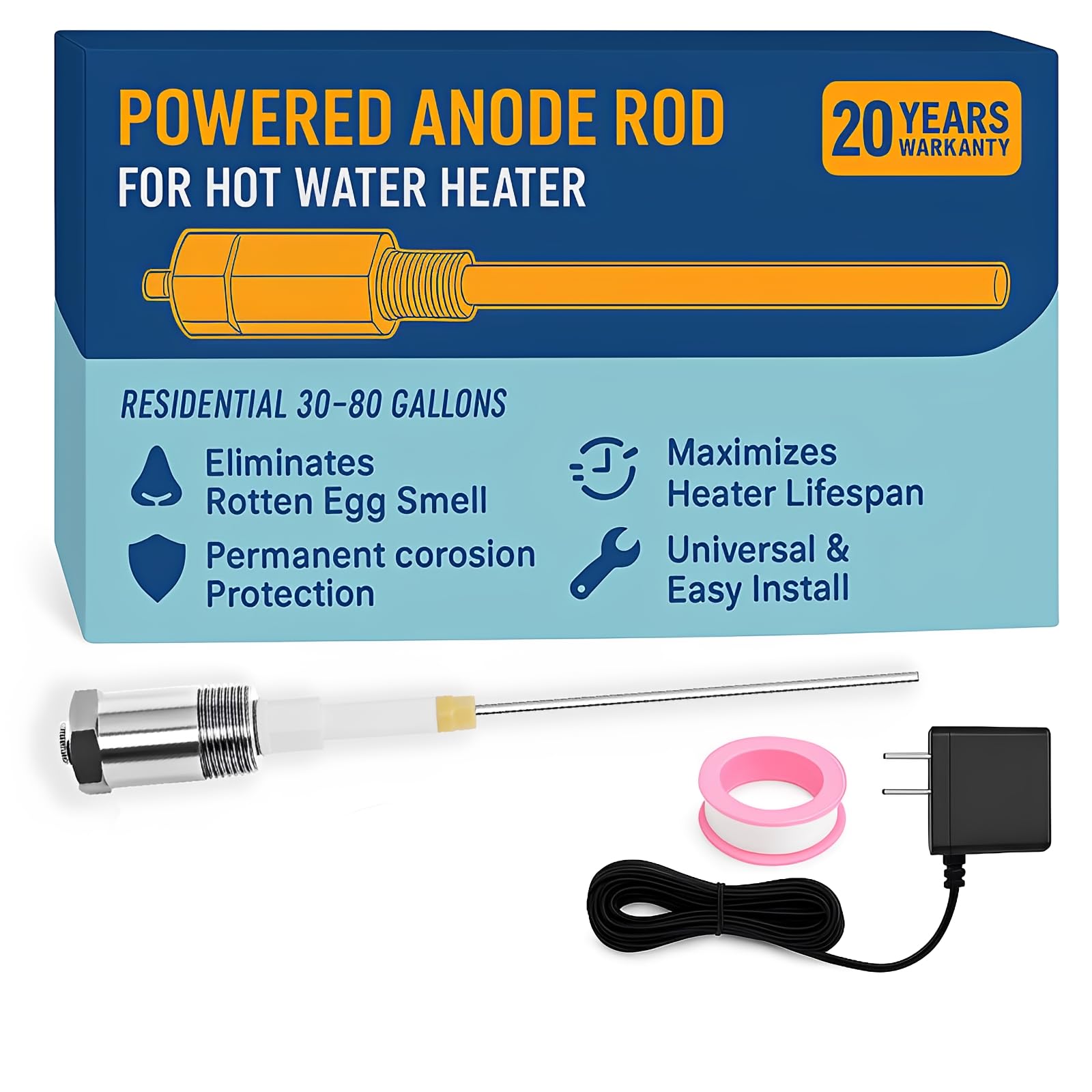
The Podoy Powered Anode Rod is a titanium-based electric unit that completely changes the protection game. Instead of sacrificing itself like magnesium or aluminum, it uses a low-voltage DC current (3V, 1A) to actively repel corrosive ions, meaning the rod never corrodes. That’s a massive advantage in hard water where sacrificial rods can dissolve in under two years — this one lasts indefinitely, with no flaking, no sediment, and no need for annual replacement.
The rod length is 9.4 inches with a standard ¾-inch NPT thread, making it compatible with most 30 to 80-gallon residential tanks (excluding Bradford White). Users report that the rotten egg sulfur smell disappears within 24 hours of installation, a direct result of the powered current suppressing the sulfate-reducing bacteria that cause the odor. The included AC/DC adapter steps down household 100-240V to safe DC levels.
Installation requires a 1-1/16-inch socket and a ratchet (not included), but the process is straightforward for anyone comfortable with basic plumbing. The only caveat is that the Teflon tape in the box is low quality — buy a separate roll of high-density tape for a leak-proof seal. For anyone fighting hard water corrosion and odor simultaneously, this is the most permanent solution available.
Why it’s great
- Never needs replacement — titanium does not corrode
- Eliminates rotten egg smell within 24 hours
- Active electronic protection works in any hardness level
Good to know
- Not compatible with Bradford White tanks
- Requires a nearby electrical outlet for the adapter
- Socket tool not included in the box
2. Eau 44″ Flexible Magnesium Anode Rod

The Eau Flexible Magnesium Anode Rod is a 44-inch rod segmented into four hinged sections, each under 12 inches. This design solves the single biggest installation headache in residential water heaters: overhead clearance. If your tank sits in a low-ceiling basement or a tight closet, a solid 44-inch rod simply won’t fit. The four articulated joints let you snake the rod through the heater opening and bend it into place without forcing the tank.
Magnesium provides stronger cathodic protection than aluminum in hard water because of its higher position on the galvanic series. That means it corrodes faster — and that’s exactly what you want. The rod sacrifices itself aggressively so your steel tank stays intact. Users with Rheem, Reliance, Richmond, Kenmore, GE, and A.O. Smith tanks report straightforward installation using the included 27mm chrome socket and Teflon tape.
One real-world detail from verified buyers: the heavy paint on the threaded sections may interfere with electrical grounding. A quick check with a multimeter confirmed near-zero resistance after scraping the paint off the contact surface. If you’re handy with tools, this is a small step for a huge payoff in tank longevity. The flexible design also makes annual inspection possible — just unscrew, check the wear, and reinstall without cutting anything.
Why it’s great
- Four-hinge design fits where solid rods cannot
- Strong magnesium sacrificial action for hard water
- Includes chrome socket and sealing tape
Good to know
- Paint on threads may need scraping for proper ground
- Impact wrench often needed to remove factory rod
- Lower segment may need cutting for short tanks
3. Podoy Flexible 44″ Magnesium Anode Rod Kit
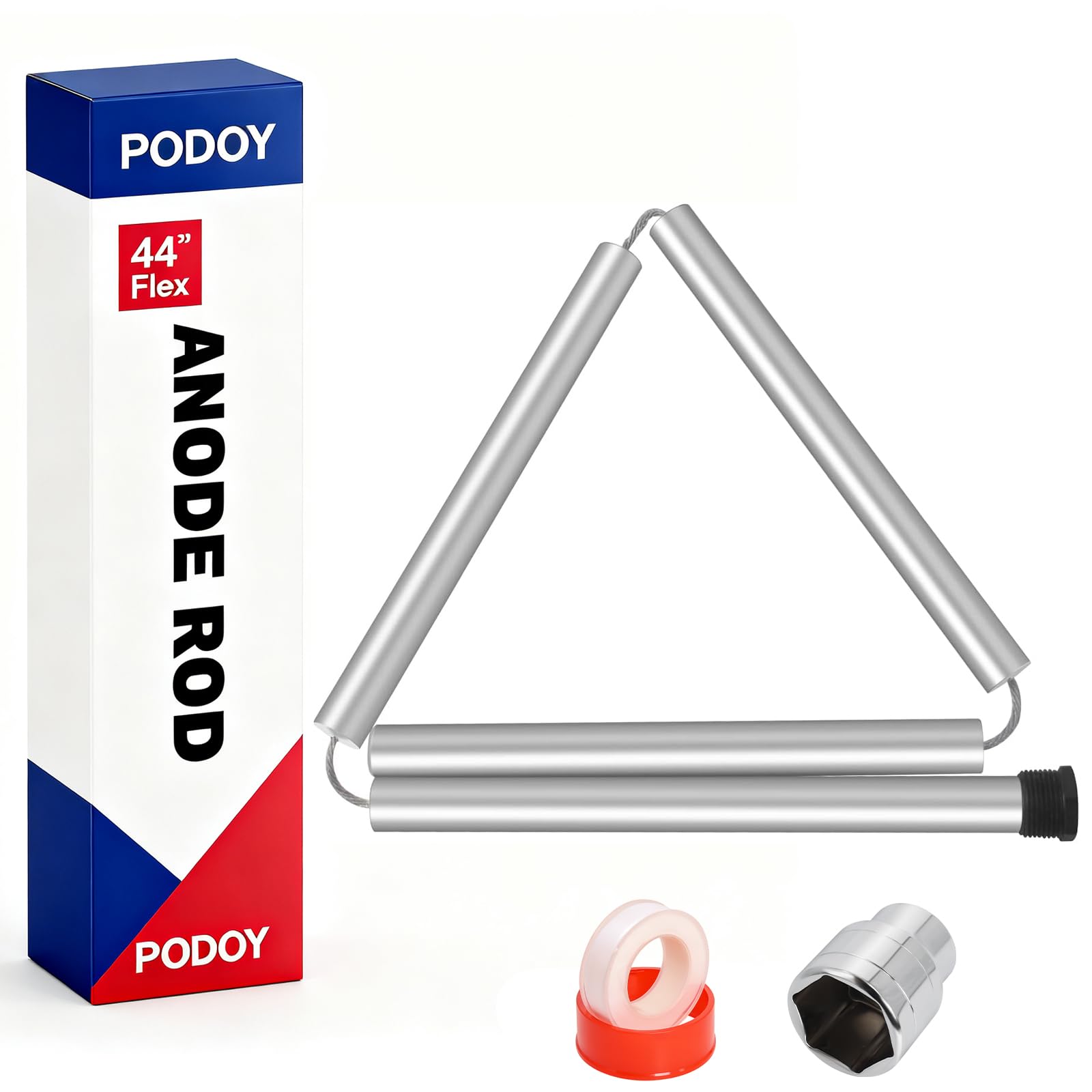
The Podoy Flexible 44″ Magnesium Anode Rod Kit offers the same four-section hinged design as the Eau rod but with a steel core for added rigidity during insertion. That steel core makes the segments a bit stiffer, which helps when you need to push the rod past a tight tank opening without the joints flopping sideways. The 0.8-inch diameter and ¾-inch NPT thread fit the vast majority of residential tanks including Rheem, Reliance, GE, Richmond, and Kenmore.
Magnesium’s stronger electrochemical potential is critical for hard water — the increased mineral content drives a faster galvanic reaction, and magnesium rods handle that load better than aluminum. Verified buyers consistently note that this rod eliminated well-water sulfur smells after the first heating cycle. The 1-1/16-inch hex socket tool included in the kit is heavy-duty enough to work with an impact wrench, which many users needed to break loose the factory-installed original rod.
The weak point is the included Teflon tape, which multiple customers describe as flimsy. Use a separate roll of quality PTFE tape or pipe dope on the threads to ensure a drip-free seal. Overall, this kit delivers professional-grade magnesium protection at a mid-range price point, making it the go-to for homeowners who want flexible installation without paying a premium.
Why it’s great
- Steel-core segments for easier insertion in tight spaces
- Magnesium stops hard water odor effectively
- Heavy-duty socket works with impact tools
Good to know
- Included Teflon tape is low quality
- May require cutting bottom segment for smaller tanks
- No indicator light on rod (only on power supply model)
4. Camco Aluminum Anode Rod 11582

The Camco Aluminum Anode Rod 11582 is the longest-serving entry in this category — it’s been on the market since 2011 and remains a solid choice for homeowners with moderately hard water. The 42-inch aluminum rod with a plated 1-1/16-inch hex bushing and ¾-inch NPT thread fits virtually any standard residential water heater. Aluminum corrodes slower than magnesium, so this rod will last longer in soft-to-medium water, but in aggressive hard water it may not suppress sulfur odors as effectively.
Users with well water report the rod lasted four to five years before needing replacement, with the old rod reduced to a thin wire. That’s the sacrificial system working exactly as designed. The rod is soft enough to cut with a standard hacksaw if your tank depth requires a shorter length — just measure carefully and wrap the threads with Teflon tape before reinstalling.
One practical note: the 42-inch length can be problematic in vertical installations with limited headroom. If your water heater sits in a closet with a low ceiling, this solid rod may not fit without cutting or bending the tank connection. For standard basement installations with adequate clearance, however, the Camco delivers reliable corrosion protection at a budget-friendly price point.
Why it’s great
- Proven track record since 2011 with consistent quality
- Aluminum lasts longer in low-to-moderate hardness water
- Easy to cut shorter with a hacksaw
Good to know
- Not ideal for strong sulfur/rotten egg odors
- 42-inch solid rod requires adequate overhead clearance
- May need 27mm socket (1-1/16″ is slightly too small)
5. Suburban 232768 Water Heater Anode Rod

The Suburban 232768 is the OEM replacement rod for Suburban and Mor-Flo RV water heaters. At 9 inches long with a ¾-inch NPT thread and 0.75-inch diameter, it’s a direct drop-in fit for the SW6DE, SW10DE, and similar models. Because it’s the exact factory spec, you avoid the guesswork of aftermarket alternatives that may have slightly different thread pitch or hex head size.
The aluminum construction is adequate for most RV water conditions, but in areas with hard well water or high sulfate content, this rod may corrode faster than magnesium. Buyers using their RVs seasonally report replacing the rod every three to four years, with about 50% deterioration visible at change time. The recommended replacement threshold is 75% corrosion — waiting longer risks tank damage.
Installation requires a 1-1/16-inch socket, a long ratchet, and a 6-inch extension bar to reach the recessed anode port. Use PTFE tape or potable pipe dope on the threads to prevent the aluminum from welding to the tank fitting. The rod is made in the USA, a detail that matters to owners who prioritize domestic manufacturing for their RV maintenance parts.
Why it’s great
- OEM fit for Suburban and Mor-Flo heaters
- 9-inch length perfect for RV clearance
- Made in the USA with consistent thread quality
Good to know
- Threads can be rough; use generous Teflon tape
- Aluminum may not suppress RV sulfur odors
- Socket and extension bar not included
6. jixsloft RV Water Heater Anode Rod & Flush Wand Kit
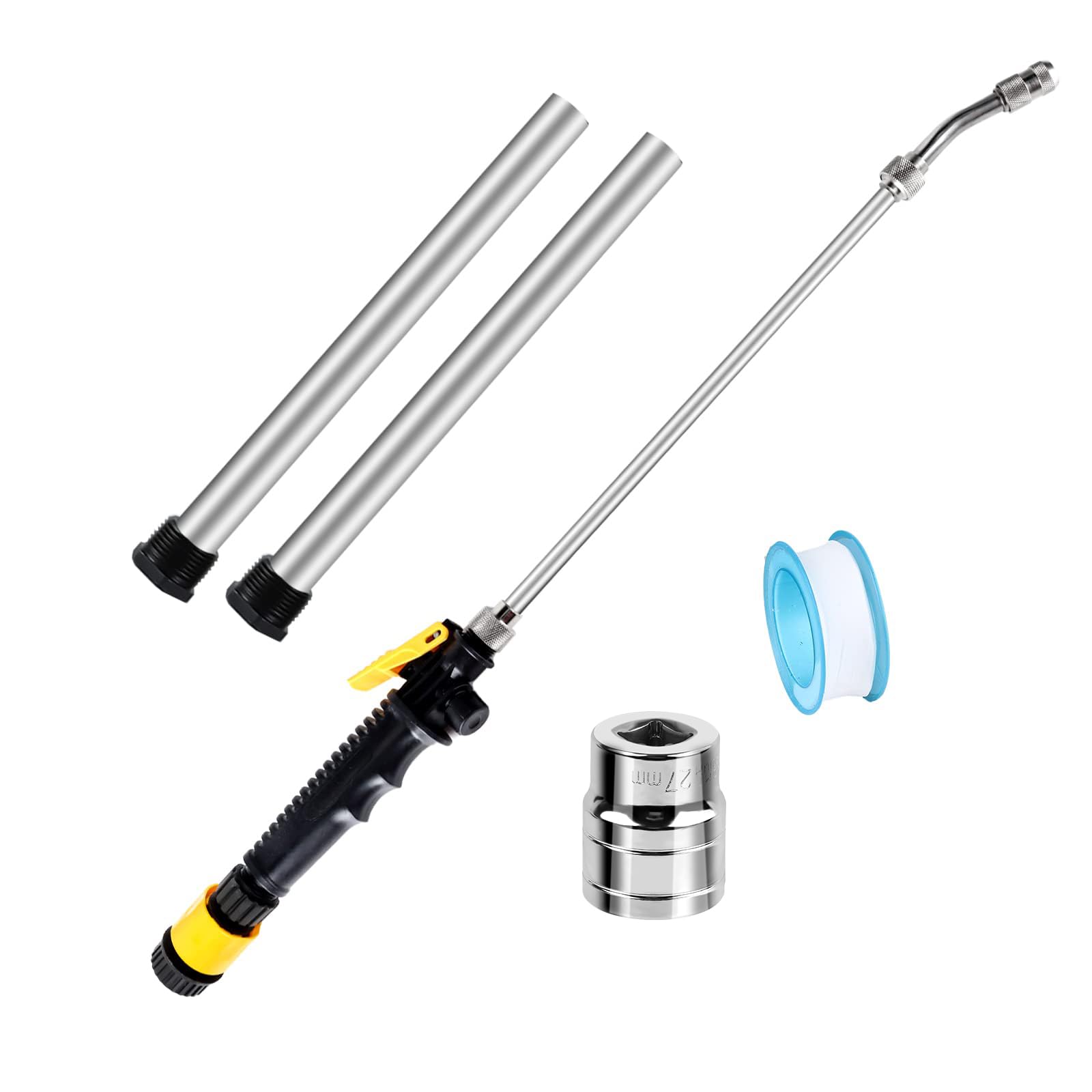
The jixsloft RV Water Heater Anode Rod & Flush Wand Kit packs two 9.25-inch aluminum anode rods, a stainless steel flush wand, a hex wrench socket, and Teflon tape into one box. For RV owners who want to handle both anode replacement and tank sediment flushing in a single maintenance session, this kit is the most convenient option. The flush wand features a curved stainless tip and adjustable nozzle that sprays forward and to the sides, effectively reaching dead spots in the tank.
The aluminum rods attract corrosive elements via electrolysis, protecting RV tanks from rust and mineral buildup. Users report that the kit completely eliminated hot water odor problems in campers and travel trailers. The included double hex wrench socket has a ¾-inch drive that works with standard ratchets, though some buyers noted the socket is too short for leverage in tight spaces and recommend using a torque wrench with an extension.
The flush wand connects to a standard garden hose via the included ½-inch quick-connect adapter and ¾-inch hose adapter. The 13.7-inch elongated metal rod reaches deep into the tank without requiring you to crawl inside the compartment. The Teflon tape is functional but thin — applying extra wraps around the anode nut and the flush wand rotation interface prevents leakage during the flushing process.
Why it’s great
- Complete kit with two rods, flush wand, and socket
- Flush wand reaches all sediment dead spots
- Fits most Suburban RV water heaters perfectly
Good to know
- Socket is short — may need extension bar
- Included Teflon tape is thin; double-wrap or buy separate
- Aluminum less effective than magnesium for odor control
7. Skoutag RV Water Heater Anode Rod & Flush Wand Kit
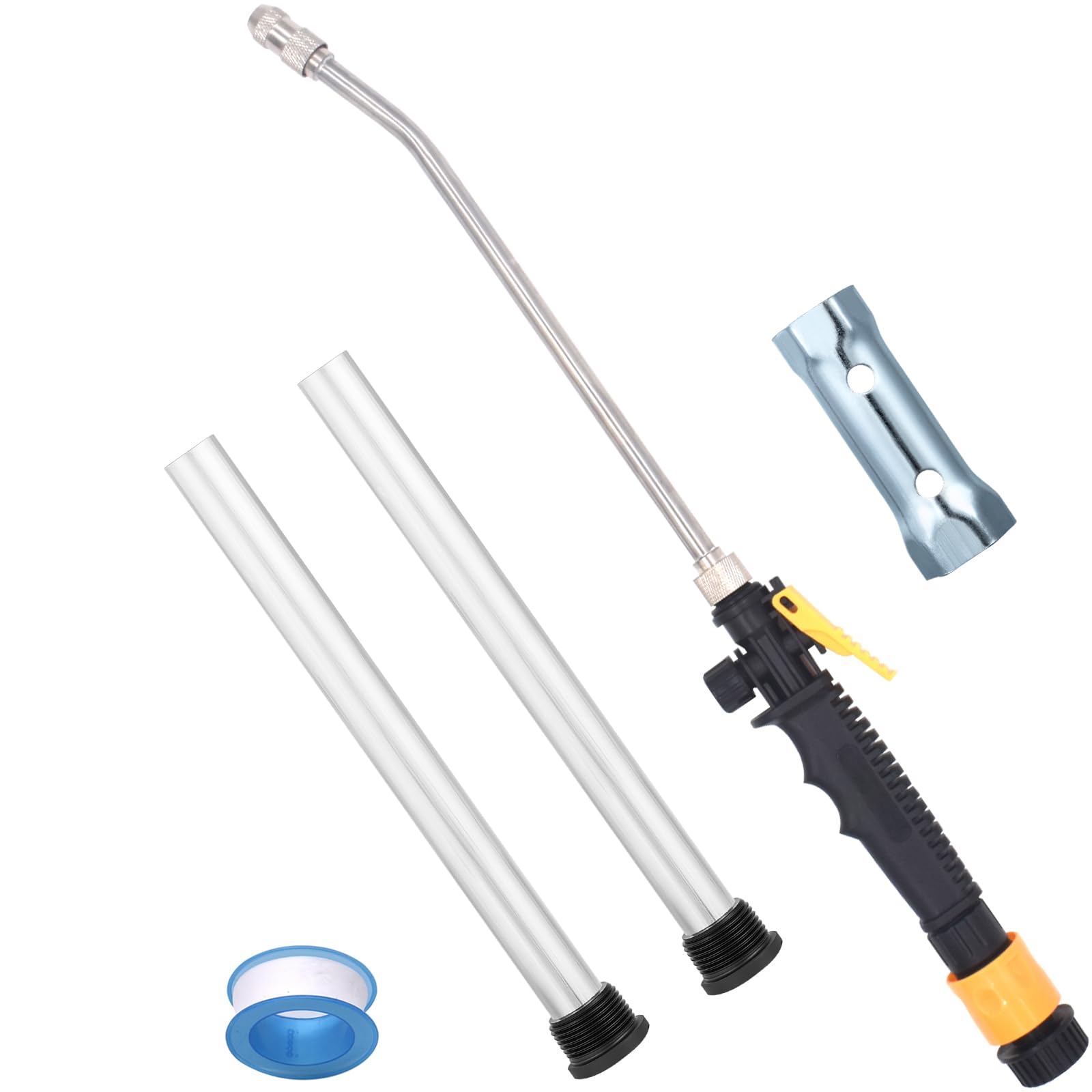
The Skoutag RV Water Heater Anode Rod & Flush Wand Kit is the magnesium alternative to the jixsloft kit, making it the better choice for RV owners dealing with rotten egg odors in hard water. The two AZ63 magnesium alloy rods provide stronger cathodic protection than aluminum, actively suppressing the sulfate-reducing bacteria that cause sulfur smells. At 9.25 inches with a ¾-inch NPT thread, they fit Suburban and Mor-Flo heaters identically to the OEM spec.
The stainless steel flush wand sprays forward and laterally when the nozzle is removed, lifting sediment from the tank bottom during annual maintenance. Users consistently mention that the wand removed a surprising amount of white mineral scale and debris after just one flush. The kit includes a dual hex wrench socket that handles both the anode nut and the element socket, plus Teflon tape for thread sealing.
One critical installation note: always turn off the water heater, let the water cool completely, and release tank pressure before removing the old rod. The magnesium rods work well, but one buyer reported that missing the annual replacement interval led to complete rod depletion after 18 months. Set a calendar reminder — the sacrifice is working, but only if you check it regularly.
Why it’s great
- Magnesium alloy rods stop RV sulfur odors effectively
- Flush wand with lateral spray cleans tank walls
- Includes dual hex socket for anode and element removal
Good to know
- Magnesium wears faster than aluminum in hard water
- Socket may not fit all element types
- Must release tank pressure before removal
FAQ
How often should I replace my anode rod in hard water conditions?
Will a magnesium anode rod eliminate the rotten egg smell in my water heater?
Can I install a residential anode rod in my RV water heater?
Final Thoughts: The Verdict
For most users, the anode rod for hard water winner is the Podoy Powered Anode Rod because it never corrodes, eliminates sulfur odor within 24 hours, and handles any water hardness level without annual replacement. If you want flexible installation with strong sacrificial protection, grab the Eau 44″ Flexible Magnesium Anode Rod. And for a complete RV maintenance bundle at an entry-level price, nothing beats the Skoutag RV Kit with Magnesium Rods and Flush Wand.