
Three steps from your driveway, a red-tailed hawk locks onto movement you can’t see. Your palms sweat. That renewed DSLR in your hand—is it enough to freeze the strike, or will the bird vanish into a blur of pixels? Wildlife photography beginners face this exact split-second, and the gear you choose decides everything between a wall-hanger and a missed memory.
I’m Rikta — the co-founder and writer behind FitlyFast. Over the past weeks, I’ve worked through the technical specifications, autofocus systems, burst rates, and lens compatibility of ten camera bodies purpose-built for a beginner stepping into wildlife photography.
Below I run the rule over this focused selection so you can buy your first wildlife rig with genuine confidence. Whether you chase birds in backyards or deer at dawn, this guide cuts through the jargon to help you find the very best beginner camera for wildlife photography.
How To Choose The Best Beginner Camera For Wildlife Photography
The ideal wildlife starter camera balances reach, speed, and affordability. You need a body with dependable autofocus that can lock onto moving subjects, a burst rate fast enough to capture fleeting action, and a system with long telephoto lenses you can grow into. Here are the three specs that separate a keeper from a miss.
Autofocus Points and Tracking
Wildlife rarely sits still. A camera with more autofocus points—especially cross-type sensors—covers more of the frame, making it far easier to track a running fox or a swooping swallow. Entry-level models often have 9 to 51 points; 51 or more with subject-tracking algorithms gives you real confidence in the field.
Burst Rate and Buffer Depth
Burst rate (frames per second) is your safety net. A camera shooting 6.5 fps or higher lets you machine-gun a sequence of wingbeats and pick the single sharpest frame afterward. Equally important is buffer depth—how many shots the camera can sustain before slowing down. Deeper buffers mean longer action sequences without waiting.
Lens Ecosystem and Focal Length Reach
The body is only half the equation. Crop-sensor cameras (APS-C) effectively multiply your lens reach by 1.5x or 1.6x, turning a 300mm lens into a 450mm or 480mm equivalent—a massive advantage for distant subjects. Look for a system (Canon EF/EF-S, Nikon F, Sony E, Nikon Z, Canon RF, L-Mount) with affordable telephoto zoom options available used or third-party.
Quick Comparison
On smaller screens, swipe sideways to see the full table.
| Model | Category | Best For | Key Spec | Amazon |
|---|---|---|---|---|
| Nikon D7500 | DSLR | All-around speed | 51 AF points, 8 fps burst | Amazon |
| Sony A7 V | Mirrorless | Burst / AI tracking | 759 AF points, 30 fps | Amazon |
| Panasonic S5II | Mirrorless | Hybrid photo/video | Phase Hybrid AF, Active IS | Amazon |
| Sony A7 III | Mirrorless | Full-frame value | 693 AF points, 10 fps | Amazon |
| Nikon Z50 II | Mirrorless | Compact 2-lens kit | 231 AF points, bird/plane AF | Amazon |
| Canon R100 | Mirrorless | Budget mirrorless | 143 AF points, 6.5 fps | Amazon |
| Canon Rebel T7 Bundle | DSLR | All-in-one kit | 75-300mm + 500mm preset | Amazon |
| Panasonic S9 | Mirrorless | Compact travel | 255 AF points, full-frame | Amazon |
| Canon T7 Bundle (Renewed) | DSLR | Entry-level value | 9 AF points, 3 fps | Amazon |
| Canon T7 Bundle (20pc Renewed) | DSLR | Budget complete kit | 9 AF points, 3 fps | Amazon |
In‑Depth Reviews
1. Nikon D7500 DSLR

The Nikon D7500 hits the sweet spot for a beginner wildlife shooter because it packs a 51-point autofocus system with 15 cross-type sensors—enough coverage to track a pronghorn across an open field. Its 8 fps burst rate is nearly three times faster than entry-level DSLRs, giving you a real chance to capture the moment a coyote pounces. The 20.9MP APS-C sensor also provides crop-factor reach, turning any telephoto lens into a longer option instantly.
Paired with the included AF-S DX NIKKOR 18-140mm f/3.5-5.6G ED VR lens, you get a versatile walk-around range with vibration reduction. But the real value for wildlife lies in Nikon’s deep F-mount lens ecosystem; you can add a used 70-300mm or 200-500mm without breaking the bank. The tilting 3.2-inch touchscreen LCD makes low-angle shooting comfortable when stalking ground birds.
Battery life is excellent, often lasting a full day of shooting, and the weather-sealed body gives you peace of mind during misty mornings. The D7500 also records 4K UHD video with stereo sound, useful for capturing behavior clips. While the 18-140mm kit lens lacks extreme reach, the body’s AF speed and burst depth make it the most capable all-rounder for a beginner who plans to grow.
Why it’s great
- 51-point AF with cross-type sensors tracks moving subjects effectively
- 8 fps burst with deep buffer for action sequences
- Weather-sealed body suits outdoor conditions
Good to know
- Kit lens only reaches 140mm, fine for close subjects but needs telephoto upgrade
- No built-in Wi-Fi for instant sharing (requires optional adapter)
- Heavier than mirrorless alternatives for long hikes
2. Sony Alpha 7 V
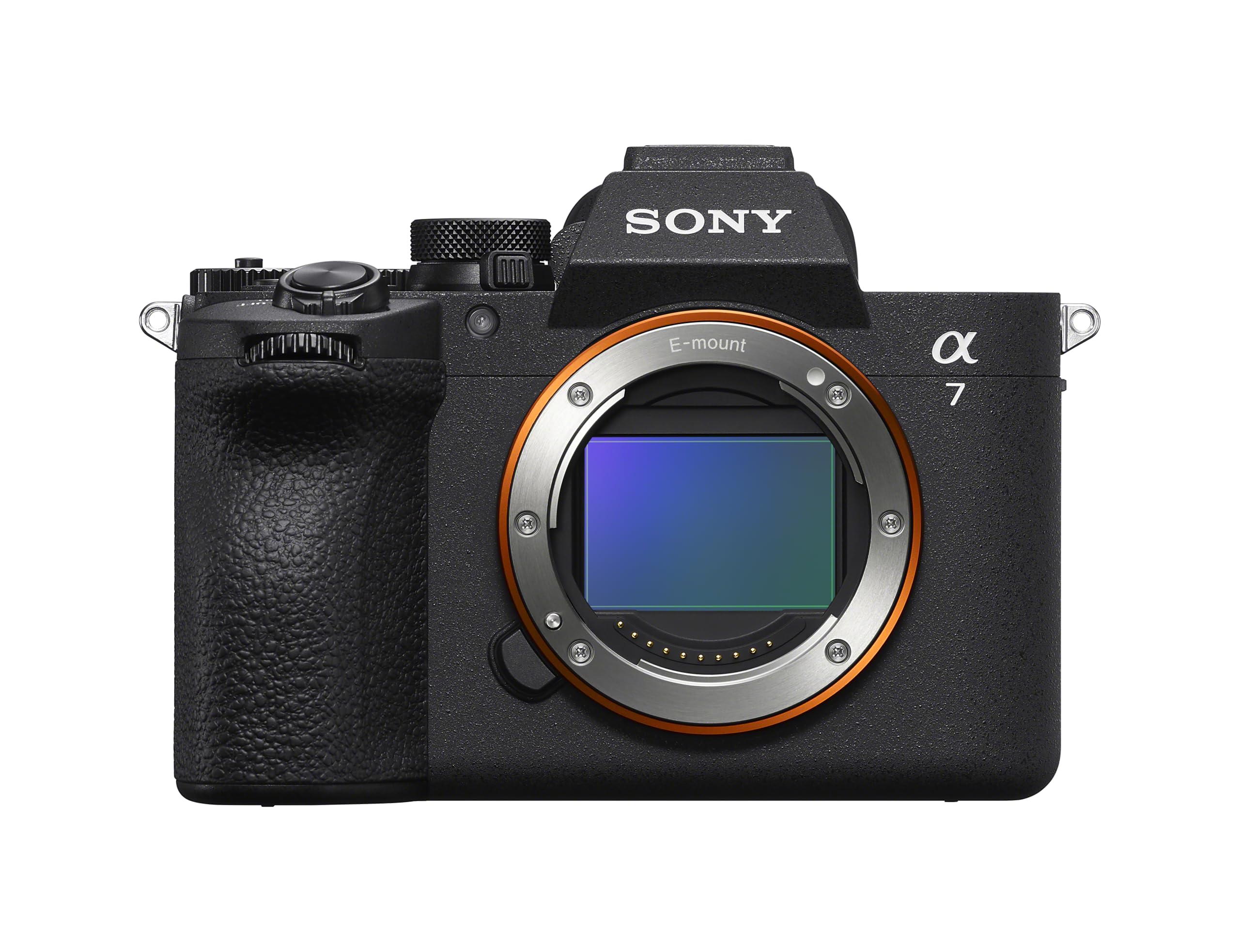
The Sony Alpha 7 V is an advanced full-frame body that justifies its place here for beginners who demand the highest hit rate. Its 759-point phase-detection AF system uses AI-based real-time recognition—detecting birds, animals, and even insects—and locks focus in near-total darkness. The 30 fps blackout-free burst with pre-capture buffer means you never miss the split-second a heron spears a fish.
The 33MP Exmor RS sensor delivers 16 stops of dynamic range, which helps recover shadow detail when shooting backlit subjects at dawn. In-body 5-axis stabilization gives up to 7.5 stops of shake correction, making handheld telephoto shots far more usable. Dual USB-C ports and improved heat dissipation allow extended 4K 120p recording without overheating, a rare feature for hybrid shooters.
The main drawback for a true beginner is the price point and the need to invest in Sony E-mount lenses. The body-only package forces a separate lens purchase, and native Sony telephoto zooms are not cheap. The menu system, while improved, still has a learning curve. This camera is best for a beginner who is serious about wildlife long-term and wants a body that will not need upgrading for years.
Why it’s great
- 759-point AI-based AF detects specific animal and bird subjects
- 30 fps burst with pre-capture buffer ensures zero missed frames
- 7.5-stop in-body stabilization sharpens handheld telephoto shots
Good to know
- Body-only package requires separate lens purchase, increasing total cost
- Complex menu system may overwhelm absolute beginners initially
- Full-frame sensor gives less crop-factor reach than APS-C bodies
3. Panasonic LUMIX S5II
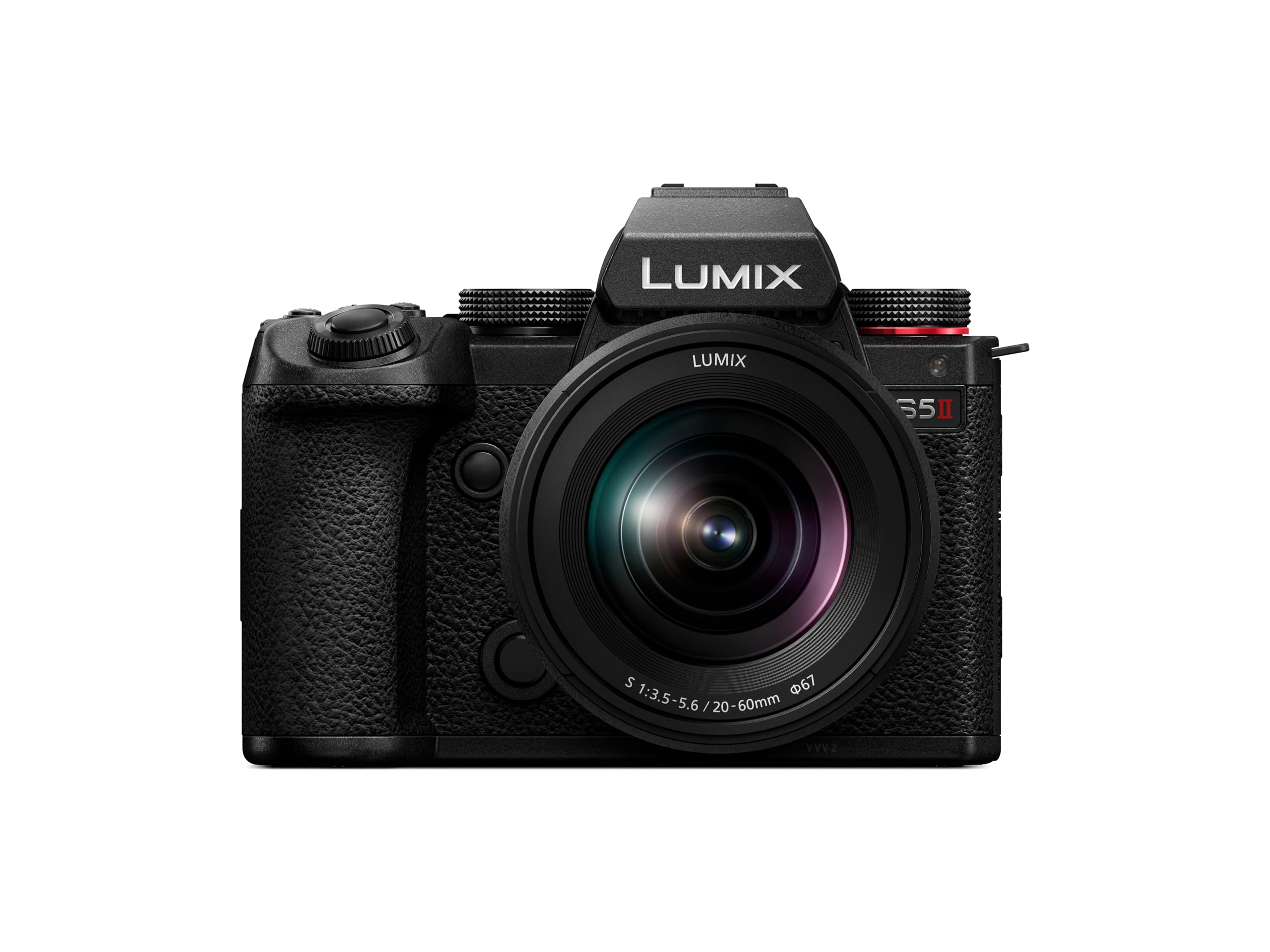
The Panasonic S5II bridges the gap between stills and video wildlife capture with its new Phase Hybrid Autofocus system, a major upgrade from Panasonic’s older contrast-only approach. The 24.2MP full-frame sensor delivers beautiful colors and a 14+ stop V-Log dynamic range, which helps when shooting in challenging forest light. The unlimited 4:2:2 10-bit recording with a built-in fan means you can record extended wildlife behavior without thermal shutdown.
Active I.S. technology is exceptionally good at smoothing walking shots, making it useful for following moving animals through brush. The included 20-60mm f3.5-5.6 lens is a versatile starter, though its wide end is not ideal for distant subjects. The L-mount ecosystem offers Sigma telephoto options like the 100-400mm f5-6.3, which is more affordable than native Panasonic glass.
Battery life is modest, and the square body design can scratch more easily than competitors. The menu system is intuitive, but the lack of a deep telephoto zoom in the kit means you will need to budget for an additional lens. For the beginner who wants to capture both 4K video of elk bugling and high-quality stills, this is a strong hybrid foundation in the L-mount system.
Why it’s great
- Phase Hybrid AF finally brings reliable continuous tracking for wildlife
- Active I.S. smoothes handheld gimbal-style walking shots
- Unlimited 4:2:2 10-bit video with internal fan for long recordings
Good to know
- Kit lens (20-60mm) lacks telephoto reach, requiring a separate lens purchase
- Battery life is modest, spare batteries essential for field work
- L-mount telephoto lens options are fewer and pricier than Nikon/Canon
4. Sony a7 III

The Sony a7 III remains a benchmark for full-frame mirrorless value, offering 693 phase-detection AF points covering 93% of the image area. This wide coverage is ideal for tracking birds in flight across the frame. The 10 fps silent or mechanical shutter with AE/AF tracking gives you fast burst speed without mirror slap, which can startle skittish wildlife.
The 24.2MP back-illuminated sensor delivers 15 stops of dynamic range and excellent low-light performance, useful for shooting at dawn or dusk when animals are most active. In-body image stabilization works with any lens you mount, and battery life is exceptional for a mirrorless camera—rated around 710 shots per charge. The included 28-70mm f3.5-5.6 kit lens is decent for landscapes but requires a telephoto add-on for wildlife.
While the a7 III lacks the AI-based subject detection of newer bodies, its standard Real-time Eye AF for animals still works effectively for most mammals. The menu system is deeper than Sony’s newer cameras and may take time to navigate. For a beginner who wants full-frame image quality with access to Sony’s vast E-mount lens library (including used third-party lenses like Tamron and Sigma), this is a proven workhorse that has held its value well.
Why it’s great
- 693-point phase-detection AF covers 93% of the frame for wide tracking
- 15-stop dynamic range preserves feather detail in high contrast
- Excellent battery life with ~710 shots per charge in the field
Good to know
- Older body lacks AI-based bird/animal subject recognition for fast action
- Menu system is complex compared to newer Sony and Panasonic designs
- Kit lens is wide-only, requiring budget for telephoto zoom lens
5. Nikon Z50 II Two-Lens Kit

The Nikon Z50 II is designed for the modern beginner with its two-lens kit covering 16-50mm and 50-250mm, providing a full-frame equivalent reach of 24-375mm thanks to the APS-C crop factor. This gives a beginner wildlife shooter immediate reach without extra purchases. The 231-point hybrid AF system includes dedicated bird and airplane detection modes, automatically identifying avian subjects and locking focus on eyes and bodies.
The 20.9MP DX-format sensor produces lifelike colors, and the 31 built-in Picture Control presets let you customize JPEG looks in-camera. The compact body with built-in flash and electronic viewfinder is easy to handle for smaller hands. 4K UHD 60p video with in-camera 120p slow-motion adds video versatility for capturing behavior like feeding or flight maneuvers.
Battery life is adequate for a day’s shooting but not class-leading, and the 50-250mm f4.5-6.3 VR lens, while useful, has a variable aperture that reduces light at the long end. The Z-mount system is growing but native telephoto lenses remain expensive compared to DSLR alternatives. This kit is ideal for a beginner who values portability and wants a working telephoto range straight out of the box.
Why it’s great
- Two-lens kit provides 24-375mm equivalent reach for wildlife immediately
- Dedicated bird detection AF with 231 points for reliable subject tracking
- Compact and lightweight body ideal for hiking and travel
Good to know
- 50-250mm lens has variable f6.3 aperture, limiting low-light performance
- Native Z-mount telephoto lenses are pricier than F-mount DSLR options
- Battery life is moderate, carry spare for full-day shoots
6. Canon EOS R100

The Canon EOS R100 is the most affordable entry into the RF-mount mirrorless system, offering 143 Dual Pixel CMOS AF zones with human, face, and animal eye detection. This makes it capable of locking onto a squirrel or a dog subject, though the animal detection is not as refined as dedicated bird/vehicle modes. The 24.1MP APS-C sensor provides a 1.6x crop factor, turning the included RF-S 18-45mm f4.5-6.3 IS STM lens into a short telephoto for closer subjects.
Continuous shooting at 6.5 fps with One-Shot AF is respectable for the price, and the DIGIC 8 processor delivers good JPEG colors straight out of camera. The compact, lightweight body is barely larger than a rangefinder, making it easy to pack on hikes. Built-in Wi-Fi and Bluetooth allow quick image transfers to a smartphone for social sharing.
The main limitation for wildlife is the kit lens range—45mm maximum (72mm equivalent) is too short for distant subjects. You will need to invest in an RF-S telephoto zoom or an EF to RF adapter with used Canon glass. The R100 also lacks a touchscreen and has a lower-resolution electronic viewfinder compared to pricier models. It is a great foundation for a beginner who wants to learn on a mirrorless system and plans to grow the lens kit over time.
Why it’s great
- 143 AF zones with animal eye detection for reliable subject tracking
- 6.5 fps burst captures moderate action sequences
- Compact and lightweight for easy hiking carry
Good to know
- Kit lens is wide-only (72mm equiv.), useless for distant wildlife
- No touchscreen and lower-res EVF than pricier mirrorless bodies
- Animal AF is less refined, lacks dedicated bird/vehicle modes
7. Canon Rebel T7 Double Zoom Kit
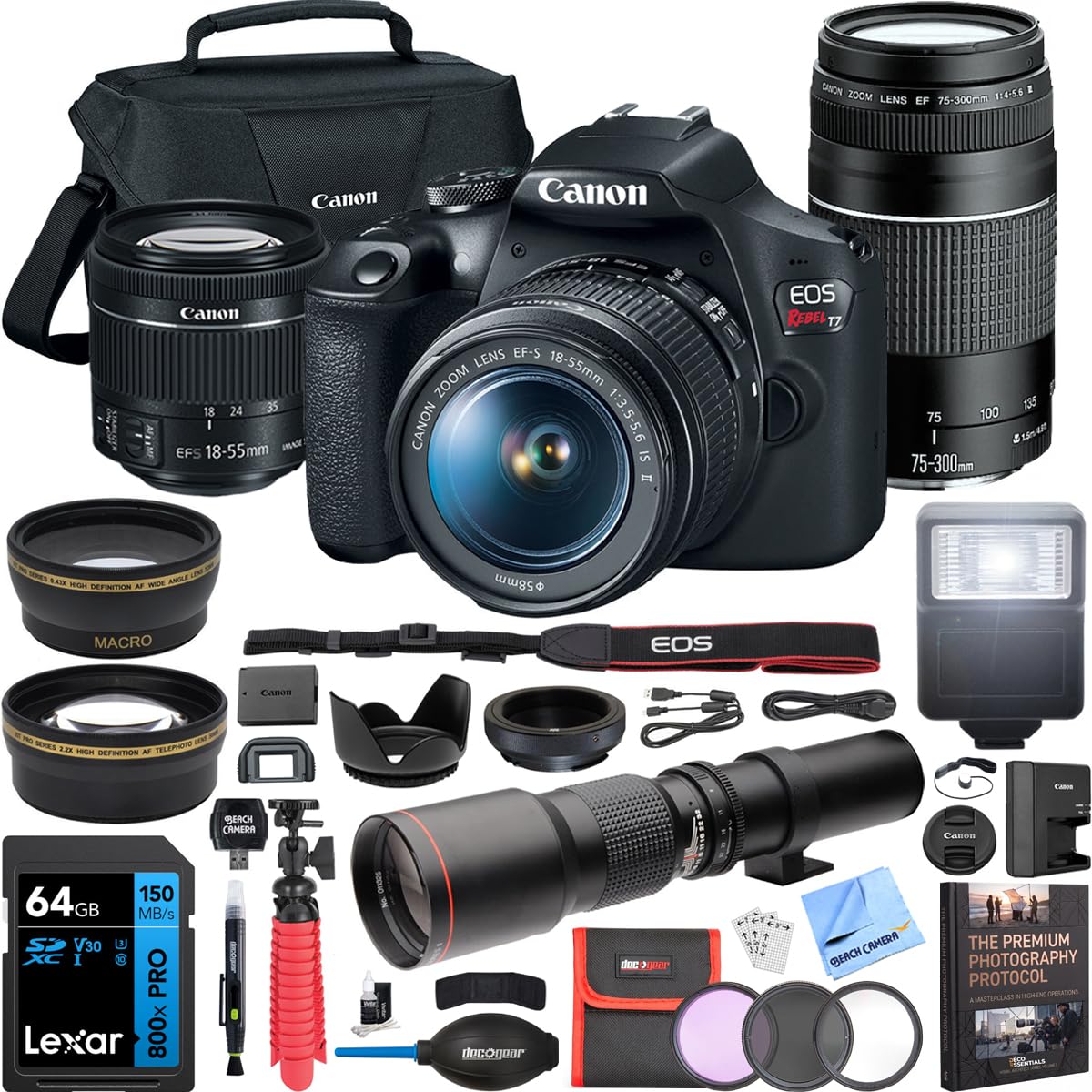
The Canon Rebel T7 Double Zoom Kit is built around the idea that a beginner needs reach immediately, bundling the EF-S 18-55mm f3.5-5.6 IS II lens and the EF 75-300mm f4-5.6 III lens plus a 500mm preset telephoto lens. The 75-300mm gives a 120-480mm equivalent range on the APS-C sensor, bringing deer 100 yards away into a tight frame. The 500mm preset lens adds even more reach, though it requires manual focus and a fixed f8 aperture, which demands bright light.
The 24.1MP APS-C sensor and DIGIC 4+ processor deliver solid image quality, and the 9-point AF system with center cross-type sensor can track slower-moving animals like grazing elk. Built-in Wi-Fi with NFC lets you share shots to a phone quickly. The included accessories—bag, tripod, flash, and filter kits—mean you have everything to start shooting immediately.
The clear limitation is the 3 fps burst rate, which is too slow for capturing birds in flight or fast predators. The 9-point AF system is outdated and struggles with moving subjects across the frame. The 75-300mm lens is an older design without image stabilization, requiring steady hands or a tripod at full zoom. This is the best all-in-one kit for a beginner who wants maximum reach for the lowest investment and is willing to work within its speed constraints.
Why it’s great
- 75-300mm + 500mm preset provides massive reach out of the box
- 13-piece bundle includes bag, tripod, flash, and filters for a complete kit
- Full USA warranty with Canon authorized product
Good to know
- 3 fps burst is too slow for birds in flight or fast action
- 9-point AF system struggles tracking moving wildlife across the frame
- 75-300mm lacks image stabilization, tripod recommended at full zoom
8. Panasonic LUMIX S9

The Panasonic S9 is an ultra-compact full-frame mirrorless camera that prioritizes portability without sacrificing image quality. Its 255-point Depth-From-Defocus autofocus system is reliable for stationary or slow-moving subjects like feeding deer or nesting birds. The full-frame sensor delivers excellent dynamic range and low-light performance, making it usable in the challenging light of dense forests.
The Lumix Lab app enables ultra-fast wireless transfers, and the multiple aspect ratio markers help frame for different social platforms in-camera. The included S 18-40mm f4.5-6.3 lens is very compact but too wide for wildlife shooting, so an additional telephoto lens is mandatory. The lack of a built-in flash and hotshoe (only a cold shoe) prevents adding an external flash for night work.
The S9 is best used as a travel companion for landscapes and incidental wildlife at close range rather than a dedicated wildlife rig. The electronic shutter has good rolling shutter performance, and the IBIS is effective for handheld shots at moderate shutter speeds. It is a niche choice for a beginner who wants a tiny full-frame camera for mixed travel and close-quarters wildlife.
Why it’s great
- Ultra-compact full-frame body for easy packing on hikes
- 255-point DFD AF with good accuracy for stationary wildlife subjects
- Excellent dynamic range and low-light capability from full-frame sensor
Good to know
- Kit lens is wide-only, requiring separate telephoto for any distant subject
- No built-in flash and cold shoe prevents adding external flash
- Small body lacks comfortable grip for one-handed use with large lenses
9. Canon EOS 2000D / Rebel T7 Essential Bundle (Renewed)

The Canon EOS 2000D (Rebel T7) is a budget-friendly DSLR with a 24.1MP APS-C sensor and the familiar Canon interface. At 3 fps burst and 9 AF points, it is clearly built for static subjects rather than fast-moving wildlife. However, the large sensor provides up to 19 times more surface area than a typical smartphone, giving you better dynamic range and control over depth of field for posed wildlife shots.
The included EF-S 18-55mm f3.5-5.6 DC III lens is fine for landscapes and close zoo animals, but wildlife at a distance will frustrate you quickly without a telephoto lens. The bundle adds a tripod, case, LED light, and 64GB memory card, which reduces the initial investment. The optical viewfinder provides a clear, real-time view that is easier to use in bright sun than an LCD screen.
Being a renewed product, it comes with a 1-year warranty and is reported by buyers to function flawlessly. The built-in Wi-Fi with NFC is a nice convenience for sharing a quick photo of a backyard bird. This is the camera for a beginner who wants to learn the basics of DSLR photography on a budget, with the understanding that upgrades for wildlife-specific use will come later.
Why it’s great
- Affordable entry into DSLR photography with full warranty
- Large 24.1MP APS-C sensor for good image quality and depth control
- Bundle includes tripod, case, memory card for immediate use
Good to know
- 3 fps burst and 9-point AF are not suited for fast-moving wildlife
- Kit lens is wide, requiring immediate upgrade for any distance shooting
- Renewed product, condition varies per unit despite reported good quality
10. Canon EOS 2000D / Rebel T7 20pc Bundle (Renewed)

This 20-piece renewed bundle of the Canon EOS 2000D (Rebel T7) is the most comprehensive starter kit on this list, including the camera body, 18-55mm lens, wide-angle lens, telephoto lens, tripod, case, memory card, and cleaning kit. For a beginner who does not know what accessories they need, this eliminates the guesswork and provides everything in one box. The camera has a 24.1MP APS-C sensor and built-in Wi-Fi with NFC.
The included telephoto lens allows some reach beyond the kit zoom, though the overall burst rate of 3 fps and 9-point AF system remain the bottleneck for wildlife action. Buyers consistently note that the bundle offers great value compared to buying items separately, and most report excellent photo quality for the price point. The camera is lightweight and comfortable to handle for extended carrying.
The main drawback echoed in customer feedback is the lack of an external microphone input, which limits future audio upgrades if you explore video. The 3 fps rate means you must be patient and wait for the perfect moment rather than spray-and-pray. For a complete beginner who wants a fully kitted setup to start learning photography with some basic wildlife reach, this renewed bundle is a smart, low-risk entry point.
Why it’s great
- 20-piece bundle provides everything a beginner needs to start shooting
- 24.1MP APS-C sensor delivers good quality for the price tier
- Lightweight body comfortable for beginners to handle and carry
Good to know
- 3 fps burst and 9-point AF limit effectiveness for moving wildlife subjects
- No external microphone input restricts future video audio upgrades
- Renewed product may have cosmetic signs of prior use
FAQ
Can I use a kit lens for wildlife photography?
What is the minimum autofocus point count I should look for?
Is a full-frame sensor better than APS-C for wildlife?
Final Thoughts: The Verdict
For most users, the beginner camera for wildlife photography winner is the Nikon D7500 because its 51-point AF system, 8 fps burst, and weather-sealed build give a beginner the best balance of speed and reach without a massive budget stretch. If you want the absolute strongest subject tracking and fastest burst rate, grab the Sony Alpha 7 V. And for a compact, ready-to-use kit with bird detection AF and two lenses, nothing beats the Nikon Z50 II as a lightweight travel companion for wildlife exploration.