
Our readers keep the lights on and the weekend projects moving. As an Amazon Associate, I earn from qualifying purchases.
A trail camera that blanks out night shots or triggers too late to catch a passing fox is worse than no camera at all. You get false confidence, empty memory cards, and zero usable footage. Beginners need a camera that nails the basics: fast motion detection, clear nighttime images, and simple setup without a steep learning curve.
I’m Rikta — the co-founder and writer behind FitlyFast. My work focuses on dissecting trail camera specs, reading through thousands of user reviews, and identifying the real-world performance that manufacturers often hide behind resolution numbers and marketing claims.
Whether you are scouting a backyard or monitoring a remote trail, you need a solid beginner wildlife camera that captures clear images without draining your budget or patience.
How To Choose The Best Beginner Wildlife Camera
Jumping into trail cameras for the first time means filtering out marketing noise. Beginners often chase megapixels and overlook trigger speed, night vision range, and battery efficiency. A 64MP camera with a slow trigger will miss the shot entirely. A camera with red glow LEDs will spook deer. Understanding these tradeoffs makes the difference between capturing wildlife and just collecting empty clips.
Trigger Speed and Detection Zone
The time between an animal entering the detection zone and the camera snapping a photo is the trigger speed. Look for 0.3 seconds or faster for decent capture rates. Budget cameras often list slower speeds or inconsistent performance in real-world conditions. Multiple PIR sensors on the sides help detect animals moving across the frame, not just straight into the lens. A 0.2-second trigger paired with a 60-foot detection range gives you reliable coverage for trails and food plots.
Night Vision Type: No-Glow vs Low-Glow
No-glow infrared uses 940nm LEDs that produce no visible light. Animals don’t see a thing, even up close. Low-glow 850nm LEDs emit a faint red glow that some wildlife notice. No-glow is the smarter choice for beginners who want to avoid spooking deer and nocturnal animals. The tradeoff is a slightly shorter effective range compared to 850nm. Cameras with f/1.6 or wider aperture lenses compensate by capturing more available light, producing brighter nighttime images despite the no-glow limitation.
Power Management and Battery Considerations
Battery drain is the most frequent beginner complaint. Cameras with non-WiFi operation consume less standby power and stretch battery life through a full season. Solar panels add an extra layer of reliability, especially for remote placement. Some cameras require lithium AA batteries because rechargeable NiMH cells drop voltage in cold weather and cause inconsistent triggering. If the camera ships without batteries, factor in the cost of quality lithium cells. A camera that drains batteries in two weeks is useless for long-term monitoring.
Quick Comparison
On smaller screens, swipe sideways to see the full table.
| Model | Category | Best For | Key Spec | Amazon |
|---|---|---|---|---|
| XTU 4K Solar WiFi | Premium Solar | Wireless viewing + 4K detail | 4K video + 64MP still | Amazon |
| GardePro E5S | Premium Non-WiFi | Fast trigger in remote areas | 0.1s trigger + 100ft night | Amazon |
| Meidase P70 (2 Pack) | Mid-Range 2 Pack | Two-camera coverage on a budget | 64MP + 1296p video | Amazon |
| Assark Solar WiFi | Mid-Range Solar | Solar powered with app control | 48MP + 1080p 30fps | Amazon |
| WOSODA 2 Pack | Budget 2 Pack | Low-cost entry with included SD cards | 30MP + 1080p video | Amazon |
| WOSPORTS Mini 2 Pack | Budget Compact | Small size for discreet placement | 24MP + 1080p video | Amazon |
| Meidase P70 (Single) | Budget Single | Single-camera monitoring on a tight budget | 64MP + 1296p video | Amazon |
In‑Depth Reviews
6. XTU 4K Solar WiFi Trail Camera
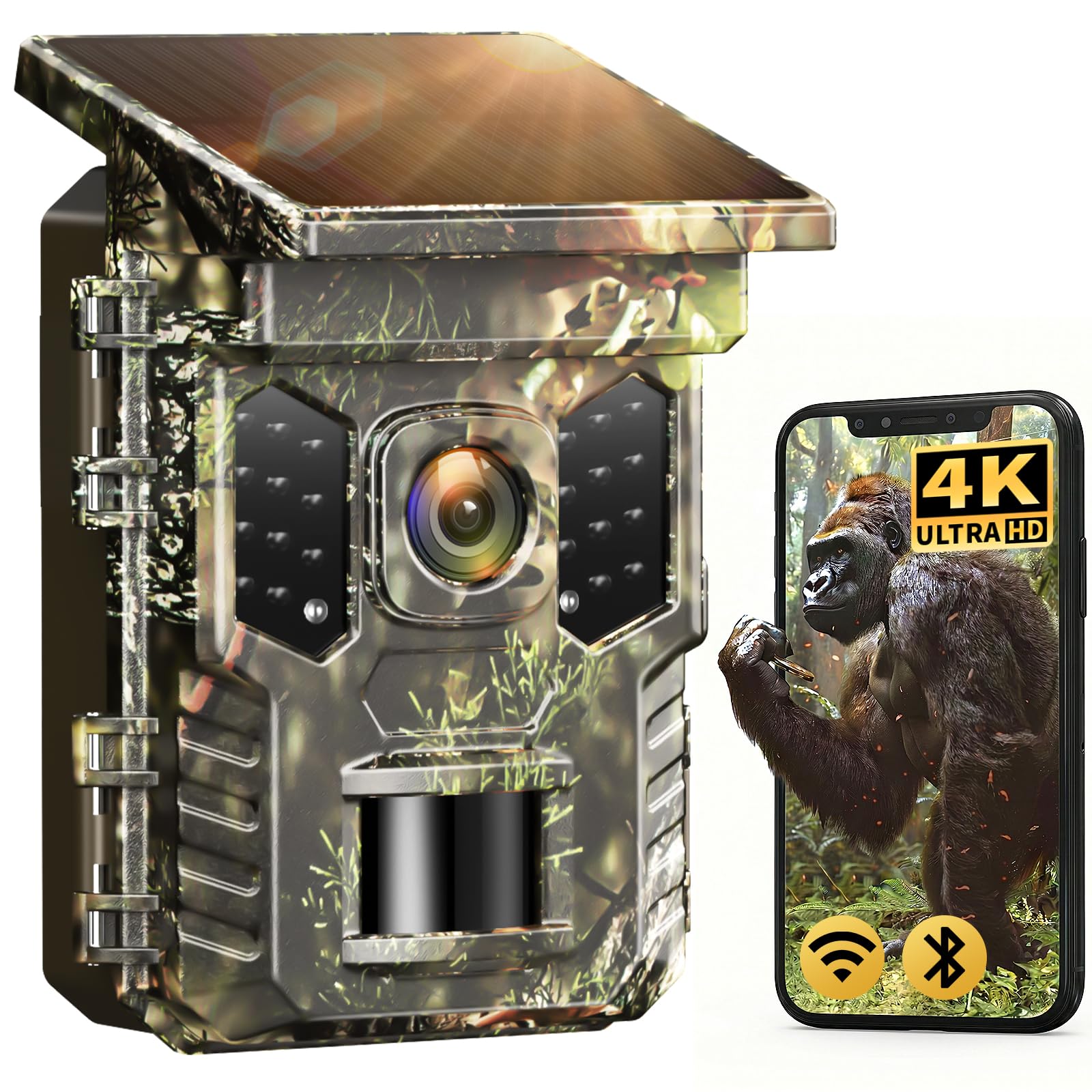
The XTU sits at the top of the beginner stack for a reason — it combines 4K video resolution and 64MP photo capture with a built-in solar panel and local WiFi connectivity. The 0.2-second trigger speed and 65-foot night vision range give you solid coverage for most backyard and trail applications. The internal rechargeable battery paired with solar top-up eliminates the constant battery swapping that plagues other cameras, and the USB-C port lets you quick-charge from a vehicle or camp power bank.
The wireless experience is local WiFi only — the camera creates its own hotspot that connects to your phone within about 49 feet, not your home network. This works well for checking images on-site without pulling the SD card, but does not offer remote cloud viewing. The 850nm low-glow IR provides clear nighttime shots up to the rated distance, though some users report the night image quality falls a notch below pure no-glow competitors in extremely dark conditions.
Quality control is the main concern here. Several user reports detail DOA units and SD card incompatibility after a few weeks of use. The solar panel reduces battery drain but may not fully sustain the camera in deep shade or cloudy stretches, so factor in occasional USB-C top-ups. For beginners who want a feature-packed solar wireless setup and are comfortable with slightly variable QC, this camera delivers a lot of capability at a fair price point.
Why it’s great
- 4K video and 64MP photos deliver outstanding daytime clarity
- Solar panel and USB-C charging keep it running without constant battery swaps
- Local WiFi lets you preview images on your phone without pulling the SD card
Good to know
- Some units arrive defective — quality control is inconsistent across batches
- Night vision quality is good but not best-in-class for pure darkness
- Solar panel only supplements battery life; not enough for full self-sufficiency in shaded spots
5. GardePro E5S Trail Camera

The GardePro E5S is built around a simple philosophy: detect fast, capture clean, and run forever on one set of batteries. The triple PIR sensor design delivers a genuine 0.1-second trigger speed, which makes it one of the fastest non-WiFi options in its range. It snaps 64MP images and records 1296p video, and the no-glow 940nm infrared lights produce images up to 100 feet without any visible light that could spook animals. The IP66-rated body handles rain and dust without issue.
Battery life is a standout advantage here. Because the E5S has no WiFi or Bluetooth module draining standby power, a set of eight lithium AA cells can last an entire season in photo mode. Users report three weeks of heavy use with over a thousand triggers daily before batteries start dropping. The camera supports an optional solar panel for continuous power, and the 1/4-inch tripod mount gives you flexible placement options beyond the standard tree strap.
The main limitation is the lack of wireless connectivity. You retrieve images by pulling the SD card and reviewing on a computer, which is fine for weekly checks but inconvenient if you need daily updates. Some users note that the microphone produces crackly audio on video clips. The menu system is straightforward but the small playback screen means serious review requires a laptop. For beginners who prioritize reliability and speed over app connectivity, the E5S is a top contender.
Why it’s great
- Triple PIR sensors provide a near-instant 0.1-second trigger speed
- No-glow IR captures clear night images without spooking wildlife
- Exceptional battery efficiency for season-long remote deployment
Good to know
- No WiFi or Bluetooth — you must pull the SD card to view images
- Audio quality on video clips is mediocre
- Some packaging mix-ups reported between E5S and lower-spec E5 models
7. Meidase P70 2 Pack Trail Camera
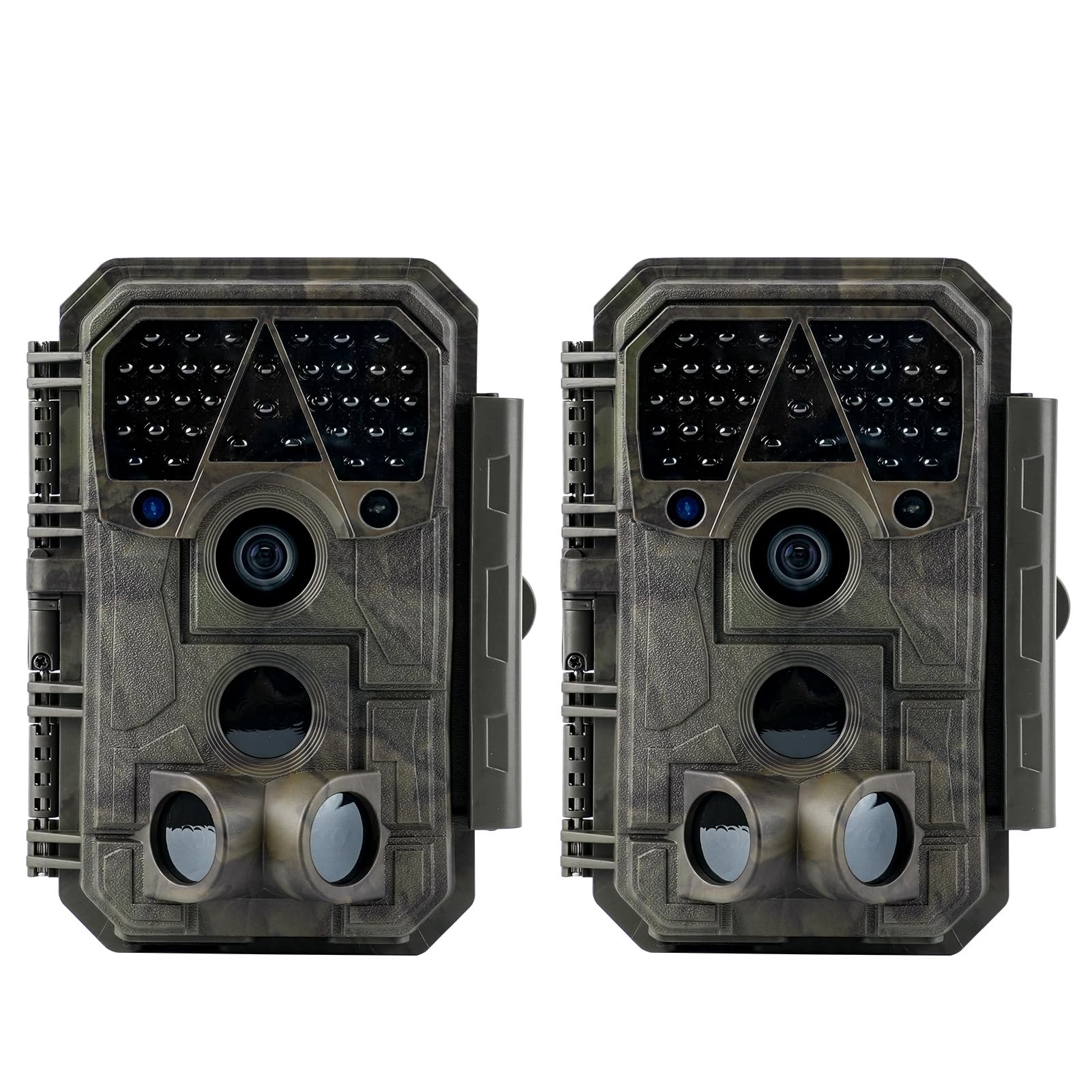
The Meidase P70 2 Pack gives you two capable cameras at a combined cost that undercuts many single-unit competitors. Each camera delivers 64MP photos and 1296p video, backed by an f/1.6 aperture lens and 940nm no-glow night vision rated to 100 feet. The dual side PIR sensors plus the central sensor achieve a 0.1-second trigger speed, matching the GardePro E5S for capture responsiveness. H.264 compression keeps file sizes manageable for faster transfers.
The 2.4-inch color display and intuitive button layout make menu navigation simple for beginners. The mounting straps are six feet long, giving you flexibility in tree placement. Solar panel support is available via the Meidase SP350 if you want continuous power. Customer support receives consistent praise for responsiveness and replacement handling when issues arise, which adds peace of mind for new buyers.
Battery management requires attention. The P70 runs on eight AA batteries per camera, and real-world testing shows reliable performance with Energizer Ultimate Lithium cells. Rechargeable NiMH batteries lead to inconsistent triggering and shorter life. Video recording drains batteries noticeably faster than photo mode. You also need to reset the calendar after each battery swap. For beginners wanting two cameras to cover multiple angles without spending on premium models, the P70 2 Pack offers strong value.
Why it’s great
- Two cameras for a price lower than most single premium units
- Fast 0.1-second trigger and no-glow night vision work well together
- 24-inch display and simple controls reduce the learning curve
Good to know
- Eight AA batteries per camera — lithium cells are required for best results
- Battery drains fast in video mode; calendar resets after battery removal
- Daytime video can show motion blur on fast-moving subjects
4. Assark Solar Trail Camera

The Assark Solar camera brings WiFi and Bluetooth functionality to a solar-powered platform, with a generous 32GB micro SD card pre-installed so you can start capturing immediately. The PH960W model captures 48MP stills and 1080p video at 30fps, using 850nm low-glow IR for nighttime shots. The included solar panel keeps the internal lithium battery topped off, and users in sunny climates report never needing to recharge manually after initial setup.
The free TrailCam Go app connects to the camera’s built-in hotspot WiFi within about 45 feet. You can preview thumbnails, download images, and adjust settings directly from your phone without pulling the SD card. The app interface is straightforward and the camera supports password protection, time-lapse mode, sound recording, and programmable time zones. The 0.2-second trigger speed and IP66 rating check the essential boxes for outdoor reliability.
The biggest practical downside is the micro SD card location. It sits underneath a stubborn rubber cover in a recess that requires a tool or fingernail to access, and the card release mechanism is finicky. The app does not support batch downloading, so retrieving many images at once still means removing the card. The night vision range is closer to 15-18 feet in real use, not the longer distances some competitors achieve. For beginners who want a solar-powered WiFi camera for close-range monitoring and don’t mind the card access hassle, this is a smart entry point.
Why it’s great
- Pre-installed 32GB micro SD means no extra purchase to start using
- Solar panel keeps battery topped off in full sun conditions
- App-based control and image preview without Wi-Fi subscription
Good to know
- Micro SD card slot is difficult to access — requires tool or fingernail
- Night vision effective range is around 15-18 feet, not 65ft
- App doesn’t support batch download of all media at once
3. WOSODA 2 Pack Trail Camera

The WOSODA 2 Pack matches a pair of 30MP cameras with two 32GB SD cards, making it a ready-to-deploy package for beginners. Each camera records 1080p video with sound and uses 850nm low-glow LEDs for night illumination. The 0.3-second trigger speed is slightly slower than premium options but still fast enough to catch most passing wildlife. The camouflage housing and front-opening design make SD card swaps easy without removing the camera from the strap.
Battery life is a mixed bag. Some users report good endurance with standard alkaline cells, while others describe the camera as a battery hog. The three-shot burst mode works reliably for capturing sequences of moving animals. Customer service gets high marks for responsive replacements when cameras fail — one review noted a free replacement even after the warranty had expired. The waterproofing holds up in typical rain and humidity conditions.
The night video quality is acceptable but not outstanding. Expect some grain in low-light conditions, though daytime images are bright and detailed. The menu navigation is intuitive with push-button controls, and the time-lapse mode adds flexibility for fixed-point monitoring. For beginners who want two cameras with included SD cards and don’t need WiFi or solar, the WOSODA 2 Pack delivers decent entry-level performance.
Why it’s great
- Two cameras and two SD cards in one package — deploy immediately
- Front-opening design simplifies card swaps and settings changes
- Reliable customer service with goodwill replacements reported
Good to know
- Battery life varies — some units drain faster than others
- Night video quality shows visible grain in low light
- 0.3-second trigger speed is adequate but misses some fast wildlife
2. WOSPORTS Mini Trail Camera 2 Pack
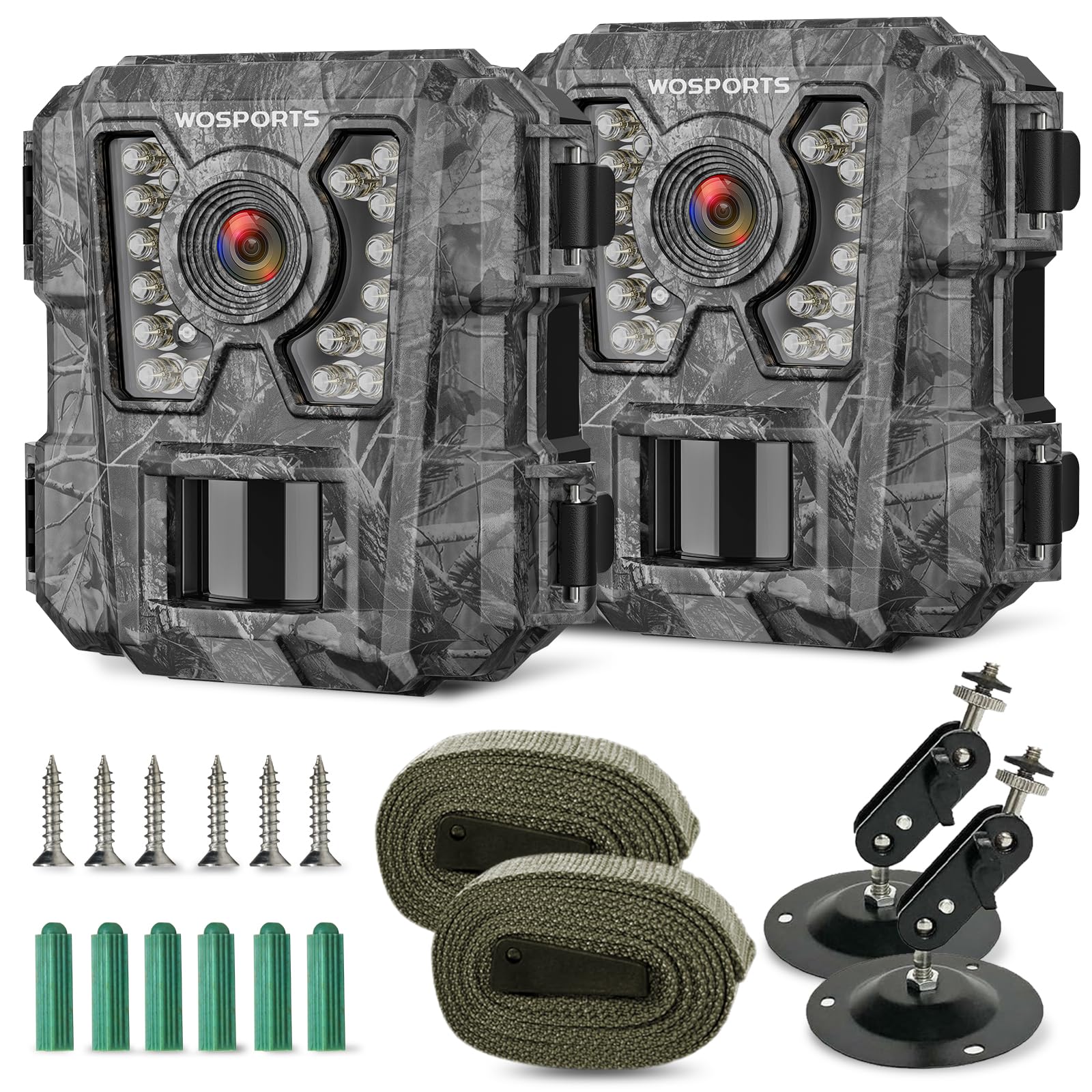
The WOSPORTS Mini 2 Pack prioritizes small size and low power draw. Each camera runs on just four AA batteries, and users report battery life exceeding six months under typical use. The compact housing — roughly 3.85 x 4.4 x 8.56 inches — makes it easy to conceal behind branches or inside tree hollows for discreet placement. The 24MP photo resolution and 1080p video capture produce clear daytime images, though video recording does not include audio.
Setup is straightforward with the push-button controller and included mounting strap. The camera works well within 3-4 feet of the target area, which is standard for budget models. Long-term users run these cameras year-round as primary monitors and report consistent performance with standard SD cards. The tough ABS shell survives weather exposure, and the low standby power consumption means fewer trips to replace batteries in remote locations.
The main missing feature is a locking mechanism for the SD card door, which makes it vulnerable to theft in unsecured areas. The lack of audio recording in video mode may disappoint users who want to hear animal calls. The first shot in burst mode occasionally overexposes before the camera adjusts to the lighting. For beginners who need a reliable, ultra-compact camera for close-range monitoring and are okay without audio, this is a solid budget option.
Why it’s great
- Extremely compact design for discreet placement in tight spots
- Runs six months or more on just four AA batteries
- Tough ABS construction survives weather and year-round use
Good to know
- No audio recording in video mode
- SD card door lacks a lock — theft risk in unsecured areas
- First burst frame sometimes overexposed before exposure adjusts
1. Meidase P70 Single Trail Camera
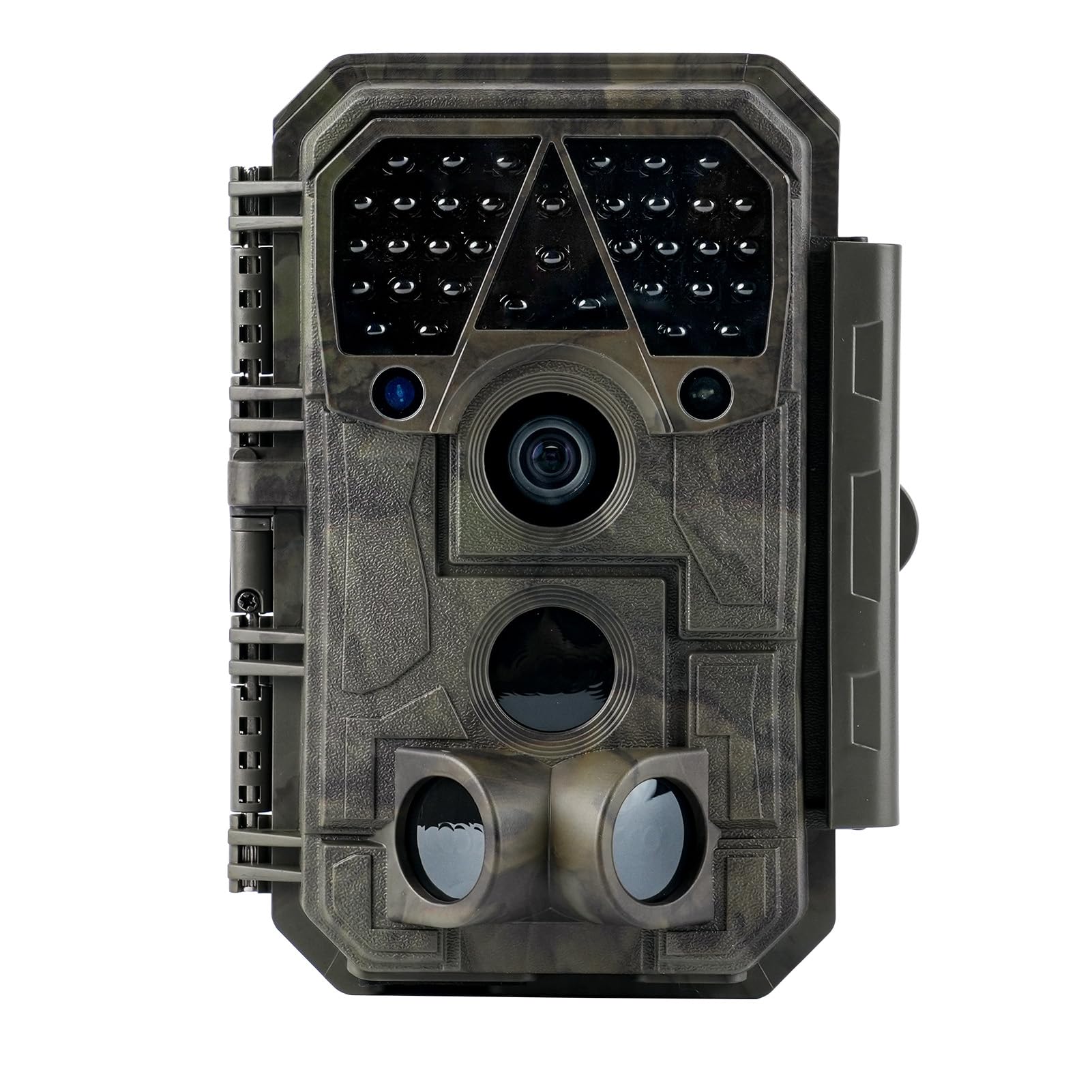
The single-unit Meidase P70 offers the same core sensor and lens as the 2-pack version but at a lower entry cost for beginners who only need one camera. The 64MP resolution and 1296p video with H.264 compression produce clean daytime footage and smaller file sizes that transfer quickly to any device. The no-glow 940nm IR LEDs and f/1.6 aperture deliver bright nighttime captures without spooking wildlife, and the 0.1-second trigger speed from the side PIR sensors helps capture animals moving across the detection zone rather than just directly toward it.
The 2.4-inch color display and dedicated buttons make on-camera menu navigation simple without needing a phone app. Users consistently praise the image quality at the lowest resolution setting for minimizing SD card usage. The solar panel support from the Meidase SP350 adds a pathway to continuous power. Customer support gets strong marks for resolving battery compartment issues and other defects quickly, often replacing units without hassle.
Like the 2-pack version, this camera demands lithium batteries for reliable cold-weather performance and consistent trigger speed. The calendar resets after each battery swap, which is a minor annoyance for users who move cameras between locations. Daytime video shows motion blur on fast-moving subjects like running deer. For beginners who want a high-resolution single camera with no-frills operation and solid nighttime captures, the single P70 is a safe and affordable starting point.
Why it’s great
- 64MP stills and 1296p video capture great detail in daytime
- No-glow night vision reaches 100 feet without visible light
- Fast 0.1-second trigger speed catches animals moving sideways
Good to know
- Requires eight lithium AA batteries — rechargeables cause issues
- Daytime motion blur noticeable on fast-moving subjects
- Calendar resets every time you replace batteries
FAQ
Do I need WiFi on a beginner wildlife camera?
What batteries work best for trail cameras in cold weather?
How many megapixels do I actually need for wildlife identification?
Final Thoughts: The Verdict
For most users, the best beginner wildlife camera winner is the GardePro E5S because it combines a near-instant 0.1-second trigger, genuine 64MP image quality, and exceptional battery efficiency in a rugged IP66 body. If you want solar power and local WiFi preview without monthly fees, grab the XTU 4K Solar WiFi. And for budget-conscious beginners needing two cameras to cover multiple trails, nothing beats the Meidase P70 2 Pack.