
Our readers keep the lights on and the weekend projects moving. As an Amazon Associate, I earn from qualifying purchases.
A bivy sack is the ultimate minimalist shelter for the solo adventurer who prioritizes mobility over luxury. Whether you’re fastpacking a ridge line, stealth camping in dense brush, or just want an emergency shell for your sleeping bag, the right bivy sack keeps you dry, warm, and protected without the weight and bulk of a tent.
I’m Rikta — the co-founder and writer behind FitlyFast. I’ve spent countless hours dissecting the technical specifications of bivy sacks, from hydrostatic head ratings to fabric denier and zipper construction, so you can cut through the marketing noise and find a shelter that actually works.
This guide covers the spectrum of waterproof shells, from budget-friendly emergency options to premium Gore-Tex systems, all carefully vetted to help you find the best bivy sack for your specific style of backcountry travel.
How To Choose The Best Bivy Sack
Choosing a bivy sack is about balancing three competing priorities: waterproof protection, breathability to prevent internal condensation, and packed weight. A bivy that nails two of these three is a win; a rare few manage all three. Understanding the materials and construction details is the only way to make the right call for your trips.
Waterproofing vs. Breathability
The fundamental tension in any bivy sack is between keeping external moisture out and letting internal perspiration escape. A fully waterproof fabric with a high hydrostatic head (10,000mm or more) will keep you dry in a downpour, but without sufficient breathability, you’ll wake up soaked in your own sweat. Look for fabrics like Gore-Tex or proprietary laminates that specify a Moisture Vapor Transmission Rate (MVTR) of at least 10,000 g/m²/day.
Weight, Durability, and Fabric Denier
Ultralight bivies often use 20D or 30D nylon to keep weight under a pound, but these are less resistant to punctures and abrasion. If you’re crawling over rocks or sleeping in thick brush, a 70D or heavier fabric is worth the extra ounces. Military-grade bivies typically use 500D Cordura or similar, which is essentially indestructible but heavy. Match the fabric to your terrain.
Hood Design and Zipper Configuration
The hood’s drawcord system determines how well you can seal out wind and rain, and whether you can close it fully without suffocating. A semi-open zipper improves ventilation but reduces storm protection. Full-length side zippers make entry and gear management easier but add weight and a potential failure point. Consider whether you need a clamshell opening for easy access or a simpler side-zip for weight savings.
Quick Comparison
On smaller screens, swipe sideways to see the full table.
| Model | Category | Best For | Key Spec | Amazon |
|---|---|---|---|---|
| Outdoor Research Helium Bivy | Premium | Ultralight backpacking | 15.8 oz, Pertex Shield 2.5L | Amazon |
| Ammo Can Man Woodland Camo Bivy | Premium | Military-grade durability | Gore-Tex, made in USA | Amazon |
| AquaQuest Pharaoh Bivy Sack | Mid-Range | Versatile all-weather use | 10,000mm HH, 70D nylon | Amazon |
| Litume Bivy Sack | Mid-Range | Ultralight stealth camping | 400g, 12,000mm HH, OEKO-TEX | Amazon |
| Mil-Tec Trilaminate Bivy | Mid-Range | Rugged budget protection | 2.9 lbs, Polyester trilaminate | Amazon |
| SOL Escape Bivvy | Budget | Emergency preparedness | ThermaShell, 70% heat reflect | Amazon |
| Military Modular Sleep System | Premium | Extreme cold weather systems | Gore-Tex bivy, 4-piece set | Amazon |
In‑Depth Reviews
1. Outdoor Research Helium Bivy
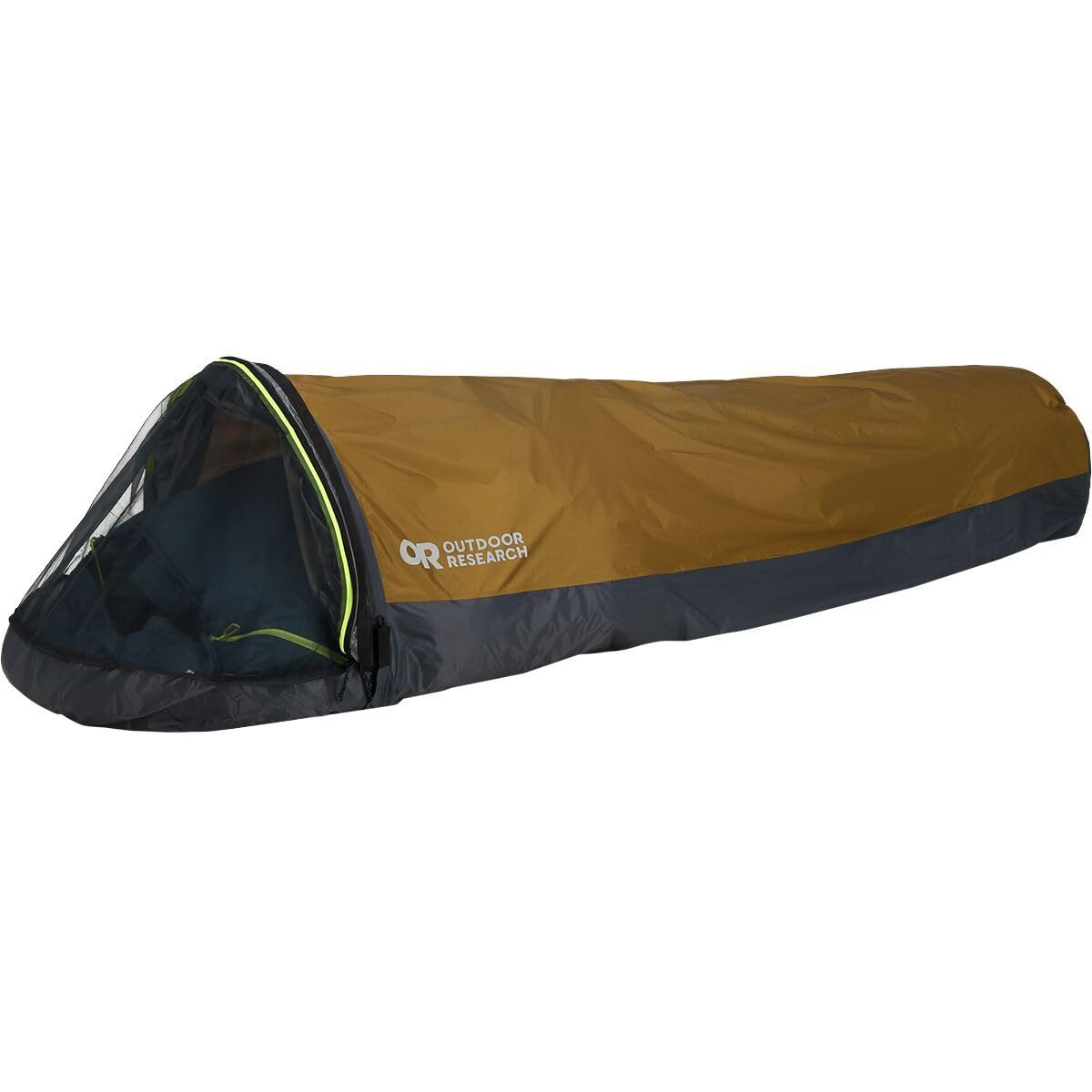
The Outdoor Research Helium Bivy is the gold standard for ultralight backpackers who refuse to compromise on weather protection. Weighing just under a pound with a clamshell opening, this bivy uses Pertex Shield Diamond Fuse 2.5-layer fabric with fully taped seams to keep rain and wind out while allowing enough moisture vapor transfer to prevent the dreaded “bag of sweat” problem that plagues cheaper bivies.
The mesh ventilation panel across the face area is a standout design choice — it lets you close the main zipper completely during a storm without suffocating, which is a massive upgrade over older bag-style bivies. The mesh vent and clamshell design are built to reduce condensation buildup, and the internal fly fasteners help keep the fabric off your face for less claustrophobic sleep.
At this weight class, you’re getting a shelter that disappears into any pack without adding noticeable bulk. The included pole and stakes create a small dome over your head, which is a rare luxury in the bivy world. It’s not cheap, but for gram-conscious adventurers who sleep in alpine and desert conditions, it’s the most versatile and trustworthy bivy on the market.
Why it’s great
- Ultralight at 15.8 ounces with pole and stakes included
- Clamshell opening with mesh vent prevents condensation build-up
- Pertex Shield fabric is durable yet packable for long trails
Good to know
- Zipper door could be redesigned to stop flapping in high wind
- Fully waterproof but not designed for submersion scenarios
2. Ammo Can Man Woodland Camouflage Bivy Cover

This is a genuine military-spec Gore-Tex bivy cover that punches far above its price point. The Ammo Can Man bivy is built with the same materials and construction as issued U.S. military sleep system components, featuring a quiet, cloth-like Gore-Tex membrane that offers exceptional moisture vapor transfer, which helps minimize condensation even in damp conditions — a rare trait for a fully waterproof bivy.
The mummy shape is generous enough to accommodate a wide sleeping pad and a thick winter bag, with room for a 6-foot user at 190 pounds. The heavy-duty zippers are reinforced with snap fasteners, and the overall build quality is rated for freezing temperatures, wind, and wet weather. Paired with a sleeping bag, it’s designed to add noticeable warmth to the overall system.
The trade-off is weight: this is not an ultralight bivy. It’s heavier than premium options, but it’s also a fraction of the cost of comparable commercial Gore-Tex bivies. If you want bombproof waterproofing and breathability without spending +, and you don’t mind the extra ounces, this is the value king.
Why it’s great
- Genuine Gore-Tex with excellent breathability — no condensation issues
- Roomier fit than typical military bivies, fits wide pads
- Unbeatable value for a made-in-USA, mil-spec product
Good to know
- Heavier than ultralight alternatives; best for car/canoe camping
- No bug netting or face pole included
3. AquaQuest Pharaoh Bivy Sack
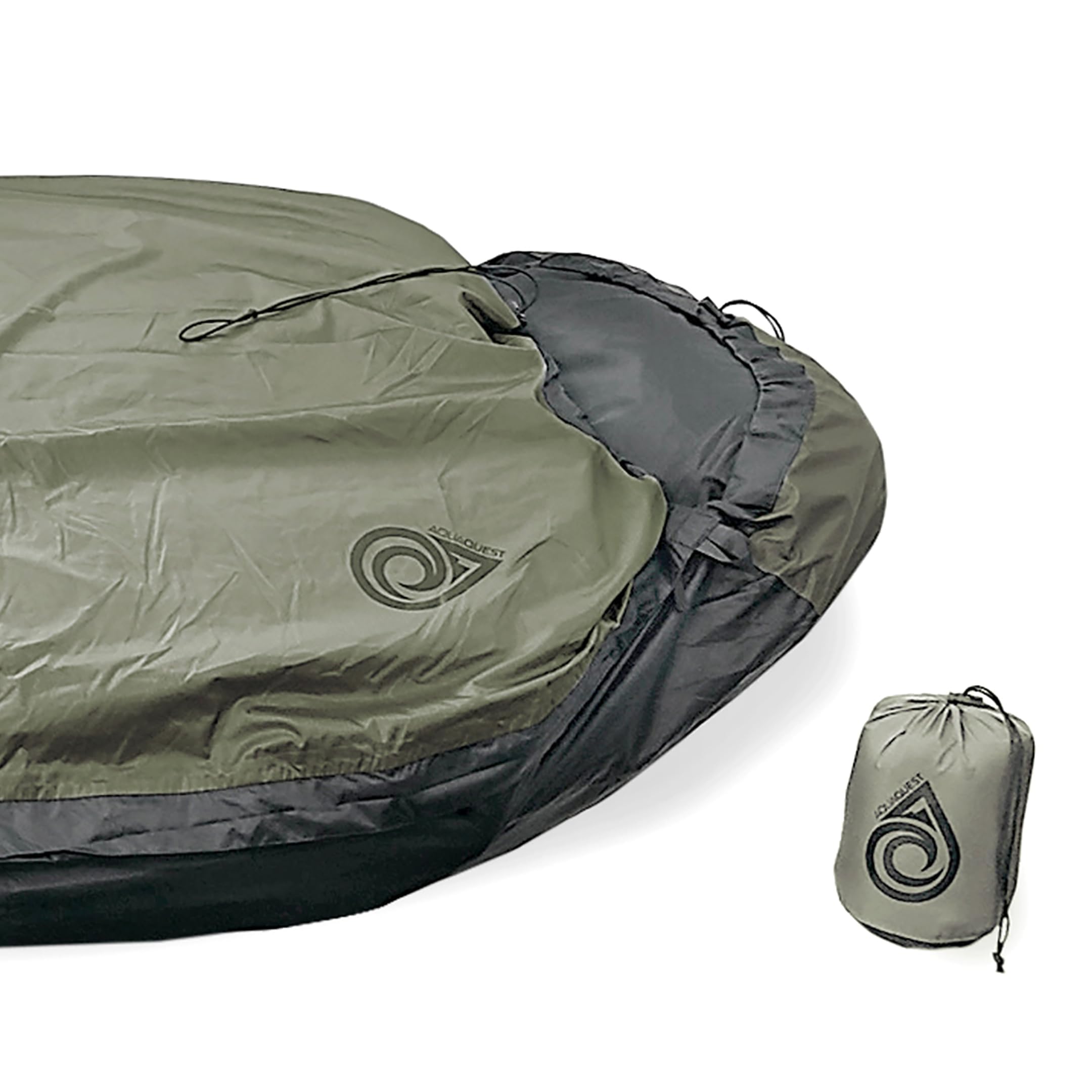
The AquaQuest Pharaoh is a well-balanced bivy that hits the sweet spot between protection, weight, and cost. With a 10,000mm hydrostatic head and a matching 10,000 g/m²/day MVTR, the waterproof-breathable 70D nylon shell offers genuine storm protection without trapping excessive moisture.
It accommodates users up to 6’6″ and fits most single sleeping bags and pads, with zippers on both sides for easy entry regardless of your sleeping bag’s zipper orientation. The elasticated drawstring hood allows you to seal up tight in truly nasty weather, though the drawstring doesn’t cinch down as tight as some prefer around the sleeping bag.
At 1.1 pounds, it’s not the lightest option in this range, but the 70D fabric is noticeably more puncture-resistant than the 20D or 30D nylon used in ultralight bivies. The integrated stuff sack keeps the packed size compact. The lifetime warranty from AquaQuest adds peace of mind that you won’t get from generic brands.
Why it’s great
- Excellent waterproofing with 10,000mm HH and sealed seams
- Durable 70D nylon resists punctures from rocks and brush
- Lifetime warranty from a reputable outdoor brand
Good to know
- Hood drawstring doesn’t cinch down as tight as some users prefer
- Velcro closure can be loud and snag on fleece layers
4. Litume Bivy Sack
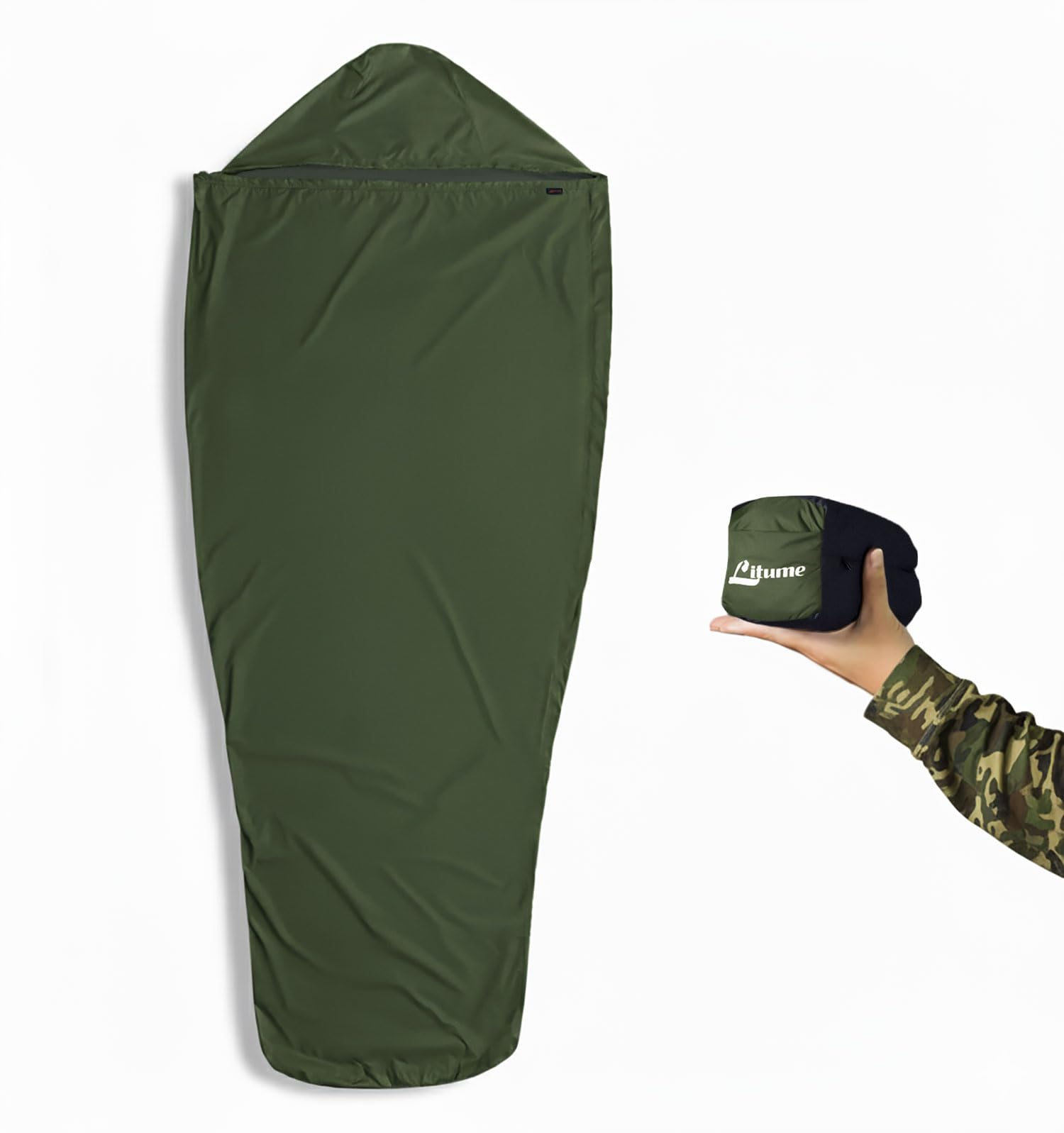
The Litume Bivy Sack is a compelling ultralight option for backpackers who want genuine waterproofing without breaking the bank. Weighing under 400 grams (about 14 ounces), this mummy-style bivy features 40D nylon with a waterproof coating rated at 12,000mm hydrostatic head — a spec that surpasses many bivies costing twice as much. The fully sealed seams and waterproof zipper covers leave no weak points for moisture intrusion.
Designed specifically to pair with mummy-style sleeping bags, the Litume has a spacious footbox for natural leg movement and a hood with an elastic drawcord that seals around your head. The semi-open YKK zipper gives access to your upper body for ventilation, though the zipper only opens to the lower ribs, which can make gear management a bit fiddly. The 40D fabric is robust enough for most conditions but won’t survive heavy abuse on sharp rocks.
The OEKO-TEX certification is a nice touch for those concerned about chemical treatments in outdoor gear. It packs down to just 17.5 x 8.5 cm, making it one of the most packable options here. The biggest caveat is condensation — like most single-wall bivies, it can trap perspiration in humid conditions, so this bivy works best in well-ventilated setups or colder, drier weather.
Why it’s great
- Exceptional 12,000mm water resistance at a very low weight
- OEKO-TEX certified fabric for safety and sustainability
- Packs incredibly small for ultralight and EDC use
Good to know
- Zipper only opens to lower ribs, limiting ventilation and access
- Condensation can be an issue in humid or damp environments
5. Mil-Tec Trilaminate Bivy

The Mil-Tec Trilaminate bivy is a no-nonsense, tank-like shelter for those who prioritize ruggedness over low weight. The trilaminate construction — a robust polyester outer with an inner waterproof layer — delivers genuine waterproofing designed to hold up through days of continuous rain, and the added layer is built to noticeably boost the warmth of your sleep system.
The generous cut accommodates various sleeping bags, including large mummy bags and even some rectangular bags, which is rare in the bivy world. The 2-way side zipper with a wide snap fastener cover provides secure closure, and the head area includes both an elastic band and hook-and-loop adjustment for a customizable seal. The trilaminate material is built to be extremely puncture-resistant, and it packs smaller than expected given its weight.
At nearly 3 pounds, this is not a bivy for gram-counting backpackers. It’s best suited for car camping, base camps, or as an emergency shelter in your vehicle. The main downsides are right-side zipper placement that may conflict with some sleeping bags, and the fact that it traps humidity — you’ll need to air it out after use. The trilaminate build has a solid, canvas-like feel that holds up well against name-brand alternatives.
Why it’s great
- Extremely durable trilaminate fabric resists punctures and abrasion
- Generous fit works with larger sleeping bags and pads
- Excellent value for a waterproof, windproof bivy
Good to know
- Heavy at nearly 3 pounds — not for ultralight trips
- Condensation buildup requires airing out after use
6. SOL Escape Bivvy

The SOL Escape Bivvy is designed for a specific purpose: emergency preparedness. It’s the bivy you throw into your bug-out bag, keep in your car, or carry as a lightweight backup shelter on day hikes. The proprietary ThermaShell material reflects up to 70% of your body heat while being water-resistant and more breathable than the crinkly mylar emergency blankets that preceded it.
At a bargain price point, this bivvy is made from spunbonded olefin — a quiet, tear-resistant material that won’t crinkle like typical emergency blankets. It’s a significant upgrade over the classic SOL Emergency Bivvy because it actually allows some moisture vapor to escape, reducing the condensation problem that makes mylar shelters miserable. It blocks wind effectively and provides a noticeable warmth boost when paired with a sleeping bag.
However, “breathable” is relative here — you will still get damp from perspiration over time, and it won’t keep you warm by itself in freezing conditions. It’s best used as an outer layer over a sleeping bag for added protection. The fit is rectangular and generous, but the standard size is snug for taller users; the manufacturer offers an XL size for anyone over roughly 5’10”. This is a survival tool, not a multi-season backpacking shelter.
Why it’s great
- Ultra-light and packs tiny for emergency kits and day packs
- Quieter and more breathable than mylar emergency blankets
- Reflects 70% of body heat for added warmth in a pinch
Good to know
- Not fully breathable — condensation and sweat buildup expected
- Standard size is snug; opt for the XL if you’re over 5’10”
7. Military Modular Sleep System 4-Piece

The Military Modular Sleep System (MMSS) is the complete package for extreme weather camping. It includes two synthetic sleeping bags (a lightweight patrol bag rated to 30°F and a heavier intermediate cold weather bag rated to -10°F), a Gore-Tex bivy cover, and a compression stuff sack. Combined, these components offer six or more layering configurations that cover temperatures from 50°F down to -50°F.
The Gore-Tex bivy cover is the same mil-spec unit used by the U.S. military — fully waterproof, breathable, and built to survive hard use. It’s wide enough to accommodate both bags layered together plus a sleeping pad, and it features a non-mummy design that gives you more room to move. It’s designed to add significant warmth and keep everything dry even in snow and rain. The mummy bag-style zippers and snap closures are heavy-duty and reliable.
The trade-off is weight — the entire system weighs about 10-11 pounds, making it impractical for long-distance backpacking. But for car camping, canoe trips, stationary base camps, or winter expeditions where weight isn’t the primary concern, this system offers unbeatable versatility and protection at a fraction of the cost of equivalent commercial gear.
Why it’s great
- Complete sleep system covering -50°F to 50°F with multiple layering combos
- Gore-Tex bivy is genuinely waterproof and breathable
- Exceptional value compared to buying equivalent commercial gear
Good to know
- Very heavy at 10+ pounds — unsuitable for backpacking
- Fabric and stitching may have minor cosmetic issues on surplus units
FAQ
Do bivy sacks cause condensation problems?
Can I use a bivy sack without a sleeping bag?
How do I clean a waterproof bivy sack?
What is the difference between a bivy sack and a tarp tent?
Final Thoughts: The Verdict
For most users, the best bivy sack winner is the Outdoor Research Helium Bivy because it delivers genuine waterproof-breathable protection in an ultralight 15.8-ounce package with excellent ventilation. If you want military-grade durability and unmatched breathability without paying for a new tent, grab the Ammo Can Man Gore-Tex Bivy. And for extreme cold weather systems where weight isn’t a concern, nothing beats the versatility and protection of the Military Modular Sleep System.