
Our readers keep the lights on and the weekend projects moving. As an Amazon Associate, I earn from qualifying purchases.
When your baby wants to be held for hours, back pain from a poorly designed carrier can turn a beautiful bonding moment into a daily struggle. The wrong carrier forces your spine to compensate, leading to shoulder grooving, lower back spasms, and shortened walks. The right one transfers weight to your hips, supports your lumbar curve, and keeps your posture aligned so you can carry your little one pain-free.
I’m Rikta — the co-founder and writer behind FitlyFast. I’ve spent hundreds of hours analyzing ergonomic specs, lumbar support designs, and weight distribution systems to find which carriers actually relieve back strain instead of creating it.
This guide breaks down the market-leading options to help you find the baby carrier for back pain that fits your body, your baby, and your daily routine without the guesswork.
How To Choose The Best Baby Carrier For Back Pain
Not every carrier labeled “ergonomic” actually protects your back. The key is understanding how the carrier transfers the weight of your baby from your shoulders and lower spine to your stronger hips and core. Focus on these three elements to avoid buying a carrier that makes your pain worse.
Hip Seat vs. Waist Belt: Which Transfers Weight Better?
A wide, padded waist belt is the minimum requirement for back pain relief. It anchors the carrier to your hips. A built-in hip seat goes further — it creates a shelf that supports your baby’s weight independently of the shoulder straps, letting you sit the baby down without the carrier sagging. For chronic back pain, a hip seat design is almost always the better choice because it keeps the load off your spine even when you’re standing still.
Strap Geometry: Cross-Back vs. H-Back
Cross-back straps pull your shoulders slightly together and create a snug fit that hugs the baby closer to your center of gravity. This reduces the forward-leaning torque that causes lower back strain. H-back straps let the shoulder blades move freely and are easier to adjust between caregivers, but they can allow the baby to hang farther from your body. For back pain, cross-back or convertible systems (like the Ergobaby’s reversible design) offer better load management.
Seat Depth and the M-Position
A shallow seat forces your baby’s legs to hang straight down, which tilts your pelvis forward and arches your lower back. A deep, bucket-style seat supports the baby’s thighs from knee to knee, keeping them in the “M” position. This keeps your baby’s weight centered against your torso and prevents you from leaning backward to compensate. Look for adjustable seat width that grows with your baby — a fixed narrow seat on a toddler causes the same postural problems.
Quick Comparison
On smaller screens, swipe sideways to see the full table.
| Model | Category | Best For | Key Spec | Amazon |
|---|---|---|---|---|
| MiaMily Hipster Plus | Hip Seat | Severe back pain relief | Built-in padded hip seat | Amazon |
| Ergobaby Omni Deluxe | Full-Size | Best overall versatility | Cross/H-back lumbar belt | Amazon |
| Baby Tula Explore | Mesh | Hot climates | Ventilated mesh with lumbar pad | Amazon |
| WildBird Aerial | Linen | Long, breathable wear | Padded cross straps | Amazon |
| Mabē Monarch | Cotton | Natural fabric preference | 90% cotton / 10% linen shell | Amazon |
| BabyBjörn Free | 3D Mesh | Quick on/off use | Built-in back support brace | Amazon |
| Momcozy 2-in-1 | Hip Seat | Budget-friendly value | 10mm thick cushion seat | Amazon |
In‑Depth Reviews
1. MiaMily Ergonomic Hip Seat Baby Carrier (Hipster Plus)
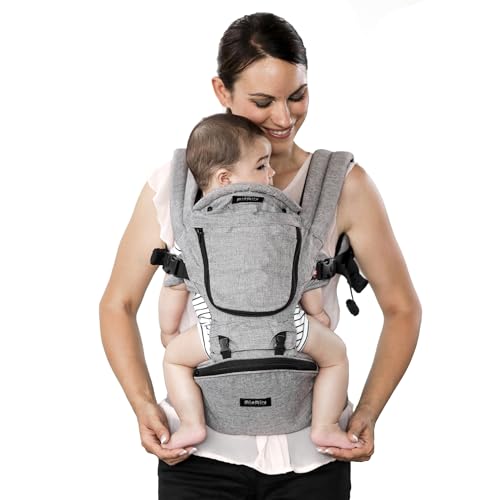
This is the carrier that users with spinal damage and chronic back pain consistently rank above everything else. The built-in padded hip seat is the critical difference — it absorbs up to 30 percent of your baby’s weight directly into your hips rather than your lumbar spine. The extra-wide waistband extends around your entire lower back, providing full lumbar support that prevents the pelvic tilt that causes pain during long walks.
Six carry positions give you flexibility from newborn to age four, and the zippered mesh panel adds ventilation when the weather warms up. The hollow hip seat doubles as storage for diapers or your phone, which is a practical bonus. Multiple reviews confirm that switching from an Ergobaby Omni 360 to this carrier eliminated severe lower back pain that had required rest breaks every ten minutes.
The main limitation is color choice — only two shades are available. The Velcro waist closure is extremely secure, but some users find it takes a few tries to get the tension right. For those whose primary concern is back pain, this is the most therapeutic carrier on this list.
Why it’s great
- Built-in hip seat transfers weight to hips, not spine
- Extra-wide lumbar belt prevents lower back strain
- Six versatile carry positions from newborn to toddler
- Hollow hip seat offers hidden storage for essentials
Good to know
- Only available in two color options
- Velcro waistband requires precise tension adjustment
- Infant insert needed for babies under 7 lbs
2. Ergobaby Omni Deluxe Baby Carrier
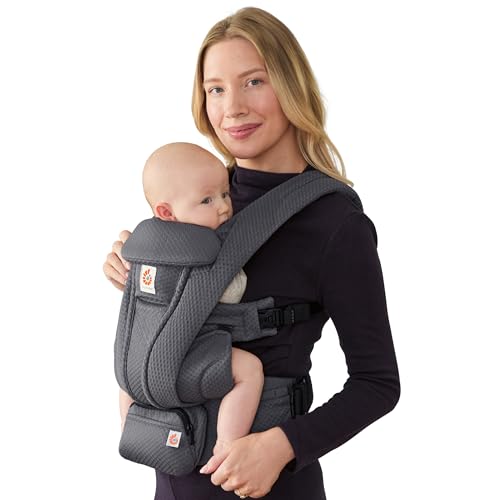
Ergobaby’s Omni Deluxe is the most comprehensively engineered carrier for parents who want both lumbar support and the flexibility to switch between cross-back and H-back strap configurations. The patented bucket seat and adjustable back panel create a deep seat that holds the baby in a natural M-position, which keeps your pelvis from tilting forward. The lumbar support accessory is included and snaps in place to fill the gap between your lower back and the waistband.
Four carry positions cover everything from newborn inward-facing to toddler back carry, with an integrated privacy hood and four built-in storage pockets. The breathable mesh fabric keeps both you and the baby cool, and the reversible strap design lets you share the carrier between caregivers of different heights without losing support. Users with pre-existing back issues report that proper adjustment makes this carrier comfortable for hikes lasting over an hour.
At nearly double the price of the budget-tier Momcozy, the cost is the main barrier. The straps and waistband are bulkier than some competitors, which may feel like overkill for quick trips. If you plan to carry for at least 30 minutes daily, the ergonomic payoff justifies the investment.
Why it’s great
- Cross-back or H-back strap modes for custom fit
- Patented bucket seat supports deep M-position
- Breathable mesh with four storage pockets and hood
- Lumbar support pad included and removable
Good to know
- Premium price point limits budget accessibility
- Bulky waistband may feel heavy for short errands
- Learning curve to switch strap modes correctly
3. Baby Tula Explore Carrier (Mesh)

Baby Tula’s Explore is the carrier to pick if you live in a hot climate and need breathable mesh without sacrificing lumbar support. The wide, padded waistband is paired with a lumbar support accessory that fills the gap between the belt and your spine, preventing the carrier from sagging forward. The adjustable seat width and height accommodate babies from newborn (no insert needed) up to 45 pounds, which eliminates the hassle of buying multiple carriers.
Three carry positions — front inward, front outward, and back carry — cover most daily scenarios, and the padded neck pillow keeps your baby comfortable during naps. The mesh fabric is lightweight and scratch-free, which parents in humid regions report makes a measurable difference in their willingness to wear the carrier for extended periods. Users with “Velcro babies” (infants who want to be held constantly) specifically praise this carrier for making contact naps possible without back spasms.
The outward-facing position uses a narrow leg opening that some toddlers outgrow before they reach the weight limit. Instructions are sparse, so you will need to watch the manufacturer’s video to get the seat adjustment correct. Once dialed in, this carrier delivers premium-level back support at a mid-range price.
Why it’s great
- Breathable mesh ideal for hot and humid weather
- No infant insert needed for newborns
- Lumbar support accessory included for lower back
- Adjustable width and height grow with baby to 45 lbs
Good to know
- Narrow outward-facing position may limit toddler use
- Instructions are minimal; video learning required
- Cross-back straps not available; H-back only
4. WildBird Aerial Buckle Carrier

WildBird’s Aerial is a rare combination of premium linen fabric, padded cross straps, and one-of-a-kind lumbar support that makes it a strong contender for parents who prioritize both back health and natural materials. The linen outer is highly breathable and becomes softer with each wash, while the padded cross straps sit across your upper back to distribute weight evenly rather than digging into your shoulder joints.
The waist belt is wide and contoured to follow your hip curve, which prevents the carrier from sliding down and forcing you to hunch. Users report zero shoulder strain even after wearing the carrier for entire afternoons, and the fabric’s durability means it holds its shape through heavy use. The carrier supports front inward and back carry positions only — no outward-facing mode — which is a deliberate design choice to maintain optimal ergonomic alignment for both you and the baby.
The absence of a forward-facing carry limits its usefulness for curious toddlers who want to see the world. The waist belt also maxes out at a 41-inch waist in the standard size, so larger caregivers will need the Large extension. For everyday walking and household chores where back pain is the primary concern, this is one of the most comfortable carriers available.
Why it’s great
- Premium linen shell is breathable and gets softer over time
- Padded cross straps prevent shoulder digging
- Contoured lumbar belt stays in place during active wear
- Excellent weight distribution for all-day comfort
Good to know
- No forward-facing carry position
- Standard waist maxes at 41 inches
- Infant snap adjustment takes a few minutes to learn
5. Mabē Monarch Ergonomic Baby Carrier
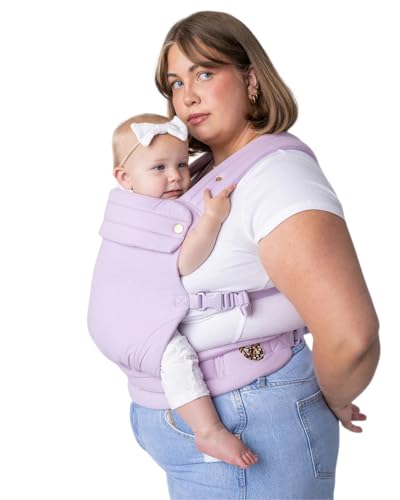
The Mabē Monarch stands out for its fabric composition — 90 percent cotton blended with 10 percent linen gives it a soft, structured feel that breathes better than pure cotton. The padded shoulder straps are thick enough to prevent pressure points, and the deep seat promotes the M-position without needing an infant insert for babies as small as 7 pounds. The carrier supports front inward, front outward, and back carry positions, giving you a full range of options as your baby grows.
Users consistently mention that the fabric is gentle against the baby’s skin and easy to wash — spot cleaning and machine washing on cold gentle cycle both work without damaging the shape. The self-buckling design lets you put it on alone, which is a practical advantage for solo parents. The aesthetic appeal is genuine; the patterns and colorways are more refined than most carriers in this bracket.
The weight limit tops out at 35 pounds, which means some toddlers will outgrow it before the 24-month mark. The waist belt is supportive but not as wide as the MiaMily or Ergobaby, so parents with existing lower back pain may find it less therapeutic for heavy toddlers. For babies under 25 pounds, this is a premium-feeling carrier that is comfortable enough for daily use without feeling overbuilt.
Why it’s great
- Soft cotton-linen blend is breathable and gentle on skin
- Thick padded straps prevent shoulder pressure
- Easy self-buckling design with clear instructions
- Machine washable with spot-clean options
Good to know
- Maximum baby weight is 35 pounds
- Waist belt is narrower than competitors
- Not ideal for severe chronic back pain with heavy toddlers
6. BabyBjörn Baby Carrier Free (3D Mesh)
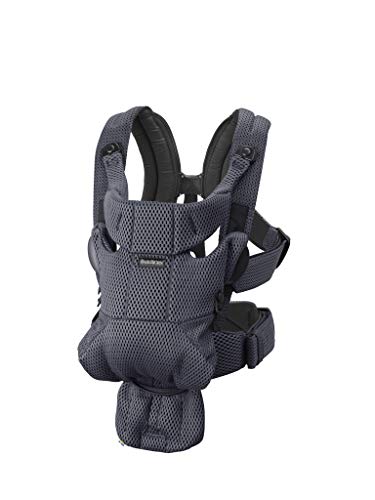
BabyBjörn’s Free carrier solves the two most common frustrations with babywearing: putting it on without help, and keeping your baby cool. The 3D mesh fabric is airy enough that you can feel airflow through the carrier, which is a distinct advantage in warm climates. The built-in back support brace is stiffer than most waist belts and provides a surprising amount of lumbar stability for a carrier that weighs so little.
The carrying positions are limited to front inward and front outward, and the weight limit stops at 26.5 pounds — which is lower than almost every other carrier here. This makes it a focused product for the newborn-to-toddler window rather than a long-term investment. Parents with babies under 20 pounds report complete elimination of shoulder and neck pain because the rigid back brace prevents them from rounding their shoulders forward to compensate for the load.
The lack of a hip seat means all of the weight still rests on your shoulders via the padded straps, so parents with chronic lower back issues may want a model with a wider waist belt or hip seat. The machine-washable mesh is a genuine convenience, and the quick-dry fabric is ready to use again within hours. This is a strong option for parents who want a lightweight, no-fuss carrier that prioritizes breathability over maximum weight capacity.
Why it’s great
- 3D mesh fabric provides excellent airflow and fast drying
- Easy to put on and take off without assistance
- Built-in back support brace prevents shoulder rounding
- Machine washable and retains shape well
Good to know
- Weight limit caps at 26.5 pounds
- No hip seat; shoulder straps carry full load
- Limited to front inward and outward carry only
7. Momcozy 2-in-1 Baby Carrier with Hip Seat

The Momcozy 2-in-1 proves that a hip seat carrier does not have to cost a premium. Its detachable hip seat can be used as a standalone seat (similar to the Tushbaby concept) or zipped into the full carrier for hands-free carrying. The 10mm thick cushion on the hip seat absorbs shock and relieves lower back pressure, while the X-shaped strap design distributes weight across your waist and shoulders rather than concentrating it on your spine.
Six positions — including cradle, hip, forward-facing, inward-facing, and back carry — give it a versatility that rivals carriers costing three times as much. The waist belt uses a quick-adjust Velcro system that fits waists up to 45 inches and can be tightened one-handed while holding the baby. The storage pocket under the seat is large enough to hold diapers, wipes, and a phone, which reduces the need for a separate diaper bag.
The fabric is breathable mesh that works in all seasons, though it is not as airy as the BabyBjörn 3D mesh. The seat adjustment requires unzipping and repositioning the carrier, which takes a moment to figure out. Some users report that the snug arm straps can restrict the baby’s arm movement if worn too tightly. For a budget-conscious parent who needs back pain relief, this is the best entry point into hip seat carrying.
Why it’s great
- Detachable hip seat doubles as a standalone seat
- 10mm thick cushion absorbs shock and relieves back pressure
- Six carry positions cover newborn to toddler
- Large under-seat storage pocket for essentials
Good to know
- Mesh fabric less breathable than premium 3D mesh
- Seat adjustment requires unzipping and repositioning
- Snug arm straps can restrict baby’s arm movement
FAQ
Will a hip seat carrier completely eliminate my lower back pain?
Can I use a back-pain-friendly carrier for a newborn?
Why does outward-facing carry sometimes increase back pain?
How tight should the waist belt be for back pain relief?
Final Thoughts: The Verdict
For most users, the baby carrier for back pain winner is the MiaMily Hipster Plus because its built-in hip seat and extra-wide lumbar belt transfer weight away from your spine more effectively than any other design tested. If you want a premium all-rounder with cross-to-H strap versatility, grab the Ergobaby Omni Deluxe. And for an entry-level hip seat that still protects your lower back without a large upfront cost, nothing beats the Momcozy 2-in-1.