
Our readers keep the lights on and the weekend projects moving. As an Amazon Associate, I earn from qualifying purchases.
The 27-inch monitor has become the go-to size for balancing screen real estate with desk space, but the spec sheets can feel like alphabet soup—QHD, IPS, VA, 144Hz, 1ms GtG. Finding the right panel means filtering through marketing claims to understand what actually drives daily use, whether that is color-critical design work, competitive gaming, or a hybrid workflow that demands both speed and image quality.
I’m Rikta — the co-founder and writer behind FitlyFast. I’ve spent countless hours studying jump frequencies, pixel densities, contrast ratios, and refresh rate behavior to separate genuine performance from advertising hype in the monitor market.
If you need a display that won’t bottleneck your system or waste your budget, this breakdown of the best 27 inch monitor options gives you the concrete specs and real-user trade-offs to make a confident buy.
How To Choose The Best 27 Inch Monitor
The best choice depends entirely on whether you prioritize motion clarity, color accuracy, or raw pixel count. Every panel technology involves a trade-off—no single monitor does everything perfectly. Knowing which compromises fit your use case prevents buyer’s remorse.
Panel Technology: IPS, VA, or OLED
IPS panels dominate the mid-range because they offer wide viewing angles and consistent color reproduction. VA panels deliver superior native contrast (2000:1 to 3000:1 vs. 1000:1 for IPS), which makes blacks look deeper in dark room gaming, but they suffer from slower pixel transitions in dark tones—a ghosting effect visible in fast camera pans. OLED panels produce true blacks and near-instantaneous response times but carry a premium cost and risk of burn-in over long-term static desktop use.
Resolution Scaling and GPU Load
At 27 inches, 1080p looks visibly soft—pixels are easy to spot. QHD (2560×1440) is the sweet spot for gaming because it delivers 109 pixels per inch and is manageable for mid-range GPUs. 4K (3840×2160) at 27 inches gives sharp text and incredible detail (163 PPI) but demands a powerful graphics card to maintain high frame rates in demanding titles. If your GPU cannot sustain 60+ FPS at 4K, a QHD monitor with a higher refresh rate will provide a smoother experience.
Refresh Rate and Adaptive Sync
60 Hz is fine for productivity and slow-paced games, but 120 Hz or higher eliminates perceived stutter in fast motion. AMD FreeSync and NVIDIA G-Sync technologies synchronize the monitor’s refresh rate to the GPU’s frame output, eliminating screen tearing without the input lag penalty of traditional V-Sync. FreeSync is the more common, license-free standard; G-Sync modules add cost and are primarily found in premium gaming monitors.
Quick Comparison
On smaller screens, swipe sideways to see the full table.
| Model | Category | Best For | Key Spec | Amazon |
|---|---|---|---|---|
| ASUS ROG Strix XG27ACDNG | Gaming OLED | Competitive, high-FPS gaming | 360Hz / 0.03ms GtG / QD-OLED | Amazon |
| Samsung Odyssey G8 G81SF | 4K OLED | Enthusiast gaming & media | 240Hz / 0.03ms / 4K QD-OLED | Amazon |
| ASUS ProArt PA279CV | Color Pro IPS | Photo/video editing, design | 4K / ΔE < 2 / 100% sRGB | Amazon |
| Acer Nitro VG270K | DFR Gaming IPS | High-res + high-refresh hybrid | 4K 160Hz / 0.5ms / FreeSync Premium | Amazon |
| Dell S2725QS | 4K Value IPS | Productivity & casual gaming | 4K 120Hz / 1500:1 / 99% sRGB | Amazon |
| Samsung ViewFinity S7 S70D | 4K Creator IPS | Creative work, multi-device | 4K / USB-C / 99% sRGB / HDR10 | Amazon |
| LG 27UP650K-W | 4K Ergo IPS | Office, trading, spreadsheets | 4K 60Hz / DCI-P3 95% / Height/Pivot | Amazon |
| Dell S2725DSM | QHD All-Rounder | Work and light gaming | QHD 144Hz / IPS / 1500:1 | Amazon |
| LG 27GS60QC-B | Curved Gaming VA | Immersive gaming on a budget | QHD 180Hz / 1000R Curve / 1ms | Amazon |
In‑Depth Reviews
1. ASUS ROG Strix XG27ACDNG

The XG27ACDNG uses a 26.5-inch QD-OLED panel at QHD resolution with a 360 Hz refresh rate and 0.03 ms response time, making it the category leader for competitive gaming clarity. Colors cover 99% DCI-P3 with factory Delta E < 2 accuracy, and the custom heatsink combined with ASUS OLED Care+ routines reduces burn-in risk significantly compared to first-gen OLED monitors.
Motion handling is essentially flawless—no ghosting, no visible pixel smearing, and the G-Sync Compatible certification eliminates tearing without adding perceptible input lag. The DisplayWidget Center software gives mouse-accessible control over OLED Care features and gaming profiles, which is more convenient than wrestling with OSD joysticks mid-match.
Height adjustment is adequate but less range than some ergonomic stands, and the 3.5mm jack output produces usable audio for desktop speakers. For gamers who want OLED blacks and 360 Hz tracking without paying for a 4K panel they cannot drive, this is the most balanced high-performance choice available.
Why it’s great
- QD-OLED delivers true blacks and vibrant colors with no blooming
- 360 Hz refresh rate provides extreme motion clarity for fast-paced games
- Burn-in prevention features (heatsink + software) are industry-leading
Good to know
- Limited height adjustment range compared to premium ergonomic stands
- HDR requires manual toggling through OSD each time
- Pixel cleaning pop-ups can interrupt gameplay if not scheduled
2. Samsung Odyssey G8 G81SF
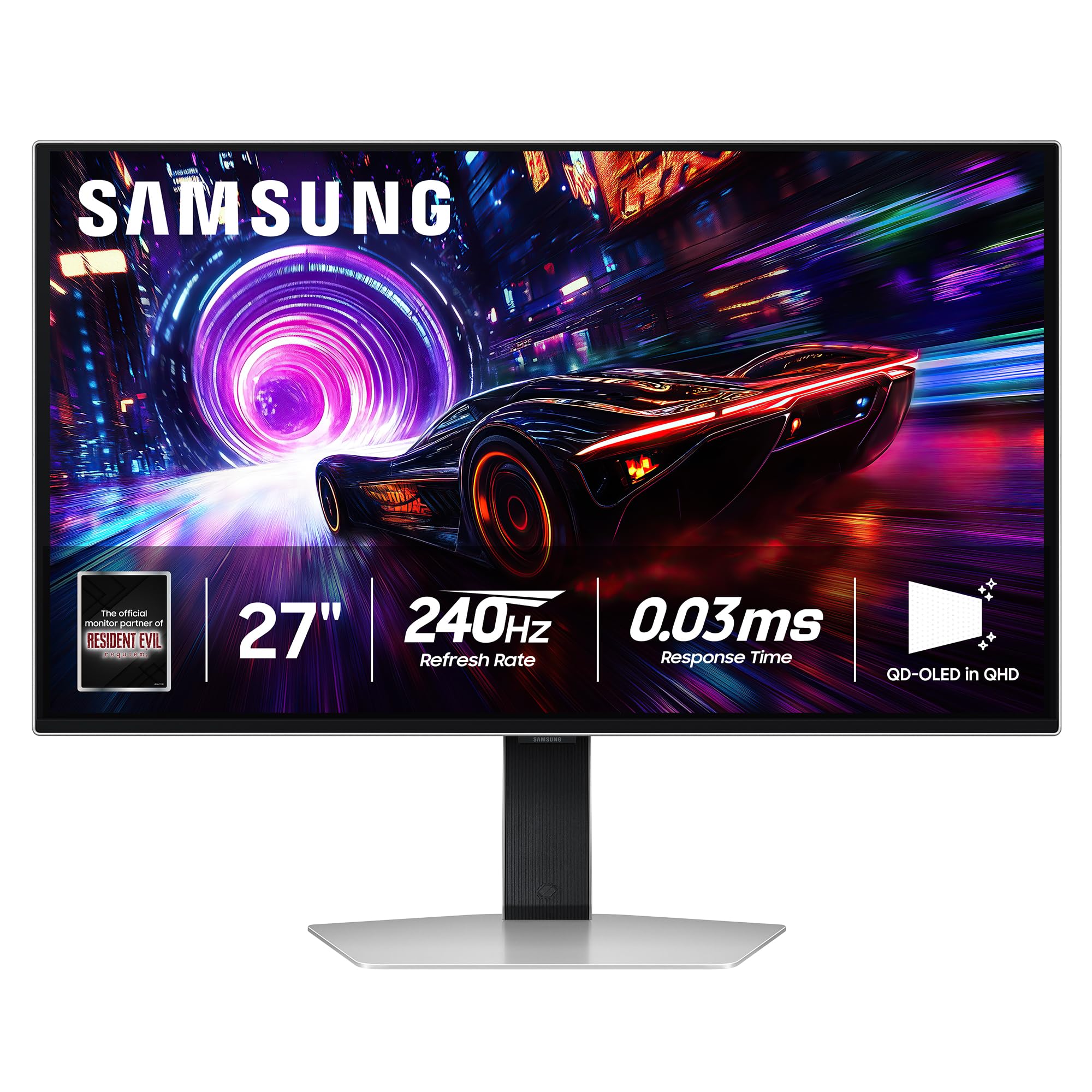
The Odyssey G8 packs a 27-inch 4K QD-OLED panel with a 240 Hz refresh rate and 0.03 ms GtG response, reaching 166 PPI—sharp enough for photo editing while smooth enough for high-frame-rate gaming. VESA DisplayHDR TrueBlack 400 means blacks are truly black with zero light bleed, and Samsung’s Glare-Free technology reduces reflection by 54% compared to standard anti-glare coatings.
A dynamic cooling system using a pulsating heat pipe prevents thermal buildup and reduces burn-in risk, while the Thermal Modulation System automatically adjusts brightness to protect the panel during long sessions. The CoreSync lighting and ergonomic stand with height, tilt, and pivot adjustment round out a package that competes directly with premium OLED options from competitors.
Some users report dead pixels within the first two months, and the warranty paperwork can be confusing—confirm the 3-year burn-in coverage before purchasing. At 250 nits typical brightness, it is not the brightest panel for HDR highlights, but the infinite contrast ratio compensates in dark room environments.
Why it’s great
- 4K resolution on 27 inches gives ultra-sharp pixel density for creative work
- 240 Hz OLED motion clarity is unmatched for competitive and immersive gaming
- Dynamic cooling system actively protects against OLED burn-in
Good to know
- Typical brightness of 250 nits is lower than high-end IPS LCDs
- Reports of dead pixels after a few months in some units
- Warranty documentation can be confusing regarding burn-in coverage
3. ASUS ProArt PA279CV

The PA279CV is a 27-inch 4K IPS monitor built for color-accurate work, with factory calibration achieving Delta E < 2, 100% sRGB, and 100% Rec. 709 coverage. The IPS panel delivers consistent color across wide viewing angles, and the matte anti-glare coating prevents reflections without introducing noticeable grain.
Connectivity includes USB-C with 65W Power Delivery, DisplayPort, HDMI, and a built-in USB 3.1 hub—allowing a single cable to drive the display, charge a laptop, and connect peripherals. The ergonomic stand supports height, tilt, swivel, and pivot rotation, making it suitable for dual-monitor portrait setups or long editing sessions where posture matters.
It lacks a high refresh rate (60 Hz max), so it is not suited for gaming beyond strategy or simulation titles. The contrast ratio is standard IPS 1000:1, meaning blacks appear gray in a dark room. For photo editors, video colorists, and designers who need accurate color out of the box, the PA279CV remains a reliable, cost-effective reference monitor.
Why it’s great
- Factory calibrated Delta E < 2 ensures accurate color out of the box
- USB-C with 65W Power Delivery simplifies laptop desk setup
- Full ergonomic stand with pivot for portrait mode workflows
Good to know
- Limited to 60 Hz refresh rate, not for competitive gaming
- Contrast ratio is typical IPS 1000:1—blacks not as deep as VA or OLED
- No built-in speakers, requires external audio solution
4. Acer Nitro VG270K

The VG270K uses Dynamic Frequency Resolution technology to switch between 4K at 160 Hz and FHD at 320 Hz, giving users the flexibility to choose high resolution for detailed work or high frame rates for competitive shooters. The 27-inch IPS panel covers 90% DCI-P3, supports HDR10, and includes AMD FreeSync Premium for tear-free gaming.
Build quality is solid for the price tier, with a zero-frame design that works well in multi-monitor setups, though the stand only offers tilt adjustment—VESA 100×100 mounting is recommended for proper ergonomics. The included HDMI 2.1 ports support high bandwidth needed for 4K at 160 Hz, and the 0.5 ms response time keeps motion blur minimal.
Some users report HDMI port failure after extended use, and the built-in speakers are weak—external speakers are a near-necessity. For gamers who play both fast-paced shooters and visually rich single-player titles, the DFR flexibility is a unique value proposition in the mid-range.
Why it’s great
- DFR switches between 4K 160Hz and FHD 320Hz for any game type
- IPS panel with 90% DCI-P3 delivers vibrant colors and wide viewing angles
- HDMI 2.1 ports enable full 4K 160Hz bandwidth without compression
Good to know
- Stand supports tilt only; VESA mounting recommended for full ergonomics
- Built-in speakers are weak and tinny
- Early reports of HDMI port reliability issues after extended use
5. Dell S2725QS

The S2725QS brings 4K resolution and a 120 Hz refresh rate together in an IPS panel with a 1500:1 contrast ratio—a noticeable improvement over standard 1000:1 IPS panels, giving deeper black levels for a more immersive desktop and video experience. The sRGB 99% coverage and HDR readiness make it suitable for color-aware productivity work.
Dell’s ComfortView Plus reduces harmful blue light to 35% or less without washing out colors, which is a genuine advantage for all-day office use. The ergonomic stand includes height, tilt, swivel, and pivot, and the built-in speakers deliver fuller sound than most integrated monitor audio—with wider frequency response than the previous generation.
It is not ideal for competitive gaming because the pixel response introduces noticeable ghosting in fast motion, and some units exhibit a slight yellow tint that can trigger headaches in sensitive users. For a hybrid work-and-play desktop, the S2725QS offers the best 4K feature set at a price that undercuts most competitors.
Why it’s great
- 4K at 120 Hz with 1500:1 contrast ratio for richer blacks than typical IPS
- ComfortView Plus reduces blue light without shifting colors to yellow
- Full ergonomic stand with pivot and improved built-in speakers
Good to know
- Noticeable ghosting in fast motion, not for competitive gaming
- Some units have a persistent yellow tint that bothers sensitive eyes
- Matte coating has a slight grain that may reduce perceived sharpness
6. Samsung ViewFinity S7 S70D

The ViewFinity S7 offers a 27-inch 4K IPS display with 99% sRGB coverage and HDR10 support, targeting creative professionals who need accurate color without the premium of a dedicated reference monitor. The stand assembles without tools—push-button height adjustment simplifies repositioning—and the thin bezel design fits modern desk aesthetics.
Connectivity is a strong suit: HDMI, DisplayPort, and USB-C ports are included alongside a USB-A hub, allowing simultaneous connection to a laptop and peripherals. The Advanced Eye Care features are TÜV-certified, automatically adjusting brightness and color temperature based on ambient light to reduce strain during long editing sessions.
The 60 Hz refresh rate limits this monitor to productivity and content consumption—gamers should look elsewhere. Some units arrive with dead pixels or light dents, and the on-screen display menu has quirks like disabling brightness adjustment when HDR is turned off. For photo and video work at a moderate budget, the S70D is a solid, feature-rich choice.
Why it’s great
- Tool-less stand with push-button height adjustment for easy setup
- USB-C and USB-A hub simplify peripheral management
- Ambient light sensor adjusts brightness and color temperature automatically
Good to know
- Limited to 60 Hz, not suitable for gaming
- Some quality control issues with dead pixels and minor physical damage in transit
- Brightness adjustment disabled when HDR is turned off in OSD
7. LG 27UP650K-W

The 27UP650K-W is a 27-inch 4K IPS monitor with 95% DCI-P3 color gamut coverage and VESA DisplayHDR 400 certification, providing above-average brightness and color volume for a monitor in its tier. The ergonomic stand supports height, tilt, and pivot adjustments, which is rare at this price point for a 4K panel.
Text is crisp and anti-glare coating is effective—reviewers using the monitor for stock trading and spreadsheet-heavy workflows report reduced eye strain compared to laptop screens. Black Stabilizer and Dynamic Action Sync features, borrowed from LG’s gaming line, improve shadow detail in dark scenes and reduce input lag for casual gaming.
The 60 Hz refresh rate caps gaming potential, and there are no built-in speakers or USB-C port—connectivity is limited to HDMI and DisplayPort. For office use, data analysis, or anyone who prioritizes pixel count and color fidelity over high frame rates, this LG offers excellent value with a quality adjustable stand.
Why it’s great
- DCI-P3 95% color gamut and DisplayHDR 400 for vibrant 4K visuals
- Full ergonomic stand with height, tilt, and pivot adjustments
- Black Stabilizer improves shadow detail in dark content
Good to know
- No USB-C port for single-cable laptop connection
- No built-in speakers—requires external audio
- 60 Hz refresh rate makes it unsuitable for fast-paced gaming
8. Dell S2725DSM
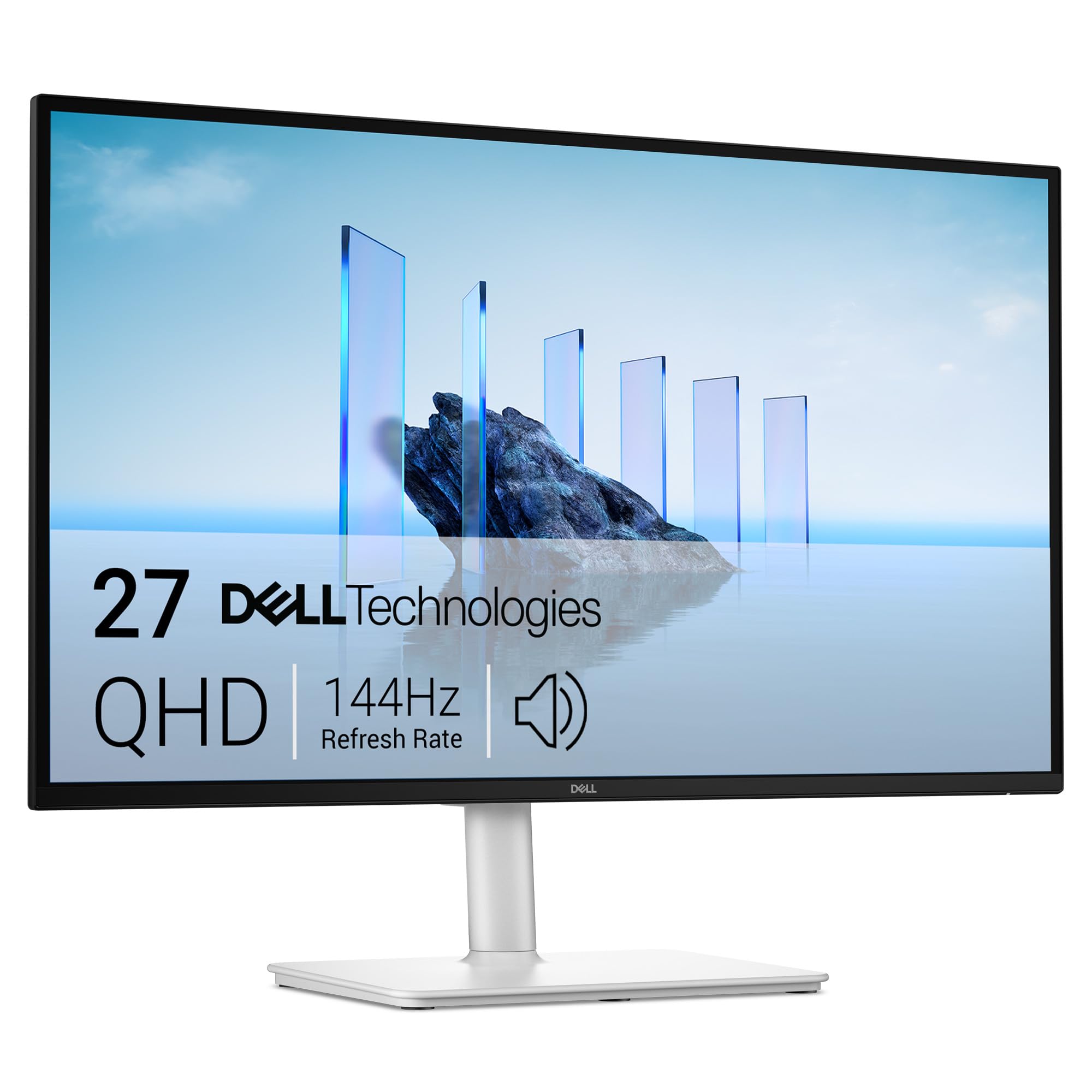
The S2725DSM uses a 27-inch QHD IPS panel with a 144 Hz refresh rate and a 1500:1 contrast ratio, giving it deeper blacks than most IPS monitors while maintaining wide viewing angles and accurate color reproduction. The 1 ms MPRT response keeps motion blur low enough for most single-player and strategy games.
Integrated dual 3W speakers deliver fuller sound than typical monitor audio, and the stand offers full ergonomic adjustment—height, tilt, swivel, and pivot—making it easy to find a comfortable viewing position. Dell’s Display and Peripheral Manager software enables workspace customization and peripheral management for users within the Dell ecosystem.
The pixel density of 109 PPI is good for productivity but not as sharp as 4K—text will look slightly less crisp if you are used to high-resolution displays. For users who want a single monitor for both office work and casual gaming without the GPU cost of 4K, the S2725DSM is a well-rounded, reliable option.
Why it’s great
- QHD 144 Hz hits the sweet spot for productivity and smooth gaming
- 1500:1 contrast ratio gives deeper blacks than standard IPS panels
- Full ergonomic stand with built-in speakers that sound decent for casual use
Good to know
- QHD pixel density (109 PPI) is less sharp than 4K for detailed work
- No USB-C input for single-cable laptop connection
- Not ideal for competitive FPS games requiring 240 Hz+ refresh rates
9. LG 27GS60QC-B

The 27GS60QC-B features a 27-inch QHD VA panel with a steep 1000R curvature, a 180 Hz refresh rate, and 1 ms GtG response time, making it one of the most affordable high-refresh curved monitors on the market. The VA technology provides a native contrast ratio of around 3000:1, delivering deep black levels that make dark game environments look immersive and rich.
AMD FreeSync ensures tear-free gameplay, and LG’s gaming features—Black Stabilizer, Dynamic Action Sync, and a crosshair overlay—are useful additions for competitive titles. The three-side borderless design saves desk space and looks modern, though the stand offers tilt-only adjustment; a VESA mount is recommended for proper positioning.
The VA panel exhibits some black-level smearing in dark scenes during fast camera pans, and the stand is basic with no height adjustment. Color-critical creative work is not this monitor’s strength—it targets gamers on a tight budget who want high refresh rates and immersive contrast without paying a premium.
Why it’s great
- 1000R curve and VA panel give deep blacks for immersive gaming
- 180 Hz refresh rate at QHD resolution for smooth gameplay
- Very competitive price for a curved high-refresh gaming monitor
Good to know
- VA panel exhibits black-level smearing in dark fast-moving scenes
- Stand supports tilt only—VESA mounting recommended for ergonomics
- Not suitable for color-accurate photo or video editing work
FAQ
Should I get a QHD or 4K monitor at 27 inches for gaming?
What is the difference between IPS and VA panel technology for monitors?
Do I need built-in speakers on a 27-inch monitor?
How important is an adjustable stand on a monitor?
Final Thoughts: The Verdict
For most users, the best 27 inch monitor winner is the ASUS ROG Strix XG27ACDNG because it combines QD-OLED contrast, 360 Hz motion clarity, and professional-grade color accuracy in a single package that handles both competitive gaming and content consumption equally well. If you want the sharpest 4K display for design work and immersive gaming, grab the Samsung Odyssey G8 G81SF. And for a budget-friendly daily driver that handles work and casual gaming without breaking the bank, nothing beats the Dell S2725DSM.