
Our readers keep the lights on and the weekend projects moving. As an Amazon Associate, I earn from qualifying purchases.
A go bag is not a fashion accessory. It is a piece of contingency equipment that lives in your trunk, under your desk, or by the door, waiting for the moment when minutes decide outcomes. The difference between a backpack that survives that moment and one that collapses under the weight of its own stitching comes down to three things: the fabric denier, the buckle tensile strength, and the ergonomics of a fully loaded 40-pound carry over distance. Most packs marketed as go bags skip one of these three pillars.
I’m Rikta — the co-founder and writer behind FitlyFast. I have spent hundreds of hours parsing military-spec construction documents, stress-testing MOLLE webbing layouts, and comparing water-bladder compatibility across tactical and outdoor brands to identify what actually separates a durable go bag from a shelf display piece.
This guide breaks down the seven most capable options currently on the market, with each review focusing on the load-bearing frame, compartment architecture, and material resilience that define a true emergency-ready pack. You will walk away knowing exactly which backpack for go bag suits your specific carry profile without wasting money on unnecessary bells or missing critical features.
How To Choose The Best Backpack For Go Bag
Selecting a go bag backpack requires shifting your mindset from “what looks tactical” to “what survives a hard carry.” Three variables separate a pack built for sustained field use from one designed for commuting: the frame support system, the webbing standard, and the fabric weight.
Frame Support: Internal Stays vs. Frameless Compression
A frameless pack folds into a sagging mess once you load 30+ pounds of gear. Look for an internal frame sheet, aluminum stays, or a molded back panel that transfers weight from the shoulders to the hips. The Kelty Redwing uses dual aluminum stays, while the Sandpiper of California Bugout Backpack incorporates a stay system inside a padded back wall — both designs keep the load stable during quick movement or uneven terrain.
MOLLE and Attachment Standards
PALS webbing (the grid of nylon straps) remains the universal standard for attaching pouches, med kits, and utility sheaths. Laser-cut MOLLE, found on the CamelBak M.U.L.E. and the LAPG Atlas, sits flatter and reduces snag risk but offers slightly less vertical adjustment range. Decide whether you plan to bolt on multiple pouches or keep a slim profile — the choice dictates which webbing style fits your loadout.
Fabric Denier and Water Resistance
Fabric weight is measured in denier (D). A 600D polyester pack like the Mardingtop is adequate for light gear but will abrade faster against concrete or rocky terrain. A 1050D nylon pack — used by the 5.11 RUSH series — resists punctures and edge wear far longer. Also verify whether the pack includes a rain cover (the Mardingtop includes one) or relies solely on DWR coating, which degrades over repeated use.
Quick Comparison
On smaller screens, swipe sideways to see the full table.
| Model | Category | Best For | Key Spec | Amazon |
|---|---|---|---|---|
| 5.11 RUSH 72 2.0 | Premium | Extended multi-day bug-outs | 55L, 1050D nylon | Amazon |
| CamelBak M.U.L.E. Tactical | Premium | Fast-mission hydration | 8L + 100oz reservoir | Amazon |
| 5.11 RUSH 12 2.0 | Mid-Range | EDC with CCW capability | 24L, 1050D nylon | Amazon |
| Kelty Redwing Tactical 50L | Mid-Range | Hybrid hiking / bug-out | 50L, aluminum stays | Amazon |
| Sandpiper Bugout Backpack | Mid-Range | Airline travel + field use | 47L, aluminum stays | Amazon |
| LAPG Atlas 72 Hour | Mid-Range | Heavy load carriage | 24x19x10 in, 900D polyester | Amazon |
| Mardingtop 50L Backpack | Budget | Entry-level survival | 50L, 600D polyester | Amazon |
In‑Depth Reviews
1. 5.11 Tactical RUSH 72 2.0 Backpack
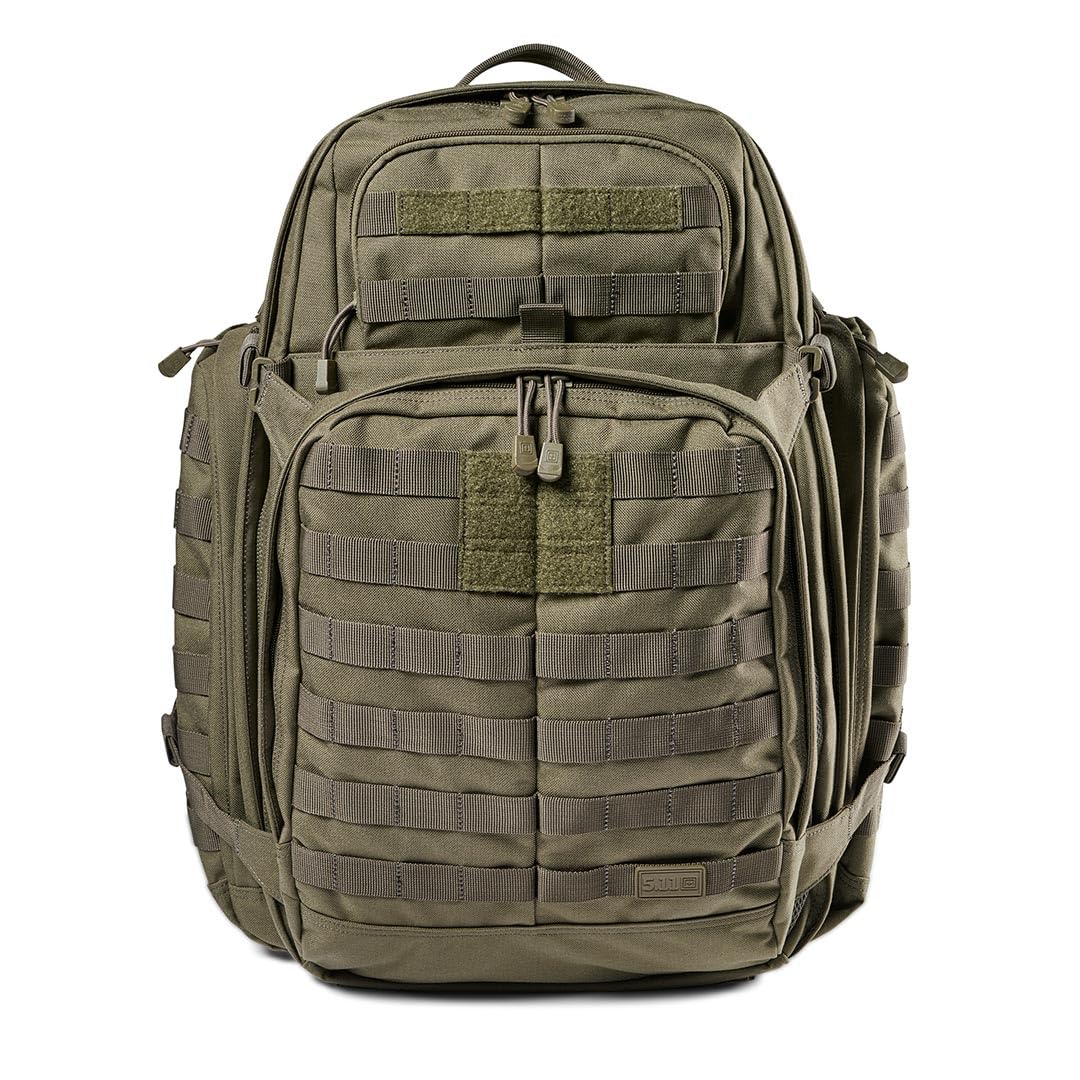
The 5.11 RUSH 72 2.0 is the definition of capacity without compromise. At 55 liters, it swallows three full days of gear — clothing, food, first-aid, tools, and a 15-inch laptop — while the 1050D nylon shell resists abrasion that would shred a lightweight pack in a single slide down a gravel slope. The contoured yoke shoulder system and reinforced back panel distribute weight evenly, which matters when the total load crosses 40 pounds. Multiple testers who deployed with this pack to the Middle East reported zero stitching failures after months of field abuse, and several replaced stolen units with the same model.
The internal organization is built around a multi-compartment architecture: a padded laptop sleeve sits alongside a hydration sleeve, while the front panel hosts a fleece-lined eyewear pocket and an admin organizer with slip and zippered dividers. The MOLLE lattice on the front and sides accepts 5.11 Tier System pouches, allowing you to shift critical gear — tourniquets, radio, multi-tool — to the exterior for instant access without unzipping the main cavity. The pack is heavy at roughly five pounds empty, but that weight translates directly into structural integrity; there are no thin fabrics or flimsy buckles here.
Buyers should note that the 55-liter footprint does not fit under airline seats and may feel oversized for a daily office carry. The shoulder strap buckles on the smaller RUSH 12 have drawn some durability concerns, but the RUSH 72’s hardware has held up under repeated field reports. If your go bag strategy demands one pack that covers 72-hour autonomy, law enforcement loadouts, and rugged outdoor treks, this is the one.
Why it’s great
- Mil-spec 1050D nylon exterior resists punctures and abrasion
- Contoured yoke and reinforced back panel handle 40+ pounds comfortably
- 55L capacity with hydration and laptop compartments
Good to know
- Empty weight near 5 pounds adds to carry baseline
- Oversized for airline overhead or compact daily use
2. CamelBak M.U.L.E. Tactical Hydration Backpack
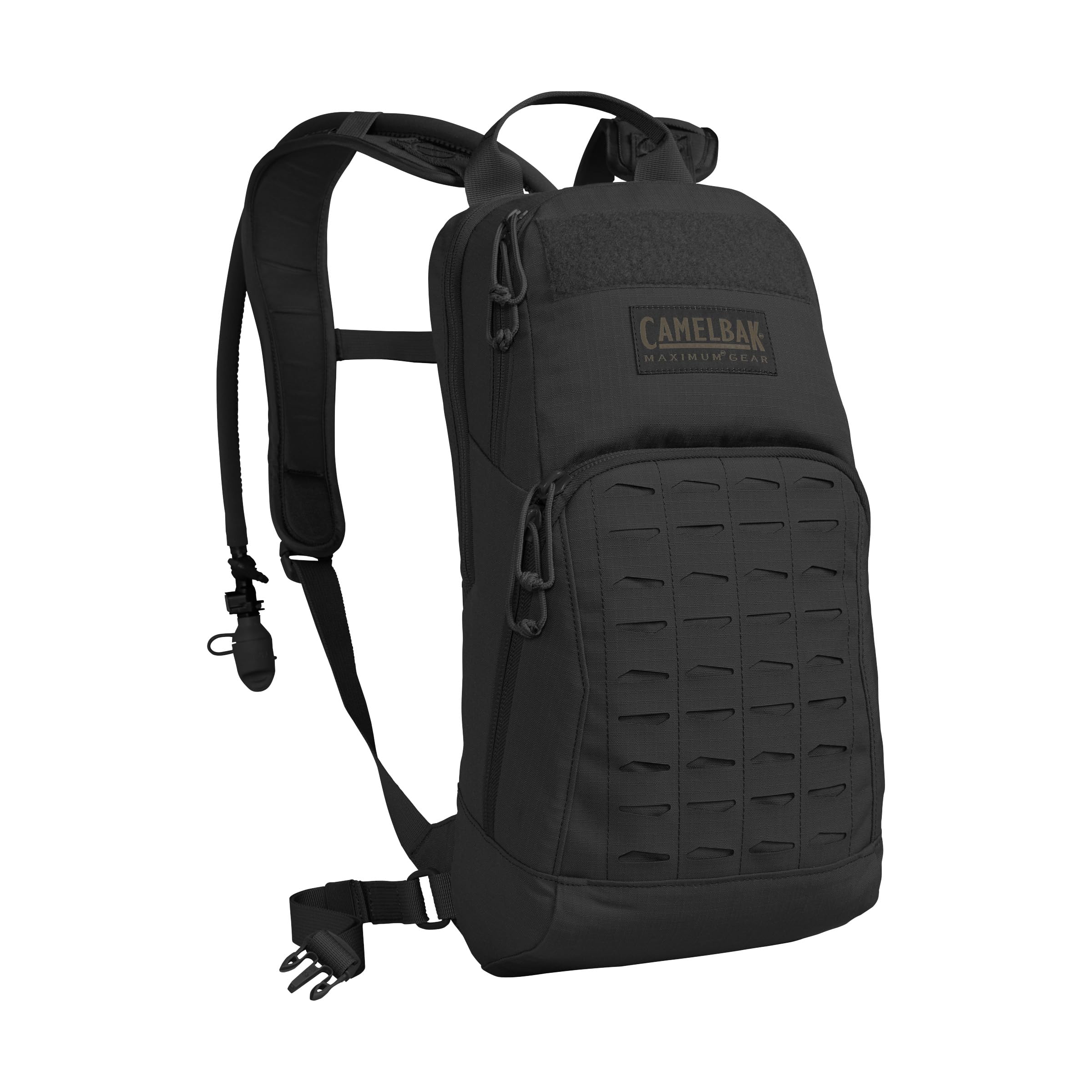
The CamelBak M.U.L.E. Tactical reconfigure the classic M.U.L.E. platform for modular loadouts. It ships with a 100-ounce Mil-Spec Crux reservoir that delivers 20 percent more water per sip than previous-generation CamelBak bladders, and the dedicated insulated compartment keeps the reservoir protected from gear crush. The cargo capacity sits at 8 liters, supplemented by upper and lower front pockets with organizational sleeves — enough space for a trauma kit, radio, navigation tools, and spare batteries without turning the pack into a bulky shelf.
The harness system features a padded back panel with a removable waist belt, keeping the pack stable during fast movement — skiing patrols, mountain biking, or urban foot chases. Laser-cut Mountain MOLLE on the lower pocket accepts small pouches, and the multiple drink tube exit ports let you route the hose over either shoulder or through the front loop. The pack weighs only 22 ounces empty, making it the lightest option in this lineup by a wide margin, which is critical when the primary mission is speed, not bulk storage.
Buyers should understand that this is not a 72-hour standalone go bag; the 8-liter cargo volume is designed to supplement a larger pack or serve as a standalone hydration system for short-duration operations. Some users have reported bite valve leakage on initial units, but CamelBak’s warranty support replaced entire tube assemblies quickly. For anyone whose go bag strategy centers on hydration mobility — wildland firefighters, backcountry skiers, or rapid-response teams — the M.U.L.E. Tactical is the logical anchor piece.
Why it’s great
- 100-ounce Mil-Spec Crux reservoir with high-flow bite valve
- Lightweight 22-ounce empty weight for fast operations
- Laser-cut MOLLE for low-profile pouch attachment
Good to know
- 8L cargo capacity limits standalone multi-day use
- Occasional bite valve issues on early units
3. 5.11 Tactical RUSH 12 2.0 Backpack

The 5.11 RUSH 12 2.0 compresses the flagship RUSH DNA into a 24-liter format that balances daily carry efficiency with emergency readiness. The exterior uses the same 1050D nylon as the larger RUSH 72, meaning the abrasion resistance is identical despite the smaller footprint. Inside, a padded laptop sleeve fits up to a 15-inch machine, and the rear hydration compartment doubles as a concealed carry sleeve with a loop panel for securing a holster. Owners consistently report that this pack outlasts cheaper EDC bags by a wide margin, with zippers and stitching surviving years of regular abuse.
The compartment layout includes a main cavity, a front lower pocket with internal slip and zippered dividers, and a fleece-lined media pocket on the top flap. External web MOLLE on the front and sides allows accessory pouches, though the pack does not include side water bottle pockets — a detail several buyers noted as an inconvenience. The contoured yoke shoulder straps and removable waist belt keep the 24-liter load stable during hiking or tactical drills, and multiple testers have used it for radio carry, e-bike battery transport, and field first-aid kits.
The RUSH 12’s biggest trade-off is size: at 24 liters, it is too small for a full 72-hour bug-out loadout, but it excels as a go bag insert for a vehicle trunk — small enough to grab on the way out and modular enough to attach pouches for situational specialization. A few users reported that the shoulder strap buckles feel less robust than the bag body, but no widespread failure pattern has emerged. This is the right choice for those who need a pack that lives in the car and transitions seamlessly into a daily laptop carrier.
Why it’s great
- 1050D nylon shell matches larger tactical packs in durability
- CCW compartment with loop panel for concealed carry
- Fleece-lined media pocket protects eyewear or phone
Good to know
- No external water bottle pockets included
- 24L capacity limits extended bug-out gear volume
4. Kelty Redwing Tactical Backpack 50L
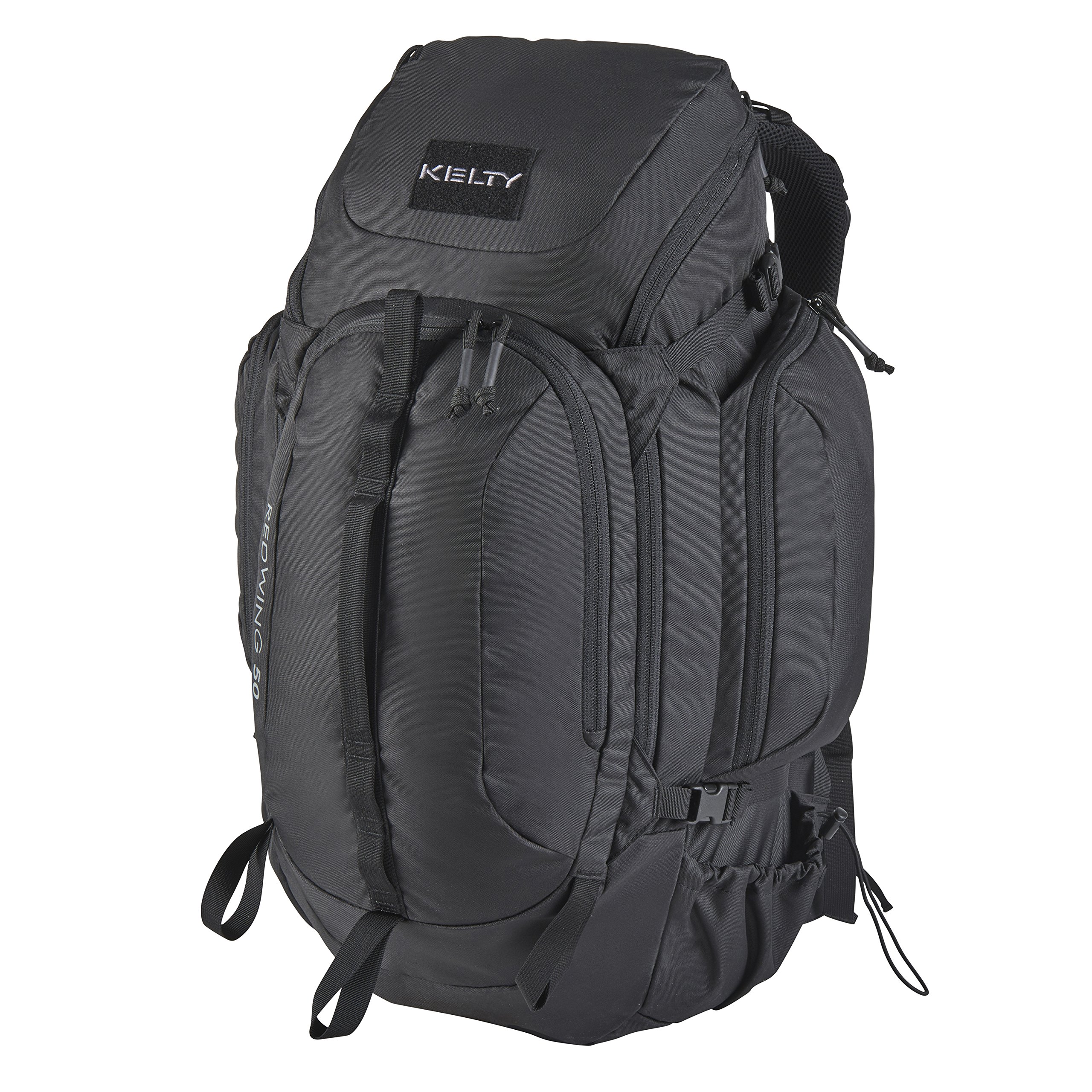
The Kelty Redwing Tactical takes the well-known Redwing hiking frame and applies military-spec construction standards, producing a pack that feels at home on a canyon trail or a patrol route. The defining feature is the dual aluminum stays inside the frame sheet — these transfer load weight directly to the hip belt, reducing shoulder fatigue during long carries. The Dynamic AirFlow back panel keeps ventilation active even when the pack is packed tight, a noticeable relief compared to solid foam back panels that trap heat.
The hybrid-loading U-zipper design unzips the main compartment like a clamshell, granting full access to the 50-liter interior without digging through a top opening. Side compression straps stabilize the load, and the large side pass-through pockets accommodate trekking poles, an axe, or a rifle buttstock — a detail tailored to hunters and law enforcement operators. The removable waist belt and top stash pocket provide additional flexibility, and the included laptop sleeve doubles as a hydration bladder compartment for a 3-liter reservoir.
Some users found the internal support initially confusing — without the aluminum stays properly seated, the bag fails to stand upright — and the webbing coverage is more limited than a full tactical MOLLE platform. The bottom pockets are designed for a rifle buttstock rather than water bottles, which can cause misplacement if the design is not studied. However, for the price point, the Redwing delivers a rare hybrid: a genuine hiking suspension system with a tactical exterior that handles 30-pound daily commutes without complaint.
Why it’s great
- Dual aluminum stays transfer weight to hip belt effectively
- Dynamic AirFlow back panel reduces sweat buildup
- Clamshell U-zipper access to 50L main compartment
Good to know
- Limited MOLLE coverage compared to true tactical packs
- Bottom pockets designed for rifle stocks, not water bottles
5. Sandpiper of California Bugout Backpack

It uses aluminum back stays to maintain structural rigidity under heavy loads, an expandable main compartment that shifts from a slim travel profile to a full 47-liter haul, and a padded waist band that stabilizes the weight during movement. Multiple long-term owners report zero failures after ten years of use — zippers intact, stitching unbroken, only minor rust on the D-rings after a decade of field exposure.
The design prioritizes aviation-friendly dimensions: at 22 inches tall, the pack fits most airline overhead bins when not fully expanded, making it a rare go bag that also serves as carry-on luggage. The clamshell opening provides full access to the main cavity, and the multiple internal pockets — including a padded laptop sleeve — keep gear organized without requiring external pouches. The hydration compatibility is built into the sleeve system, allowing a 3-liter bladder to sit flush against the frame sheet.
At roughly five pounds empty, this is not a lightweight day pack. The pack tends to sag against the lower back when underfilled, and the soft bottom lacks the rigid base needed for standing upright on rough terrain. Buyers who plan to use this as a dedicated hiking or rucking bag may find the suspension less sophisticated than the Kelty Redwing. But for those who need a single bag that moves between car trunk, airplane cabin, and field deployment without attracting attention, the Sandpiper remains a proven workhorse.
Why it’s great
- Proven 10-year durability with zero structural failures reported
- Aluminum stays maintain load stability under heavy weight
- 47L expandable capacity fits airline overhead bins
Good to know
- Empty weight near 5 pounds increases base load
- Soft bottom causes sag when underfilled
6. LA Police Gear Atlas 72 Hour Tactical Backpack
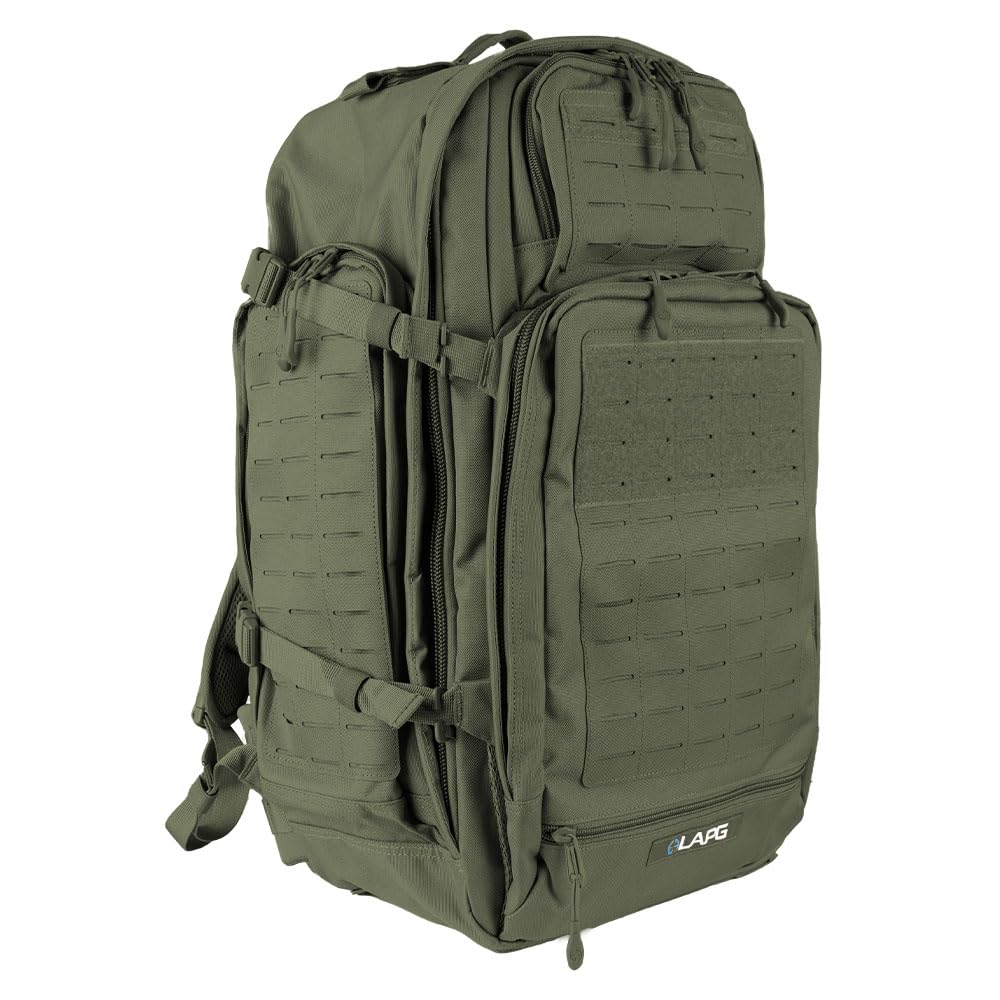
The LAPG Atlas 72 Hour is a generously sized tactical backpack designed to swallow 53 pounds of gear without complaint, as confirmed by multiple owner reports. The 900D polyester body feels substantial without the weight penalty of 1050D nylon, and the laser-cut MOLLE panel on the front provides a flat mounting surface for pouches without the bulk of traditional PALS webbing. The interior is loop-lined for hook-backed accessories, and the removable backplate adds structure while allowing the bag to be stored flat when not in use.
The compartment layout includes a large main cavity, a quick-access top pocket, and a fleece-lined eyewear/accessory compartment. The adjustable shoulder strap system integrates with a separate tactical chest pack for CCW carry, adding versatility for users who need to distribute load off the shoulders. The compression straps on the sides manage the bag’s profile, pulling the load tight against the back during active movement. Buyers have rated this pack favorably against options from Condor and 5.11, particularly praising the stitching quality and the generous 24-inch height that accommodates long tools or tripods.
The Atlas presents a few compromises: the internal material feels thin relative to the rugged exterior, and the waterproofing fails at the zipper seams under heavy rain — an external rain cover or dry bag insert is advisable for wet climates. The PALS lattice on the front panel is less dense than a full tactical grid, limiting pouch placement options. Still, for the price point, this bag delivers exceptional load capacity and a comfortable carry for users with larger builds or heavy gear requirements.
Why it’s great
- Handles 53-pound loads with comfortable shoulder harness
- Laser-cut MOLLE for low-profile accessory attachment
- Loop-lined interior for hook-backed gear organization
Good to know
- Zipper seams not fully waterproof under heavy rain
- PALS lattice less dense than full tactical MOLLE grids
7. Mardingtop 50L Hiking Backpack
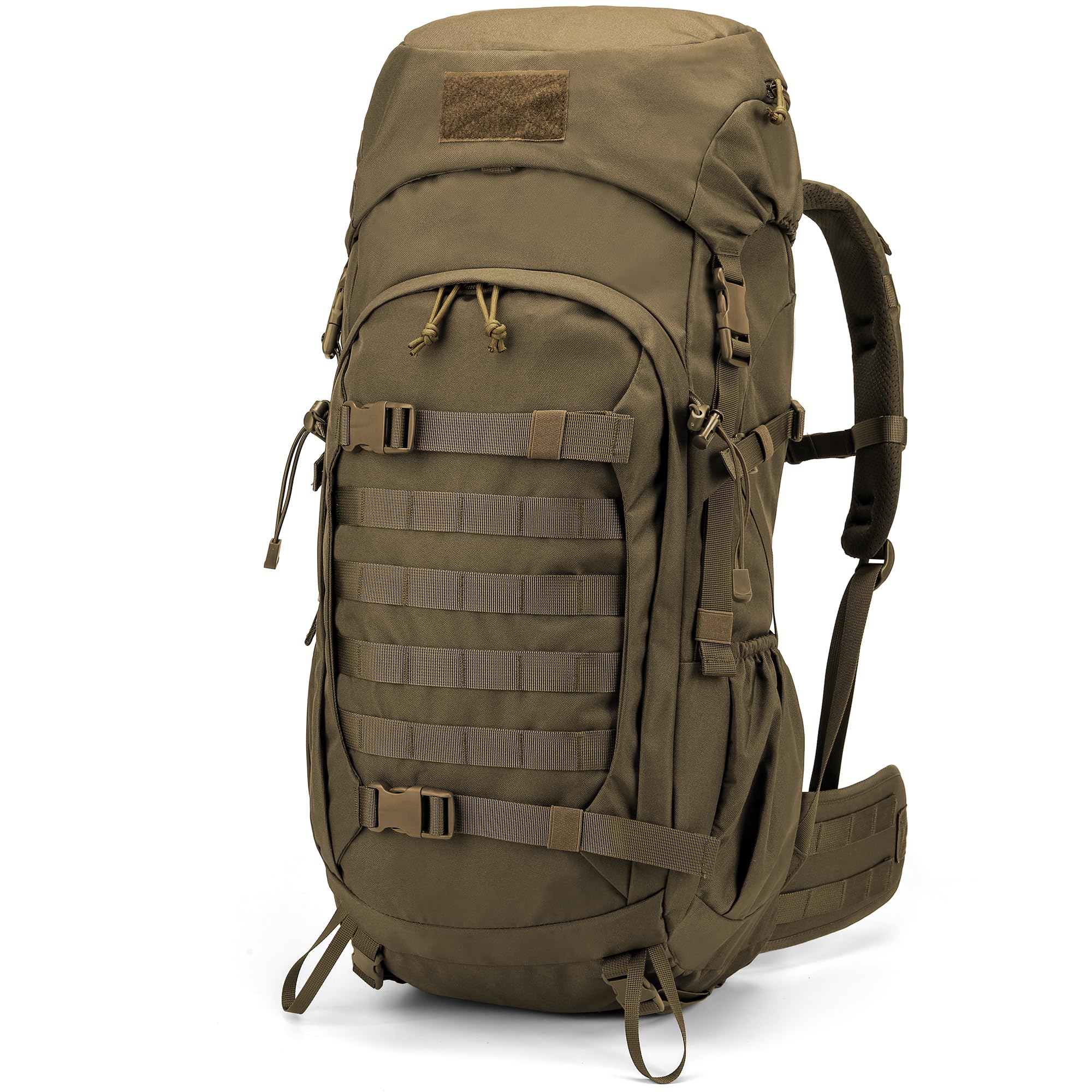
The Mardingtop 50L is the most affordable entry in this guide, targeting buyers who need a functional go bag on a strict budget. The 600D polyester body includes a rain cover, YKK zippers, and MOLLE webbing on the front panel, allowing basic pouch attachment without breaking the bank. The main compartment unzips clamshell-style for full access, and the hydration sleeve accommodates up to a 5-liter bladder — a detail usually reserved for pricier packs. The adjustable padded sternum strap and hip belt provide a customizable fit for different body sizes.
Multiple long-distance hikers have reported using this pack for 150+ mile treks with no structural failure, praising the spacious interior and the included rain cover that protects the entire bag exterior. The pack can hold a 15.6-inch laptop, and the quick-access front zipper allows entry to the main compartment without fully opening the clamshell — a practical feature for grabbing a layer or navigation tool mid-stride. The frame is adjustable but soft: it lacks the rigid aluminum or HDPE frame sheet found on pricier options, so load transfer to the hips is less efficient under heavy weight.
Buyers should be aware that the buckles have drawn criticism for slipping under tension, and the pack’s lightweight fabric will abrade faster against rock or concrete than a 1050D nylon counterpart. This is not the pack for a multi-year field deployment or a 50-pound ruck march. However, for a weekend bug-out bag, a vehicle trunk kit, or a starter survival pack that allows you to allocate budget toward gear rather than the bag, the Mardingtop delivers surprising value for the dollar.
Why it’s great
- Budget-friendly entry with YKK zippers and rain cover
- Clamshell main opening and hydration sleeve for 5L bladder
- Proven durability on 150+ mile hiking trips
Good to know
- Buckles prone to slipping under heavy tension
- 600D polyester abrades faster than tactical-grade nylon
FAQ
What size backpack is ideal for a 72-hour go bag?
Do I really need an internal frame for my go bag?
Is a hydration bladder worth the extra weight in a go bag?
Final Thoughts: The Verdict
For most users, the backpack for go bag winner is the 5.11 Tactical RUSH 72 2.0 because its 55-liter capacity, 1050D nylon shell, and contoured suspension system cover every base from long-duration autonomy to heavy load carriage without structural compromise. If you want a compact hydration-focused setup that moves fast and weighs almost nothing empty, grab the CamelBak M.U.L.E. Tactical. And for a budget-friendly entry that leaves room in the budget for gear, nothing beats the Mardingtop 50L as a starter go bag.