
Our readers keep the lights on and the weekend projects moving. As an Amazon Associate, I earn from qualifying purchases.
A bee house that looks charming but rots in one season or, worse, never attracts a single occupant is a waste of garden real estate. The difference between a thriving pollinator hotel and an empty wooden box comes down to three details: tube depth, roof overhang, and the absence of splintered interiors. The market is flooded with novelty shapes, but only a handful of designs respect the specific nesting biology of solitary bees.
I’m Rikta — the co-founder and writer behind FitlyFast. I’ve analyzed dozens of bee house listings, cross-referenced tube dimensions, assessed wax-coating durability, and filtered through hundreds of verified customer reports to separate the functional habitats from the decorative ones.
Whether you are a backyard gardener aiming to boost fruit set or a bee-curious beginner looking for a low-maintenance insect hotel, this guide breaks down the critical specs that make a bee house actually work — not just look pretty.
How To Choose The Best Bee House
Selecting a bee house is not about picking the prettiest shape. Solitary bees — primarily mason bees and leafcutter bees — have strict nesting preferences. A house that ignores those preferences will remain vacant. Focus on the structural factors that matter to the insects, not to human aesthetics.
Tube Depth and Diameter
The industry standard for mason bees is a tunnel diameter of 5/16 inches and a depth of at least 6 inches. This specific dimension mimics the natural burrows left by beetles in dead wood. Shallower tubes may attract only wasps, while larger diameters invite predators. Always measure the actual tube length before assuming specs are accurate — many budget houses cut corners here.
Weather Protection and Material
Wax coatings and roof overhangs are not decorative upgrades. Rain and dampness encourage fungal growth that kills bee larvae. A full-body wax seal prevents water absorption into the wood, while a roof that extends at least half an inch past the tube openings keeps driving rain out. Cedar and fir resist rot naturally; pine requires sealing. Avoid houses with exposed bamboo tubes that cannot be replaced — they trap old cocoons and breed disease year after year.
Quick Comparison
On smaller screens, swipe sideways to see the full table.
| Model | Category | Best For | Key Spec | Amazon |
|---|---|---|---|---|
| JCs Wildlife Poly Lumber | Premium | Long-term durability | 6.59 lbs, 8 panels | Amazon |
| Rivajam Native Bee Observatory | Premium | Observation & learning | Viewing panel, wax coat | Amazon |
| Rivajam Beekeeper Pro Mach II | Mid-Range | Weather resistance | Metal roof, 100% waterproof | Amazon |
| WHITEHORSE Premium Cedar | Mid-Range | Cedar build, expert design | 6″ tubes, French cleat | Amazon |
| WildYard Yellow Bee House | Mid-Range | Bright garden decor | Cedar wood, removable tubes | Amazon |
| POLLIBEE Hexagon Wax Coated | Value | Budget-friendly starter | Wax coated, 5/16″ tubes | Amazon |
| POLLIBEE Mason Bee House | Value | Entry-level, compact | Wax coated, 6″ tubes | Amazon |
In‑Depth Reviews
1. JCs Wildlife Small Poly Lumber Mason Bee House

This house is built from recycled poly lumber — a dense plastic-wood composite that will not rot, warp, or splinter regardless of how many seasons it sits in direct rain. Weighing over six and a half pounds, it stays put in strong winds without needing extra anchoring. The eight removable panels are crafted from charred pine, and the smoky aroma is a known attractant for mason bees — a clever biological detail absent from almost every other model on this list.
The locking block system makes seasonal cleaning straightforward. You pull the block, slide out each panel, and scrape away old mud and cocoons without damaging the tunnels. Each panel contains professionally routed grooves at the correct 5/16-inch diameter and roughly 6-inch depth. This is not a decorative tube bundle — it is a serious management tool for beekeepers who intend to harvest cocoons each fall.
Multiple owner reports confirm bees moved in within the same day of mounting, and the poly lumber finish shows zero signs of weathering after months of exposure. The included information sheet covers basic mason bee husbandry, but experienced keepers will appreciate the panel system most. The only real consideration is weight — you need a solid fence post or wall to mount it securely.
Why it’s great
- Poly lumber resists rain, UV, and rot indefinitely
- Removable charred pine panels attract bees naturally
- Correct tube dimensions for mason bee nesting
Good to know
- Heavier than other models at 6.59 pounds
- Premium price reflects material and construction quality
2. Rivajam Native Bee Observatory

The defining feature here is the acrylic viewing panel that slides open to reveal pre-drilled nesting tunnels. This design lets you observe mason bees storing pollen, laying eggs, and sealing chambers without disturbing them. It is the only product in this lineup that functions as both a habitat and a live educational display — ideal for school gardens, curious homeowners, or anyone who wants to witness the lifecycle up close.
Build quality is solid, with a fir wood exterior and a wax coating intended to repel moisture. Assembly is required, but the provided Allen wrench and cleaning tool make setup and maintenance simple. Some users noted the top edges did not meet perfectly, though this was fixable with an extra screw. The plexiglass hinges align only one way, so pay attention during installation.
Several buyers reported bee activity within the first week, which is unusually fast for a new house. The observation window does create slightly more light exposure inside the tunnels than a solid wood wall would — a few owners added cardboard inserts to darken the rear chambers, which boosted occupancy. If you prioritize education and engagement over pure occupancy volume, this is the most rewarding model to own.
Why it’s great
- Acrylic panel allows safe observation of bee activity
- Wax coating adds weather protection
- Includes cleaning tool for easy maintenance
Good to know
- Some units have minor gaps in wood joints
- Light infiltration through window may require shading
3. Rivajam Beekeeper Pro Mach II Mason Bee House
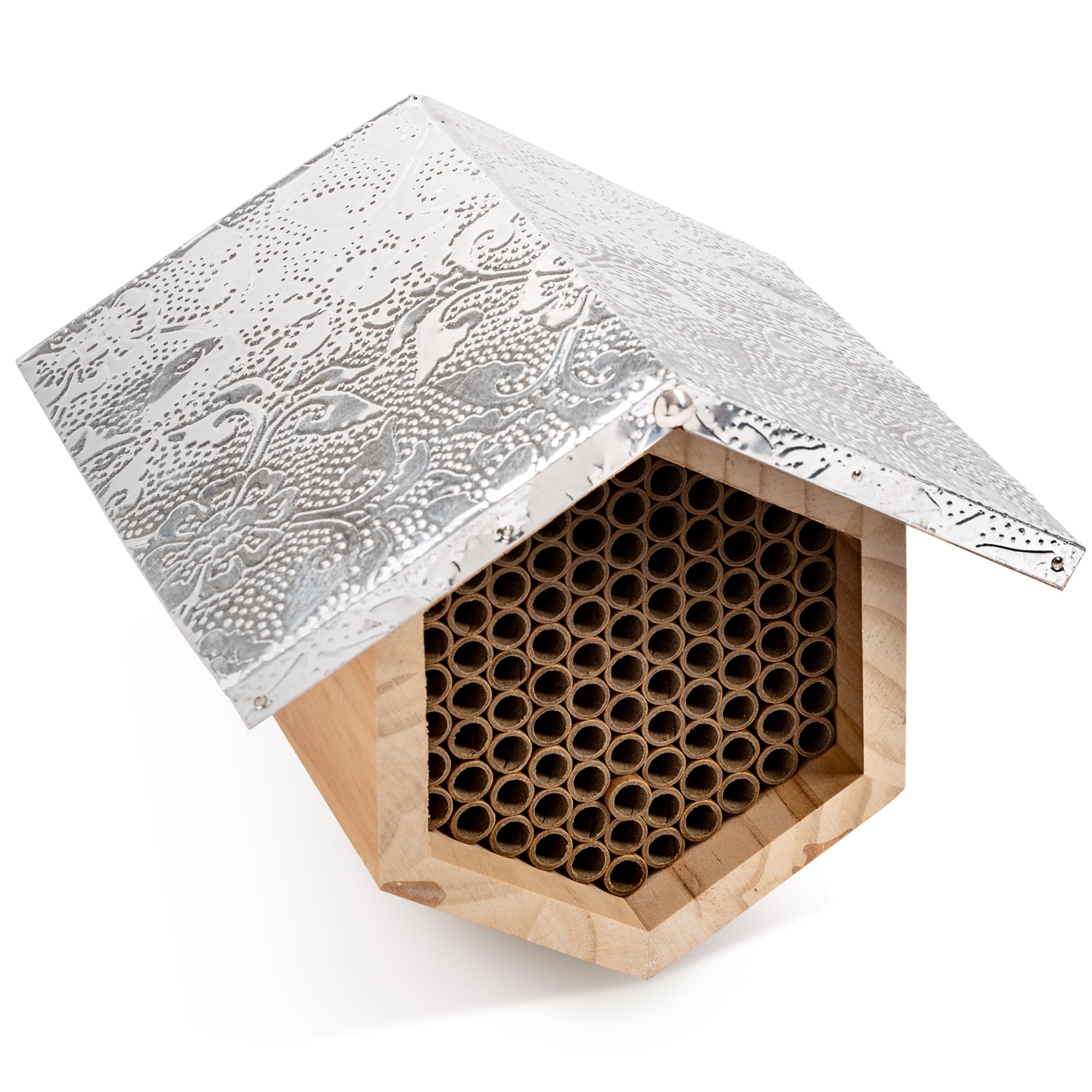
The pressed metal roof on this model is a genuine differentiator. While most bee houses rely solely on wax or stain for waterproofing, the Mach II’s metal cap provides 100 percent overhead coverage that keeps the nesting tubes bone-dry even during prolonged downpours. The exterior body is coated with a waterproof lacquer, and the entire unit is built from pine with a rustic, geometric silhouette that stands out in a garden without looking like a craft project.
Inside, the cardboard nesting tubes are fully removable and replaceable — a critical feature for disease control. At the end of each season, you pull the old tubes, harvest cocoons, and insert fresh ones. Refill packs are available separately from Rivajam, which extends the life of this house indefinitely. The mounting system uses pre-installed hooks and included screws, though one owner reported a screw head shearing during installation against soft pine, so pre-drilling pilot holes is advisable.
Reports from users who placed the house in a sheltered spot with morning sun exposure describe hundreds of leafcutter and mason bees occupying the tunnels within a few weeks. A small number of units arrived with minor roof damage in transit, but the replacement process was straightforward. If you live in a region with heavy spring rains, the metal roof makes this the most weather-resilient mid-range option available.
Why it’s great
- Metal roof provides complete rain protection
- Replaceable cardboard tubes support seasonal sanitation
- Geometric design is visually distinctive
Good to know
- Some units arrived with minor roof damage
- Included screws can be brittle; pre-drilling recommended
4. WHITEHORSE Premium Cedar Bee House
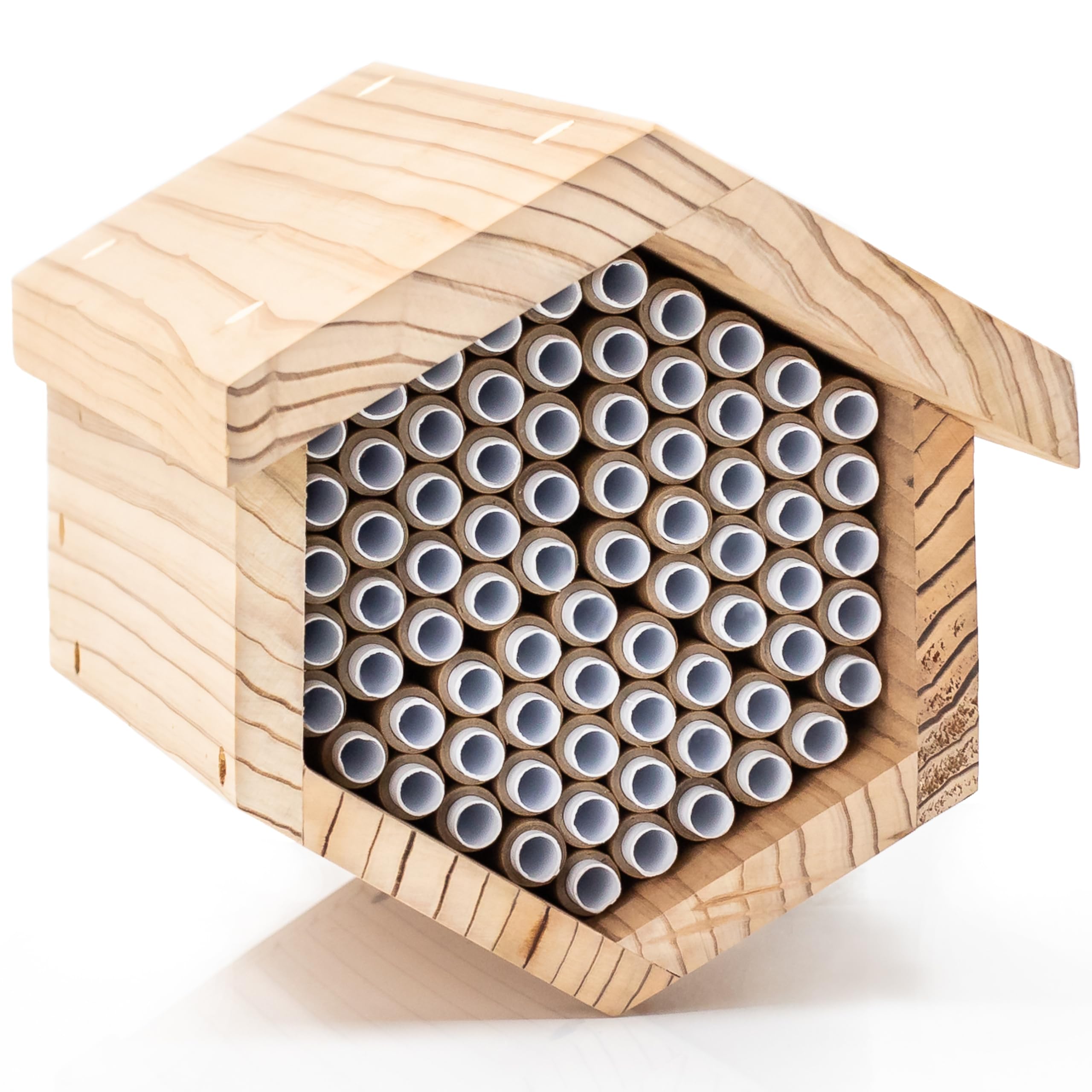
Designed by professional beekeepers, the WHITEHORSE house prioritizes structural features that reduce larval mortality. The roof overhang extends well past the tube openings, and a half-inch gap sits in front of the tubes to prevent rain splash from entering the nesting chambers. The back uses dado joint construction rather than simple butt joints, which keeps the interior less drafty and more thermally stable — a detail hardly any other brand addresses.
The material is western cedar, a naturally rot-resistant wood that does not require chemical treatment. Decking screws replace standard nails for a longer-lasting frame. The French cleat mounting system is secure and allows the house to be removed easily for winter storage or cleaning. It ships fully assembled with cardboard tubes that use paper liners, making cocoon removal simple without tearing the tubes apart.
A few owners reported no bee activity even after a full season, which may be due to placement rather than house design — the company suggests east-facing orientation with morning sun. The brand’s customer service was responsive to follow-up concerns, though access to the promised bee-attraction PDF required some email follow-through. For keepers who want a house built to professional specifications with replaceable liners, this is the most thoughtful construction in the mid-range tier.
Why it’s great
- Dado joint construction reduces drafts
- Western cedar resists rot without chemicals
- Paper liners simplify cocoon harvesting
Good to know
- Some users saw no bees for over a year
- Requires protection from rodents and squirrels
5. WildYard Bee House – Yellow, Modern Wood
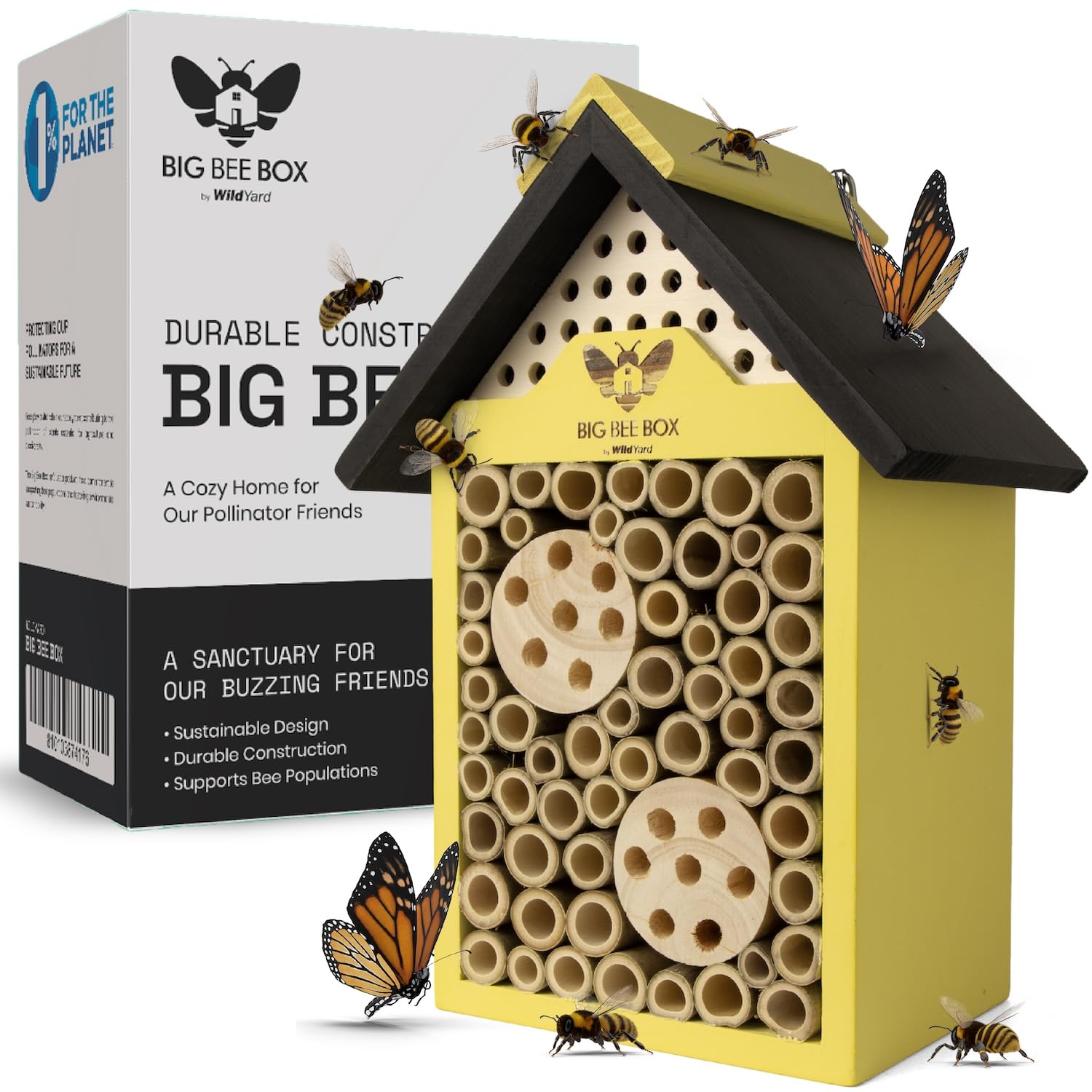
WildYard takes a different approach by making the bee house a deliberate garden design element. The cheerful yellow finish is painted onto a cedar wood body, and the anti-rust metal hanger is included. It ships flat-packed and requires assembly, but the pieces fit cleanly and the vibrant color provides a visual cue for pollinators — some research suggests bees are drawn to yellow and blue hues.
The nesting tubes are removable, which allows for periodic replacement to prevent parasite buildup. The internal cavity is spacious enough to accommodate a variety of solitary species, and the roof is sloped to shed rain. Several owners reported the house was fully occupied within a month, with both bees and beneficial wasps competing for tunnel space — a sign of healthy garden biodiversity.
Not every placement succeeded. A minority of buyers reported zero activity, which in some cases may relate to the painted exterior. Paint can seal the wood pores and reduce the natural scent that attracts bees, though the cedar base still offers some intrinsic aroma. If your garden needs a pop of color and you are willing to experiment with placement, this is the most decorative option that still takes bee biology seriously.
Why it’s great
- Bright yellow color doubles as garden decor
- Removable tubes support seasonal cleaning
- Cedar wood construction resists decay
Good to know
- Paint may reduce natural wood scent attraction
- Some buyers reported no bee activity
6. POLLIBEE Hexagon Wax Coated Mason Bee Hotel
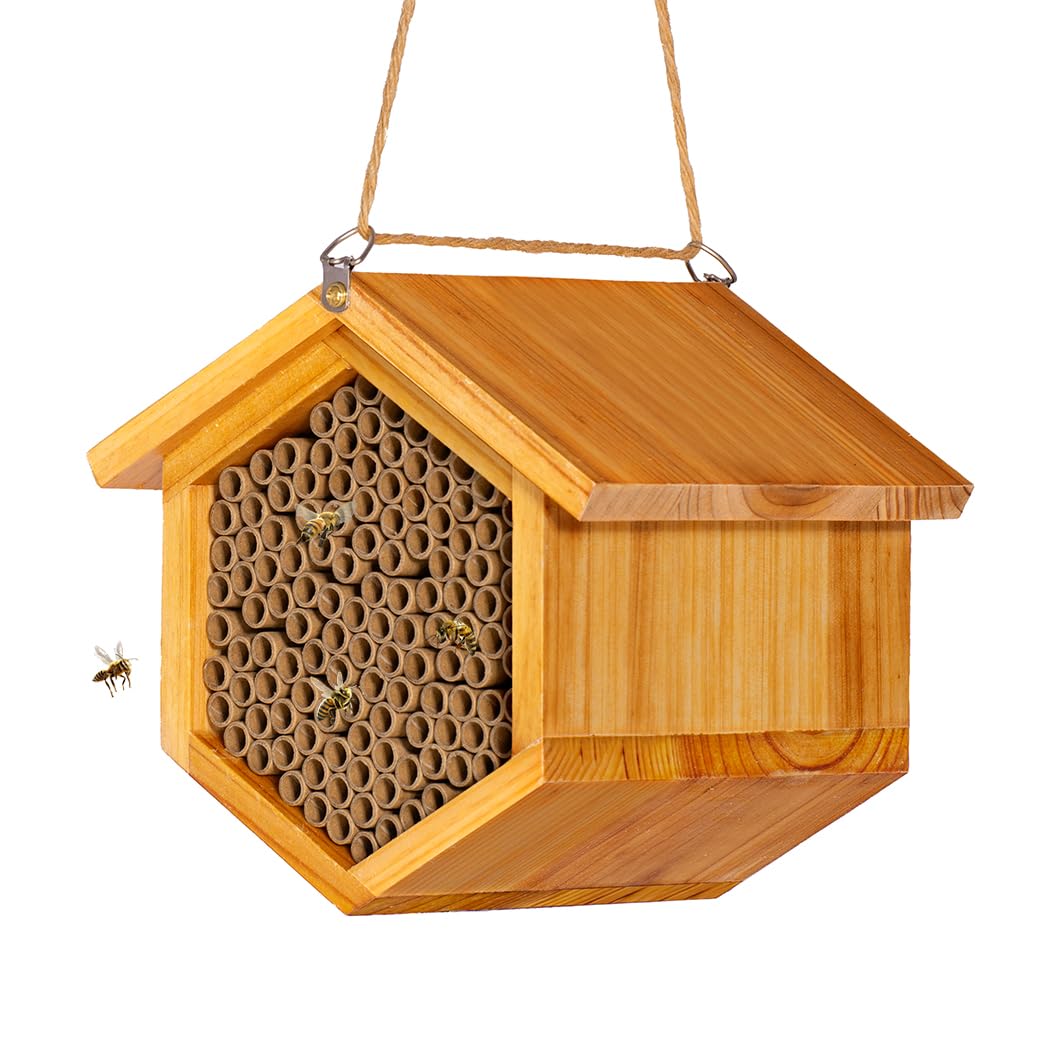
At a very accessible price point, this POLLIBEE hexagon-shaped house delivers the essentials: a full-body wax coating for water resistance, 5/16-inch tube diameters, and 6-inch tunnel depths. It ships fully assembled and ready to hang with a stainless steel screw clasp and a length of rope. For a first-time bee keeper who is not ready to invest heavily, this model checks the correct biological boxes without breaking the budget.
Customer reports confirm the wax coating holds up well through at least one wet season. The hexagon shape is visually appealing and sits nicely against a fence or tree trunk. Several buyers noted that tubes filled with cocoons within three weeks when the house was placed in a sheltered, east-facing spot. The inclusion of replacement rubber bands for holding tubes in place is a thoughtful touch, though some users found those bands had deteriorated before they could use them.
The main trade-off is the tube material itself — these are fixed wooden tunnels rather than replaceable cardboard inserts. Over multiple seasons, old cocoon debris and fungal spores can accumulate. To mitigate this, you can drill out the used tunnels or replace the entire unit every couple of years. For the price, it is a sound entry point that lets you learn mason bee habits before upgrading to a more serviceable model.
Why it’s great
Why it’s great
- Full wax coating provides effective rain protection
- Correct tunnel dimensions for mason bees
- Affordable entry-level price point
Good to know
- Fixed wooden tunnels cannot be replaced
- Included rubber bands may deteriorate quickly
7. POLLIBEE Mason Bee House – Handmade Natural Wooden

This compact model from POLLIBEE is the smallest wax-coated option in the lineup, with exterior dimensions of roughly 6.3 by 6.38 by 6.5 inches. It uses the same proven 5/16-inch tube diameter and 6-inch tunnel depth as the hexagon version, making it functionally equivalent for mason bee nesting in a tighter footprint. The full-body wax coating is applied consistently, and the stainless steel screw clasp on the back allows secure attachment to a wall or tree trunk.
Assembly is not required — it arrives ready to hang with a included rope and nails. Several repeat buyers purchased this as a second unit after their first POLLIBEE house filled up quickly, which speaks to consistent nesting performance. The smaller size works well for balconies, small gardens, or spots where multiple houses are spaced apart to reduce parasite transmission.
A few buyers noted that the metal hardware — particularly the hanging clasp and screws — can rust after a season of exposure. Replacing them with stainless steel alternatives is a simple fix. Some users also reported that one or two tubes arrived blocked or missing, so inspect the unit upon arrival. For the compact size and correct bee-friendly specs, this is a reliable, no-frills starter that focuses on function over decoration.
Why it’s great
- Compact size fits small gardens and balconies
- Full wax coating protects from rain
- Correct tunnel depth for mason bees
Good to know
- Metal hardware may rust over time
- Some tubes may arrive blocked or missing
FAQ
Should I choose a bee house with bamboo tubes or replaceable cardboard tubes?
How high off the ground should I mount a bee house?
What direction should my bee house face for the best occupancy?
How do I clean a mason bee house at the end of the season?
Final Thoughts: The Verdict
For most users, the bee house winner is the JCs Wildlife Poly Lumber because its recycled poly construction, charred pine panels, and removable design offer unmatched durability and correct bee biology. If you want to observe the nesting process up close, grab the Rivajam Native Bee Observatory. And for weather-heavy climates where rain is a constant threat, nothing beats the Rivajam Beekeeper Pro Mach II with its metal roof and replaceable tubes.