
Our readers keep the lights on and the weekend projects moving. As an Amazon Associate, I earn from qualifying purchases.
You unbox a 3D printer expecting to create, but the reality often involves hours of bed leveling, filament tangles, and failed first layers. That learning curve stops too many newcomers before they ever print a successful model. The right machine for a starter eliminates that friction—delivering reliable results from the very first power-on.
I’m Rikta — the co-founder and writer behind FitlyFast. After analyzing dozens of hours of user feedback, unboxing guides, and stress-testing the core specs that matter most for beginners, I have a clear picture of which printers actually deliver on the promise of a frustration-free start.
Whether you are buying for a child, a classroom, or your own first dive into additive manufacturing, you need a machine that prioritizes ease of setup, automatic calibration, and consistent output over raw speed or exotic material support. This guide cuts through the noise to find the 3d printer for starters that will actually get you printing, not troubleshooting.
How To Choose The Best 3D Printer For Starters
Selecting your first printer is about matching the machine to your patience level and project goals. A printer that demands constant tinkering will kill your enthusiasm. One that just works, on the other hand, will keep you learning and creating. Focus on the features that minimize friction rather than those that maximize theoretical speed or filament flexibility.
Auto Bed Leveling — The Decisive Feature
A manual leveling process requires adjusting four bed screws with a piece of paper, then repeating after every few prints. For a starter, this is the fastest route to frustration. Printers with 16-point or 49-point auto leveling, like those from ELEGOO and Anycubic, handle this calibration automatically before each print, ensuring a perfect first layer every time. This single feature separates machines that are a joy to use from those that end up collecting dust.
Build Volume vs. Desk Footprint
Typical starter printers offer build volumes between 100mm³ and 260mm³. A smaller volume like 100x110x100mm (the Geeetech M1) is perfect for toys, figures, and small functional parts, and it keeps the machine compact. A 220mm³ or 256mm³ volume allows for larger items like phone cases, mask brackets, or articulated animals. Consider what you actually want to print—most beginners start with small objects, and a smaller build plate often means fewer failed prints due to warping or adhesion issues across a large surface.
Print Speed — Don’t Chase the Number
Manufacturers tout speeds of 250mm/s, 500mm/s, or even 600mm/s. These are maximums, not real-world averages. A printer that achieves 250mm/s with high acceleration and vibration compensation will finish a Benchy boat in under 20 minutes, which is genuinely fast. But a printer that runs at 150mm/s but produces flawless prints every time is a better choice for a starter than one that hits 600mm/s but introduces ghosting or layer shifts. Look for consistent print quality at moderate speeds rather than an impressive top speed that sacrifices reliability.
Supported Filament and Material Versatility
PLA is the ideal starter filament—it is non-toxic, low-warp, and prints at moderate nozzle temperatures (190-220°C). Printers that handle PLA well are the foundation. As you progress, you may want to experiment with PETG or TPU. A nozzle temperature of 280°C or higher and an all-metal hotend open the door to these materials. Avoid printers that limit you to a single proprietary filament unless you are certain you will never need flexibility.
Connectivity and Slicer Ecosystem
SD card printing is the simplest and most reliable method for a beginner. WiFi-enabled printers, such as those using the Bambu Handy app or Poloprint Cloud, allow you to start prints from your phone and monitor them remotely. However, a poor app experience can be worse than an SD card. Verify that the slicer software (the program that converts your 3D model into printer instructions) is intuitive and pre-configured with profiles for your specific printer. Orca Slicer and Bambu Studio are excellent for beginners. Cura is powerful but has a steeper learning curve.
Quick Comparison
On smaller screens, swipe sideways to see the full table.
| Model | Category | Best For | Key Spec | Amazon |
|---|---|---|---|---|
| Bambu Lab P1S | Premium / Enclosed | Reliable workhorse with enclosed build | 500mm/s, CoreXY, 260mm³ | Amazon |
| Anycubic Kobra X | Multicolor | Native 4-color printing on a budget | 600mm/s, 260mm³, AI Camera | Amazon |
| ELEGOO Centauri Carbon | Enclosed | Out-of-box reliability and high-speed | 500mm/s, CoreXY, 320°C nozzle | Amazon |
| FLASHFORGE AD5M Pro | Enclosed Pro | Quick-swap nozzles and multi-material | 600mm/s, enclosed, 220mm³ | Amazon |
| Creality K1C | Carbon Fiber | Carbon fiber filament compatibility | 600mm/s, 300°C nozzle, AI camera | Amazon |
| FLASHFORGE Adventurer 5M | Mid-Range | Fast setup with reliable first layer | 600mm/s, CoreXY, 220mm³ | Amazon |
| Bambu Lab A1 mini | Compact | Ultra-compact for home creativity | ≤48dB quiet, auto calibration | Amazon |
| Entina Tina2 Plus | Kids / Kids | WiFi app-based control for children | 250mm/s, ceramic hotend, PEI plate | Amazon |
| Geeetech M1 | Educational | Open source learning for schools | 250mm/s, 100mm³, auto leveling | Amazon |
In‑Depth Reviews
1. Anycubic Kobra X
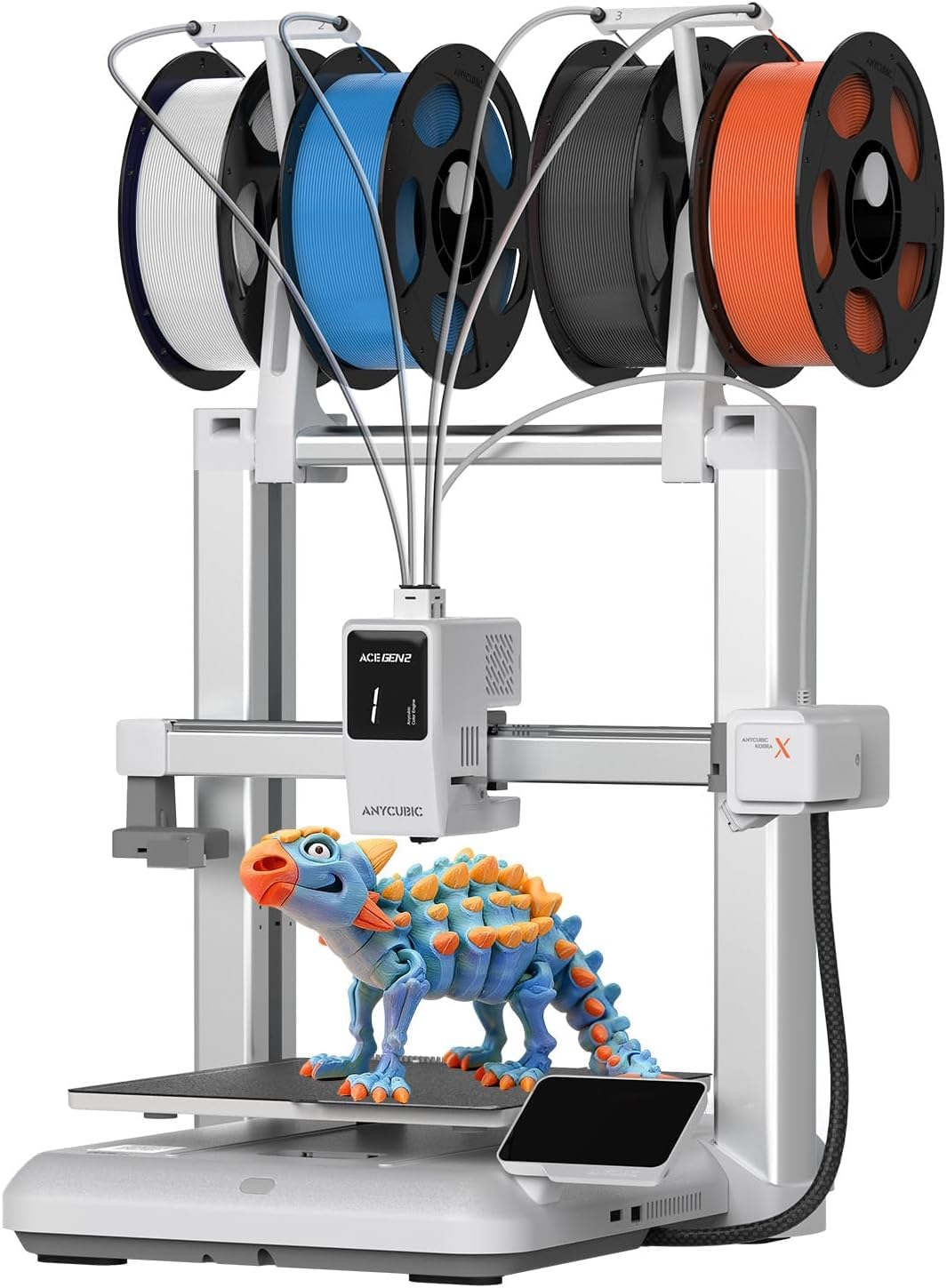
Anycubic jumps ahead of the pack by offering native 4-color printing at a price that rivals single-extruder machines. The ACE 2 Pro system allows up to 19 colors with additional units, and the Kobra X reduces purge waste by more than 80% compared to competing multi-material setups. For a starter who wants to explore multicolor projects without manual filament swapping, this machine is a revelation.
The LeviQ 3.0 auto leveling uses 49 calibration points to ensure a flawless first layer, and the 600mm/s maximum speed is supported by vibration compensation that keeps layer lines crisp. Users with over 265 hours of print time report no adhesion issues, and the AI camera provides spaghetti detection and foreign object monitoring for remote peace of mind.
Print quality at 600mm/s remains outstanding with detailed overhangs and smooth top surfaces. The 260mm³ build volume offers plenty of room for larger projects, and the hardened steel nozzle handles abrasive filaments like carbon fiber. The phone app is functional but could be more polished—a minor trade-off for the capabilities offered at this level.
Why it’s great
- Native 4-color printing eliminates manual filament changes for beginners
- 49-point auto leveling removes first-layer guesswork entirely
- Reduced purge waste by 81% saves filament and time over other multi-color systems
Good to know
- ACE 2 Pro units are not compatible with the older ACE Pro
- Phone app could benefit from a more intuitive interface
2. Bambu Lab P1S

The Bambu Lab P1S is the machine that experienced makers recommend to beginners who want to skip the tinkering entirely. It arrives fully enclosed, auto-levels before every print, and connects seamlessly with the Bambu Studio slicer and Handy app. Setup takes under 30 minutes, and users consistently report excellent print quality immediately with no post-processing tweaking needed.
The enclosed design improves print performance for advanced filaments like ABS and ASA while keeping noise levels manageable. The 500mm/s print speed and 20000mm/s² acceleration make short work of medium-sized models, and the CoreXY motion system ensures consistent layer quality even at those speeds. The built-in camera allows real-time monitoring and time-lapse capture.
While multi-color capability requires the optional AMS unit, the P1S handles PLA, PETG, TPU, and ABS flawlessly out of the box. The auto leveling system is calibrated before each print, eliminating the manual adjustment burden. Users upgrading from older printers describe the P1S as drastically shortening their design cycle because reliability is no longer a variable.
Why it’s great
- Fully enclosed chamber enables reliable ABS/ASA printing without warping
- Auto-leveling before every print ensures consistent first layers
- Bambu Studio slicer provides pre-configured profiles for hassle-free setup
Good to know
- Multi-color printing requires purchasing the separate AMS unit
- Vent the lid for PLA; close it for ABS for optimal results
3. ELEGOO Centauri Carbon

The ELEGOO Centauri Carbon arrives fully assembled and pre-calibrated, making it one of the easiest plug-and-play experiences for a starter. The die-cast aluminum frame minimizes vibration, and the auto bed leveling with vibration compensation produces consistently smooth first layers. The 256mm³ build volume is generous for a machine in this class, and the 320°C brass-hardened steel nozzle opens the door to advanced engineering-grade filaments.
CoreXY speeds of up to 500mm/s and 20000mm/s² acceleration mean that a Benchy can be completed in around 18 minutes without sacrificing quality. The heated bed reaches high temperatures quickly and the dual-sided plate features a PLA-specific surface that provides excellent adhesion. Users with hundreds of hours of print time report zero mechanical issues and reliable first-layer success.
The built-in chamber camera supports real-time monitoring and time-lapse video capture, which is especially useful for teachers and hobbyists who want to share their progress. Some users note that the initial unit had a USB-C connector design issue, but replacement units have proven robust. The slicer crashing on very complex STL files with older laptops is a known limitation.
Why it’s great
- Die-cast aluminum frame provides exceptional stability for high-speed prints
- 320°C nozzle handles carbon fiber and other advanced filaments
- PLA-specific build plate surface ensures strong adhesion without adhesives
Good to know
- Initial units had a USB-C connector design flaw that was later corrected
- Requires a stable surface to minimize shaking at high speeds
4. FLASHFORGE AD5M Pro

The AD5M Pro from FLASHFORGE brings a 3-second quick-swap nozzle system that lets you change between 0.4mm and 0.6mm nozzles without any tools—a convenience that beginners will appreciate when switching between detailed prints and faster, stronger prototypes. The CoreXY motion system achieves 600mm/s with vibration compensation that reduces ghosting, and enclosed chamber with dual-layer filtration makes it safe for classroom or home use.
Auto leveling is one-click and fast, and users confirm that the machine calibrates accurately within seconds of pressing start. The 220mm³ build volume is adequate for most hobby projects, and the direct-drive extruder handles flexible TPU reliably. The built-in camera allows real-time monitoring, and the filament runout sensor plus power-loss recovery provide safety nets for long prints.
However, the user experience is not flawless. Some units have experienced extruder failures shortly after the third print, and customer service responsiveness varies. The packaging can be flimsy, though machines typically arrive intact. The old USB software should be replaced with the latest version from the manufacturer’s website for optimal performance.
Why it’s great
- 3-second quick-swap nozzle system simplifies material changes for beginners
- Enclosed chamber with dual-layer filtration is safe for classroom environments
- Vibration compensation ensures smooth layers at 600mm/s
Good to know
- Some units have reported extruder failures after limited use
- Customer support response times can vary significantly
5. Creality K1C

The Creality K1C is built for the starter who already knows they want to explore advanced materials like carbon fiber infused filaments. The clog-free direct extruder uses a bolster spring and ball plunger to grip filament tightly, and the 300°C nozzle with a titanium alloy heatbreak prevents heat creep that can cause jams. At 600mm/s with 20000mm/s² acceleration, the K1C is genuinely fast when it works correctly.
Auto calibration handles Z-offset, bed leveling, and input shaping automatically, and the AI camera detects spaghetti failures and foreign objects. The triple-fan cooling system—hotend, part, and auxiliary—minimizes stringing and warping for bridges and overhangs. Users praise the print quality for the price, especially for functional prototypes and mechanical parts.
The downside is that the K1C is not truly plug-and-play for the absolute beginner. Assembly instructions are poor, and some units have arrived with Z-axis motor binding or warped beds. Frame squaring and belt tension adjustments may be necessary, and the quality control issues mean that patience is required. For the starter willing to troubleshoot, it offers exceptional value.
Why it’s great
- Clog-free extruder handles carbon fiber and abrasive filaments reliably
- Triple-fan cooling system produces clean overhangs and bridges
- Auto calibration eliminates manual paper-leveling routines
Good to know
- Assembly instructions are poorly written and may require external video guides
- Quality control issues like warped beds and motor binding have been reported
6. FLASHFORGE Adventurer 5M

The Adventurer 5M is a refined entry-level printer that delivers a fast and reliable experience without the pro-level price tag. The one-click auto leveling system calibrates the bed perfectly every time, and the CoreXY motion system with vibration compensation keeps layers clean at 600mm/s. Setup takes about 10 minutes from unboxing to first print, and the WiFi connectivity allows wireless file transfer.
The single-color printing performance is excellent, with good adhesion on the dual-sided PEI steel plate. Users report hundreds of successful prints without mechanical failures after initial setup. The 50W heating nozzle reaches 200°C in 35 seconds, and the 32mm³/s flow rate keeps extrusion consistent even at higher speeds.
Potential drawbacks include a smaller 220mm³ build volume compared to some rivals, and the lack of a fully enclosed design limits advanced filament use. Some firmware freezes and confusing manual positioning prompts have been noted by users, but overall, the machine offers a reliable and quiet operation that beginners appreciate.
Why it’s great
- Reliable single-color printing with excellent adhesion on the dual-sided PEI plate
- Fast 35-second heat-up time for the 200°C nozzle reduces waiting
- Vibration compensation eliminates ghosting in prints at high speeds
Good to know
- Small 220mm³ build volume may limit larger projects
- Firmware freezes and confusing manual prompts have been reported
7. Bambu Lab A1 mini
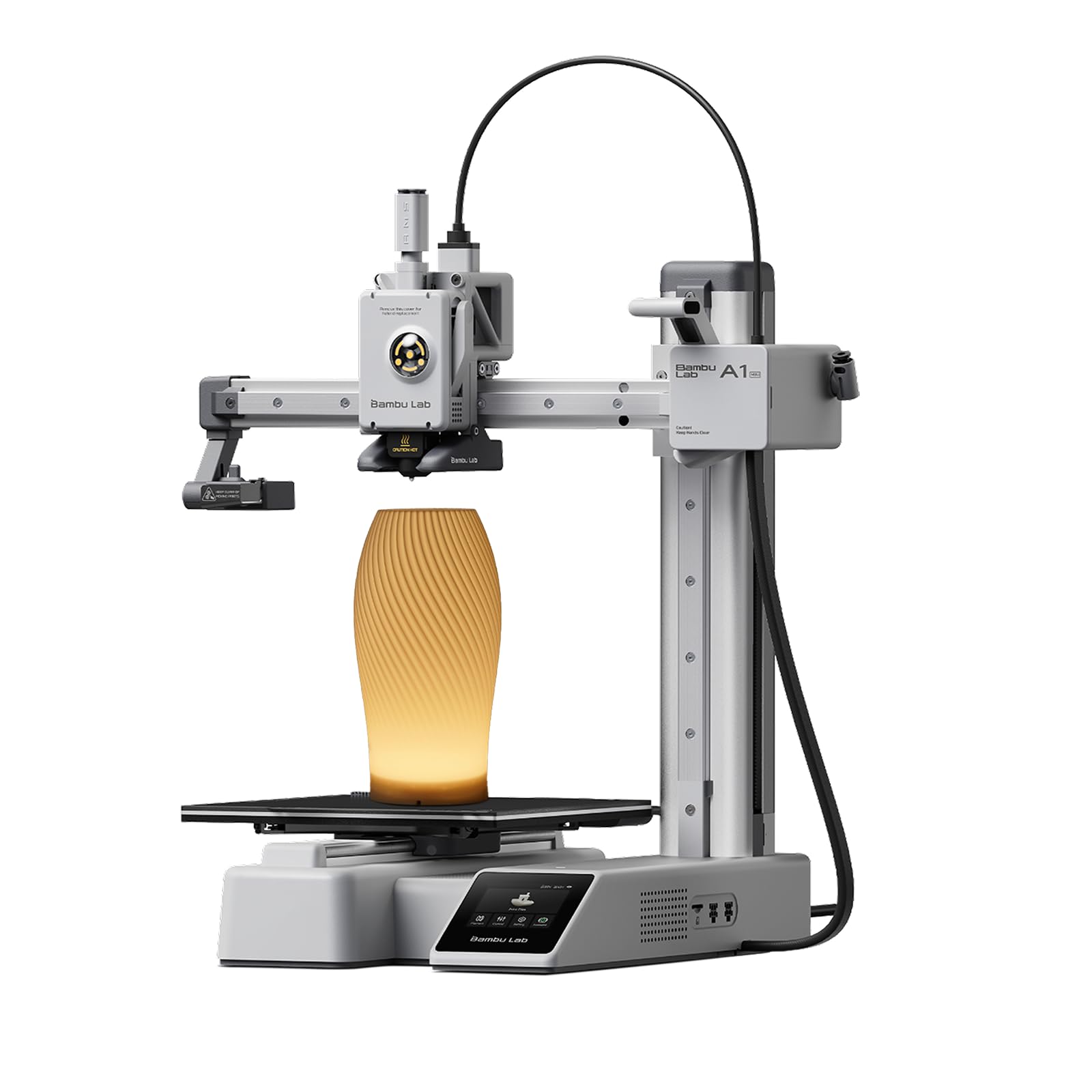
The Bambu Lab A1 mini is the smallest and quietest entry in this list, designed for home use where space and noise are real constraints. At ≤48 dB, it runs quieter than a normal conversation, and the fully automatic calibration ensures that beginners can start printing with minimal fuss. The included LED Lamp Kit turns prints into functional decorative lights, adding a creative twist that kids love.
The print quality from the A1 mini is genuinely impressive for its size, with clean layers and good detail on small models. The Bambu ecosystem—MakerWorld for ready-to-print files and the Handy app for remote control—makes the experience seamless for those who prefer a curated workflow. Users frequently describe it as the simplest printer they have used.
The main limitation is the compact build volume, which means you are restricted to smaller objects like toys, phone stands, or jewelry. The A1 mini is not designed for large functional parts. Also, some users have reported print lifting from the plate due to surface contamination issues, which a simple microfiber cloth wipe resolves.
Why it’s great
- Ultra-quiet operation at ≤48dB fits naturally into any home environment
- Automatic calibration eliminates setup time for beginners
- Included LED Lamp Kit adds creative fun for kids and hobbyists
Good to know
- Small build volume limits object size significantly
- Print adhesion can be sensitive to plate cleanliness
8. Entina Tina2 Plus

The Tina2 Plus is built from the ground up for kids and supervised beginners. It arrives fully assembled, and the WiFi-enabled Poloprint Cloud app gives access to over 1,500 preloaded models that children can print directly from a phone or tablet. The 40-second ceramic hotend heats up quickly, and the auto leveling system with dual Z-axis ensures stable prints without manual calibration.
The partially enclosed frame separates high-temperature components from direct contact, making it safer for home and classroom environments. The PEI spring steel build plate provides good adhesion and allows prints to pop off easily when cooled. The 250mm/s print speed is adequate for learning projects, and the WiFi connectivity allows remote monitoring and print management.
The app experience is functional but not perfect—the model library is limited compared to desktop slicers, and some users have encountered WiFi connection errors after initial prints. Customer support has been spotty for those facing app registration issues. For a child who just wants to press print on pre-made models, it works; for deeper control, a desktop slicer setup is required.
Why it’s great
- WiFi app with 1,500+ preloaded models simplifies printing for children
- Ceramic hotend heats up in 40 seconds for quick start times
- Partially enclosed frame adds safety for unsupervised learning environments
Good to know
- App can be unreliable; WiFi connection errors and registration failures reported
- Customer support has been difficult to reach for app-related issues
9. Geeetech M1
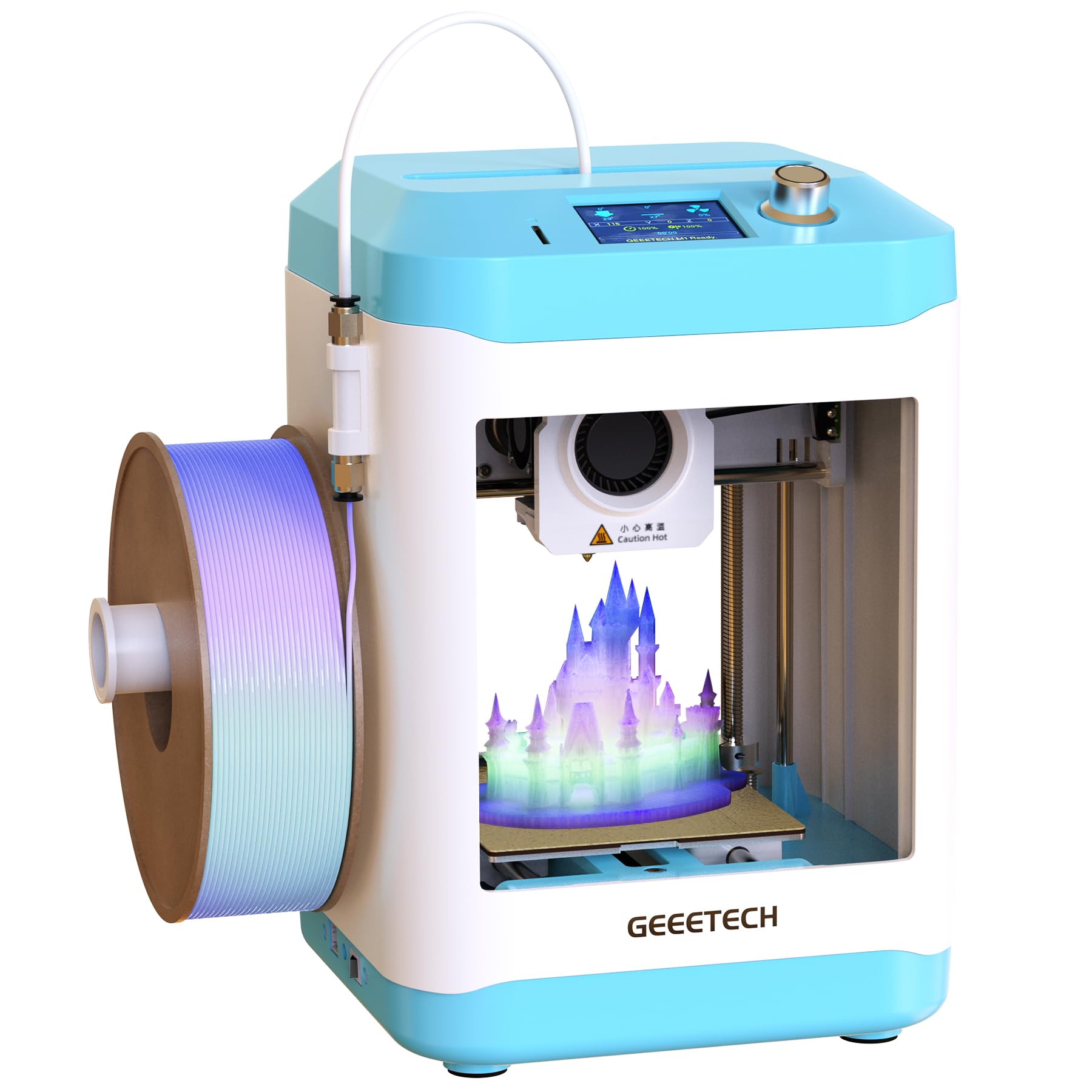
The Geeetech M1 is a fully open-source mini 3D printer designed specifically for schools and STEM learning. The 16-point auto leveling system ensures successful first layers even for first-time users, and the flexible magnetic build plate makes removing small models easy for small hands. The knob-controlled 2.4-inch LCD color screen with bright lighting is intuitive for children to operate.
The dual-drive metal gear extruder with a 1:5 gear ratio provides consistent force for both PLA and flexible TPU filaments. The 50W heating rod allows speeds up to 250mm/s, and the compact 100x110x100mm build volume is perfect for producing small shapes, animals, and educational models. The fully assembled design means no complex setup time—just plug in the TF card and print.
The M1 is not without trade-offs. The filament holder is mounted too low, near the power cable, and some users have reported clogs and layer shift issues when pausing prints. The printer slicer (Orca or Cura) does not have a dedicated kid-friendly app, so children will need adult assistance to slice complex models. For small, simple prints, however, it is a reliable learning tool.
Why it’s great
- Open-source design allows full customization and educational use
- 16-point auto leveling ensures first-layer success for beginners
- Compact size and bright screen make it safe and visible for kids
Good to know
- Filament holder placement near the power cable is awkward for 1kg spools
- Clogs and layer shifts have occurred when pausing prints
FAQ
Do I need a dedicated computer to run a 3D printer?
What is the best filament for a first print?
How often do I need to level the bed on a printer with auto leveling?
Is a fully enclosed printer necessary for a beginner?
What safety precautions should I take with a 3D printer at home?
Final Thoughts: The Verdict
For most users, the 3d printer for starters winner is the Anycubic Kobra X because it combines native multi-color capability, a generous 260mm³ build volume, and the most comprehensive auto leveling system (49 points) at a price that undercuts many single-color rivals. If you want a fully enclosed, set-and-forget workhorse that handles advanced filaments, grab the Bambu Lab P1S. And for a compact, quiet machine designed for kids and tiny creative projects, nothing beats the Bambu Lab A1 mini.