
Our readers keep the lights on and the weekend projects moving. As an Amazon Associate, I earn from qualifying purchases.
There is a specific moment every new diver or surfer knows—the cold shock of water rushing into a rental suit that’s been worn by hundreds of strangers, the awkward struggle of wrestling a tight neoprene tube over your shoulders, and the lingering smell of ocean and locker room you can never quite wash out. Buying your first wetsuit is meant to end that cycle, not introduce a new set of fit or freezing problems.
I’m Rikta — the co-founder and writer behind FitlyFast. I’ve spent hundreds of hours cross-referencing neoprene densities, seam construction types, and sizing charts to match the right beginner wetsuit to the right body type and water temperature.
This guide focuses on seven of the most practical entry-level suits available, breaking down the concrete specs that matter most so you walk into your first dive or surf session with confidence. If you’re shopping for the best beginner wetsuit, understanding thickness, zip style, and seam quality is the difference between a great day on the water and a shivering, chafed mess.
How To Choose The Best Beginner Wetsuit
Before you drop money on any neoprene suit, understand that a wetsuit works by trapping a thin layer of water between your skin and the neoprene, which your body then warms up. If the fit is too loose, that water constantly flushes out and you get cold fast. If it’s too tight, you restrict blood flow and movement. For a beginner, the goal is a “hug” that doesn’t choke.
Thickness and Temperature Range
The vast majority of beginner wetsuits are built with 3mm neoprene, which is a versatile sweet spot for water temperatures between 55°F and 70°F. A 3mm suit gives you enough insulation for spring and fall diving or surfing in most temperate regions without turning you into a stiff board. Some suits use a 3/2mm split (3mm on the chest for core warmth, 2mm on the arms for flexibility), which is a smart design detail that costs no extra money. Avoid anything thinner than 2mm for real immersion—those are rash guards, not wetsuits.
Zip Style: Back Zip vs. Front Zip
For absolute beginners, a back-zip wetsuit with a long pull cord is the most forgiving design. You don’t need a buddy to close it, and the wide opening makes getting your shoulders through far less frustrating than a front-zip entry. The trade-off is that back-zip suits can allow a little more water to trickle down your spine compared to a high-quality front-zip model, but the ease of use makes it the right choice for your first season. Front-zip suits offer a better seal and core warmth but require some practice to get on without assistance.
Seam Construction and Durability
Beginner suits almost always use flatlock stitching, which is comfortable against the skin and prevents chafing. The flatlock stitch joins two panels by overlapping them and sewing flat, creating a low-profile seam. These seams allow some water passage (meaning they’re not fully waterproof), but they stretch well and are cheap to repair. Premium suits use glued and blind-stitched (GBS) seams that are nearly watertight, but they cost significantly more and are not necessary for casual recreational use. For a first suit, flatlock is perfectly fine as long as the stitching looks neat and consistent.
Reading the Size Chart Correctly
The single biggest mistake new buyers make is using their T-shirt size to pick a wetsuit. A wetsuit should be snug everywhere—there should be no air pockets at the lower back, knees, or armpits. Most brands’ size charts use weight as the primary driver, then height to determine the length of the torso and limbs. Ignore chest size unless you’re very broad-shouldered; use weight first. If you’re between sizes, the general rule for new wetsuit users is to go up one size rather than down, because you’ll likely be swimming in slightly warmer water where too-tight is worse than slightly loose.
Quick Comparison
On smaller screens, swipe sideways to see the full table.
| Model | Category | Best For | Key Spec | Amazon |
|---|---|---|---|---|
| Lemorecn Men’s 3/2mm Front Zip | Mid-Range | Cold water versatility | 3mm chest / 2mm arms | Amazon |
| GoldFin Men’s 3mm Back Zip | Mid-Range | Budget all-rounder | 3mm neoprene / 70°F rating | Amazon |
| ZCCO Men’s 3mm Full | Mid-Range | Plus-size fit | 3mm CR neoprene / up to 4XL | Amazon |
| Cressi Skin Full Suit | Premium | Layering / sun protection | 1mm stretch fabric / front zip | Amazon |
| Seaskin Women’s 3mm Front Zip | Mid-Range | Women’s specific fit | 3mm neoprene / YKK front zip | Amazon |
| AnParc Women’s 3mm Back Zip | Mid-Range | Curve-conscious fit | 3mm neoprene / UV 50+ | Amazon |
| O’Neill Youth Reactor-2 3/2mm | Premium | Kids’ durability | 3/2mm neoprene / ankle zips | Amazon |
In‑Depth Reviews
1. Lemorecn Men’s 3/2mm Full Wetsuit Front Zip

The Lemorecn stands out because it uses a 3/2mm panel design rather than a uniform 3mm sheet. The 3mm chest panel locks body heat in where you need it most, while the 2mm sleeves give you better paddle range for surfing or swimming. The flatlock seams run smooth along the inner arms and sides, so you won’t chafe even during a two-hour session. Multiple real-world buyers between 5’11” and 240 lbs reported that the 3XL fits without crunching the neck, though some noted the neck can feel tight for the first hour until the neoprene relaxes.
The front-zip entry takes a little practice on land, but once you’re in, the velcro neck closure and YKK 10# zipper create a very secure seal. Water ingress around the collar is minimal compared to back-zip suits of the same thickness. The suit also includes anti-abrasion knee pads, which are a welcome extra at this price point—kneeling on a surfboard or rocky shore won’t wear through the neoprene after a dozen uses.
For the beginner who wants to dive or surf in water as cool as 55°F without spending premium money, this is the most balanced option. The 3/2mm split gives you warmth without the restriction of a thick suit, and the construction quality matches suits that cost significantly more. The only real trade-off is that the neck fit runs tight for some body shapes, so if you have a thick neck or shoulders, you may want to size up one.
Why it’s great
- 3/2mm panel design provides targeted warmth where you need it and flexibility where you don’t
- Anti-abrasion knee pads add durability for surf and shore entries
- Front zip with YKK zipper creates a very watertight seal
Good to know
- Neck opening runs tight for larger builds and may take a few sessions to break in
- Front-zip entry takes more practice than a back-zip suit
2. GoldFin Men’s 3mm Back Zip Wetsuit

The GoldFin is the entry-level suit that punches above its weight class. The 3mm uniform neoprene construction works well for Southern California and Florida water temps in the low 70s, and the back-zip design with a large marine-grade zipper pull is about as easy as it gets for a first-time user. The ankle zippers are a thoughtful touch that buyers with large feet (sizes up to 13.5) consistently praise—no more wrestling your heels through a tight neoprene cuff.
Multiple verified buyers in the 6-foot, 250-pound range reported that the fit was snug but not restrictive, which is exactly what you want from a wetsuit. The neoprene blend includes nylon on both the interior and exterior, which helps the suit slide on more easily than raw neoprene. The brand’s size chart uses weight as the primary reference, and following it closely (rather than guessing based on height) produces a good result for most body types.
The main compromise here is the zipper flap—or rather, the lack of a substantial one. Without a robust velcro flap covering the back zipper, you’ll get a noticeable cold trickle down your spine when you first submerge. The suit also lacks the anti-abrasion knee pads found on some comparably priced options, so kneeling on rough surfaces will wear the knees faster. That said, for someone who wants a reliable 3mm suit for pool training, snorkeling, or warm-water diving without spending a full day’s pay, this is the sensible choice.
Why it’s great
- Ankle zippers make removal incredibly easy for big feet
- Back-zip design with large pull tab is beginner-friendly
- Solid 3mm neoprene performance for temperate water
Good to know
- Zipper lacks a cover flap, allowing noticeable water entry at the spine
- No reinforced knee pads, so durability on rough surfaces is limited
3. ZCCO Men’s 3mm Premium Neoprene Full Suit

The ZCCO is one of the few budget-friendly wetsuits that extends past the typical 2XL ceiling. Sizes go up to 4XL, and multiple large-framed buyers (6’4″, 280 lbs) confirmed the 4XL fits comfortably. That alone makes it a strong candidate for bigger beginners who struggle to find wetsuits that don’t strain at the shoulders or ride up at the waist. The material uses 90% CR neoprene with a smooth-skin inner at the collar, arms, and legs that helps create a tighter seal against water entry.
The suit uses standard flatlock stitching rather than glued and blind-stitched seams, which is expected at this price tier. Buyers who used it for full open-water SCUBA certification courses reported the stitching held up through multiple dives without coming loose. However, the fit runs noticeably large compared to other brands—a 5’7″, 130-lb athletic male reported the Small was too loose at the knees, hips, and lower back. If you’re ordering, use your weight as the primary guide and consider sizing down if you’re between sizes.
The YKK back zipper with a hook-and-loop closure is sturdy, and the suit comes in several color options that look more expensive than they are. The primary downside is the lack of heat-sealed seams, which means more water flushing through the stitch holes compared to a premium suit. But for warmer water diving, snorkeling, or paddle boarding, this suit offers exceptional value for the build quality and the size range it covers.
Why it’s great
- Available in sizes up to 4XL for larger body types
- 90% CR neoprene with smooth-skin inner seals at collar and cuffs
- Sturdy YKK back zipper with hook-and-loop closure
Good to know
- Sizing runs large; most buyers should order down one size for proper fit
- Flatlock stitching allows water flow through seams, not ideal for cold water
4. Cressi Skin Adult Full Suit
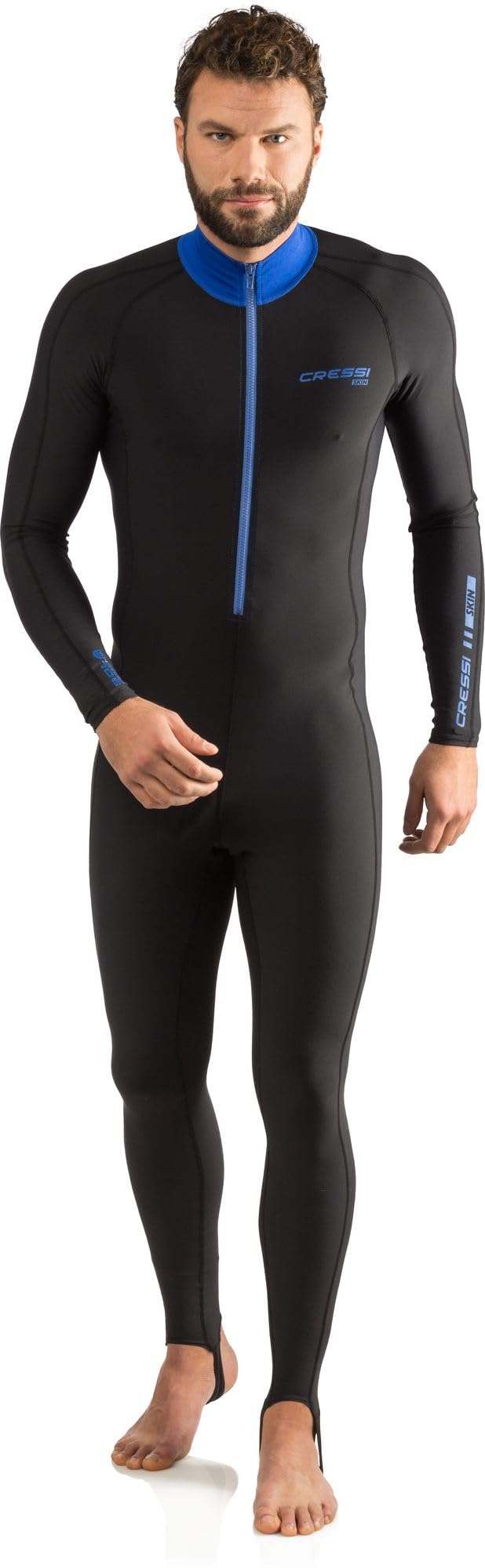
The Cressi Skin is not a standard neoprene wetsuit—it’s an 86% polyester, 14% spandex full-body rash guard that acts as a thermal layer, sun barrier, and sting protection all in one. Many beginners don’t realize that a 1mm skin suit can be worn alone in warm water (75°F+) or under a thicker wetsuit to add a few degrees of warmth while making the outer suit easier to slide on. The front zip helps with donning, though several buyers noted the zipper doesn’t extend low enough, making bathroom breaks inconvenient.
This suit is built for versatility rather than pure warmth. It provides excellent UV protection, and the stretch fabric moves with you during open-water swimming without any restriction. One buyer who used it for long-distance ocean swimming praised its ability to prevent sea lice stings while adding a slight insulating layer. The fabric is machine-washable in a mesh bag, which is a major convenience upgrade over neoprene that requires hand-washing and flat drying.
The key limitation is that this is not a cold-water suit at all. If you plan to dive or surf in water below 70°F, this skin suit will not keep you warm on its own—it’s designed to be a foundation layer or summer-only piece. But for the beginner who wants one versatile garment that works as sun protection for tropical snorkeling and as a layering piece under a 3mm suit, the Cressi Skin is a smart addition to the gear bag.
Why it’s great
- Versatile as a standalone rash guard or as a thermal layering piece under a wetsuit
- Machine-washable for easy care
- Excellent UV and jellyfish sting protection
Good to know
- Provides minimal warmth on its own—not suitable for cold water without a layer
- Front zipper does not extend low enough for easy bathroom use
5. Seaskin Women’s 3mm Fullsuit Front Zip

The Seaskin women’s suit is one of the most consistently well-rated beginner wetsuits for female divers and surfers. The 3mm neoprene provides reliable insulation for water in the 55°–68°F range, and the three-layer fabric construction (outer nylon, middle neoprene, inner thermal lining) helps the suit dry faster between sessions. The flatlock stitching runs cleanly along the seams, and most buyers reported zero chafing even after hours of paddling or diving.
Several female buyers in the 5’3″ to 5’6″ range reported that the XS and S sizes fit snugly without creating pressure points at the neck or shoulders. The front-zip entry with a heavy-duty YKK zipper is easy to manage solo, and the suit’s overall flexibility allows for full range of motion while swimming. The knee pads on this model are thicker than many budget alternatives, adding some protection for kneeling on pool decks or boat ladders.
The most common critique from buyers is that the hip area runs slightly loose—about half an inch to one inch of extra fabric for some body shapes. This doesn’t affect thermal performance, but it can create a small pocket of air that looks bunched under a rash guard. For most beginners, this is a minor cosmetic issue, and the combination of quality neoprene, front-zip convenience, and women-specific sizing makes this a strong contender for your first suit.
Why it’s great
- Three-layer neoprene construction dries faster and provides consistent warmth
- Front-zip YKK zipper allows easy solo entry and exit
- Good range of women’s sizes with accurate fit for smaller frames
Good to know
- Hip area can feel slightly loose for some body shapes
- Only available in a few color options
6. AnParc Women’s 3mm Neoprene Back Zip

The AnParc women’s suit is a solid back-zip option that prioritizes ease of entry and a flattering cut. The 3mm neoprene is laminated with a three-layer construction similar to the Seaskin, but the AnParc uses a back zipper with a long pull rope that makes it very beginner-friendly. The suit is available in several color combinations including black/aqua, which adds a bit of personality without looking garish.
Buyers around 5’4″ to 5’6″ with chest measurements in the 40–41 inch range reported that the size Large fits well through the bust without uncomfortable compression, though the crotch area can hang slightly loose on shorter torsos. The suit includes reinforced knee padding and UV 50+ protection, and the neoprene feels soft against the skin without the chemical smell that some budget suits carry. The back zip creates a good seal, and the velcro collar closure keeps water flushing to a minimum.
The main drawback is that the back-zip design—while easier to get into—allows slightly more water entry around the neck and spine compared to front-zip suits. Some buyers also noted that the suit runs a little long in the torso, so shorter women should pay close attention to the height recommendations on the size chart. For the beginner woman who wants a comfortable, stylish, and affordable 3mm suit for warm-water snorkeling and surfing, the AnParc delivers everything you need without overcomplicating the design.
Why it’s great
- Back zipper with long pull rope is the easiest design for first-time use
- Flattering cut with multiple color options
- Soft neoprene with no strong chemical odor
Good to know
- Back-zip design allows some water trickle at the neck
- Torso runs long; shorter women may experience a droop in the crotch
7. O’Neill Youth Reactor-2 3/2mm Back Zip Full Wetsuit

The O’Neill Reactor-2 is a recognized name in the youth wetsuit space, and for good reason—it’s built with the same 3/2mm neoprene panel design as adult performance suits but scaled down for smaller frames. The arms use 2mm neoprene for flexibility, which matters a lot for kids who are learning to paddle and swim. The back-zip entry with a long pull cord is straightforward, and the ankle zippers eliminate the struggle of pulling neoprene over wet feet.
Multiple parents reported buying this suit for multiple children across several years because the construction holds up to the abuse of sandy beach entries, scraping against surfboards, and repeated rinsing. The knee pads are reinforced in a way that’s durable enough for active kids who spend more time kneeling than standing. The size chart uses age and weight, and buyers noted that the fit runs slightly long in the arms and legs—which is actually helpful since kids grow quickly and the suit can be used for two seasons before being outgrown.
The main consideration is that this is a youth-specific suit, so adult beginners won’t find their size here. Also, the color options for the youth line are more limited than the adult range, which some kids may find boring. But for a parent buying their child’s first real wetsuit (not just a rash guard), the O’Neill Reactor-2 is the proven, durable option that will survive a season of enthusiastic use and still look good for the next kid.
Why it’s great
- 3/2mm neoprene split provides core warmth and arm flexibility for active kids
- Ankle zippers make entry and exit much easier for children
- Durable reinforced knee pads withstand beach and surfboard use
Good to know
- Youth sizing only—not available for adult beginners
- Limited color options for the youth line may not appeal to all kids
FAQ
Should I buy a 3mm or 5mm wetsuit as a beginner?
How tight should a beginner wetsuit fit?
Can I use a wetsuit for swimming laps in a pool?
What does the “3/2mm” designation mean?
How do I care for my first wetsuit to make it last?
Final Thoughts: The Verdict
For most users, the best beginner wetsuit winner is the Lemorecn Men’s 3/2mm Front Zip because its paneled neoprene design gives you the warmth of a winter suit with the flexibility of a summer model, all at a price that won’t make you hesitate to use it. If you want a back-zip suit that’s even easier to get into and plan to stay in warm water, grab the GoldFin Men’s 3mm Back Zip. And for bigger body types who have struggled to find a comfortable fit elsewhere, the ZCCO 3mm Full Suit offers the widest size range at the lowest cost.