
Our readers keep the lights on and the weekend projects moving. As an Amazon Associate, I earn from qualifying purchases.
That fishy aftertaste, the dreaded fish burps hours later, and the nagging doubt that your expensive fish oil is even being absorbed properly—these are the real frustrations that drive people away from omega-3 supplements. Antarctic krill oil solves all three with phospholipid-bound omega-3s that absorb more efficiently than fish oil and leave zero reflux.
I’m Rikta — the co-founder and writer behind FitlyFast. I’ve spent countless hours dissecting the molecular differences between triglyceride and phospholipid omega-3 delivery, sourcing certifications, and bioavailability metrics to separate the supplements that actually work from those that just smell like the ocean.
Whether you need joint relief, cardiovascular support, or a brain boost without the burp, this guide to the best antarctic krill oil breaks down seven top contenders by absorption mechanics, purity testing, and real user outcomes.
How To Choose The Best Antarctic Krill Oil
Not all krill oil is created equal. Differences in EPA/DHA concentration, phospholipid content, sourcing standards, and purity testing create a wide gap between budget options and high-performing supplements. Understanding these variables prevents you from wasting money on a product that offers little more than a fishy placebo.
Check the Phospholipid Content
This is the single most important metric for krill oil effectiveness. The omega-3s in krill oil are bound to phospholipids, which allows them to emulsify in the watery environment of your stomach and pass into your bloodstream more efficiently than fish oil’s triglyceride form. A higher phospholipid percentage generally means better absorption and fewer digestive issues.
Verify Sustainability and Purity Certifications
Look for Marine Stewardship Council (MSC) certification, which ensures the krill was harvested with minimal environmental impact. Third-party testing for heavy metals, PCBs, and dioxins is equally critical—Antarctic krill feed low on the food chain, so contamination risk is lower, but reputable brands still test each batch and publish results.
Evaluate Astaxanthin Levels
Astaxanthin is the natural antioxidant that gives krill oil its characteristic red hue and prevents the oil from oxidizing. Higher astaxanthin content means the oil stays fresh longer on your shelf and provides additional free-radical fighting benefits in your body. Most quality krill oils contain between 100 and 500 mcg of astaxanthin per softgel.
Quick Comparison
On smaller screens, swipe sideways to see the full table.
| Model | Category | Best For | Key Spec | Amazon |
|---|---|---|---|---|
| Kori Krill Oil | Premium | Maximum Absorption | 560mg phospholipids per serving | Amazon |
| Kirkland Signature | Mid-Range | Budget Value in Bulk | 160 softgels per bottle | Amazon |
| BioEmblem | Premium | Heavy Metal Purity | 340mg omega-3 per 1000mg serving | Amazon |
| ONNIT | Mid-Range | MSC Certified Sourcing | iGEN Non-GMO tested | Amazon |
| Natures Craft | Mid-Range | High Count Supply | 240 softgels per bottle | Amazon |
| Micro Ingredients | Budget-Friendly | Fish/Krill Blend Value | 2000mg eq. blend per serving | Amazon |
| Nutricost | Budget-Friendly | Entry-Level Krill | 1000mg krill oil per serving | Amazon |
In‑Depth Reviews
1. Kori Krill Antarctic Krill Oil
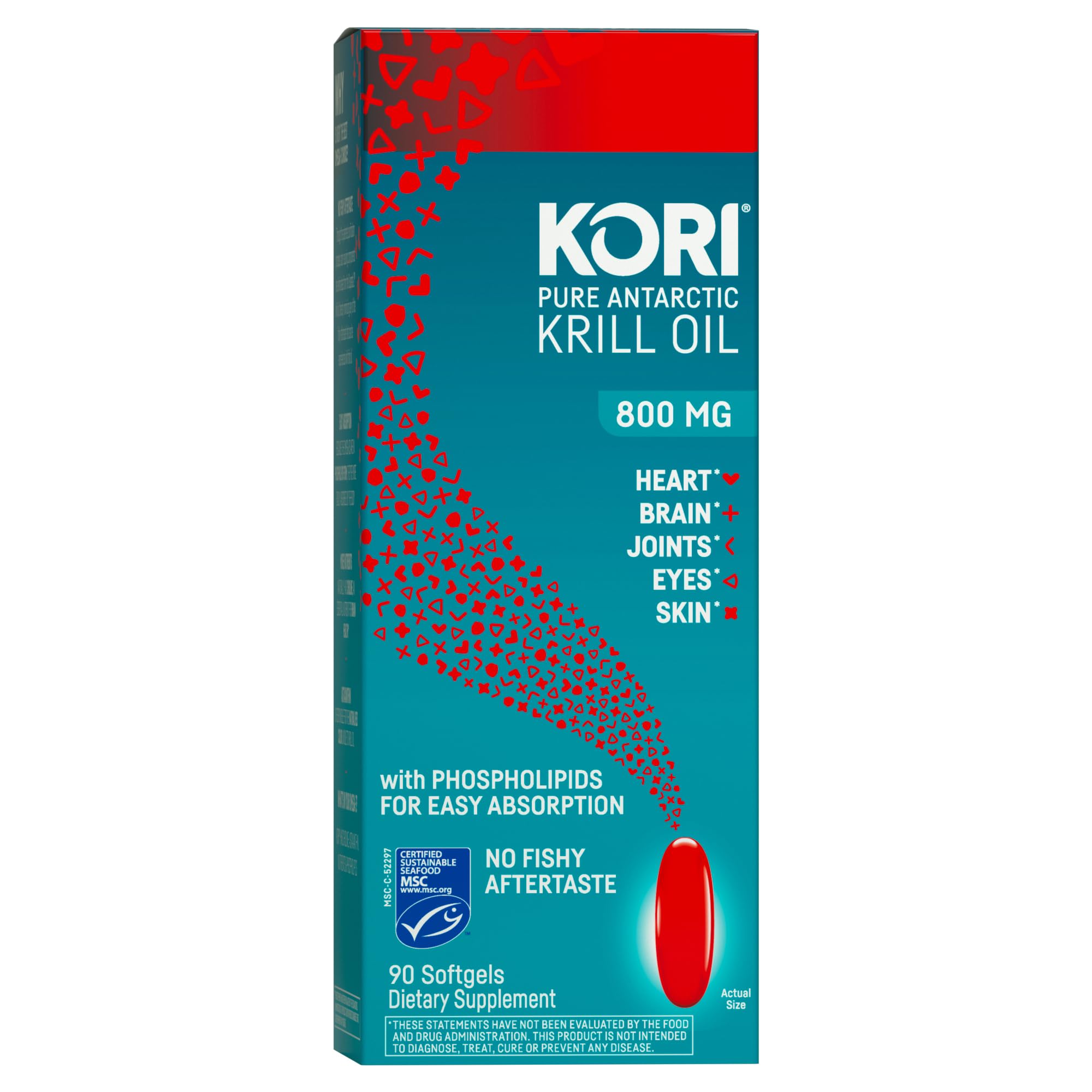
Kori hits the sweet spot between absorption science and everyday usability. Each softgel delivers 560mg of phospholipids—the highest concentration in this lineup—which means the omega-3s are delivered to your organs faster and more efficiently than any fish oil. The 70mg of choline per serving adds a brain-support bonus that most krill oils skip entirely.
The advanced formulation also includes astaxanthin as a natural stabilizer, keeping the oil fresh without artificial preservatives. Kori reports no burp and no fishy aftertaste, and the brand describes this as a clinically-proven source to raise omega-3 index levels within 30 days.
On the sustainability front, Kori sources exclusively from Antarctic waters with independent evaluations for environmental responsibility. The 90-count bottle provides a solid month-plus supply at a per-serving cost that justifies the premium positioning. If you want the most bioavailable krill oil on this list, this is it.
Why it’s great
- 560mg phospholipids for superior absorption
- 70mg choline supports brain and liver health
- No fishy aftertaste or burping reported
Good to know
- Softgels are slightly larger than some competitors
2. Kirkland Signature Krill Oil

Kirkland Signature has built its reputation on delivering warehouse-scale value, and their krill oil is no exception. The 160-count bottle offers the highest softgel count in this group, making it a strong choice for families or individuals committed to daily omega-3 supplementation. Each 500mg softgel is smaller than most krill capsules, which is a practical advantage for anyone who struggles with large pills.
While the per-capsule omega-3 content is lower than premium options—you need two softgels to match a standard 1000mg serving—the overall cost per gram of omega-3 remains competitive. Users note a mild earthy smell when opening the bottle, but consistently report no fishy burps or aftertaste, which is the primary complaint that drives people away from fish oil in the first place.
The lack of published third-party testing details is worth noting. Kirkland relies on its manufacturing quality control rather than transparent batch-level lab reports. For most users, the balance of price, quantity, and acceptable absorption makes this a dependable daily driver for general omega-3 maintenance.
Why it’s great
- 160-count bottle offers excellent bulk value
- Small softgels are easy to swallow
- No fishy aftertaste despite initial bottle odor
Good to know
- Lower EPA/DHA per capsule (requires two softgels)
- No individual batch testing disclosed
3. BioEmblem Antarctic Krill Oil

BioEmblem stands out for its commitment to purity verification. Their krill oil is filtered and tested for heavy metals and other contaminants, and the manufacturing facility is NSF-registered and cGMP-certified in California. Each 1000mg serving delivers 340mg of omega-3s, including 136mg of EPA and 64mg of DHA, plus phospholipids and astaxanthin for enhanced absorption and oxidation protection.
The phospholipid-bound omega-3s are designed for high bioavailability, and the softgels are small enough to swallow comfortably. The company avoids artificial stearates and sulfates, catering to those with sensitive digestive systems or clean-label priorities.
The non-GMO certification and absence of common allergens—soy, gluten, dairy, and corn—make this a safe choice for restricted diets. While the omega-3 totals are moderate compared to high-concentration blends, the purity focus and third-party accountability justify the mid-range positioning for buyers who prioritize clean sourcing above raw numbers.
Why it’s great
- Heavy metal tested and NSF-registered facility
- Small, easy-to-swallow softgels
- Free from soy, gluten, dairy, and corn
Good to know
- Moderate EPA/DHA levels compared to higher-dose options
4. ONNIT Antarctic Krill Oil

ONNIT brings a performance-oriented angle to krill oil, backed by Marine Stewardship Council certification for sustainable harvesting and iGEN Non-GMO verification for ingredient integrity. The 1000mg per serving formulation is designed to support cognitive function, cardiovascular health, and joint mobility—a broad-spectrum approach that aligns with ONNIT’s athletic and biohacking audience.
The omega-3s support joint, cardiovascular, and brain function as part of healthy cell membrane structure. The astaxanthin content provides antioxidant protection while keeping the oil fresh, and the phospholipid structure is designed to be absorbed without the digestive upset common with lower-quality fish oils. The strong oceanic smell upon opening is a sign of fresh, non-deodorized krill rather than a quality defect.
With a 60-count bottle, this is not the highest-volume option, but the combination of MSC certification and iGEN testing provides a level of supply-chain transparency that appeals to buyers who want to verify every link in the production chain. For buyers focused on joint mobility and cardiovascular support alongside verified sourcing, ONNIT is a solid pick.
Why it’s great
- MSC certified for sustainable Antarctic sourcing
- iGEN Non-GMO tested for purity
- Supports joint, cardiovascular, and brain function
Good to know
- Noticeable oceanic smell when bottle is opened
- 60-count bottle requires more frequent repurchasing
5. Natures Craft Antarctic Krill Oil

Natures Craft offers a high-volume option that doesn’t compromise on the core krill oil benefits. The 240 softgel bottle provides an eight-month supply at a reasonable per-serving cost, making it a practical choice for long-term supplementation. Each 500mg softgel delivers omega-3s with EPA, DHA, and naturally occurring astaxanthin for heart and brain health support.
The softgel size makes it easy to swallow despite the high count, and the capsules are designed to leave no aftertaste. The manufacturer recommends taking the softgels with meals for optimal absorption, which is consistent with the phospholipid delivery mechanism.
The lack of third-party certification disclosures is a minor drawback, though Natures Craft maintains standard GMP compliance. For buyers who prioritize bottle longevity and value over batch-level testing transparency, this is a solid mid-range krill oil that covers the essentials without unnecessary markup.
Why it’s great
- 240-count bottle lasts eight months at one softgel daily
- Softgels are comfortable to swallow despite product volume
- Contains naturally occurring astaxanthin alongside omega-3s
Good to know
- No third-party testing certifications disclosed
6. Micro Ingredients Mega Omega-3 Krill & Fish Oil
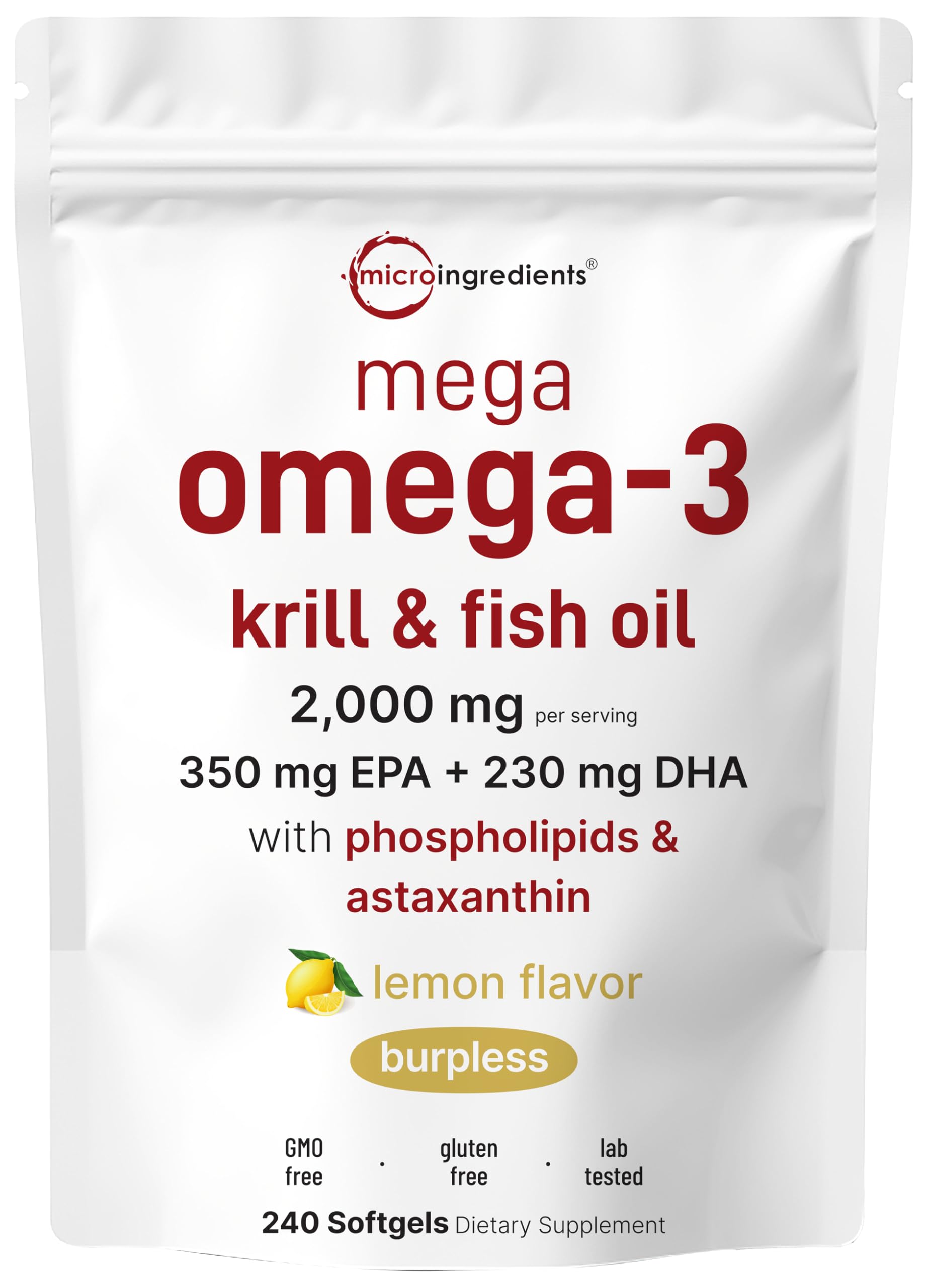
Micro Ingredients takes a hybrid approach by blending purified fish oil with Antarctic krill oil. The theory is sound—fish oil provides higher EPA/DHA density while krill oil contributes phospholipids and astaxanthin for better absorption and oxidation resistance. Each serving delivers 350mg of EPA and 230mg of DHA from a 2000mg equivalent complex, which is significantly more omega-3 per capsule than pure krill options.
The enteric-coated softgels are lemon-flavored and burpless, addressing the two most common complaints about omega-3 supplements simultaneously. Users report easy swallowing, no sticky residue, and no aftertaste. The bulk 240-count pouch format reduces packaging waste and per-serving cost, though the pouch is less convenient for travel compared to traditional bottles.
This is a budget-friendly entry point for users who want the benefits of krill oil without paying a premium for 100% krill sourcing. The blend format is less pure than dedicated krill oils, but the higher EPA/DHA numbers make it functionally effective for heart and brain support at a substantially lower cost per milligram of omega-3.
Why it’s great
- Higher EPA/DHA per serving than pure krill oils
- Lemon flavor eliminates fishy aftertaste
- Enteric-coated to prevent burping
Good to know
- Blend format dilutes krill-specific phospholipid benefits
- Pouch packaging less portable than bottles
7. Nutricost Krill Oil 1000mg
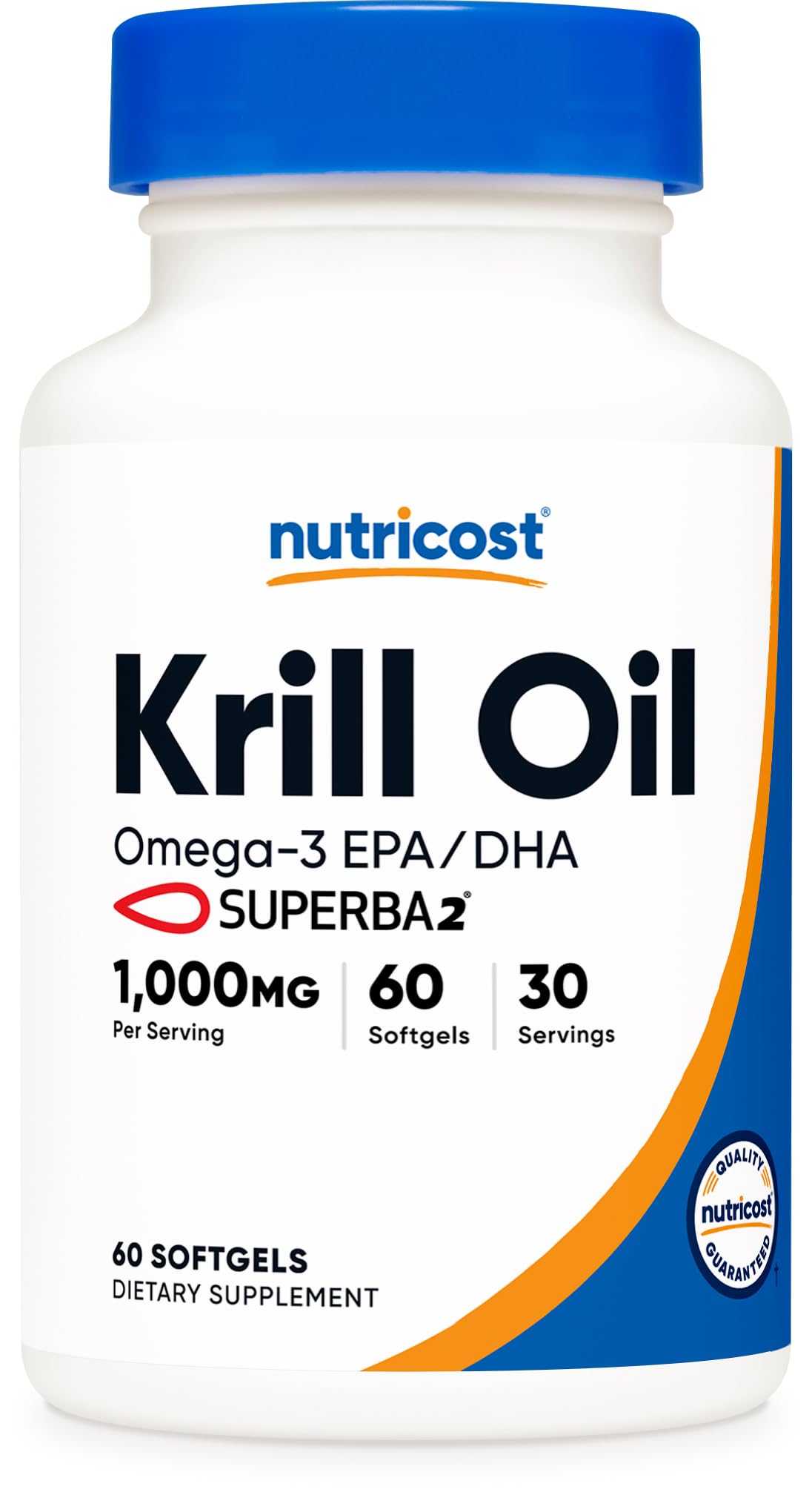
Nutricost positions itself as the no-nonsense entry point for krill oil supplementation. Each 1000mg serving uses Superbakrill, a standardized krill oil ingredient known for consistent omega-3 content and phospholipid levels. The formulation is manufactured in a GMP-compliant, FDA-registered facility, providing baseline quality assurance at the lowest price point in this lineup.
Users transitioning from fish oil report immediate relief from fish burps and find the softgels easy to incorporate into their daily routine. While the product lacks the detailed phospholipid and astaxanthin counts of premium competitors, it delivers the fundamental krill oil benefits—omega-3 EPA/DHA in a more absorbable form—at a price that makes daily supplementation accessible.
The 60-count bottle provides a one-month trial window to assess tolerance and effectiveness before committing to larger quantities. For cost-conscious buyers who want to test krill oil without a financial commitment, Nutricost offers a no-regret starting point that still meets GMP manufacturing standards.
Why it’s great
- Lowest barrier to entry for krill oil supplementation
- GMP-compliant facility ensures baseline quality
- Eliminates fish burps compared to standard fish oil
Good to know
- No detailed phospholipid or astaxanthin levels provided
- 60-count bottle requires monthly repurchasing
FAQ
How much EPA and DHA should I look for in a krill oil supplement?
Will Antarctic krill oil cause fish burps like standard fish oil does?
Why is Antarctic krill oil more expensive than regular fish oil?
Final Thoughts: The Verdict
For most users, the best antarctic krill oil winner is the Kori Krill Oil because its 560mg phospholipid content and added choline deliver superior absorption and comprehensive health support. If you want bulk value without sacrificing quality, grab the Kirkland Signature Krill Oil for its 160-capsule supply at a competitive price. And for joint relief and verified sustainable sourcing, nothing beats the ONNIT Antarctic Krill Oil with its MSC certification and iGEN testing.