
Our readers keep the lights on and the weekend projects moving. As an Amazon Associate, I earn from qualifying purchases.
Stepping into outdoor photography means trading predictable studio light for the raw, untamed elements — harsh midday sun, fast-moving clouds, dust, and even light rain. The camera you choose needs to deliver sharp, vibrant images in variable conditions without overwhelming you with menus and settings. This guide cuts through the noise to find the models that balance rugged dependability, image quality, and a learning curve that won’t kill your creative spark.
I’m Rikta — the co-founder and writer behind FitlyFast. I’ve spent countless hours analyzing lens ecosystems, weather-sealing IP ratings, sensor performance in low light, and autofocus tracking systems to determine which cameras truly handle the demands of the trail and the beginner’s budget.
Whether you’re capturing sweeping landscapes at golden hour or a distant bird in flight, the right gear makes all the difference. We’ve vetted dozens of models to bring you the definitive guide to the best beginner camera for outdoor photography.
How To Choose The Best Beginner Camera For Outdoor Photography
Selecting your first camera for outdoor work requires focusing on environmental resistance, portability, and a system that grows with you. Here are the critical factors to weigh before making your purchase.
Weather Sealing and Build Durability
Outdoor photography exposes your gear to dust, moisture, and temperature extremes. A camera with robust weather sealing—rubber gaskets around battery doors, lens mounts, and button housings—can mean the difference between a working camera and a brick after a light drizzle or a dusty hike. Look for models explicitly stating “weather-sealed” construction.
Sensor Size and Low-Light Performance
A larger sensor captures more light, which is critical for the deep shadows of a forest or the soft light of dawn. APS-C sensors (found in many beginner DSLRs and mirrorless cameras) offer a great balance of size and performance. Full-frame sensors provide even better dynamic range and low-light capability but come at a higher cost and weight penalty.
Autofocus System for Moving Subjects
Wildlife, running water, and moving hikers demand a responsive autofocus system. Look for phase-detection AF points that cover a wide area of the frame. Features like animal and eye-detection AF are incredibly helpful for beginners trying to track a bird or a pet on the trail.
Image Stabilization (IBIS vs. Lens-Based)
When shooting handheld in low light or with a long telephoto lens, image stabilization is a must. In-Body Image Stabilization (IBIS) works with any lens you mount, making it a versatile choice for outdoor photographers who might swap lenses in the field. Lens-based stabilization (OIS/VR) is also effective but only active with that specific lens.
Quick Comparison
On smaller screens, swipe sideways to see the full table.
| Model | Category | Best For | Key Spec | Amazon |
|---|---|---|---|---|
| Sony a7 III | Mirrorless | Landscape & Low-Light | 24.2MP Full-Frame Sensor | Amazon |
| Canon EOS RP | Mirrorless | Full-Frame Entry | 26.2MP Full-Frame Sensor | Amazon |
| OM SYSTEM OM-5 | Mirrorless | Weatherproof Travel | Weather Sealed Body | Amazon |
| Nikon Z50 II | Mirrorless | Versatile Two-Lens Kit | 20.9MP APS-C Sensor | Amazon |
| Nikon D7500 | DSLR | Action & Wildlife | 51-Point AF System | Amazon |
| Canon EOS R100 | Mirrorless | Compact Entry | 24.1MP APS-C Sensor | Amazon |
| OM SYSTEM E-M10 IV | Mirrorless | Lightweight Starter | 20MP Micro 4/3 Sensor | Amazon |
| Panasonic LUMIX G85 | Mirrorless | Stabilized Video/Photo | 5-Axis IBIS | Amazon |
| Sony a7C II | Mirrorless | Compact Full-Frame | 33MP Full-Frame Sensor | Amazon |
| Panasonic LUMIX ZS99 | Point & Shoot | Ultra-Zoom Travel | 24-720mm Zoom Lens | Amazon |
| Canon EOS 2000D Bundle | DSLR | Budget-Friendly Start | 24.1MP APS-C Sensor | Amazon |
In‑Depth Reviews
1. Sony a7 III Full-Frame Mirrorless with 28-70mm Lens

The Sony a7 III is a benchmark that has defined the full-frame mirrorless category for good reason. Its 24.2-megapixel back-illuminated sensor delivers outstanding dynamic range and low-light performance, which is essential for capturing the subtle tones of a twilight landscape or the texture of a sunlit mountain face. The 693 phase-detection AF points cover 93% of the frame, giving beginners a huge margin for error when composing action shots.
This camera is a workhorse for outdoor photography due to its 10 fps continuous shooting and impressive 15-stop dynamic range, meaning you can recover shadow and highlight detail in post-processing. The kit 28-70mm lens is a reliable, if basic, starter optic. Many users note the battery life is exceptional for a mirrorless camera, lasting over 700 shots per charge, which is a major plus on a full-day hike without access to power.
While the menu system can feel dense, the core performance and image quality are so compelling that most beginners quickly learn to work around it. The a7 III lacks a fully articulating screen, which can make low-angle tripod work a bit awkward, and the 4K video has minor crop and rolling shutter. However, as a stills-first camera for the outdoors, it remains a powerhouse that will serve a beginner for years.
Why it’s great
- Exceptional full-frame dynamic range for landscapes
- Industry-leading battery life for long treks
- Fast and accurate AF with excellent subject tracking
Good to know
- Menu system has a steep learning curve for new users
- Kit lens is adequate but limits low-light reach
- No fully articulating touchscreen for odd angles
2. Sony Alpha 7C II Full-Frame Mirrorless

The Sony a7C II packs the latest full-frame technology into a body that rivals the size of many APS-C cameras. Its 33-megapixel sensor and dedicated AI processing unit deliver exceptional subject recognition, including precise tracking of animals and birds, making it a fantastic option for the beginner wildlife photographer who values portability. The BIONZ XR processor ensures fast operation and world-class 4K 4:2:2 10-bit video
The compact size is a massive advantage for outdoor use—this camera fits in a small daypack or even a large jacket pocket, encouraging you to actually bring it on every hike. The flip-out vari-angle screen is useful for vlogging or getting ground-level shots of wildflowers. Users consistently praise the telepathic-like eye-tracking autofocus and the intuitive, improved menu system over the previous generation.
The main trade-offs for such a small full-frame are a lower-resolution electronic viewfinder (EVF) compared to bulkier alternatives and a single SD card slot, which is a consideration for professionals but less of a concern for a beginner. The body is not as aggressively weather-sealed as the OM SYSTEM options, and you’ll want to be cautious in heavy rain. For the beginner who wants pro-level image quality in a truly carry-everywhere package, this is a top contender.
Why it’s great
- Extremely compact and lightweight for a full-frame camera
- Excellent AI-based autofocus for animal and bird tracking
- High-resolution 33MP sensor for detailed landscapes
Good to know
- Smaller EVF can be less comfortable for long periods
- Only one SD card slot
- Weather sealing is adequate but not top-tier for heavy rain
3. Canon EOS RP with RF24-105mm Lens Kit

The Canon EOS RP is the most accessible entry point into the full-frame world, and when paired with the versatile RF 24-105mm f/4-7.1 IS STM lens, it becomes a formidable outdoor companion. The 26.2-megapixel sensor produces images with the shallow depth of field and rich color science that Canon is known for, instantly elevating travel and landscape photos above what a smartphone can achieve.
This camera is incredibly lightweight for a full-frame body, making it a pleasure to carry on long hikes. The 5-axis optical image stabilization in the kit lens helps keep handheld shots sharp in the fading light of a forest. The user interface is classic Canon—intuitive, simple, and welcoming for a beginner, with a fully articulating touchscreen that makes composing from low or high angles effortless.
Potential buyers should be aware of the 4K video limitations: a significant crop factor, no Dual Pixel AF in 4K, and a 30-minute recording limit. The kit lens, while light and stabilized, has a slow variable aperture that struggles in very dim conditions without a tripod. For a beginner focused on still photography and 1080p video, it is a superb, cost-effective way to get full-frame results.
Why it’s great
- Most affordable entry to full-frame mirrorless
- Very lightweight and comfortable for all-day carry
- Intuitive menu system perfect for beginners
Good to know
- 4K video features are severely cropped and limited
- Kit lens aperture is slow in low light
- Battery life is average; a spare is recommended
4. OM SYSTEM OM-5 Mark II Body
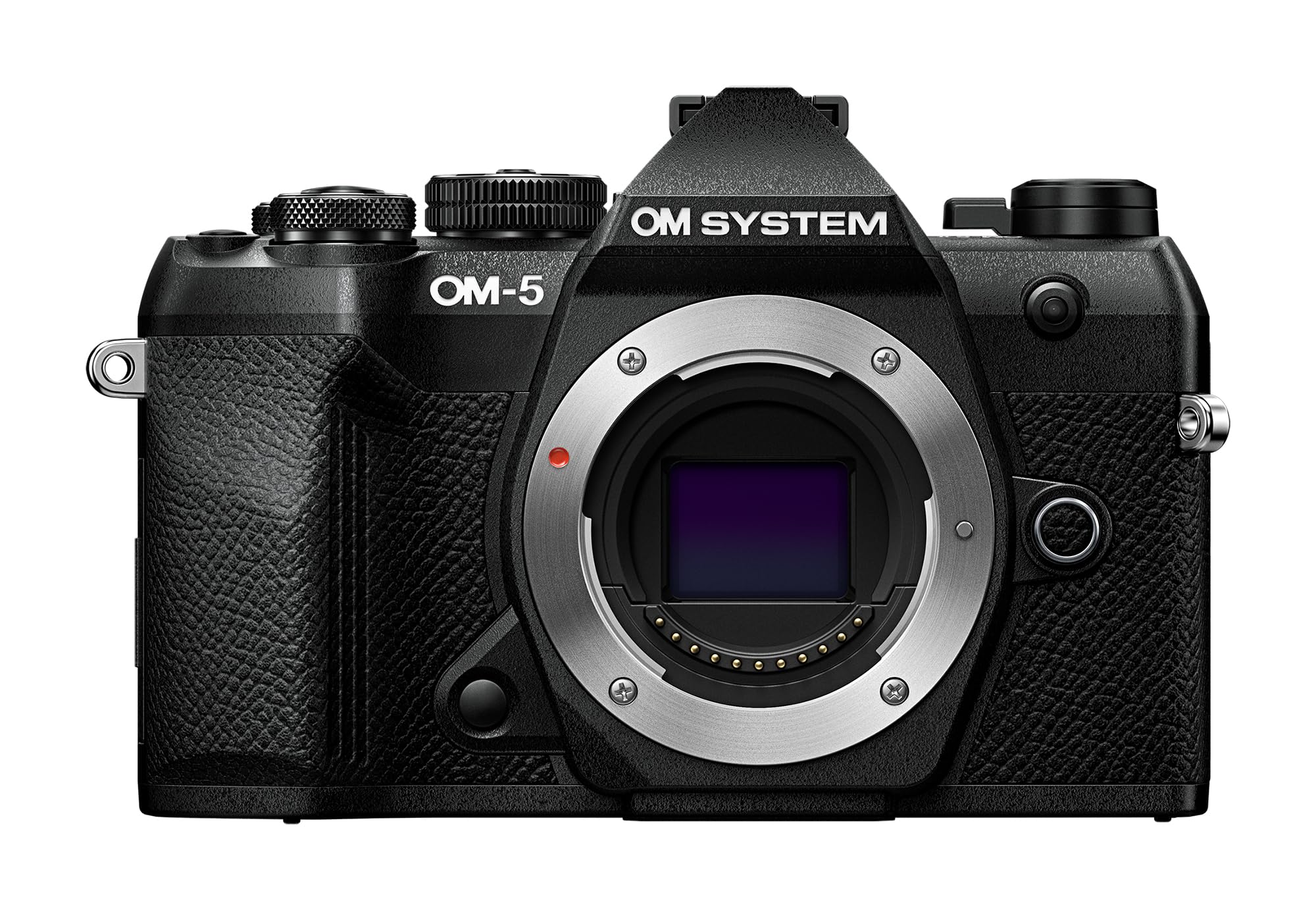
The OM SYSTEM OM-5 is the camera you take when the weather forecast looks grim. Built with extensive weather sealing, a magnesium alloy chassis, and a dust- and splash-proof design, it is ready for rain, sand, and snow. Its micro four-thirds sensor delivers 20-megapixel images and is paired with the industry’s best 5-axis in-body image stabilization, rated up to 6.5 stops.
This stabilization is a game-changer for outdoor photography—you can shoot handheld at impossibly slow shutter speeds for silky waterfalls or twilight cityscapes without a tripod. The body is also remarkably compact and lightweight, and it includes features like focus bracketing and a built-in computational photography button that unlocks high-res modes and live ND filters. These tools help beginners capture complex scenes with minimal effort.
The micro four-thirds sensor has a smaller physical size than APS-C or full-frame, meaning you get a 2x crop factor on lenses (making telephoto photography easier) but slightly less dynamic range and high-ISO performance. The menu system can feel deep, but the in-camera features are so powerful that they offset the learning curve. This is a top pick for the beginner who prioritizes durability and stabilization above all else.
Why it’s great
- Excellent weather sealing for harsh outdoor conditions
- World-class in-body image stabilization
- Compact and lightweight with powerful computational features
Good to know
- Micro 4/3 sensor has smaller dynamic range than larger sensors
- Battery life is modest; carry a spare
- Small grip can be cramped for larger hands
5. Nikon Z50 II with Two Lenses

The Nikon Z50 II is a thoughtfully designed mirrorless camera for the creative beginner. Its 20.9-megapixel DX-format sensor captures vibrant colors and impressive detail, and the inclusion of two lenses—a 16-50mm standard zoom and a 50-250mm telephoto zoom—provides coverage from wide-angle landscapes to distant wildlife, all in a package that fits easily in a small bag.
One of its standout features is the dedicated Picture Control button, offering 31 built-in presets that allow you to preview and apply stylistic looks in real time. This is an excellent learning tool, helping beginners understand how different color profiles affect a scene. The autofocus system is superb, with 231 points and subject detection that reliably tracks people, dogs, cats, birds, and vehicles, making it a breeze to capture action.
The body includes a built-in flash, which is handy for fill light in backlit landscapes. The Z50 II uses a single SD card slot and its battery life is average for a mirrorless camera. While not as ruggedly weather-sealed as the OM-5, its compact size and dual-lens versatility make it an extremely compelling starter kit for the aspiring outdoor photographer.
Why it’s great
- Comes with two lenses covering wide to telephoto range
- User-friendly with creative Picture Control presets
- Reliable subject-detection autofocus for wildlife
Good to know
- Single SD card slot
- Battery life is adequate but not exceptional
- Weather sealing is limited; avoid heavy rain
6. Nikon D7500 with 18-140mm Lens

The Nikon D7500 is a classic DSLR that brings professional-grade performance from Nikon’s flagship D500 down to a more accessible price point. Its 20.9-megapixel APS-C sensor, paired with Nikon’s EXPEED 5 image processor, delivers excellent low-light performance and class-leading image quality. The 51-point autofocus system with 15 cross-type sensors is fast and reliable, and the 8 fps continuous shooting is perfect for capturing fast-moving wildlife or sport.
The included AF-S DX NIKKOR 18-140mm f/3.5-5.6G ED VR lens is a fantastic all-in-one travel zoom, providing a versatile range from wide-angle to medium telephoto. The optical VR stabilization helps in tricky conditions. The large, bright optical viewfinder is a joy to use for composing shots, providing a clear, lag-free view of your subject, which is still valued by many outdoor photographers over electronic viewfinders.
At this point, the D7500 is a mature design from 2017, so it lacks some modern mirrorless features like in-body stabilization and a fully articulating touchscreen. It is also a larger, heavier kit compared to a mirrorless alternative. For a beginner who appreciates the classic DSLR feel, the optical viewfinder, and wants a proven, durable body with a killer lens, this remains an outstanding choice.
Why it’s great
- Robust build quality with weather-resistant construction
- Excellent 18-140mm kit lens is very versatile for travel
- Superb battery life lasting all day on a single charge
Good to know
- Heavier and bulkier than mirrorless competitors
- No in-body image stabilization
- Lacks modern features like a fully articulating screen
7. Canon EOS R100 with RF-S18-45mm Lens

The Canon EOS R100 is the smallest and lightest body in the EOS R series, designed for maximum portability without sacrificing image quality. Its 24.1-megapixel APS-C sensor and DIGIC 8 processor produce sharp, colorful images that are a clear step up from any phone. The Dual Pixel CMOS AF with 143 zones and human/animal eye detection is snappy and reliable, even for a beginner.
Its compact design means it can be tossed into a larger coat pocket or a tiny sling bag, making it the ideal “always with you” camera for spontaneous outdoor adventures. The 4K video capability is a bonus for capturing hiking memories, though it is limited to 24p. The user guide is straightforward, and the camera includes creative filters that help new photographers experiment with different looks.
The lack of in-body stabilization means you’ll need steady hands or a lens with IS for sharp handheld shots in low light. The electronic viewfinder is small and basic, and the single SD card slot is the bare minimum. For a beginner on a tight budget who wants to step into the Canon RF ecosystem with a capable, pocket-friendly body, the R100 is a strong starting point.
Why it’s great
- Ultra-compact and lightweight body for easy travel
- Good Dual Pixel autofocus with eye detection
- Accessible entry into the modern Canon RF lens system
Good to know
- No in-body image stabilization
- Small, basic electronic viewfinder
- 4K video is limited to 24fps with no slow-motion
8. OM SYSTEM E-M10 Mark IV with 14-42mm Lens

The OM SYSTEM (formerly Olympus) E-M10 Mark IV is a stylish, powerful, and compact mirrorless camera that is a joy to carry on a hike. Its 20-megapixel Micro Four Thirds sensor and 5-axis in-body image stabilization are a fantastic combination, allowing you to capture sharp handheld shots in low light and create smooth video. The body is beautifully built with a classic silver and leather aesthetic.
The stabilizer works at up to 4.5 stops, meaning you can confidently shoot at slower shutter speeds near dusk. The flip-down monitor and dedicated selfie mode, while maybe not the primary use for outdoor photography, is a unique feature that makes vlogging or group shots easy. The 16 Art Filters, including a nostalgic Instant Film look, add a creative, fun dimension that encourages experimentation on the trail.
As a micro four-thirds camera, it shares the same smaller sensor limitations as the OM-5, meaning less dynamic range than APS-C or full-frame alternatives. The autofocus is contrast-detection based, which is generally reliable for landscapes but can hunt a bit with fast-moving wildlife. The kit 14-42mm EZ pancake lens retracts to be very pocketable. It’s a fantastic camera for the beginner wanting high-quality, stabilized images in a beautiful, small body.
Why it’s great
- Excellent 5-axis in-body stabilization for sharp shots
- Compact and stylish retro design that’s fun to use
- Creative Art Filters inspire new photographers
Good to know
- Micro 4/3 sensor has less dynamic range than larger sensors
- Contrast-detection AF can be slower for action
- No USB-C charging
9. Panasonic LUMIX G85 with 12-60mm Lens

The Panasonic LUMIX G85 is an incredibly well-rounded camera that delivers exceptional value, especially for those interested in both stills and video on their outdoor trips. Its 16-megapixel sensor omits the low-pass filter for enhanced sharpness, and the 5-axis Dual Image Stabilization 2 works both in-body and in the kit lens, creating a handholding experience that can eliminate camera shake almost completely.
The body features a magnesium alloy front frame and is splashproof and dustproof, giving it a level of durability that many competitors in this price range lack. The electronic viewfinder is huge and clear, and the tilting touchscreen makes it easy to compose from unique perspectives. The 4K Photo mode is a standout feature, letting you extract 8-megapixel stills from 30 fps 4K bursts, which is perfect for capturing a bird taking off or a wave crashing.
The 16-megapixel sensor has a lower resolution than many current competitors, which limits cropping potential for landscapes. The autofocus can struggle in very low-light conditions for video. The kit 12-60mm lens is sharp and versatile. For a beginner wanting a durable, feature-packed camera with best-in-class stabilization at a mid-range price, this is an exceptional choice.
Why it’s great
- Excellent Dual I.S. 2 stabilization for shake-free handheld shots
- Weather-sealed body for use in light rain and dust
- Great 4K video and 4K Photo burst mode
Good to know
- 16MP sensor is lower resolution than many newer models
- Autofocus in low light can be sluggish
- Battery life is average; a spare is recommended
10. Panasonic LUMIX ZS99 Point and Shoot

The Panasonic LUMIX ZS99 is a compact point-and-shoot that defies its size with a powerful 30x optical zoom (24-720mm equivalent) Leica lens. This makes it the ultimate pocket camera for outdoor enthusiasts who want to capture everything from sweeping canyon vistas to a distant mountain goat without carrying bulky interchangeable lenses. It’s the perfect companion for family trips, concerts, and hikes where you prioritize simplicity.
The 4K video and 4K Photo burst modes bring modern features to a classic compact design. The 1,840k-dot tiltable touchscreen is excellent for composing at awkward angles, and built-in Bluetooth and Wi-Fi make it simple to transfer images to your phone for social media. The camera body is genuinely pocketable, which solves the biggest problem in outdoor photography—actually bringing your camera.
The 1/2.3-inch sensor is small, so image quality, especially in low light, will not rival that of a DSLR or mirrorless camera with a large APS-C or full-frame sensor. The autofocus can also be slow and less reliable in challenging conditions. For a beginner who wants the ultimate in reach and portability without the complexity of interchangeable lenses, this is the best option.
Why it’s great
- Incredible 30x optical zoom lens in a pocketable body
- Very simple to use with automatic and manual modes
- Great battery life and USB-C charging
Good to know
- Small sensor limits image quality in low light
- Autofocus can be slow, especially at full zoom
- Electronic viewfinder is very small and basic
11. Canon EOS 2000D / Rebel T7 Bundle (Renewed)

The Canon EOS 2000D (Rebel T7) is a classic entry-level DSLR that has introduced millions to the world of photography. This renewed bundle is the best value-oriented option for a beginner who wants a full photographic experience without a huge investment. The 24.1-megapixel APS-C sensor delivers solid, reliable images, and the included 18-55mm lens provides a standard zoom range perfect for learning composition and exposure.
This specific bundle is packed with accessories—a tripod, case, wide-angle and telephoto lens attachments, memory cards, and more—giving a new photographer everything they need to get started immediately. The optical viewfinder is bright and lag-free, which many beginners find more intuitive than an EVF. The battery life on a DSLR is exceptional, easily lasting through a day of shooting.
As a budget-friendly model, it has a 9-point autofocus system that can feel slow and basic compared to modern mirrorless cameras. The 3 fps continuous shooting is not suitable for action or wildlife. It lacks modern features like Wi-Fi for easy photo sharing (though this bundle adds an accessory), and the kit lens is the most basic offering from Canon. For the absolute lowest barrier to entry into serious photography, this bundle is hard to beat.
Why it’s great
- Extremely affordable entry point with full DSLR features
- Comes with a massive accessory bundle for immediate use
- Great battery life for long days out
Good to know
- Autofocus system is basic and slow for action
- Low continuous shooting speed (3 fps)
- Lacks modern features like touchscreen and built-in Wi-Fi
FAQ
Is weather sealing really necessary for hiking and landscape photography?
How important is an optical viewfinder vs. an electronic viewfinder for outdoors?
Should a beginner start with a DSLR or a mirrorless camera for outdoor use?
What is the best single lens for a beginner outdoor photographer?
Final Thoughts: The Verdict
For most users, the winner for the best beginner camera for outdoor photography is the Sony a7 III because it delivers professional full-frame image quality, exceptional dynamic range for landscapes, and a robust feature set at a price that now offers incredible value. If you want maximum durability and a camera you can trust in any weather, grab the OM SYSTEM OM-5. And for the beginner who values ultimate compactness and two-lens versatility, nothing beats the Nikon Z50 II kit. Choose based on your environment and weight tolerance, and you’ll have a camera that grows with you for years on the trail.