
Our readers keep the lights on and the weekend projects moving. As an Amazon Associate, I earn from qualifying purchases.
The best board games for young kids turn a living room floor into a tiny workshop, a construction site, or a puppy-filled dog park without a single instruction manual argument. At ages two through four, a game needs to survive sticky fingers, short attention spans, and the absolute refusal to lose — which is why the strongest options in this category lean on physical pieces kids can grab, cooperative goals where everyone wins together, and zero reading required.
I’m Rikta — the co-founder and writer behind FitlyFast. I’ve spent countless hours analyzing the durability specs, age-rating accuracy, and real-world play patterns of dozens of preschool board games to figure out which ones actually hold a toddler’s focus past the first turn.
Whether you need a quick gift for a two-year-old or a family game night staple that won’t frustrate a preschooler, this guide breaks down the top-rated options. You’ll find the very best board games for young kids based on build quality, educational value, and how well they keep little hands engaged.
How To Choose The Best Board Games For Young Kids
A preschooler’s first board game should feel more like play and less like a structured lesson. The best options use physical components — chunky wooden pieces, squishy silicone, or thick cardboard — that kids can manipulate without frustration. Before you buy, check three things: the recommended age range on the box, the total play time (15 minutes is the sweet spot for ages 2-4), and whether the game relies on reading or uses visual cues like colors and pictures. Cooperative games where everyone works toward a shared goal tend to win here because they remove the sting of losing entirely.
Cooperative vs. Competitive: Which Works First?
For kids under four, cooperative games dramatically reduce emotional drama. Instead of one winner and several losers, every player helps the team reach a goal — rescuing baby dinosaurs, building a house, or feeding a squirrel. This format teaches turn-taking and shared decision-making without the meltdown that comes when a three-year-old realizes they didn’t win. Competitive games with simple matching mechanics can work around age four, but only if the rules are forgiving enough that no one gets eliminated early.
Material Durability Matters More Than You Think
Board games for toddlers face relentless abuse: dropped on hardwood floors, chewed by curious mouths, bent by small fists learning how much force to apply. Solid wood pieces (like the Cottify memory game) or thick cardboard with a glossy coating survive far longer than paper cards or thin plastic tokens. Games with a storage bag or sturdy box also help keep all pieces together between sessions — an edge that matters when you’re hunting for the missing acorn under the sofa at 7 PM.
Play Time and Attention Span Alignment
A fifteen-minute game is about the maximum for a two-year-old. Games that stretch past twenty minutes will likely lose half the players before the finish line. Look for products that advertise a 10-15 minute play time on the box. The best preschool games also offer scaled-down variations for younger players — simpler rules, fewer pieces, or a shorter path — so the same game grows with the child over twelve to eighteen months.
Quick Comparison
On smaller screens, swipe sideways to see the full table.
| Model | Category | Best For | Key Spec | Amazon |
|---|---|---|---|---|
| HABA Building Site | Cooperative | Construction obsessed toddlers | Includes toy dump truck | Amazon |
| Tongues Out! | Memory/Matching | Silly sensory engagement | 12 Squishy pug tokens | Amazon |
| Baby Dinosaur Rescue | Cooperative | Teamwork practice ages 4+ | Image based cards, no reading | Amazon |
| Acorn Soup | Imaginative Play | Following recipe cards | 24 Wooden ingredients + spoon | Amazon |
| Cottify Wooden Memory | Memory/Matching | Travel friendly matching | 36 Solid wood disc cards | Amazon |
| eeBoo Build a Robot | Number/Spinner | Early number recognition | FSC certified paper pieces | Amazon |
| Duck Duck Dance | Active/Movement | Gross motor skill building | 4 Movement dice + board | Amazon |
In‑Depth Reviews
1. HABA My Very First Games Building Site

HABA’s Building Site nails the toddler board game formula from the first flip of a chip. The cooperative goal — work together to build a house — means every player contributes without the pressure of winning or losing. At its heart, the game is a simple matching exercise where kids flip cardboard tiles to see which piece they get to load onto the included wooden dump truck and transport to the construction zone. The dump truck itself is a standalone toy that integrates with HABA’s Kullerbu track system, so the game keeps delivering value long after the structured play ends.
The storytelling element sets this game apart from simpler matching alternatives. A short narrative read aloud before and during play helps two- and three-year-olds buy into the mission of building the house, turning abstract actions like “place the window chip” into purposeful tasks. Parents report that kids as young as 18 months enjoy just freely playing with the wooden blocks and truck, then grow into the structured game rules around age two. The cardboard components are thick enough to survive dropping from a toddler’s hand height onto tile.
For a first board game purchase, this is the one that grows with your child from free-form floor play to structured cooperative sessions. The rules adapt easily: you can shorten the game by using fewer chips, or let a younger child simply drive the truck around while older siblings follow the full rules. At roughly fifteen minutes per round, it fits perfectly into a preschooler’s attention window.
Why it’s great
- Cooperative format prevents emotional meltdowns
- High-quality wooden truck is a durable toy on its own
- Story-based gameplay immerses young children in the mission
Good to know
- Premium pricing compared to simpler card games
- Box is on the larger side for shelf storage
2. Tongues Out! Squishy Memory Game
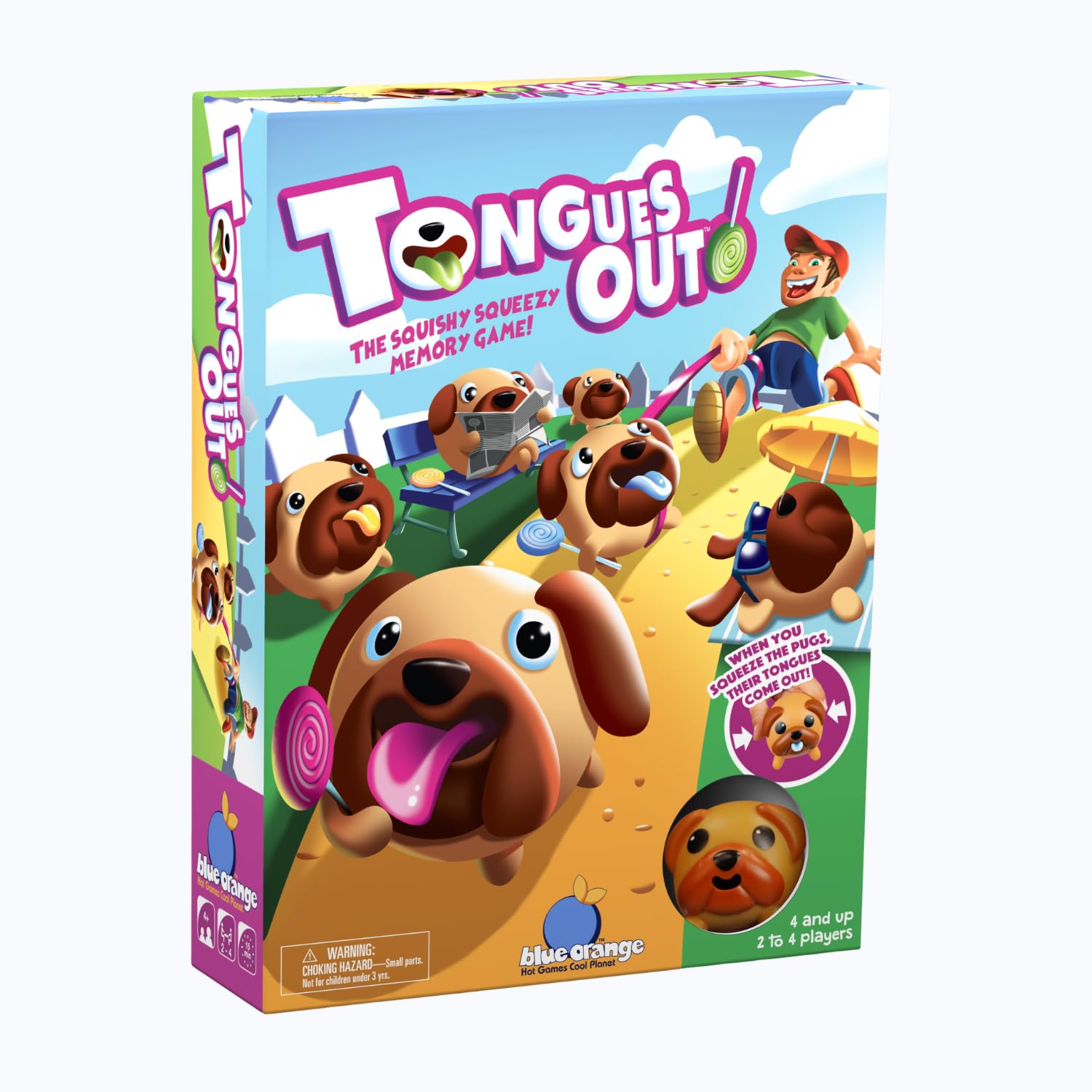
Tongues Out! turns color matching into a tactile game that preschoolers genuinely find hilarious. The gameplay loop is simple: roll two lollipop-colored dice, then squeeze the squishy pug tokens to pop out their tongues until you find a tongue color that matches the dice. Each correct match lets you place that pug on your dog park board, and the first player to collect six pugs wins. The physical satisfaction of pressing down on those silicone pugs and watching the tongue spring up is the hook that keeps kids coming back.
Blue Orange Games designed this for ages four and up, but reviews consistently show that younger kids — even two-and-a-half-year-olds — can participate with a little guidance. The game requires no reading, just color recognition, so it works well for mixed-age sibling play. At ten and a half inches square, the game board is large enough for small hands to reach across without knocking pieces off the table. The twelve pug tokens are one-piece silicone, so there are no small parts to lose under furniture.
This is an excellent second or third board game purchase for a family that already has a basic cooperative game and wants something with more independent play value. The dice-rolling and squeezing mechanics keep fine motor skills engaged, and the game teaches turn-taking without any reading barrier. The only real downside is that the competitive format — one winner — may frustrate some three-year-olds, though the fast rounds and silly theme usually keep the mood light.
Why it’s great
- Squishy silicone pugs offer a unique sensory experience
- No reading required — pure color matching
- Fast rounds keep short attention spans engaged
Good to know
- Competitive format may frustrate very sensitive kids
- Best for ages four and up despite younger kids enjoying it
3. Baby Dinosaur Rescue Board Game

Baby Dinosaur Rescue throws players into a cooperative race against lava — a high-stakes premise that preschoolers absolutely buy into. The goal is to guide baby dinosaur tokens across a valley path to the safety of Dinosaur Island before the lava token reaches the end. Every turn, players flip image-based cards that either move a dinosaur forward or advance the lava. Since no reading is required, even four-year-olds can play independently after one round of demonstration.
The cooperative format here is slightly more complex than HABA’s Building Site because it introduces a shared timer pressure: the lava advances every time a certain card is drawn. This mechanic encourages real communication and strategy among players, as older siblings or parents discuss whether to sacrifice a forward move to block the lava. The base game is designed for ages four and up, but parents report that younger siblings can participate by simply picking cards and letting older players decide the strategy.
One design consideration: the dinosaur and lava tokens are lightweight cardboard, and some reviewers note they blend into the board during fast play. The lava cards also appear frequently by design, which can frustrate very young players who want to see constant progress. Removing a couple of lava cards from the deck is an easy house rule fix. For families wanting a cooperative game with genuine decision-making for kids approaching kindergarten, this is a strong contender.
Why it’s great
- Teaches real strategizing through cooperative pressure
- Strong dinosaur theme appeals universally at this age
- Simple image cards require zero reading
Good to know
- Tokens are thin cardboard — can bend over time
- Frequent lava cards may frustrate sensitive kids
4. Peaceable Kingdom Acorn Soup

Acorn Soup transforms the abstract concept of following instructions into a hands-on activity that two-year-olds naturally find satisfying. The game centers on a squirrel preparing for winter by making soup. Players draw recipe cards that show which wooden ingredients — acorns, berries, leaves, and other forest items — to drop into the included wooden spoon. The game is cooperative in spirit: there is no winner or loser, just the shared goal of following the recipe and feeding the squirrel.
The components are unusually good for the price point. The twenty-four wooden ingredients are chunky enough that toddlers can grasp them easily, and the wooden spoon is one solid piece with no choking hazards. The recipe cards use clear, colorful imagery so pre-readers can identify which ingredient to grab next. Parents report that the game quickly evolves beyond the structured play: kids love simply dumping the ingredients into the spoon and then “feeding” the soup to parents, which builds imaginative play skills on top of the matching mechanic.
The main knock against Acorn Soup is that some units arrive with a missing piece. Customer service resolves the issue, but it’s worth checking the contents when the box first arrives. For a two-year-old’s first “game with rules,” this is an ideal introduction because the rules are soft enough that a toddler can’t play them wrong. It also works well for solo play while a parent cooks dinner.
Why it’s great
- Chunky wooden ingredients survive aggressive toddler handling
- Recipe cards teach counting and following instructions
- Encourages imaginative “feeding” play beyond the game
Good to know
- Occasional missing pieces reported upon arrival
- Very simple rules — older preschoolers may get bored
5. Cottify Wooden Matching Game

The Cottify Wooden Matching Game takes the classic memory card format and upgrades it with solid basswood discs that are practically indestructible. Each of the thirty-six cards is a two-point-two-inch circle with a thickness that feels substantial, unlike paper cards that bend after one enthusiastic flip. The surface is painted with colorful animal illustrations — lion, monkey, elephant — on backgrounds that vary by color, which adds an extra visual cue for younger players still mastering pure memory matching.
The included drawstring pouch makes this a strong travel companion. You can toss the bag into a diaper bag, pull it out at a restaurant or on a plane, and have a memory game ready in seconds. The manufacturer recommends ages three and up, but parents report that eighteen-month-olds enjoy simply looking at the pictures and progressing to simple face-up matching before moving to the full memory challenge. The wood material also wipes clean easily, which matters for games that end up in sticky hands.
The only production issue reported is a misprint in some batches where one animal pair was swapped for a different animal — a quality control miss that would be frustrating if you’re counting on the full set. That said, the overwhelming majority of reviews highlight the durability and good value. For families who want a memory game that will survive years of play across multiple kids, the Cottify set is the most durable option in this category.
Why it’s great
- Solid wood construction resists bending and tearing
- Pouch storage makes it ideal for travel or restaurant use
- Different colored backgrounds add an extra matching cue
Good to know
- Misprinted animal pairs reported in some batches
- Discs lack a form to stay organized when laid out
6. eeBoo Build a Robot Spinner Game

eeBoo’s Build a Robot cleverly disguises early number recognition as a robot-building race. Players spin a numbered spinner, call out the number they land on, and then collect the matching robot part — head, body, arm, or leg — to assemble their own mechanical buddy. The satisfaction for a three-year-old comes from physically slotting the pieces together to reveal a complete robot character, which feels more like building a toy than playing a game.
The components here are FSC-certified paper with vegetable-based inks, making this the most environmentally conscious option in this lineup. The sturdy pieces hold up well to repeated assembly and disassembly, though the cardboard construction means they won’t survive being chewed or soaked. Play time runs about fifteen minutes, and the game works for two to four players ages three and up. The number range is limited to one through five, so it’s perfect for introducing counting without overwhelming a new learner.
That’s not necessarily a weakness; the game doubles as a creative open-ended toy. The only real caveat is that the die-cut cardboard tools used to punch out the pieces can tear under heavy preschooler hands, so adult assembly of the initial punch-out is recommended.
Why it’s great
- Teaches numbers 1-5 through engaging building mechanics
- FSC-certified paper with vegetable inks for eco-conscious families
- Robot assembly offers open-ended creative play on its own
Good to know
- Cardboard tools can tear during initial punch-out
- Kids may ignore the spinner and just build robots freely
7. Peaceable Kingdom Duck Duck Dance

Duck Duck Dance solves a problem many parents discover too late: some two-year-olds absolutely refuse to sit still for a board game. This active game replaces a game board with movement dice that tell players to wiggle, clap, fly, twist, or jump. Roll the dice, do the dance move, then flip over a pond audience member to see who is watching the performance. Once all four audience members are revealed, the game is complete.
The movement focus makes this a natural fit for gross motor skill development and high-energy toddlers who need to burn physical energy. The large foam dice are easy for small hands to roll, and the instructions include a parent guide with variations for different skill levels — you can simplify by ignoring one die, or increase the challenge by requiring both dice to sync. The artwork is bright and engaging, and the short rounds prevent boredom.
The trade-off is that some kids want to invent their own dance moves rather than follow the dice, which defeats the structured gameplay. Others may simply throw the dice around rather than rolling purposefully — a phase that passes with practice. For a two-year-old’s first experience with turn-taking and following directions that involve whole-body movement, this is the most age-appropriate option in the lineup. It also works well as a party game for multiple toddlers.
Why it’s great
- Gets toddlers moving — perfect for high energy kids
- Large foam dice are easy to read and roll
- Multiple ways to play adapt to different skill levels
Good to know
- Some kids ignore dice and invent their own dance moves
- Requires floor space for active play
FAQ
What age can a toddler start playing board games?
How do I prevent a toddler from eating small game pieces?
Should I buy a competitive or cooperative game first?
Final Thoughts: The Verdict
For most users, the board games for young kids winner is the HABA Building Site because it combines a cooperative format, a beloved construction theme, and a durable wooden dump truck that functions as a standalone toy. If you want squishy sensory engagement and color matching, grab the Tongues Out! game. And for a travel-friendly memory game that survives years of abuse, nothing beats the Cottify Wooden Matching Game.