
Our readers keep the lights on and the weekend projects moving. As an Amazon Associate, I earn from qualifying purchases.
Snowshoeing turns a winter landscape into your personal playground, but nothing kills the adventure faster than cold, wet feet that can’t find solid purchase on packed snow. The wrong boot leaves you shivering at the trailhead or slipping off your bindings, turning a crisp day into a miserable trudge back to the car.
I’m Rikta — the co-founder and writer behind FitlyFast. I’ve spent countless hours cross-referencing insulation ratings, waterproof membranes, and outsole compounds to find the boots that actually work when the snow gets deep and the temperature drops.
Whether you’re breaking trail through fresh powder or stomping down a packed path, the right pair handles frozen toes and icy steeps. That’s why I built this guide to the best boot for snowshoeing.
How To Choose The Best Boot For Snowshoeing
A snowshoe boot has to do three jobs at once: keep your feet warm, keep them dry, and lock into your bindings securely. Most mistakes happen when buyers focus on just one of these jobs and ignore the others.
Insulation Weight and Activity Level
Snowshoeing is aerobic — you’re generating body heat. Too much insulation (600 grams or more) will soak your socks with sweat, which then freezes when you stop. Look for 200 to 400 grams of synthetic or Primaloft insulation. The sweet spot for most conditions is 400 grams, which handles single-digit temperatures without turning your feet into clammy bricks. For warmer spring snowshoeing, 200 grams are plenty.
Waterproofing and the Collar Height
A waterproof membrane (Gore-Tex, B-DRY, or a proprietary film) is non-negotiable — dry feet stay warm. But the boot collar matters just as much. A locking snow collar or a tall gaiter-compatible shaft keeps powder from dumping in over the top. If the collar is too short or loose, you’ll be pouring melted snow out of your boots by mile two.
Binding Compatibility and Sole Stiffness
Most modern snowshoe bindings are strap-on or tube-frame designs that grip the boot under the toe and around the heel. A boot that’s too soft in the midsole will flex inside the binding, causing heel lift and poor energy transfer. Look for a boot with a nylon or TPU shank — it provides enough stiffness for efficient stride transfer while still allowing natural walking motion. Deep lugs (5 mm or more) also help the binding grip the boot rather than sliding off.
Quick Comparison
On smaller screens, swipe sideways to see the full table.
| Model | Category | Best For | Key Spec | Amazon |
|---|---|---|---|---|
| KEEN Revel 4 Mid Polar | Mid-Range | All-day deep snow and binding use | 400g insulation, thermal heat shield | Amazon |
| Helly Hansen Garibaldi V3 | Mid-Range | Wet, slushy winter terrain | Primaloft 400g, Max Grip outsole | Amazon |
| Oboz Bridger 10″ Insulated | Premium | Cold, rugged backcountry miles | 400g Freeze Guard, B-DRY membrane | Amazon |
| Salewa Condor EVO GTX | Premium | Technical alpine snowshoeing | Gore-Tex, Vibram Teton outsole | Amazon |
| Baffin Control Max | Premium | Extreme cold and heavy snow | Arctic-rated, 2 lb weight | Amazon |
| LOWA Zephyr MK2 GTX | Premium | Fast-paced, lightweight snowshoeing | Gore-Tex, CORDURA upper | Amazon |
| The North Face Chilkat V 400 | Mid-Range | Snowshoeing on packed or icy trails | 400g insulation, DWR finish | Amazon |
| KEEN Revel III Mid | Mid-Range | Versatile winter hiking and snowshoeing | 200g insulation, waterproof breathable | Amazon |
| Columbia Expeditionist Shield | Budget | Newcomers on a tight budget | Thermal-reflective lining, Omni-Grip | Amazon |
In‑Depth Reviews
1. KEEN Revel 4 Mid Polar Insulated Waterproof
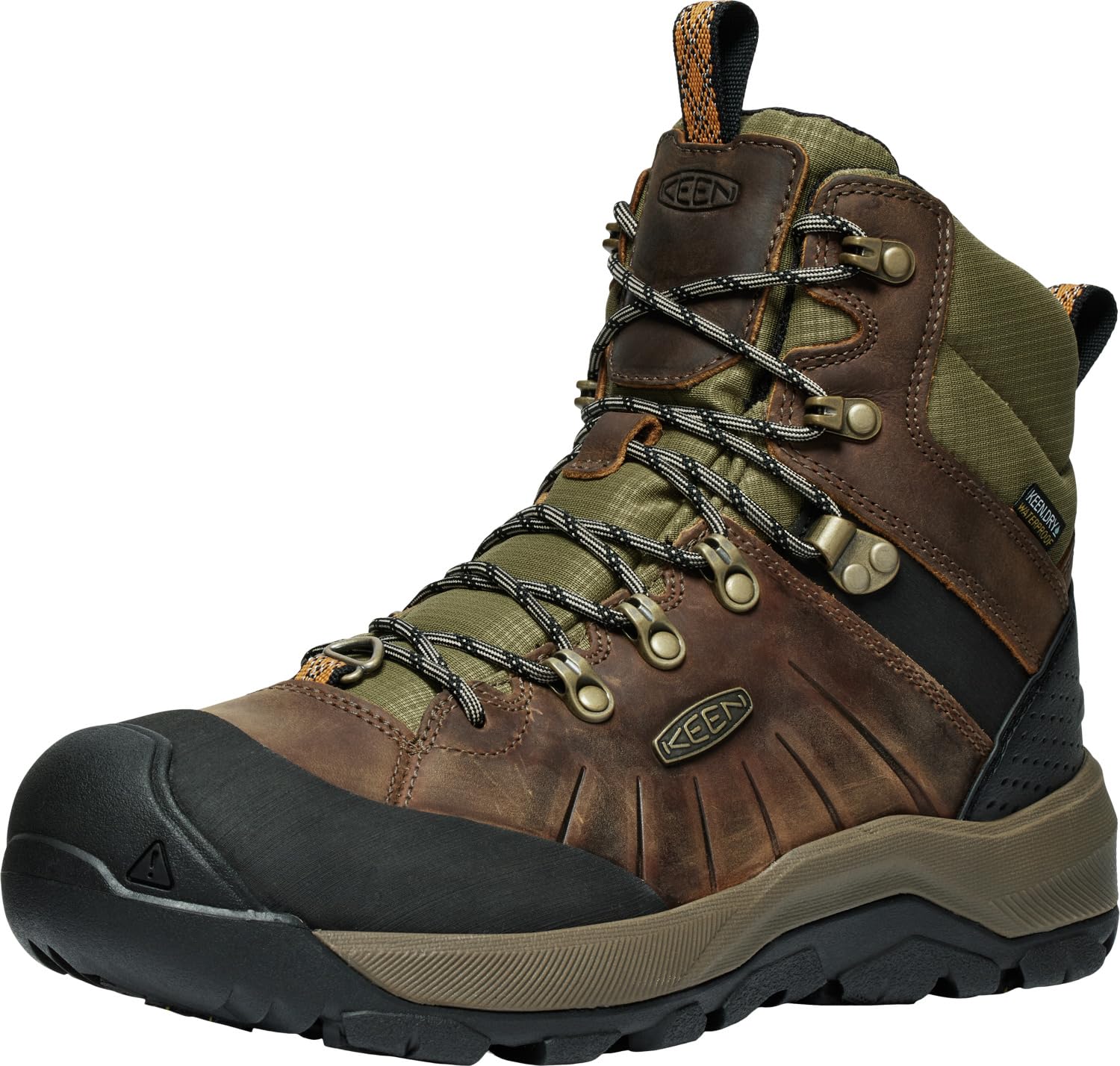
The Revel 4 Mid Polar is the closest thing to a purpose-built snowshoe boot you’ll find. KEEN packed it with 400 grams of insulation, a thermal heat shield that reflects warmth back toward your foot, and a waterproof breathable membrane that kept reviewers dry and warm climbing a Colorado fourteener in single-digit wind chill. The speed lace system cinches quickly, and the traditional wider toe box leaves room for thick socks without pinching your circulation.
What makes this boot stand out for snowshoeing is the outsole. Reviewers report that the traction is so aggressive they often leave their cleats at home, and multiple users confirm it works seamlessly with snowshoe bindings. The midsole is stiff enough to prevent heel lift inside the binding but still flexible enough for natural walking motion on packed trail sections between snowfields.
After a full season of harsh winter use, owners note minimal wear on the upper and sole — the boot holds up to repeated binding strap pressure and wet-dry cycles without delamination. If you need one boot that does everything from breaking trail to post-holing through crust, this is it.
Why it’s great
- Excellent binding compatibility thanks to a stiff yet walkable midsole
- Proven warmth in subzero temperatures with 400g insulation
- Roomy toe box fits snowshoe-specific socks comfortably
Good to know
- Slightly heavier than non-insulated hiking boots
- Some users prefer a half-size up for extra sock space
2. Helly Hansen Garibaldi V3 Waterproof Winter Boots

Helly Hansen brings its Norwegian marine heritage to the Garibaldi V3, and it shows in the waterproofing. The combination of LWG-rated leather and a sealed construction means you can stomp through slush and overflow without a hint of moisture inside. The 400-gram Primaloft insulation keeps feet warm down to well below freezing, but because Primaloft breathes better than many polyester fills, your feet won’t cook on a strenuous uphill climb.
The Pro Guard rubber wrap around the toe and heel is a smart design for snowshoeing — it protects the leather from strap abrasion and prevents the boot from wearing thin where bindings make contact. Reviewers in Northern Michigan and other harsh winter climates report the Garibaldi V3 stays comfortable in freezing rain and deep powder, and the Max Grip outsole holds firm on icy patches after snow has melted and refrozen.
One reviewer specifically noted the boot feels firm underfoot, which translates to solid energy transfer through a snowshoe binding. The lace-up system includes a gaiter attachment point, making it easy to seal out snow at the collar. If you regularly snowshoe in wet, maritime winter conditions, this boot is built for exactly that.
Why it’s great
- Premium-quality leather with excellent abrasion resistance
- Primaloft insulation breathes well during high-output snowshoeing
- Rubber toe and heel guards protect against binding wear
Good to know
- Runs true to size, but a thicker sock may require a half-size up
- Heavier than synthetic-only snowshoe boots
3. Oboz Bridger 10″ Insulated B-DRY Hiking Boots
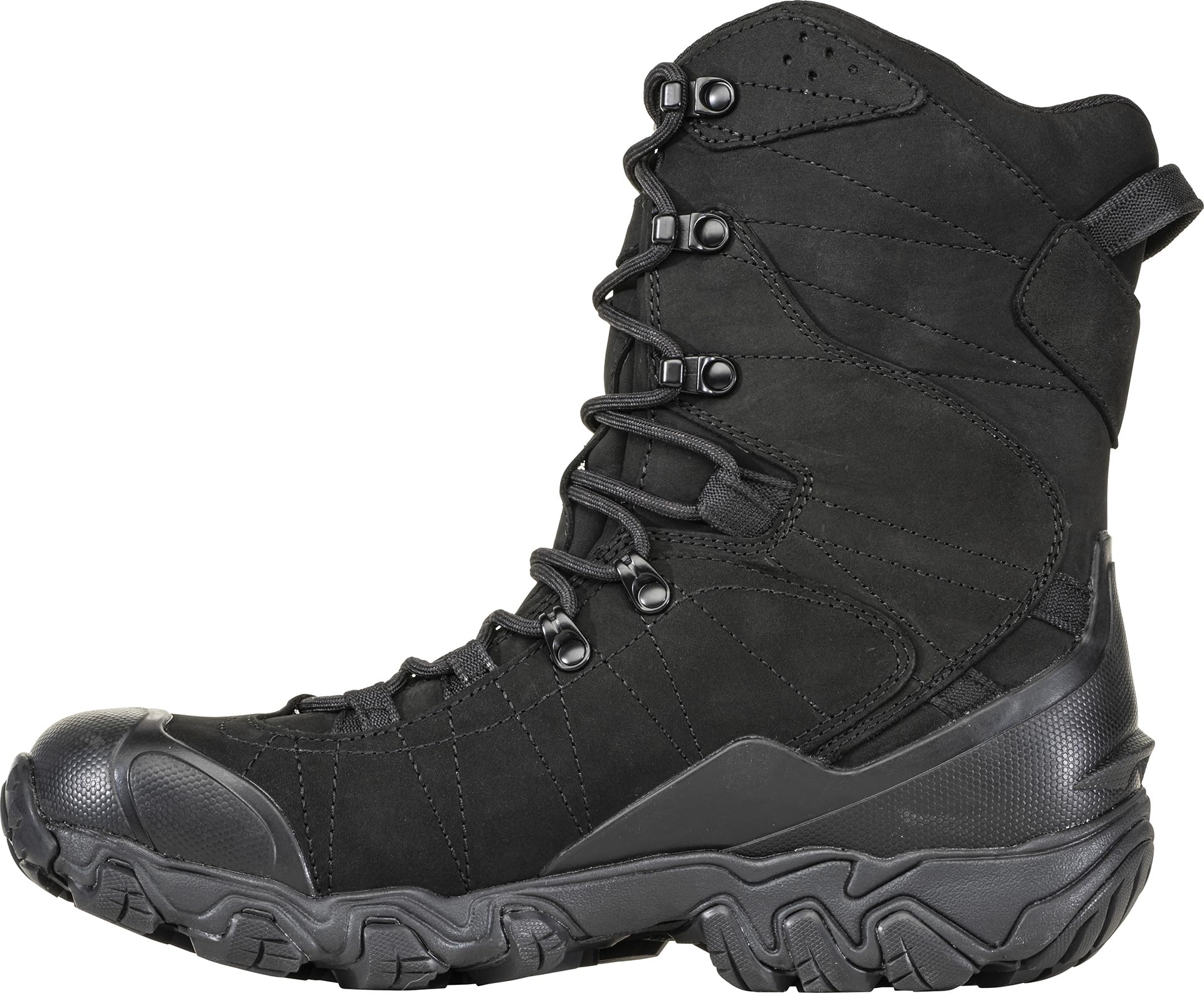
The Oboz Bridger 10″ is the burliest boot on this list, trading a few ounces of weight for bombproof protection on long, cold backcountry snowshoe days. It carries 400 grams of Freeze Guard insulation, a B-DRY waterproof liner, and a TPU chassis that provides torsional stiffness — exactly what you need when scrambling over fallen logs or kicking steps into a steep slope. The DWR nubuck leather upper sheds snow and resists wetting out even after hours of contact with melting powder.
Owners consistently emphasize the comfort of the O Fit Insole Thermal, which combines arch support with a reflective layer to keep heat in. The boot comes out of the box with zero break-in required, according to multiple reviews. The Granite Peak outsole uses deep, widely spaced lugs that clear mud and snow quickly — a critical feature because packed snow in the tread destroys traction on hard surfaces.
The 10-inch shaft is a serious advantage for deep-powder snowshoeing. It sits well above the binding collar, meaning even if you punch through a snow bridge into waist-deep fluff, no snow gets inside. The gaiter D-ring is a factory addition, not an afterthought. If your snowshoe routes take you off-trail into unconsolidated snow, this boot is your best defense against frozen ankles.
Why it’s great
- 10-inch shaft keeps deep powder out effectively
- Stiff TPU chassis provides excellent binding energy transfer
- Zero break-in and exceptional long-mile comfort
Good to know
- Runs small — most users need a full size up
- Hefty build may feel overkill for short, low-effort snowshoe trips
4. Salewa Condor EVO GTX Mountaineering Boot

The Salewa Condor EVO GTX is built for the intersection of snowshoeing and technical terrain. It carries a Gore-Tex Performance Comfort lining that regulates moisture during high-exertion climbs, and the Vibram Teton outsole uses a self-cleaning pattern with a generous toe contact zone and an undercut heel for secure braking on snow and ice. The stiff nylon-and-fiberglass insole makes it semi-automatic crampon compatible — a bonus if your snowshoe route ends at a couloir or icy ridge where crampons are safer.
Salewa’s 3F System connects the lacing to the heel via an external exoskeleton, which locks the heel down while allowing the forefoot to flex naturally. This matters for snowshoeing because it prevents the heel lift that causes friction blisters on long days. The 3D Lacing adjustment at the forefoot and midfoot lets you fine-tune the fit around binding pressure points. Reviewers who used these boots on multi-day San Juan treks reported zero break-in issues and no blisters after 25 miles with a heavy pack.
The Perwanger suede leather upper is more abrasion-resistant than most synthetic snowshoe boots, and the nylon shank provides the rigidity needed for efficient stride transfer. This is not a budget option, but for snowshoers who move between trail, talus, and alpine snowfields, it’s the most versatile technical boot available.
Why it’s great
- Crampon-compatible for mixed snow and ice approaches
- Heel-locking 3F System prevents lift inside bindings
- Vibram Teton self-cleaning outsole handles varied snow conditions
Good to know
- Narrower fit — not ideal for wide feet
- Premium price reflects advanced alpine features
5. Baffin Control Max Snow Boot
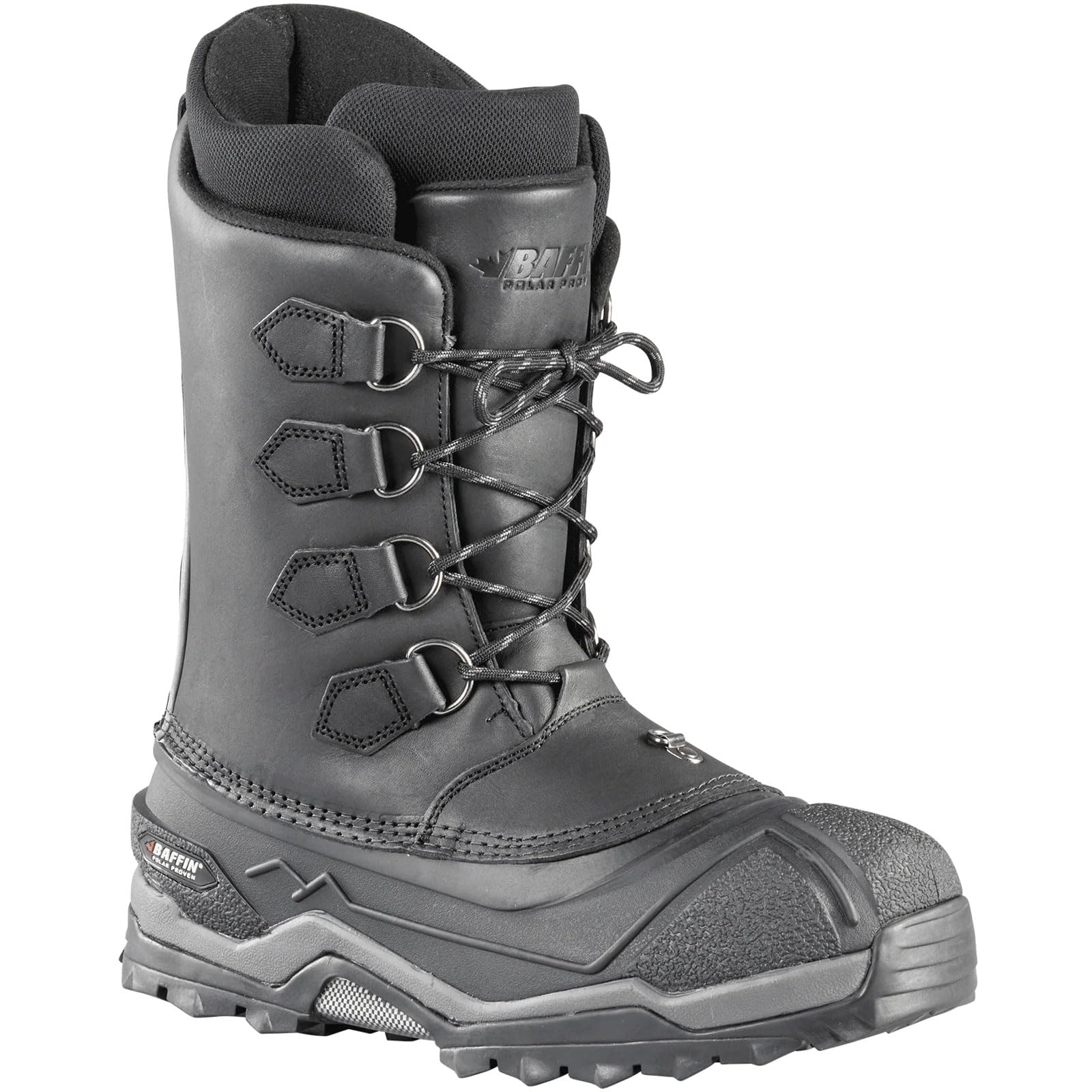
The Baffin Control Max is a polar-rated boot designed for the coldest snowshoeing scenarios — think -20°F and below. It uses a multi-layer inner boot system with removable liners that trap dead air for insulation, while the Polar Rubber outsole stays flexible in extreme cold where standard rubber stiffens and loses grip. The tall leather upper includes a locking snow collar that cinches tight around the calf, keeping snow out even when you post-hole unexpectedly.
Reviewers consistently describe the Control Max as “serious business boots.” The EVA midsole provides cushioning that feels like walking on pillows, according to multiple owners, and the Icepaw pads add bite on glare ice. However, the boot is undeniably bulky — several users returned it because it looks like “astronaut boots” and doesn’t fit under casual snow pants. For dedicated snowshoe missions in extreme cold, that bulk is a feature, not a flaw.
The height of the boot (tall shaft with nylon locking collar) works perfectly with snowshoe bindings that have heel straps. The removable liner also makes drying faster between snowshoe days — pull the liner, stuff it with newspaper, and you’re ready the next morning. If you regularly snowshoe above treeline or in northern latitudes where temperatures plummet, this boot is in a class of its own.
Why it’s great
- Arctic-rated insulation handles extreme subzero conditions
- Removable liner speeds up drying between trips
- Locking snow collar seals out deep powder effectively
Good to know
- Very bulky — not practical for driving or casual wear
- Runs small; order a half to full size up
6. LOWA Zephyr MK2 GTX Mid
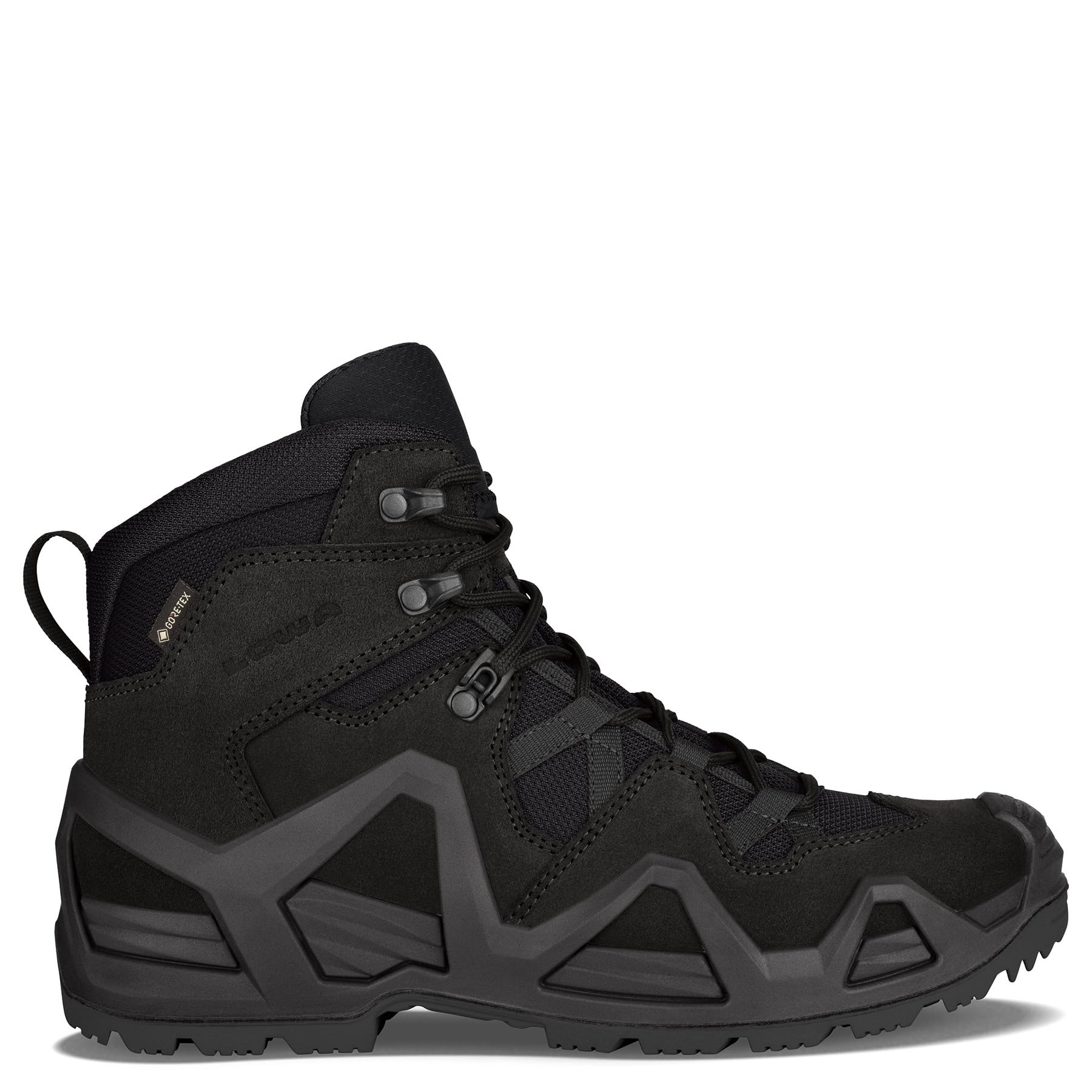
The LOWA Zephyr MK2 GTX is a stealthy choice for snowshoeing — it’s not marketed as a snow boot, but its tactical construction makes it a powerhouse for fast-paced, lightweight trips. The combination of tear-resistant suede and abrasion-resistant CORDURA keeps the boot light enough for running-style approaches while providing the durability to handle binding straps day after day. The Gore-Tex Extended Comfort lining provides waterproofing that breathes astonishingly well, making it ideal for high-output snowshoeing where sweat management is the real challenge.
Infantry veterans and active-duty users vouch for the durability — several reviewers noted they wore this same model through deployments in Afghanistan. The boot is noticeably lighter than the Salomon Quest 4D Force 2, another tactical favorite, while matching it in stability and waterproofing. The outsole is slightly less grippy on wet, smooth surfaces than a dedicated winter boot, but the harder rubber compound provides superior durability on off-trail terrain.
The Zephyr MK2 is resoleable, which is rare at this weight. If you plan to snowshoe frequently on packed trail systems rather than breaking deep powder, this boot gives you a lightweight, responsive platform that doesn’t sacrifice protection. The mid-height collar works with gaiters, so a simple pair of waterproof gaiters seals the snow gap effectively.
Why it’s great
- Extremely lightweight for a waterproof, durable boot
- Resoleable construction extends its usable life significantly
- Excellent Gore-Tex breathability for high-output snowshoeing
Good to know
- Lacks heavy insulation — requires thick wool socks in deep cold
- Outsole is less aggressive on wet ice than dedicated winter boots
7. The North Face Chilkat V 400 Snow Boot

The North Face Chilkat V 400 is a women’s snow boot that nails the balance between warmth and walkability. It packs 400 grams of insulation into a relatively lightweight package — the boot weighs about 1.6 pounds — making it much easier to lift during long snowshoe strides than heavier pac boots. The DWR finish and waterproof build handle slush and shallow snow effectively, though some reviewers note it isn’t fully submersible for deep puddle crossings.
The outsole uses a non-slip rubber compound that performed well on wet pavement and packed snow, according to owners. The boot runs narrow — multiple reviewers recommend ordering a half to full size up. The shaft is tall enough to work with most gaiters, and the simple lace-up system is easy to adjust with cold, gloved hands. The color options are accurate to product photos, and the styling is clean enough for the drive to the trailhead.
Where the Chilkat V 400 shines is on moderate snowshoe routes — think well-traveled trails, rolling terrain, and afternoon outings where the temperature hovers in the teens. It won’t win any awards for extreme cold retention or technical binding stiffness, but for the vast majority of recreational snowshoers, it provides all-day comfort at a reasonable weight.
Why it’s great
- Lightweight build reduces fatigue on longer snowshoe loops
- 400g insulation provides reliable warmth in moderate winter conditions
- Non-slip outsole performs well on packed snow and icy pavement
Good to know
- Runs narrow; definitely order a half to full size up
- Not fully waterproof for deep puddle or creek crossings
8. KEEN Revel III Mid Waterproof Insulated Hiking Boot
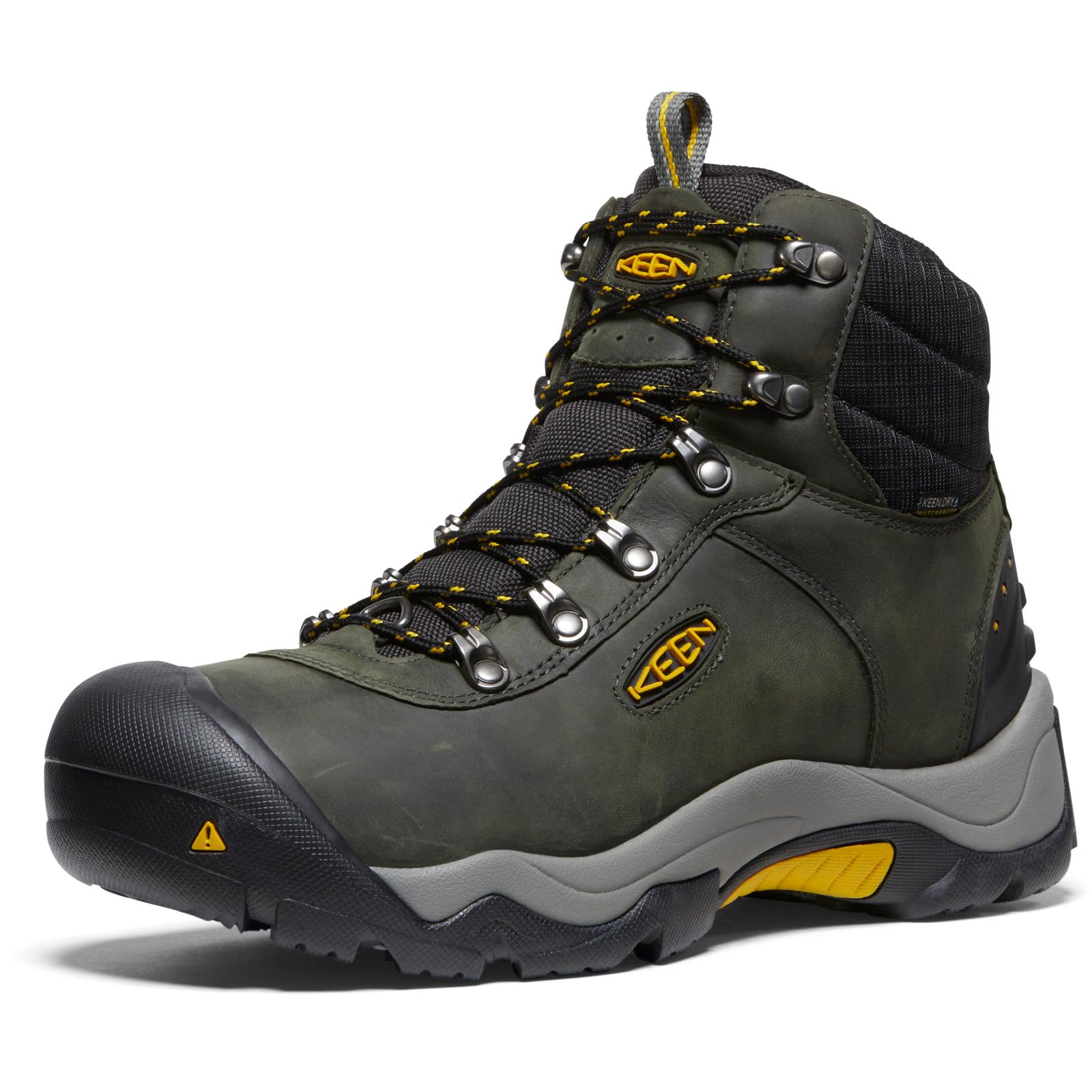
The KEEN Revel III Mid is a lighter alternative for spring snowshoeing or high-output winter hiking where 400-gram insulation would be too warm. With 200 grams of insulation and a waterproof breathable membrane, it hits the sweet spot for temperatures in the 20s and above — enough to keep feet comfortable without soaking them in sweat. KEEN’s traditional wide toe box accommodates snowshoe-specific socks without constricting circulation, and the thermal heat shield inside adds a noticeable warmth boost at rest stops.
Multiple reviewers rank this as the best boot they found after trying over a dozen competitors, including Merrell. The ankle support is high and stiff enough to prevent rolling on uneven terrain, yet the boot requires minimal break-in. The outsole provides excellent snow traction, and owners confirm it works seamlessly with Stabilicers and gaiters. The stability is particularly noticeable on sidehills and traverses where a softer boot would allow ankle fatigue to set in.
The main trade-off is the 200-gram insulation ceiling — this boot is not designed for subzero days. Several owners noted that if the temperature drops into the single digits, their feet get cold without a supplemental chemical warmer. For the shoulder season and mild-winter snowshoeing, though, it’s one of the most comfortable and durable options in its tier.
Why it’s great
- Lightweight with excellent breathability for aerobic snowshoeing
- Wide toe box accommodates thick socks without pressure
- Strong ankle support prevents rolling on uneven terrain
Good to know
- 200g insulation is insufficient for subzero temperatures
- Runs slightly large — some users drop a half size
9. Columbia Expeditionist Shield

The Columbia Expeditionist Shield proves you don’t need to spend a fortune to get a warm, waterproof boot for occasional snowshoeing. It uses Columbia’s thermal-reflective lining to bounce body heat back at your feet, and the waterproof-breathable membrane keeps moisture out while allowing vapor to escape. The Omni-Grip outsole provides cold-optimized traction that bites into ice and packed snow — a surprising feature at this tier. At just over the price floor for this category, it brings genuine winter boot capability to a budget-friendly package.
Owners rave about the warmth-to-weight ratio, with several calling it the best value they’ve found. The boot is lightweight, easy to walk in, and dries quickly when it does get wet. One reviewer reported comfort down to 10°F, and multiple users noted the boot runs warm without overheating. The break-in period is minimal, and the overall construction feels durable enough for at least a few winters of recreational use.
The biggest caveats are sizing and the stock insole. Multiple reviewers emphasize that these boots run small — order at least a half size up. The included insole is thin and should be replaced with a supportive aftermarket option for longer snowshoe days. The styling is slightly juvenile (gold trim at the collar), but that’s cosmetic. For newcomers who want to try snowshoeing without a big investment, the Expeditionist Shield is a solid entry point.
Why it’s great
- Excellent value for a warm, waterproof winter boot
- Lightweight build reduces fatigue during all-day use
- Thermal-reflective lining punches above its price tier for warmth
Good to know
- Runs small — order a half to full size up
- Stock insole is thin; an aftermarket replacement improves long-mile comfort
FAQ
Can I use any winter boot for snowshoeing or do I need a special boot?
How much insulation do I need for snowshoeing in mild winter temperatures?
Will crampons fit over these snowshoe boots?
Do I need to size up in snowshoe boots for thick socks?
Final Thoughts: The Verdict
For most users, the boot for snowshoeing winner is the KEEN Revel 4 Mid Polar because it nails the three essentials — 400-gram warmth, reliable waterproofing, and a stiff enough midsole to transfer power into your bindings without feeling like a clunky boot. If you want deeper carryover to technical alpine snowshoeing with crampon compatibility, grab the Salewa Condor EVO GTX. And for deep-powder, backcountry snowshoe missions where snow depth is measured in feet, nothing beats the Oboz Bridger 10″ Insulated.