
Our readers keep the lights on and the weekend projects moving. As an Amazon Associate, I earn from qualifying purchases.
Florida’s sandy soils and intense sun turn most grass seed into an expensive failure. Standard cool-season blends scorch, while many warm-season options struggle to establish a dense, reliable turf. The solution lies in choosing a seed bred specifically for low-fertility sands and high humidity.
I’m Rikta — the co-founder and writer behind FitlyFast. I’ve spent countless hours analyzing germination rates, soil compatibility, and customer-reported establishment success so you get a lawn that thrives without constant irrigation.
Whether you’re patching bare spots or planting from scratch, finding the right bahia grass seed for florida means prioritizing deep root systems and minimal upkeep.
How To Choose The Best Bahia Grass Seed For Florida
Florida’s sandy, acidic soils demand a grass that is drought-hardy and low in fertility requirements. Bahia grass checks both boxes, but the choice between Pensacola and Argentine varieties, as well as raw versus coated seed, dramatically affects your results. Focus on these factors before making a purchase.
Pensacola vs. Argentine Varieties
Pensacola Bahia is the standard for pastures and low-maintenance lawns across Florida’s central and northern regions. It has a coarse texture, sends up tall seed heads, and thrives in full sun with little water. Argentine Bahia, by contrast, produces a denser, darker green turf with fewer seed stalks, making it more visually appealing for a home lawn. Argentine also handles slightly more shade, though neither variety tolerates heavy foot traffic as well as St. Augustine or Bermuda.
Coated vs. Raw Seed
Coated seed has a clay or polymer layer that adds weight and moisture retention around each kernel. This helps prevent birds from eating the seed and improves water contact during germination. However, coated bags contain less actual seed by weight — sometimes only 40-50% pure seed. Raw seed gives you more viable seed per pound and is generally cheaper, but it requires precise watering and good seed-to-soil contact to germinate uniformly.
Companion Crops and Fillers
Some Bahia blends include browntop millet as a nurse crop. The millet germinates in under a week, holding soil in place and shading the slow-to-establish Bahia seedlings beneath it. The millet dies off after about 65 days, leaving the permanent Bahia to take over. This system works well on slopes or erosion-prone areas, but you must keep the millet mowed so it doesn’t crowd out the slower Bahia.
Quick Comparison
On smaller screens, swipe sideways to see the full table.
| Model | Category | Best For | Key Spec | Amazon |
|---|---|---|---|---|
| Hancock Argentine Bahia Seed Mix | Coated Blend | Erosion-prone sites needing quick cover | 75% Argentine Bahia + 25% Browntop Millet | Amazon |
| Hancock Raw Pensacola Bahia | Raw Pasture Grade | Open sunny lawns and pasture | Raw uncoated Pensacola variety | Amazon |
| SeedRanch Pensacola Bahia Grass Seed | Raw Economy | Budget-conscious large areas | 10 lbs covering ~1,000 sq ft | Amazon |
| Lesco All-Pro Transition Tall Fescue | Fescue Blend | Transition-zone high-traffic lawns | Endophyte-enhanced for insect resistance | Amazon |
| Lesco Tall Fescue Select Blend | Blue Tag Pure | Large pure-seed projects | 50 lbs weed-free, 0% inert filler | Amazon |
| Jonathan Green Black Beauty | Cool-Season Fescue | Delmarva region sandy soil | Three tall fescue varieties blend | Amazon |
| Barenbrug Winter Wonderlawn | Winter Overseed | Overseeding dormant Bermuda in winter | Ryegrass blend germinates in 2-4 days | Amazon |
In‑Depth Reviews
1. Hancock Argentine Bahia Grass Seed Mix

The Argentine Bahia variety is the preferred choice for a denser, darker green home lawn compared to the coarser Pensacola type. Hancock’s coated blend includes 75 percent Argentine Bahia mixed with 25 percent browntop millet, which acts as a fast-growing cover crop. The millet stabilizes soil and holds moisture for the slower Bahia seedlings, making this a smart pick for slopes or areas prone to erosion during Florida’s heavy rain events.
The coated seed weighs more per bag, meaning you get less actual Bahia seed by volume, but the millet’s rapid five‑to‑seven‑day germination provides visible early coverage that helps manage watering expectations. Reviews consistently note excellent germination rates when the seeding guide is followed closely, particularly regarding mowing frequency to avoid the millet shading out young Bahia plants.
Some users report that the millet grows in with a different texture at first, but it dies off naturally after about two months, leaving a uniform Bahia stand. The main downside is the higher cost per pound of actual Bahia seed compared to raw options, though the reduction in soil loss and weed pressure often justifies the premium for small to medium lawns.
Why it’s great
- Browntop millet provides quick erosion control while Bahia establishes
- Argentine variety yields a finer, darker green turf than Pensacola
- Coated seed retains moisture for better germination in sandy soil
Good to know
- Millet must be mowed regularly to avoid shading out Bahia seedlings
- Less actual Bahia seed per pound due to coating and millet content
- Some users reported the millet outgrew the Bahia in poorly managed conditions
2. Hancock Raw Pensacola Bahia Grass Seeds

Hancock’s raw Pensacola Bahia is the classic workhorse for Florida’s sandy, poor fertility soils. This is an uncoated seed, so you get 100 percent Bahia in the bag with no fillers or nurse crops. It is designed for full sun exposure and well-drained sands, making it the go-to for large open lawns and pasture applications throughout the state.
Germination reports range from excellent to poor, with success heavily dependent on consistent moisture during the establishment phase. Users who watered twice daily for two weeks saw vigorous sprouting, while those who relied on rainfall alone often reported patchy results. The raw seed requires good seed-to-soil contact — raking it in lightly rather than broadcasting on the surface makes a measurable difference.
Once established, Pensacola Bahia is extremely drought tolerant and requires minimal fertilizer. The main trade-off is its coarse blade and tendency to produce tall seed heads, which some homeowners find less attractive for a manicured front yard. For a low-maintenance lawn or pasture that handles sandy soil without constant irrigation, this is a proven performer.
Why it’s great
- 100 percent pure Bahia seed, no fillers or coating
- Excellent drought tolerance once established in sandy soil
- Proven performer for Florida pastures and low-maintenance lawns
Good to know
- Coarse texture and tall seed heads may not suit all home lawns
- Germination can be slow and spotty without consistent twice-daily watering
- Some customers received seed that failed to germinate entirely
3. SeedRanch Pensacola Bahia Grass Seed

SeedRanch offers a raw Pensacola Bahia in a 10-pound bag, covering approximately 1,000 square feet. This is a budget-tier option that delivers solid results when planted with proper preparation. The seed is uncoated, so you are paying for pure Bahia seed without any moisture-retaining clay or polymer coating.
Customer experiences are split, with roughly 70 percent reporting good germination when they fertilized the day before planting and mixed the seed with topsoil or compost. The key spec to note is the recommended watering regimen: 10 to 15 minutes twice daily in full sun areas and once daily in partial shade. Users who followed this approach described thick, resilient turf that survived foot traffic and even local drought conditions.
The main complaint is the slow germination speed — Pensacola Bahia can take two to three weeks to show consistent growth, which tests the patience of homeowners accustomed to ryegrass’s one-week turnaround. Additionally, a minority of buyers saw zero germination, suggesting variability in seed lot quality. For large-area projects on a tight budget, the per-pound cost is hard to beat.
Why it’s great
- Low price per pound for covering large bare areas
- Raw seed means no filler or coating to inflate weight
- Survives heavy foot traffic and drought once established
Good to know
- Slow germination — expect two to three weeks with consistent watering
- Mixed germination rates reported across different lots
- Requires soil prep and fertilizer day before planting for best results
4. Lesco All-Pro Transition Tall Fescue Blend
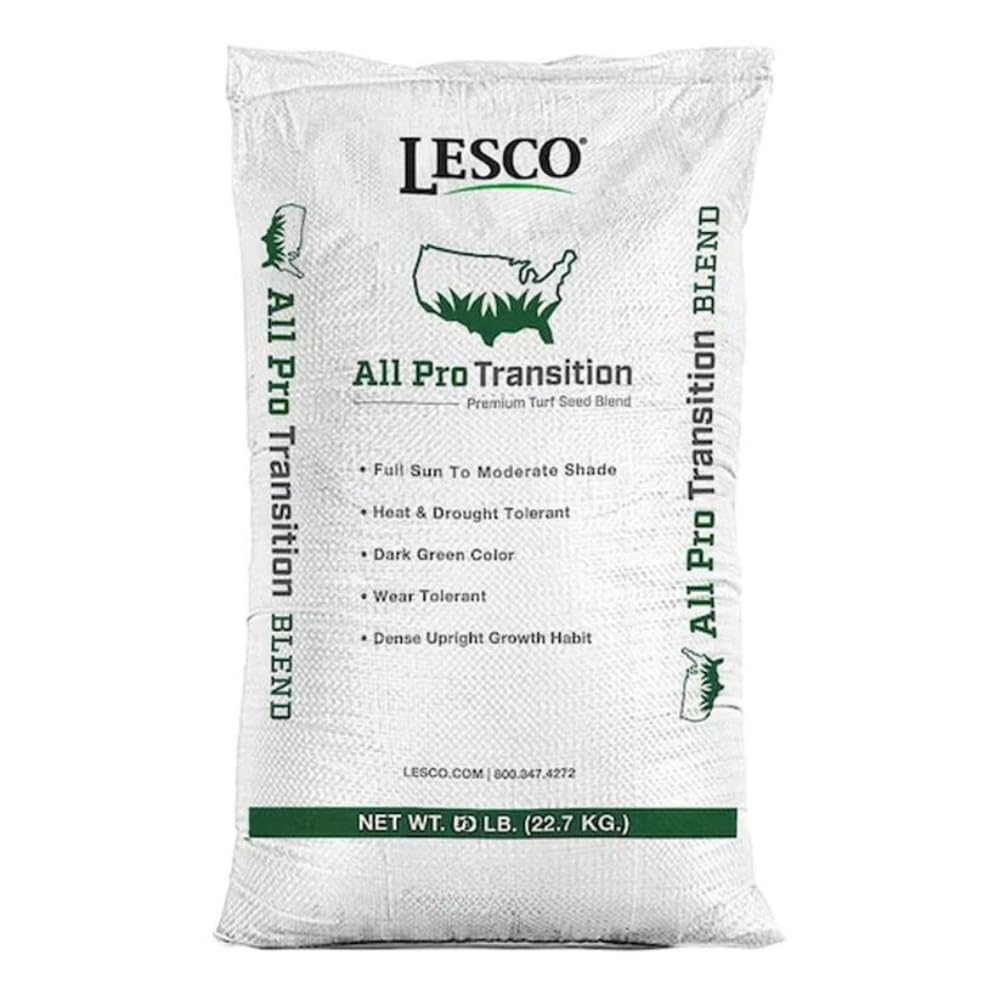
This Lesco blend is not Bahia but is a strong contender for Florida homeowners in the northern transition zone who want a finer-textured turf with better shade tolerance than Bahia can provide. It combines multiple tall fescue varieties bred for stress tolerance, including endophyte-enhanced strains that naturally deter chinch bugs and sod webworms — common pests in Florida lawns.
The germination speed is noticeably faster than Bahia, with visible sprouts appearing within a week under warm, moist conditions. Users report a dense, dark green turf that feels soft underfoot and holds up well to kids and pets. The blend is specifically formulated for transition zones, meaning it can handle the moderate winters and hot, humid summers found in northern Florida and the Panhandle.
Tall fescue is not as drought-tolerant as Bahia once established, requiring more frequent watering during dry spells. It also struggles in the deep sandy soils of central and southern Florida, where Bahia’s deep taproot provides a clear advantage. This is a niche option for homeowners who prioritize turf quality over absolute water efficiency.
Why it’s great
- Fine texture and dark green color more attractive than Bahia
- Endophytes provide natural insect resistance common in Florida
- Germinates fast — visible within 5-7 days with consistent moisture
Good to know
- Less drought tolerant than Bahia, needs regular watering in dry spells
- Not suited for deep sandy soils of central/south Florida
- Non-returnable item, so plan coverage carefully before purchase
5. Lesco Tall Fescue Select Blend Grass Seed
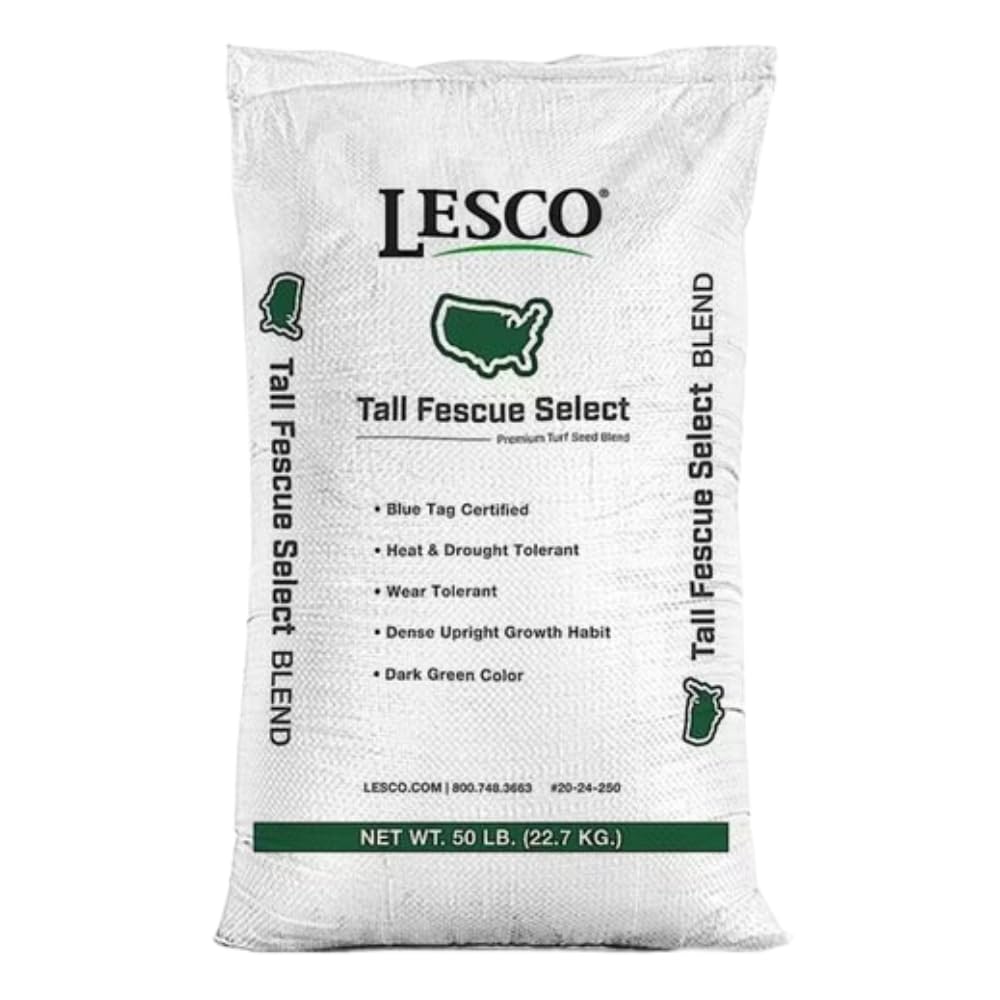
For those who prioritize seed purity above all else, Lesco’s Blue Tag Certified Tall Fescue delivers zero weed seed and zero inert filler. The 50-pound bag covers 5,000 to 10,000 square feet, making this a high-volume option for large lawns or commercial properties in northern Florida’s transition zone where tall fescue can persist through mild winters.
Experienced users specifically note the difference between this pure seed and coated alternatives from big-box stores. Coated seed often contains over 50 percent inert ingredients by weight, meaning you pay for clay and polymer rather than actual seed. Lesco’s Select Blend is all seed, so you get dense, uniform coverage with no filler breaking down in the soil.
Germination is slightly slower than the All-Pro blend, with some users reporting two weeks to full emergence. The payoff is a thick, weed-free lawn that fills in evenly. The main limitation is the same as with any tall fescue in Florida: it requires more water than Bahia and will struggle in the deep sands and intense heat south of the I-4 corridor.
Why it’s great
- Blue Tag Certified — zero weed seed and zero inert filler
- 50-pound bag offers best cost per pound of actual seed
- Dense, upright growth habit creates a professional-grade lawn
Good to know
- Tall fescue needs more water than Bahia in Florida’s heat
- Non-returnable, so measure your area precisely before ordering
- Poor choice for central and southern Florida’s sandy soils
6. Jonathan Green Black Beauty Delmarva Grass Seed

While formulated for the Delmarva region, this Jonathan Green Black Beauty blend shares soil characteristics with parts of northern Florida: sandy, low-fertility ground that struggles to retain moisture. The mix contains three tall fescue varieties, giving it better shade tolerance and a finer blade than Bahia, making it a viable option for homeowners in the Panhandle who want a cooler-season aesthetic.
Germination is fast for a fescue — many users report visible growth in under a week with daily watering and a light topsoil cover. The color is a rich dark green that stands out against the lighter green of standard Bahia lawns. It performs well in both sun and partial shade, filling in bare spots with uniform density.
The 7-pound bag is small, intended for patching and small-area overseeding rather than full-lawn establishment. Its cool-season nature means it will go dormant during Florida’s hottest summer months, requiring overseeding each fall to maintain winter color. This is a niche product for specific use cases, not a full-season Florida lawn solution.
Why it’s great
- Dark green color and fine texture exceed Bahia’s appearance
- Germinates in under a week with consistent moisture
- Good for sandy soil and partial shade conditions
Good to know
- Small 7-pound bag suitable only for patching, not full lawns
- Cool-season fescue goes dormant in Florida summer heat
- Not recommended as a permanent Florida lawn solution
7. Barenbrug Winter Wonderlawn Grass Seed
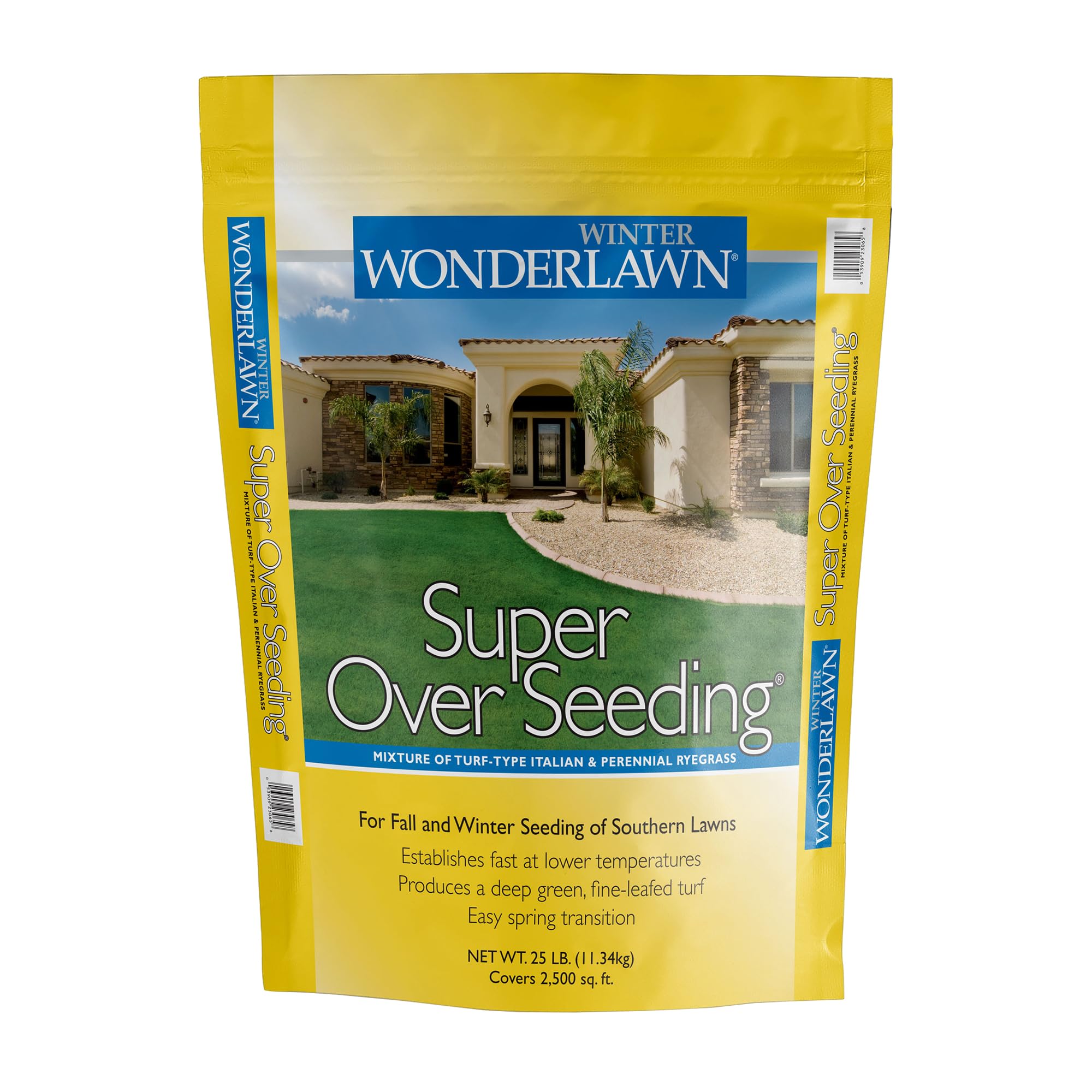
Barenbrug’s Winter Wonderlawn is a premium ryegrass blend designed for overseeding dormant Bermuda or Bahia lawns during Florida’s winter months. It is not a permanent grass — the ryegrass naturally transitions out in spring when the warm-season grass wakes up — but it provides green coverage when your Bahia goes brown and dormant from December through February.
The germination speed is exceptional, with blades visible in as little as two to four days under cool, moist conditions. Homeowners in southern Florida and California report lush green growth with minimal effort, simply broadcasting the seed and letting winter rain do the watering. The fine leaf texture blends well with existing Bahia without looking patchy.
The main drawback is that this is a temporary solution. The ryegrass dies off as temperatures rise in late spring, and it requires full renovation to re-establish Bahia if the overseeding process damages the underlying warm-season turf. It also needs regular mowing during its growing window, adding maintenance during a season when your Bahia lawn normally requires none.
Why it’s great
- Extremely fast germination — green in 2-4 days
- Maintains green color over dormant Bahia all winter
- Fine texture blends naturally with existing warm-season grass
Good to know
- Temporary solution — ryegrass dies in spring heat
- Adds mowing maintenance during winter dormancy period
- Requires careful overseeding to avoid smothering Bahia
FAQ
How long does Bahia grass seed take to germinate in Florida?
Should I use coated or raw Bahia seed for my Florida lawn?
Can I plant Bahia grass seed in the summer in Florida?
Final Thoughts: The Verdict
For most users, the bahia grass seed for florida winner is the Hancock Raw Pensacola Bahia because it offers reliable full-sun performance in sandy soil with minimal ongoing cost. If you want a denser, darker lawn with better erosion control, grab the Hancock Argentine Bahia Mix. And for covering large areas on a tighter budget, nothing beats the per-pound value of SeedRanch Pensacola Bahia.