
Our readers keep the lights on and the weekend projects moving. As an Amazon Associate, I earn from qualifying purchases.
Stepping into 35mm film photography for the first time means picking between the convenience of a modern point-and-shoot and the creative control of a classic SLR. The wrong choice leads to disappointing scans, jammed film, or a camera that feels too complicated to take out the door.
I’m Rikta — the co-founder and writer behind FitlyFast. I’ve spent hundreds of hours cross-referencing film formats, lens coatings, autofocus systems, and user feedback to find the cameras that actually make learning film photography fun and repeatable.
This guide breaks down seven options built for entry-level use. Whether you prefer the grab-and-go ease of a half-frame point-and-shoot or the full manual control of a classic SLR, the best beginner 35mm film camera comes down to how much control you want over your exposure and composition.
How To Choose The Best Beginner 35mm Film Camera
Not all 35mm film cameras are beginner-friendly. A vintage SLR with a faulty light meter is a recipe for blank rolls, while a basic point-and-shoot limits your ability to learn exposure basics. Your choice should balance simplicity with enough control to grow into.
Half-Frame vs Full-Frame 35mm
A half-frame camera exposes two vertical 17mm x 24mm images per standard 35mm frame, giving you 72 shots on a 36-exposure roll. This cuts film costs in half and makes it ideal for casual shooting. A full-frame camera uses the entire 36mm x 24mm area per shot, producing larger negatives that scan with more detail. Beginners on a budget often prefer half-frame for the economy, while those aiming for prints or better quality scans should go full-frame.
Autofocus SLR vs Zone-Focus vs Fully Manual
Autofocus SLRs like the Canon Rebel 2000 handle focus and exposure automatically, removing the steepest learning curve. Zone-focus point-and-shoots use distance symbols (portrait, group, mountain) instead of precise focusing, which is plenty sharp for casual snapshots but limits depth-of-field control. Fully manual cameras like the Pentax K1000 require you to set focus, aperture, and shutter speed every shot — rewarding for enthusiasts but frustrating for a first-timer who just wants usable photos.
Renewed Quality and Light Meter Reliability
Most affordable film cameras on the market are renewed or vintage models. The light meter — often a mercury-cell based system in older SLRs — is the most common point of failure. A dead meter means you must guess exposure or use an external meter, which defeats the purpose of a beginner-friendly camera. Look for sellers that specifically test and guarantee the meter, and avoid cameras where the meter requires obsolete batteries.
Quick Comparison
On smaller screens, swipe sideways to see the full table.
| Model | Category | Best For | Key Spec | Amazon |
|---|---|---|---|---|
| Pentax 17 | Half-Frame P&S | 72 shots per roll, modern build | 25mm F3.5 HD coated lens | Amazon |
| Canon Rebel 2000 | Autofocus SLR | Full creative modes, easy to use | 7-point autofocus system | Amazon |
| Canon EOS Kiss (Rebel G) | Autofocus SLR | Reliable AF, good value | Wide-area autofocus point | Amazon |
| Kodak EKTAR H35N | Half-Frame P&S | Built-in star filter, bulb function | Coated glass lens | Amazon |
| Canon AE-1 | Manual SLR | Classic learning tool, FD lenses | TTL metering, 1/1000s shutter | Amazon |
| Pentax K1000 | Manual SLR | Pure manual, mechanical build | 50mm f/2 lens, no battery needed | Amazon |
| TBC Reusable 35mm | Basic Point & Shoot | Ultra budget entry, transparent design | 28mm/F8 fixed lens | Amazon |
In‑Depth Reviews
1. Pentax 17

The Pentax 17 is a modern half-frame 35mm compact that produces 72 images per standard 36-exposure roll. Its 25mm F3.5 lens features HD coating borrowed from Pentax’s SLR line, delivering sharpness and contrast that outclasses any budget point-and-shoot. The magnesium alloy top and bottom covers give it a solid feel that resists the flex typical of plastic alternatives.
Its zone-focus system divides distances into six symbols, from close-up to infinity, making focusing intuitive without requiring rangefinder skill. The manual film advance lever recreates the tactile satisfaction of vintage cameras while the quiet shutter release allows for discreet candid shots. ISO range spans 50 to 3200, covering most color and black-and-white emulsions.
Users consistently praise the image quality and fun factor, noting the economy of doubling frames per roll saves real money over time. The primary drawback is the price point — it sits significantly higher than most beginner alternatives. The fixed lens and zone-focus system limit creative depth-of-field control, but for a grab-and-go everyday film companion, this is the gold standard.
Why it’s great
- 72 shots per roll cuts film costs in half
- HD coated lens rivals vintage SLR glass
- Lightweight magnesium alloy build
- Quiet shutter for discreet shooting
Good to know
- Premium price compared to basic point-and-shoots
- Fixed lens limits focal length versatility
- Zone-focus requires learning distance estimation
2. Canon Rebel 2000 SLR Film Camera with 28-80mm Lens
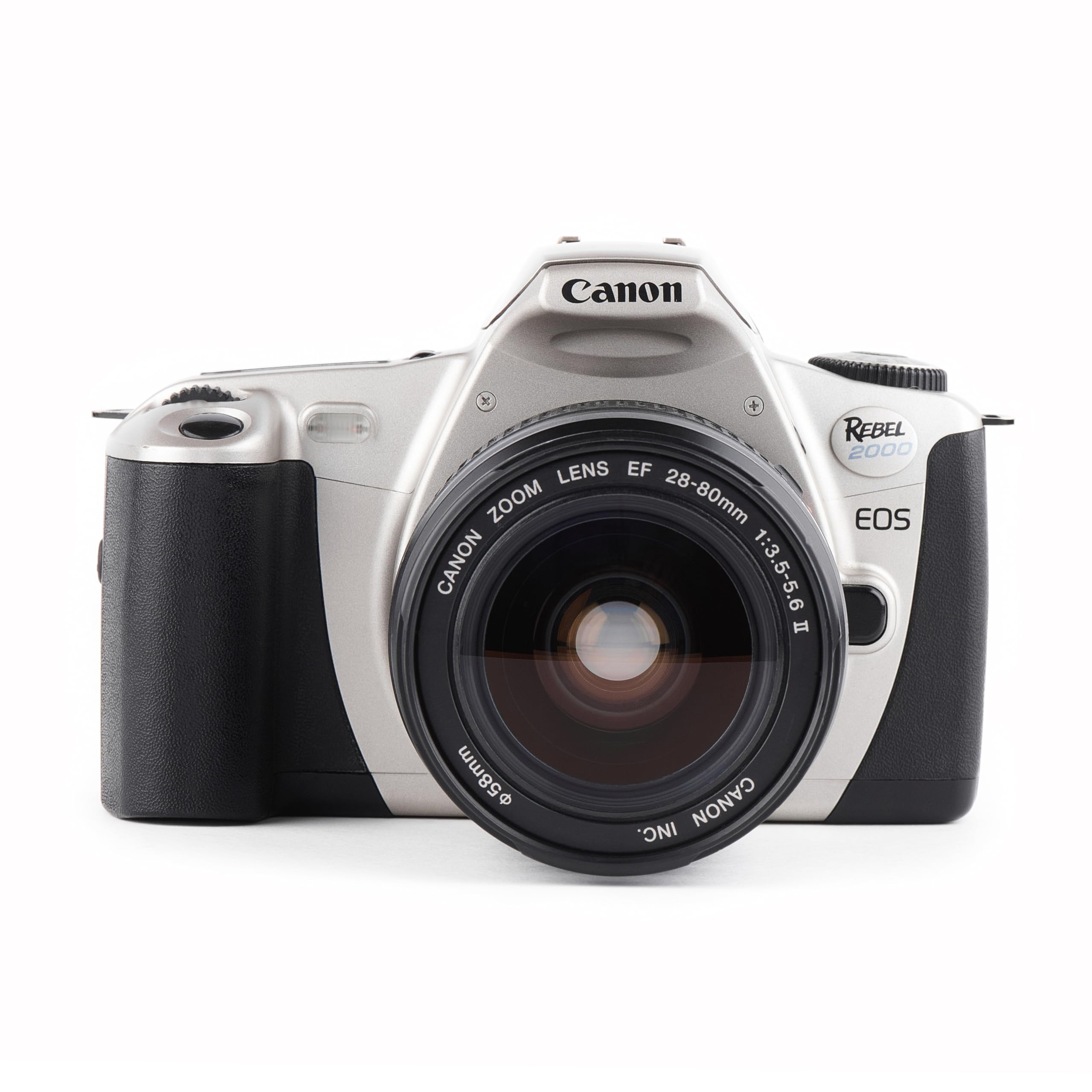
The Canon Rebel 2000 brings the familiar ease of a modern DSLR into the film world. Its 7-point autofocus system locks onto subjects quickly and accurately, even in lower light, and the built-in pop-up flash provides reliable fill. The included 28-80mm EF zoom lens covers wide-angle to portrait lengths without needing a lens change.
Exposure modes span full Program AE for point-and-shoot simplicity through to Aperture Priority, Shutter Priority, and full Manual mode for when you want to take creative control. Automatic film loading, advance, and rewind handle the mechanical drudgery so you can focus on framing and composition. The camera uses standard 35mm film and is compatible with the entire Canon EF lens ecosystem.
Renewed copies generally arrive in excellent condition, with most buyers reporting fully functional meters and clean glass. The camera is lightweight enough for daily carry and the mode dial makes switching between automatic and manual effortless. The only common issue is that some renewed units lack a manual or battery — check listings for included accessories.
Why it’s great
- 7-point autofocus is fast and accurate
- Full program auto mode for no-fuss shooting
- Canon EF lens ecosystem offers endless upgrades
- Automatic film loading and rewind
Good to know
- Plastic build feels less premium than metal vintage SLRs
- Renewed units may lack original accessories
- Battery type (CR123A) is less common than AA
3. Canon New EOS Kiss (Rebel G) with 35-80mm Lens

The Canon EOS Kiss — sold as the Rebel G in North America — is essentially the same camera under different names, offering a proven autofocus platform with a wide-area autofocus point that covers a large portion of the frame. Its intuitive controls include a clear LCD display that shows shutter speed, aperture, and frame count at a glance, making it easy to stay in control.
Shooting modes include full auto, program, aperture priority, and shutter priority, letting you gradually explore manual controls without ever feeling lost. The built-in flash handles low-light scenarios and fill flash duties reliably. The 35-80mm EF zoom lens is a standard kit lens that covers everyday focal lengths with acceptable sharpness for film.
Buyers consistently report the renewed units arrive in excellent condition with working meters, clean glass, and functioning auto-wind mechanisms. It takes a standard LR44 battery which is widely available. The plastic body is lightweight but durable, and the overall package represents solid value for someone who wants a worry-free entry into autofocus film photography.
Why it’s great
- Reliable wide-area autofocus for everyday use
- Clear LCD display for settings at a glance
- Multiple exposure modes for gradual learning
- Affordable entry into Canon EF system
Good to know
- Plastic construction feels less robust than metal SLRs
- Kit lens is mediocre compared to prime glass
- Film rewind button placement can be confusing at first
4. Kodak EKTAR H35N Half Frame Film Camera

The Kodak EKTAR H35N is an improved version of the popular H35, adding a coated glass lens element for sharper images and a built-in star filter that creates four-beam flares on light sources for a retro creative effect. It’s a half-frame camera, meaning it doubles your shots per roll to 72 on a 36-exposure roll, which is excellent for beginners who want to shoot liberally.
The focus-free lens is pre-set for general distances, eliminating the need for focusing entirely. The new bulb function allows long exposures for capturing light trails or night scenes when paired with a tripod. It requires a AAA battery for the flash and standard 35mm film. The viewfinder is square, so you must hold the camera vertically for horizontal half-frame compositions.
Feedback from users highlights the powerful flash and the charming, unsharp image character that many find aesthetically pleasing for casual snapshots. The film advance wheel can feel stiff, and the battery door is somewhat flimsy. While the H35N adds real value over the H35 with its glass lens and bulb mode, some budget-conscious buyers think the original H35 is sufficient.
Why it’s great
- Coated glass lens improves sharpness over plastic lenses
- Built-in star filter adds creative flair
- Half-frame format doubles shots per roll
- Bulb function for night photography experiments
Good to know
- Film advance wheel can be stiff
- Battery door feels flimsy
- Image resolution is unimpressive at large print sizes
5. Vintage Canon AE-1 with 50mm 1:1.8 Lens

The Canon AE-1 is arguably the most iconic 35mm SLR ever produced, and for good reason. Its shutter-priority auto exposure mode lets you set the shutter speed while the camera selects the aperture, striking a balance between creative control and ease of use. The built-in Through-The-Lens (TTL) metering system delivers accurate exposures in most lighting conditions when functioning properly.
It accepts Canon FD lenses, offering access to a vast library of high-quality glass at affordable prices. The metal body construction gives it a satisfying heft and durability that plastic cameras lack. Shutter speeds range from 2 seconds to 1/1000th plus Bulb mode, covering almost any shooting scenario. The included 50mm f/1.8 is a legendary prime lens known for sharpness and a natural field of view.
Renewed examples can be hit or miss — most arrive functioning well, but some buyers report dead light meters or sticky shutters. The original mercury battery for the meter is banned, but many sellers install a modern 1.5V or 1.35V adapter. For a beginner who is committed to learning exposure fundamentals, the AE-1 is a rewarding tool that will grow with you.
Why it’s great
- TTL metering is accurate when calibrated
- Shutter-priority auto mode helps beginners learn
- Durable metal body lasts decades
- Massive library of affordable FD lenses
Good to know
- Meter requires battery adapter modification
- Renewed condition varies widely between sellers
- Fully manual mode is less intuitive for raw beginners
6. Pentax K1000 with 50mm Lens

The Pentax K1000 is the definitive manual-only film camera, famously used in photography courses for decades because it forces you to learn the exposure triangle: aperture, shutter speed, and focus. It has no auto mode, no autofocus, and no built-in flash — just a needle-based light meter and a robust all-mechanical shutter that operates without batteries.
The included 50mm f/2 prime lens provides a natural standard field of view and a fast enough aperture for low-light handheld shooting. The Pentax K lens mount is compatible with a huge range of affordable vintage glass. The light meter uses a single LR44 battery and is always on, giving you a reference point for correct exposure. The camera is compact for an SLR and built like a tank.
Buyer experiences with renewed K1000 units are mixed — many receive fully functional cameras, but a notable number report dead or inaccurate light meters. Because the camera is fully mechanical, a broken meter doesn’t stop you from shooting (you can use a phone app or Sunny 16 rule), but it defeats the purpose of a beginner-friendly tool. It is best suited for someone who wants to learn photography methodically and is willing to read a manual.
Why it’s great
- Pure manual operation teaches exposure fundamentals
- Mechanical shutter works without any batteries
- Compact and extremely durable build
- 50mm f/2 lens is excellent and versatile
Good to know
- Light meter failure is common in renewed units
- No auto mode can frustrate casual shooters
- Learning curve is steeper than autofocus options
7. TBC Reusable 35mm Film Camera
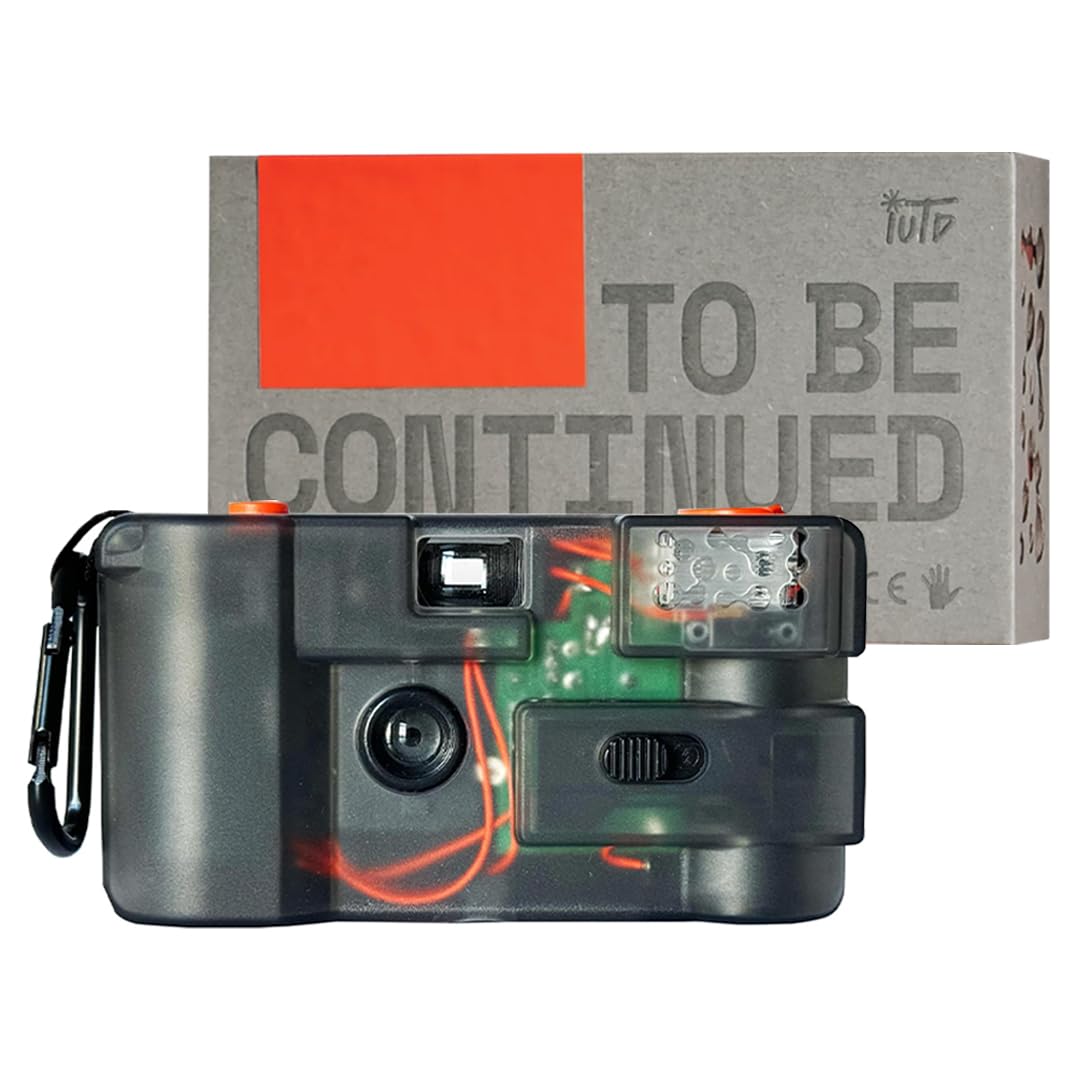
The TBC Reusable 35mm Film Camera is an entry-level point-and-shoot with a transparent body that shows the internal film transport mechanism — a design feature that appeals to creators and aesthetics-focused users. It has a fixed 28mm/F8 wide-angle lens, a 1/120s fixed shutter speed, and a built-in automatic flash that fires in low light.
It supports ISO 100-400 film and uses a simple manual film advance and rewind system. The camera comes with a carabiner attachment for clipping to bags or belts, making it highly portable. It requires no batteries for the shutter (the flash needs a standard battery) and is designed to be truly beginner-friendly: just load film, point, and shoot.
User feedback is largely positive for the price, with many praising the aesthetic photos and ease of use. However, some buyers report that the film rewind button is overly sensitive and can accidentally release mid-roll, wasting frames. The build quality feels disposable to some, and the fixed aperture means you need good light or flash for usable results. It is a genuine low-risk test drive for film photography, but not a long-term tool.
Why it’s great
- Extremely low cost to try film photography
- Transparent design is visually unique
- Carabiner clip for easy carrying
- Simple operation with no settings to learn
Good to know
- Sensitive film rewind button can ruin a roll
- Build quality feels disposable
- Fixed aperture and shutter limit low-light performance
FAQ
What is the best film ISO for a beginner 35mm camera?
Should a beginner buy a half-frame or full-frame 35mm camera?
How do I check if a renewed film camera’s light meter works?
Is a fully manual camera like the Pentax K1000 too hard for a beginner?
Final Thoughts: The Verdict
For most users, the best beginner 35mm film camera winner is the Pentax 17 because it combines modern reliability, excellent HD-coated optics, and the cost-saving half-frame format in a lightweight magnesium body that will last years. If you want autofocus and interchangeable lens versatility, grab the Canon Rebel 2000. And for the absolute lowest risk way to test the film waters, nothing beats the TBC Reusable 35mm.