
Our readers keep the lights on and the weekend projects moving. As an Amazon Associate, I earn from qualifying purchases.
Separating meat from bone without tearing, shredding, or wasting precious protein demands a blade that can navigate joints and cartilage with surgeon-like precision. A subpar boning knife turns a simple trimming task into a frustrating battle of tugging and sawing.
I’m Rikta — the co-founder and writer behind FitlyFast. I’ve spent countless hours analyzing blade geometries, steel compositions, handle ergonomics, and edge retention across dozens of boning knife models to build this guide for serious home cooks and hunters.
Whether you’re breaking down a whole chicken, portioning a pork shoulder, or preparing backstrap from this season’s deer, finding the right tool for the job matters. This guide breaks down the top contenders to help you confidently pick from the best boning knives available today.
How To Choose The Best Boning Knife
A boning knife is a specialized tool, and picking the wrong one can waste meat or make the job dangerous. Focus on these three factors to narrow your search.
Blade Flexibility: Stiff vs. Flexible
A stiff blade is ideal for heavy-duty work like breaking down beef or pork, where you need leverage to cut through tough connective tissue. A flexible blade excels at poultry and fish, where you need to hug the bone closely without piercing the meat. Some models offer a semi-flexible middle ground.
Blade Length: 5 vs. 6 Inches
A 5-inch blade gives you maximum control for small joints and tight cavities, making it a favorite for chicken and small game. A 6-inch blade provides extra reach, suited for larger roasts, hams, and deer hindquarters. Consider what you break down most often before choosing a length.
Steel and Construction: Stamped vs. Forged
Stamped blades are cut from a sheet of steel, making them lighter and more affordable while still holding a good edge. Forged blades are heat-treated and shaped under pressure, offering superior strength, balance, and longer edge retention. Forged knives generally come at a higher cost but reward you with better performance over years of use.
Quick Comparison
On smaller screens, swipe sideways to see the full table.
| Model | Category | Best For | Key Spec | Amazon |
|---|---|---|---|---|
| Victorinox Fibrox 6-Inch | Mid-Range | Versatile all-around deboning | 6-inch flexible blade | Amazon |
| Victorinox Fibrox 5-Inch | Mid-Range | Detailed trimming & poultry | 5-inch narrow blade | Amazon |
| HENCKELS Forged Premio | Mid-Range | Home butchers on a budget | 5.5-inch forged blade | Amazon |
| Mercer Culinary Genesis | Mid-Range | High-carbon steel for hunters | 6-inch forged blade | Amazon |
| WÜSTHOF Gourmet 5-Inch | Premium | Everyday premium precision | 5-inch laser-cut blade | Amazon |
| WÜSTHOF Classic 5-Inch | Premium | Rigorously forged heirloom build | 5-inch forged full tang | Amazon |
| Shun Classic 6-Inch | Premium | Fine fillet & boning work | 6-inch Damascus steel | Amazon |
In-Depth Reviews
1. Victorinox Fibrox 6-Inch Flexible Boning Knife
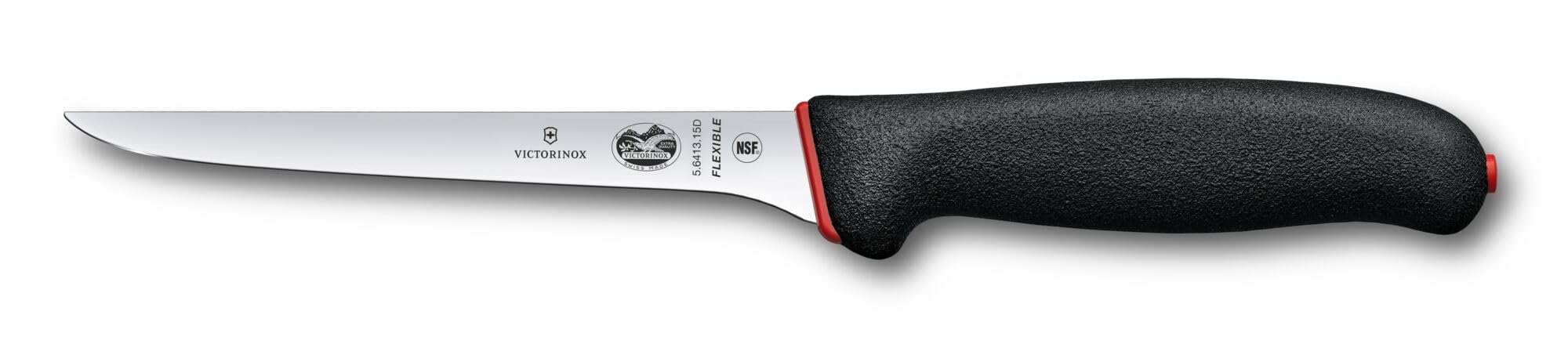
The Victorinox Fibrox 6-inch offers a winning balance of precision and value that makes it a top recommendation for home cooks and hunters alike. Its curved flexible blade allows you to follow rib cages and hip bones cleanly, while the thermoplastic rubber handle ensures a secure grip even when handling slippery cuts of meat.
Professional chefs have long favored this series for its willingness to take a keen edge and hold it through heavy use. The extra flexibility in the 6-inch model makes it particularly adept at poultry and fish, but it handles larger roasts and deer quarters with surprising ease. Customer reports consistently highlight how well it sharpens and how comfortably it fits in the hand.
At this tier, the Swiss-made construction gives you a reliable daily driver that outperforms many knives at twice the investment. The blade is stamped rather than forged, but the heat treatment and edge geometry ensure performance meets the needs of serious kitchens and game processing stations.
Why it’s great
- Excellent edge retention out of the box
- Ergonomic non-slip handle
- Versatile flexibility for multiple meat types
Good to know
- Blade is stamped, not forged
- Some users prefer a stiffer blade for heavy beef work
2. Victorinox Fibrox 5-Inch Boning Knife

The 5-inch version of Victorinox’s iconic Fibrox line gives you a more nimble tool for tight spaces. The extra-narrow blade makes it ideal for separating chicken thighs at the joint, trimming silver skin from tenderloins, or removing fat caps from smaller cuts where a longer blade feels clumsy.
Fans of this model praise its laser-sharp factory edge and the confidence inspired by the textured handle. The stamped blade keeps the weight low, reducing hand fatigue during longer prep sessions. It holds an edge comparably to the 6-inch version, and owners report that a few passes on a honing steel keep it ready for action.
This knife is dishwasher-safe per the manufacturer, though hand washing is always recommended to preserve the edge. For anyone needing a dedicated poultry and trim knife without stepping up to a premium price tier, this is an easy pick.
Why it’s great
- Extremely sharp from the factory
- Lightweight and easy to maneuver
- Excellent value for the performance
Good to know
- Stamped construction, not forged
- Too short for large roasts or ham boning
3. HENCKELS Forged Premio 5.5-Inch Boning Knife

The HENCKELS Forged Premio delivers a forged blade at a price point usually associated with stamped knives. The 5.5-inch blade is stiffer than the flexible Fibrox models, making it a solid option for home butchers working with beef and pork where leverage matters more than bend.
The full-tang, triple-rivet handle offers a comfortable, balanced feel in the hand, and the satin-finished blade arrived sharp in nearly every user report. The German stainless steel takes and holds an edge well enough for weekend projects, and the bolster provides a safe finger guard during heavy trimming.
Some buyers noted minor burrs on the factory edge that were easily corrected with a honing rod. Made in China from unspecified German steel, it lacks the provenance of Solingen-made knives, but for the price it offers a capable forged option for everyday boning tasks.
Why it’s great
- Forged construction at a competitive price
- Stiff blade handles beef and pork well
- Comfortable, well-balanced handle
Good to know
- Not as flexible for poultry or fish
- Steel origin is unspecified German
4. Mercer Culinary Genesis 6-Inch Flexible Boning Knife

The Mercer Genesis 6-inch boning knife is a forged, high-carbon German steel option that punches well above its tier. The X50 Cr Mo V15 steel formulation is known for taking a razor edge and holding it through tough trimming sessions, and the taper-ground edge increases efficiency as you work around joints and cartilage.
Users with arthritis and hand fatigue issues frequently highlight the Santoprene handle as a game-changer. It provides a soft, non-slip grip even when wet, and the full-tang forged design gives the knife a balanced heft that inspires confidence. It’s flexible enough for chicken and fish while stiff enough for moderate beef work.
Mercer recommends hand washing this knife, and the forged construction rewards that care with years of reliable service. For hunters processing deer and for home cooks who want a forged blade with genuine flexibility, this is a standout choice.
Why it’s great
- High-carbon steel holds an edge well
- Comfortable, non-slip Santoprene handle
- Genuine flexibility for poultry and fish
Good to know
- Not dishwasher safe
- Some users may prefer a stiffer blade for heavy beef
5. WÜSTHOF Gourmet 5-Inch Boning Knife

The WÜSTHOF Gourmet series brings German precision to a more accessible tier within the brand’s lineup. This 5-inch boning knife features a high-carbon stainless steel blade that is laser-cut and precision-honed for incredible sharpness right out of the box. The narrow, curved blade is designed to glide along bones cleanly.
The polyoxymethylene (POM) handle is durable and resistant to moisture, though it lacks the textured grip of the Fibrox or the warmth of a wooden handle. The blade is lighter than a fully forged model, making it a nimble tool for detail work around chicken joints and small roasts. Customers consistently rate it as sharp and well-balanced.
This knife demands hand washing and regular maintenance to keep its edge. It offers a clear path into the WÜSTHOF ecosystem for those who want a trusted brand without committing to the full forged price of the Classic series. For precise boning in a compact package, it’s a capable performer.
Why it’s great
- Razor sharp out of the box
- Lightweight and precise for detail work
- German engineering at a mid-tier price
Good to know
- Laser-cut, not forged
- Handle is smooth, less grippy when wet
6. WÜSTHOF Classic 5-Inch Boning Knife
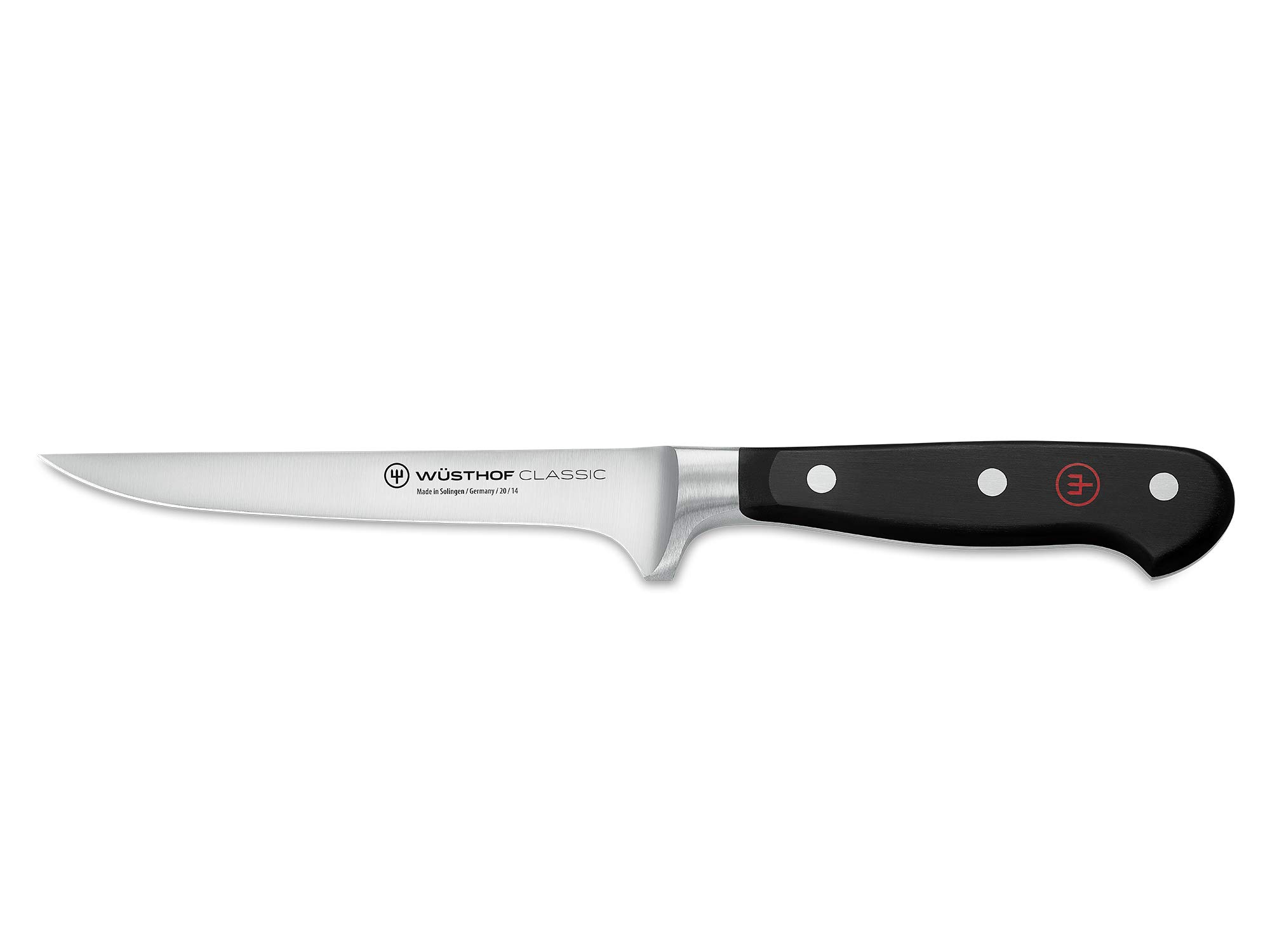
The WÜSTHOF Classic 5-inch is the benchmark for traditional forged boning knives. Made in Solingen, Germany, from high-carbon stainless steel, this precision-forged, full-tang knife delivers a level of balance and edge stability that stamped blades cannot match. The triple-riveted handle provides a secure, traditional feel.
The blade is noticeably stiffer than the flexible models in this guide, making it the go-to choice for breaking down heavier primal cuts of beef and pork. Users report it arrives extremely sharp and holds that edge through extended use with only occasional honing. The weight distribution is superb, inspiring precision cuts with minimal effort.
This is an investment in a long-term kitchen tool. It requires hand washing and respectful care, but owners often describe it as the last boning knife they’ll ever buy. If your primary need is rigorous daily boning and you value forged construction, this is the standard to measure against.
Why it’s great
- Premium forged construction with perfect balance
- Superior edge retention
- Heirloom-quality build from Solingen
Good to know
- Significant investment for a single-purpose knife
- Stiff blade is less suited for delicate poultry or fish
7. Shun Classic 6-Inch Boning & Fillet Knife

The Shun Classic 6-inch Boning & Fillet Knife is a Japanese masterpiece crafted from VG-MAX steel at the core, clad with 68 layers of Damascus stainless steel. The 16-degree edge angle is significantly sharper than the typical 20-degree Western knife, allowing it to slice through meat with minimal resistance and incredible precision.
The D-shaped Pakkawood handle is both beautiful and functional, offering a comfortable grip that conforms to the hand over time. This blade is thin and flexible, excelling at fish filleting and the most delicate boning tasks. The layered Damascus pattern is not just cosmetic — it helps the blade release food more easily than a plain edge.
This is a premium tool that requires careful hand washing and a gentle touch. It is brittle compared to German steel and should never be used on bone or frozen meat. For the chef who values razor-sharp precision above all else and works primarily with fish and poultry, the Shun is a sublime performer.
Why it’s great
- Unmatched sharpness with a 16-degree edge
- Beautiful layered Damascus construction
- Ideal for fish and delicate boning work
Good to know
- High-maintenance and hand wash only
- Fragile edge not suited for bone or heavy use
FAQ
Should I pick a flexible or stiff boning knife?
Can I use a boning knife on frozen meat?
Is a 5-inch or 6-inch boning knife better for home use?
Final Thoughts: The Verdict
For most users, the best boning knives winner is the Victorinox Fibrox 6-Inch Flexible Boning Knife because it combines professional-grade sharpness, a secure grip, and versatile flexibility at a price that leaves room for other kitchen investments. If you want a forged knife with superior edge retention for heavy beef and pork work, grab the WÜSTHOF Classic 5-Inch. And for the chef who prizes razor-sharp precision and works primarily with fish and poultry, nothing beats the Shun Classic 6-Inch Boning & Fillet Knife.