
Our readers keep the lights on and the weekend projects moving. As an Amazon Associate, I earn from qualifying purchases.
Specs are compiled from manufacturer listings and verified buyer reviews and can change over time — please confirm the key details on the product page before buying.
Teaching a toddler to ride is less about pedals and more about balance — and a balance bike is the tool that skips the wobble-and-crash drama of training wheels (training wheels that attach to the rear axle) entirely. The right one matches your child’s inseam (the length from crotch to floor), weight, and confidence level, letting them learn at their own pace on sidewalks, grass, or gravel. This guide walks through the real specs and honest trade-offs of seven top models so you can pick the one that actually fits your kid, your home, and your sanity.
I’m Rikta — the founder and writer behind FitlyFast. This guide is built by comparing the manufacturers’ published specifications and the patterns across verified customer reviews, so you get each pick’s real strengths and trade-offs instead of marketing spin.
The right baby balance bike can turn a frustrating first ride into a joyful glide into independence — whether your toddler is just learning to walk or already running.
Quick Picks
- Strider 12 Pro Bike — Best Overall
- Retrospec Cub Toddler Balance Bike — Best Value
- Yvolution Y Velo Junior 9″ Balance Bike — Best for Beginners
- banana bike LT Balance Bike — Lightweight Pick
- RIDYEE Toddler Balance Bike — Fun Design
- Gotrax KS12 Balance Bike — High Capacity
- Liberry Baby Balance Bike — Tiny Rider Pick
How To Choose The Best Baby Balance Bike
A balance bike is a simple tool, but a few key specs separate a smooth learner from a wobbly frustration. Here’s what to check before you click “buy.”
Seat Height Range — The Only Number That Really Fits
Ignore the “ages 2-5” label on the box. What matters is whether your child’s inseam (the length from crotch to floor) falls inside the bike’s seat height range. Your toddler should be able to sit on the saddle with both feet flat on the ground and knees slightly bent. A bike that is too tall forces them onto tiptoes, creating instability. A bike that is too low bunches their legs up and makes gliding awkward.
Weight of the Bike — Lighter is Faster to Learn
A toddler’s own body weight is small, so a heavy bike feels like a burden. A bike that is too heavy makes steering, stopping, and picking it up after a fall a struggle. Lighter bikes (under 7 pounds) let kids control the bike themselves rather than the bike controlling them. Heavier bikes (over 8 pounds) can work for older or stronger kids, but for a beginner, lighter is almost always better.
Tire Type — Where the Rubber Meets the Ride
Most balance bikes use either EVA foam tires (ethylene-vinyl acetate, a solid foam that never goes flat) or air-filled (pneumatic) tires. EVA tires are puncture-proof, maintenance-free, and work well on pavement and hard-packed dirt. They are lighter and never go flat. Air-filled tires provide more grip and shock absorption on grass or gravel but can go flat and require a pump. For indoor and sidewalk riding, EVA tires are the simpler choice.
Quick Comparison
| Model | Best For | Seat Height | Weight | Max Rider Weight | Amazon |
|---|---|---|---|---|---|
| Strider 12 Pro | Longest usable range | 11″ – 19″ | 5.6 lbs | 60 lbs | Amazon |
| Retrospec Cub | Durable value pick | 11″ – 14.5″ | 10 lbs | — | Amazon |
| Yvolution Y Velo Junior | Extra stability for beginners | 11″ – 14.2″ | 7.7 lbs | 44 lbs | Amazon |
| banana bike LT | Ultra-light aluminum frame | 12.2″ – 15.7″ | 6.4 lbs | 55.12 lbs | Amazon |
| RIDYEE Toddler | Off-road styling & custom plate | 13.4″ – 15.8″ | — | — | Amazon |
| Gotrax KS12 | High weight capacity + LED lights | 16.5″ – 18.3″ | 8.6 lbs | 110 lbs | Amazon |
| Liberry Baby | Smallest toddlers (1 year+) | 9.7″ – 11″ | 5 lbs | 55 lbs | Amazon |
In‑Depth Reviews
1. Strider 12 Pro Bike

The ultralight aluminum frame that outgrows every other pick on this list.
The Strider 12 Pro weighs just 5.6 pounds (2.5 kg) — that is lighter than the banana bike LT (6.4 lbs) and far lighter than the Retrospec Cub (10 lbs). That weight savings matters for a toddler who needs to lift and steer the bike themselves. The real headline here is the seat height range: with the included regular seat post it goes from 11 inches up to 17 inches, and with the included XL seat post it stretches to 19 inches. That means a child with an inseam of 12 inches all the way to 20 inches fits — a span that covers roughly ages 1 to 5 years. Buyers report that kids who used this Strider from about 18 months onward mastered balance and steering, then transitioned to a pedal bike in under an hour.
The foam rubber tires are flat-free, so you will never patch a tube or pump a tire. The frame is aluminum, which resists rust and keeps the bike light. The maximum rider weight is 60 pounds (27 kg). One caveat: a few owners noted the headset (the top part of the bike where the handlebars attach to the frame) has some play (less stiff than a full-size bike), and the seat post bottom can hit the child’s legs when slammed all the way down — some parents sawed off a small section. But for the longest usable range in a single purchase, this is the pick.
Unlike the Gotrax KS12, which tops out at a higher weight limit but is heavier at 8.6 lbs, the Strider prioritizes proportional weight and a much wider seat height envelope. It costs more upfront, but it avoids needing a second bike in a year.
Why it leads the list
- Seat height adjusts from 11″ to 19″ — fits the longest age range here
- At 5.6 lbs, the lightest bike in this review
- Flat-free foam tires require zero maintenance
- Includes a regular and an XL seat post for extended use
What to watch for
- Premium price compared to budget picks like the Liberry
- Headset can feel slightly loose; some owners modify the seat post
- No footrest or bell included
Stick-with-it choice: Buy this if you want one bike that works from the first wobbly steps at 15 months all the way to the confident glider at age 5 — it skips the upgrade cycle entirely.
The trade-off: The higher price and the occasional loose headset are the main reasons some families go with a mid-range pick like the Retrospec Cub instead.
2. Retrospec Cub Toddler Balance Bike

A sturdy, no-nonsense bike that survives the drop-and-drag years.
The Retrospec Cub gives you a solid alloy steel frame with airless, puncture-proof tires that roll smoothly over pavement, grass, and dirt without ever needing a pump. The seat adjusts from 11 inches to 14.5 inches, and the handlebars use a quick-release clamp for on-the-go changes — no tools required. It weighs 10 pounds, which is noticeably heavier than the Strider 12 Pro at 5.6 lbs or the banana bike LT at 6.4 lbs, so it is better suited for kids who have already built some leg strength. Owners mention that after a full year of use the bike remained durable, surviving drops, dragging, and outdoor storage without mechanical issues.
One honest trade-off: at 10 pounds, the Cub is the heaviest bike in this review. That weight comes from the steel frame, which makes it tough but also means a younger or smaller toddler may struggle to maneuver it on their own. The low frame design helps with mounting, but the overall heft is a real consideration. If your child is on the smaller side or just starting out, the banana bike LT at 6.4 lbs or the Liberry at 5 lbs are easier options.
Reviewers mention the seat adjusts very high relative to the frame, giving it a longer-than-expected fit window for a budget-friendly price. The solid wheels mean no flats, ever. Assembly is quick, and the included stickers let kids personalize it.
What works well
- Puncture-proof airless tires — zero flats, rolls on grass and pavement
- Adjustable seat (11″–14.5″) with quick-release handlebar
- Customers note it survives a year+ of hard use without breaking down
- Low step-through frame makes mounting easy for small kids
The biggest drawback
- At 10 lbs, it is the heaviest bike in this review
- Heavier frame may feel sluggish for a new rider under 2 years old
Durable-value verdict: Reach for the Cub if your toddler is at least 2 years old with some leg strength and you want a bike that can handle backyard abuse while staying affordable.
Not the right fit if: Your child is a small 18-month-old or a lightweight beginner — the banana bike LT or the Strider will feel much easier for them to control.
3. Yvolution Y Velo Junior 9″ Balance Bike

A 2-in-1 rear wheel that lets kids find their balance in stages.
The Y Velo Junior stands out with its dual rear wheel design — a wide double-wheel setup for the earliest wobbly rides, then a single wheel once your child builds confidence. The seat adjusts from 11 inches to 14.2 inches, which suits children from about 18 months to 3 years old, with a maximum rider weight of 44 pounds. At 7.7 pounds, it is middle-of-the-pack for weight — lighter than the Retrospec Cub (10 lbs) but heavier than the Strider (5.6 lbs). The larger front wheel and higher ground clearance (the space between the bike’s bottom and the ground) help on uneven surfaces like grass or bumpy pavement, reducing the chance of the frame scraping. Reviewers point out that a 2-year-old was able to ride it safely right away and that the double-wheel mode made the bike feel stable enough not to tip easily.
The biggest limitation is the maximum rider weight of 44 pounds — that is lower than the Liberry (55 lbs) and far lower than the Gotrax KS12 (110 lbs). A heavier or taller child will outgrow this bike’s weight capacity sooner. Similarly, the seat height max of 14.2 inches is lower than the Strider’s 19 inches, so this bike has a shorter usable lifespan. But for a child just starting out who needs extra stability, the dual-wheel setup is a genuine advantage that no other bike here offers.
Unlike the banana bike LT (which assumes the child can balance right away), the Y Velo Junior actively slows down the learning curve with that second rear wheel — giving parents a confidence buffer that many beginners need.
Why beginners love it
- 2-in-1 rear wheel — double-wheel mode for stability, single mode for balance practice
- Higher ground clearance for riding on grass or bumpy paths
- Solid build quality; owners say it feels sturdy and doesn’t tip easily
- Easy to switch between modes without tools
The shorter lifespan
- Max rider weight of 44 lbs limits how long the bike fits
- Seat maxes out at 14.2 inches — shorter fit window than the Strider
- Heavier than the Strider or banana bike LT
Stability-first pick: Choose this if your toddler is just starting to walk and you want a bike that actively prevents tipping — the dual rear wheel is a real safety net for the first rides.
Outgrow warning: If your child is already 3 years old or close to 44 pounds, this bike will have a short usable life — the Strider or the Gotrax KS12 will last much longer.
4. banana bike LT Balance Bike

At 6.4 pounds, this aluminum bike feels like a toy — in a good way.
The banana bike LT is built around a low center of gravity (low frame so the child’s weight sits close to the ground) aluminum frame that makes it easy for toddlers to step through and balance. It weighs just 6.4 pounds (2.9 kg), making it lighter than the Y Velo Junior (7.7 lbs) and the Retrospec Cub (10 lbs). The seat adjusts from 12.2 inches to 15.7 inches using a quick-release clamp — no tools needed — and the handlebars adjust the same way. The maximum rider weight is 55.12 pounds (25 kg), which is on par with the Liberry (55 lbs). The EVA foam tires (ethylene-vinyl acetate solid foam) are puncture-proof and roll smoothly on pavement and hard-packed dirt. The bowed frame design dips slightly in the middle, which helps prevent the child’s shoes from catching on the frame while gliding. Shoppers say that toddlers progressed from staggering to fast riding in just a few weeks, and that the paint is durable and vibrant even after outdoor use.
One criticism in reviews: some units arrived with scratches or chipped paint straight from the start, suggesting quality control in packaging could be better. The assembly instructions also missed a mention of a small black plastic piece on the handlebar bottom that some owners had to figure out on their own. Compared to the Strider 12 Pro (5.6 lbs), the banana bike is about 0.8 pounds heavier and has a shorter seat height range (12.2–15.7 inches vs 11–19 inches), so it fits a narrower span of ages. That said, for a child in the 2–4 year range, the banana bike is an impressive balance of light weight, aluminum durability, and a reasonable price point.
Vs the Gotrax KS12 (8.6 lbs, iron frame), the banana bike’s aluminum construction makes it over 2 pounds lighter and much easier for a small child to carry and control. That weight advantage is the single biggest reason a parent should pick this over the heavier steel-frame options.
Lightweight advantages
- 6.4 lb aluminum frame — one of the lightest bikes for ages 2-5
- Low center of gravity makes balancing easier for beginners
- Quick-release seat and handlebar adjustments, no tools needed
- Bowed frame helps prevent shoes from catching while gliding
Watch out for
- Some units arrive with chipped paint or scratches
- Seat height range (12.2″–15.7″) is shorter than the Strider’s
- Missing assembly detail about the handlebar bottom piece
Lightweight winner: Buy the banana bike LT if your 2-to-4-year-old needs a bike they can pick up and steer themselves without struggling — the aluminum frame makes it a joy to handle.
skip it if: You want the longest possible fit window — the Strider 12 Pro with its two seat posts will last years longer.
5. RIDYEE Toddler Balance Bike
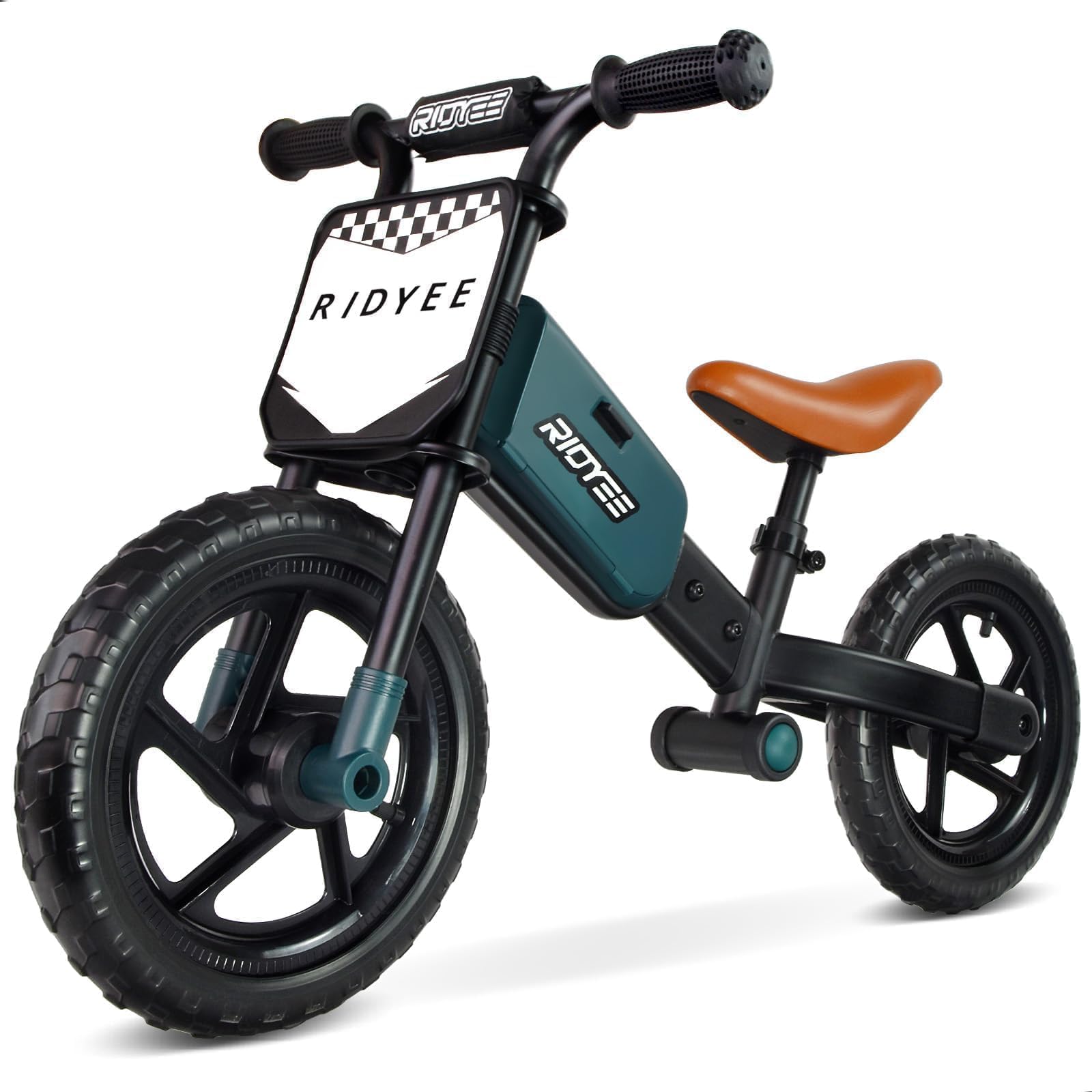
A sand-motocross look with a custom name plate that kids can sticker themselves.
The RIDYEE balance bike uses a carbon steel frame with an “off-road concept” design inspired by sand motocross bikes. The seat adjusts from 13.4 inches to 15.8 inches without tools, which is a tighter range than the Strider’s but on par with the banana bike LT. It includes a shock-absorbing seat, anti-slip grips, and all-terrain EVA tires (ethylene-vinyl acetate foam). The standout feature is the customizable front plate and three sets of letter and number stickers — kids can put their name on the bike, which owners say adds a personal ownership element that young riders love. Buyers report that the bike feels “sturdy, durable, well-made” and that after some initial practice, even a 2-year-old mastered it and improved their balance and confidence.
A few honest drawbacks: some reviewers mention the stickers on the name plate don’t stick particularly well. And compared to the banana bike LT’s aluminum frame (6.4 lbs), the RIDYEE’s carbon steel construction is heavier — though the exact weight is not stated in the data, several reviews describe it as “initially heavy for a 2-year-old.” Another reviewer noted the tires are plastic rather than rubber, which would have earned a perfect score from them. If you plan to ride mostly on smooth pavement, the plastic-like tires are fine, but for gravel or uneven ground, rubber tires would grip better.
Vs the Liberry (5 lbs, 55 lbs max), the RIDYEE has a higher seat range and a more rugged look, but the Liberry is significantly lighter and more stable for the youngest toddlers. The RIDYEE fits best for a child who is already walking confidently and wants a bike that looks and feels like a “real” dirt bike.
What makes it fun
- Customizable name plate with stickers boosts creativity and ownership
- Shock-absorbing seat for smoother rides on bumps
- Tool-free seat adjustment from 13.4″ to 15.8″
- Sporty off-road design that stands out from standard bikes
The honest limits
- Heavier than aluminum-framed alternatives like the banana bike LT
- Name plate stickers may peel off over time
- Tires are plastic, not rubber — less grip on loose surfaces
Personalization pick: Choose the RIDYEE if your little rider is into “big kid” looks and you want a bike they can put their name on — the sticker kit and motocross styling are unique here.
Weight caveat: If your child is under 2 years old or on the smaller side, the heavier steel frame may be a struggle — the Liberry or banana bike LT will feel easier for them.
6. Gotrax KS12 Balance Bike
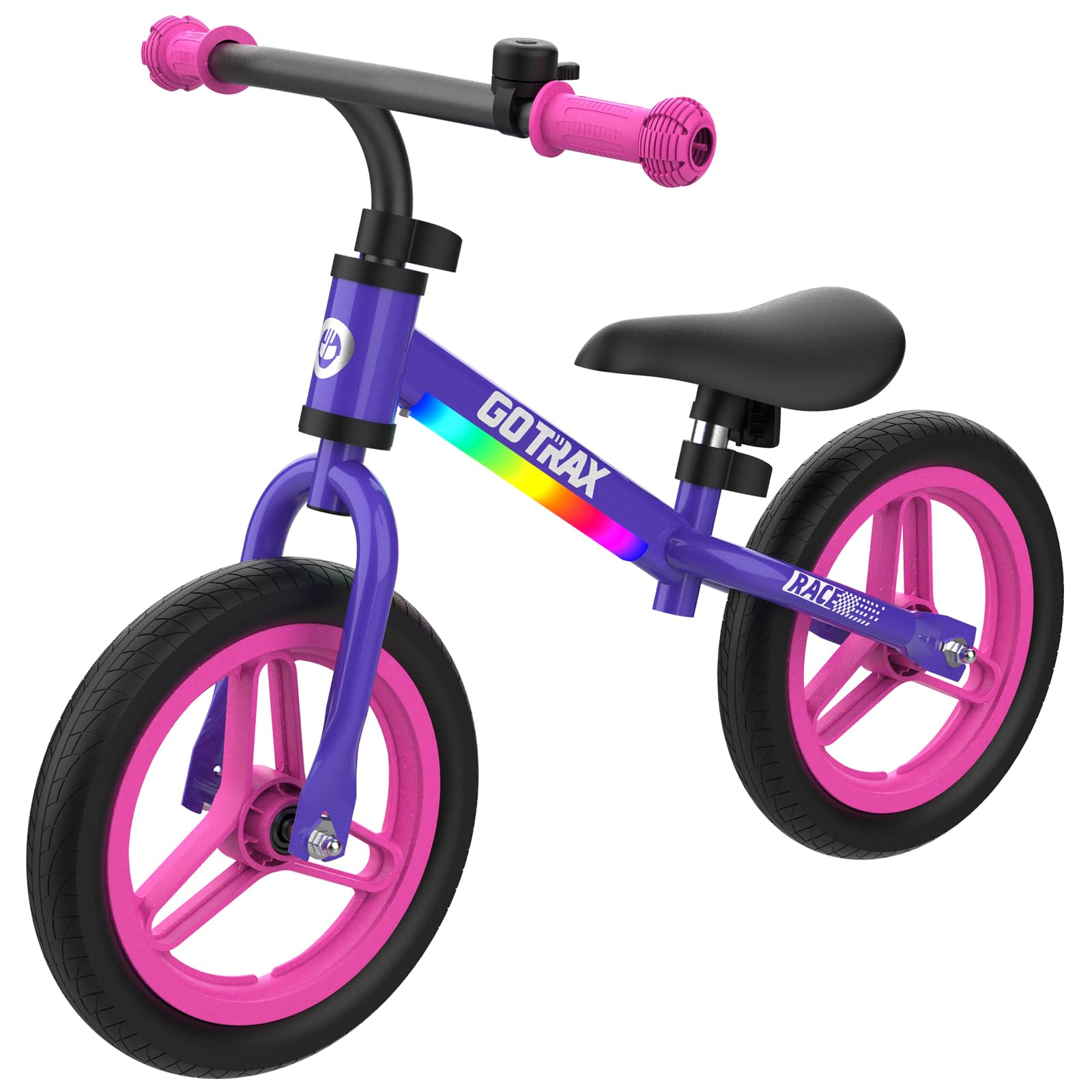
LED lights and a 110-pound weight limit — built for bigger toddlers who love flash.
The Gotrax KS12 has a maximum weight recommendation of 110 pounds, which is double the Liberry’s 55 pounds and far above the Strider’s 60 pounds. That high limit, paired with a seat height range from 16.5 inches to 18.3 inches and an iron frame, makes this bike suitable for older or larger children who have outgrown the smaller models. It weighs 8.6 pounds, which is heavier than the banana bike LT (6.4 lbs) and the Strider (5.6 lbs), but the trade-off is a sturdy build that can handle rougher play. The unique LED lights in the wheels light up as the bike rolls, adding visibility and fun. It also comes with a bell, a thicker padded seat, and silicone handlebar grips. Owners mention that it was a perfect fit for a 3-year-old (38 inches tall) and that the 5-minute assembly time was a welcome surprise.
The trade-off is the weight. At 8.6 pounds, this is the second-heaviest bike in the review (after the Retrospec Cub at 10 lbs). A small or young toddler may find it difficult to lift or steer. And unlike the Y Velo Junior, which has a dual rear wheel for stability, the Gotrax is a standard single-wheel design with no braking system — so stopping is entirely foot-powered. However, for a 3- or 4-year-old who has outgrown lighter bikes, the KS12’s combination of high weight capacity, adjustable handlebars (22.8 to 26 inches), and fun LED lights makes it a compelling upgrade.
Vs the RIDYEE (carbon steel, 13.4–15.8 inch seat), the Gotrax has a taller seat range and a higher weight limit, making it better for older kids. But the RIDYEE’s off-road styling and name plate give it more personality for younger riders who prefer customization.
Standout specs
- Maximum weight recommendation of 110 lbs — highest in this review
- LED wheel lights add visibility and fun for evening rides
- Adjustable handlebar height from 22.8″ to 26″
- Bell, padded seat, and silicone grips included
Weight trade-off
- At 8.6 lbs, it’s heavy for a young or small toddler
- No braking system — stopping is foot-only
- Iron frame is less rust-resistant than aluminum
Heavy-duty pick: Grab the Gotrax KS12 if you have a sturdy 3- or 4-year-old who is close to outgrowing typical balance bikes — the 110-pound limit and tall seat will keep them riding for longer.
Better for older kids: For a first-time rider under 2, the 8.6-pound weight will feel like a burden — the Strider or banana bike LT are much easier for them to control.
7. Liberry Baby Balance Bike
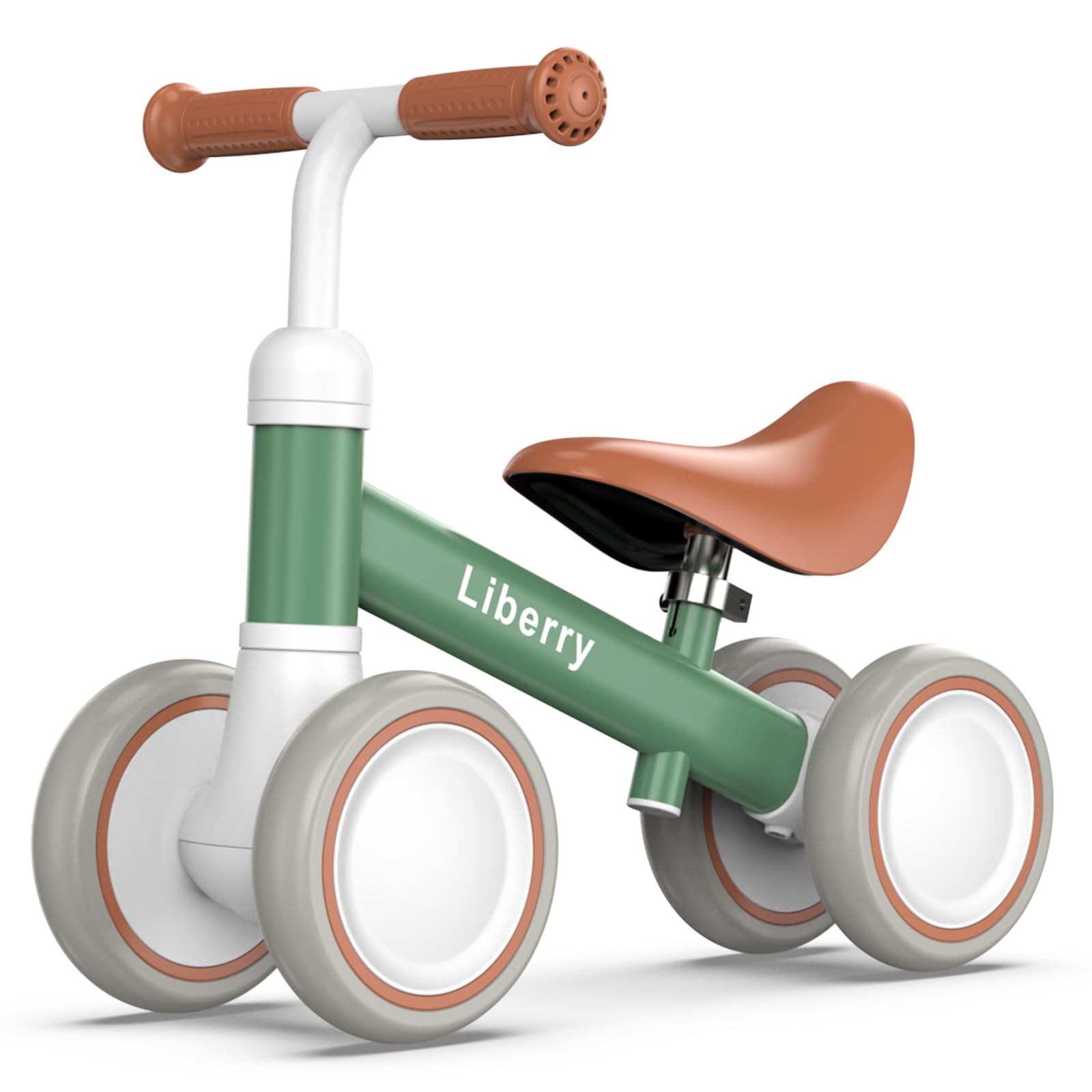
Four wheels, 5 pounds, and a seat so low it fits a 12-month-old.
The Liberry Baby Balance Bike is purpose-built for the smallest riders — ages 12 to 24 months. The seat adjusts from 9.7 inches to 11 inches, which is far lower than the RIDYEE’s 13.4-inch minimum or the Gotrax’s 16.5-inch minimum. The bike weighs just 5 pounds, making it 3.6 pounds lighter than the Gotrax KS12 (8.6 lbs) and half the weight of the Retrospec Cub (10 lbs). It uses a four-wheel design (two rear wheels close together) for extra stability, so a child who is just learning to walk can sit and scoot without tipping sideways. The closed wheels protect little feet and toes from getting pinched. The maximum weight recommendation is 55 pounds, which matches the banana bike LT but with a much shorter seat range. Customers note that a 13-month-old who had been walking since 11 months could easily get on and off without tipping, and that the bike left no marks on wood floors.
The catch is the limited growth window. With a max seat height of just 11 inches, most children will outgrow this bike before their second birthday. The applicable child inseam is 10–18 inches, which is a narrow band. Compared to the Strider 12 Pro (11–19 inch seat height), the Liberry has less than half the usable range. It is also not designed for uneven terrain — the manufacturer advises against riding on gravel paths. But for a baby taking their first walking steps, the Liberry offers a stability and weight advantage that no other bike in this review can match. Vs the Y Velo Junior (dual rear wheel, 7.7 lbs, 11–14.2 inch seat), the Liberry is lighter and has an even lower seat, making it the true starting point for the youngest toddlers. The Y Velo Junior has a longer usable height range, but the Liberry is the only bike here that truly fits a 12-month-old.
Best for the littlest ones
- Weighs just 5 lbs — lightest bike in this review
- Seat adjusts from 9.7″ to 11″ — fits 12-month-olds and up
- 4-wheel design prevents tipping for brand-new walkers
- Closed wheels protect feet from pinching
Quick outgrow warning
- Max seat height of 11 inches — most kids outgrow it before age 2
- Not suitable for gravel or rough terrain
- 55 lb max weight limit but kids will outgrow the seat height first
First-bike specialist: Buy the Liberry if your child is under 18 months and just learning to walk — the low seat, light weight, and four-wheel stability make it the safest starting point.
Short-term tool: Do not buy this expecting it to last past age 2 — consider the Strider 12 Pro or the banana bike LT if you want a bike that grows for multiple years.
Understanding the Specs
Seat Height (Inches)
This is the single most important number on a balance bike. It measures how low or high the saddle can go. Your child should place both feet flat on the ground with a slight bend in the knee when seated. A bike that is too tall forces tiptoe balancing, which is unstable. A bike that is too low bunches the legs up and prevents a natural gliding motion. Always measure your child’s inseam (floor to crotch) and match it to the bike’s seat height range — ignore the “ages” label.
Frame Material (Steel vs Aluminum)
Steel frames (carbon steel or alloy steel) are heavier and more durable — they cost less but make the bike harder for a small child to lift and steer. Aluminum frames are lighter and resist rust but cost more. For a child’s first bike, lighter is almost always better because the bike’s weight is a direct obstacle to the child’s ability to control it. If your kid is under 3, prioritize a sub-7-pound bike with an aluminum frame.
Tire Type (EVA vs Air)
EVA foam tires (ethylene-vinyl acetate, a solid foam) are solid, puncture-proof, and maintenance-free. They are lighter and work well on pavement, sidewalks, and hard-packed dirt. Air-filled tires provide better grip and shock absorption on grass or gravel but can go flat and require a pump. For most toddlers who ride on neighborhood sidewalks and driveways, EVA tires are the simpler, more practical choice. The trade-off is that EVA tires have less traction on loose surfaces compared to air tires.
Maximum Weight Recommendation
This is the manufacturer’s stated maximum rider weight. It tells you the structural limit of the frame and components. A higher number (like 110 lbs on the Gotrax KS12) signals a more sturdy build that can handle older or larger children. A lower number (like 44 lbs on the Y Velo Junior) means the bike is designed for smaller riders and may flex or wear out under a heavier child. Always check this number against your child’s current weight and expected growth.
FAQ
What inseam does my child need for a balance bike?
At what age can a child start using a balance bike?
Are foam tires better than air tires on a balance bike?
How do I know if a balance bike is too heavy for my toddler?
Can a balance bike replace training wheels?
Do balance bikes come with brakes?
What is the difference between a 2-wheel and 4-wheel balance bike?
How long does a balance bike typically last a child?
Should I buy a balance bike with pedals?
What terrain can a balance bike handle?
Final Thoughts: The Verdict
Across the board, the baby balance bike winner is the Strider 12 Pro because it combines the lightest aluminum frame (5.6 lbs) with the widest seat height range (11 to 19 inches), giving you one bike that fits from the first wobbly steps at 15 months all the way to a confident 5-year-old glider. If you want a durable mid-range option that survives backyard abuse while staying affordable, grab the Retrospec Cub. And for the littlest rider — a 12-18 month old just learning to walk — the standout is the Liberry Baby Balance Bike, with its 5-pound weight, 9.7-inch low seat, and four-wheel stability.
How We Picked
We do not accept paid placement. Every pick is matched to a real buyer and a real use-case; we do not hands-on test units.
Sources & Methodology
Specifications: manufacturer listings and product documentation. Review insights: verified customer reviews, as of July 2026. Pricing: not shown on this page (it changes often); check the current price via the retailer link.
As an Amazon Associate, FitlyFast earns from qualifying purchases. This does not affect which products we feature.