
Our readers keep the lights on and the weekend projects moving. As an Amazon Associate, I earn from qualifying purchases.
Specs are compiled from manufacturer listings and verified buyer reviews and can change over time — please confirm the key details on the product page before buying.
You are planning a multi-day trek, and the forecast shows rain. The right rain pants can make or break a wet-weather trek. A good pair of backpacking rain pants needs to be lightweight enough to carry without a second thought, but tough enough to keep you bone-dry when the sky opens up.
I’m Rikta — the founder and writer behind FitlyFast. This guide is built by comparing the manufacturers’ published specifications and the patterns across verified customer reviews, so you get each pick’s real strengths and trade-offs instead of marketing spin.
Whether you are facing a week of sideways rain in Iceland or a single afternoon thunderstorm on the Appalachian Trail, you need reliable shell pants that won’t weigh you down. This is your no-nonsense guide to finding the best backpacking rain pants for your next adventure.
Quick Picks
- Outdoor Research Men’s Helium Rain Pants — Best Overall
- Marmot Men’s PreCip Eco Rain Pant — Best Value
- Berghaus Women’s Waterproof Hiking Pant Gore-TEX Paclite — Premium Women’s Pick
- Mountain Hardwear Men’s Stretch Ozonic Pants — Stretch Comfort
- Badlands Exo Rain Pant — Quick On/Off
How To Choose The Best Backpacking Rain Pants
Picking the right rain pants for backpacking depends on three things: how much they weigh, how well they keep water out, and how easily you can stash them in your pack. The lightest options hover around 4.5 ounces, but some hikers prefer a bit more durability for off-trail use. Here is what to look for.
Weight and Packability
Every ounce matters when you carry everything on your back. The best backpacking rain pants fold into their own pocket or a small pouch, taking up about as much space as a water bottle. Look for fabrics around 30D (denier, a measure of thread thickness) for a good balance of lightness and tear resistance.
Waterproofing and Breathability
Look for a “waterproof” label, not just “water-resistant.” Look for a waterproof membrane — Gore-Tex, NanoPro, or Pertex Shield — and sealed seams. You also need some breathability so you do not end up wet from your own sweat. A zippered vent along the side or a gusseted crotch helps dump heat on steep climbs.
Fit and Sizing
Sizing is the most common frustration among buyers. Many brands run large, and sizing can be inconsistent. You want enough room to layer over your hiking pants or base layer without the shell feeling baggy and flapping in the wind. An elastic waistband with a drawcord helps you dial in the fit without a belt.
Quick Comparison
| Model | Best For | Weight | Material | Amazon | |
|---|---|---|---|---|---|
| Outdoor Research Men’s Helium Rain Pants | Best Overall | 5 Ounces | 100% Nylon with Pertex Shield | Back pocket | Amazon |
| Marmot Men’s PreCip Eco Rain Pant | Best Value | 4.5 ounces | NanoPro recycled nylon | Front zip pockets | Amazon |
| Berghaus Women’s Waterproof Hiking Pant Gore-TEX Paclite | Premium Women’s Pick | — | Gore-Tex Paclite | Squishable mesh pouch | Amazon |
| Mountain Hardwear Men’s Stretch Ozonic Pants | Stretch Comfort | 9.6 ounces | 100% recycled shell | — | Amazon |
| Badlands Exo Rain Pant | Quick On/Off | — | Waterproof membrane | Packs into own pocket | Amazon |
In‑Depth Reviews
1. Outdoor Research Men’s Helium Rain Pants
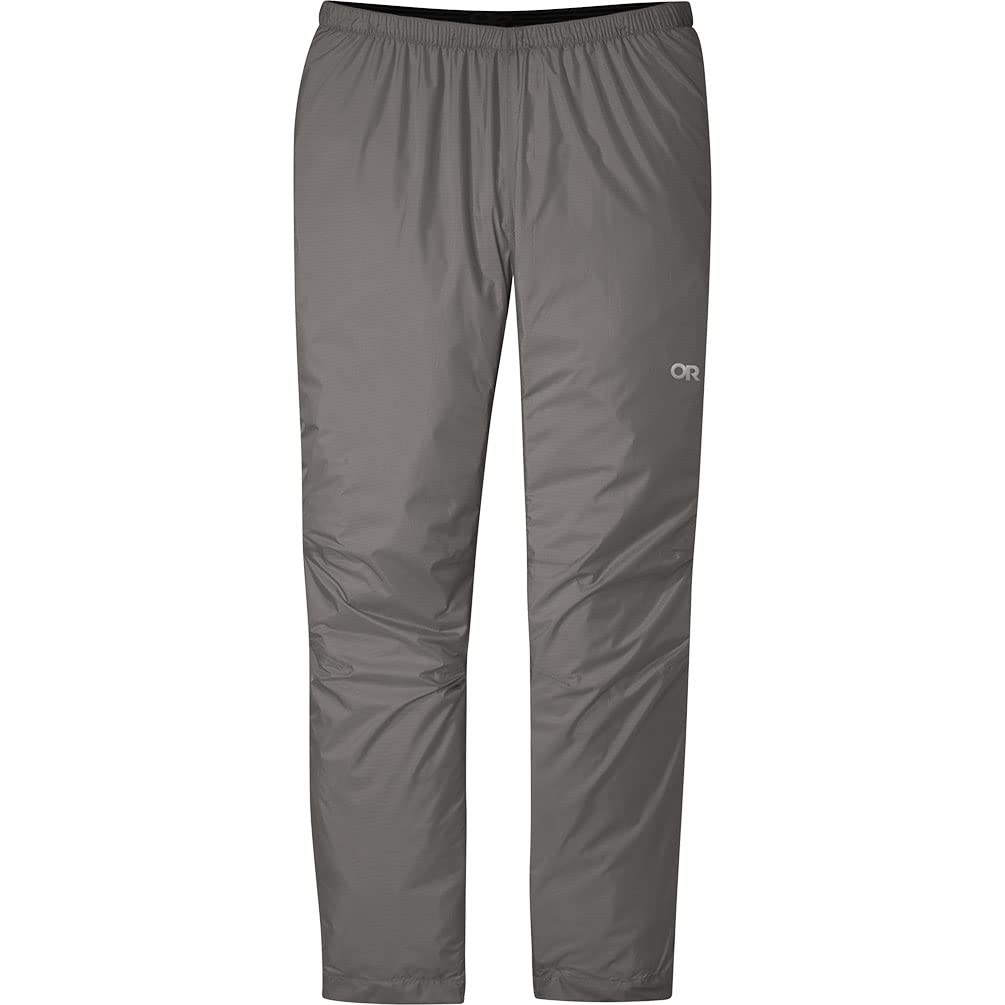
The featherlight shell that survived a week of nonstop Icelandic rain.
At just 5 ounces, these pants are the lightest in this lineup. One reviewer even measured 6.3 ounces on their own scale. Yet another buyer reported they “kept me dry for 7 days pouring down every single day.” The 100% nylon fabric uses a 30D ripstop weave (a fabric thickness that resists tearing) with a Pertex Shield membrane (a thin waterproof layer) so your legs stay dry in cool-weather hiking. For a shell that packs to nearly nothing, that is an outstanding real-world result.
What makes the Helium such a well-rounded choice is how it handles the small details. The elastic waistband with gripper tape keeps the pants from sliding down, and the gusseted crotch (a diamond-shaped insert) gives you a full range of motion when stepping over logs or boulders. One buyer with a 34-inch waist found a size medium fit snugly over sweatpants, confirming the standard fit runs trim — good for layering without excess fabric flapping. The back pocket doubles as a stuff sack, and the ankle zippers with snaps let you pull them on over boots quickly. That ankle zipper is much shorter than the full-length zipper on the Badlands Exo, so you cannot vent your whole leg the same way.
The catch here is that the Pertex Shield has limits. One reviewer noted the fabric “soaks through in wet grass or heavy rain,” and at least a couple of buyers mentioned the pocket location is hard to reach with a backpack hip belt on. For sustained downpours or bushwhacking through wet brush, a heavier fabric like the Mountain Hardwear Stretch Ozonic (at 9.6 ounces) might hold up better. But for the hiker who wants the lightest, most packable emergency shelter for their legs, this is the one to beat — just know it is best for cool-weather rain, not tropical downpours. If you face constant heavy wet brush, skip this and pick the more durable Ozonic.
What Shines
- Ultra-light at 5 ounces — you will barely notice it in your pack
- Gusseted crotch and elastic waist make actual hiking comfortable
- Back pocket and ankle snap tabs add real convenience
Where It Falls Short
- Reviewers report it soaks through in heavy rain or wet grass
- Pocket becomes inaccessible when wearing a backpack
- Zipper only goes to the ankle, not to the knee for better venting
Who It Fits Best: Hikers who prioritize minimal pack weight and plan for cool-weather rain rather than tropical downpours.
One Real Trade-Off: The lightweight fabric will wet through if you spend extended time in heavy rain or wet brush.
2. Marmot Men’s PreCip Eco Rain Pant

The budget-friendly shell that weighs less than a granola bar.
At 4.5 ounces, the PreCip Eco is one of the lightest pairs in this roundup, alongside the Outdoor Research Helium at 5 ounces, and it comes from a brand known for reliable outdoor gear. The fabric is a PFC-free DWR (durable water repellent that skips the harsh chemicals) Marmot NanoPro recycled nylon ripstop, so you are keeping water out and keeping your environmental footprint smaller. One buyer used them on an Alaskan fishing trip and confirmed they “worked well” and were “waterproof.”
The PreCip Eco is designed with practical trail features: a drawcord at the elastic waist for a secure fit, side ankle zippers with snap tabs so you can change shoes without taking the pants off, and front zip pockets to stash small gear like a phone or snacks. for sheer packability, Marmot lists the product dimensions as 17 x 17 x 3 inches. For a bargain-minded shopper who wants a name-brand shell that punches above its price, this is a smart grab. One key difference from the Helium: it has front zip pockets, which the Helium lacks, so you can access your stuff without taking off your pack hip belt.
Now, the sizing situation here is a real problem. Multiple reviewers describe these as “massively oversized, like a circus tent” and “clown trousers.” One buyer who ordered an XL based on Amazon’s recommendation said they ended up with a medium. Another reviewer at 5’9″ found the 34-inch leg length too long. You will almost certainly need to size down from your usual, and the material has no stretch, so any mismatch becomes uncomfortable. A few buyers also mentioned non-breathable feel, with one saying “L’acqua la tengono fuori, come le buste di plastica dell’immondezza” — water stays out like a plastic bag, but it does not breathe. For cool-weather use or short downpours this is fine; for a sweaty uphill climb you might prefer the Helium.
The Upside
- Lightest pick at 4.5 ounces — easy to forget in your pack
- Eco-friendly recycled nylon with PFC-free DWR finish
- Front zip pockets add utility you do not always get in rain pants
The Downside
- Sizing is wildly inconsistent — most buyers need at least one size smaller
- Seams and zippers can rub against bare legs uncomfortably
- Low breathability, so you will sweat on any real exertion
Why It Makes Sense: This is the smart money pick for someone who wants a trusted brand and the lightest possible pack weight on a budget.
The Catch You Need to Know: You must size down at least one full size from your normal fit, otherwise you will be swimming in fabric.
3. Berghaus Women’s Waterproof Hiking Pant Gore-TEX Paclite

Gore-Tex protection that stuffs into a pouch the size of your fist.
If you want the gold standard in waterproofing and have the budget to match, these Berghaus pants bring a Gore-Tex Paclite membrane (a thin, durable waterproof layer used in high-end shells) into a women-specific cut. The key advantage here is a real Gore-Tex membrane which offers more reliable and longer-lasting waterproof performance than proprietary coatings like NanoPro or Pertex Shield. Side zips let you vent when things heat up, and the pants fold into their own squishable mesh pouch for easy storage.
The Berghaus is designed for the female form, which is a big deal in this category. Many rain shells are unisex or men’s-cut, leaving women hikers with too much room in the waist and not enough in the hips. A gusseted crotch (a diamond-shaped insert that adds mobility) helps you stride and climb without restriction. It is not the lightest option in this roundup, but the Gore-Tex membrane typically offers better breathability than lighter proprietary fabrics. For a multi-day trip where you know rain is coming, giving up a few ounces for the durability of Gore-Tex is a smart trade. Compared to the Marmot PreCip which buyers report breathes poorly, the Berghaus’s Gore-Tex is better for climbing hills without soaking yourself from the inside.
The Big Win
- Gore-Tex Paclite membrane is the most proven waterproofing here
- Women-specific cut avoids the baggy fit of unisex pants
- Self-stuffing mesh pouch keeps the pack organized
The Trade-Offs
- Heavier than the sub-5-ounce options
- Premium price tag makes it an investment piece
Best Suited For: Female backpackers who want the security of a Gore-Tex membrane and are willing to carry a few extra ounces for it.
Consider This: If weight is your #1 priority and you are hiking in moderate conditions, a lighter women’s shell from another brand might serve you better.
4. Mountain Hardwear Men’s Stretch Ozonic Pants
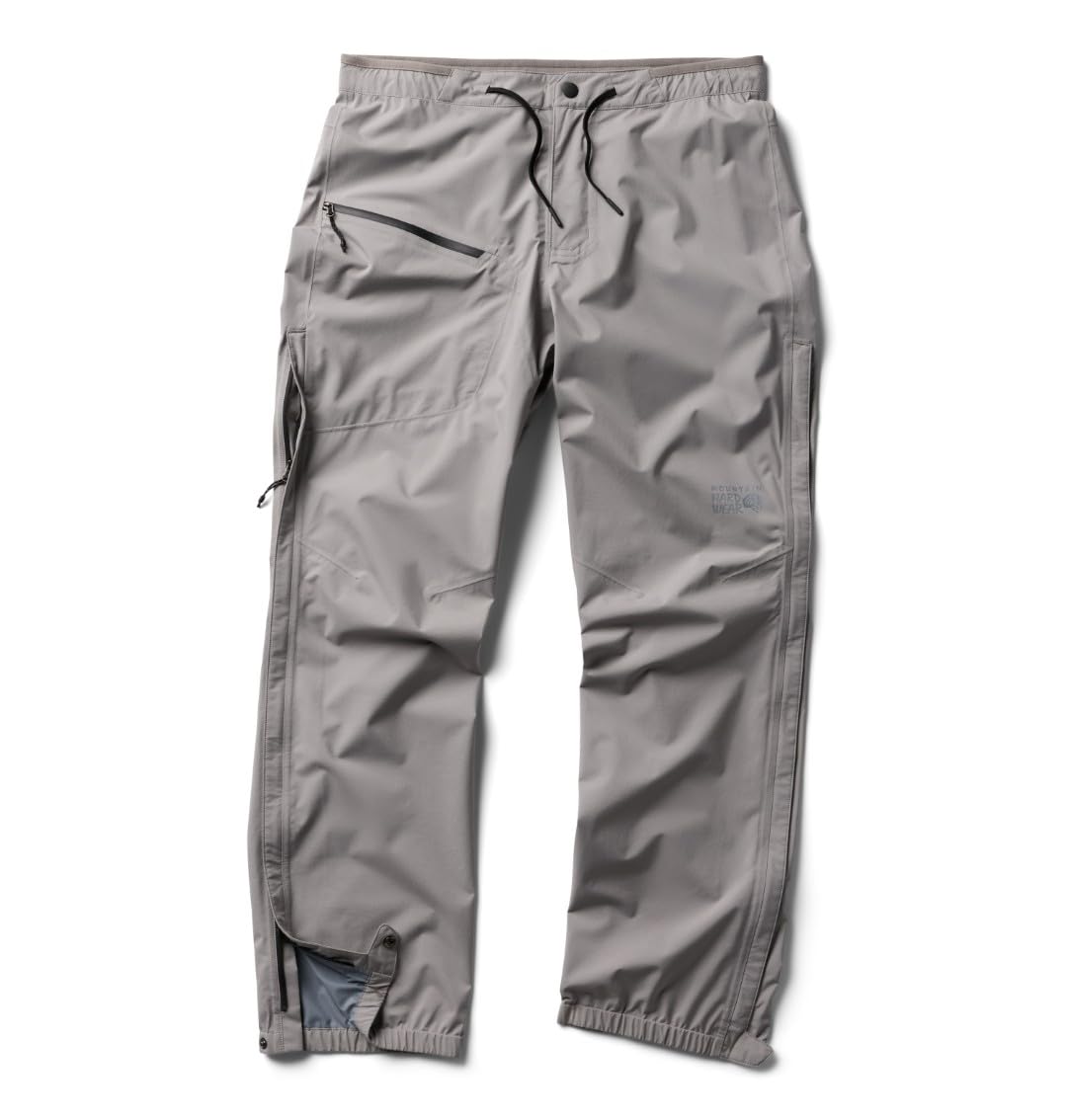
The only pair here that stretches with you on steep ascents.
At 9.6 ounces, the Stretch Ozonic is noticeably heavier than the Helium at 5 ounces. But what you get for those extra ounces is a 2.5-layer construction (a face fabric, a waterproof membrane, and a thin inner layer that protects the membrane) with four-way stretch fabric that moves with your body. If your hiking involves scrambling over rocks, high steps over fallen logs, or any motion beyond a straightforward walk, this stretch is a standout. The shell is made from 100% recycled fabric, which aligns with Mountain Hardwear’s sustainability push.
The 2.5-layer build is worth understanding: it is lighter and more packable than a 3-layer shell (which adds a separate inner liner), but more durable than a 2-layer. The trade-off is that the inner coating can feel clammy against bare skin if you wear these without a base layer. Buyers who have worn the Ozonic on wet spring mornings report that it handles sustained rain well, though at 9.6 ounces these are not an in-case-of-emergency shell — they are a rain pant you plan to hike in. That stretch is a clear advantage over the non-stretch Marmot PreCip, which some buyers find restrictive on climbs.
Standout Features
- Four-way stretch makes scrambling and high steps easy
- 100% recycled shell fabric is a genuine eco-win
- 2.5-layer construction balances durability with packability
What Holds It Back
- At 9.6 ounces it is the heaviest pick here, versus the 4.5-ounce Marmot
- Inner layer can feel sticky against bare skin
- Premium price for a niche feature set
Best For: Backpackers who move dynamically — trail runners, scramblers, anyone who values freedom of motion over saving every ounce.
skip it if: Your hiking is mostly on flat, well-graded trails where a lightweight, non-stretch shell will work fine.
5. Badlands Exo Rain Pant
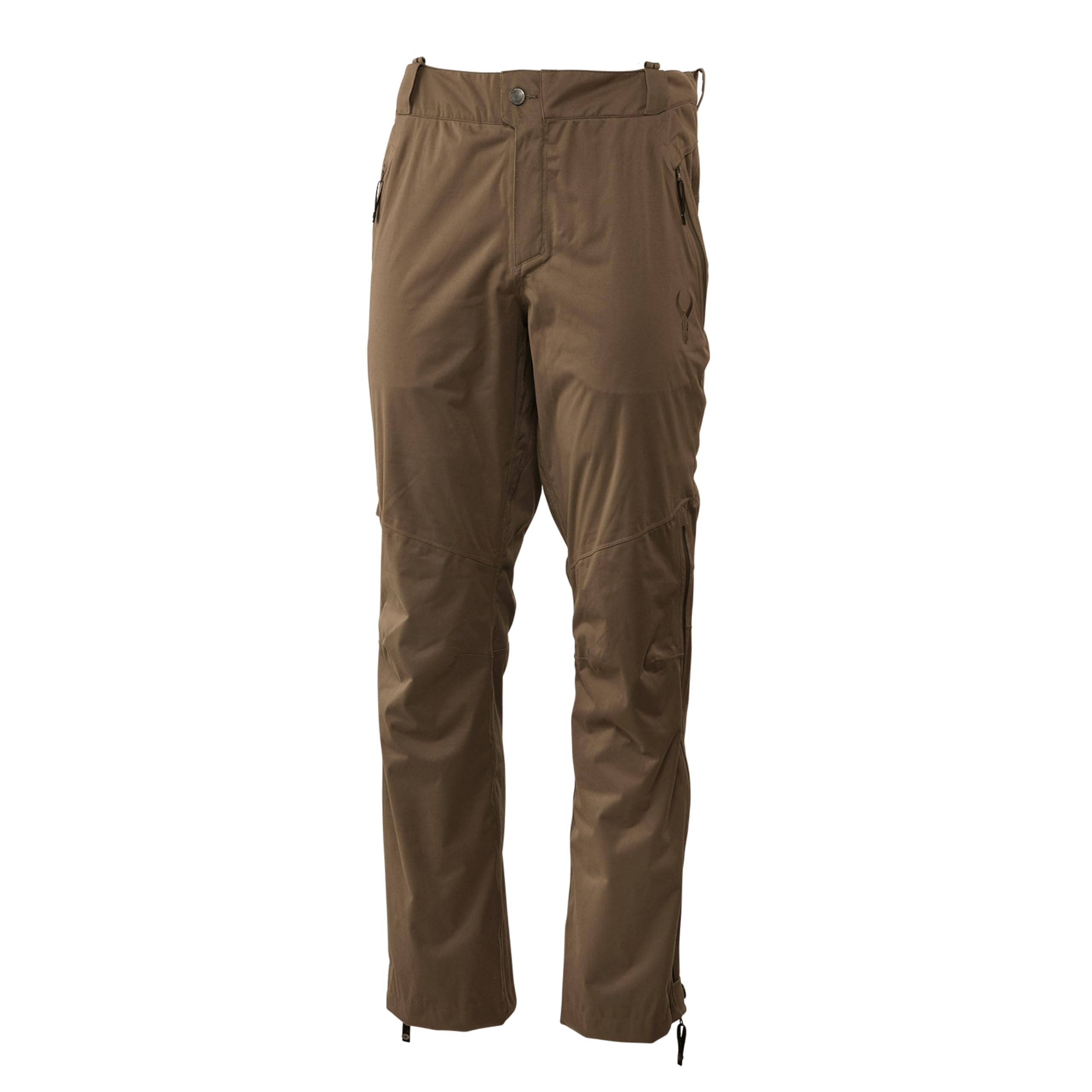
Slip them on over boots in seconds when the sky opens.
The Exo Rain Pant solves among the most annoying problems with rain shells: getting them on fast enough before you get soaked. A full-length side zipper runs from ankle to hip, so you can step into these without taking off your boots. That same zipper doubles as a massive vent when you want to dump heat on a climb. Badlands calls these “ultra-light and 100 percent waterproof” with a breathable membrane, and the pants pack into their own zippered pocket for stashing in your pack.
Coming from Badlands, a brand known for rugged hunting gear, these pants are built for durability. The full-length side zippers use a sturdy YKK-style zipper that should hold up to repeated use. The trade-off for that zipper, however, is a slightly bulkier pack-down size compared to the super-compact Marmot PreCip or Outdoor Research Helium. For the hiker who hates stopping to undress in the rain, the convenience of the Exo design is worth the extra space in your pack. The full-length zipper is a clear advantage over the Helium’s short ankle zip when you need to cool down mid-climb.
Why You Want It
- Full-length side zipper lets you pull them on over boots instantly
- Same zipper doubles as a long vent for temperature control
- Packs into its own pocket for organized storage
The Drawbacks
- Full-length zipper adds weight and bulk compared to minimalist shells
- Less breathable than a membrane-focused shell like the Helium
Reach For These If: You value speed and convenience — the ability to throw them on mid-trail without stopping to take off your boots is genuinely handy.
Look Elsewhere If: Packing to the smallest possible volume is your top priority, as the zippers make this a bit bulkier than the competition.
Understanding the Specs
Denier (D) and Fabric Weight
Denier is a unit that measures the thickness of the individual fibers in a fabric. A 30D ripstop nylon (like the Outdoor Research Helium uses) is light and packs small, but it is also less resistant to tearing if you brush against sharp rocks or branches. A higher denier like 70D is heavier and more abrasion-resistant but takes up more space in your pack. For backpacking, 30D to 50D is the balance.
Membrane Technology: Gore-Tex vs Proprietary
A waterproof membrane is a thin film laminated to the outer fabric that stops water droplets from passing through while allowing water vapor (sweat) to escape. Gore-Tex is the industry standard with a proven track record for durability and breathability. Proprietary membranes like Marmot NanoPro or Pertex Shield are lighter and cheaper, but they may wet out (water stops beading and soaks into the fabric) faster under sustained rain. The trade-off is pack weight versus long-term waterproofness.
FAQ
Do I really need rain pants for backpacking or can I just use a rain jacket?
How heavy should my backpacking rain pants be?
Will these rain pants fit over my regular hiking pants?
What does “2.5-layer” mean on a rain pant?
Are Gore-Tex rain pants worth the extra money?
How do I care for my rain pants to keep them waterproof?
Can I use rain pants for winter hiking or snow?
What is the difference between a side zipper and ankle zippers?
Final Thoughts: The Verdict
For most hikers, the best backpacking rain pants are the Outdoor Research Men’s Helium Rain Pants because they balance a 5-ounce weight, proven Pertex Shield waterproofing, and smart features like a gusseted crotch at a mid-range price. If you want the lightest possible pack weight on a budget, grab the Marmot Men’s PreCip Eco Rain Pant at 4.5 ounces — just be prepared to size down. And for women who want the security of a real Gore-Tex membrane in a cut that actually fits, the Berghaus Women’s Gore-TEX Paclite Pant is the clear premium pick.
How We Picked
We do not accept paid placement. Every pick is matched to a real buyer and a real use-case; we do not hands-on test units.
Sources & Methodology
Specifications: manufacturer listings and product documentation. Review insights: verified customer reviews, as of July 2026. Pricing: not shown on this page (it changes often); check the current price via the retailer link.
As an Amazon Associate, FitlyFast earns from qualifying purchases. This does not affect which products we feature.