
Our readers keep the lights on and the weekend projects moving. As an Amazon Associate, I earn from qualifying purchases.
Specs are compiled from manufacturer listings and verified buyer reviews and can change over time — please confirm the key details on the product page before buying.
A budget fly line should do one thing above all else: load your rod on the backcast and shoot line on the forward stroke without costing you a week of lunches. After looking at the specs and real talk from over three thousand owner reviews across nine different lines, the consistent picture is simple — a few lines punch so far above their price that paying more feels optional. Here are the honest standouts, the real trade-offs, and which one actually fits the water you fish most.
I’m Rikta — the founder and writer behind FitlyFast. This guide is built by comparing the manufacturers’ published specifications and the patterns across verified customer reviews, so you get each pick’s real strengths and trade-offs instead of marketing spin.
Whether you are rigging a first combo or stocking a spare spool, the right budget fly line gives you smooth turnover, a durable coating, and the confidence to fish all day without the sting of a blown budget.
Our Picks at a Glance


How To Choose The Best Budget Fly Line
A lower price does not mean a line has to cast poorly. The trick is knowing which specs matter and which marketing phrases to ignore. These three factors separate a bargain from a dud.
The Taper Type Matters Most
Weight-forward (WF) lines dominate the budget market for a reason — they load a rod faster and shoot line farther with less false casting than a double-taper (DT) line. If you fish small streams and rarely cast past 40 feet, a DT line gives you the ability to flip it end-for-end when one half wears out. Otherwise, stick with WF for versatility.
Check the Welded Loop — Both Ends
A welded loop on the front end lets you snap on a leader in seconds. A loop on the backing end does the same for the reel connection. Several budget lines only weld one end, which forces you to tie a nail knot to the backing. If convenience matters to you, a line with two welded loops saves hassle on the water.
Floatability Isn’t Guaranteed
Some budget floating lines ride high all day. Others start to sink after an hour, especially in moving water. Check owner reports for “sinks mid-drift” complaints. Lines with a slick PVC coating and a braided core tend to float longer than those with a stiff, thin jacket.
Quick Comparison
| Model | Best For | Length | Breaking Strength | Line Weight | Amazon |
|---|---|---|---|---|---|
| Piscifun Sword★ Best Overall | All-around budget workhorse | 100 feet | — | WF-5F | Amazon |
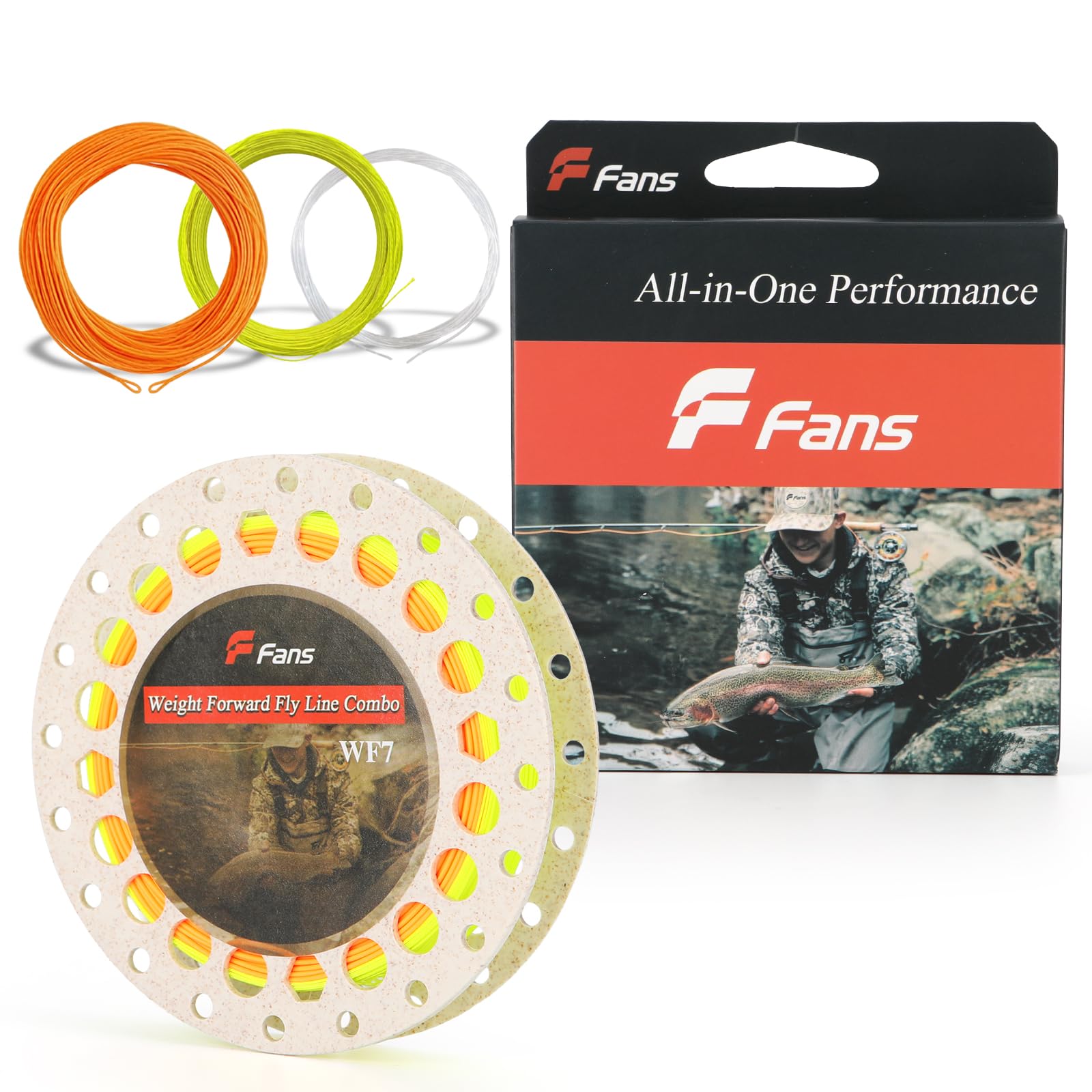
| 8Fans Fly Line ComboBest Starter Combo | Complete starter setup | — | 20 pounds | WF-4F | Amazon |
| Gold Fly Line (Angler Dream)Highest Strength | High strength on a budget | 90 Feet | 40 pounds | WF2F | Amazon |
| Moonlit Fly Fishing | Tight, overgrown streams | — | — | 4wt | Amazon |
| Orvis Clearwater | First line for beginners | 90 feet | — | WF 6 | Amazon |
| Rio Mainstream Trout WF | Smooth mid-range upgrade | 80 feet | — | WF5F | Amazon |
| Rio Mainstream Trout DT | Small-stream flip-and-go | — | — | 5 Weight | Amazon |
| Scientific Anglers Frequency | All-weather trout line | — | — | WF4F | Amazon |
| Cortland 444 Peach | Classic supple feel | 90 FT | — | WF3F | Amazon |
In‑Depth Reviews
1. Piscifun Sword Fly Fishing Line with Welded Loop
This 100-foot line makes budget fly fishing feel like a secret weapon.
The Piscifun Sword uses a longer front taper and a slightly bigger diameter over the first 30 to 33 feet, which means your rod loads fast even when you do not have room for a full false-cast sequence. The payoff is smooth turnover at distance and enough authority to punch through a headwind without fighting the line. A 100% Phthalate-Free PVC coating keeps the slickness high and the environmental footprint lower than many bargain lines manage.
The welded loop on the leader end is what buyers consistently call out — as one puts it, an “excellent weight forward line with a welded loop on the leader end.” That loop plus two exposed core loops at the color break make rigging to backing and leader genuinely quick. At 4.5 stars across thousands of owners, it earns the top spot because it nails the trifecta: smooth casting, reliable float, and a price that leaves room for a good fly box. The occasional report of loop separation after a season is the main caveat — inspect the weld before a big trip.
Why owners keep buying it
- Longer 30–33 ft taper loads rods fast and shoots line far
- 100% Phthalate-Free PVC coating stays slick and casts clean
- Welded loop on the leader end saves rigging time
- Corrosion-resistant for both freshwater and saltwater use
The honest trade-off
- Floatability draws mixed feedback — some report the tip dips mid-drift
- Welded loop durability varies; a few owners saw it separate after heavy use
- Initial odor from the coating is strong but fades after a trip or two
Reach for this if: you want a do-everything WF line that casts well in wind, loads fast, and leaves cash in your pocket for flies. It beats the Gold Angler Dream line for versatility with its 100-foot length and bigger diameter head.
Think twice if: you need a dedicated dry-fly floater that stays high through a long drift — the mixed floatability feedback suggests it is better suited to streamers, nymphs, and general trout work.
2. 8Fans Fly Fishing Line Combo
This 3-in-1 kit includes everything needed to spool a reel and hit the water.
This 3-in-1 setup includes the fly line itself, a pre-spooled backing line, and a nylon tapered leader — all pre-tied and ready to fish. For someone unboxing their first real outfit or setting up a spare spool for a quick weight change, that convenience is the real value. The 20-pound breaking strength is exactly right for trout and panfish, and the 8-strand braided polyester backing wears well against guides.
The weight-forward PVC line carries two welded loops (one on each end), so you can swap leaders fast without tying a knot. The bright orange color is a genuine asset for tracking your line on overcast water. The catch is that the included backing feels a bit like nylon twine to some owners, and the leader has some memory straight from the package. But at this price point — and with a 4.9-star score across early reviews — it delivers “smooth, accurate casting for all skill levels” as buyers report.
Why it works for beginners
- Pre-tied 3-in-1 combo: fly line, backing, and tapered leader ready to fish
- Two welded loops simplify leader and backing attachment
- Bright orange color makes line tracking easy in low light
- Smooth casting performance that surprises avid fly fishers
The honest trade-off
- Backing feels less refined than premium setups — functional but basic
- Tapered leader has some memory initially and may need stretching
- Only 32 ratings so far, so long-term durability is still being proven
Best for: a new fly angler or anyone who wants a single-purchase spool solution without buying backing and leader separately.
Hold off if: you already have good backing and leader material — the standalone line options above give you more length and higher ratings for similar money.
3. Gold Fly Line (Angler Dream)
Its 40-pound breaking strength is 40 pounds, ready for bigger water.
The Gold Fly Line from Angler Dream hits 40 pounds of breaking strength — that is twice the 20-pound rating of the 8Fans combo and enough headroom to muscle bigger fish like steelhead or carp without worrying about a snap on the hook set. The nylon core wrapped in PVC gives it a supple feel on the cast, and buyers describe it as “texture and premier finish, together with low price, does provide the angler with a very fine line.” The special taper design delivers loop stability at distance while still loading the rod at close range for flies from size 22 up to size 2.
Two welded loops (front and back) make rigging fast. At 90 feet, it is 11% shorter than the Piscifun Sword’s 100-foot length, which matters if you regularly need to reach distant trout in still water. The durability feedback is mixed — some owners mention the line holds up for multiple seasons, others had the welded loop separate under tension. The textured coating and moss-green/fluorescent-yellow color scheme offer good visibility.
What wins owners over
- 40-pound breaking strength compared to the 20-pound of many competition lines
- Special taper balances close-range loading with long-distance loop stability
- Two welded loops for quick leader and backing connection
- Textured PVC coating feels supple and casts smoothly
The honest trade-off
- 90 feet compared to the Piscifun Sword’s 100 feet
- Welded loop durability draws mixed reports — some saw separation
- Limited to single-strand construction, which may coil more than braided alternatives
Choose this for: fishing situations where breaking strength matters — larger flies, bigger fish, or water with heavy cover where you cannot let the fish run far.
Pass if: your fishing stays in the 20-pound range (trout, panfish) and you prefer the extra 10 feet of the Piscifun Sword for longer presentations.
4. Moonlit Fly Fishing Performance WF Taper

Its short shooting head loads a rod with just a flick, ideal for tight quarters.
Moonlit’s Performance WF Taper line is built for a specific pain point: you have brush behind you and a slot in front of you, with no room for a false cast. The short shooting head loads the rod fast, making roll casts easy and delivering larger flies into tight pockets without a backcast. Buyers who have used RIO and SA lines consistently comment that this line holds its own, with one calling it “amazingly good value” and noting consistent quality across multiple rods.
It comes in a single 4wt configuration, which is the balance for small-stream trout work. The slick PVC coating shoots easily through the guides, and the olive-and-brown color blends well on the water. The main limitation is that it does not shoot as far as a traditional longer-belly line — that is the trade-off for the short head design. If your fishing is 95% on smaller water, this delivers 4.8-star performance that punches above its mid-range price.
Why small-water anglers love it
- Short shooting head loads rods fast with minimal false casting
- easy roll casts and accurate presentation in tight spaces
- True-to-weight sizing that matches rods consistently
- Slick coating shoots line smoothly through guides
The honest trade-off
- Short head design limits maximum shooting distance on open water
- Only available in a few weight options — 4wt is the primary offering
- Low total ratings (21) so far, so long-term durability data is thin
Reach for this if: you primarily fish brushy creeks, small rivers, or any water where a backcast is a luxury. It beats the Orvis Clearwater for tight-quarters loading speed.
skip it if: you need a general-purpose line for big lakes, wide rivers, or long-distance presentations — a longer weight-forward taper serves those conditions better.
5. Orvis Clearwater Fly Line
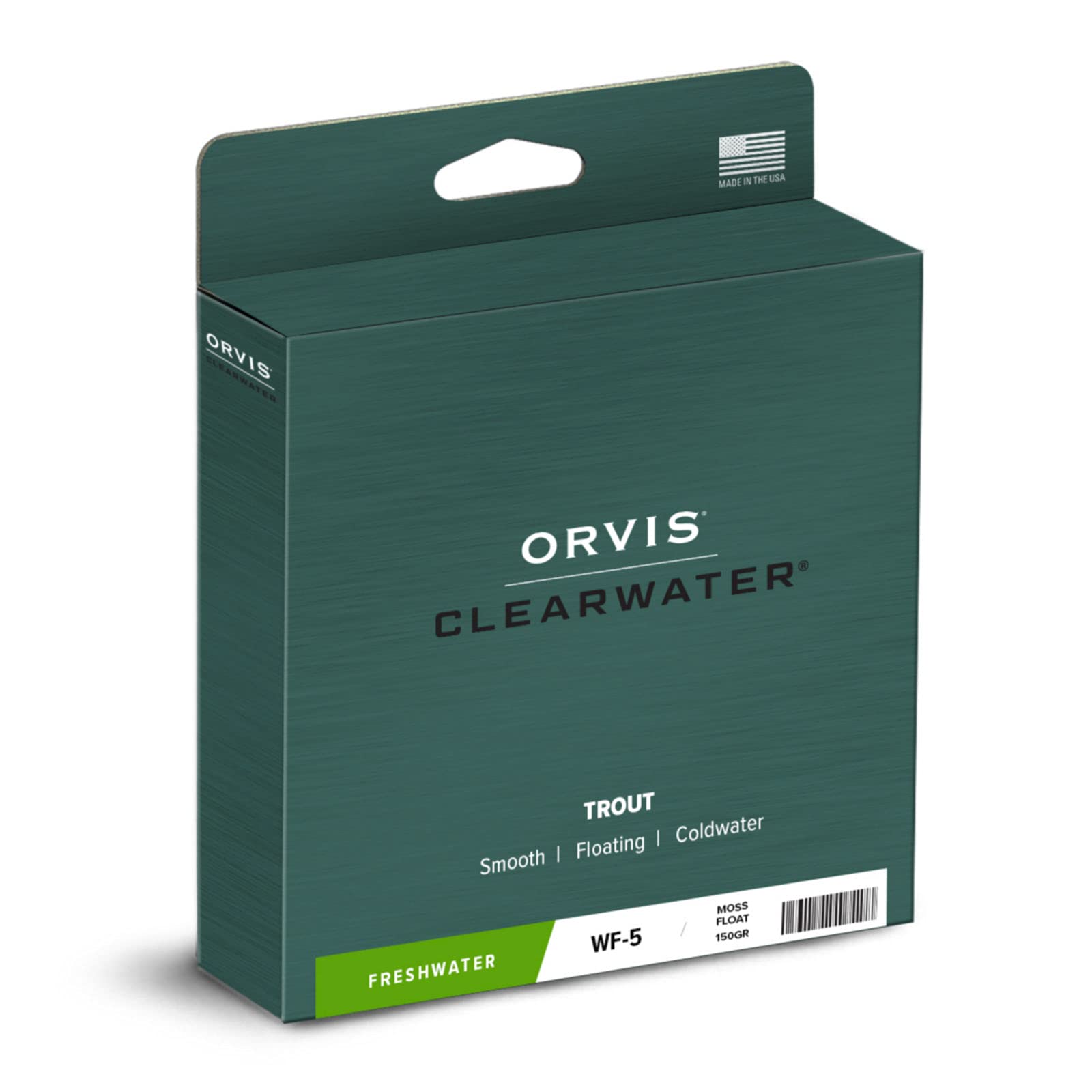
This forgiving mid-grade line turns bad casts into decent ones.
Orvis designed the Clearwater with a weight-forward taper that is half a size heavy — that extra grain helps load a moderate-action rod more easily, which is exactly the kind of rod most beginners start with. The 90-foot moss-colored line has a front welded loop for quick leader changes, and the multifilament core stays supple in cool to moderate water temperatures. Owners consistently describe it as “smooth casting floats nicely” and say it is “way better than the cheap stuff” without needing to jump to premium lines.
The honest shortcoming is that this line does not have a welded loop on the backing end. You will need to tie a nail knot or attach your own loop to connect to the backing. It is also not designed for warm tropical water or extreme cold — the coating is tune for the 40–70°F range where most trout fishing happens. At 4.5 stars across a solid base of ratings, it is the safest pick for someone who wants a name-brand line without the flagship price.
What makes it beginner-friendly
- Half-size heavy grain loads moderate-action rods more easily
- Front welded loop simplifies leader attachment for fast rigging
- Durable multifilament core stays flexible in cool to moderate water
- 90-foot length covers most trout-stream fishing distances
The honest trade-off
- No welded loop on the backing end — you must tie a nail knot
- Not tune for warm tropical water or extreme cold
- Some owners note the front loop can snag when landing trout
Best for: the new angler who wants a reliable, brand-backed line that casts forgivingly and floats well without overspending.
Think twice if: you are a seasoned caster who prefers two welded loops for fast reel changes — the Rio Mainstream WF below gives you that and a slicker coating for similar money.
6. Rio Mainstream Trout WF Fly Line

The line that casts like it costs more — slick, smooth, and eager to load.
The Rio Mainstream Trout WF is slightly heavier than standard lines, which helps load medium and fast-action rods without having to work for it. The supple core is wrapped with a slick coldwater coating that stays smooth even when the thermometer drops. Buyers compare it favorably to the budget SA Aircell line, noting that “the Rio’s coating feels better in the hand and the Rio line seems to cast smoother.” At 80 feet, it is shorter than the Piscifun Sword’s 100 feet, but the trade-off is a more refined casting feel at typical trout distances.
The welded loop on the front end makes leader changes quick. The memory issue is the most consistent negative — the line holds coils from the start, though most customers note it relaxes after a few hours on the water. The green color blends well with most river bottoms, and the floatability is solid for a floating line in cool water. At 4.6 stars across a solid base of ratings, it is the pick for the angler who wants to feel a quality coating without hitting the tier.
Why owners upgrade to it
- Slightly heavier grain weight loads rods easily at all distances
- Slick coldwater coating feels smooth and casts easily
- Welded loop on the front end for fast leader rigging
- Solid floatability in cold to moderate water temperatures
The honest trade-off
- 80 feet compared to the Piscifun Sword’s 100 feet
- Significant line memory from the start — needs stretching
- Only one welded loop (front end only); backing requires a knot
Reach for this if: you want the smoothest casting feel in the mid-range and fish mostly at typical trout-stream distances under 70 feet.
Choose the Piscifun instead if: you need the extra 20 feet for distance casting and can accept a slightly less refined coating feel.
7. Rio Mainstream Trout DT Fly Line
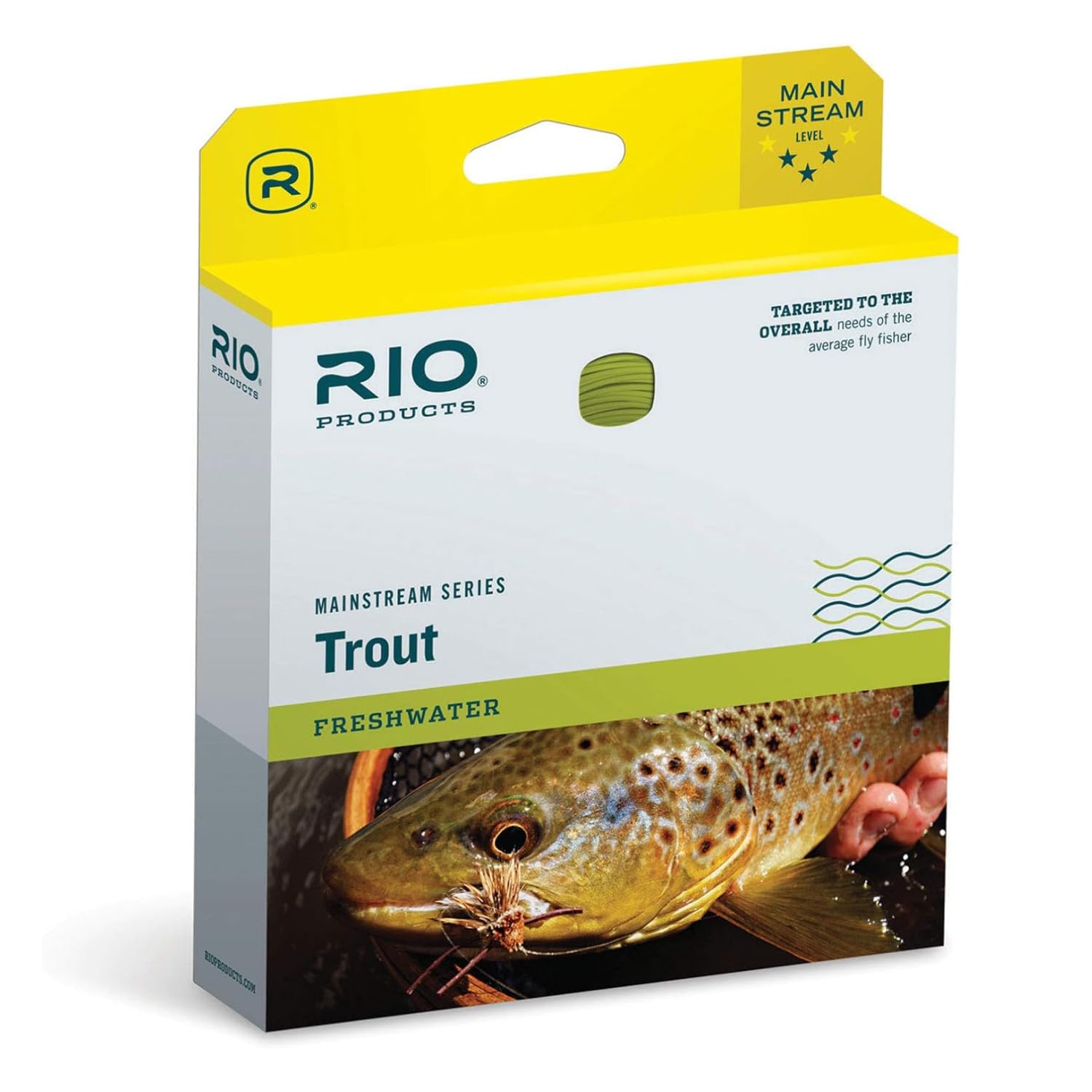
A double-taper line you can flip end-for-end once the first half wears thin.
The DT version of the Rio Mainstream Trout line takes a different approach — it uses Rio’s MaxFloat tip technology, a high-float coating that the maker claims rides more than twice as high as regular fly line tips without increasing diameter. The SlickCast coating is the same durable, low-friction formula found on Rio’s premium lines. Double-taper lines are ideal for small-stream fishing where you rarely cast beyond 40 feet, and the symmetrical profile lets you reverse the line on the reel when the front half shows wear — effectively doubling its life.
The big catch is that this line does not come with any welded loops at all, despite some packaging suggesting otherwise. Multiple owners point this out, and it means you need to tie a nail knot on both ends. The stiffness is also noted by several owners, though the line relaxes with use. At 4.2 stars, it scores lower than the WF version, mainly due to the missing loops and initial stiffness. For the river-only angler who values economy across seasons, cutting the DT line in half gives you two lines for the price of one.
The DT advantage
- MaxFloat tip technology floats higher than standard tips
- SlickCast coating produces very low friction for smooth shooting
- Double-taper design can be reversed when one end wears — double the life
- Ideal for short-distance presentations on small rivers and creeks
The honest trade-off
- No welded loops on either end — requires nail knots for rigging
- Initial stiffness is noticeable; line needs time to relax
- DT design limits maximum casting distance compared to WF lines
Choose this for: tight, smaller water where you rarely cast far and want the option to flip the line season after season.
Pass if: you want a line ready to fish from the start without tying knots — the WF version gives you a welded loop and a slicker feel for the same price.
8. Scientific Anglers Frequency Trout Floating Fly Line

The line that shoots more line with less effort — even in a stiff breeze.
The Scientific Anglers Frequency line uses an advanced shooting technology that reduces friction through the guides, letting you shoot line with noticeably less effort than many competitors. Owners note it “shoots a lot of line with little effort” and report improved casting distance compared to other mid-range lines. The versatile taper handles everything from dry flies to small streamers, making it a true all-rounder for trout in varying conditions.
The buckskin color is drab enough to stay subtle on the water but easy to track against the surface. At 4.6 stars across a strong base of ratings, it earns consistent praise for quality and value. The durability feedback is mixed at the margins — some reviewers point out cracking after heavy use, while others say the tip stays afloat after two seasons of regular fishing. The lack of a welded loop on the backing side is the most consistent owner complaint, forcing a nail knot for the reel connection. If you fish in weather that changes hourly, this line’s shooting performance makes it a compelling companion.
Why it excels in variable conditions
- Advanced shooting technology reduces guide friction for easy line shoot
- Versatile taper handles dry flies, nymphs, and small streamers effectively
- High floatation keeps the tip riding well even in choppy water
- Low memory from the start compared to some competitors
The honest trade-off
- No welded loop on the backing side — requires a nail knot
- Durability draws mixed feedback; some experienced cracking after extended use
- May tangle more than other lines when coiled for storage
Best for: anglers who fish in windy or variable conditions and want a line that shoots far with minimal false casting.
Consider the Cortland 444 instead if: maximum suppleness and traditional presentation feel matter more to you than long-distance shooting.
9. Cortland 444 Peach Fly Fishing Line

The ultra-supple classic that has been floating trout streams for over five decades.
The Cortland 444 Peach is the most expensive line on this list, but it earns a spot because its ultra-supple construction is genuinely different from the stiffer budget alternatives. The line is crafted with a flexible composition that helps you detect subtle strikes and mend line with minimal effort. The front welded loop simplifies leader changes, and the high-floating capability keeps your dry fly riding high even in slightly turbulent water. Owners consistently praise its “smooth casting, even taper” and note that it “loads rod perfectly” for presentations from dry flies to light nymphs.
The peach color is a signature — it offers high visibility for casting and tracking on the water while blending naturally against most backgrounds. At 4.7 stars across a solid base of ratings, it is the highest-rated line here for a reason: the casting feel is noticeably smoother than lines in the – range. The floatability is mixed in some owner reports, with a few noting the tip can sink after extended use. If presentation feel is your priority and your budget allows the stretch, the Cortland 444 Peach delivers a classic experience that has earned its reputation across five decades.
What makes it a classic
- Ultra-supple construction provides exceptional flexibility and strike sensitivity
- Even taper loads rods perfectly for accurate, controlled presentations
- Front welded loop for quick leader attachment
- High-visibility peach color aids line tracking without spooking fish
The honest trade-off
- Premium price — the most expensive line on this list by a clear margin
- Floatability draws some mixed feedback; tip can sink after extended use
- Supple feel may not load fast-action rods as effectively as heavier lines
Reach for this if: presentation feel is your top priority and you fish moderate-action rods with dry flies and light nymphs. The supple feel beats the Scientific Anglers Frequency for delicate presentations.
Save your money if: you are on a strict budget — the Piscifun Sword or Rio Mainstream WF deliver 90% of the casting performance for roughly a third of the price.
Understanding the Specs
Weight-Forward Taper (WF)
A weight-forward line has most of its mass in the front 30 to 40 feet, which loads the rod faster and shoots line farther than a double-taper. This is the most versatile taper for general trout fishing and the standard for budget lines because it works well in wind and at medium to long distances. The trade-off is that WF lines wear out at the front end faster than a DT line, which you can flip around once one half shows wear.
Breaking Strength
This is the amount of tension (in pounds) the line can withstand before snapping. Most budget trout lines land around 20 pounds, which is plenty for trout and panfish. A 40-pound line like the Gold Fly Line gives you headroom for steelhead, carp, or fishing around heavy cover. The number matters most when you are fighting a fish that makes a long run — if the line breaks at a welded loop or a knot, that is the breaking strength you need to trust. Do not confuse this with the leader’s tippet strength, which should always be the weakest link in your setup.
Welded Loop
A welded loop is a pre-formed loop at the end of the fly line that lets you attach a leader or backing with a loop-to-loop connection instead of tying a knot. A front welded loop saves time on the water. A loop on both ends saves even more time during reel changes. The quality of the weld matters — a poorly welded loop can separate under tension, which is a complaint that shows up in reviews of some budget lines. If a line has only one welded loop, you will need to tie a nail knot for the other connection.
Floatability
Floatability refers to how well a floating fly line stays on the surface during a drift. A line with good floatation rides high even after hours of casting, which keeps your dry fly or indicator where it belongs. Budget lines often use a PVC coating that can lose buoyancy over time or in colder water, causing the tip to sink mid-drift — a pattern mentioned in several customer reviews. Lines with a slick coating and a supple core tend to float higher and longer than stiff, thick-coated alternatives. MaxFloat or similar tip-coating technologies improve floatation without increasing line diameter.
FAQ
Can I use a budget fly line on a high-end rod?
What is the difference between WF and DT fly line?
How long does a budget fly line last?
Is a higher breaking strength always better?
Do I need a welded loop on both ends?
Can a budget fly line handle saltwater?
What does “half-size heavy” mean on a fly line?
How do I reduce line memory on a budget fly line?
Which budget fly line is best for small streams?
What weight fly line should I use for trout?
Final Thoughts: The Verdict
Across the board, the best budget fly line is the Piscifun Sword because it delivers a 100-foot weight-forward line with a slick PVC coating and a welded loop at a price that leaves room for flies — backed by thousands of happy owners. If you want a complete spool solution for a spare reel or your first outfit, grab the 8Fans Fly Line Combo. And if presentation feel is everything and you are willing to stretch the budget, the Cortland 444 Peach offers a classic supple taper that has been earning its keep for over fifty years.
How We Picked
We do not accept paid placement. Every pick is matched to a real buyer and a real use-case; we do not hands-on test units.
Sources & Methodology
Specifications: manufacturer listings and product documentation. Review insights: verified customer reviews, as of July 2026. Pricing: not shown on this page (it changes often); check the current price via the retailer link.
As an Amazon Associate, FitlyFast earns from qualifying purchases. This does not affect which products we feature.