
Our readers keep the lights on and the weekend projects moving. As an Amazon Associate, I earn from qualifying purchases.
Specs are compiled from manufacturer listings and verified buyer reviews and can change over time — please confirm the key details on the product page before buying.
That daily café latte adds up fast, and the machines that justify the expense often cost more than your coffee habit does. The real question for a budget buyer is which machine pulls a rich shot and survives daily use without breaking down.
I’m Rikta — the founder and writer behind FitlyFast. This guide is built by comparing the manufacturers’ published specifications and the patterns across verified customer reviews, so you get each pick’s real strengths and trade-offs instead of marketing spin.
This breakdown covers 11 value-driven espresso makers with the pressure, temperature control, and steam power that matter most for budget espresso machines.
Our Picks at a Glance
How To Choose The Best Budget Espresso Machines
You don’t need a commercial-grade machine to make a genuinely good espresso at home. You need a machine that hits the right brew pressure, keeps a stable temperature, and steams milk properly — and plenty of budget models do all three. The trick is knowing which specs actually deliver that, rather than getting distracted by a big number on the box.
Pump pressure: why 15 vs 20 bar matters
Brew pressure is what forces hot water through finely-ground coffee to extract oils and crema. Most entry-level machines run a 15-bar pump, while the newer wave of budget picks advertise 20 bar. The machine you buy can only ever actually use around 9 bar at the coffee grounds — that’s the balance for extraction — but a higher-rated pump means it reaches that pressure more reliably without struggling. A 20-bar pump also tends to handle a finer grind more consistently, which is what you want if you’re serious about pulling a balanced shot.
Temperature stability: the PID difference
If your espresso tastes sour or burnt, the machine’s temperature consistency is likely the culprit. A PID controller (a precise thermostat that keeps the water at a steady temperature) prevents the fluctuation you get on basic machines. A PID controller is the single biggest quality upgrade for the money—it turns inconsistent shots into the same great cup every time.
The steam wand: frother vs real steam
If you drink lattes or cappuccinos, the steam wand matters as much as the shot itself. A simple frothing attachment creates loose, bubbly foam, while a proper steam wand injects steam to create dense, silky microfoam — the kind that holds up in latte art and tastes rich rather than watery. Look for a wand that produces consistent pressure and texturizes milk evenly; that’s what separates a machine for milk-drink lovers from one for straight-espresso purists.
Water tank and footprint
A removable water tank makes refilling and cleaning dramatically easier. Consider how many cups you’ll brew — a 42 oz tank handles ten-plus cups in one fill, while a smaller 34 oz unit might need refilling mid-week if you’re brewing daily. Also measure your counter space: compact vertical designs around 11 inches tall fit under most kitchen cabinets and suit small apartments, dorms, and RVs.
Quick Comparison
| Model | Best For | Pressure | Water Tank | Weight | Amazon |
|---|---|---|---|---|---|
| XIXUBX EM700-BL★ Best Overall | Compact daily use | 20-bar | 34 oz | 7 lbs | Amazon |
| SHARDOR 20 BarSmart Control | Touchscreen control | 20-bar | 45 oz | 8.5 lbs | Amazon |
| CHULUX EliteIced Special | Iced espresso presets | 20-bar | 40 oz | 8 lbs | Amazon |
| Chefman CraftBrew | Simple one-touch brews | 15-bar | 1.5 L | 7.9 lbs | Amazon |
| XIXUBX Pressure Gauge | Monitoring extraction | 20-bar | 42 oz | 8.2 lbs | Amazon |
| Capresso EC100 | Long-term reliability | 15-bar | 46 oz | 4.08 kg | Amazon |
| Neretva 15 Bar | Beginner simplicity | 15-bar | 1.8 L | 3.8 kg | Amazon |
| AIRMSEN 20 Bar | Automatic milk frothing | 20-bar | 1.8 L | 9.3 lbs | Amazon |
| CASABREWS 5418 PRO | Lightning-fast heating | 20-bar | 2.1 lbs | 8.4 lbs | Amazon |
| Gevi 58mm | Full custom control | — | 2.2 L | 13.7 lbs | Amazon |
| CASABREWS Ultra | Family-sized tank | 20-bar | 73 oz | 13.6 lbs | Amazon |
In-Depth Reviews
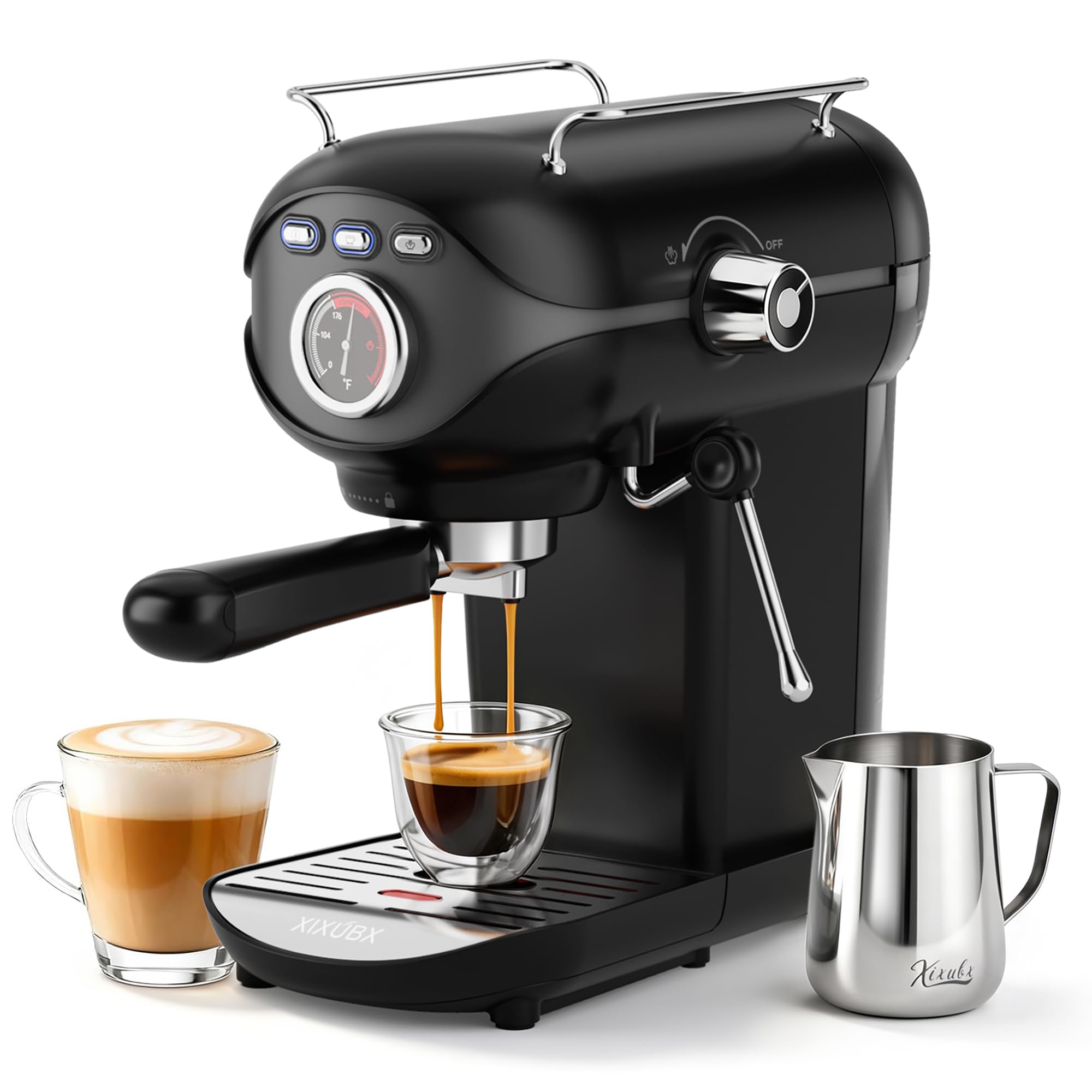
1. XIXUBX Compact Espresso Maker
The daily-driver that beats the café line with steady temperature and minimal noise.
This is the pick that keeps showing up in “saved me money” reviews — the compact 7-pound body takes up serious countertop space and runs a 20-bar pump (the pressure force that extracts coffee oils) so shots come out with rich, golden crema. It heats up fast and brews a full shot in 22–30 seconds, which makes it a fit for busy mornings and dorm-room schedules.
The built-in PID temperature controller (a precise thermostat that prevents temperature swings) is what separates this from cheaper models — it keeps the water at a steady optimal temperature, which gets rid of the burnt or sour aftertaste you often get with budget machines. The steam wand whips up dense, smooth microfoam for lattes and cappuccinos, and the compact vertical design fits in small kitchens, RVs, and office desktops.
The one honest limitation buyers report: the milk frother isn’t at the level of a coffee shop’s, but it’s perfect for at-home lattes. The customer consensus anchors on build quality — that’s the aspect owners praise most, followed closely by value for money. As buyers put it, “I’ve used this daily since I purchased it, and it runs well.”
compact and reliable
- Daily use without issues — quality is the top praise
- 22–30 second single-button brewing for quick mornings
- PID control keeps flavor balanced and repeatable
limited steam power
- Milk frother is at-home quality, not café-grade
- Shots run a modest ~1–2 oz of liquid output
small kitchens: apartment dwellers and first-time buyers wanting a reliable daily espresso without the learning curve.
heavy milk use: you need café-grade steam power for professional-style microfoam.
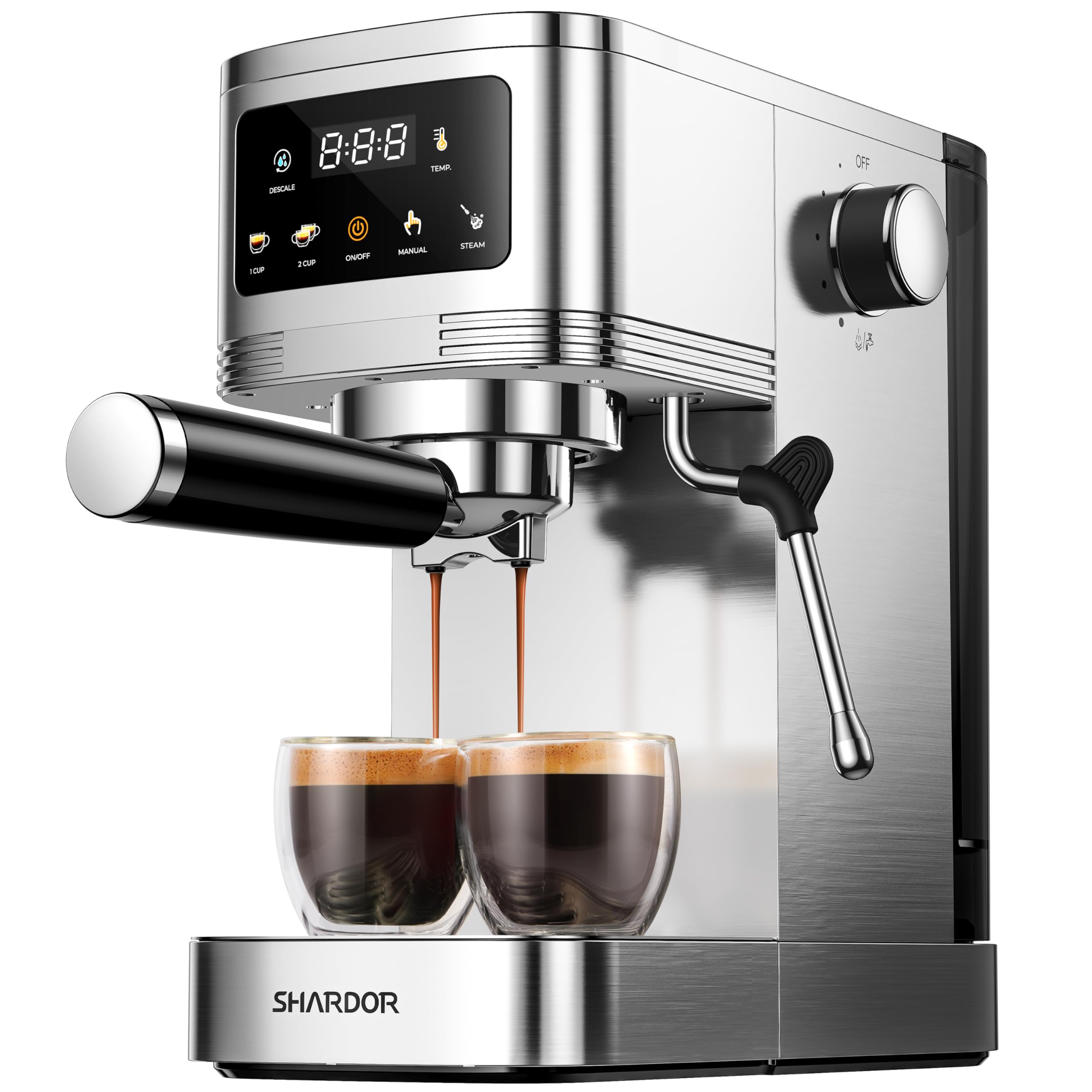
2. SHARDOR 20 Bar Touchscreen
Touchscreen control with three temperature settings for dialing in your exact shot.
For the buyer who wants to tweak things rather than just press a single button, this 8.5-pound stainless steel machine brings an LED touchscreen with single and double cup options, manual mode to customize strength, and three NTC precision temperature settings (a sensor that reads water temperature accurately). That means you can adjust the extraction temperature to suit your taste, not just accept whatever the machine gives you.
The 20-bar pump pairs with a 1350W motor (the heating element’s power), and the 45 oz removable water tank lets you brew several cups without refilling. The steam wand creates creamy, rich foam suitable for latte art, and convenience features include one-touch descaling and an auto shutoff after 15 minutes of inactivity. It heats up in under a minute, so the wait between deciding you want coffee and drinking it is short.
Owners note the setup takes about 5 minutes, and the 20-bar pressure delivers thick crema with a fast milk frother — the quality build is what earns the most praise. The recurring caveat: temperature control gets mixed feedback, with some finding it not hot enough for their preference, and an occasional plastic smell in the milk steamer was noted by a few.
touchscreen simplicity
- Three temperature settings for custom extraction
- 45 oz removable tank for several cups per fill
- 15-minute auto shutoff for safety and energy
plastic build
- Temperature control is mixed — some find coffee lukewarm
- Occasional plastic smell in the steamer reported
tech lovers: you enjoy experimenting with temperature and strength settings.
durability seekers: you want piping-hot drinks straight from the brew boiler without adjustment.
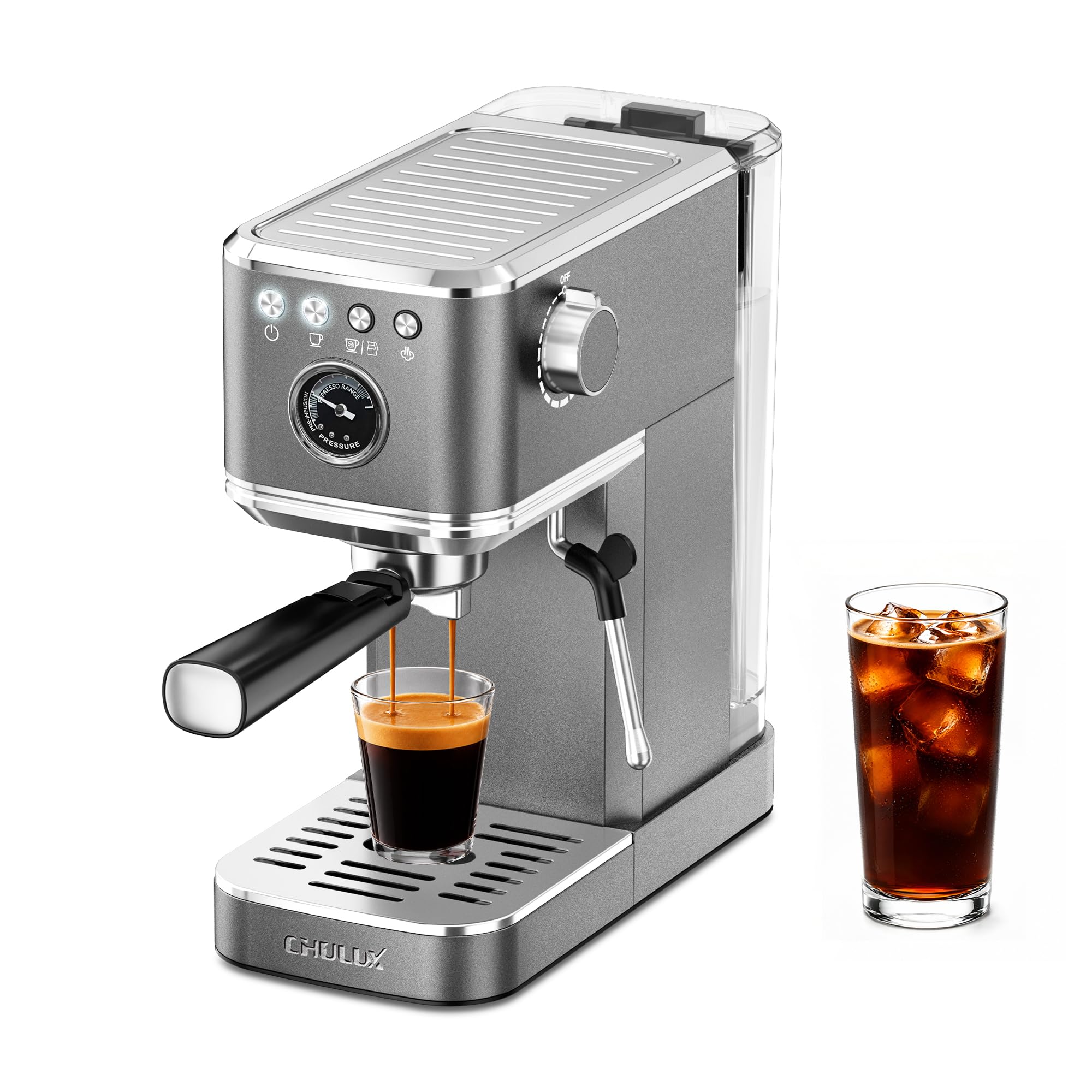
3. CHULUX Elite Espresso Machine
A 30-second preheat and three presets including a dedicated iced espresso mode.
For iced-coffee lovers, this is the machine that gets it — it starts with three presets (Espresso, Americano, Iced Espresso), so you press a button and get a long coffee or a cold-brew-style shot without fiddling with volumes. It runs a 20-bar imported pump and a 1350W boiler that preheats in 30 seconds, which suits busy mornings.
Low-pressure pre-infusion gently soaks the grounds before full extraction, which helps release coffee oils and flavor for a barista-grade balance. The PID temperature control delivers water at precisely the right temperature, and the pro-style steam wand creates velvety milk texture for latte art. It auto-turns-off after 25 minutes of inactivity, though it carries one of the larger footprints in this group — so it’s best for a countertop with room to spare.
The compact machine consistently earns praise for producing rich, smooth espresso that replaced café visits for many owners, with the steam wand frothing milk well for lattes and cappuccinos. The main con is physical — the footprint is bigger than the slim designs from competitors like the SHARDOR above, so measure your space before committing.
serious baristas: iced-coffee drinkers who want a dedicated cold-mode preset.
budget buyers: counter space is tight — this one takes up more room than most.
4. Chefman CraftBrew 15-Bar

The 1.5-liter tank and touch panel make it easy to brew for a crowd.
This stainless steel machine is built for volume — the 1.5-liter removable water reservoir holds enough to keep brewing espresso for a group of brunch guests, and you can detach the tank to fill it straight in the sink. The 15-bar pump produces bold, rich flavor with a built-in milk frother for cappuccinos and lattes, and a touch control panel with a built-in timer lets you adjust shot volume for a mellow lungo or a concentrated ristretto.
It heats up quickly and the frother gets strong reviews for its performance. You get two shot baskets for single or double shots, and the descale alert appears automatically after 500 brewing cycles so you know when maintenance is due. The machine carries a 1-year assurance from Chefman and is cETL approved (a safety certification for electrical appliances).
The honest trade-off: the loud vibration and noise level is the most-discussed negative, and some owners mention it tends to overheat. The performance earns the top praise spot, but if you brew in a quiet early-morning household, the noise could be a genuine nuisance — it vibrates enough that one owner suggested a silicone coaster to keep cups from walking.
craft flavor control
- Large 1.5L tank for multi-cup brewing
- Descale alert after 500 cycles takes out the guesswork
- Compact stainless steel that looks good on the counter
slower heat-up
- Loud with strong vibrations during brewing
- Some owners find it overheats over time
flavor chasers: the strongest value when you’re brewing multiple cups in one sitting.
quick shots: noise bothers you — this is one of the louder machines in the group.
5. XIXUBX Pressure Gauge Edition
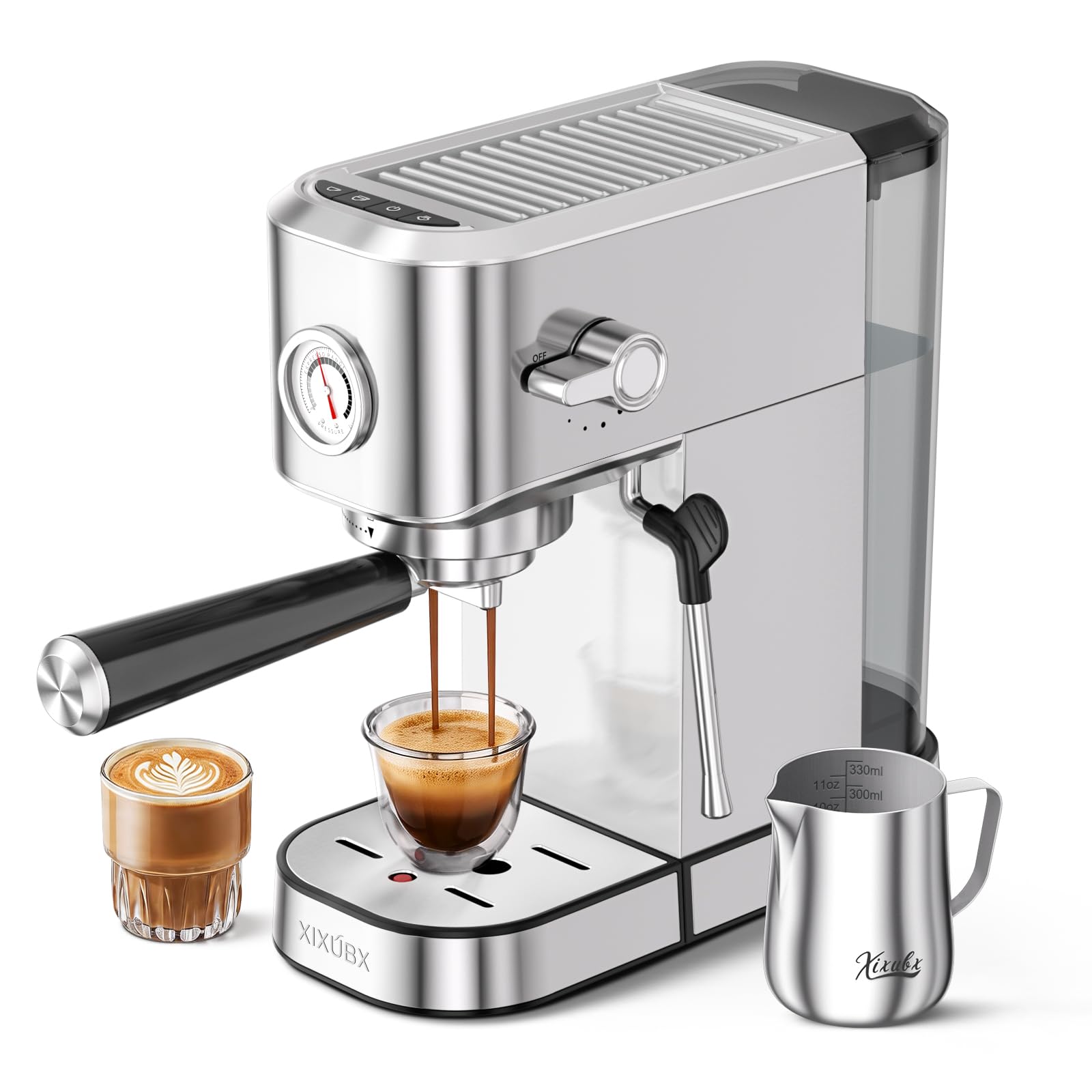
A visible pressure gauge turns you into a dialed-in barista from day one.
If you want to understand what’s happening during extraction, this is the model — it sports a visible pressure gauge (a dial that shows real-time brew pressure) so you can monitor and adjust to hit the ideal 9 bar for balanced extraction. Paired with the 20-bar pump, that visibility means you learn quickly what a good shot looks like, not just what it tastes like.
The 42 oz removable water tank brews at least 10 cups per fill, making it a strong choice for family gatherings or office use. The 360° rotating steam wand (a wand that swivels for easier positioning) produces dense, silky microfoam for latte art and detaches for simple cleaning. A stainless steel milk frothing pitcher is included, so you have what you need to start right away.
Ease of use is the single most-praised aspect — it heats up in under a minute and the controls are intuitive enough for beginners. One owner found its espresso quality rivals a machine costing four times as much, and the steam wand outperforms pricier Italian brands for creamy froth. That’s the bar this budget pick clears.
precision fans: real-time pressure monitoring so you can learn and dial in your shots.
novices: anyone who wants a set-and-forget button with zero technique involved.
6. Capresso EC100

The thermoblock classic that proves durable basics beat flashy gimmicks.
This is the machine people buy and then still own two years later, pulling daily shots with rich crema. Its stainless-steel lined thermoblock heating system (an instant water heater instead of a boiler) delivers 15 bars of pressure for high-pressure espresso, and the removable 46-oz water container makes filling and cleaning easy. A large, integrated cup warming tray sits on top so your espresso stays hot while you finish frothing.
The swivel frother offers unlimited steam output for cappuccinos and lattes, and the machine accepts two filters — one for single or double espressos, or pre-packaged espresso pods for convenience. The housing is ABS plastic with stainless steel accents, which keeps it light but not flimsy. It’s a manual machine in the truest sense: no shot button, so you control the extraction yourself, which appeals to beginners and veteran baristas alike.
Performance leads as the most-praised aspect, with espresso performance close behind — it makes “great coffee with lots of crema” and lets owners skip the café line entirely. The realistic caveat is reliability, which earns mixed feedback over years of use; some customers note it stops working properly after extended periods, while others log multiple years of daily service without complaint.
traditionalists: beginners who want a straightforward manual machine with proven endurance.
tech upgrades: reliability is a mixed bag long-term — some units last years, others falter.
7. Neretva 15 Bar
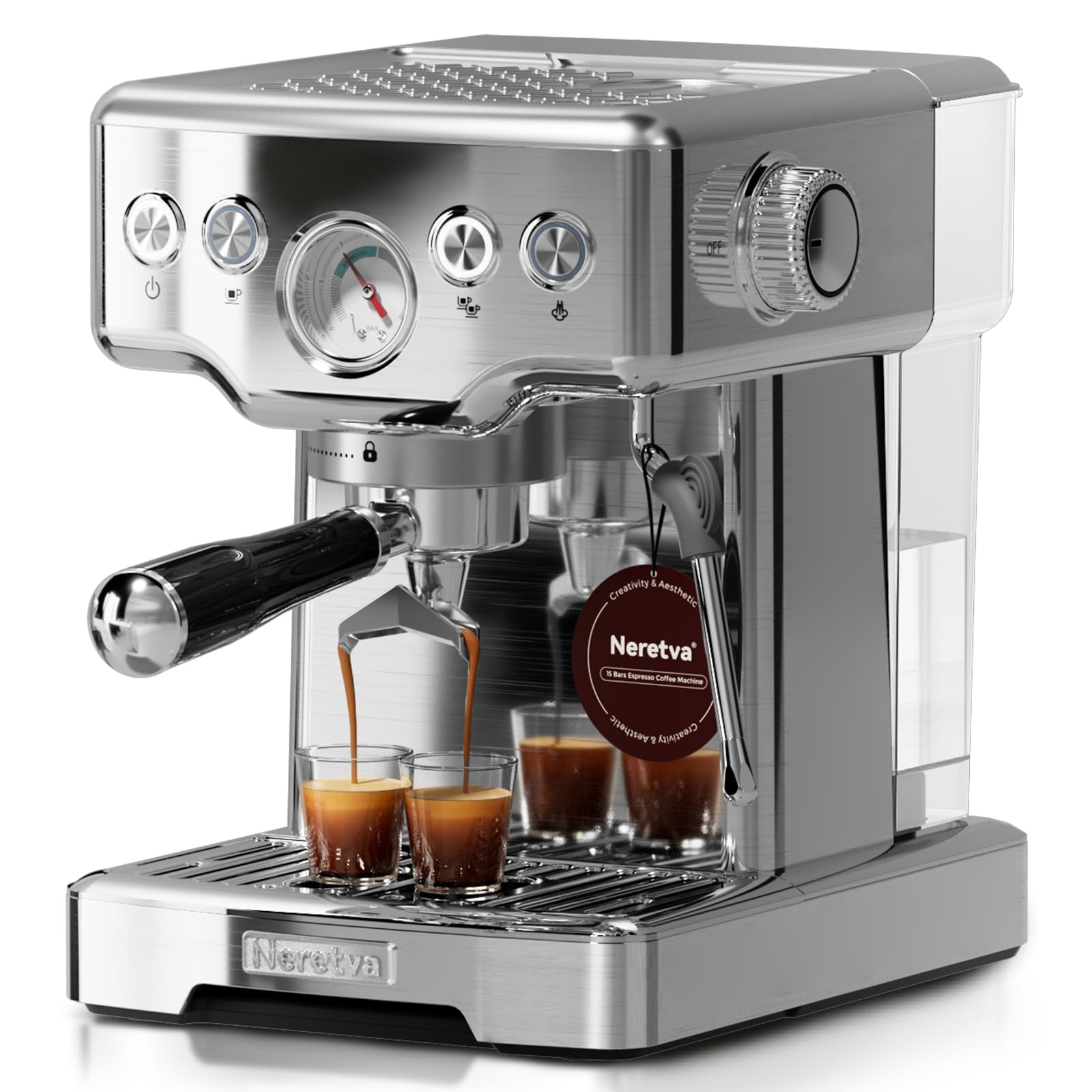
Low-pressure pre-infusion and automatic pressure relief for a forgiving first machine.
New espresso makers usually pull bitter or sour shots while they learn, and this machine is built to soften that curve. It uses low-pressure pre-infusion (a gentle water soak before full pressure) that gradually builds up and reduces air bubbles, which helps flavors extract evenly. A built-in OPV (over pressure valve) automatically releases excess pressure, protecting the boiler and keeping taste quality consistent.
The 15-bar pump and 198°F precise temperature control work together for barista-grade extraction, and a visible pressure gauge shows you exactly where your brew sits. The powerful steam wand creates delicate microfoam for latte art, and the included kit covers everything: a 1.8-liter tank, portafilter, milk frothing pitcher, dosing funnel, and single/double cup pressurized filters. The maker even offers 12-hour quick-response customer service.
The design draws compliments — one owner said it looks like an old Thunderbird grill — and it’s praised for being simple to use while making “awesome coffee.” The reliability story is mixed, though: some machines stop working completely over time, which is the main caution for long-term buyers. For a first machine at this price, the features are generous.
daily drinkers: first-time buyers who want forgiveness and guidance as they learn.
entertaining: reliability reports are inconsistent — not every unit lasts.
8. AIRMSEN 20 Bar Dual Boiler

A fully automatic milk frother means latte foam without holding the wand.
This is the machine for the person who wants a latte but resents the manual steam-wand chore. It’s a 3-in-1 maker — espresso, cappuccino, latte — with one-click automatic operation and an automatic milk frother that creates rich, delicate foam while you do something else. The detachable design makes cleaning simple.
Power comes from a 20-bar professional Italian pump and a 1350W motor with pre-infusion technology for full coffee saturation. Compare that to a 15-bar machine: at 20 bar, it extracts richer coffee oils for a more aromatic cup. The full touchscreen LED panel streamlines everything, and the stainless steel exterior on all four sides is durable and complements most kitchens. A 60 oz water tank is listed in the title for continuous brewing.
Owners say it makes “heavenly lattes” and has a sleek appearance, with great value for money and easy cleanup — one user reports almost two years of steady production on a single total cleaning, with quick rinses after each use. The caveat is mixed temperature performance: some find it heats quickly, others say the coffee arrives lukewarm.
simultaneous tasks: you want automatic milk texturing without any wand technique.
tight counters: drink temperature gets mixed reviews — you may need to preheat cups.
9. CASABREWS 5418 PRO
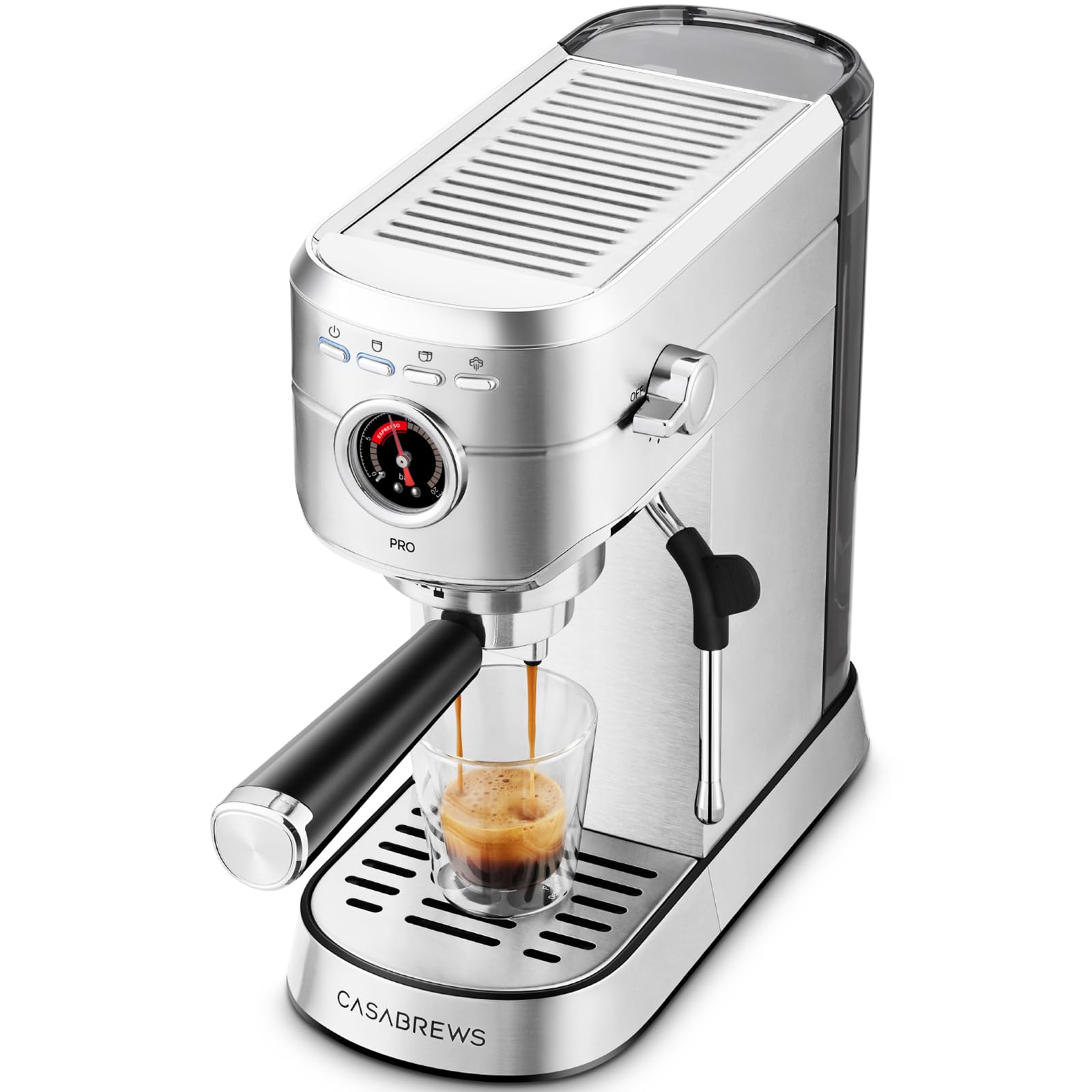
Flashheat technology gets to brewing temperature in under 5 seconds flat.
This is the machine for anyone whose patience runs out before the coffee does. Its Flashheat system reaches the perfect brewing temperature in under 5 seconds — not 30, not a minute, five — and switches from brewing to steam in 3 seconds, then back to brewing in 3 seconds. Traditional machines take about 30 seconds for that transition, so this one saves real time on busy mornings.
The 20-bar premium pump works with a built-in pressure gauge so beginners can monitor extraction in real-time, and the pre-infusion function saturates the coffee puck to release trapped CO2 (a gas that can cause sourness if it stays in the shot). The pro steam wand is equipped with PID temperature control for rapid, dry, powerful steam that makes silky microfoam. It’s compact, stainless steel, and easy to clean.
Performance leads the praise, with owners pulling “amazing shots” daily and one reaching 1,000 shots before its first descale. A 2-year Bambino Plus owner switched to this lighter, smaller machine and found it steadier. The realistic note: the housing is largely plastic despite the stainless steel look — an aesthetic trade-off one owner flags, though it doesn’t affect function.
home pros: impatient mornings when 5-second heat-up beats everything else.
quiet mornings: it looks metallic but the body is mostly plastic — fine for function, not glamour.
10. Gevi 58mm Commercial
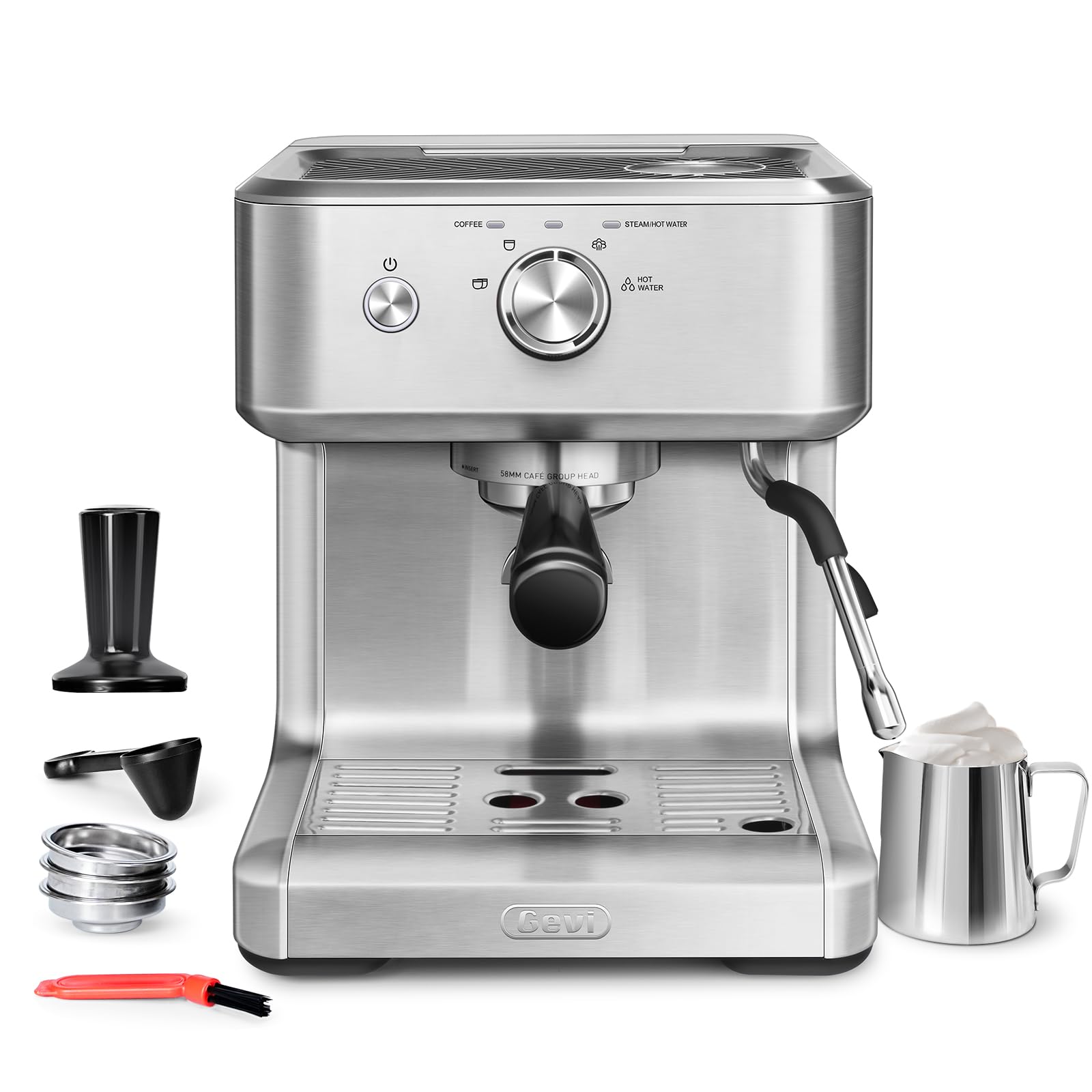
A full-size commercial portafilter and four-shot presets in a budget shell.
Serious home baristas often hit a wall with budget machines: the tiny 51mm portafilter (the handle that holds the coffee basket) limits how much you learn about real espresso. This Gevi breaks that pattern with a full 58mm portafilter — the same standard as commercial café machines — so your technique transfers if you ever go pro. The dual wall filter baskets (pressurized baskets that help create crema at lower pressure) are included alongside single wall options.
It brings advanced PID & NTC dual temperature control (two sensors working together) that holds water between 194°F–204°F — the “golden zone” for rich coffee oils. You get 4 adjustable shot volumes, from a concentrated espresso up to a full Americano, and 4 precise temperature settings, all via simple one-dial knob operation. The 2.2 liter water tank and complete barista kit (58mm portafilter, tamper, milk frothing pitcher, spoon) come in the box, plus a 12-month warranty.
The customer consensus centers on functionality and grinding performance — owners find it easy to use with quick, perfect results and minimal wait between servings. At 13.7 pounds it’s substantially heavier and sturdier than the compact picks above, which many owners read as build quality. No major recurring negatives surface; the biggest ask is basic technique.
home cafes: you want to learn real espresso technique on a commercial-size portafilter.
small apartments: counter space is at a premium — this is one of the largest machines here.
11. CASABREWS Ultra
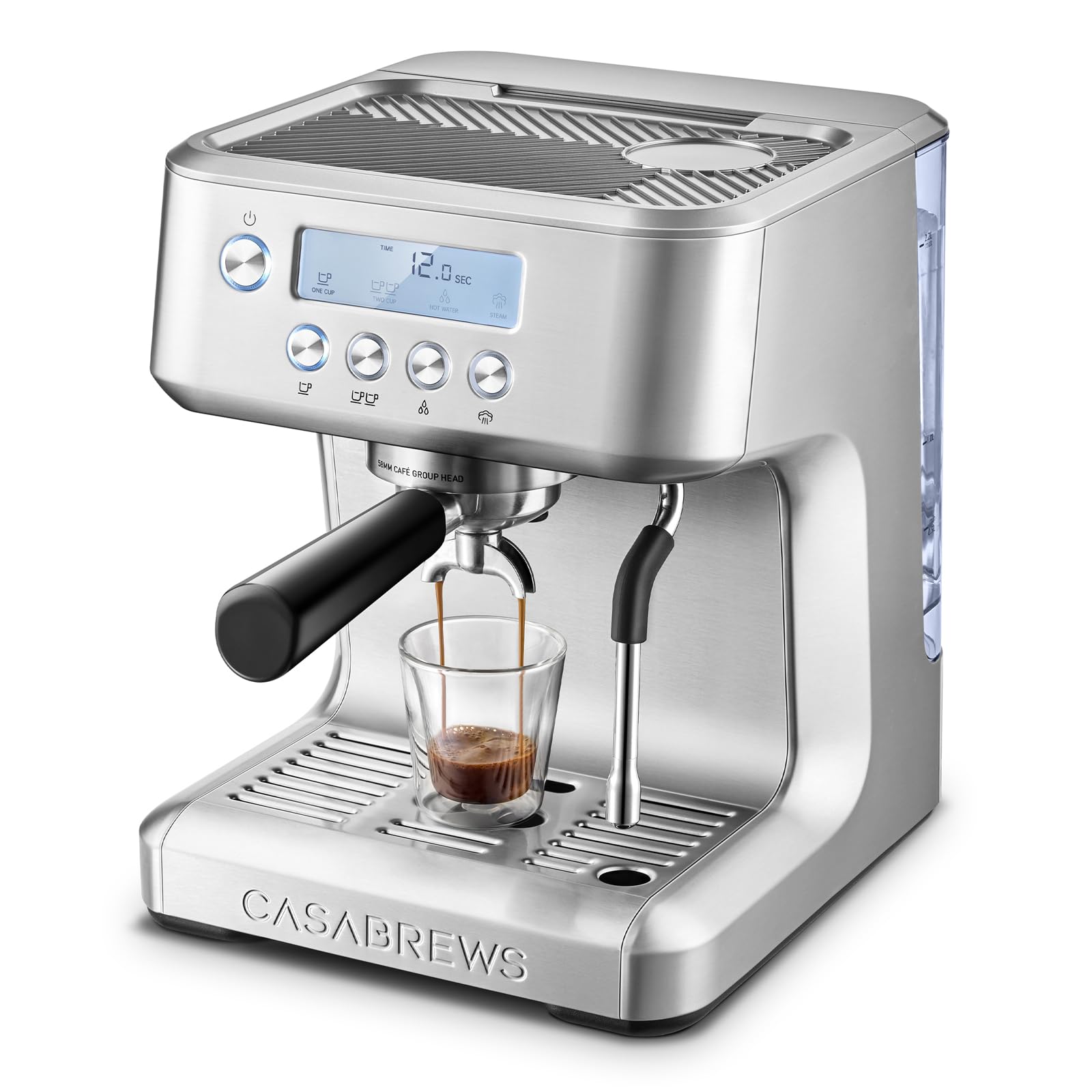
A 73-ounce tank that brews for a week without a single refill.
This is the crowd-pleaser of the group — the 73 oz removable water tank (over two liters) means a week of lattes for a busy household before you need to refill. That’s more than double the capacity of the compact XIXUBX at 34 oz, and it makes hosting easy. The brushed stainless steel finish is the most cafe-like of the budget picks, and the LCD display guides you through steam, hot water, and pre-programmed shots.
Brewing power comes from a 20-bar Italian pump and a 1350W heating system, and you can customize the brewing temperature with four settings — though the note in the data clarifies that adjustment only applies to espresso, not steam. The advanced steam wand creates rich, creamy microfoam for latte art, and the included kit is comprehensive: single wall and dual wall filters in both one-cup and two-cup sizes, a 58mm portafilter, tamper with spoon, and a cleaning needle.
Quality is the dominant theme in owner feedback — it’s the most-praised aspect by a wide margin, with value for money close behind. First-timers have pulled “the best home espresso ever” on their initial shot with a simple pre-ground bustelo grind. It outperforms Nespresso machines for many owners, though a few note the stock portafilter and baskets feel light — one owner upgraded baskets for better shots, and heating speed reads as mixed.
busy mornings: households brewing several milk drinks daily who don’t want to refill constantly.
long-term use: the stock portafilter is cheap-feeling — a basket upgrade improves shots.
Understanding the Specs
Pump Pressure (Bars)
This is the advertised force behind your shot. While extraction actually happens around 9 bar, a 15-bar or 20-bar pump ensures the machine reaches that pressure reliably. A 20-bar pump generally handles fine grinds more consistently than a 15-bar one, which matters for balanced flavor.
PID Temperature Control
PID is a precise thermostat that holds water at a steady brewing temperature. On basic machines, temperature fluctuates and ruins shots with a burnt or sour taste. With PID, each cup tastes like the last — repeatable, balanced, and cafe-quality.
Pre-Infusion
Pre-infusion is a low-pressure soak that wets the coffee grounds before full pressure kicks in. It releases trapped CO2 and reduces air bubbles, so the water extracts flavors evenly instead of channeling through weak spots. The result is a smoother, more complete shot.
Steam Wand
A real steam wand injects steam to texturize milk into dense microfoam — the silky texture that makes latte art possible. A basic frothing attachment just adds loose bubbles. If you drink milk-based drinks, the wand’s power and control matter as much as the shot.
FAQ
How many bars of pressure do I really need for good espresso?
What does a PID temperature controller do for a budget espresso machine?
Is a 51mm or 58mm portafilter better for a beginner?
How long does a good budget espresso machine last?
Do I need a grinder to go with a budget espresso machine?
Why does my cheap espresso taste sour or bitter?
What’s the difference between an automatic milk frother and a manual steam wand?
How many cups can I brew before refilling the water tank?
Final Thoughts: The Verdict
The winner for most buyers is the XIXUBX Compact because it pairs a 20-bar pump with PID temperature control in a small 7-pound frame that fits tight spaces — and it earns strong ratings from a large owner base. If you want hands-on control and monitoring, the XIXUBX Pressure Gauge Edition shows you real-time extraction pressure. And for high-volume households, the CASABREWS Ultra with its 73 oz tank is the one to reach for.
How We Picked
We do not accept paid placement. Every pick is matched to a real buyer and a real use-case; we do not hands-on test units.
Sources & Methodology
Specifications: manufacturer listings and product documentation. Review insights: verified customer reviews, as of August 2026. Pricing: not shown on this page (it changes often); check the current price via the retailer link.
As an Amazon Associate, FitlyFast earns from qualifying purchases. This does not affect which products we feature.