
Our readers keep the lights on and the weekend projects moving. As an Amazon Associate, I earn from qualifying purchases.
Choosing a 12×50 binocular means committing to serious reach — 12x magnification pulls distant ridges, treeline bucks, and celestial objects into plain view, but that power demands a 50mm objective to gather enough light for usable brightness at dawn and dusk. The catch is that the same magnification amplifies every hand tremor, exposure haze, and optical flaw, turning a cheap purchase into a frustrating blur.
I’m Rikta — the founder and writer behind FitlyFast. I dissect the actual glass coatings, prism materials, and mechanical tolerances that separate a blur machine from a optical tool you keep for a decade.
This guide walks through seven of the best contenders currently available to help find your match. Whether you hunt public land, watch birds at first light, or scan the night sky, the right 12×50 binoculars deliver clarity that makes the extra weight worth carrying.
How To Choose The Best 12×50 Binoculars
Twelve-power glassing sits at the threshold where optical quality becomes non-negotiable. The same 12x magnification that brings a buck’s antler tines into sharp focus also magnifies lens aberrations, poor coatings, and mechanical slop. Sorting the keepers from the throwaways requires understanding four key decision points before you click buy.
Glass Quality and Coatings Are Everything
At 12x, a fully multi-coated lens system is the baseline. Beyond that, look for dielectric coatings on the prism surfaces and phase correction coatings on roof prisms. These two upgrades directly boost light transmission and contrast — the difference between a washed-out silhouette at dusk and a crisp image with discernible fur texture. Extra-low dispersion (ED) glass eliminates the purple/green fringing that plagues cheaper 12×50 models on high-contrast edges like branches against a bright sky.
Exit Pupil Diameter Governs Low-Light Performance
Divide the 50mm objective by the 12x magnification and you get a 4.17mm exit pupil. That’s larger than a 10×42’s 4.2mm, which is good, but the real usability test happens at dawn and dusk. A 4.17mm exit pupil delivers enough light to keep your iris fully engaged in low-light conditions, but only if the coatings and glass quality actually transmit that light to your eye — another reason not to cheap out on prism and lens coatings.
Weight, Balance, and Tripod Adaptability
A 12×50 binocular is a heavy tool, typically landing between 28 and 35 ounces. That weight becomes a stability liability for handheld use at 12x — every pulse and muscle twitch shows in the image. Look for a model with a tripod adapter socket built into the center hinge, and pay attention to the balance point when you hold it. An open-bridge design can cut weight and improve grip ergonomics, making extended glassing sessions less fatiguing.
Field of View vs. Magnification Trade-Off
Wider apparent fields of view (above 60 degrees) make target acquisition easier and reduce the sensation of looking through a straw. However, wider FOV at 12x often comes with more edge distortion and a heavier price tag. Narrower fields (around 55-57 degrees) are more common at this magnification and often deliver sharper edge-to-edge correction. Decide whether scanning large areas or isolating distant details matters more for your primary use case.
Quick Comparison
On smaller screens, swipe sideways to see the full table.
| Model | Category | Best For | Key Spec | Amazon |
|---|---|---|---|---|
| Leupold BX-4 Pro Guide HD | Premium | Low-light hunting at distance | Guard-ion hydrophobic coating | Amazon |
| Maven C.3 12×50 ED | Premium | Astronomy & long-range glassing | ED glass, 28 oz weight | Amazon |
| Celestron Nature DX ED | Mid-range | ED glass on a budget | Extra-low dispersion objective | Amazon |
| Nikon PROSTAFF 5 | Mid-range | All-day hiking & birding | Fiber-reinforced polycarbonate body | Amazon |
| Bushnell R5 | Mid-range | Fixed-focus simplicity | IPX7 waterproof rating | Amazon |
| OM SYSTEM OLYMPUS Pathfinder | Premium | Sharp Porro prism views | 18.3mm eye relief | Amazon |
| Vortex Triumph HD | Budget | Entry-level casual viewing | HD optical system | Amazon |
In‑Depth Reviews
1. Leupold BX-4 Pro Guide HD 12×50

The BX-4 Pro Guide HD Gen 2 represents Leupold’s mid-premium tier with an open-bridge, dual-hinge design that shaves weight to just 1.83 pounds — remarkable for a 12×50. The Elite Optical System pairs with Leupold’s proprietary Guard-ion lens coating, which actively repels water, dirt, and fingerprints so you spend less time wiping lenses and more time glassing. Users consistently report exceptional brightness and clarity at dusk, a direct benefit of the phase-corrected prisms and high-transmission glass.
The 65.2-degree apparent field of view is noticeably wide for a 12×50, making target acquisition faster and reducing the tunnel-vision effect that plagues narrower designs. The rubber armor provides a secure grip in wet conditions, and the 100% waterproof/fogproof sealing means you can trust it through a downpour without hesitation. Multiple long-term reviews mention this model outperforming older Leupold glass and even some higher-priced competitors.
Diopter adjustment falls in the +/-3 to +/-4 range, adequate for most users but not as fine-grained as some competition. The included case and adjustable neck strap are functional, though some users swap the strap for a harness for extended carry. At this price tier, the BX-4 delivers the best balance of weight, optical clarity, and field of view for a serious 12×50 buyer.
Why it’s great
- Wide 65.2° apparent FOV reduces tunnel vision at 12x
- Guard-ion coating sheds water and oil on contact
- Under 2 pounds — lightest premium 12×50 in this roundup
Good to know
- Diopter adjustment range is limited compared to some rivals
- Premium pricing puts it at the top of the budget range
2. Maven C.3 12x50mm ED Binocular

Maven cuts the middleman by selling direct, and the C.3 12×50 ED is the clearest proof of that model’s value proposition. The fully multi-coated optics sit behind premium extra-low dispersion glass that virtually eliminates chromatic aberration, even on high-contrast edges like tree branches against a snowfield. At 28 ounces, it’s one of the lighter 12×50 options available, and the balanced ergonomics make handheld glassing sessions less fatiguing than the weight suggests.
Users upgrading from Vortex Diamondbacks to the C.3 report a dramatic improvement in low-light clarity and contrast, particularly during the last minutes of legal shooting light. The polymer housing is rugged enough for backcountry use, and the sealed construction is both waterproof and fogproof. Reviewers consistently note that the optical quality rivals binoculars costing significantly more — the trade-off is a slightly tighter field of view at 251 feet per 1,000 yards.
The included microfiber pouch and neck strap are adequate, but the real draw is the lifetime guarantee and the loaner program that lets you try before committing. Some users note that the 12x magnification combined with the 28-ounce weight requires a steady hand or a tripod for extended detail work, but for the price point, the C.3 ED represents a genuine optical bargain.
Why it’s great
- ED glass virtually eliminates chromatic aberration
- Lightweight 28-ounce build for a 12×50
- Direct-to-consumer pricing offers premium glass at a significant discount
Good to know
- Field of view is narrower than some competitors
- Carry case is basic — consider an aftermarket harness
3. Celestron Nature DX ED 12×50
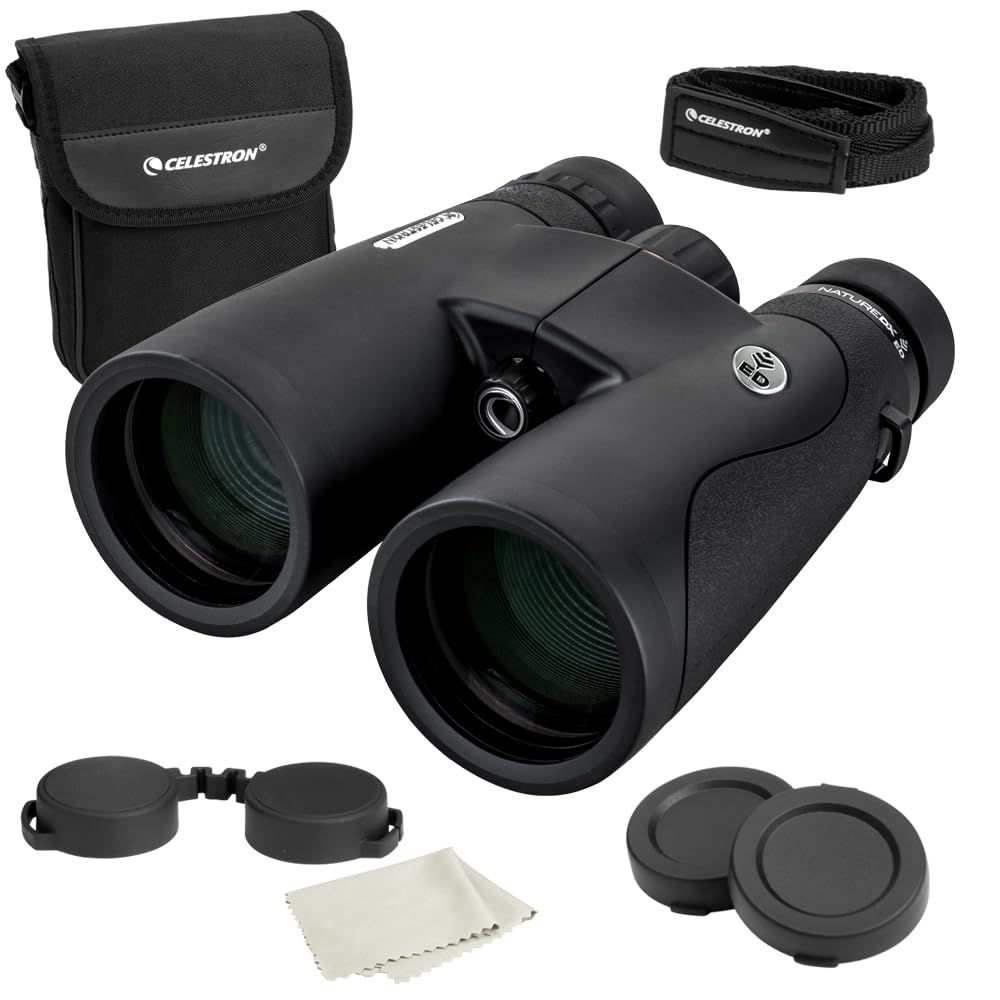
The Nature DX ED is the most affordable way to get extra-low dispersion glass in a 12×50 format. Celestron fits ED objective lenses and phase-coated BaK-4 prisms into a rubber-armored polycarbonate housing that weighs just under 32 ounces. Users report razor-sharp images with natural color rendition and notably reduced chromatic aberration compared to similarly priced models without ED glass.
One of the strongest use cases reported by owners is astronomy — the 12×50 combination with ED glass reveals the Orion Nebula with surprising clarity and pulls in Pleiades stars with minimal fringing. The built-in tripod adapter socket is a critical feature for stargazing, as the 12x magnification demands stable support for nighttime use. The twist-up eyecups offer multiple positions for eyeglass wearers, and the 14.3mm of eye relief is adequate for most users.
Some owners note that the twist-up eyecups don’t lock into position as firmly as premium models, and a minority report difficulty achieving perfect diopter alignment. The included carrying case is functional but basic. Relative to the optical performance delivered, the Nature DX ED is a strong choice for buyers who want ED glass without jumping to the premium price bracket.
Why it’s great
- ED glass at a mid-range price point
- Tripod adapter socket included for stable astronomy views
- Phase-coated BaK-4 prisms maximize light transmission
Good to know
- Eyecups lack a positive lock mechanism
- Diopter adjustment can be finicky for some users
4. Nikon PROSTAFF 5 12×50
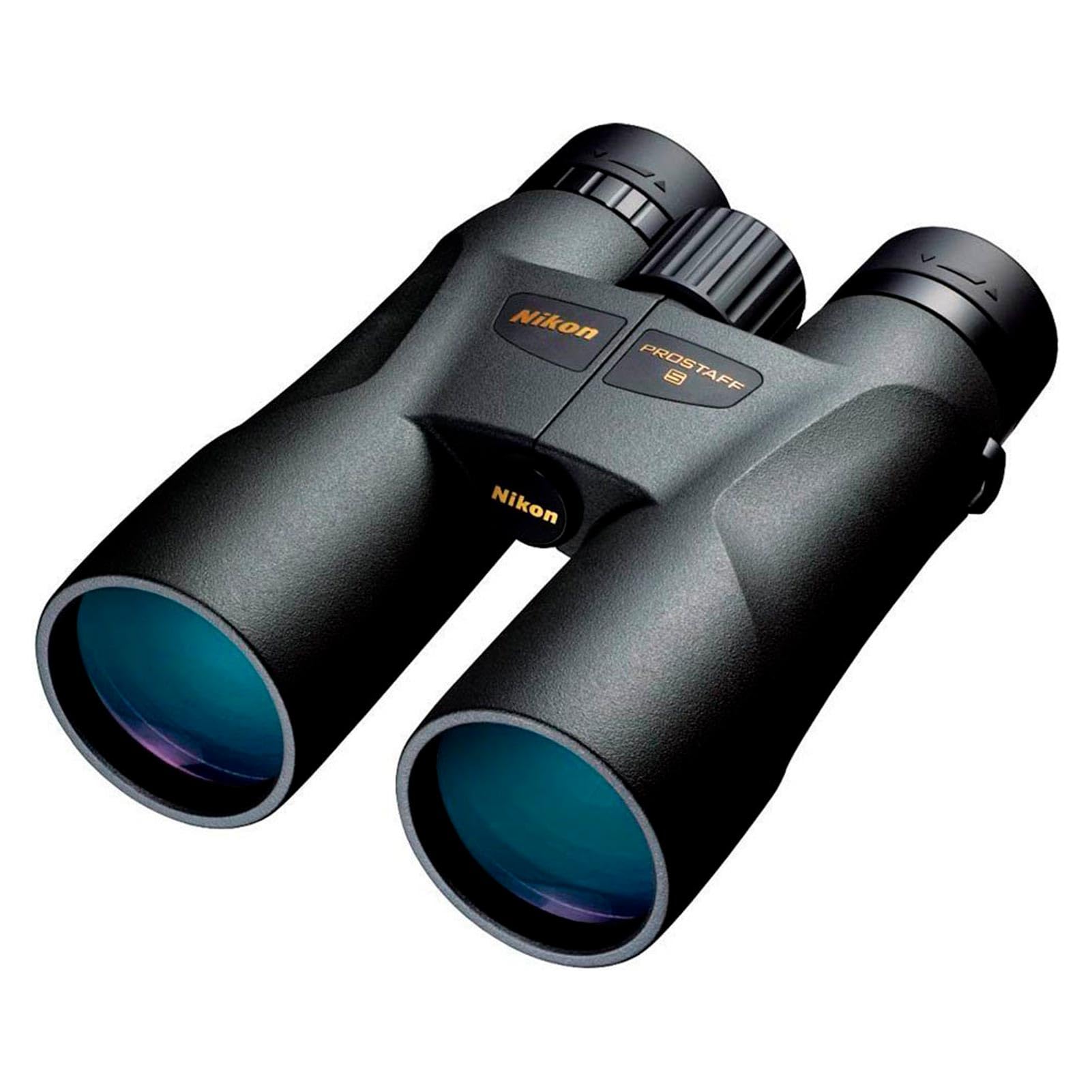
Nikon’s PROSTAFF 5 line prioritizes portability without sacrificing the optical foundation that made the brand a standard in birding. The fiberglass-reinforced polycarbonate resin body keeps weight manageable, and users frequently comment that these binoculars feel significantly lighter than their 12×50 size suggests. The multilayer-coated lenses and prisms deliver bright, color-accurate images with reduced glare, making them a solid choice for dawn-to-dusk observation sessions.
The high-eyepoint design with 15.5mm of eye relief is generous, allowing eyeglass wearers to see the full field of view without pressing lenses against the eyecups. The turn-and-slide multi-click eyecups provide fine positioning adjustments for comfortable long sessions. The central focus knob is smooth and responsive, allowing quick transitions from a nearby bird to a distant ridgeline without overshooting focus.
Nitrogen-filled and O-ring sealed construction provides reliable waterproof and fogproof performance through rain, mist, and humidity changes. Some owners note that the field of view at 246 feet per 1,000 yards is narrower than some competitors, but the trade-off is edge-to-edge sharpness that remains consistent across the entire field. For the hiker or birder who values low weight and reliable glass, the PROSTAFF 5 is a proven performer.
Why it’s great
- Lightweight fiber-reinforced body is comfortable for all-day carry
- Generous 15.5mm eye relief for eyeglass users
- Smooth, precise center focus mechanism
Good to know
- Field of view is narrower than some rivals
- No dielectric coatings on the prisms
5. Bushnell R5 12×50
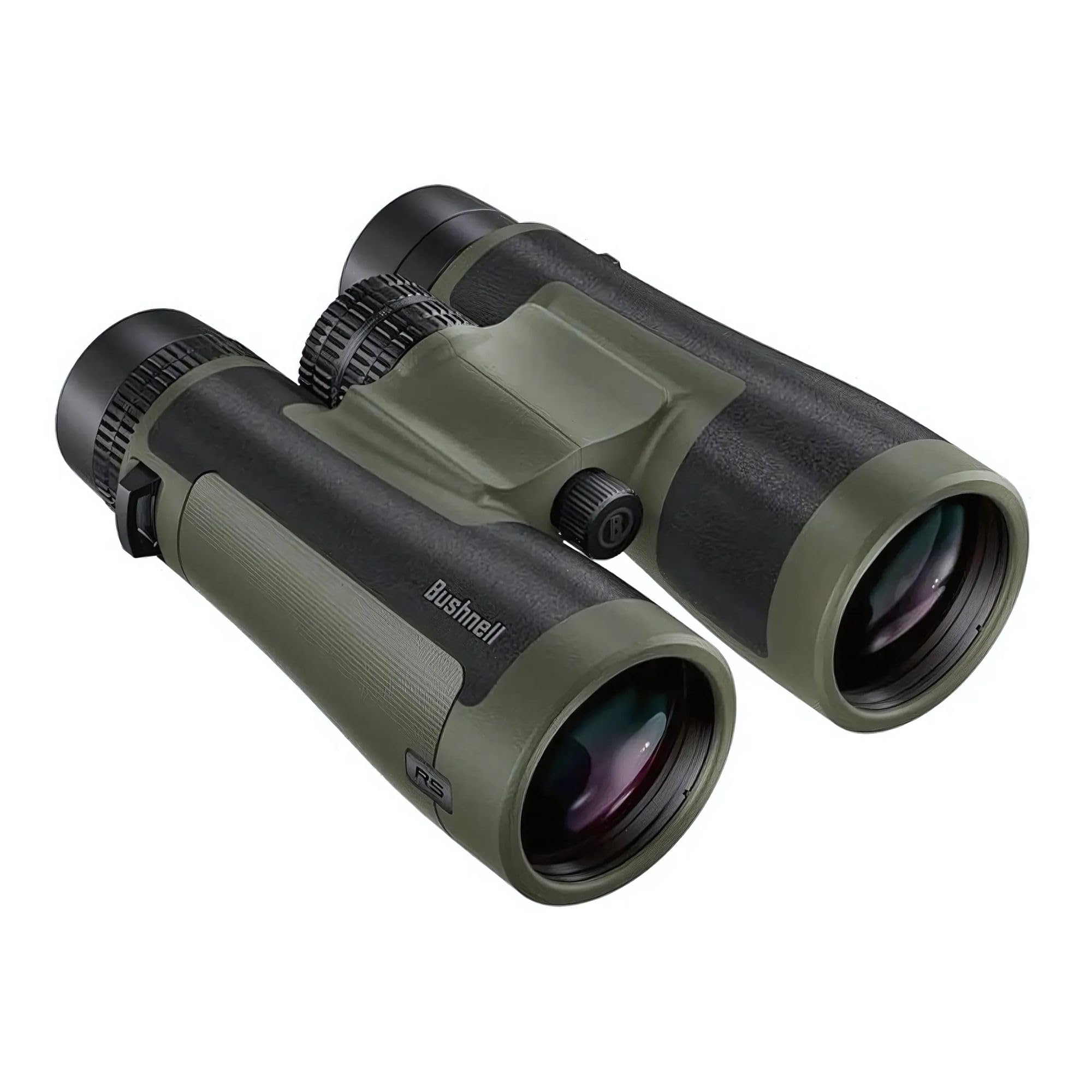
The R5 series from Bushnell packs dielectric and phase prism coatings — usually found on higher-tier optics — into a mid-range frame. The dielectric coatings boost light transmission and color fidelity, while Bushnell’s exclusive EXO Barrier creates a permanent hydrophobic layer on the exterior lenses that repels water, oil, and dust. Users report image clarity that compares favorably against premium brands, especially at last light when coating quality matters most.
A notable feature of the R5 is the fixed-focus design, which sets the binocular at a factory-calibrated infinity focus point. This eliminates a moving central focus mechanism and reduces potential failure points, but it also means the binoculars perform best at distances beyond 50 yards. Close-range birding or detail work under 30 yards will be out of focus. The IPX7 rating means these binoculars survive submersion in up to one meter of water for 30 minutes — real insurance for wet-weather hunting.
The shockproof ergonomic body with rubber overmold provides a secure grip in wet conditions. The included Vault LITE harness is a quality accessory for hands-free carry. Some users report the lens caps fit tightly due to stiff rubber ribs, which can be annoying to seat fully. If your primary use is scanning open country and you can live without close-focus capability, the R5 punches above its price bracket in optical performance.
Why it’s great
- Dielectric and phase coatings at a mid-range price
- IPX7 waterproof rating survives submersion
- EXO Barrier permanently repels water and oil from lenses
Good to know
- Fixed focus limits close-range usability
- Lens caps are stiff and hard to fully seat
6. OM SYSTEM OLYMPUS Pathfinder EXPS I 12×50

Olympus takes a traditional route with the Pathfinder EXPS I, using Porro prisms instead of the roof prism design found in most modern binoculars. Porro prisms typically deliver a brighter, more contrast-rich image because they reflect light internally without the need for phase correction coatings. The 7-element, 4-group lens system produces an exceptionally sharp view that users describe as “crisp edge-to-edge” with excellent contrast.
The standout spec here is the 18.3mm of eye relief — the longest in this roundup and a clear advantage for eyeglass wearers who need distance between the eyepiece and their corrective lenses. The 55.2-degree apparent field of view is on the narrower side, but users report the image quality compensates with a natural, evenly lit presentation free of haze. Owners using it for astronomy report clear views of the Orion Nebula and Pleiades.
The rubberized body provides a comfortable grip, and the diopter adjustment ring is built into the right eyepiece for fine-tuning. Some users find the interpupillary distance adjustment tricky, and the narrow FOV makes tracking fast-moving birds or game more challenging. The eyecups can retract easily with brow contact, which may be an issue during active glassing. For stationary observation and eyeglass-friendly comfort, the Pathfinder delivers classic optical quality.
Why it’s great
- Porro prism design delivers bright, contrast-rich images
- 18.3mm eye relief is best-in-class for eyeglass wearers
- Exceptional sharpness and edge-to-edge clarity
Good to know
- Narrower field of view makes tracking moving subjects harder
- Eyecups retract too easily with brow contact
7. Vortex Triumph HD 12×50
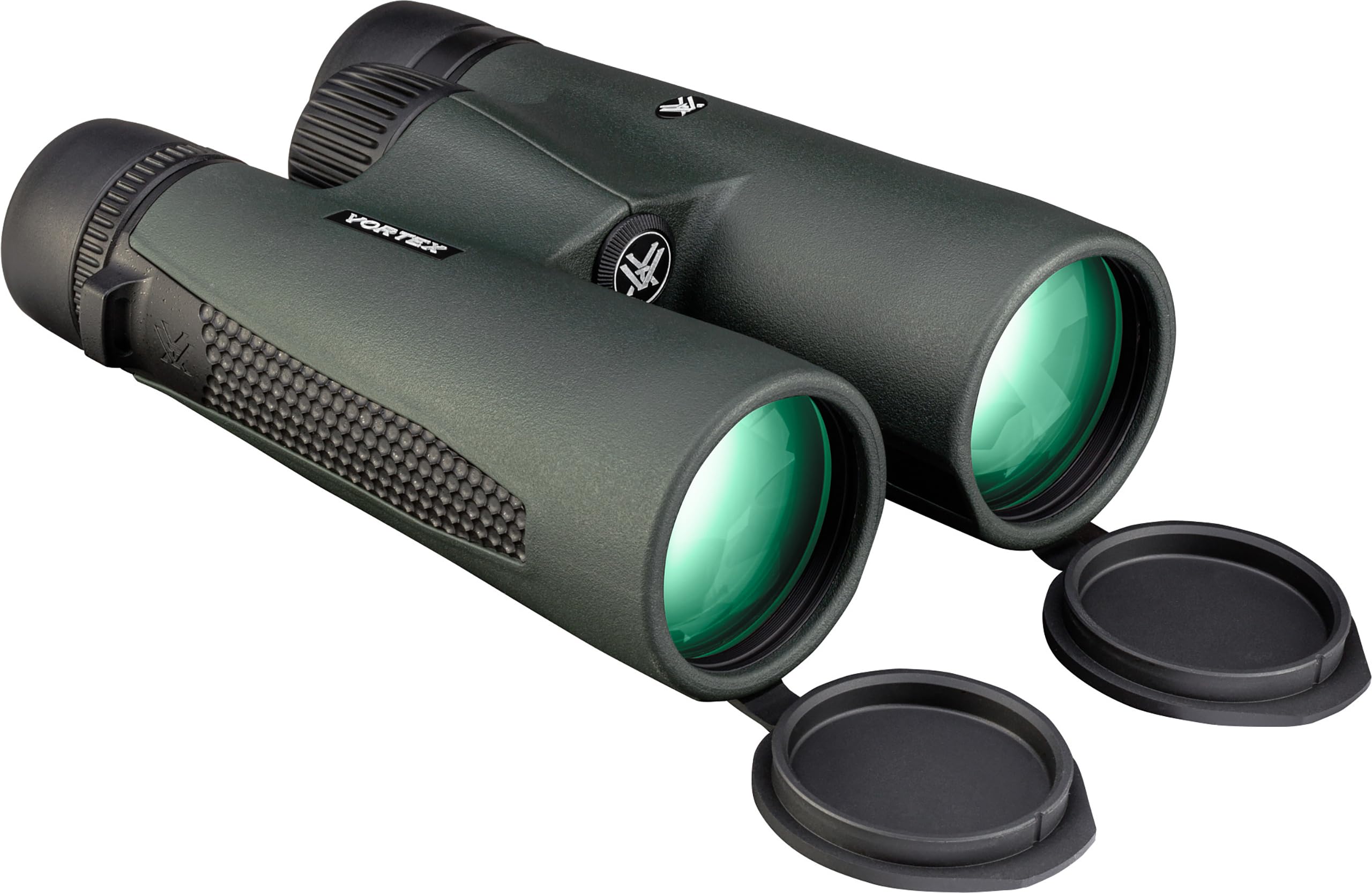
Vortex’s Triumph HD line is the entry point into the brand’s ecosystem, offering an HD optical system and fully multi-coated lenses at a budget-friendly price. The optimized glass elements deliver decent resolution and color fidelity for the price point, with reduced chromatic aberration compared to uncoated budget binoculars. Owners using them for casual backyard wildlife, night sky scanning, and daytime hikes report clear images up to 1-2 miles.
The polycarbonate chassis with full rubber armor provides shockproof durability — one user reported dropping them from 20 feet out of a tree with no damage. Nitrogen-purged construction makes the Triumph both waterproof and fogproof, matching features found on more expensive models. The tripod adapter socket is a welcome inclusion at this price tier, allowing shake-free viewing during extended sessions.
The 16mm of eye relief is adequate for most users, and the adjustable eyecups accommodate glasses. The included GlassPak harness is functional but some reviewers find it cumbersome compared to simpler neck straps. The VIP warranty is the real value here — Vortex’s unlimited, unconditional, lifetime guarantee that transfers to new owners. If you need a durable 12×50 for occasional use and prioritize warranty coverage over premium optical coatings, the Triumph HD gets the job done.
Why it’s great
- Unlimited, unconditional lifetime VIP warranty
- HD optical system performs above its price tier
- Tripod adapter socket included — rare at this budget level
Good to know
- Harness system can feel cumbersome for daily carry
- Optical coatings are basic — lower contrast than premium models at dusk
FAQ
Are 12×50 binoculars too heavy for handheld use?
What is the best 12×50 binocular for eyeglass wearers?
Can I use 12×50 binoculars for stargazing?
Final Thoughts: The Verdict
For most users, the best 12×50 binoculars overall is the Leupold BX-4 Pro Guide HD because it combines a wide 65.2-degree field of view with hydrophobic Guard-ion lens coatings and a lightweight open-bridge design — the most versatile high-performance package in this group. If you want ED glass without paying premium-tier prices, grab the Celestron Nature DX ED. And for eyeglass-friendly comfort or classic Porro prism contrast, nothing beats the OM SYSTEM OLYMPUS Pathfinder.