
Our readers keep the lights on and the weekend projects moving. As an Amazon Associate, I earn from qualifying purchases.
A fuzzy, warped print undermines your design intent, while a crisp, high-fidelity model wins the room. Finding a machine that reliably translates your digital file into a physically accurate, smooth-surfaced prototype is the real challenge.
I’m Rikta — the co-founder and writer behind FitlyFast. I’ve analyzed dozens of 3D printers, comparing precision specs, material handling, and real-world print quality to identify which machines genuinely serve architectural workflows.
After reviewing hundreds of hours of user data, I’ve isolated the machines that deliver the dimensional accuracy and surface finish architectural work demands. This guide breaks down the best 3d printer for architects across budget and feature tiers.
How To Choose The Best 3D Printer For Architects
Selecting a 3D printer for architectural work means prioritizing a different set of specs than a hobbyist’s machine. You need reliable layer adhesion, a build volume large enough for model components, and the ability to handle engineering-grade filaments that resist shrinkage and deliver stiff, durable parts.
Dimensional Accuracy and XY Resolution
For architectural scale models, a deviation of even 0.2 mm can throw off the fit of structural components. Look for machines with a CoreXY motion system and an XY resolution below 50 microns. A rigid metal frame—ideally die-cast aluminum—minimizes vibration and ensures every layer stacks exactly where it should.
Build Volume and Batch Efficiency
A printer with a 256 mm³ build volume (about 10 inches per side) is a versatile sweet spot, letting you produce a building massing model in one piece or several site-context pieces in one run. For larger projects, a 300 mm³ volume lets you print life-size details or larger structural sections without splitting the file.
Material Compatibility and Enclosed Chamber
Architects often need ABS or ASA for weather-resistant presentation models, or even carbon-fiber-reinforced nylon for load-testing prototypes. An enclosed printer with a heated chamber (60°C or higher) is critical to prevent warping on these materials. Also confirm the nozzle can reach at least 300°C to handle these advanced filaments.
Layer Resolution and Surface Finish
Standard FDM prints at 0.2 mm layers show visible stair-stepping. For client-ready models, a machine capable of 0.08 mm layer heights will produce a near-injection-molded surface. Resin printers offer even finer detail (XY down to 20 microns), making them ideal for intricate facade elements or furniture details.
Quick Comparison
On smaller screens, swipe sideways to see the full table.
| Model | Category | Best For | Key Spec | Amazon |
|---|---|---|---|---|
| Bambu Lab P1S | FDM Enclosed | Fast, reliable workflow | 500 mm/s speed, 260 mm³ volume | Amazon |
| Original Prusa MK4S | FDM Open | Professional-grade reliability | Input shaping, 9.84″ x 8.3″ x 8.6″ | Amazon |
| ELEGOO Centauri Carbon | FDM Enclosed | Out-of-box precision | 320°C nozzle, die-cast frame | Amazon |
| QIDI Q1 Pro | FDM Enclosed | Engineering-grade filaments | 60°C heated chamber, 350°C nozzle | Amazon |
| FLASHFORGE AD5M Pro | FDM Enclosed | Quick-swap nozzles, filtration | 600 mm/s, 280°C nozzle | Amazon |
| FLASHFORGE Adventurer 5M Pro | FDM Enclosed | User-friendly, air filtration | 600 mm/s, 220 mm³ volume | Amazon |
| ELEGOO Jupiter 2 | Resin MSLA | Ultra-fine architectural detail | 16K, 20 µm XY resolution | Amazon |
| Bambu Lab A1 Combo | FDM Open | Multi-color, quiet studio use | 10,000 mm/s² acceleration | Amazon |
| Anycubic Kobra X | FDM Open | Budget-friendly multi-color | 600 mm/s, 49-point leveling | Amazon |
| Creality Ender 3 V3 Plus | FDM Open | Large volume, mod-friendly | 300 mm³ volume, CoreXZ | Amazon |
| Creality CFS System | Accessory | Multi-material upgrade for K2 | 16-color auto-switch | Amazon |
In‑Depth Reviews
1. Bambu Lab P1S

The Bambu Lab P1S hits the sweet spot for architectural workflows: a fully enclosed CoreXY printer with a 260 mm³ build volume and a closed-loop control system that delivers consistent layers at up to 500 mm/s. The auto bed leveling and vibration compensation mean you get reliable first-layer adhesion without constant calibration, which is critical when printing overnight before a client meeting.
Users report excellent results with PLA and PETG for massing models, and the enclosed design allows reliable printing of ABS and ASA for weather-resistant presentation pieces. The printer comes 90% pre-assembled, setting up in under 30 minutes, and the Bambu Studio slicer streamlines workflow from concept to physical part. Multi-color capability requires the optional AMS unit, but even single-material prints exhibit sharp corners and smooth wall surfaces.
Where this printer excels for architects is its combination of speed and repeatability. Complex parts print in hours, not days, and the machine’s closed ecosystem minimizes failed prints. The main trade-off is that it doesn’t recommend carbon or glass-fiber reinforced filaments, limiting advanced prototyping. Still, for daily model production, this is the most capable turnkey option.
Why it’s great
- Consistent, fast printing with auto-calibration
- Fully enclosed supports ABS/ASA without warping
- Large community and polished software
Good to know
- Multi-color AMS is an extra purchase
- Not recommended for carbon-fiber filaments
- Closed-source firmware limits tinkering
2. Original Prusa MK4S
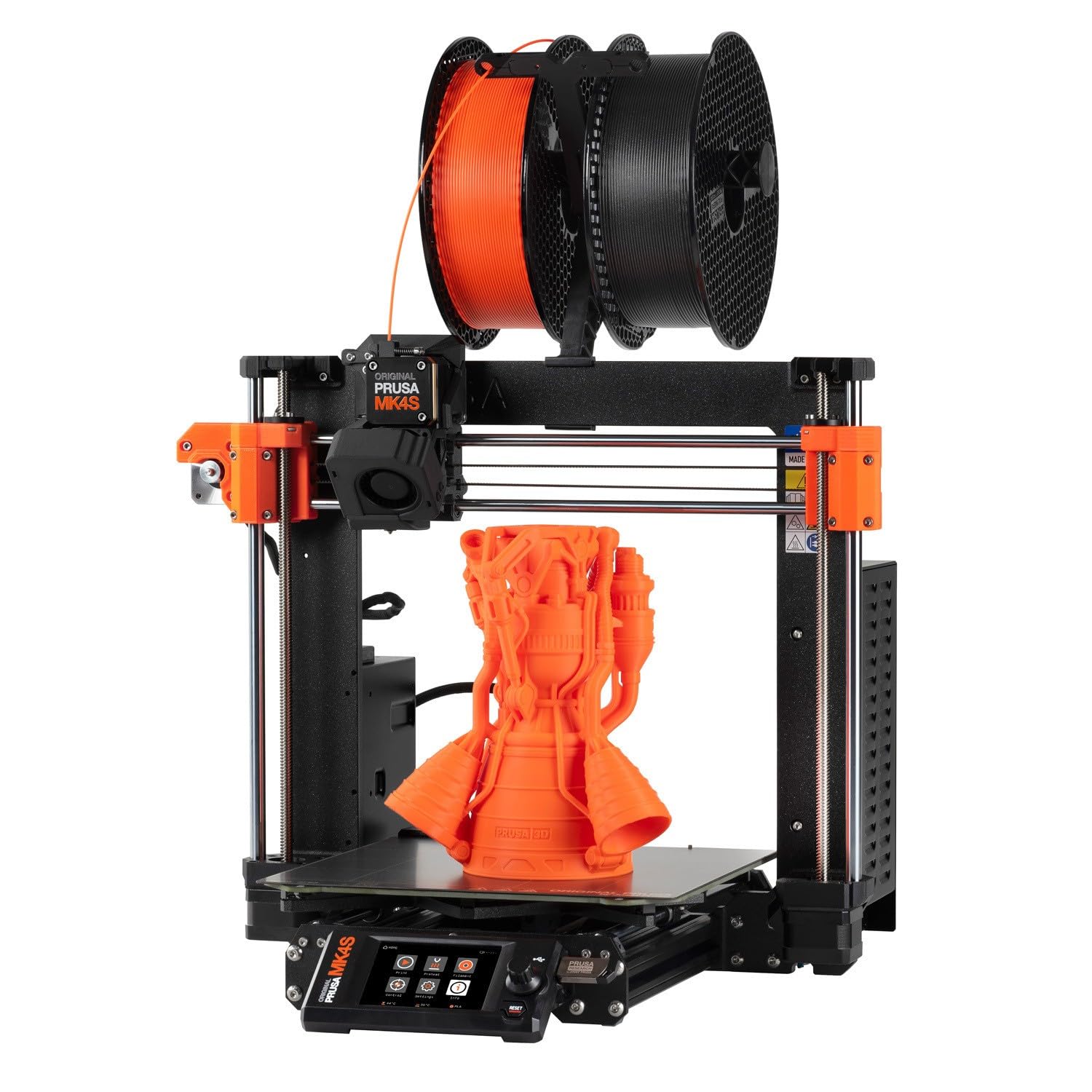
The Original Prusa MK4S is the benchmark for professional-grade reliability in an open-frame design. Its Input Shaping feature compensates for motion-induced vibrations, producing sharp edges and clean vertical walls even at higher speeds. With a build volume of 9.84 x 8.3 x 8.6 inches, it’s sufficient for many architectural model components, though you’ll need to split larger pieces.
Prusa’s reputation for consistency is well-earned. Users report flawless first-layer adhesion using the included PEI sheet, and the printer handles PLA, PETG, and even flexible TPU with minimal tuning. The open-source ecosystem means you can customize the printer and slicer profiles to match your exact material needs, an advantage for firms with specific workflow requirements. Assembly from the kit takes a dedicated day, but the interactive instructions make it accessible.
The premium price reflects the German-Czech engineering, lifetime technical support, and long-term upgrade path. For an architecture firm that treats the printer as a capital investment—printing daily for months without failure—the MK4S justifies its cost. The trade-off is that open-frame design means you’ll need an enclosure if you want to print ABS or ASA reliably.
Why it’s great
- Exceptional layer consistency and surface finish
- Fully open-source with long-term upgradeability
- Strong support community and PrusaConnect app
Good to know
- Open-frame requires enclosure for ABS/ASA
- Kit assembly takes several hours
- Build volume is smaller than many competitors
3. ELEGOO Centauri Carbon
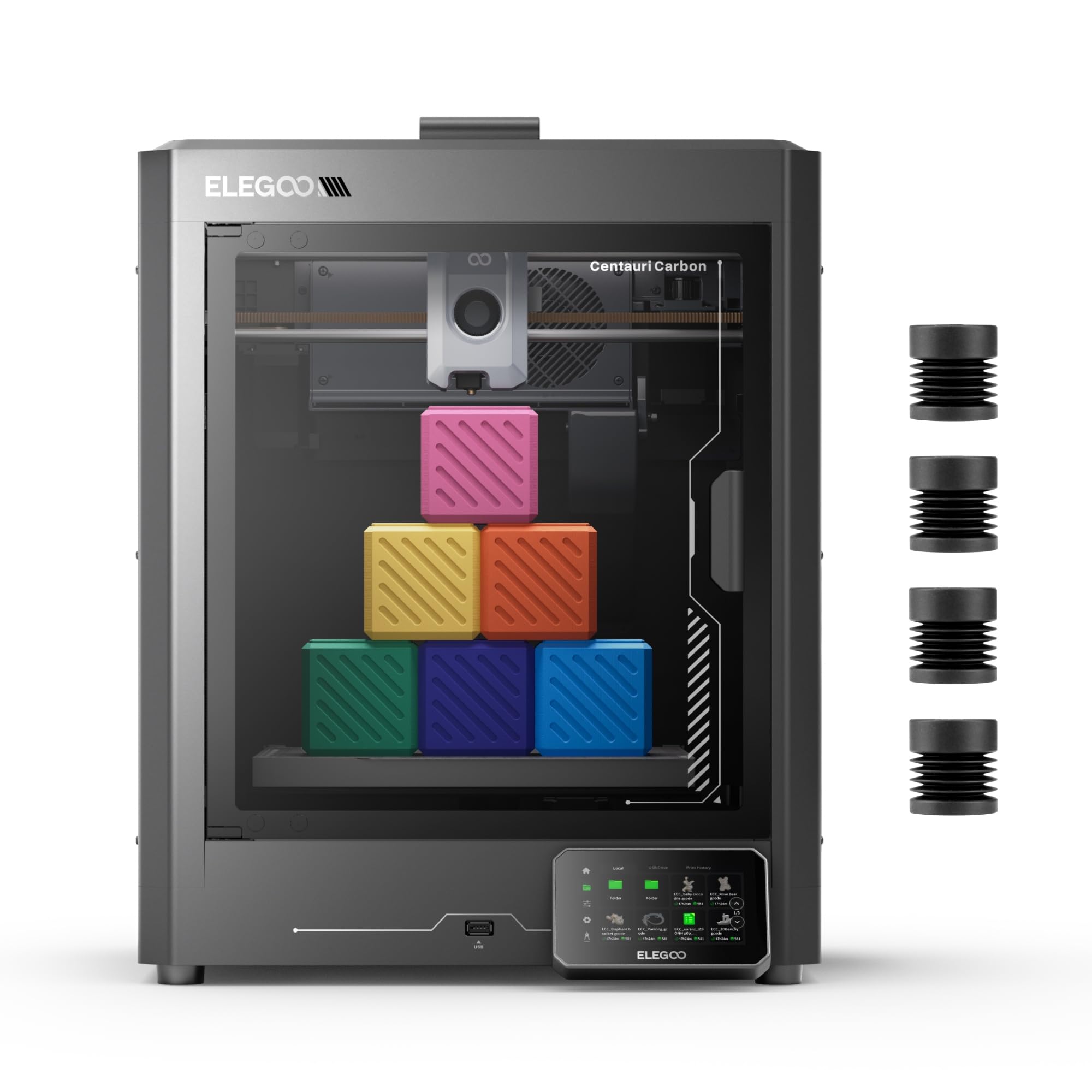
The Centauri Carbon arrives fully assembled and pre-calibrated, meaning you’re printing 10 minutes out of the box. Its rigid die-cast aluminum frame is a spec that directly translates to dimensional accuracy—less vibration means every layer stacks precisely, which is critical for architectural models where component fit is tight.
With a 320°C brass-hardened steel nozzle, this printer can handle carbon-fiber-reinforced filaments and other advanced materials, opening up options for prototype parts that need stiffness or heat resistance. The built-in camera and dual LED lighting allow remote monitoring, and the 256 mm³ build volume fits most massing models. Users report excellent PLA and PETG prints with minimal stringing, and the auto bed leveling ensures reliable starts.
The primary consideration is that the ecosystem is newer than Bambu Lab’s, so community profiles for unusual materials are thinner. Early reliability reports are strong, but a few users mentioned warranty support took time. For architects who want a plug-and-play machine that can also handle advanced filaments, this is a compelling mid-range choice.
Why it’s great
- Pre-calibrated out of the box, minimal setup
- Die-cast frame ensures print precision
- 320°C nozzle supports advanced materials
Good to know
- Newer ecosystem with fewer community profiles
- Software can be slow with large STL files
- HEPA filter is optional for fume-sensitive work
4. QIDI Q1 Pro

The QIDI Q1 Pro is built for engineers and architects who need to print with advanced materials like carbon-fiber nylon and polycarbonate. Its active 60°C heated chamber and 350°C bimetal nozzle make it one of the most capable machines in its price bracket for demanding filaments.
Users report excellent results with ABS, ASA, and PA612-CF, materials that would warp badly on an open-frame printer. The auto leveling and tangle detection add reliability for long prints. The integrated 1080p camera and time-lapse are useful for documenting prototype iterations. The printer ships with 32 GB of internal storage and is based on Klipper firmware, which is fully open-source for advanced tuning.
The included slicer (QIDI Studio) provides good starting profiles for most materials, but advanced users may want to tweak settings for maximum quality. The lack of a built-in carbon filter is a minor oversight for a machine designed for high-temp materials; you’ll need to print the official filter box. For an architect regularly printing functional prototype parts, this machine’s material range is a significant asset.
Why it’s great
- Heated chamber reduces warping on engineering materials
- 350°C nozzle for high-temp filaments
- Open-source Klipper firmware for full control
Good to know
- No integrated carbon filter for fumes
- Spool holder design feels flimsy
- Side-mounted spool adds footprint
5. FLASHFORGE AD5M Pro

The AD5M Pro is an enclosed CoreXY printer designed for users who want speed without sacrificing detail. Its 600 mm/s maximum travel speed is backed by built-in vibration compensation that keeps layers smooth, even at high speeds. The fully enclosed chamber with HEPA and activated carbon filtration makes it suitable for studio or classroom environments.
A standout feature for iterative design is the 3-second quick-swap nozzle system, allowing you to switch between 0.4 mm and 0.6 mm nozzles without tools. The direct-drive extruder handles flexible TPU as well as rigid filaments like PLA and ABS. The built-in camera and remote monitoring via the Flash Maker app let you track progress from your desk. Users report excellent out-of-box print quality, though some experienced software compatibility issues with newer macOS versions.
The 220 mm³ build volume limits single-piece architectural models, but it’s sufficient for components and details. The filtration system is a genuine advantage for studios where fumes from ABS or ASA printing would be a concern. For architects working in shared or sensitive environments, this is a solid, well-ventilated choice.
Why it’s great
- Enclosed with effective HEPA/carbon filtration
- Tool-less nozzle swap in 3 seconds
- Quiet operation suitable for shared spaces
Good to know
- Software compatibility issues on newer macOS
- 220 mm³ volume is on the smaller side
- Some units reported extruder jams
6. FLASHFORGE Adventurer 5M Pro

The Adventurer 5M Pro offers a similar feature set to its sibling with a focus on simplicity. The 1-Click Auto Printing system handles bed leveling and nozzle cleaning before each print, reducing the variables that cause failed prints. This is a practical advantage for an architecture firm where multiple users may operate the machine without deep 3D printing experience.
Maximum print speed of 600 mm/s and 20,000 mm/s² acceleration mean fast turnaround on concept models. The all-metal frame and CoreXY system maintain stability, and the interchangeable nozzle sizes (0.25 mm to 0.8 mm) let you dial in the right balance of speed and detail. User reviews highlight that it’s genuinely quiet and relatively easy to maintain, though a few units arrived with calibration issues that were resolved by customer support.
The dual circulation filtration system is effective at reducing dust and fumes, again making it a strong candidate for an office environment. While the 220 mm³ build volume is identical to the AD5M Pro, this model is slightly more oriented toward beginners. For smaller firms just adopting in-house printing, this is a safe, reliable entry point.
Why it’s great
- Very easy unboxing and setup process
- Effective fume filtration for office use
- Good print quality at high speeds
Good to know
- Software installation issues on newer OS
- Smaller build volume for larger models
- Customer support response times vary
7. ELEGOO Jupiter 2
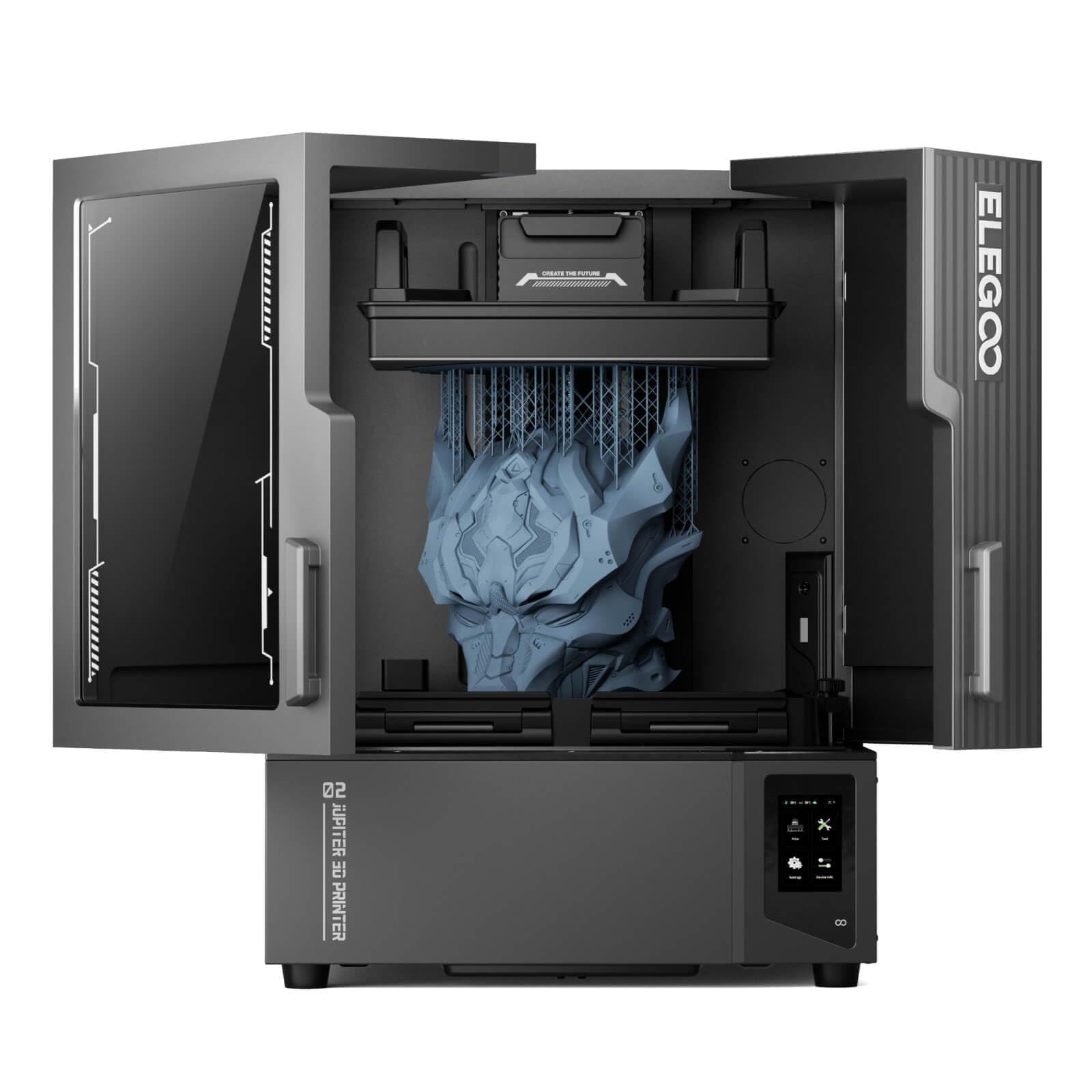
The Jupiter 2 is a resin (MSLA) printer, not FDM. For architects who need ultra-fine detail on facade elements, furniture details, or small-scale figures, its 16K resolution (20 × 26 μm XY) produces surfaces that look injection-molded. The build volume of 302.4 × 162 × 300 mm is massive for a resin printer, letting you print a dense site model in one job.
Resin printing delivers a smooth, layer-free finish that FDM cannot match at small sizes. The Jupiter 2 includes smart tank heating to maintain a consistent 30°C resin temperature, which is critical for reliable layer adhesion. The auto resin feeding system ensures you don’t run out mid-print, and the built-in HDR camera allows time-lapse documentation. Users report excellent detail reproduction, though this machine requires more post-processing (washing, curing, support removal) than FDM.
Resin printing is messier and requires dedicated ventilation; the resin itself has a noticeable odor. The Jupiter 2 is best suited for finishing models and detail components, not structural prototyping. For architectural presentations where the model’s visual quality is paramount, this printer occupies a distinct niche that FDM cannot fill.
Why it’s great
- Exceptional 16K detail for fine architectural elements
- Large build volume for resin (over 300mm tall)
- Heated VAT and auto-feeding reduce print failures
Good to know
- Requires dedicated ventilation and post-processing
- Not suitable for functional prototyping
- Resin and consumables are more expensive
8. Bambu Lab A1 Combo
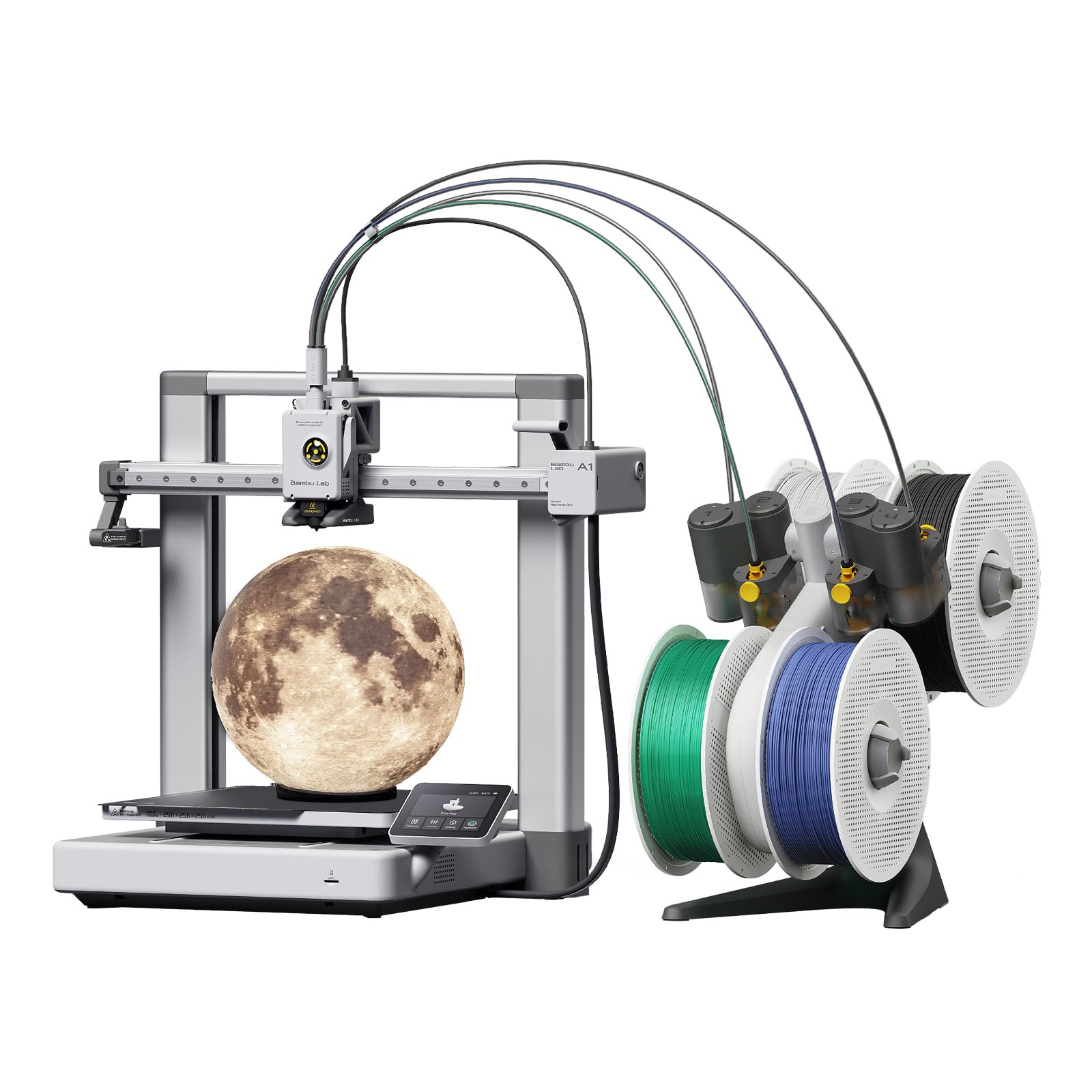
The A1 Combo is Bambu Lab’s open-frame alternative, featuring a fully automatic calibration system and active flow rate compensation for consistently smooth prints. It runs at under 48 dB, making it one of the quietest printers available—a practical advantage in an open-plan studio where noise is a concern.
With the AMS Lite unit included, this combo supports up to four colors, opening up the possibility of printing site context maps or diagrams with color-coded elements directly on the model. The 1-Clip quick swap nozzle makes maintenance simple. Users consistently praise the seamless experience: it works reliably out of the box, with excellent print quality on PLA and PETG. The included LED Lamp Kit is a novelty, but the core printer is genuinely impressive for its speed and finish.
The open-frame design and smaller build volume (within typical 256 mm³ range) mean it’s best for clients who primarily work with PLA and want color flexibility. It cannot reliably print high-temperature filaments without an enclosure. For an architecture studio producing concept models and mockups in full color, this is a unique and productive tool.
Why it’s great
- Very quiet, ideal for sensitive environments
- Full-auto calibration eliminates fiddling
- Multi-color with included AMS Lite
Good to know
- Open frame, not for ABS/ASA without enclosure
- Primarily limited to PLA-based materials
- AMS Lite can be finicky with some spool sizes
9. Anycubic Kobra X
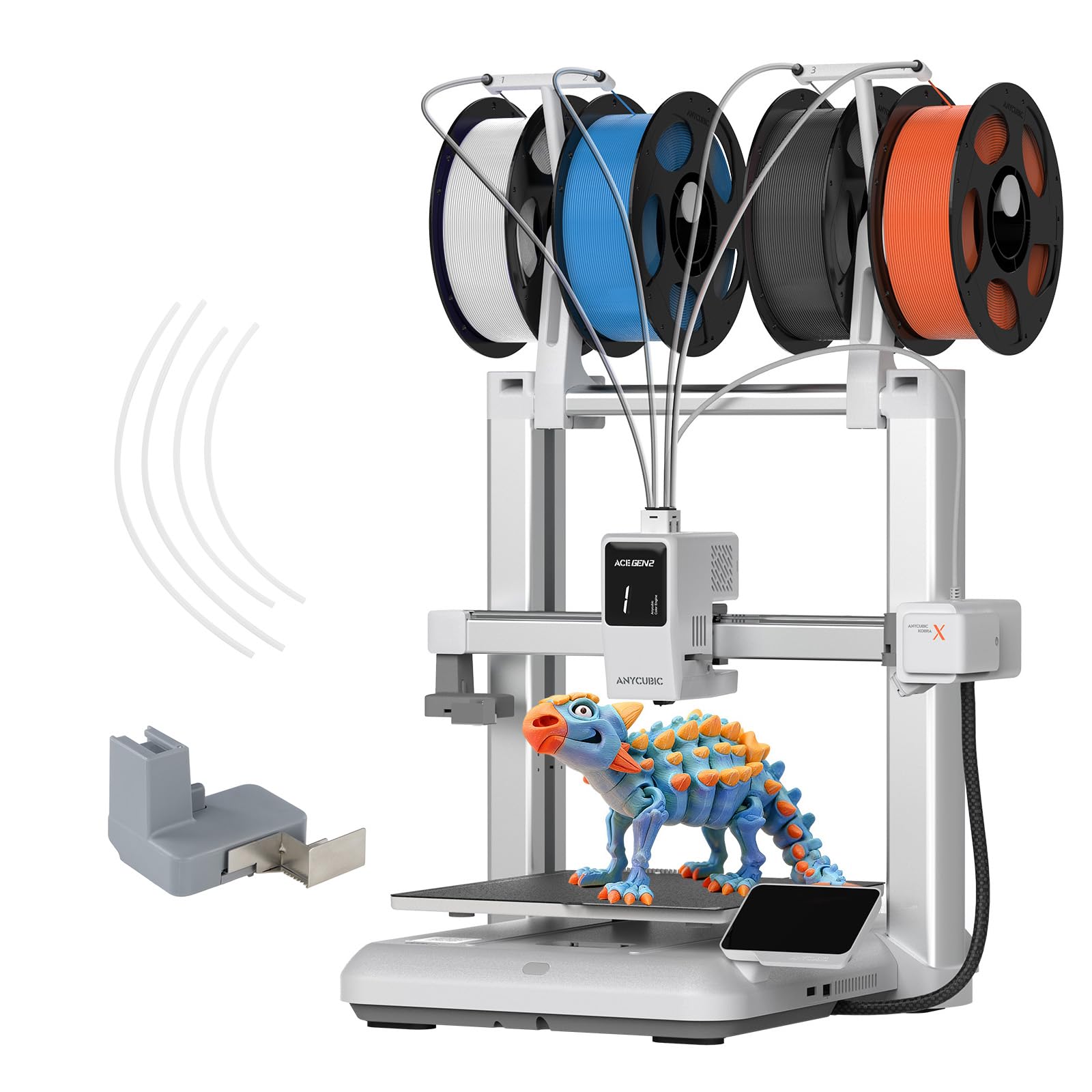
The Kobra X brings entry-level multicolor printing to a broader audience. It ships with native 4-color capability and can be expanded to 19 colors with additional ACE Pro units. For an architect on a budget who wants to experiment with color-coded models, this is a unique value proposition.
The LeviQ 3.0 auto bed leveling uses 49-point calibration, ensuring reliable first-layer adhesion. The 600 mm/s max speed and hardened steel nozzle are competitive specs, and the built-in AI camera offers spaghetti detection and remote monitoring. Users report excellent out-of-box reliability, with many completing dozens of prints without failures. The sound level is rated around 45 dB, making it quiet enough for shared workspaces.
The build volume (within typical 256 mm³ range) handles most architectural components. The biggest caveat is that a small minority of users received defective units with adhesion problems, though Anycubic’s replacement program appears responsive. For a firm testing the waters of in-house 3D printing at a low investment, this is a capable, feature-rich starting point.
Why it’s great
- Entry-level price with multicolor capability
- 49-point auto leveling ensures reliable starts
- Quiet operation and remote monitoring
Good to know
- Quality control can be inconsistent
- Multi-color requires additional ACE units
- Limited material support for advanced filaments
10. Creality Ender 3 V3 Plus

The Ender 3 V3 Plus offers a 300 mm³ build volume, letting you print larger architectural masses in one piece without splitting. The CoreXZ motion system with dual Y-axis motors provides stable high-speed printing up to 600 mm/s, and the auto-calibration handles leveling and input shaping automatically.
The tri-metal “Unicorn” nozzle uses a hardened steel tip for durability with abrasive filaments, and the direct-drive extruder includes a spring-loaded mechanism for consistent grip. Users generally report good print quality for the price, with excellent adhesion on the textured PEI plate. The larger frame does introduce more noise than smaller printers, and a few owners have noted that the Y-axis acceleration is software-limited below advertised figures.
This is a capable workhorse for firms that need to print large, functional parts or batch multiple smaller models. The Creality ecosystem has extensive community support. However, setup is more involved than the Bambu or ELEGOO options, and the open-frame design requires an enclosure for engineering filaments. For the budget-conscious firm wanting maximum volume, this is a strong contender.
Why it’s great
- Large 300 mm³ build volume for bigger models
- Robust direct-drive extruder with Unicorn nozzle
- Auto-calibration simplifies operation
Good to know
- Open frame, not for ABS/ASA without enclosure
- Loud fans; some units have QC variance
- Y-axis acceleration may be limited
11. Creality CFS System

The Creality CFS is a multi-color add-on system designed exclusively for the K2 series printers (K1, K1 Max, K1C, K2, K2 Plus). It operates as a dry storage and auto-switching unit for up to four spools, and by connecting four CFS units, you can achieve 16-color printing. For architectural presentation models, the ability to print in multiple colors eliminates the post-processing painting step, saving significant time.
The system uses RFID-tagged filaments to auto-detect material type and color, syncing with the printer and slicer for seamless mapping. The snap-away support function uses a different support material that detaches cleanly, preserving the model’s surface finish. The airtight design with desiccant keeps humidity-sensitive filaments dry during long prints.
This is a specialized accessory, not a standalone printer. It’s only compatible with the listed models. While it adds significant capability, the total investment (printer plus CFS) is substantial. For firms already using the K2 platform and needing color capability, this is the path of least resistance. For others, the Bambu Lab AMS system offers similar functionality.
Why it’s great
- Up to 16 colors for complex presentation models
- RFID auto-detection of filament type/color
- Airtight storage prevents moisture issues
Good to know
- Only works with Creality K2 series printers
- Significant extra cost on top of printer
- Less flexible than a dedicated AMS system
FAQ
What is the best layer height for architectural scale models on an FDM printer?
Should I get an FDM or resin printer for architectural work?
Do I need a heated chamber for printing architectural models?
How important is print speed for architectural model production?
Final Thoughts: The Verdict
For most users, the best 3d printer for architects winner is the Bambu Lab P1S because its combination of enclosed design, reliable auto-calibration, and fast CoreXY motion delivers consistent, high-quality models with minimal tinkering. If you want professional-grade reliability and an open-source upgrade path, grab the Original Prusa MK4S. And for ultra-fine surface detail on presentation pieces, nothing beats the ELEGOO Jupiter 2 resin printer.