
Our readers keep the lights on and the weekend projects moving. As an Amazon Associate, I earn from qualifying purchases.
Capturing a full human body in high-resolution 3D is a leap beyond scanning a coffee mug or a car part. The organic curves, subtle skin textures, and complex geometry of a person push every aspect of a scanner’s hardware and software to its limit. A single missed detail can ruin an entire model.
I’m Rikta — the co-founder and writer behind FitlyFast. I’ve spent hundreds of hours analyzing scan data, comparing point cloud densities, and evaluating the real-world tracking stability of handheld and structured-light scanners to find the few that can reliably handle the challenge of a human subject.
This guide focuses specifically on the hardware, software, and techniques that separate a usable full-body scan from a distorted mess, helping you choose the absolute best 3d scanner for human body for your budget and workflow.
How To Choose The Best 3D Scanner For Human Body
Scanning a human body introduces constraints that object scanning does not. The subject will move, has hair and reflective eyes, and features delicate skin that cannot be sprayed with markers or powder. Choosing the right scanner means understanding how each technology handles these challenges.
Infrared Safety and Eye Comfort
For human scanning, the light source must be eye-safe. Scanners using infrared (IR) light, such as VCSEL projectors or structured light, are inherently safe for direct eye exposure at standard operating distances. Avoid high-power laser scanners that require protective eyewear and are not intended for live subjects.
Tracking Technology: Markers vs. Feature Alignment
The most reliable body scanners use geometric feature tracking. These scanners analyze the surface texture and geometry of the body to maintain alignment as you move the scanner around the subject. Marker-based tracking is less suitable for bodies because placing adhesive dots on skin is impractical and uncomfortable. Look for scanners that advertise “marker-free” or “feature-based” tracking specifically for organic shapes.
Scanning Speed and Frame Rate
A human subject can only remain perfectly still for a few seconds. A higher frame rate (14-20 frames per second) allows the scanner to capture more data before the subject inevitably shifts. This reduces the risk of misaligned or distorted sections in the final model. Scanners that can complete a full-body pass in under 30 seconds are ideal.
Hair and Texture Handling
Hair is one of the hardest surfaces for a 3D scanner to capture because it is fine, light-absorbing, and lacks a solid surface. Some dedicated human-body scanners include a “Hair Mode” that uses specific infrared patterns to reconstruct hair geometry. A scanner with an RGB camera also helps by mapping real-world color onto the hair mesh, improving the visual result even if the geometry is not perfect.
Quick Comparison
On smaller screens, swipe sideways to see the full table.
| Model | Category | Best For | Key Spec | Amazon |
|---|---|---|---|---|
| Shining 3D Einstar Vega | All-In-One Wireless | Standalone body scanning | Built-in 32GB RAM / 512GB SSD | Amazon |
| Creality CR-Scan Otter | Dual-Lens Handheld | Versatile indoor/outdoor | 20 fps scanning speed | Amazon |
| Revopoint RANGE | Structured Light Large | Large objects & complete bodies | 650mm single capture range | Amazon |
| Revopoint INSPIRE 2 | Hybrid Dual-Mode | High precision with wireless | 0.03mm precision | Amazon |
| Shining 3D Einstar | Infrared Handheld | Detailed hair & body capture | 14 FPS with Hair Mode | Amazon |
| 3DMakerpro Mole | Portable Premium | Fine detail scanning | 0.05mm accuracy | Amazon |
| EinScan SE Desktop | Desktop Dual-Mode | Tabletop body scanning | 0.1mm single-shot accuracy | Amazon |
| Creality CR-Scan Ferret Pro | Entry-Level Wireless | Learning body scanning | 0.1mm accuracy | Amazon |
| WITHINGS Body Scan | Health Smart Scale | Body composition analysis | Segmental body composition | Amazon |
| FLASHFORGE AD5X | Multi-Color 3D Printer | Printing scanned bodies | 600mm/s print speed | Amazon |
| Matterport Pro3 | Professional LiDAR | Large space & structure scanning | 100m extended range | Amazon |
In‑Depth Reviews
1. Shining 3D Einstar Vega Wireless 3D Scanner

The Einstar Vega is the closest thing to a dedicated human-body scanner in the consumer-to-prosumer tier. Its all-in-one design houses an 8-core 2.4GHz CPU, 32GB of RAM, and a 512GB SSD right in the handheld unit, meaning it requires no computer tether at all. The 6.4-inch AMOLED screen provides real-time feedback, and the integrated 48MP RGB camera captures full color texture alongside geometry. Users report completing a full torso scan in under 90 seconds without needing to connect to any external device, which is a massive workflow advantage for scanning live subjects.
Two scanning modes cover the full range of human anatomy. The Fast Mode using VCSEL projectors can capture a person from 270mm to 1500mm away at up to 20 FPS, making it excellent for a full standing body scan. The HD Mode with MEMS projectors takes over for close-up face detail at 100-350mm, delivering higher resolution for features like eyes and lips. The infrared light source is completely eye-safe and can handle dark hair and skin tones equally well, even in outdoor sunlight below 30,000 lux. The hybrid alignment system blends marker and feature tracking to prevent the drift that plagues lesser scanners on organic curves.
The handful of user concerns center on the learning curve required to master the two scanning modes. Some users report that scanning black or highly reflective objects may still require spray, though this is less of an issue for human skin and hair. The battery life is adequate for a single session but not for extended field work without a power bank. The on-unit post-processing is good but not yet as powerful as the desktop software options from Revopoint. For anyone prioritizing a clean, untethered body scanning experience, the Vega is the clear leader.
Why it’s great
- Fully standalone scanning with no PC required
- Two dedicated modes for full-body and close-up facial scanning
- 48MP RGB camera for vivid real-time color texture
Good to know
- Battery lasts about one hour per charge
- Still may need spray for very dark shiny objects, not skin
- On-unit software has fewer editing features than desktop alternatives
2. Creality CR-Scan Otter 3D Scanner

The CR-Scan Otter is Creality’s most capable human-body scanner, built around a 4-lens stereo vision system that includes long-focal and short-focal lenses. This dual-lens approach lets it capture objects from a coin-sized 10mm up to a massive 2000mm, making it one of the most versatile scanners for scanning everything from a single finger to a full body. The scanning range extends from 110mm to 1200mm, and the 20 fps frame rate helps freeze motion during a whole-body pass.
Creality engineered the Otter to handle challenging surfaces without spray. Eight infrared LEDs and two white LEDs illuminate the subject, and the one-shot 3D imaging technology stabilizes tracking to reduce the loss of alignment that happens when scanning curved body parts like shoulders and hips. The color mapping algorithm uses the million-pixel RGB camera to produce lifelike textures, and users report the hardware is generally reliable after the most recent firmware updates. The three touch-sensitive buttons on the unit let you start, pause, or adjust depth camera exposure without fumbling with a phone app.
The main drawback is that the Otter relies heavily on marker tracking for its most stable performance. While it can do marker-free scanning, many users find the tracking less reliable in that mode, especially on smooth skin without distinctive features. Using the scanner with the optional wireless Bridge accessory drops the frame rate to 8-9 fps, which can be limiting for fast body scans. The Otter is a solid hardware platform that requires some patience and technique to achieve top-tier body scanning results.
Why it’s great
- Dual-lens system covers huge object size range from 10mm to 2000mm
- Excellent environmental adaptability for outdoor scanning
- One-shot 3D reduces tracking loss on organic shapes
Good to know
- Marker-free tracking is less reliable on smooth skin
- Wireless bridge drops frame rate significantly
- Requires a powerful PC with good GPU for best results
3. Revopoint RANGE Handheld 3D Scanner

The Revopoint RANGE is specifically optimized for large objects, and a human body falls squarely in its wheelhouse. Its single-frame capture area of 360mm x 650mm at 600mm distance means you can cover a full torso in just a few passes. The structured light projector works at double the distance of the older POP series, from 300mm to 800mm, giving you more room to maneuver around a standing subject without losing tracking. At 18 fps, it collects data fast enough to outrun minor subject movement.
The aspheric lenses in the RANGE reduce image aberration, producing sharper 3D models with less distortion at the edges of the scan. The embedded processor means the scanner works with office-level computers, lowering the barrier for users who don’t own a high-end workstation. The Revo Scan software is intuitive and has a dedicated human-scanning mode that helps beginners configure the right settings. Users who have taken the time to learn the proper distance and exposure controls report excellent full-body results, including scans of hair and clothing texture.
The trade-off is that the RANGE does require some surface preparation for best results. Very dark clothing or shiny skin can cause tracking loss without the use of scanning spray or good ambient lighting. Some users report that the learning curve for light-based scanning is steep compared to laser-based systems, and the export options are limited to STL, OBJ, and PLY without native CAD support. For those willing to invest a few hours in practice, the RANGE delivers premium body scanning performance at a mid-range price.
Why it’s great
- Wide single-frame capture ideal for torso and full-body passes
- Aspheric lenses reduce distortion for sharper results
- Works with standard office computers, no high-end GPU required
Good to know
- May need spray for dark or shiny surfaces
- Export limited to STL, OBJ, and PLY formats
- Steep learning curve for first-time structured light users
4. Revopoint INSPIRE 2 3D Scanner
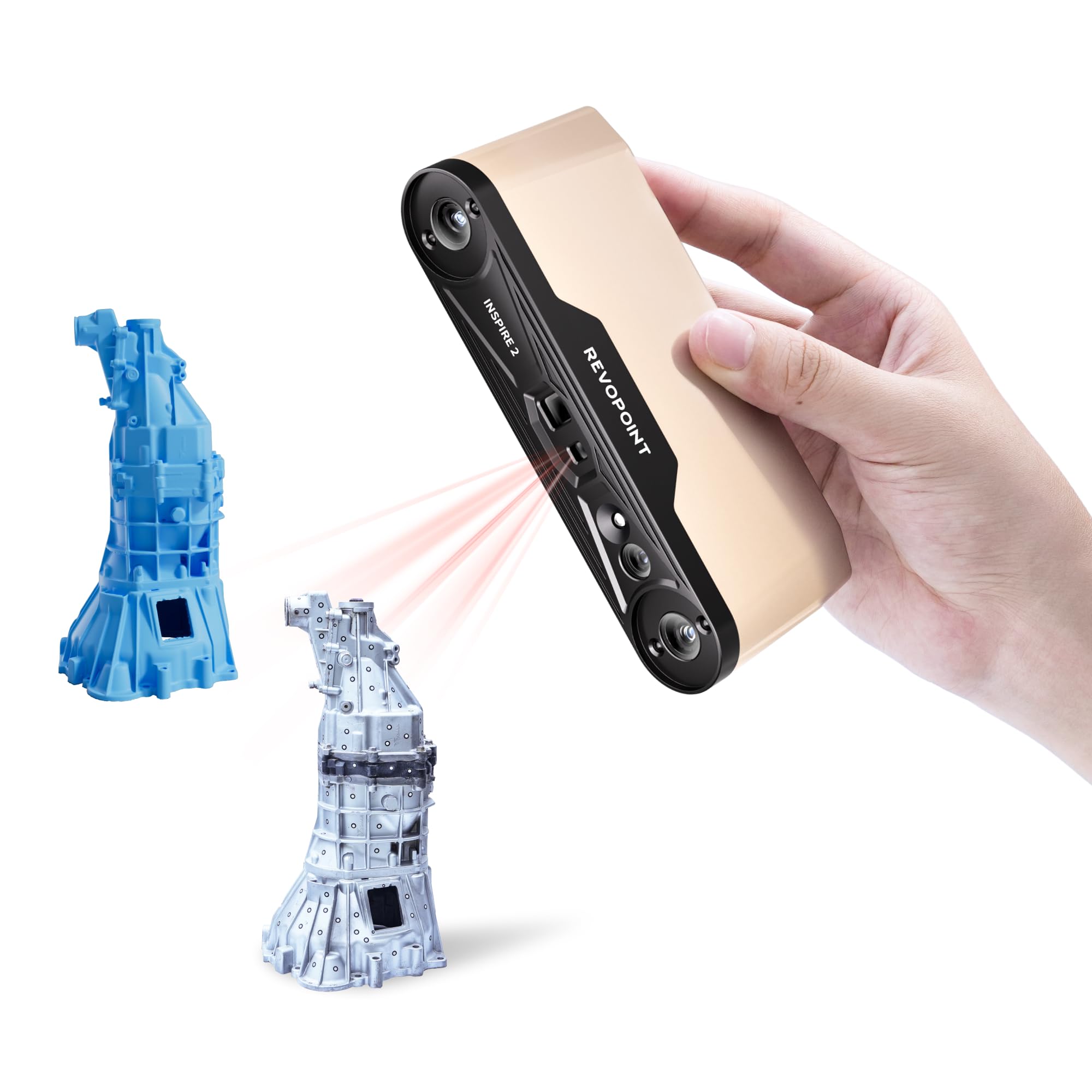
The INSPIRE 2 is Revopoint’s answer to the demand for a high-precision hybrid scanner that can handle both structured light and multi-line laser modes. Its 0.03mm precision is among the best in its class, and the dual scanning modules let you switch between infrared structured light for fast body captures and multi-line laser for detailed facial features. The built-in WiFi 6 enables wireless scanning with interactive streaming, allowing you to monitor a body scan from a tablet or phone while the subject stands in the scanning zone.
The high-precision calibration board included in the kit boosts point cloud accuracy by 75%, which is meaningful when scanning the subtle asymmetry of a human face. The 11 infrared laser lines are effective on reflective and dark surfaces without spray, and the adjustable optical zoom (1.5x and 2x) lets you focus on specific areas like an ear or a hand for maximum detail. The Revo Metro software provides advanced post-processing tools including hole filling and mesh sharpening, and the one-click import to Revo Design (sold separately) enables a full scan-to-CAD pipeline.
Users have noted that the calibration sticky dots included in the kit do not stay stuck for long, requiring replacement for consistent results. The learning curve is steep for beginners, especially when toggling between the two scanning modes, and the PC requirements are demanding for the laser mode (recommended i7 13th Gen or Ryzen 7 5800 with RTX 3060). The INSPIRE 2 is best suited for users who want the highest possible precision and are willing to dial in the settings for each scan session.
Why it’s great
- Best-in-class 0.03mm precision for fine facial detail
- Dual scanning modules for versatility on different surfaces
- WiFi 6 wireless streaming for remote monitoring
Good to know
- Calibration dots have poor adhesive and need replacing
- High PC requirements for laser scanning mode
- Steep learning curve for mode switching and settings
5. Shining 3D Einstar Handheld 3D Scanner
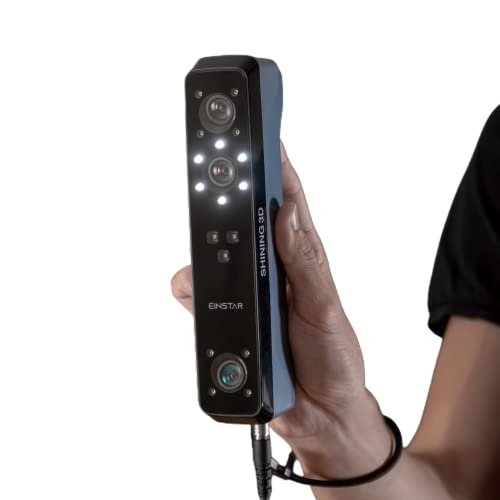
The original Shining 3D Einstar remains one of the most popular handheld scanners for body scanning, thanks to its dedicated “Hair Mode” that actively reconstructs hair geometry using three infrared VCSEL projectors and two stereo depth cameras. This feature sets it apart from most competitors that simply ignore hair or treat it as noise. Users report being able to scan a full head of hair along with the face and neck without the usual holes or messy artifacts. The point distance of up to 0.1mm and scanning speed of 14 FPS produce dense, usable data for 3D printing or digital avatar creation.
The software, EXstar, includes a data quality indicator that guides the user to improve scanning technique in real time, which is especially helpful for beginners learning how to maintain the correct distance and angle around a human subject. The scanner is comfortable and safe for eyes, as it uses no projector light during scanning. The built-in RGB color camera captures high-fidelity textures that align with the geometry. One USB cable handles both data and power, keeping the setup minimal and the working distance flexible.
The main criticism from users is the build quality compromise: one user reported a defective fan that did not affect performance but suggests QC inconsistency. The software, while functional, lacks the polish of Revopoint’s Revo Scan and can feel unintuitive to new users. The scanner also struggles with very dark skin tones and black hair in low light, requiring good ambient lighting to maintain tracking. For the price, the Einstar is a capable body scanner with a unique advantage for hair capture, but it rewards patient users who are willing to troubleshoot.
Why it’s great
- Dedicated Hair Mode for reconstructing full head geometry
- Real-time data quality indicator helps beginners improve
- Infrared VCSEL projectors are eye-safe for direct body scanning
Good to know
- Some units have reported QC issues with fans
- Software is functional but less polished than alternatives
- Struggles with very dark skin and hair in poor lighting
6. 3DMakerpro Mole Handheld 3D Scanner

The 3DMakerpro Mole is built around a near-infrared light source and optical anti-shake modules that make it especially stable for handheld body scanning. The anti-shake lenses actively compensate for the natural tremor of a human hand, reducing the distortion and ghosting that can ruin a body scan. With a single-frame accuracy of 0.05mm and resolution of 0.1mm, the Mole captures fine skin texture and small features like eyelashes and pores with impressive fidelity. The scanning speed of 10 FPS is lower than the competition, but the anti-shake hardware means each frame is cleaner.
The Mole uses an invisible near-infrared light source that is completely safe for eyes and comfortable for the subject. It supports marker-free scanning, using intelligent algorithms to track the surface features of the body without the need for adhesive dots. The JMStudio software includes one-click model optimization tools for automatic alignment, denoising, mesh simplification, and texture mapping. The unit is lightweight at 13.7 ounces and fits comfortably in one hand, reducing fatigue during extended body scanning sessions.
The downside is that the “no marker” claim is optimistic for human scanning. Users consistently report that the scanner struggles with black objects and shiny surfaces, requiring scanning spray for dark clothing or sweaty skin. The tabletop mode is easier to use than handheld mode, which defeats the purpose for full-body scanning. The software lacks robust tutorials, and new users report a steep learning curve before achieving usable body scans. The Mole is a high-quality stationary scanner that doubles as a handheld, but it demands patience and careful technique.
Why it’s great
- Optical anti-shake modules compensate for hand tremor
- 0.05mm single-frame accuracy for fine skin detail
- Completely eye-safe near-infrared light source
Good to know
- Marker-free tracking is less reliable on dark or shiny skin
- Software lacks tutorials for new users
- Lower 10 FPS frame rate than some competitors
7. EinScan SE Desktop 3D Scanner

The EinScan SE is a desktop 3D scanner, not a handheld unit, which fundamentally changes the body scanning workflow. It uses a rotating platform and a fixed sensor to capture the subject from all angles. The Auto Scan mode rotates the turntable while the scanner captures data at a single-shot accuracy of <0.1mm and point distance of 0.17-0.2mm. The Fixed Scan mode allows for a stationary, more detailed capture of a specific body part like a hand or face. This turbo setup eliminates the tracking issues common with handheld scanners, as the subject remains still while the device moves around them mechanically.
The EXScan software is designed for simplicity. Automatic calibration removes the tedious setup steps, and one-click scanning initiates the data capture. Post-processing tools include hole filling, sharpening, and smoothing, which are essential for cleaning up body scans. The scanner outputs watertight meshes that are directly compatible with 3D printers and popular editing software. The EinScan SE is known for its consistent, repeatable results and its ability to handle a wide range of object sizes from 30mm to full human torsos.
The obvious limitation is that it only works in a desktop configuration, meaning you cannot scan a standing person in a natural pose; the subject must sit or lie on the turntable platform. The scanning process is slower than handheld methods, requiring several minutes per full-body capture. Some users have reported hardware defects and poor customer support from the specific seller “3D UMAX”. The EinScan SE is an excellent option for users who prioritize accuracy and consistency over portability and can work with subjects in a controlled seated position.
Why it’s great
- Turntable elimination of tracking errors for consistent body scans
- 0.1mm single-shot accuracy for reliable detail
- Watertight mesh output ready for direct 3D printing
Good to know
- Desktop only; cannot scan standing subjects in natural pose
- Slower capture process compared to handheld scanners
- Customer support from some sellers has been unreliable
8. Creality CR-Scan Ferret Pro 3D Scanner

The Ferret Pro is Creality’s entry-level wireless handheld scanner, designed to be the most accessible option for users new to 3D body scanning. It uses WiFi 6 for stable wireless scanning across Windows, macOS, Android, and iOS devices. The 105-gram weight makes it the lightest scanner in this guide, and the included carrying case, tripod, power bank, and phone holder make it a true travel-ready kit. The anti-shake tracking and 24-bit color scanning deliver 0.1mm accuracy for objects between 50mm and 2000mm.
The software setup is straightforward, and the scanner is genuinely beginner-friendly out of the box. Users report being able to scan a human body on the first try without extensive calibration, which is rare in this category. The wireless scanning with an iPhone is particularly smooth, allowing one person to scan another freely without a tangled cable. The color reproduction is good, and the results are usable for 3D printing, digital avatars, and basic reverse engineering of human forms.
The Ferret Pro has significant limitations that prevent it from being a primary body scanning tool for serious users. The tracking is not reliable on reflective, transparent, or very dark surfaces, which includes many body types and clothing colors. The software is buggy and limited in functionality, with some users reporting that it only exports STL files and cannot handle negative features well. The maximum outdoor light tolerance is 30,000 lux, which is fine for shade but not direct sunlight. For the price, it is a capable learning tool, but experienced users will quickly outgrow it.
Why it’s great
- Ultra-light 105g design for fatigue-free handheld use
- WiFi 6 wireless works smoothly with iPhones
- Complete travel kit included in the box
Good to know
- Tracking fails on reflective, transparent, or dark surfaces
- Software is buggy and limited to basic STL export
- Not reliable for a primary body scanning workflow over time
9. WITHINGS Body Scan Smart Scale
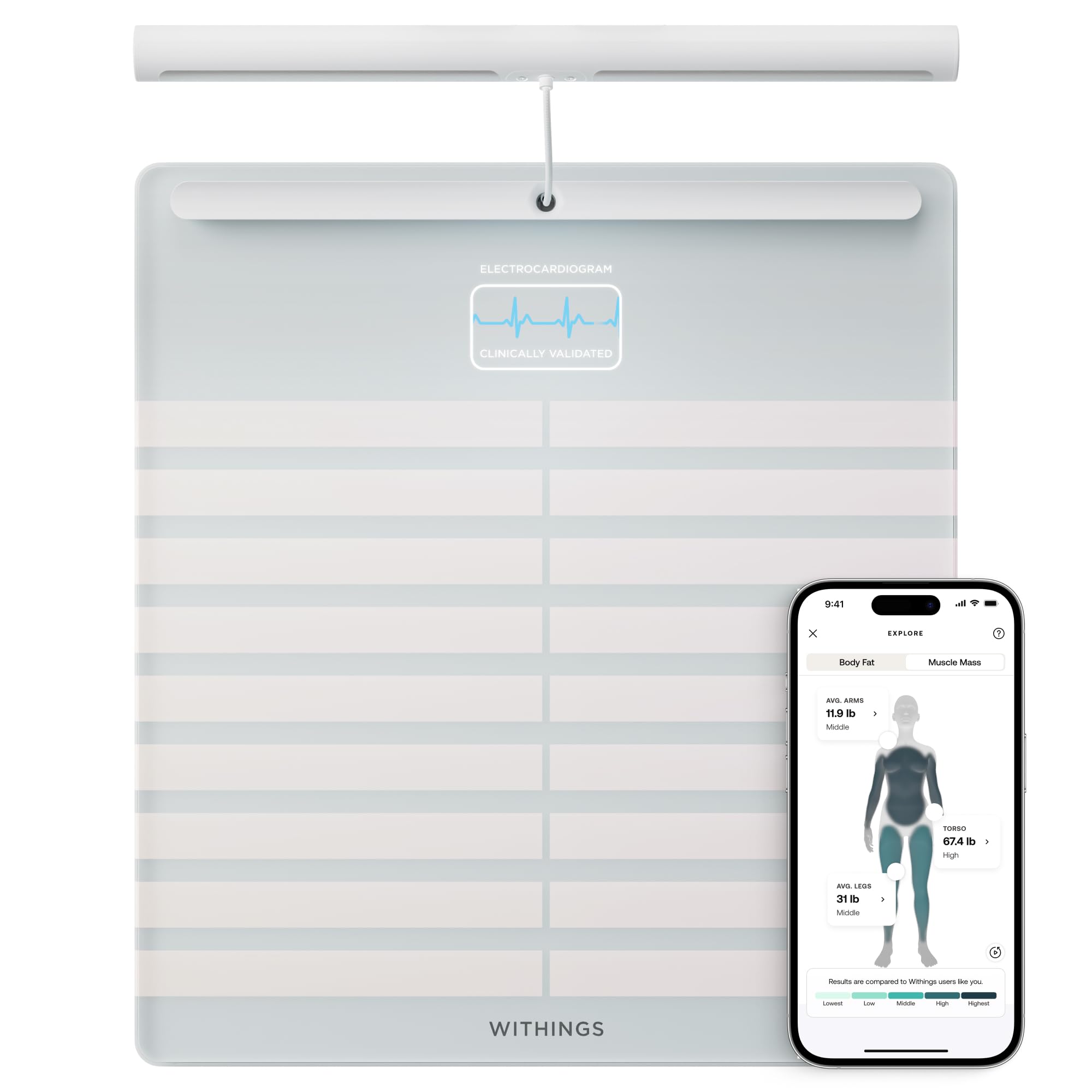
The WITHINGS Body Scan is not a 3D scanner for creating digital models, but it earns a place in this guide for a completely different use case: segmental body composition analysis. It uses bioelectrical impedance to measure fat and muscle mass in each arm, leg, and torso segment separately, providing a clinical-level breakdown of body shape and composition. It also conducts a 6-lead ECG to check for atrial fibrillation, measures vascular age via arterial stiffness, and evaluates the sweat gland function in the feet as an indicator of skin health.
For users whose goal is to track changes in body shape for fitness, health, or medical reasons, the Body Scan provides far more actionable data than a visual 3D model. The handle-mounted electrodes ensure that the segmental analysis is accurate and reproducible over time. The USB-C rechargeable battery is convenient, and the data syncs automatically via WiFi to the WITHINGS app. The device has been developed with leading hospitals and is clinically validated, which is a meaningful differentiator for health-focused buyers.
The main complaints are the price and the inconsistent customer support. Several users report that the body composition data does not match their DEXA scan results, with significant discrepancies in body fat percentage and weight. The app interface is not intuitive, and the multi-user management system is cumbersome for families. The Body Scan is a powerful health analytics tool, but it is not a visual 3D scanner and should only be purchased for its specific health tracking capabilities, not for creating printable 3D models of a person.
Why it’s great
- Segmental body composition analysis for each limb and torso
- Clinically validated ECG for atrial fibrillation detection
- Measures vascular age and skin barrier function
Good to know
- Does not produce any 3D visual model of the body
- Accuracy discrepancies reported vs. DEXA scans
- Unresponsive customer support for some users
10. FLASHFORGE AD5X 3D Printer
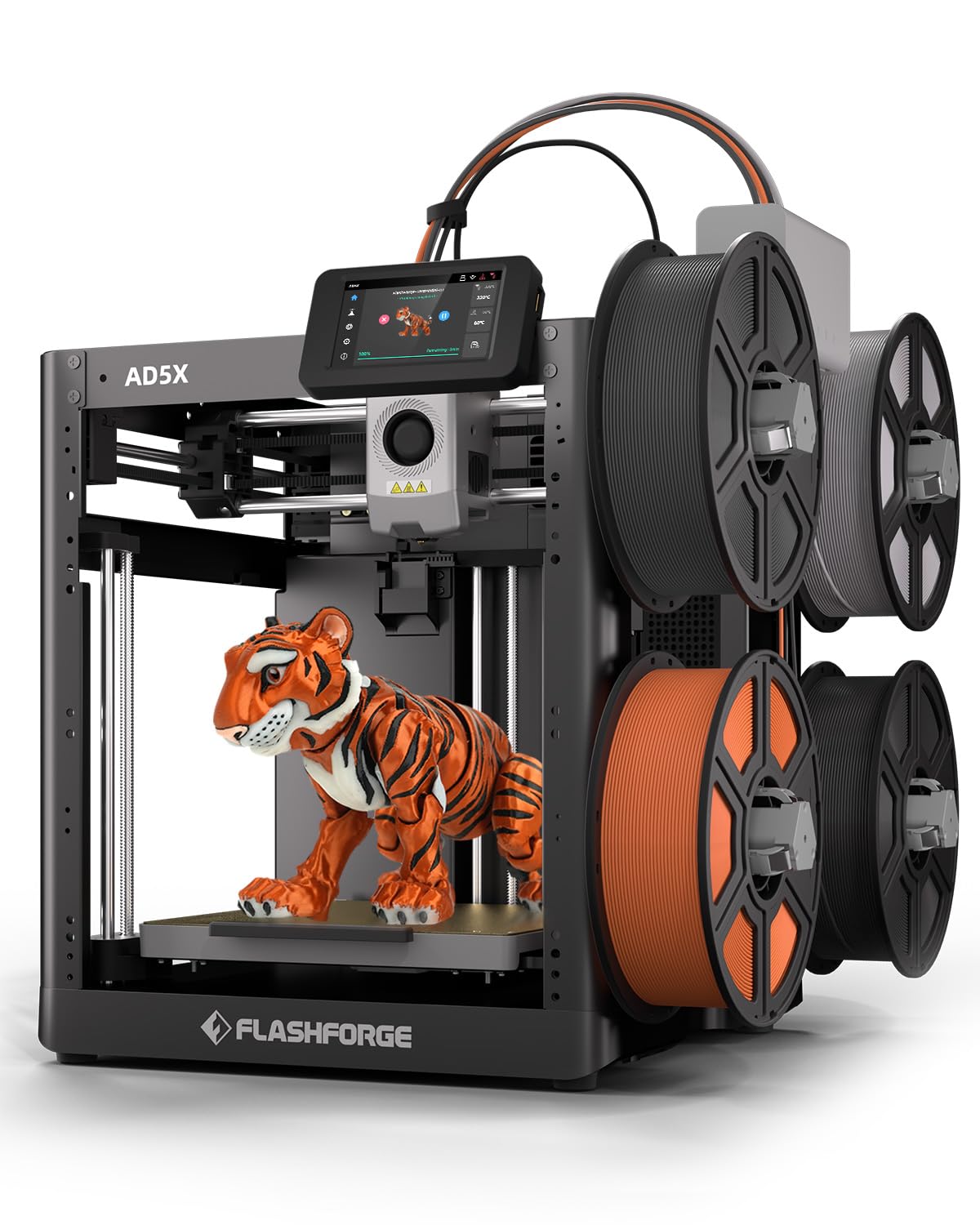
The FLASHFORGE AD5X is a CoreXY 3D printer, not a scanner, but it is the perfect companion to a 3D body scanner. Once you have captured a 3D model of a person, you need a printer capable of reproducing that model accurately and in color. The AD5X supports up to four colors simultaneously through its integrated filament system (IFS), allowing you to print a full-color bust or figurine in a single run. The 600mm/s print speed and 20,000mm/s² acceleration make it fast enough for batch production of scanned objects.
The 300°C direct-drive extruder can print a wide range of materials, including PLA, PETG, TPU, and even some high-temp filaments for durable parts. The 1-click auto leveling ensures first-layer adhesion is consistent, which is critical for the complex overhangs and delicate features of a scanned human body. The vibration compensation system reduces ringing and ghosting at high speeds, preserving the fine detail from your scan. The 220x220x220mm build volume is large enough to print a half-scale human bust or a life-sized hand or foot.
The printer is not without issues. The stock software (an Orcaslicer fork) is considered poor by many users, who recommend upgrading to the standard Orcaslicer or PrusaSlicer. The multicolor printing is functional but produces significant purge waste and increases noise levels during filament changes. Some users have reported filament jams at the 4-to-1 connector. The AD5X is a powerful and fast printer that complements a body scanning workflow, but it requires software configuration and some patience with the multicolor system.
Why it’s great
- Multi-color printing for full-color scanned body replicas
- 600mm/s CoreXY speed for fast prototyping
- Vibration compensation maintains fine scan detail
Good to know
- Stock slicer software is poorly optimized
- Multicolor printing creates high purge waste
- Occasional filament jams at the 4-in-1 connector
11. Matterport Pro3 3D Lidar Scanner

The Matterport Pro3 is a professional-grade LiDAR scanner designed to create immersive 3D virtual tours of interior and exterior spaces, not human subjects. Its 100-meter extended scanning range, 20mm accuracy at 10 meters, and capture speed of under 20 seconds per sweep make it ideal for capturing architectural environments, construction sites, and large landmarks. The Performance Kit includes two removable batteries, a tripod, a dolly, and a backpack, enabling continuous scanning across large areas without recharging.
The Pro3’s LiDAR sensor takes millions of measurements per scan, producing dense point clouds that are processed by the Matterport subscription platform into photorealistic 3D models. The camera captures 20.3 MP stills and 4K video, which are stitched together with the LiDAR data to create a fully navigable virtual space. For applications like real estate, facility management, and historical preservation, the Pro3 is a definitive tool. The included accessories and durable build quality support professional field use.
The scanner is completely unsuitable for human body scanning. Its accuracy specification of +/-20mm at 10m is far too coarse for capturing human anatomy, and the LiDAR sensor is not eye-safe for scanning people at close range. The most significant drawback is the mandatory subscription fee required to access and export the scan data, which adds a recurring cost on top of the already high purchase price. Many users express frustration with the subscription model and the inability to edit raw scan data locally. The Pro3 is a specialized tool for spatial scanning only.
Why it’s great
- Industry-leading 100m scanning range for large spaces
- LiDAR precision for architectural and construction scanning
- Professional kit with dual batteries and wheeled dolly
Good to know
- Not suitable for human body scanning due to low accuracy and eye safety
- Mandatory subscription required to access scan data
- High overall cost including subscription and kit
FAQ
Can any of these scanners scan a subject with dark skin or black hair?
Do I need a dedicated PC for handheld body scanning?
How long does a full-body scan typically take?
What file format do I need for 3D printing a scanned body?
Final Thoughts: The Verdict
For most users, the 3d scanner for human body winner is the Shining 3D Einstar Vega because its all-in-one standalone design, dual scanning modes, and built-in processing make body scanning truly portable and immediate. If you want the highest precision close-up detail for facial scanning, grab the Revopoint INSPIRE 2. And for a budget-friendly entry into body scanning that still produces usable results, nothing beats the Creality CR-Scan Ferret Pro.