
Our readers keep the lights on and the weekend projects moving. As an Amazon Associate, I earn from qualifying purchases.
The difference between a blurry memory and a frame-worthy shot often comes down to a sensor that can drink in the light and a stabilizer that laughs at your shaky hands. Whether you are chasing a toddler through the park or framing a narrative for a short film, the heart of the decision is matching your ambitions to a sensor size, bit rate, and lens ecosystem that won’t leave you stranded a year from now.
I’m Rikta — the co-founder and writer behind FitlyFast. I have spent countless hours cross-referencing sensor readout speeds, stabilization algorithms, and lens roadmaps to separate real advancements from marketing fluff in the mirrorless and cinema space.
After cutting through the specs, the real standouts reveal themselves through dynamic range, autofocus reliability, and practical usability. This deep-dive guide to the best 4k camera breaks down what matters for vloggers, professionals, and budget-conscious creators alike.
How To Choose The Best 4K Camera
Selecting a 4K camera today is less about resolution and more about the supporting cast: sensor architecture, stabilization strategy, and codec support. A body that shoots great 4K but lacks a robust audio input or reliable autofocus can frustrate you in the field. Below are the core decision points that separate a smart investment from an expensive lesson.
Sensor Size and Low-Light Performance
Full-frame sensors (like the 33MP Exmor R in the Sony a7 IV) offer significantly better light gathering than Micro Four Thirds sensors, delivering cleaner shadows at ISO 6400 and shallower depth of field. However, MFT systems like the Panasonic LUMIX G85 provide a smaller, lighter kit with excellent in-body stabilization, making them ideal for travel and handheld run-and-gun work. Your choice here dictates the lenses you can use and your creative ceiling in dim environments.
Image Stabilization: IBIS vs. Gimbal
In-body image stabilization (IBIS) can give you 4 to 5.5 shutter speed stops of handheld stability, which is invaluable for photos and walking video. Cameras like the OM System E-M10 Mark IV and Panasonic G85 feature class-leading 5-axis IBIS. For buttery smooth pans and moving shots, a physical gimbal is still superior, but IBIS eliminates the need to carry extra gear for most casual and mid-range work. The DJI Osmo Pocket 3 offers a hybrid built-in gimbal solution in a pocket-sized package.
Recording Features: Bit Rate, Color Depth, and Crop Factors
Higher bit depth (10-bit vs. 8-bit) and 4:2:2 color sampling allow for much more forgiving color grading in post-production — critical for professionals. Some cameras, like the Sony a7 IV, crop the sensor when recording 4K at 60 fps, reducing effective field of view. Others, like the Blackmagic Pocket Cinema Camera 4K, offer raw recording formats at the expense of battery life. Always check specific recording limits, such as the Panasonic G100’s 20-minute 4K clip cap, before committing to a workflow.
Quick Comparison
On smaller screens, swipe sideways to see the full table.
| Model | Category | Best For | Key Spec | Amazon |
|---|---|---|---|---|
| Canon EOS R5 | Full-Frame Mirrorless | High-Resolution Hybrid Work | 45MP / 8K Raw / 20fps e-shutter | Amazon |
| Sony a7 IV | Full-Frame Mirrorless | Versatile Stills & Video | 33MP BSI / 4K 60p 10-bit 4:2:2 | Amazon |
| Sony a7 III | Full-Frame Mirrorless | Budget Full-Frame Entry | 24.2MP BSI / 15-stop DR | Amazon |
| Canon EOS 5D Mark IV | DSLR | Reliable Professional Workhorse | 30.4MP FF / 4K Motion JPEG | Amazon |
| Blackmagic Pocket 4K | Cinema Camera | Professional Color Grading | MFT / 13 Stops DR / ProRes & RAW | Amazon |
| DJI Osmo Pocket 3 | Compact Gimbal Camera | Travel & Vlogging on the Go | 1-inch CMOS / 4K 120fps / 3-Axis | Amazon |
| Nikon D7500 | DSLR | Sports & Wildlife Shooting | 20.9MP DX / 51-Point AF / 8fps | Amazon |
| Panasonic G85 | MFT Mirrorless | Best Value IBIS & Weather Sealing | 16MP MFT / 5-Axis IBIS / 4K 30p | Amazon |
| Panasonic LUMIX G100 | MFT Mirrorless | Compact Vlog with Tracking Audio | 20.3MP MFT / 360° Mic / V-Log L | Amazon |
| FoMaKo K600N | PTZ Camera | Church & Studio Live Streaming | 4K 60fps / 20x Zoom / NDI HX3 | Amazon |
| OM System E-M10 IV | MFT Mirrorless | Beginner-Friendly Stills & Selfies | 20MP MFT / 5-Axis IBIS / Flip Screen | Amazon |
In‑Depth Reviews
1. Canon EOS R5

The Canon EOS R5 packs a stacked 45-megapixel full-frame sensor that delivers staggering detail and dynamic range, rivaling medium-format quality in a mirrorless body. Its DIGIC X processor enables 8K RAW internal recording and 4K 120fps with autofocus, making it a hybrid powerhouse. The Dual Pixel CMOS AF II covers 100% of the frame and uses deep learning for tracking people, animals, and vehicles — it locks onto an eye and refuses to let go.
In-body stabilization is a game-changer here, providing up to 8 stops of correction, allowing handheld shots at shutter speeds that would normally require a tripod. The EVF is massive and bright, and the mechanical burst at 12 fps with full AF/AE keeps up with fast action. Overheating concerns during extended 8K recording have been largely mitigated with firmware updates, though long 4K HQ sessions still benefit from a cooling fan in hot environments.
Battery life sits around 650 shots per charge, which is acceptable given the performance demands. The RF lens mount opens up a stellar lineup of glass, but early adopters should budget for native RF lenses or adapt EF glass. For professionals who need the highest resolution stills and flexible 4K/8K video in one body, this is the benchmark.
Why it’s great
- Stunning 45MP detail and deep dynamic range
- 8K internal Raw and 4K 120fps with AF
- Best-in-class Dual Pixel AF with subject recognition
- 8-stop IBIS allows handheld low-light shots
Good to know
- Battery life is average for the class
- Requires RF glass or adapter for EF lenses
- 8K recording can trigger thermal limits in hot weather
2. Sony Alpha 7 IV

The Sony a7 IV refines the full-frame hybrid formula with a 33-megapixel back-illuminated sensor coupled with the BIONZ XR processor, delivering 15 stops of dynamic range and clean files up to ISO 6400. Its real-time Eye AF for humans, animals, and birds is fast and sticky, even in tricky side-lighting. The 4K 60p recording in 10-bit 4:2:2 uses the full sensor width in Super 35 mode at 60 fps, with 7K oversampled 4K at 30 fps providing exceptional sharpness.
The ergonomics feel refined with a deeper grip and fully articulating touchscreen, making waist-level and self-record work easy. Dual card slots (one CFexpress Type A, one SD UHS-II) give flexibility for backup or overflow. Battery life is excellent, with real-world shoots easily exceeding 2,000 stills per charge. In-body stabilization provides about 5.5 stops of compensation, enough for steady handheld walking footage when paired with OSS lenses.
The S-Cinetone color profile inherited from Sony’s cinema line means pleasing skin tones out of camera, reducing grading time. The menu system is still dense but more logical than earlier generations. The 60 fps crop factor is a minor trade-off, and the lack of a built-in flash is expected at this level. For the creator who needs a do-everything camera without stepping up to the a7S or FX lines, the a7 IV is a top contender.
Why it’s great
- 33MP sensor with excellent dynamic range and low noise
- Reliable real-time eye tracking for all subjects
- 4K 60p 10-bit 4:2:2 and S-Cinetone profile
- Strong battery life and dual card slots
Good to know
- 4K 60p has a Super 35 crop
- Menu complexity can be intimidating at first
- No flash included
3. Sony a7 III

The Sony a7 III remains a compelling entry point into full-frame mirrorless, offering a 24.2-megapixel back-illuminated sensor with 15 stops of dynamic range. Its 693 phase-detection points cover 93% of the frame, providing fast and accurate autofocus even in challenging light. The 4K 30p video output is impressive, oversampled from the full sensor width, and the camera supports S-Log profiles for grading flexibility.
Battery life is a standout feature here — the NP-FZ100 pack yields around 710 shots per charge, dramatically better than earlier Sony bodies. The ergonomics are comfortable with a deep grip, and the in-body stabilization provides 5 stops of compensation, making it possible to shoot handheld at lower shutter speeds. The kit lens (28-70mm) is decent for starting, but the real strength shines with primes or faster glass.
Low-light performance is excellent, with usable images up to ISO 12800 and clean results up to 6400. The menu system is dated compared to the a7 IV, and the rear screen is not fully articulating. For photographers moving from crop-sensor DSLRs who want full-frame quality, the a7 III offers the best value-to-performance ratio in the lineup.
Why it’s great
- Excellent full-frame image quality with 15-stop DR
- Fast, reliable 693-point phase-detect AF
- Best-in-class battery life for mirrorless
- 5-stop IBIS for steady handheld shots
Good to know
- No 4K 60p or 10-bit recording
- Rear screen is fixed, not fully articulating
- Menu system is less intuitive than newer models
4. Canon EOS 5D Mark IV
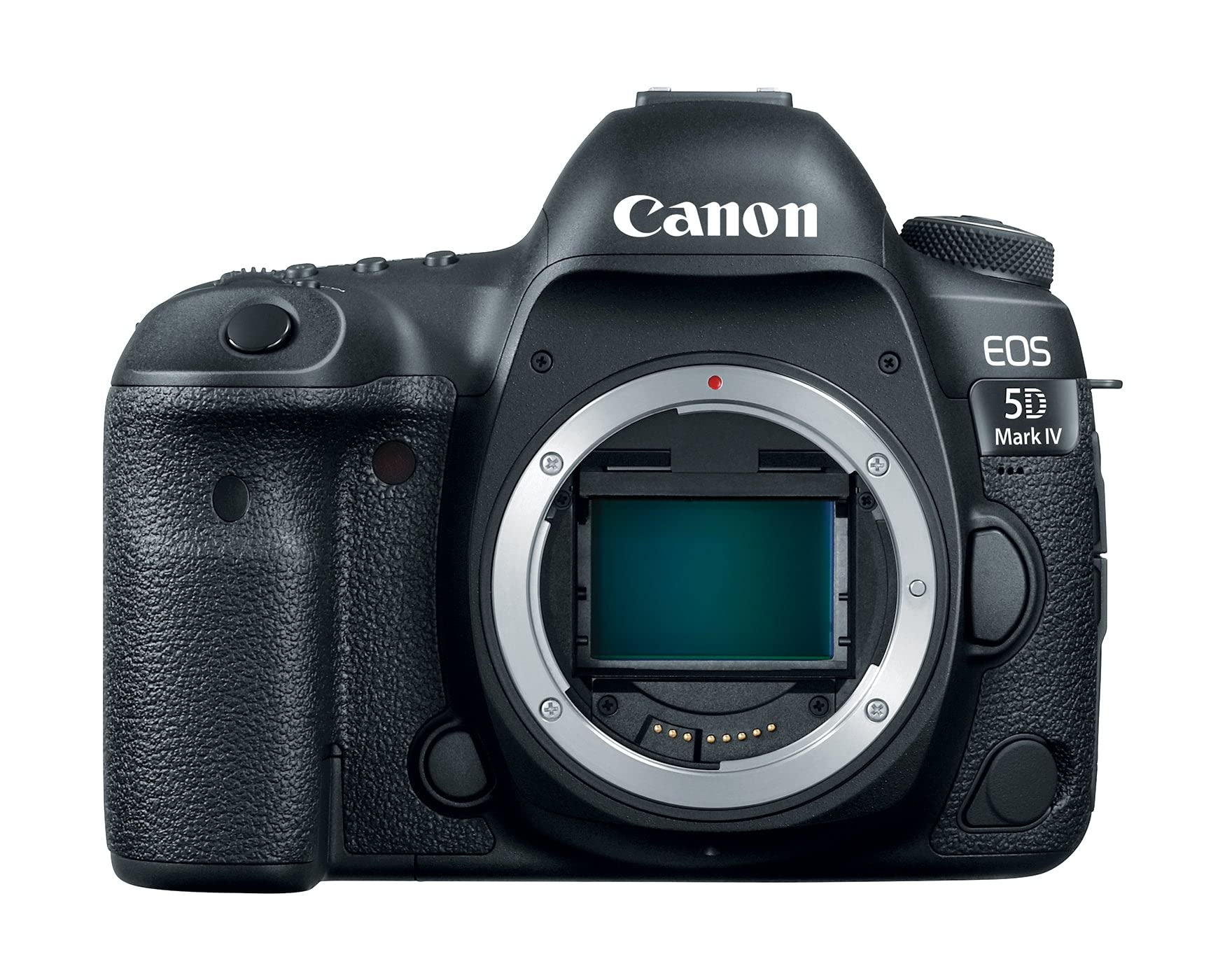
The Canon EOS 5D Mark IV is the professional workhorse that built countless commercial portfolios, and it still holds its own with a 30.4-megapixel full-frame sensor and DIGIC 6+ processor. Its 61-point autofocus system with 41 cross-type sensors delivers reliable tracking for studio and event work. The 4K Motion JPEG video at 30/24 fps is a dated implementation with a large crop factor, but the resulting quality is sharp with excellent color science.
Dual Pixel CMOS AF provides smooth, reliable autofocus during live view and video, making it a solid choice for hybrid shooters who prefer an optical viewfinder for stills. The built-in GPS for geotagging is a boon for travel photographers, though it does drain battery life more quickly. The touchscreen interface is intuitive, allowing fast AF point selection during live view.
Dynamic range is notably improved over the 5D Mark III, with cleaner shadow recovery and less banding at base ISO. High ISO performance is excellent up to 12800, making it suitable for low-light events. The camera remains a tank in build quality, featuring weather sealing that handles tough conditions. For photographers loyal to the Canon EF ecosystem and who need a reliable body that delivers professional results, the 5D Mark IV is still a formidable choice.
Why it’s great
- 30.4MP full-frame sensor with excellent color science
- Dual Pixel CMOS AF for smooth video focus
- Built-in GPS for geotagging
- Rock-solid build quality and weather sealing
Good to know
- 4K video has a significant crop factor
- Motion JPEG codec is less flexible for editing
- GPS impacts battery life noticeably
5. Blackmagic Pocket Cinema Camera 4K

The Blackmagic Pocket Cinema Camera 4K is designed purely for video, boasting a Micro Four Thirds sensor that records 4K DCI (4096 x 2160) with 13 stops of dynamic range and dual native ISO up to 25600. It records directly to Apple ProRes and 12-bit Blackmagic RAW, offering unmatched grading flexibility in post-production. The included DaVinci Resolve Studio activation key means you can go from capture to color grade without extra software costs.
The compact body houses a bright 5-inch LCD touchscreen that serves as your primary interface, reducing the need for external monitors. Audio inputs include mini XLR with phantom power and a 3.5mm jack, making it suitable for professional sound capture. Recording to CFast 2.0, SD UHS-II, or external SSD via USB-C gives flexible media options, but the included LP-E6 battery lasts only about 30 minutes — external power is almost mandatory for serious shoots.
This camera lacks IBIS, continuous autofocus during video, and a flip screen, so it demands a gimbal or tripod and manual focus discipline. The screen is also hard to see in bright sunlight without a hood. For filmmakers who prioritize image quality and color science over convenience, the BMPCC 4K provides cinema-grade results at a fraction of the cost of dedicated cine cameras.
Why it’s great
- 13 stops dynamic range and dual native ISO
- Records ProRes and 12-bit Blackmagic RAW
- Includes DaVinci Resolve Studio license
- Professional audio with mini XLR inputs
Good to know
- Poor battery life (~30 minutes per charge)
- No IBIS or continuous autofocus
- Screen is dim in direct sunlight
6. DJI Osmo Pocket 3 Creator Combo

The DJI Osmo Pocket 3 redefines pocket-sized filmmaking with a 1-inch CMOS sensor that captures 4K video at up to 120fps, offering slow-motion capabilities previously reserved for larger cameras. Its integrated 3-axis mechanical gimbal delivers stabilization that rivals much larger setups, eliminating shake during walking, running, or active shooting. The 2-inch rotatable touchscreen automatically switches between horizontal and vertical orientation, making it perfect for both YouTube and TikTok content.
ActiveTrack 6.0 uses advanced subject recognition to keep you centered in the frame, even during dynamic movement — ideal for solo vloggers. The Creator Combo adds a DJI Mic 2 transmitter, a wide-angle lens, a battery handle, and a mini tripod, significantly extending recording time and audio quality. The fast USB-C charging gives about 166 minutes of total battery life across the internal battery and handle.
D-Log M and 10-bit color depth allow for professional-grade color grading, capturing up to one billion colors. The stereo recording captures immersive audio, and it can connect directly to two DJI Mic 2 transmitters for multi-speaker interviews. The main limitation is a fixed lens, so there is no optical zoom or lens interchangeability. For any creator who prioritizes portability and stabilization, this is the definitive all-in-one package.
Why it’s great
- 1-inch sensor and 3-axis built-in gimbal produce smooth 4K 120fps
- Rotatable touchscreen handles both horizontal and vertical shooting
- ActiveTrack 6.0 keeps subject centered for solo vlogging
- Creator Combo includes mic, wide lens, battery handle, and tripod
Good to know
- Fixed lens limits versatility; no interchangeable glass
- Screen can be small for precise framing
- Requires careful handling to protect gimbal
7. Nikon D7500

The Nikon D7500 is a rugged DSLR that brings top-tier autofocus and metering from the D500 into a more accessible DX body. Its 20.9-megapixel sensor delivers class-leading image quality with excellent high-ISO performance, aided by the EXPEED 5 processor. The 51-point AF system with 15 cross-type sensors and group-area AF tracks moving subjects reliably at up to 8 fps, making it a strong choice for wildlife and sports.
The 3.2-inch tilting touchscreen is responsive, and the optical viewfinder is large and bright, providing a clear view for composition. 4K Ultra HD video at 30 fps includes stereo sound, power aperture control, and auto ISO, delivering good quality for casual video work. The body is weather-sealed and built to withstand dust and moisture, so you can shoot confidently in less-than-ideal weather.
The 18-140mm VR kit lens offers a versatile zoom range for travel and everyday use, covering wide-angle to telephoto in one lens. The camera lacks a headphone jack for audio monitoring and has a single SD card slot. For photographers who prefer an optical viewfinder and need a durable body with proven autofocus, the D7500 is one of the best DSLRs available at its price point.
Why it’s great
- 51-point AF system with excellent tracking performance
- Weather-sealed body for tough field conditions
- 8 fps continuous shooting captures fast action
- Excellent high-ISO image quality from 20.9MP sensor
Good to know
- Single SD card slot
- No headphone jack for video monitoring
- DSLR design is larger than mirrorless alternatives
8. Panasonic LUMIX G85

The Panasonic LUMIX G85 is a mirrorless Micro Four Thirds camera that punches above its weight with best-in-class 5-axis in-body image stabilization. The 16-megapixel sensor lacks a low-pass filter, boosting fine detail by nearly 10% over previous MFT sensors. It records 4K QFHD video (3840 x 2160) and features exclusive 4K Photo and Post Focus modes, allowing you to extract 8MP stills from video or refocus after capture.
The magnesium-alloy body is dust and splash resistant, making it a reliable companion in light rain or dusty environments. The OLED live viewfinder (2360K dots) is clear, and the 3-inch tilting touchscreen aids composition from awkward angles. The 12-60mm Power O.I.S. kit lens offers good range and pairs with the IBIS for dual stabilization, resulting in incredibly smooth handheld footage.
Ergonomics are excellent with a large grip and well-placed controls. The autofocus can be sluggish in low light for 4K video, and battery life is average at best. The G85 is the best value option for anyone who needs reliable stabilization in a compact, weather-sealed body without spending into higher tiers.
Why it’s great
- Excellent 5-axis IBIS works with both photo and video
- Weather-sealed magnesium-alloy body
- Crisp 4K QFHD video with Post Focus capability
- Good value with the versatile 12-60mm kit lens
Good to know
- AF can struggle in low light during video
- Battery life is average; spare recommended
- No headphone jack for audio monitoring
9. Panasonic LUMIX G100

The Panasonic LUMIX G100 is built for video creators, featuring a 20.3-megapixel Micro Four Thirds sensor and a built-in 360-degree microphone with tracking audio. The mic automatically adjusts to capture clear sound from the subject, whether indoors, outdoors, in crowds, or during one-on-one conversations. The lightweight body is designed for one-handed shooting, making it a natural fit for vloggers and social media content creators.
The camera includes V-Log L recording for color grading, along with frame markers for social media aspect ratios. It doubles as a high-quality webcam via USB for livestreams and video calls. The 12-32mm kit lens is compact but delivers a decent range for everyday vlogging, though its variable aperture is limiting in low light.
The 4K video has excellent color and clarity, but the camera has a 20-minute recording limit in 4K mode, which can be a problem for long events. The plastic build feels less durable than its peers in the Lumix line. For those starting their video journey who want a dedicated vlogging tool with good audio out of the box, the G100 is a focused and affordable option.
Why it’s great
- Built-in 360-degree tracking mic with clear audio
- Lightweight and designed for one-handed shooting
- V-Log L recording for color grading flexibility
- Works as a plug-and-play webcam
Good to know
- 20-minute 4K recording limit per clip
- Plastic body feels less robust
- Kit lens is slow in low light
10. FoMaKo K600N
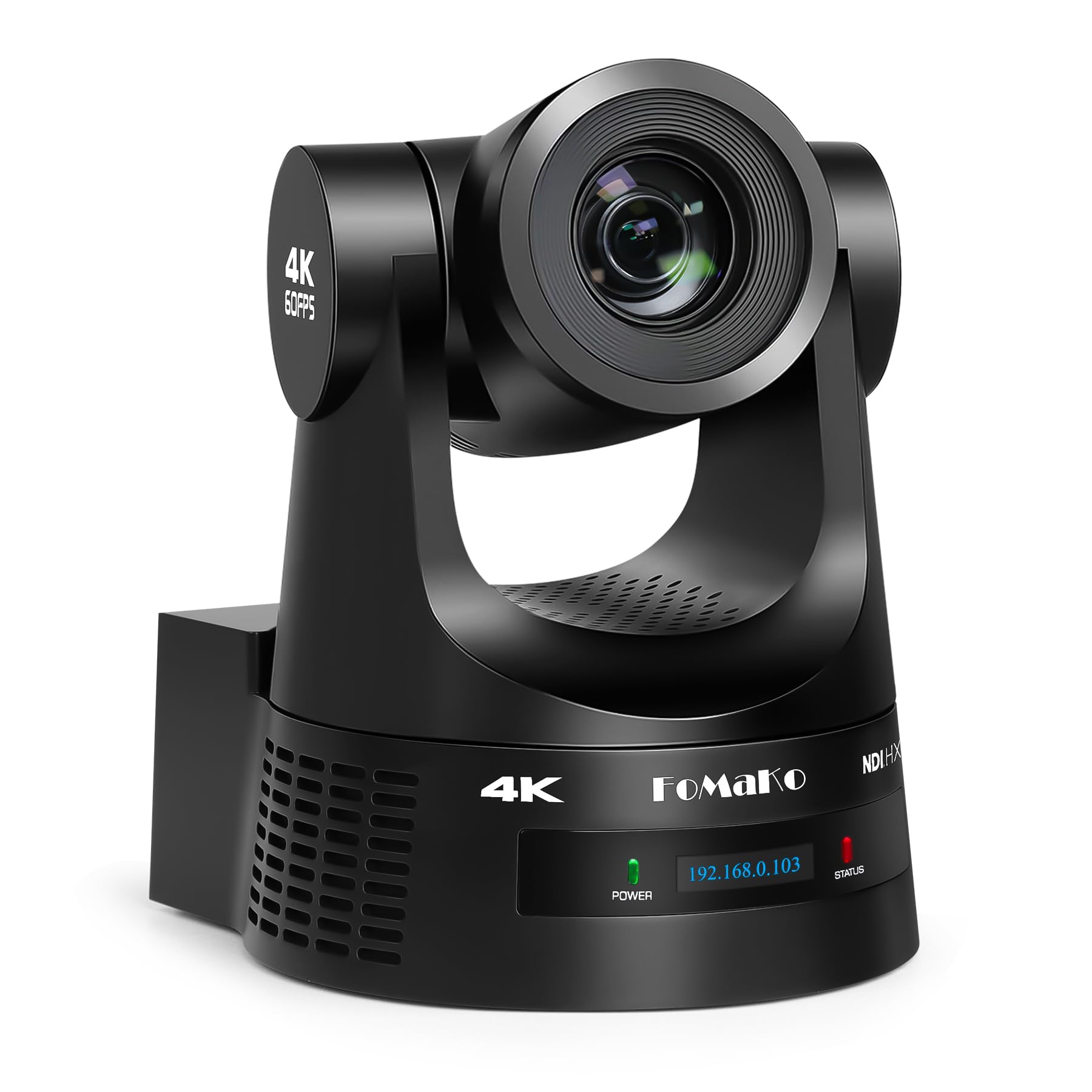
The FoMaKo K600N is a dedicated PTZ camera built for live production, offering 4K 60fps output over NDI HX3, HDMI, and 3G-SDI simultaneously. The 20x optical zoom lens captures fine detail from across a room, making it ideal for church worship services, lecture halls, and studio broadcasts. The third-generation AI auto-tracking lets you adjust tracking sensitivity, target size, and lost-target behavior via the remote control.
Auto-focus technology locks onto subjects quickly and maintains sharpness during zoom adjustments. The camera supports PoE (Power over Ethernet), reducing cable clutter by carrying power, control, and video over a single network cable. It is compatible with vMix, OBS, and other major streaming software, and works with FoMaKo controllers or third-party PTZ controllers via RS232/RS485.
Video quality delivers true-to-life colors and good sharpness, even in moderately lit rooms. The IR remote supports up to 255 presets. Network setup can be tricky initially, especially for users unfamiliar with DHCP, but documentation and support are available. For any organization needing a reliable, affordable, and feature-rich PTZ camera for live streaming, the K600N is a strong contender.
Why it’s great
- 4K 60fps simultaneous HDMI, NDI, SDI, and USB output
- 20x optical zoom captures distant subjects clearly
- Gen 3 AI auto-tracking with customizable settings
- PoE support for simple single-cable setup
Good to know
- Network configuration can be challenging for beginners
- Minor pan/tilt jerkiness at very slow speeds
- No built-in image stabilization
11. OM System E-M10 Mark IV

The OM System E-M10 Mark IV is a compact Micro Four Thirds mirrorless camera designed with beginners in mind. Its 20-megapixel Live MOS sensor and 5-axis in-body stabilization deliver sharp, stabilized images even in low light, allowing handheld shots at shutter speeds up to 4.5 stops slower than normal. The flip-down monitor and dedicated selfie mode automatically activate when the screen is rotated, making it an excellent choice for self-portrait enthusiasts.
The camera features 16 art filters, including Instant Film, adding a nostalgic touch straight out of camera. The 14-42mm EZ pancake kit lens is extremely compact, making the whole setup almost pocketable. Bluetooth and Wi-Fi connectivity allow seamless image transfer to a smartphone via the OI Share app. The body has a retro aesthetic that is both functional and stylish.
Autofocus is quick and reliable with 121 contrast-detection points. The in-camera panorama stitching and scene modes help beginners achieve great results without manual setup. The camera charges via micro-USB (not USB-C), and the app requires a Wi-Fi connection for file transfer, which is slower than modern standards. For someone stepping up from a smartphone and wanting a versatile, user-friendly camera with excellent stabilization, the E-M10 IV is a perfect entry point.
Why it’s great
- 5-axis IBIS provides 4.5 stops of stabilization
- Compact and lightweight with retro design
- Flip-down screen and dedicated selfie mode
- In-camera art filters and panorama stitching
Good to know
- Charges via micro-USB, not USB-C
- Wireless transfer requires Wi-Fi connection
- Kit lens is decent but upgrading improves sharpness
FAQ
What is the real difference between 8-bit and 10-bit 4K video for color grading?
How does the 4K crop factor affect my lens choices on the Sony a7 IV?
When should I choose a PTZ camera over a traditional mirrorless or DSLR for 4K work?
Final Thoughts: The Verdict
For most users, the best 4k camera winner is the DJI Osmo Pocket 3 because it combines an excellent 1-inch sensor, built-in gimbal stabilization, and a full accessory kit in a pocket-sized body that delivers smooth 4K 120fps video effortlessly. If you want full-frame flexibility with professional stills and video, grab the Sony a7 IV for its 33MP sensor and reliable hybrid performance. And for pure cinematic quality without the cinema price, nothing beats the Blackmagic Pocket Cinema Camera 4K for its 13 stops of dynamic range and raw recording capabilities.