
Our readers keep the lights on and the weekend projects moving. As an Amazon Associate, I earn from qualifying purchases.
A freezing trail wind cuts through synthetic layers, leaving you shivering despite three tops. The wrong next-to-skin choice turns a summit push into a misery of clammy fabric and stolen warmth. The right one becomes an invisible cocoon — managing moisture, trapping heat, and letting you forget you’re wearing it.
I’m Rikta — the co-founder and writer behind FitlyFast. I have logged hundreds of hours analyzing fiber micron counts, fabric weight specs, weave density, and real-user comfort data to separate performance base layers from fashion thermals.
This guide breaks down the construction, material science, and fit nuances that matter when the temperature drops. Whether you prioritize odor resistance for multi-day trips, moisture wicking for high output, or pure warmth for static camp, the base layer for hiking you choose hinges on grams per square meter, fiber origin, and seam placement — not marketing claims.
How To Choose The Best Base Layer For Hiking
A hiking base layer serves one function: manage the microclimate between skin and outer layers. It must wick sweat during climbs and retain heat when you stop. Choosing the wrong fabric or weight derails your entire layering system.
Fabric Type: Merino vs Synthetic vs Blends
Pure merino wool offers unmatched breathability and natural odor resistance, making it the gold standard for multi-day trips where washing is rare. The fiber’s crimp traps dead air for insulation without bulk. Synthetic fabrics (polyester, nylon) dry faster and cost less but accumulate smell rapidly — a problem in enclosed tents or huts. Blends combine merino’s softness with synthetic durability, extending lifespan at the knees and elbows where pure wool thins first.
Weight and GSM Rating
Lightweight (150-180 GSM) fits high-output activities like fastpacking in 40–60°F conditions. Midweight (200-250 GSM) covers most three-season hiking from 25–45°F. Heavyweight (320-400 GSM) is for static camp, deep winter, or users who run cold. A common mistake is buying heavyweight for active hiking — you overheat, sweat soaks the fabric, and the insulation flips from warming to chilling as soon as you pause.
Fit and Seam Construction
Base layers must fit snugly without restriction — gaps allow cold air to circulate and defeat the insulation. Look for flatlock stitching that lies flush against the skin, preventing chafing under backpack hip belts and shoulder straps. Raglan sleeves reduce shoulder seam friction for pack wearers. Extended torso lengths prevent the shirt from riding up when you reach overhead on a scramble.
Quick Comparison
On smaller screens, swipe sideways to see the full table.
| Model | Category | Best For | Key Spec | Amazon |
|---|---|---|---|---|
| Smartwool Men’s Classic Thermal Merino Base Layer Crew | Premium Top | Ultimate all-day warmth on trail | 250 GSM, 100% Merino, Flatlock seams | Amazon |
| Smartwool Women’s Classic Thermal Merino Base Layer Bottom | Premium Bottom | Women’s fit for cold-weather hiking | 250 GSM, 100% Merino, Hourglass-friendly | Amazon |
| Meriwool 100% Merino Heavyweight 400g Thermal Pants | Extreme Warmth | Sub-zero static camp and deep winter | 400 GSM, 100% Merino, Heavyweight | Amazon |
| Merino Wool Base Layer Mens Half Zip (Quarter Zip) | Versatile Top | Temperature regulation with zip vent | 250 GSM, 100% Merino, 17.5 micron | Amazon |
| DANISH ENDURANCE Merino Wool Base Layer Pants | Midweight Bottom | Skiing and active cold-weather wear | 180 GSM, Merino blend, Extended length | Amazon |
| Merino Wool Base Layer Mens T-Shirt (250) | Core Warmth | Budget-friendly merino for everyday hiking | 250 GSM, 100% Merino, Standard fit | Amazon |
| Dalavch 4 Pack Women’s Thermal Shirts | Budget Pack | Multi-pack for casual cold-weather wear | Fleece-lined, Synthetic, Compression fit | Amazon |
In-Depth Reviews
1. Smartwool Men’s Classic Thermal Merino Base Layer Crew

The Smartwool Classic Thermal Crew represents the benchmark for hiking base layers. Its 250 GSM midweight fabric balances warmth and breathability across 25°F to 50°F conditions, making it the most versatile piece for three-season hikers. The 100% merino construction uses ZQ-certified fibers known for consistent diameter and durability — fewer weak points mean less pilling after repeated wash cycles.
The fit is tailored without being restrictive: the extended tail stays tucked under a hip belt, and flatlock seams at the shoulders prevent hot spots under pack straps. Users report consistent performance after months of weekly wear, with no shrinkage when following cold wash instructions. The neck height sits cleanly under a midlayer without bunching.
Where it earns the top slot is its temperature regulation during high-output ascents. The merino fabric manages moisture vapour rather than trapping liquid sweat, so you don’t experience the chilling effect when pausing for a snack. It’s expensive, but the longevity and consistent warmth justify the investment for anyone who hikes seriously.
Why it’s great
- Exceptional temperature regulation across wide range
- Flatlock seams eliminate chafe under pack straps
- Extended torso length stays tucked during scrambles
- Durable construction resists pilling over months
Good to know
- Premium pricing above most alternatives
- Must follow cold wash instructions to avoid shrinkage
- Midweight may run warm for summer alpine starts
2. Smartwool Women’s Classic Thermal Merino Base Layer Bottom

The women’s version of the Classic Thermal bottom brings the same 250 GSM 100% merino fabric with a cut engineered for female anatomy. The waistband sits higher to avoid gap when bending over a trail map, and the hip-to-thigh taper eliminates the baggy knee problem common in unisex leggings. Testers at sizes 0 to 18 report consistent fit without compression or sag.
Field use in 20°F to 40°F conditions confirms the warmth rating: worn under softshell pants, these bottoms eliminate the need for an extra mid layer on active hikes. The fabric’s moisture management prevents clamminess during ascents, and the odor resistance holds for three to four days of continuous wear — critical for backpacking trips without laundry access.
The two-tone design is a subtle bonus; the bottoms look clean enough to wear as standalone leggings around camp. Machine washing on gentle and hang drying preserves the fabric integrity — users report no shrinkage or pilling after five months of regular rotation. The primary drawback is the limited color selection compared to the men’s line.
Why it’s great
- Women-specific cut eliminates sagging and gapping
- 250 GSM merino handles 20°F to 50°F range
- Odor resistance holds for multi-day trips
- Design doubles as standalone leggings
Good to know
- Premium price point
- Machine wash gentle required to avoid shrinkage
- Limited color options compared to men’s line
3. Meriwool Men’s 100% Merino Heavyweight 400g Thermal Pants

The Meriwool Heavyweight 400g thermal pants are the specialist choice for sub-zero conditions. At 400 GSM, these are nearly twice as dense as a standard midweight base layer, built for hunters sitting in tree stands, ice fishermen, or campers spending long hours stationary in below-zero temperatures. The fabric is soft and non-itchy despite the density, which is unusual for heavyweight merino.
Users report comfortable wear in 16°F with only a light pant layer over them. The fit runs true to size with a relaxed leg that layers easily under insulated trousers without binding. The crotch gusset provides mobility, but some users note the lack of a drawstring means the pants can slip down when worn as a standalone layer during active movement — a design tradeoff for a piece focused on static warmth.
Durability is strong for the weight class; the 400g fabric resists abrasion better than lightweight merino options. The odor resistance and temperature regulation remain exceptional even after multiple wears. For anyone whose hiking includes extended winter stops or who runs persistently cold, this heavyweight layer is a warmer alternative to stacking multiple midweight pieces.
Why it’s great
- 400 GSM provides unmatched warmth for static cold
- Soft merino avoids itch typical of heavy wools
- Relaxed fit layers easily over insulated pants
- Excellent odor resistance for multi-day use
Good to know
- No waist drawstring; pants may slip during activity
- Too warm for any hiking above 30°F
- Bulky compared to midweight options
4. Merino Wool Base Layer Mens Half Zip (Quarter Zip)

This quarter-zip base layer stands out for its ventilation flexibility. The zip allows precise temperature dumping during high-output climbing without removing layers — pull it down an inch and trapped heat escapes through the collar opening. The 250 GSM midweight fabric suits the same 25°F to 45°F range as the Smartwool crew, but the zip adds a gear advantage for stop-and-go hiking itineraries.
The 17.5 micron superfine merino is the key spec here. Fibers at this diameter are finer than human hair, which eliminates the itch that turns casual hikers off wool. The fabric carries OEKO-TEX and RWS certifications, confirming animal welfare standards and freedom from harmful substances — relevant for anyone with chemical sensitivities or preferences for ethical sourcing.
Fit is slim and tailored, intended for layering under a shell. Users at 6’2″ and 210 pounds report the XL fits well with good arm length. Some long-term users note pinhole thinning after months of wear, suggesting the fabric trades some durability for the ultra-soft hand feel. The included merino socks are a welcome bonus that extends value.
Why it’s great
- Quarter zip enables temperature venting mid-climb
- 17.5 micron superfine merino is non-itchy on sensitive skin
- RWS and OEKO-TEX certified for ethical sourcing
- Multiple weight options (165/250/320 GSM) available
Good to know
- Some users report pinhole thinning over extended wear
- Tumble drying damages fibers; lay flat only
- Slim fit may feel restrictive for broader builds
5. DANISH ENDURANCE Merino Wool Base Layer Pants
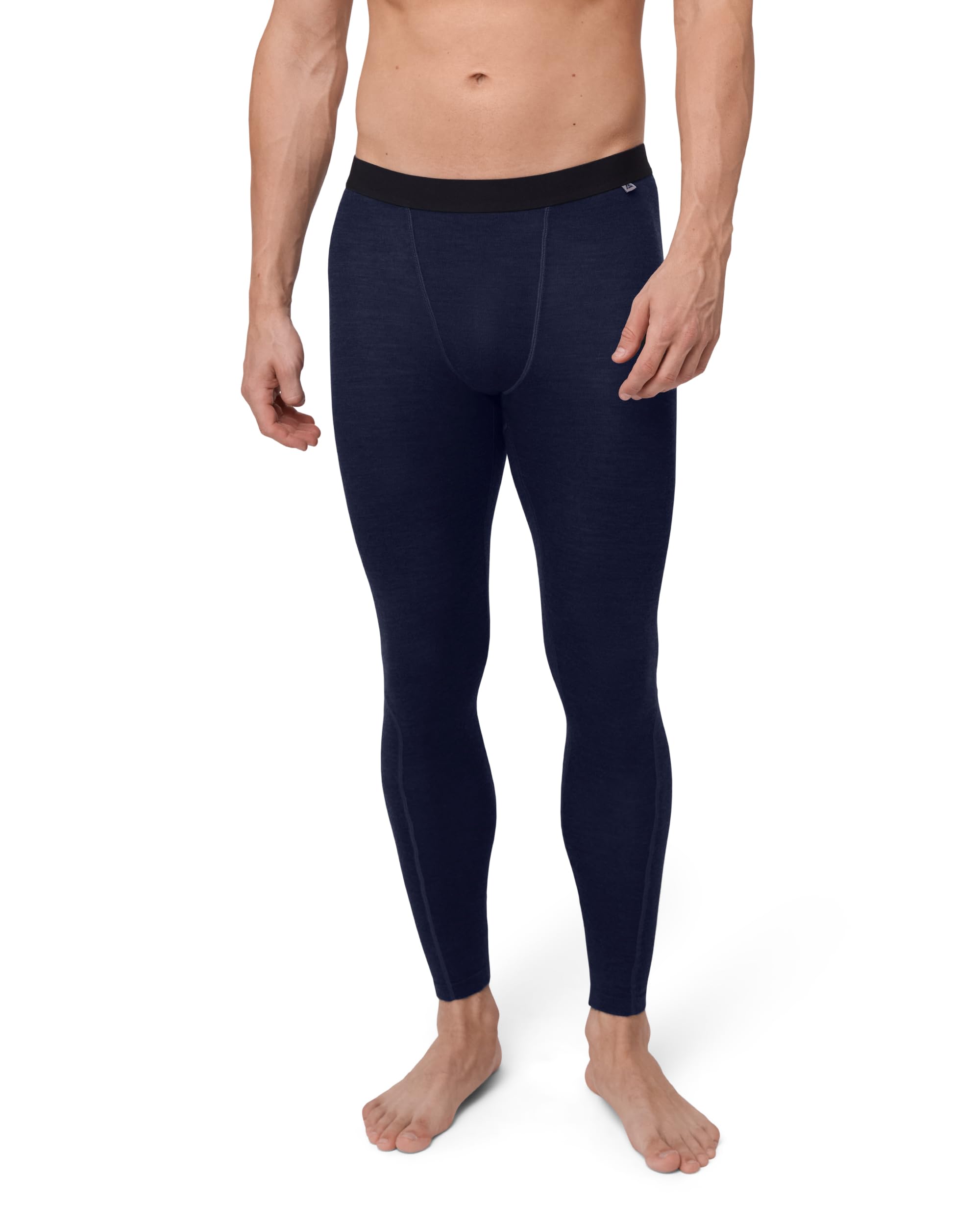
The DANISH ENDURANCE base layer pants use a 180 GSM midweight merino blend that prioritizes active moisture management over raw warmth. At this weight, the fabric is breathable enough for cross-country skiing, running, or fast hiking in the 30°F to 50°F range without trapping sweat. The blend likely includes nylon or elastane for stretch and durability, addressing the fragility issue that pure lightweight merino suffers.
Fit is snug without being compressive — users report the snugness allows layering under slim jeans or softshell pants without bulk. The extended leg length is a deliberate design choice for tall hikers and skiers who need the leg to stay tucked into boot tops. The fly pouch is a practical addition for bathroom breaks on the trail without full removal.
Users describe the warmth as perfect for moderate cold days where a heavyweight layer would cause overheating. The fabric feels high quality and holds shape after washing. The main limitation is the 180 GSM weight: this is not warm enough for stationary use below 20°F or for cold-sleeping hikers. It is a specialized active piece, not an all-rounder.
Why it’s great
- 180 GSM blend breathes well for high-output activity
- Extended leg length stays tucked into boot tops
- Fly pouch adds convenience on the trail
- Durable construction with stretch for mobility
Good to know
- Too lightweight for static cold below 20°F
- Snug fit may require sizing up for some users
- No full-length zip for venting
6. Merino Wool Base Layer Mens T-Shirt (250)
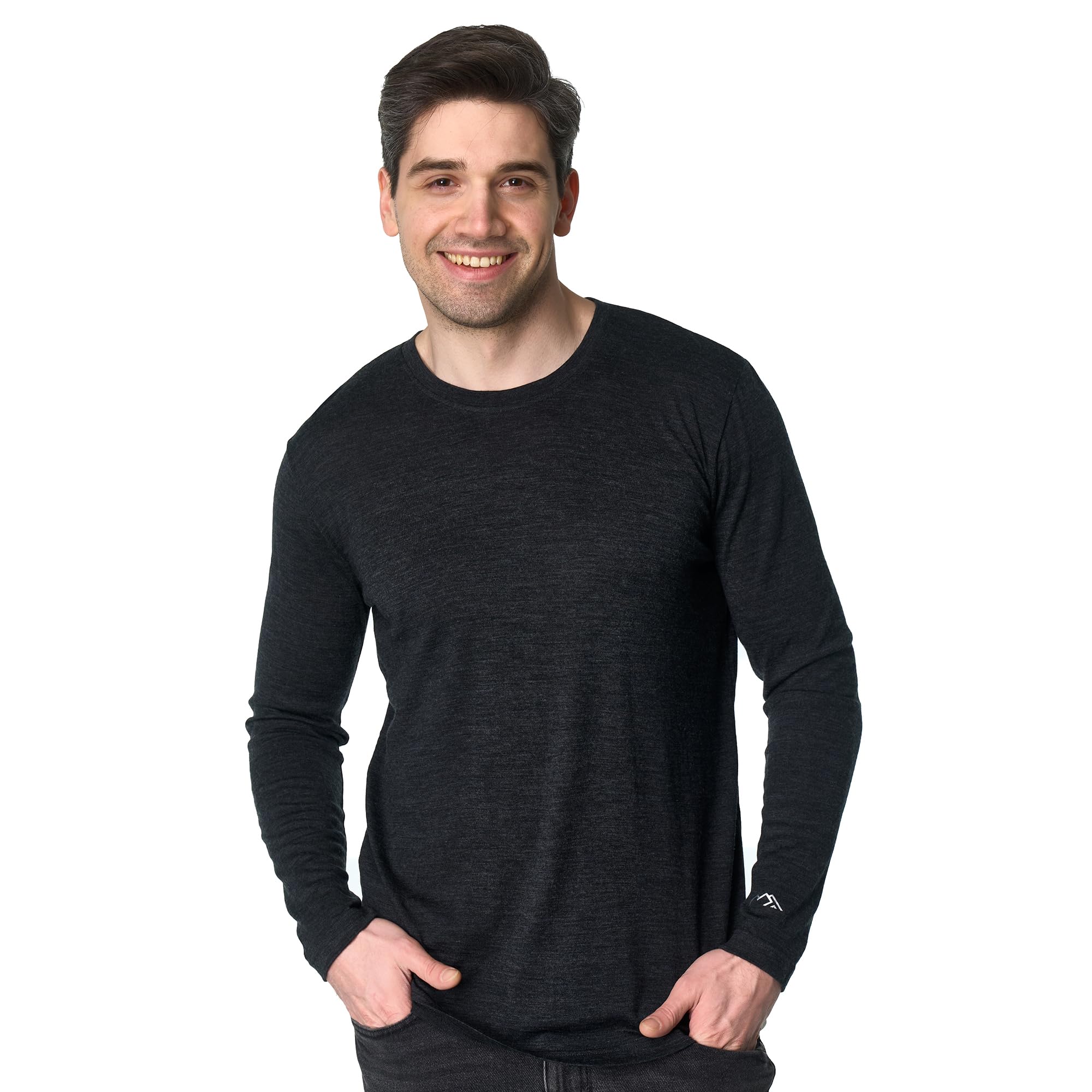
This 250 GSM 100% merino crew offers the same weight class as top-tier options at a reduced cost. The fabric is soft and lightweight for its warmth — users describe it as a “lightweight undershirt” that provides excellent warmth without bulk. The standard fit works well under flannel shirts or midlayers for casual hiking and daily winter wear alike.
Where it compromises versus premium options is in finish details: the stitching is basic flatlock rather than the more refined seam construction found on Smartwool, and the color fidelity is slightly off from product images (users note denim blue reads darker grey). However, the core function — moisture wicking, breathability, and odor resistance — performs at the same level as pieces costing nearly twice as much.
Durability appears solid for the price tier. Users report the shirt holds shape after washes with no shrinkage. The sleeves run slightly short for very long-armed hikers, so those with atypical proportions should check the size chart carefully. For someone testing merino for the first time or needing multiple base layers without a premium spend, this is the most accessible entry point.
Why it’s great
- 250 GSM merino warmth at a budget-friendly price
- Soft fabric with excellent breathability
- Odor resistance holds for multi-day wear
- Great entry-level test for merino wool
Good to know
- Sleeve length may be short for long arms
- Basic stitching less refined than premium brands
- Color can differ significantly from online images
7. Dalavch 4 Pack Women’s Thermal Shirts
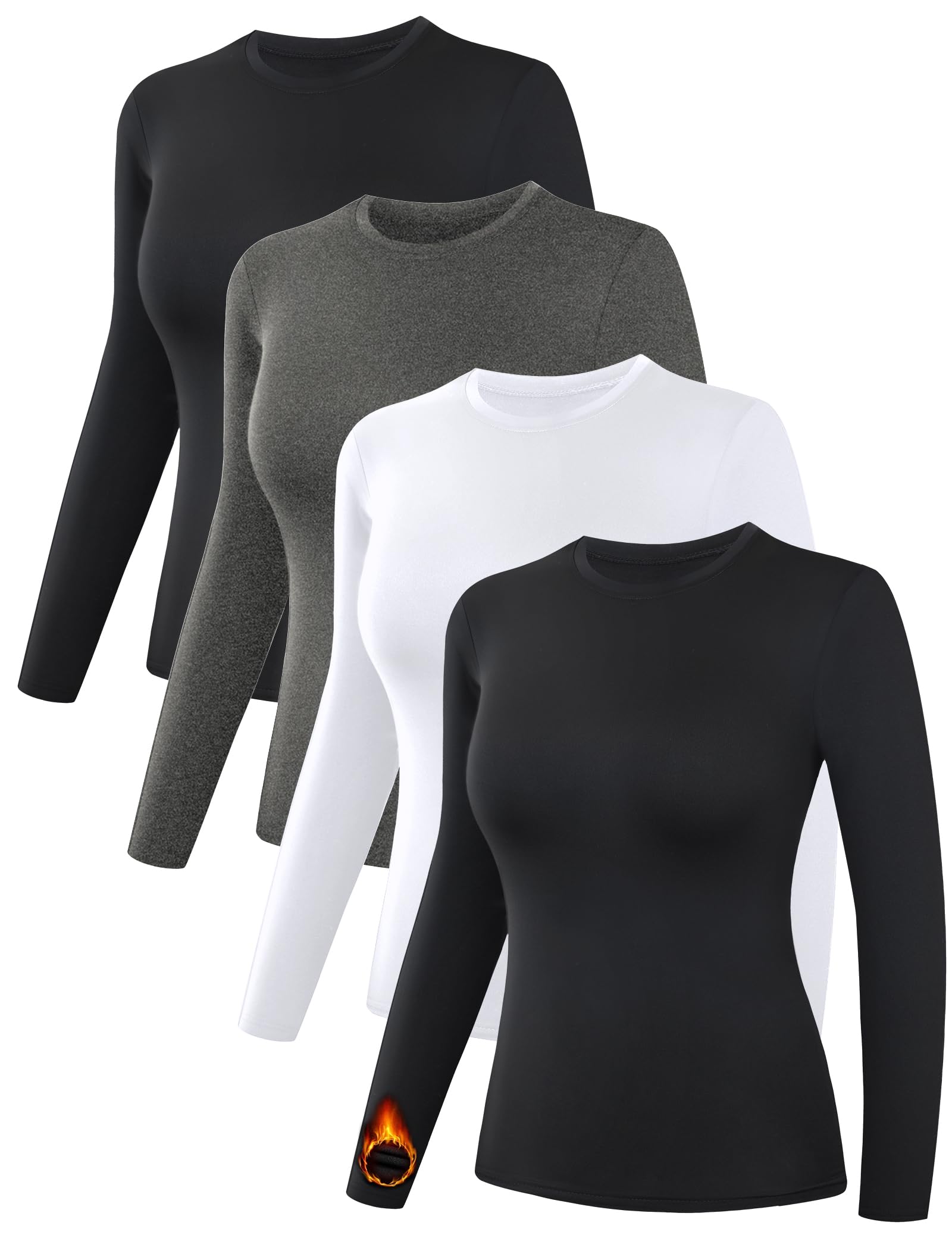
The Dalavch 4-pack offers four fleece-lined synthetic tops at a total cost comparable to a single merino base layer. These are compression-fit shirts designed for warmth under street clothes or as standalone casual wear — not technical hiking pieces. The fleece interior traps air for insulation, and the stretch fabric allows layering under a midlayer for added warmth.
The synthetic construction means these dry faster than wool if soaked, but the odor retention is the tradeoff: expect noticeable smell after a single day of active hiking. The shirts run small per user reports, so sizing up is recommended. The 4-pack format suits families or those who want a set of dedicated cold-weather undershirts for daily commuting or light outdoor chores.
For actual hiking applications, these are best suited to beginner-level trails or as backup layers. The fleece lining is warm but does not wick moisture as effectively as merino, leading to a clammy feeling during aerobic exertion. The price makes them a valid option for someone building a winter wardrobe on a tight budget, but they cannot match the performance of merino for serious hiking.
Why it’s great
- Four shirts for the price of one merino layer
- Fleece lining provides immediate warmth
- Compression fit works well under clothing
- Dries faster than wool when saturated
Good to know
- Synthetic fabric retains odor after one day
- Fleece lining traps moisture during exertion
- Runs small; size up for a comfortable fit
- Shrank after first wash — check care instructions
FAQ
Can I wear a cotton shirt as a hiking base layer?
How often should I wash a merino wool base layer?
What does 250 GSM mean in real hiking conditions?
Are synthetic base layers a better value than merino?
Should I choose a crew neck or zip neck base layer for hiking?
Final Thoughts: The Verdict
For most users, the base layer for hiking winner is the Smartwool Men’s Classic Thermal Merino Base Layer Crew because its 250 GSM 100% merino construction delivers consistent temperature regulation from trailhead to summit across the widest range of conditions. If you want the ventilation flexibility of a zip for temperature dumping on climbs, grab the Merino Wool Quarter Zip. And for sub-zero static use where pure warmth is the priority, nothing beats the Meriwool Heavyweight 400g Thermal Pants.