
Our readers keep the lights on and the weekend projects moving. As an Amazon Associate, I earn from qualifying purchases.
That grainy, washed-out image you’ve tolerated from cheap projectors isn’t just bad—it’s a sign you chose hardware that couldn’t handle your content. Real home theater immersion requires true 4K decoding, sufficient ANSI lumens to fight ambient light, and a sound system that doesn’t send you running for a soundbar. Anything less and you’re watching a slideshow on a big screen.
I’m Rikta — the co-founder and writer behind FitlyFast. I’ve spent hundreds of hours analyzing projector performance metrics, parsing real customer feedback on brightness claims versus actual output, and comparing contrast ratios and auto-calibration systems to find the units that actually deliver on their promises.
This guide cuts through the marketing noise to identify the units that genuinely perform, so you can finally enjoy a real cinematic experience at home without overpaying. This is your definitive resource for finding the best 4k projector under $1000.
How To Choose The Best 4K Projector Under $1000
Choosing a 4K projector in this price range means balancing brightness, resolution, smart features, and audio quality. You don’t have to sacrifice image clarity for a reasonable price, but you do need to know which specs are real and which are marketing fluff. This section breaks down the critical factors that separate a great home theater projector from a frustrating disappointment.
Brightness: The ANSI Lumens Reality Check
The single most important spec is brightness, measured in ANSI lumens. Many budget projectors inflate their lumen numbers, claiming 10,000 or 20,000 lumens when the real output is a fraction of that. Trust brands that list ANSI lumens, which is a standardized measurement. For a usable image with some ambient light, look for at least 1,500 ANSI lumens. For daytime viewing or outdoor use, aim for 2,000 ANSI lumens or more. This ensures your movies and games remain vivid and watchable even when you haven’t drawn every curtain.
Resolution: Native vs. 4K Decoding
Almost every projector in this price range has a native 1080p DLP or LCD chip that accepts a 4K signal and downscales it. This is called “4K decoding” or “4K support.” True native 4K chips are significantly more expensive. The good news: 4K decoding still produces a sharp, detailed image that looks dramatically better than a standard 1080p projector, especially on a 100-inch screen. Don’t let marketing confuse you—look for “4K UHD” support and confirm it can handle HDR10 content for better contrast and color.
Auto Calibration: The No-Fuss Factor
Manual keystone correction and focus adjustment are a thing of the past. Modern projectors feature automatic systems that use cameras and sensors to detect the screen and adjust focus, keystone, obstacle avoidance, and screen alignment within seconds. This is a game-changer for everyday use, especially if you move the projector between rooms or take it outside. Look for features like “AI auto focus” and “6D auto keystone” to save yourself the headache of manual tweaks.
Built-in Smart System vs. External Stick
Many projectors now come with their own operating system (Google TV, custom Android, or proprietary OS) pre-installed, eliminating the need for an external streaming stick. This simplifies setup and reduces cable clutter. However, some smart systems are faster and more stable than others. Google TV and official-licensed Android systems generally offer the best app support (Netflix, YouTube, Prime Video) with regular updates. Cheaper proprietary OS may have limited apps or slower performance. If you value a seamless experience, prioritizing a projector with a robust built-in smart system is worth the slight premium.
Audio: Built-in Speakers vs. External Sound
Built-in speakers on projectors are notoriously weak, often tinny and underpowered. However, some mid-range to premium models now pack powerful Dolby Audio speakers (30W–60W) that actually fill a room. These can be surprisingly good, saving you the cost and clutter of a soundbar. If you’re serious about cinema sound, look for projectors with Dolby Audio, dual speakers, or at least 20W of total output. Bluetooth audio support is also valuable for connecting to external sound systems without cables.
Quick Comparison
On smaller screens, swipe sideways to see the full table.
| Model | Category | Best For | Key Spec | Amazon |
|---|---|---|---|---|
| ViewSonic PX701-4K | DLP / Gaming | Hardcore gaming & low latency | 4.2ms input lag at 1080p/240Hz | Amazon |
| HAPPRUN K7 Pro (3000 ANSI) | Google TV | Bright daylight viewing | 3,000 ANSI lumens | Amazon |
| WiMiUS G2 | Google TV | Built-in streaming & motion smoothing | Real 1,100 ISO ANSI + MEMC | Amazon |
| HAPPRUN KC7 PRO | Streaming Built-in | All-in-one simplicity | 2,500 ANSI lumens | Amazon |
| AuKing (4000 ANSI) | Linux OS | Maximum brightness in class | 4,000 ANSI lumens | Amazon |
| HAPPRUN (Google TV 270° Stand) | Google TV | Versatile placement & built-in stand | 2,000 ANSI lumens + 270° stand | Amazon |
| PUTRIMS P66 | Google TV Built-in | Compact ceiling/corner projection | 360° stand + short throw | Amazon |
| ONOAYO ONO5Pro 2.0 | Smart TV OS | Room-filling Dolby Audio | Dual 60W Dolby speakers | Amazon |
| Kogata GC357 | 4K Decoding | Crisp image and auto correction | MTK9660 chip + 1,500 ANSI | Amazon |
| Lisowod L61Pro | Portable | Travel and grab-and-go cinema | 2.4 lbs with built-in handle | Amazon |
| HAPPRUN (4K Decoding) | Basic Smart | Budget-friendly starter build | 2,000 ANSI lumens | Amazon |
In‑Depth Reviews
1. ViewSonic PX701-4K

The ViewSonic PX701-4K is the undisputed champion for competitive gamers in this price tier. Its DLP DMD chip delivers native 3840×2160 UHD resolution with 3,200 ANSI lumens, making it bright enough for living rooms with moderate light. But the real story is the 4.2ms input lag at 1080p with a 240Hz refresh rate—a spec that rivals dedicated gaming monitors. The 1.1x optical zoom and H/V keystone provide flexible placement, though you’ll need to handle manual setup.
Real-world users praise the sharp, vivid image and note that the auto keystone works well for basic alignment. The dual HDMI inputs allow simultaneous connection to a gaming console and a streaming box, though there is no built-in smart system. You’ll need an external device for Netflix or YouTube. The lamp life is rated at 20,000 hours in SuperEco mode, but actual reports suggest replacing the bulb after about 1.5–2 years of regular use, which is manageable at roughly per replacement.
The built-in 10W speaker is adequate for casual viewing but you’ll want a soundbar for any serious movie session. The USB port is for service only, not media playback. If you prioritize low latency, high refresh rate, and a genuine DLP 4K experience over smart features, this is your pick. It’s a pure performance machine for the home theater enthusiast who already has external audio and streaming devices.
Why it’s great
- Incredible 4.2ms input lag at 240Hz for competitive gaming
- 3,200 ANSI lumens for bright, usable daytime image
- Native UHD DLP chip with true 4K resolution
Good to know
- No built-in smart system; requires an external streaming stick
- Bulb replacement needed after ~1.5 years with heavy use
- Built-in speaker is weak for immersive audio
2. HAPPRUN K7 Pro (3000 ANSI)
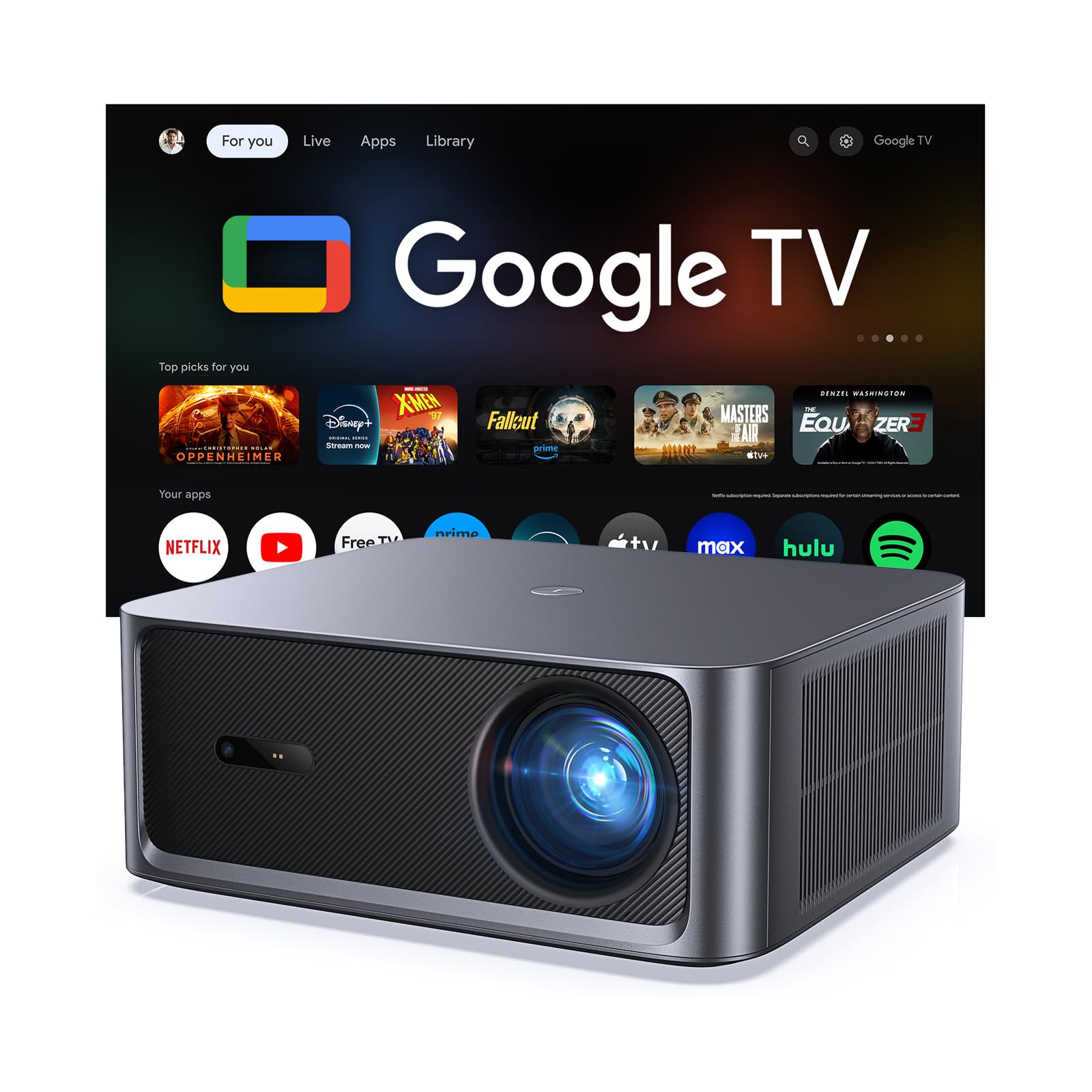
The HAPPRUN K7 Pro brings true 3,000 ANSI lumens to the table, making it one of the brightest projectors in the under $1000 category. This extra brightness allows it to maintain a vivid, watchable image even in rooms with ambient light or during daytime with curtains slightly open. The built-in Google TV system with official apps (Netflix, Prime Video, Disney+, Hulu) means you can start streaming immediately without a separate stick. The 4K decoding with HDR10+ support delivers crisp detail and rich color depth on screens up to 300 inches.
Setup is completely automatic with auto focus and 6D auto keystone correction that works reliably, according to many user reviews. The dual 10W speakers with Dolby Audio provide decent clarity and bass for the built-in audio, though pairing with a Bluetooth soundbar via 5.2 Bluetooth elevates the experience. The 20,000:1 contrast ratio handles dark scenes well, with better-than-average black levels for an LCD projector in this range.
Some users note the auto keystone can occasionally require a manual touch-up for perfect alignment, and the 50%–100% zoom is digital (not optical), which can introduce slight softness at max zoom. The remote is responsive with Google Assistant for voice control. For the brightness it delivers, the K7 Pro is an outstanding value for anyone who wants a powerful, all-in-one home theater solution without adding extra devices.
Why it’s great
- Exceptional 3,000 ANSI lumens for bright rooms and outdoor use
- Built-in Google TV with all major streaming apps pre-installed
- Fast and accurate auto focus and 6D keystone correction
Good to know
- Digital zoom may soften image at maximum range
- Built-in speakers are decent but a soundbar is recommended for critical listening
- Auto keystone can sometimes be slightly off requiring manual tweak
3. WiMiUS G2
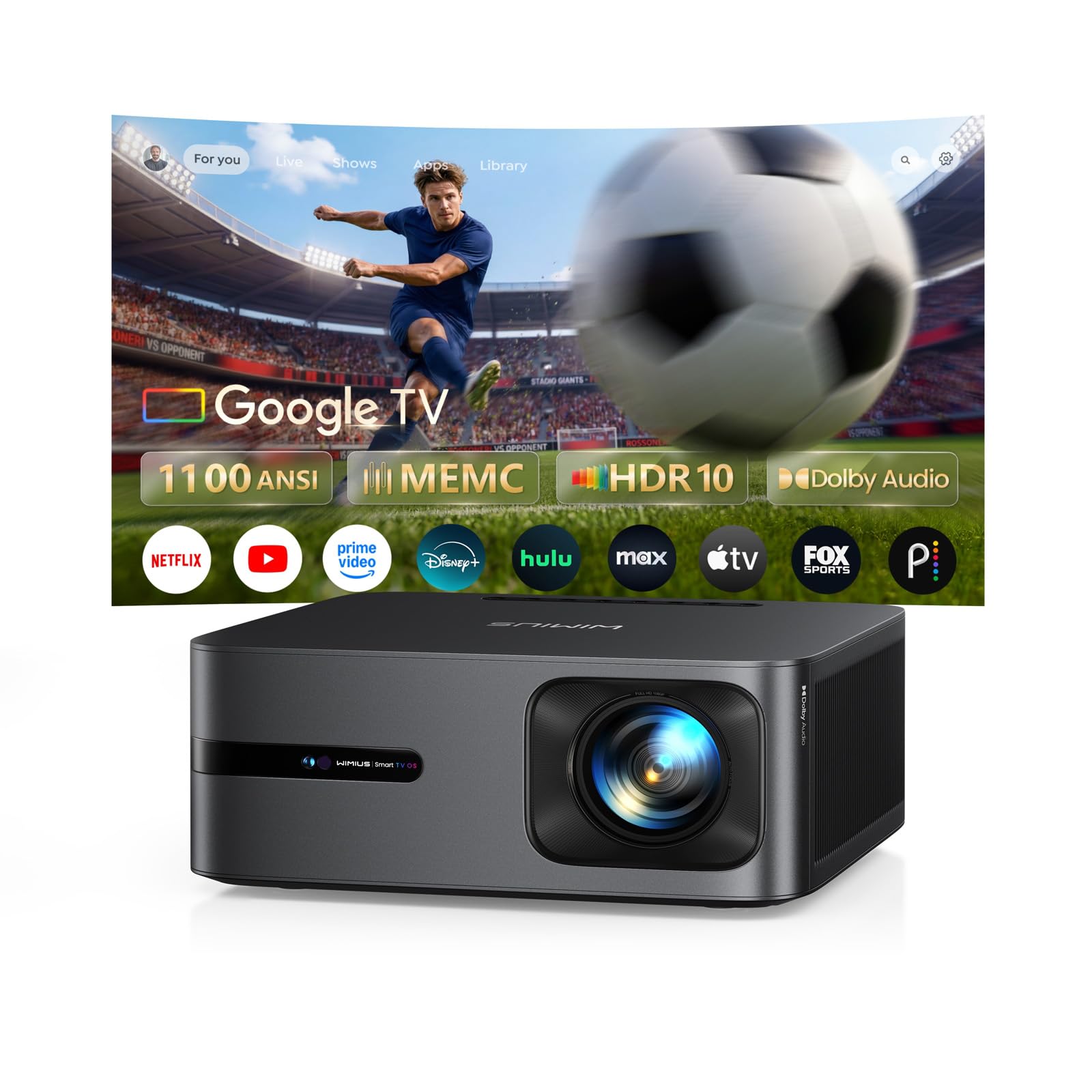
The WiMiUS G2 is a premium-feeling projector that runs the latest Google TV 14.0 on a fast MT9660 processor with 2GB RAM and 32GB storage. It offers real 1,100 ISO ANSI brightness, which is honest and consistent, unlike inflated Chinese lumen claims. The true advantage here is the MEMC (Motion Estimation and Motion Compensation) technology, which smooths fast-moving sports and action scenes to eliminate blur and stutter—a rare and valuable feature at this price.
The 30W Dolby Audio speakers are powerful and clear, providing room-filling sound that can compete with a budget soundbar. The two-way Bluetooth 5.2 lets you use the projector as a standalone speaker or connect external audio. Auto focus, auto keystone, obstacle avoidance, and screen alignment are all fast and accurate, with the ability to remember settings for fixed installations. The one-click dust removal is a practical feature that helps maintain image clarity over time.
Some users report the auto focus can struggle in very dark corners, but the manual override is simple. The lack of an optical zoom means you must physically move the projector to adjust screen size. The 2+32GB storage is generous for app downloads and updates. For a polished, feature-rich smart projector that prioritizes motion clarity and built-in audio, the WiMiUS G2 is a serious contender.
Why it’s great
- MEMC technology for smooth sports and action content
- Certified Google TV 14.0 with official Netflix and app store
- Powerful 30W Dolby Audio with two-way Bluetooth
Good to know
- No optical zoom; requires physical repositioning for different screen sizes
- Auto focus can struggle in very low light conditions
- 1,100 ANSI lumens is adequate but not as bright as some competitors
4. HAPPRUN KC7 PRO
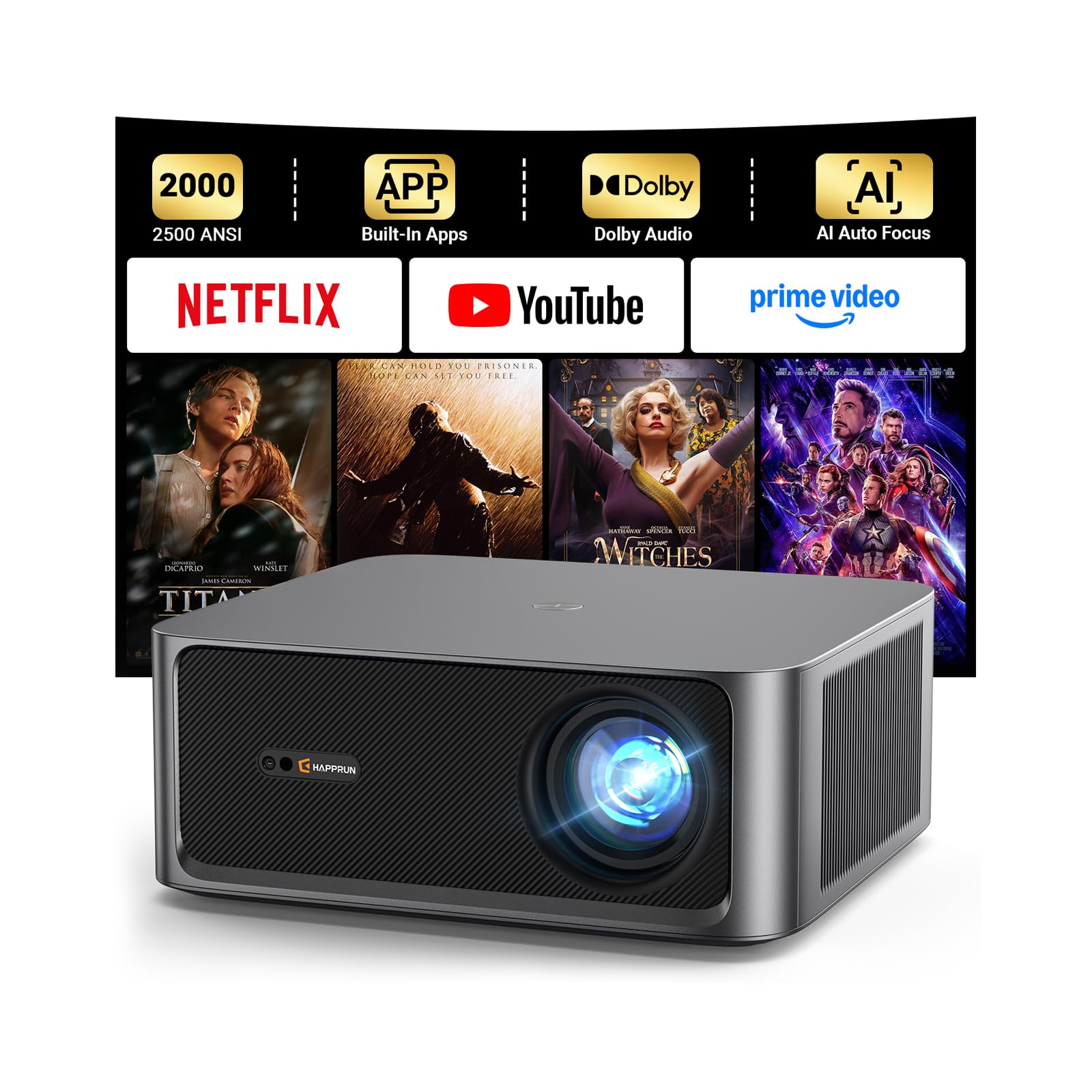
The HAPPRUN KC7 PRO sits in a sweet spot of brightness and convenience. With 2,500 ANSI lumens (listed as 2500 ANSI), it outperforms many projectors in the range by delivering a bright, detailed 4K-decoded image that works well even with lamps on. The built-in streaming system comes pre-loaded with Netflix, Prime Video, YouTube, and Hulu directly from the factory. Setup is plug-and-play: turn it on, connect to WiFi, and start watching within minutes.
Auto focus and auto keystone correction are reliable, and the projector includes obstacle avoidance, which automatically adjusts the image if you place it near a wall switch or picture frame. The dual 10W speakers with Dolby Audio provide clear dialogue and decent bass for a projector, though they are rear-facing, so you may want to angle the sound toward the listening area. The quiet operation during use gets consistent praise in reviews.
The main missing features are Google TV (this uses a simpler smart OS) and any advanced motion smoothing like MEMC. The navigation is snappy enough for basic streaming, but power users may prefer the Google TV interface of the WiMiUS G2. For the brightness, auto-setup, and price, the KC7 PRO is an excellent choice for someone who wants a no-fuss home theater projector that works well right out of the box.
Why it’s great
- Strong 2,500 ANSI lumens for bright image in ambient light
- Built-in Netflix, Prime Video, YouTube, and Hulu pre-installed
- Fast and reliable auto focus and keystone correction
Good to know
- Uses a simpler smart OS, not Google TV
- Rear-facing speakers may need acoustic placement
- No MEMC or advanced motion smoothing
5. AuKing (4000 ANSI)
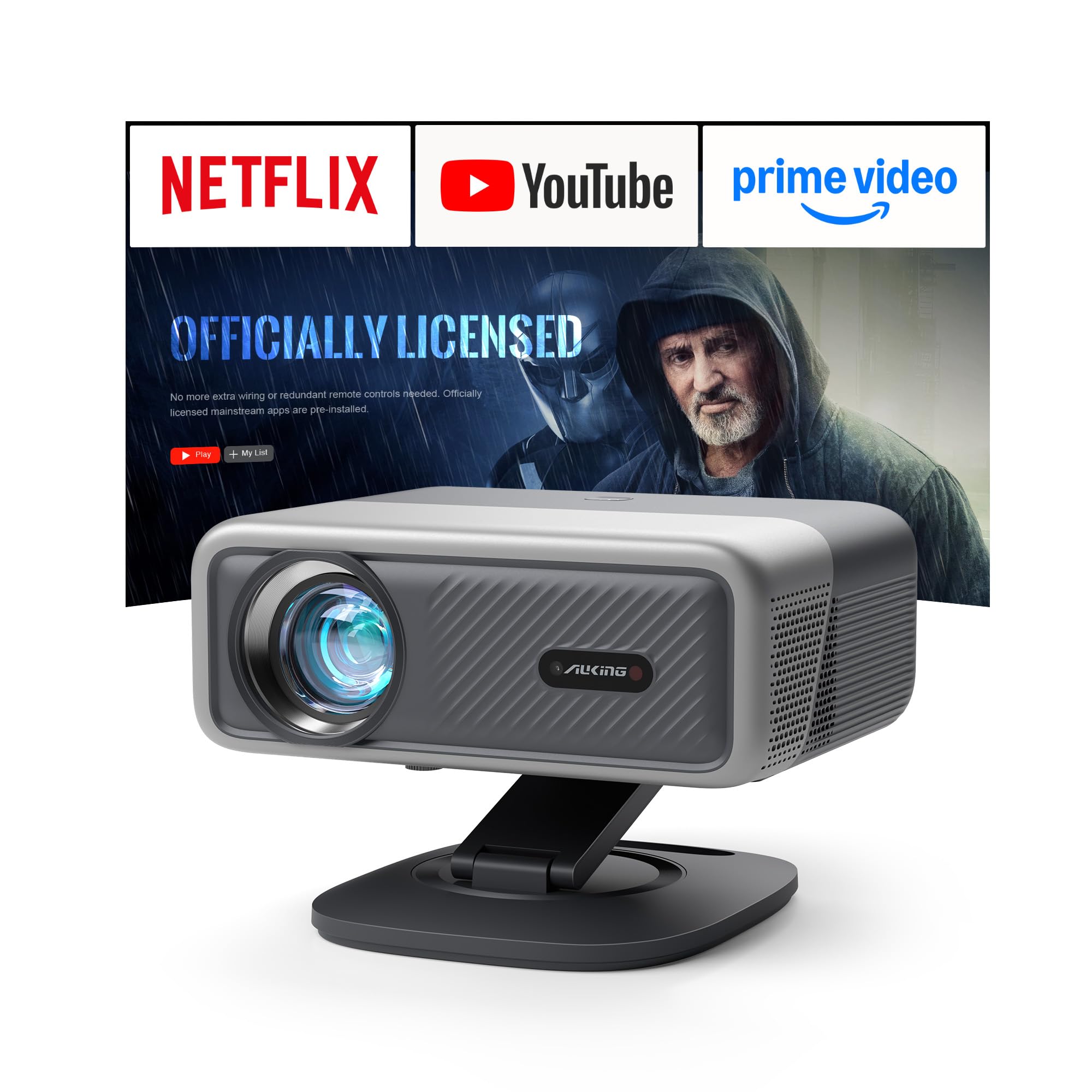
If absolute brightness is your priority, the AuKing projector claims a staggering 4,000 ANSI lumens, which makes it the brightest unit in this lineup. This level of output allows you to watch movies, sports, and games with the lights fully on or even in partial daylight without significant washout. It supports full 4K decoding with HDR10+ and boasts a 99.8% wide color gamut for rich, vibrant colors. The built-in apps include Netflix, Prime Video, and YouTube, so you can start streaming quickly.
The TOF (Time of Flight) laser auto focus is notably fast—locking in at 0.2 seconds—which is significantly quicker than standard camera-based systems. The auto keystone correction is also automatic. The Linux-based operating system is lightweight and responsive, launching instantly without the bloat of Android. The foldable, removable stand is a practical addition, offering 360° horizontal and 180° vertical tilt, and it collapses flat for storage.
Downsides include a louder fan noise than competitors, and the unit is physically larger and heavier. The built-in audio is decent but not exceptional for music or action movies. The 4,000 ANSI claim is impressive, but some users suspect real-world output is closer to 2,500 ANSI based on reviews—still very bright for the price. For those who need a projector that works in challenging light conditions, the AuKing is a compelling choice.
Why it’s great
- Industry-leading 4,000 ANSI lumens for daylight viewing
- Fast TOF laser auto focus in 0.2 seconds
- Foldable 360° stand for flexible placement
Good to know
- Louder fan noise compared to competitors
- Larger and heavier build is less portable
- Built-in speakers are average for critical audio
6. HAPPRUN (Google TV with 270° Stand)
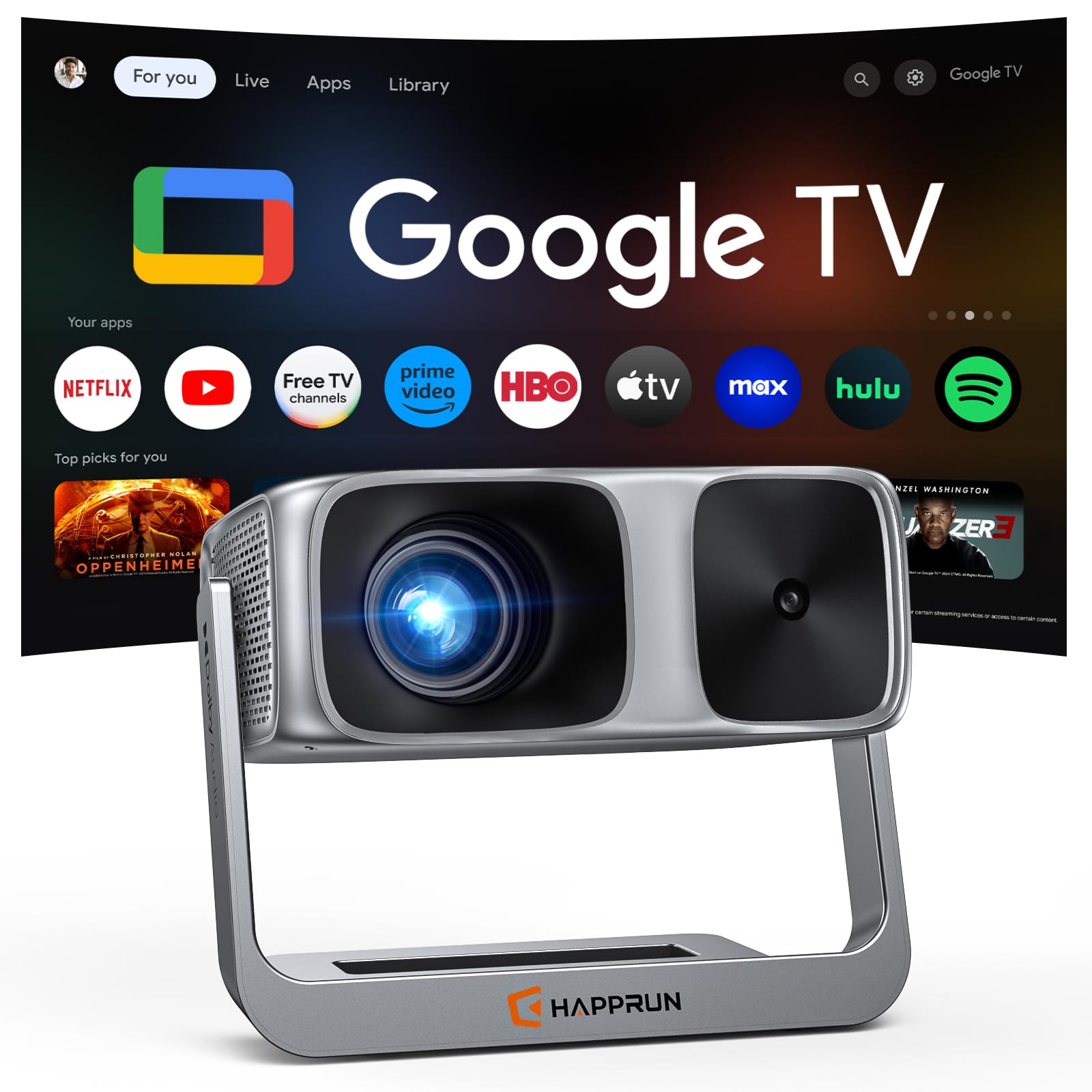
This HAPPRUN model pairs a built-in Google TV smart system with a highly practical 270° adjustable stand, eliminating the need for a separate tripod. The stand allows you to point the image at walls, ceilings, or awkward corners, which is perfect for bedrooms or tight living rooms. It delivers 2,000 ANSI lumens—enough for moderate ambient light—and supports 4K decoding with HDR10+ for sharp, colorful images. The dual 10W speakers with Dolby Audio provide better-than-average sound for a projector.
Setup is fully automatic with auto focus and 6D keystone correction that works well in most scenarios. Google TV provides a familiar interface with voice control via the remote, giving access to Netflix, Prime Video, Disney+, Hulu, and more without an extra device. WiFi 6 ensures smooth streaming, and Bluetooth 5.2 allows easy connection to external speakers or headphones. The 50%–100% zoom is digital, which is fine for most uses.
Some users note the built-in speaker volume needs to be set to 40-50% to avoid distortion at high levels, and the auto keystone can occasionally misalign on heavily angled surfaces. The ability to use the 270° stand to project onto the ceiling while lying in bed is a standout feature. For someone who values flexibility in placement without sacrificing smart features, this HAPPRUN projector is a top-tier choice.
Why it’s great
- Unique 270° adjustable stand for flexible viewing angles
- Built-in Google TV with voice assistant
- 2,000 ANSI lumens and 4K decoding with HDR10+
Good to know
- Built-in speakers need volume kept around 40% to avoid distortion
- Auto keystone can struggle on steep angles
- Digital zoom instead of optical
7. PUTRIMS P66
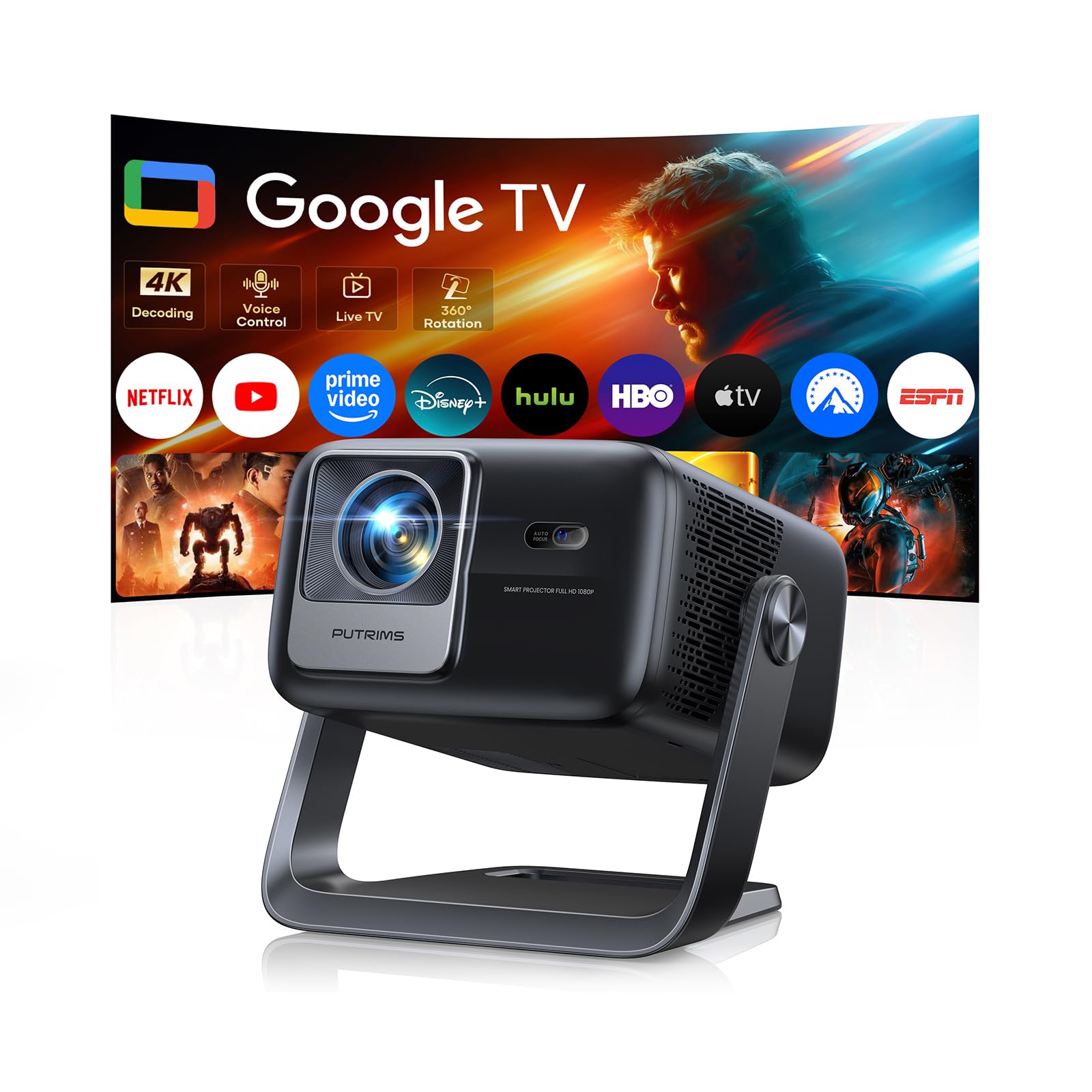
The PUTRIMS P66 is built around flexibility. Its 360° rotatable stand and 1.17:1 ultra-short throw ratio mean you can place it mere inches from a wall and still get a huge screen—perfect for small bedrooms, apartments, or ceiling projection for lazy movie nights. It comes with Google TV built-in, offering over 10,000 apps including Netflix, Prime Video, and Disney+ without an external stick. The voice remote with Google Assistant simplifies navigation.
Inside, you get a 30W HiFi stereo speaker system that delivers surprisingly punchy audio for its compact size. AI auto focus and keystone correction work quickly, and the system can remember your settings, so you only need to adjust once. WiFi 6 and Bluetooth 5.3 provide fast connectivity, and the projector supports screen mirroring from iOS and Android. The 500 ISO ANSI brightness is modest compared to some competitors, but it’s honest and produces a sharp, vibrant 1080p image in dark or dimly lit rooms.
The main trade-off is brightness: 500 ISO ANSI is sufficient for nighttime or controlled lighting, but not for daytime viewing with sunlight. The built-in speakers are good but lack deep bass. For its target use case—bedroom ceiling movie watching, small living spaces, or portable use—the P66 is a fantastic compact package. The 2-year warranty and lifetime technical support provide extra peace of mind.
Why it’s great
- 360° stand and short throw for tight spaces and ceiling projection
- Built-in Google TV with voice control
- Powerful 30W HiFi stereo audio for its size
Good to know
- 500 ISO ANSI brightness is best for dark rooms only
- Speakers lack deep bass for action movie immersion
- No optical zoom; screen size adjusted by distance
8. ONOAYO ONO5Pro 2.0
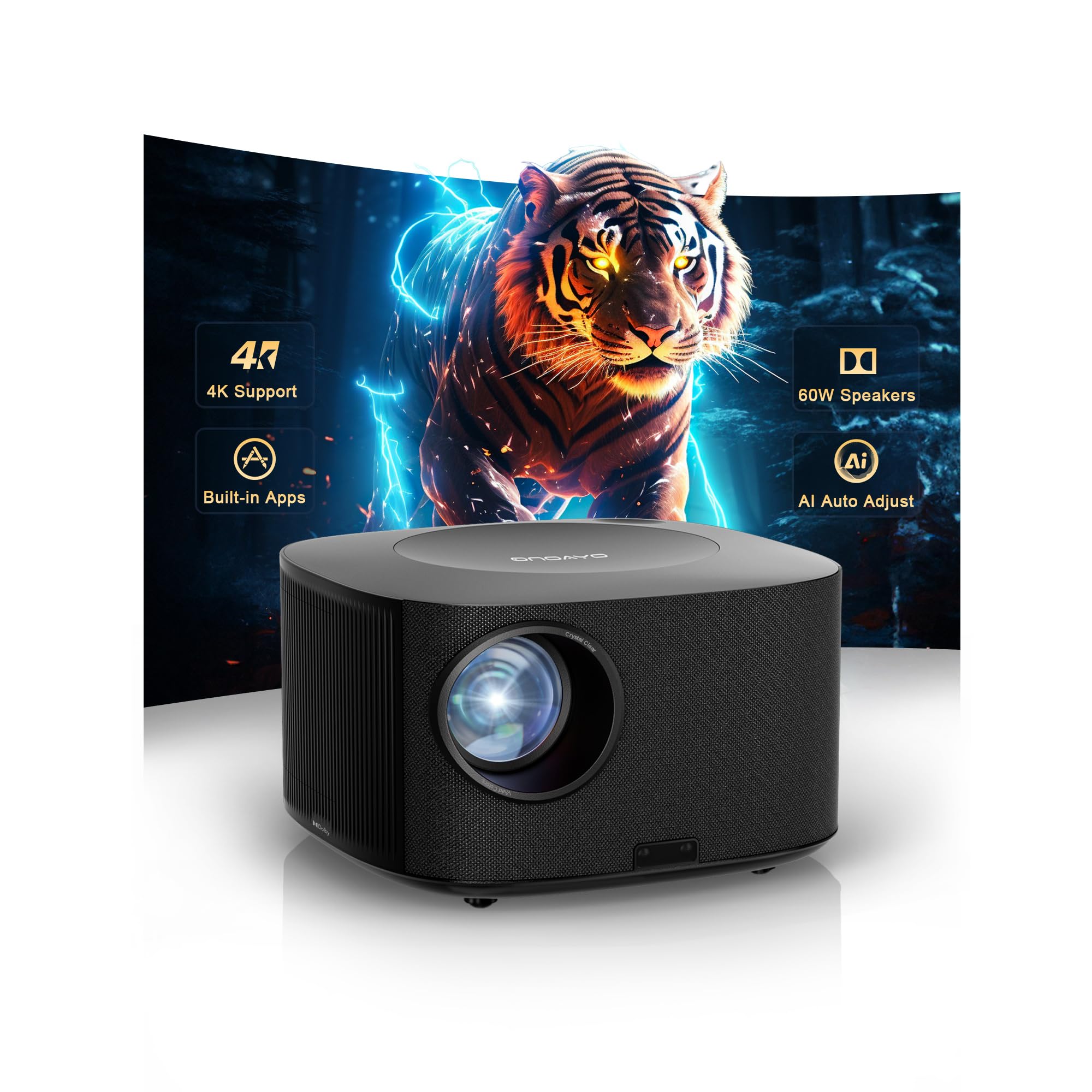
The ONOAYO ONO5Pro 2.0 prioritizes audio in a way few projectors do. Its dual 60W Dolby Audio speakers, tuned with 800+ hours of Hollywood engineering, deliver powerful, room-filling sound that can replace a soundbar for most viewers. This is a major differentiator—you get theater-quality audio from the projector itself. The 3,500 brightness level (in Chinese lumen terms, roughly equivalent to 1,500–2,000 ANSI) and 4K support ensure the image is bright and colorful even with some ambient light.
The projector features the VisionlQ auto calibration system, which handles auto focus, keystone, obstacle avoidance, and screen alignment in about 3 seconds. The sealed optical engine prevents dust from degrading image quality over time. The Smart TV Pro OS 2.0 comes with built-in apps including YouTube, Prime Video, and Disney+ (Netflix is available via the app store). WiFi 6 and Bluetooth 5.2 ensure fast, stable connections.
The native resolution is 1080p with 4K support, so the image is sharp but not true 4K. The fan is audible but not distracting during audio playback. The unit is relatively compact and portable for its speaker size. For anyone who wants an all-in-one home theater experience without a separate sound system, the ONO5Pro 2.0 is a compelling choice, especially for outdoor and living room setups where audio matters.
Why it’s great
- Industry-leading dual 60W Dolby Audio for rich room-filling sound
- Fast VisionlQ auto calibration in 3 seconds
- Sealed optical engine protects against dust degradation
Good to know
- Native 1080p resolution with 4K decoding, not true 4K
- Fan noise is audible during quiet scenes
- Smart OS is proprietary, not Google TV
9. Kogata GC357
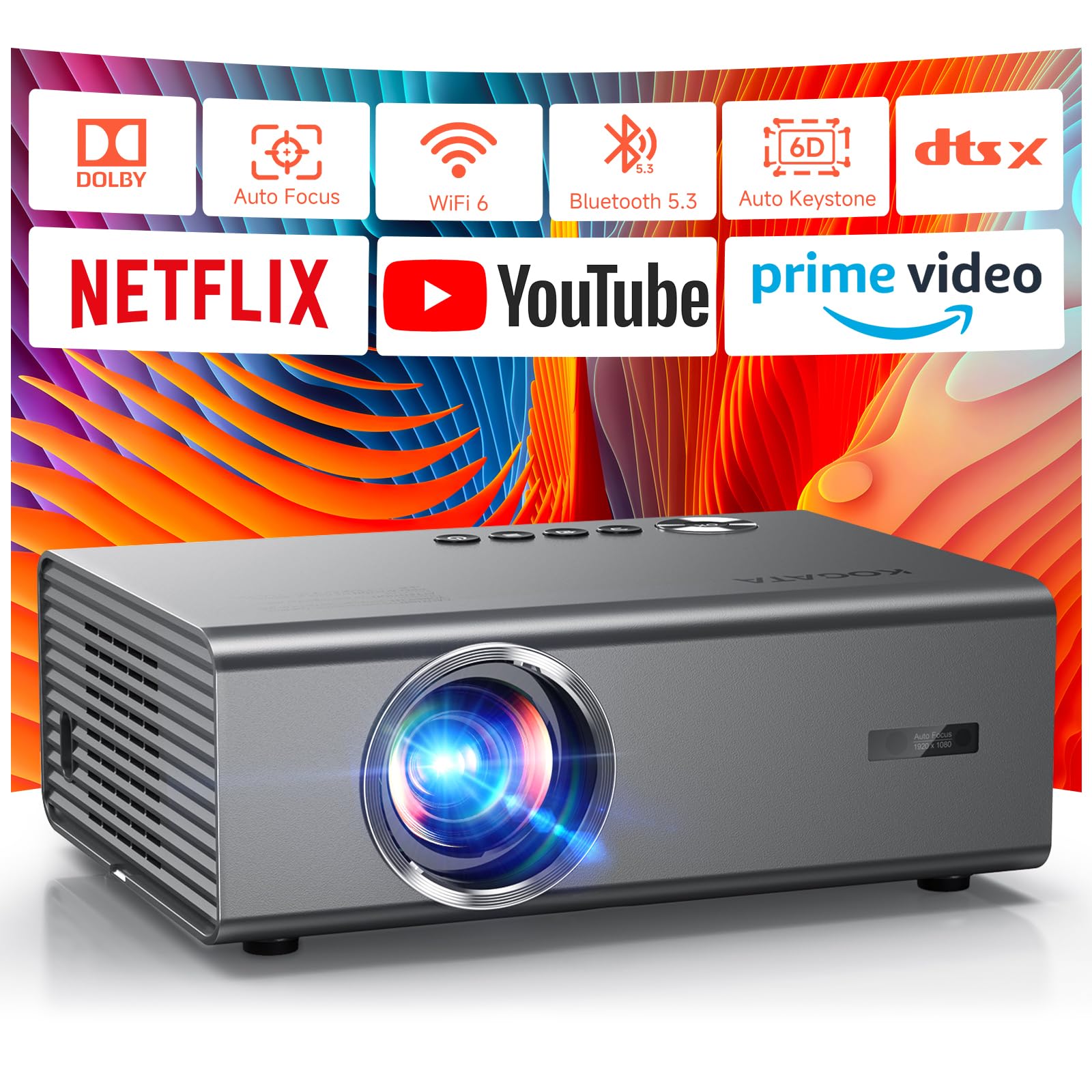
The Kogata GC357 is powered by the MediaTek MTK9660 chipset, the same processor found in many high-end smart TVs. This enables true 4K decoding, HDR10+ support, and AI-powered picture quality enhancement that optimizes contrast and color in real-time. With 1,500 ANSI lumens, it’s bright enough for dim to moderately lit rooms. The 6D auto keystone correction and auto focus work smoothly, delivering a perfectly rectangular image from almost any angle.
Built-in apps include Netflix and YouTube pre-installed, with over 200 additional apps available for download. The Dolby Audio and DTS Audio certification ensures the dual speakers produce clear, well-balanced sound. WiFi 6 and dual Bluetooth channels (for connecting to headphones or speakers) provide flexibility for both audio and streaming. The 100%–50% zoom lets you adjust screen size without moving the projector.
The biggest compromise is the brightness ceiling: 1,500 ANSI lumens is good but not great for daytime use. The 2+8GB memory is adequate for streaming but not future-proofed for heavy app usage over years. The compact form factor is very portable, making it a good choice for indoor/outdoor flexibility. For a sharp, feature-rich projector with a reliable processor, the Kogata GC357 is a solid mid-range choice.
Why it’s great
- Powerful MTK9660 chipset for true 4K decoding
- Reliable 6D auto keystone and auto focus
- Dolby Audio and DTS Audio certification
Good to know
- 1,500 ANSI lumens is bright but not for full daylight
- 2+8GB memory is modest for long-term app storage
- Built-in speakers, while clear, lack deep bass
10. Lisowod L61Pro
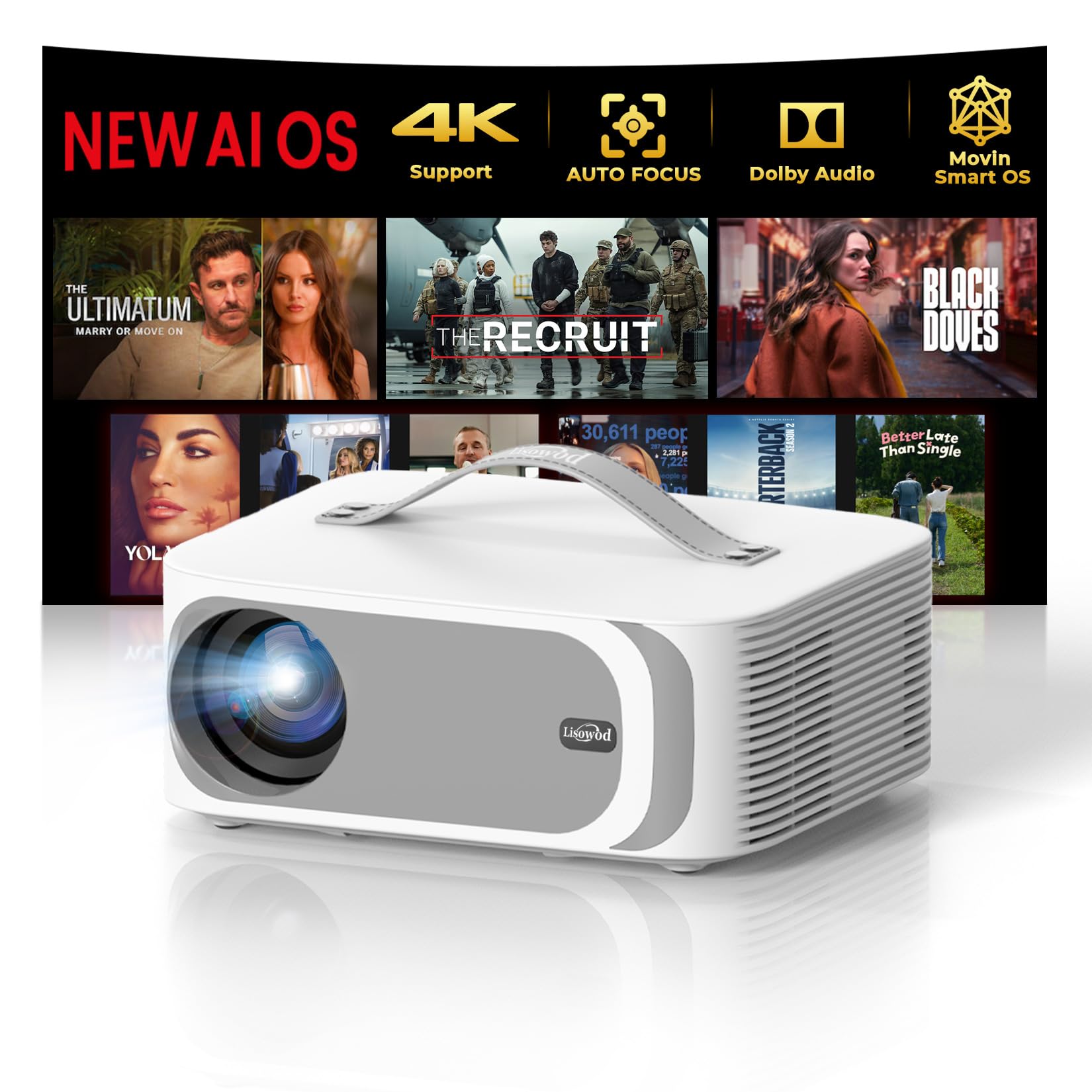
The Lisowod L61Pro is designed for those who want a true cinema experience that can pack up and go. At just 2.4 pounds with a built-in ergonomic handle, it’s the most portable product in this comparison. Despite the small footprint, it packs a 50W Dolby Audio speaker system that delivers powerful, room-filling sound. The AI Movin 2.0 OS enables fast app launches, and it comes with official licensed apps for Netflix, Prime Video, Disney+, YouTube, and Apple TV+ pre-installed.
The 4K decoding support with HDR10+ and a 25,000:1 contrast ratio produces sharp, cinematic images with rich blacks and vibrant colors. The 2,500 brightness level (Chinese lumen rating) is roughly comparable to 1,000-1,200 ANSI lumens—adequate for darker environments. The AI auto calibration system includes auto focus, 6D keystone, obstacle avoidance, and screen alignment, all working in about 3 seconds. WiFi 6 and Chromecast support make casting from phones effortless.
The tiny form factor means the lens is not sealed, so dust ingress is possible over time. The 50W speakers are impressive for the size but still can’t match the bass of a dedicated soundbar. Some users report the auto focus sometimes needs a manual touch-up. For travelers, campers, or anyone with multiple rooms, the L61Pro is a game-changer for portability without sacrificing image or audio quality.
Why it’s great
- Ultra-portable at 2.4 lbs with a built-in carry handle
- 50W Dolby Audio for surprising sound from a small package
- Official licensed streaming apps pre-installed
Good to know
- Brightness is best for dark rooms, not for daytime viewing
- Unsealed lens is susceptible to dust over time
- Auto focus may need occasional manual correction
11. HAPPRUN (4K Decoding Basic)

This HAPPRUN model represents an entry-level but competent 4K decoding projector. With 2,000 ANSI lumens, it provides a bright, clear image that’s usable with some ambient light. The auto focus and 6D auto keystone correction work reliably within 5 seconds, and the added AI auto obstacle avoidance and screen alignment handle most setup needs automatically. The 20,000:1 contrast ratio and HDR10+ support improve shadow detail and color depth noticeably over cheaper models.
The built-in 8W HiFi speaker is basic but adequate for casual viewing—think office presentations or background TV. The bidirectional Bluetooth 5.2 allows you to use the projector as a Bluetooth speaker or connect soundbars. It’s compatible with external streaming sticks via HDMI 2.0 and USB 2.0 ports. The 50% zoom function is digital, but the 300-inch maximum screen size is impressive for movie nights.
The biggest compromises are the lack of a built-in smart system (you’ll need a Fire Stick or Roku) and the weaker built-in audio compared to the more expensive HAPPRUN variants. The fan is moderately loud but not distracting. For someone building their first home theater on a tight budget who already has a streaming stick and soundbar, this HAPPRUN delivers solid performance at the most accessible price point.
Why it’s great
- Good 2,000 ANSI lumens for its price tier
- Reliable auto focus and 6D auto keystone correction
- Supports up to 300-inch screen size
Good to know
- No built-in smart system; requires external streaming stick
- 8W speaker is basic and best paired with external audio
- Digital zoom only
FAQ
Can a projector under $1000 produce a true 4K image?
How many ANSI lumens do I need for a living room with ambient light?
What is auto keystone correction and do I really need it?
Final Thoughts: The Verdict
For most users, the 4k projector under $1000 winner is the HAPPRUN K7 Pro because it offers the best combination of high brightness (3,000 ANSI lumens), built-in Google TV with all major apps, and reliable auto calibration. If you want the lowest input lag for competitive gaming, grab the ViewSonic PX701-4K with its 4.2ms response time. And for the best built-in audio that eliminates the need for a soundbar, nothing beats the ONOAYO ONO5Pro 2.0 with its dual 60W Dolby speakers.