
Our readers keep the lights on and the weekend projects moving. As an Amazon Associate, I earn from qualifying purchases.
A bright room is the ultimate stress test for any television. Sunlight pouring through windows washes out dark scenes, creates distracting reflections on the screen, and reveals the true limits of a display’s peak brightness. The difference between a TV that fights glare and one that succumbs to it determines whether movie nights feel cinematic or like watching through a dirty window. For rooms with large windows, skylights, or even harsh overhead lighting, the panel technology and luminance rating matter far more than any smart feature or brand badge.
I’m Rikta — the co-founder and writer behind FitlyFast. I spend hundreds of hours analyzing panel specifications, brightness measurements, and anti-glare coatings to find which televisions actually hold up under challenging lighting conditions rather than just claiming they do.
The secret to a great viewing experience in a sunlit living room is not simply buying the most expensive model — it is knowing which combination of Mini-LED backlighting, quantum dot color, and peak nits will cut through the ambient light. This guide breaks down the best 55 inch tv for bright room use, comparing real-world anti-glare performance, color volume under daylight, and the dimming precision that keeps blacks black even when the blinds are open.
How To Choose The Best 55 Inch TV For Bright Room
Choosing a television for a well-lit space shifts the priority list significantly. Color accuracy and motion handling matter, but they become irrelevant if the screen cannot overcome ambient light. The following factors separate TVs that deliver a punchy picture in sunlight from those that turn into mirrors.
Peak Brightness — The Anti-Glare Weapon
Measured in nits, peak brightness determines how well the TV can overpower reflected light. A model hitting 1,000 nits or more will maintain visible highlights and legible shadows even when sunlight hits the screen directly. TVs below 600 nits often look dim and washed out in bright rooms, forcing you to close blinds entirely.
Panel Type and Dimming Zones
Mini-LED and QLED panels deliver the high luminance required for bright environments, while OLED models typically lack the sheer brightness to compete with direct sunlight unless they use specialized MLA panels. Local dimming zones control how precisely the TV can maintain black levels next to bright areas — more zones mean less blooming and better contrast in mixed-lit scenes.
Anti-Reflective Screen Coatings
Not all screens are equal in how they handle incoming light. Premium models use multi-layer anti-reflective treatments that diffuse direct sunlight and reduce mirror-like reflections. Basic matte finishes can cause a hazy appearance that dulls colors. Look for TVs that specifically mention anti-reflective or low-reflection screen technology.
HDR Format Support and Color Volume
Dolby Vision IQ, HDR10+ Adaptive, and HLG matter more in bright rooms because they dynamically adjust the picture based on ambient light sensors. Quantum dot color (QLED) also provides higher color volume at peak brightness, meaning colors stay saturated rather than fading as the TV pushes its luminance higher.
Quick Comparison
On smaller screens, swipe sideways to see the full table.
| Model | Category | Best For | Key Spec | Amazon |
|---|---|---|---|---|
| Hisense U8 Series | Premium | Maximum brightness & contrast | 5000 nits / LD5600 zones | Amazon |
| Sony BRAVIA 5 | Premium | Upscaling & PS5 gaming | XR Processor / Mini-LED | Amazon |
| Toshiba Z670R | Mid-Range | Value with 144Hz gaming | Native 144Hz / Mini-LED | Amazon |
| LG QNED85A | Mid-Range | Color volume & smart features | Alpha 8 AI / Precision Dimming | Amazon |
| Samsung Neo QLED QN70F | Mid-Range | AI upscaling & bright color | NQ4 AI Gen2 / Mini-LED | Amazon |
| TCL QM7K | Mid-Range | High dimming zones for price | LD2500 zones / Anti-Reflective | Amazon |
| Sony BRAVIA 2 | Mid-Range | Reliable processing & PS5 | 4K Processor X1 / Motionflow | Amazon |
| Amazon Ember Mini-LED | Mid-Range | Fire TV integration & gaming | 144Hz / 1400 nits / 512 zones | Amazon |
| Westinghouse Mini-LED | Budget-Friendly | Entry-level Mini-LED value | 93% DCI-P3 / Local Dimming | Amazon |
| Roku Plus Series | Budget-Friendly | Simple OS & free content | Mini-LED / QLED / Dolby Vision | Amazon |
| SYLVOX Deck Pro 3.0 | Specialty | Fully waterproof outdoor use | 1000 nits / IP-rated | Amazon |
In‑Depth Reviews
1. Hisense 55″ U8 Series ULED Mini-LED
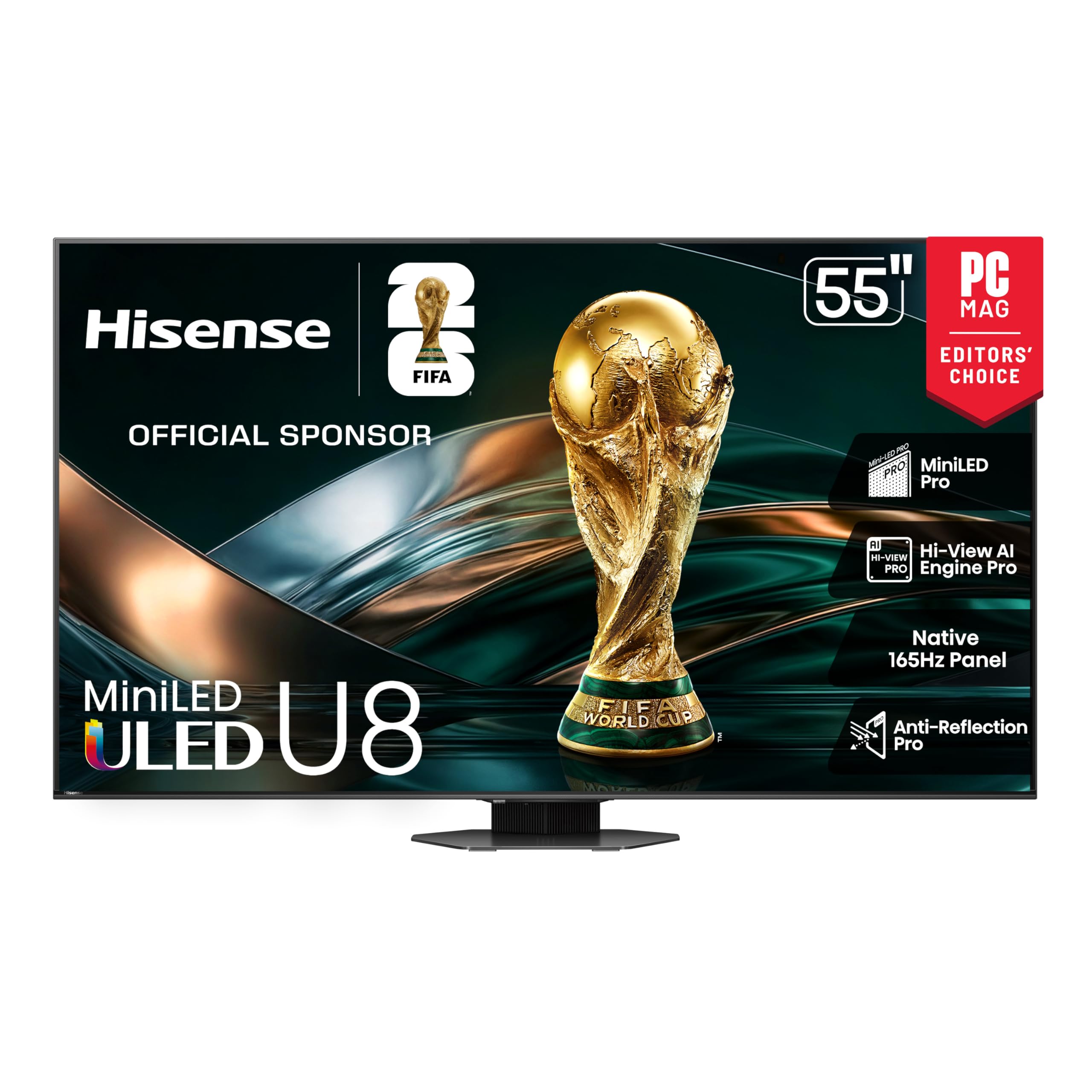
The Hisense U8U8QG is the undisputed brightness king in this class, hitting up to 5,000 nits peak luminance with a staggering 5,600 local dimming zones. That combination means sunlit living rooms pose no challenge — reflections are crushed by sheer light output, and HDR highlights retain their pop even during midday. The QLED quantum dot layer ensures color volume stays high rather than fading as brightness ramps up, a common issue with lower-tier panels.
The Anti-Reflection Pro coating is a genuine difference-maker, incorporating a specialized layer that diffuses direct sunlight rather than scattering it into a hazy bloom. On the gaming side, the native 165Hz panel and VRR up to 288Hz provide fluid motion for fast-paced titles, though the 4.1.2 channel Dolby Atmos sound system is merely decent — most viewers will want a separate soundbar to match the visual performance.
Google TV runs smoothly on the Hi-View AI Engine Pro, which intelligently adjusts picture based on ambient light and content type. The biggest caveat is reliability concerns raised by some long-term users who report occasional software hiccups requiring resets. For pure bright-room performance at this price point, however, nothing else in the 55-inch segment comes close.
Why it’s great
- 5,000-nit peak brightness obliterates glare in direct sunlight
- 5,600 local dimming zones deliver near-OLED black levels
- Native 165Hz refresh rate with VRR support up to 288Hz
Good to know
- Built-in speakers lack depth for the price tier
- Some users report software stability issues over time
2. Sony BRAVIA 5 55″ Mini LED

Sony’s BRAVIA 5 leverages Mini-LED technology controlled by the XR Backlight Master Drive to produce bright, punchy images with minimal blooming. While its peak brightness of roughly 1,000 nits is lower than the Hisense U8, Sony’s XR processor compensates with superior real-time scene analysis that optimizes contrast and color for ambient lighting conditions. The result is a picture that looks natural and balanced rather than artificially boosted.
The anti-reflective coating on the BRAVIA 5 is among the best in its class, effectively cutting down mirror-like reflections without introducing the hazy appearance common on cheaper matte screens. For PS5 owners, exclusive features like Auto HDR Tone Mapping and Auto Genre Picture Mode make this the ideal gaming companion, ensuring games look their best regardless of room lighting. The Google TV interface is snappy and responsive, negating the need for an external streaming device.
Where this set falls short is raw peak luminance compared to the Hisense competition — it cannot match the 5,000-nit output of the U8 in directly sunlit scenes. Additionally, only two of its four HDMI ports support HDMI 2.1, which may frustrate multi-console gamers. For viewers who prioritize processing quality and color accuracy over raw brightness, this remains a top-tier choice.
Why it’s great
- Excellent XR processing for natural, balanced HDR
- Premium anti-glare coating minimizes reflections effectively
- PS5 integrations are seamless and genuinely useful
Good to know
- Only two HDMI 2.1 ports
- Peak brightness falls short of top-tier Mini-LED competitors
3. Toshiba 55″ Z670R Mini-LED
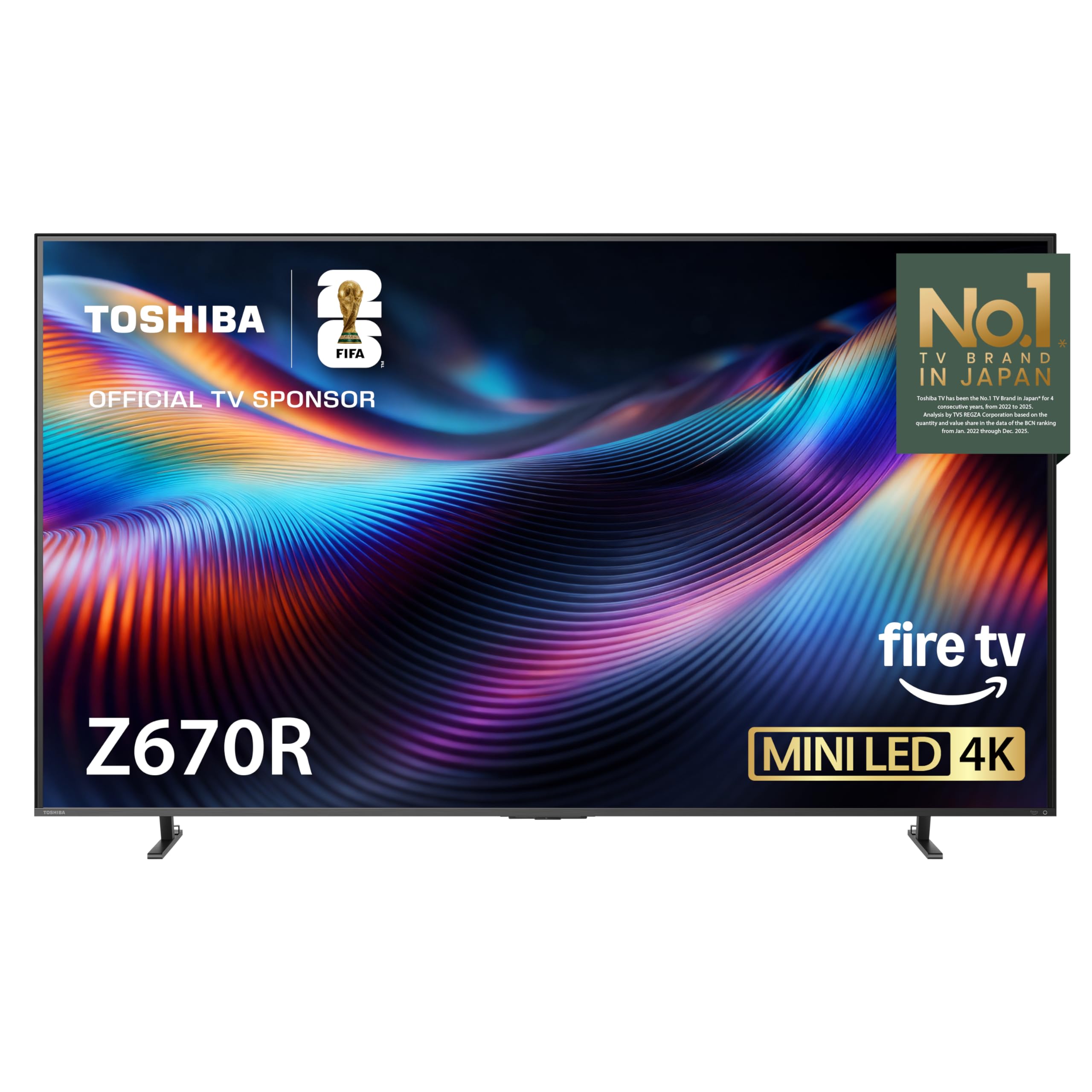
The Toshiba Z670R punches surprisingly hard for its price tier, pairing Mini-LED backlighting with full-array local dimming to deliver bright, contrast-rich images that handle ambient light well. The REGZA Engine ZRi Gen3 provides AI-driven picture tuning that adapts to room brightness via the AI Light Sensor Pro, automatically adjusting luminance to maintain visibility without washing out shadow details. At peak brightness, it holds its own against models costing significantly more.
A native 144Hz panel with AMD FreeSync Premium and VRR makes this a sleeper hit for gamers who want smooth motion without paying flagship prices. The Dolby Vision IQ and HDR10+ Adaptive support are essential for bright rooms, as both formats dynamically adjust HDR mapping based on the ambient light sensor readings. The REGZA Power Audio Pro with built-in bass woofer delivers surprisingly authoritative sound for TV speakers, though purists will still want a separate system.
The Fire TV interface is snappy, but power users may find the advertising-heavy home screen intrusive. One reviewer noted the remote’s “Recents” button is frustratingly small, and the lack of a separate subwoofer output limits audio upgrade paths. For a mid-range 55-inch bright-room TV with gaming chops, this is an exceptional value.
Why it’s great
- Mini-LED with full-array dimming delivers strong contrast in sunlight
- Native 144Hz with FreeSync Premium for fluid gaming
- AI Light Sensor Pro adapts brightness to room conditions
Good to know
- Fire OS interface includes heavy promotional content
- Remote button layout feels cramped
4. LG 55″ QNED evo AI QNED85A

LG’s QNED85A brings a different strength to the bright-room battle: color volume. With 100% Color Volume certification, this set maintains its vibrant saturation even when the TV pushes high luminance to combat glare, avoiding the washed-out look that plagues many LED panels. The Mini-LED Precision Dimming system controls individual zones with impressive accuracy, keeping blacks deep in dark corners of the screen even as the overall brightness fights ambient light.
The Alpha 8 AI Processor Gen2 uses machine learning to analyze incoming content and adjust picture parameters for the current room lighting, a feature that works particularly well when the sun moves across the room during a long viewing session. Filmmaker Mode helps preserve director intent for movie watching, though daytime viewing will benefit more from the Dynamic picture preset. The 120Hz native refresh rate with VRR support up to 144Hz covers gaming requirements without the higher price of 144Hz-native competitors.
Where this TV disappoints is the remote — the magic remote lacks a mute button and a dedicated number pad, forcing users through extra menu layers for basic functions. The webOS platform is responsive but some features require navigating a cluttered interface. For buyers who prioritize color accuracy and stability in variable lighting over peak brightness bragging rights, this is a refined choice.
Why it’s great
- 100% Color Volume maintains saturation at high brightness
- Alpha 8 AI effectively adapts to changing room light
- Precision Dimming provides excellent contrast control
Good to know
- Remote lacks mute button and numeric keypad
- webOS interface can feel cluttered
5. Samsung 55″ Neo QLED QN70F

Samsung’s Neo QLED QN70F uses Mini-LED backlighting with Quantum Matrix precision to deliver bright, punchy images that cut through ambient light effectively. The NQ4 AI Gen2 processor uses 20 neural networks to upscale HD content to near-4K quality, which matters in bright rooms because lower-resolution content appears particularly soft when displayed at high brightness. The Motion Xcelerator 144Hz ensures sports and action remain blur-free, a critical factor when sunlight creates motion artifacts on slower panels.
Samsung Vision AI provides ambient light adaptation, though it is more aggressive in adjusting overall brightness rather than fine-tuning local contrast like LG’s approach. The slim bezel design looks modern on a media console, and the Samsung TV Plus platform offers over 2,700 free channels, reducing the need for a separate streaming service for casual viewing. Color reproduction is vibrant, and the Quantum HDR feature adds dynamic range that keeps highlights from clipping in sunny conditions.
The primary drawback is the Samsung remote, which is small and minimalist — some users find it uncomfortable for extended use, and the lack of a backlight makes it hard to find in dimmer evening conditions after a bright day of watching. Additionally, the Tizen operating system, while smooth, does not offer the same third-party app support as Google TV or Fire TV. For a well-rounded bright-room TV with excellent upscaling, this is a solid mid-range contender.
Why it’s great
- 20 neural network AI upscaling keeps HD content sharp at high brightness
- 144Hz Motion Xcelerator for blur-free sports and gaming
- Slim design with high-quality Mini-LED backlight
Good to know
- Remote feels too small and lacks backlighting
- Tizen OS has fewer third-party apps than competitors
6. TCL 55″ QM7K Mini-LED QLED
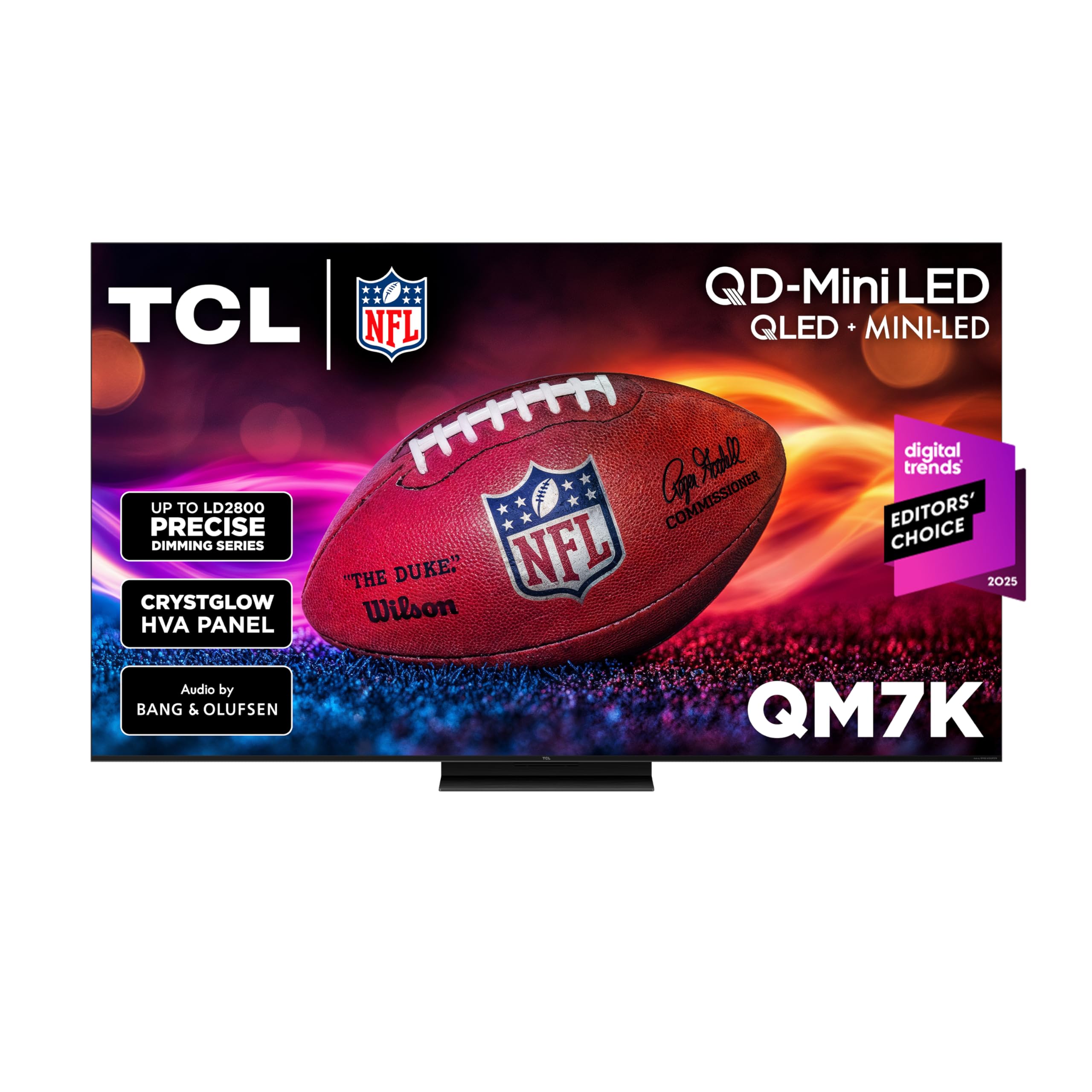
The TCL QM7K is the value champion for bright rooms, pairing a CrystGlow HVA panel with an anti-reflective screen treatment that effectively diffuses sunlight without the heavy cost penalty of premium models. With up to 2,500 local dimming zones (LD2500), this set delivers black levels that stay impressively deep even when the backlight is working hard to overcome ambient light. The QD-Mini LED technology blends the color vibrancy of QLED with the contrast precision of Mini-LED backlighting.
Google TV runs responsively on this model, and the inclusion of Dolby Vision IQ with HDR10+ Adaptive means the TV automatically adjusts its HDR tone mapping based on real-time room lighting. The built-in Onkyo audio with Dolby Atmos is surprisingly capable, though the Bang & Olufsen branding seems more marketing than meaningful performance upgrade. For gamers, the 120Hz-144Hz VRR support covers all major consoles without compromises.
Build quality feels slightly less premium than the Samsung or LG alternatives, particularly the remote which reviewers describe as “cheap.” The Google TV platform includes bloatware that cannot be fully uninstalled, though performance remains snappy overall. For buyers who want Mini-LED brightness and anti-glare capability without stretching into premium territory, this is the smartest dollar spent.
Why it’s great
- 2,500 dimming zones for excellent contrast in bright rooms
- Effective anti-reflective screen coating at a reasonable price
- Dolby Vision IQ with Google TV for seamless streaming
Good to know
- Remote feels cheap and light
- Google TV includes some pre-installed bloatware
7. Sony BRAVIA 2 II 55″

The Sony BRAVIA 2 II takes a different approach to bright-room performance, relying on the 4K Processor X1 and 4K XR-Reality PRO upscaling rather than extreme peak brightness. With an annual energy consumption of only 141 Watts, it is the most efficient model here, yet it still produces a lifelike picture with natural colors and dynamic contrast. The Motionflow XR keeps fast-moving content crisp, reducing the blur that becomes more noticeable when sunlight hits the screen.
Exclusive PlayStation 5 features — Auto HDR Tone Mapping and Auto Genre Picture Mode — make this the logical choice for PS5 owners, as the TV automatically optimizes for gaming and streaming content. The Eco Dashboard keeps energy settings accessible, and the built-in Sony Pictures CORE app provides access to IMAX Enhanced movies. Google TV offers smooth navigation, and the inclusion of Apple AirPlay 2 and Google Cast makes multi-device streaming effortless.
The trade-off is that the BRAVIA 2 II uses a standard LED panel rather than Mini-LED, so it lacks the sheer brightness of the QN70F or QM7K. In very sunny rooms with direct sunlight hitting the screen, it will struggle more than Mini-LED competitors. Some users have also reported occasional freezing issues that require a power cycle. For balanced bright-room performance with superior processing and PS5 integration, it remains a strong mid-range option.
Why it’s great
- Excellent 4K upscaling via X1 Processor
- PS5 Auto HDR and Genre Picture Mode work flawlessly
- Low power consumption with high processing efficiency
Good to know
- Standard LED panel cannot match Mini-LED peak brightness
- Some units experience freezing requiring power cycle
8. Amazon Ember 55″ Mini-LED Series
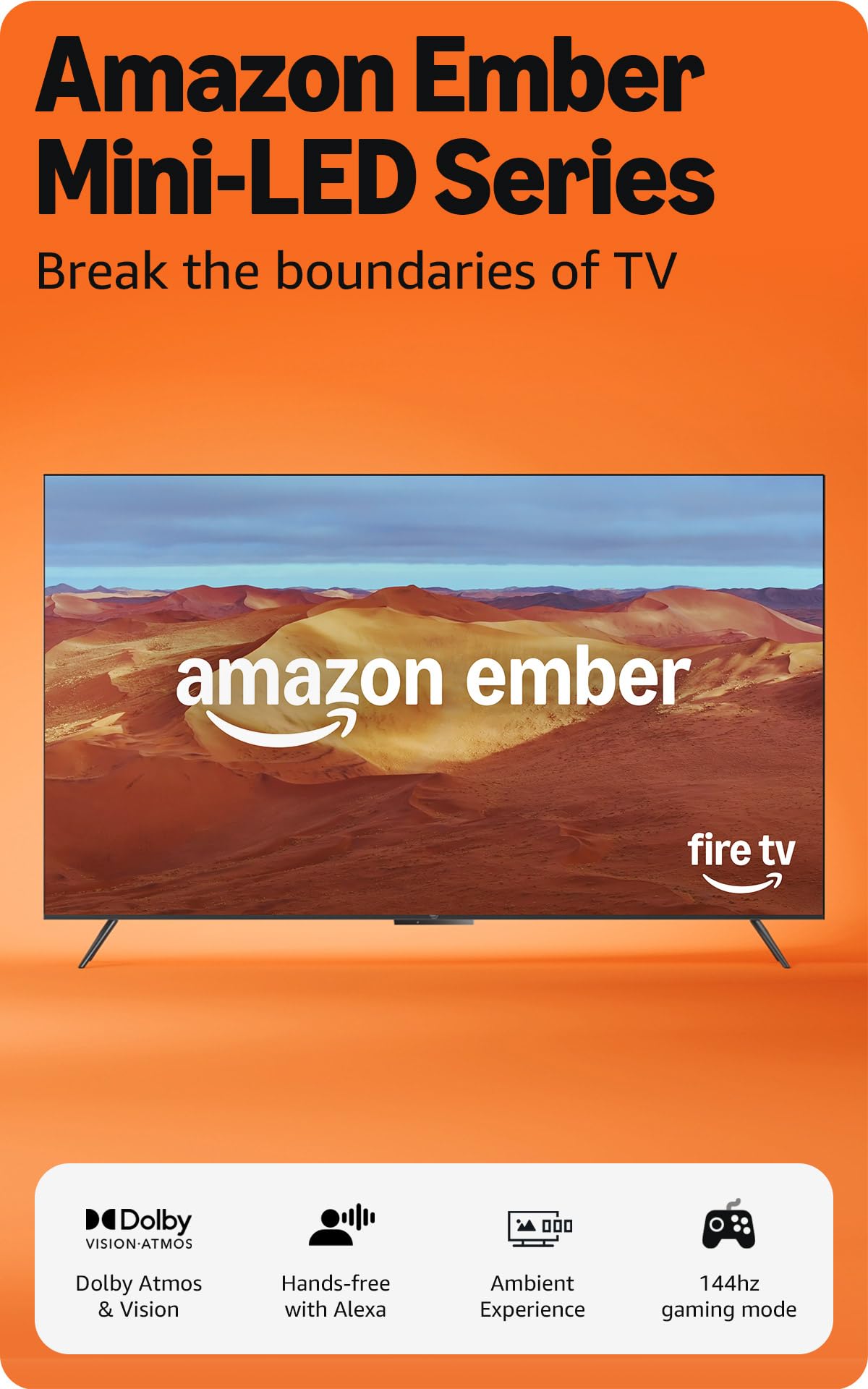
The Amazon Ember Mini-LED Series delivers an impressive spec sheet for its position in the lineup: up to 1,400 nits of peak brightness, 512 local dimming zones, and a native 144Hz panel with AMD FreeSync Premium Pro certification. This is more than enough luminance to cut through typical living-room ambient light, and the QLED quantum dot layer ensures colors pop rather than fade when the TV runs at high brightness. The Dolby Vision IQ support means HDR content is dynamically optimized for the room’s current light level.
The Fire TV integration is the defining feature here, with hands-free Alexa control that works even when the screen is off. The Omnisense technology wakes the display when you enter the room, which is a genuinely convenient touch for family spaces. The 2.1 Dolby Atmos audio system includes a built-in subwoofer that delivers more bass than most TV speakers, reducing the immediate need for a soundbar.
Where the Ember stumbles is software responsiveness. Multiple reviews report that the Fire TV interface becomes laggy over time, requiring restarts to restore smooth navigation. Amazon’s advertising within the interface is also more aggressive than any other platform. For households already deep in the Amazon ecosystem that want a bright, gaming-capable TV with smart-home integration, this is a compelling choice with some software caveats.
Why it’s great
- 1,400 nits and 512 dimming zones for strong bright-room performance
- 144Hz FreeSync Premium Pro for tear-free gaming
- Hands-free Alexa and room-wake sensing are genuinely useful
Good to know
- Fire TV interface can become sluggish over time
- Aggressive Amazon advertising on the home screen
9. Westinghouse 55″ Mini-LED Roku TV
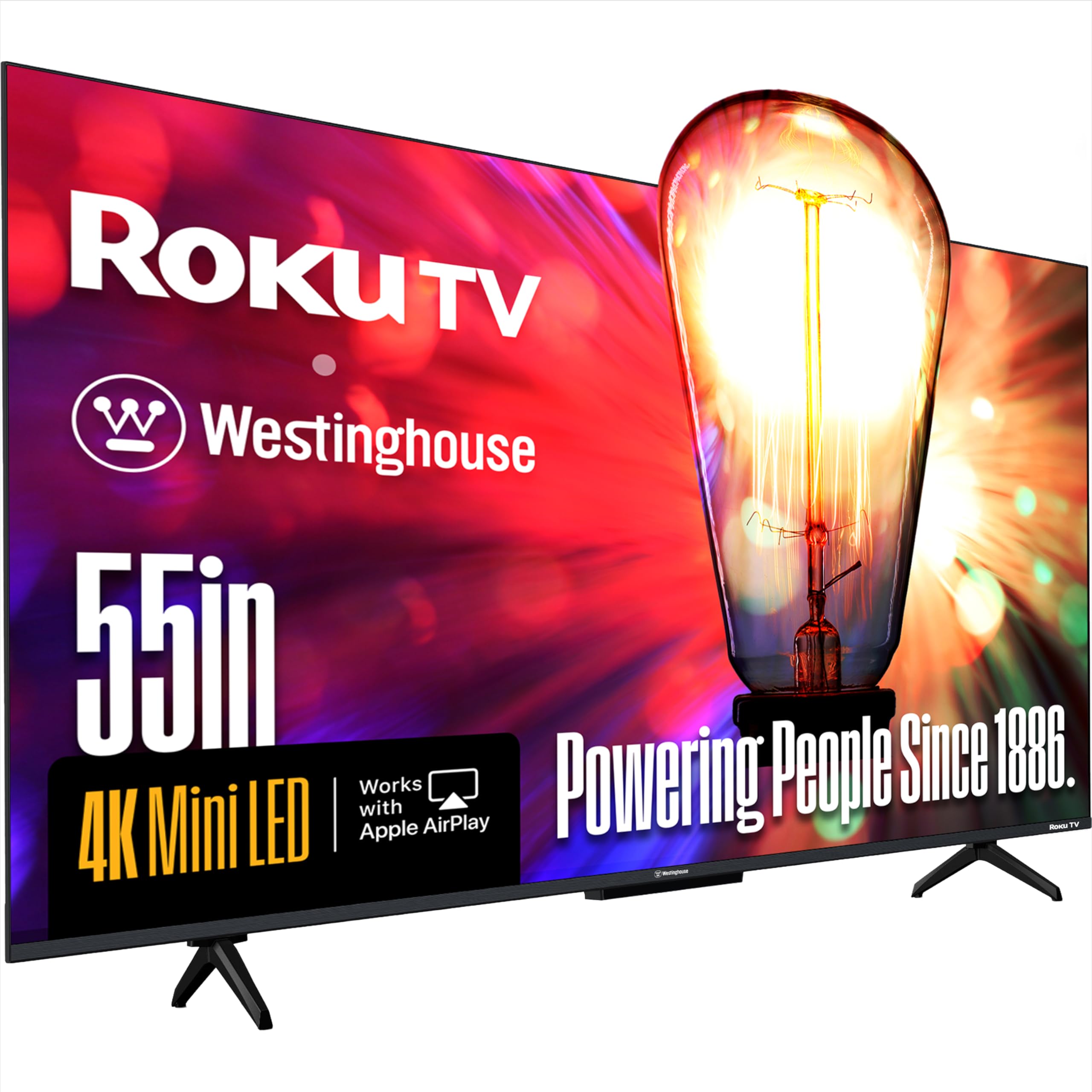
The Westinghouse Mini-LED Roku TV is the most accessible entry point into Mini-LED technology for bright-room buyers on a budget. The QLED quantum dot layer delivers 93% DCI-P3 color gamut coverage, ensuring that colors remain vivid even when the backlight is pushing high luminance to combat ambient light. Local dimming zones, while not as numerous as premium competitors, still provide noticeably better contrast than any standard edge-lit LED at this price.
The Roku platform is the standout software advantage — it remains the simplest, most intuitive smart TV interface available, with fast app launching and automatic updates that don’t bloat the system over time. The 4 HDMI 2.1 ports with eARC support provide good connectivity for multiple devices. MEMC motion processing helps reduce judder in fast-moving sports and action content, which is beneficial in bright rooms where motion artifacts are more noticeable.
Where the budget nature shows is in audio quality — reviewers consistently note the sound is “loud but muddy in midrange” and “slightly hollow.” A soundbar should be budgeted alongside this TV. The 60Hz refresh rate also limits its appeal for serious gamers. For viewers who prioritize bright-room picture quality and a frustration-free interface over audio and gaming, this is the most affordable Mini-LED option available.
Why it’s great
- Mini-LED with QLED color at the lowest entry price point
- Roku OS is fast, simple, and free of advertising clutter
- 4 HDMI 2.1 ports with eARC for ample connectivity
Good to know
- Built-in speakers lack clarity and midrange definition
- 60Hz refresh rate limits gaming performance
10. Roku 55″ Plus Series Mini-LED
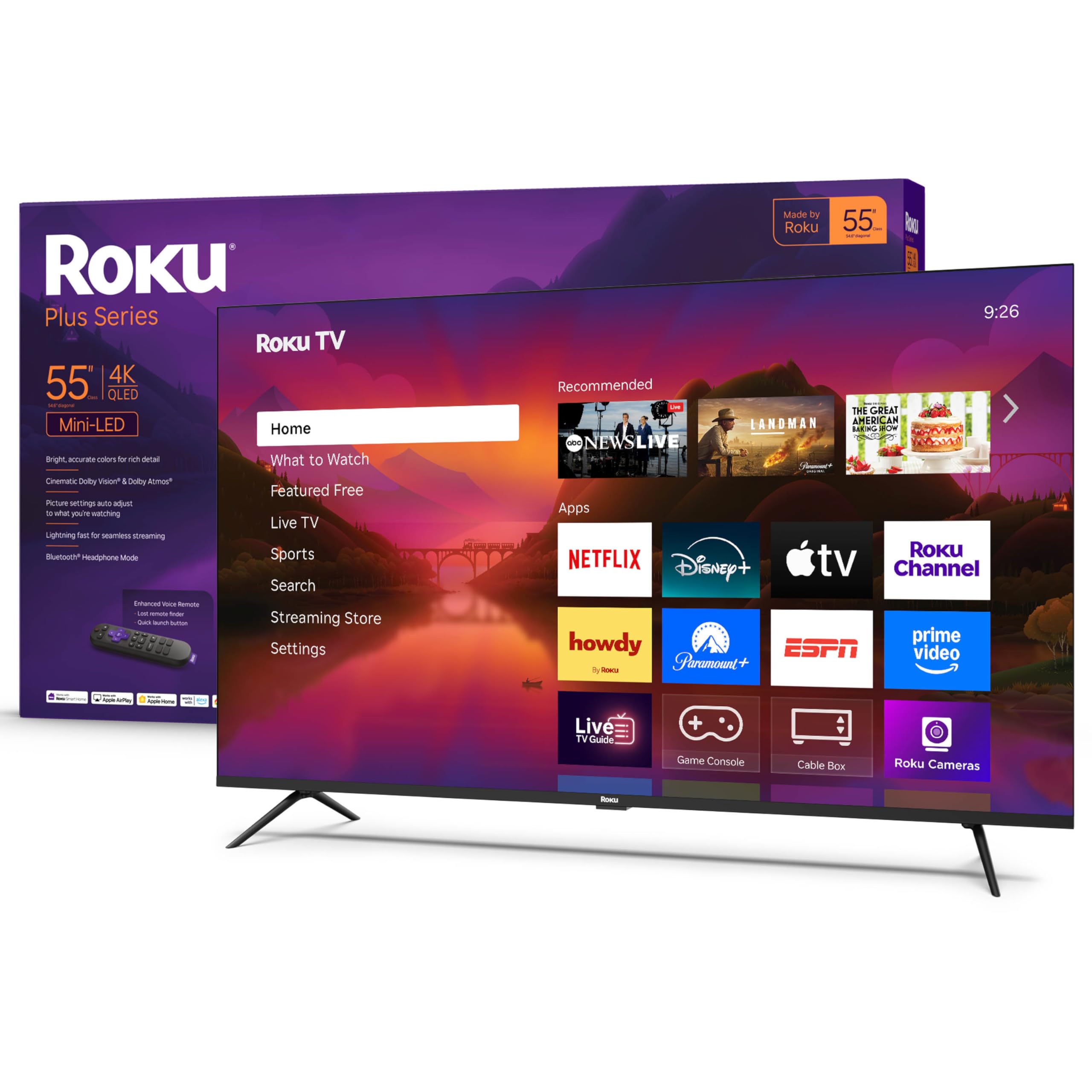
The Roku Plus Series brings Mini-LED backlighting and QLED quantum dot color to a more accessible price point, making it a solid starter choice for bright-room viewing on a tighter budget. While it does not match the peak brightness of the Westinghouse offering, its Mini-LED backlight produces more uniform luminance across the screen, reducing the hot-spotting that can occur with cheaper edge-lit panels. The Dolby Vision support adds dynamic HDR content that adjusts to room lighting.
Roku’s interface remains the gold standard for simplicity, and the Enhanced Voice Remote with lost remote finder is a genuinely useful addition for family households. The Roku Smart Picture Max AI processing cleans up incoming signals and optimizes color and sharpness automatically, which helps maintain picture quality when sunlight creates additional noise in the signal path. The built-in subwoofer in the Dolby Atmos system provides more bass than expected from a budget model.
The key limitation is brightness — while adequate for shaded bright rooms, this TV will struggle with direct sunlight compared to the Westinghouse or any Mini-LED model with higher zone counts. The 60Hz panel also means no VRR or high-refresh gaming. For casual viewers who want a straightforward, ad-light smart TV experience with decent bright-room capability, this is a smart pick.
Why it’s great
- Mini-LED with QLED for good color and brightness at a low price
- Roku OS remains the simplest, most user-friendly interface
- Enhanced Voice Remote with lost remote finder is family-friendly
Good to know
- Peak brightness not sufficient for direct sunlight exposure
- 60Hz panel with no VRR or high-refresh gaming support
11. SYLVOX 55″ Deck Pro 3.0 Outdoor TV
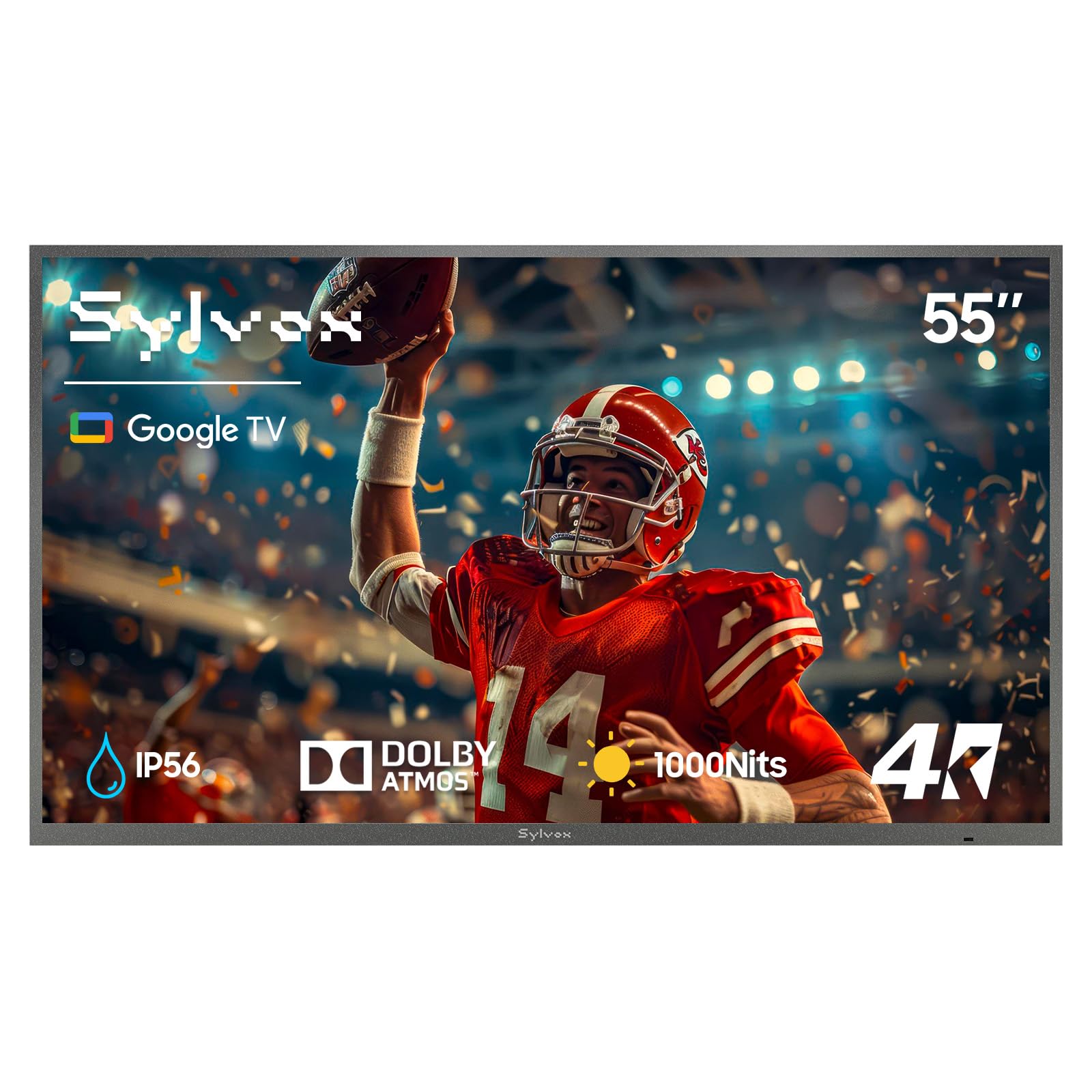
The SYLVOX Deck Pro 3.0 is a specialized solution for anyone who needs a television in a fully exposed outdoor setting. With 1,000 nits of peak brightness and a waterproof, weatherproof build rated to withstand rain, humidity, and temperature extremes, it is the only model here designed from the ground up for direct-sun environments. The 4K HDR10 panel includes an advanced anti-glare layer that keeps the picture visible even on bright patios and decks.
Google TV provides modern streaming integration, and the voice assistant remote works with Firestick compatibility for expanded app options. The robust metal frame and sealed electronics ensure longevity in outdoor conditions where indoor TVs would fail within months. Reviewers consistently praise the build quality and the picture clarity in full sun, noting that the 1,000-nit brightness is sufficient even during peak daylight hours when most indoor TVs become unusable.
The downsides are significant for indoor use: this TV is heavy due to its weatherproof construction, the speakers are adequate but not exceptional, and the price is a major premium over comparable indoor sets. Customer service experiences reported by one reviewer suggest the extended warranty may be necessary for long-term reliability. For covered patios or partially shaded outdoor spaces that need a durable TV, this is the only serious contender.
Why it’s great
- Fully waterproof and weatherproof for outdoor direct-sun use
- 1,000-nit brightness maintains visibility in full sun
- Robust metal frame and sealed electronics for durability
Good to know
- Heavy and requires secure mounting due to weatherproof build
- Significant premium over comparable indoor-only TVs
FAQ
How many nits do I need for a living room with large windows?
Can an OLED TV work in a bright room or should I stick with QLED?
Does a higher refresh rate matter when watching TV in a bright room?
What is the difference between Mini-LED and standard LED for bright-room use?
Final Thoughts: The Verdict
For most users, the best 55 inch tv for bright room winner is the Hisense U8 Series because its 5,000-nit peak brightness and 5,600 local dimming zones provide unmatched glare resistance and contrast in any lighting condition. If you want superior processing and seamless PS5 integration, grab the Sony BRAVIA 5. And for a covered patio or outdoor space where weather resistance matters, nothing beats the SYLVOX Deck Pro 3.0.